Published: October 2025 | Last updated: May 2026 | Editorial review and quality control: Martina N.
What does HIV do to the body?
HIV first destroys CD4 immune cells, then fuels chronic inflammation that reaches the gut within days, the brain within weeks, and the heart, bones, and skin over years. Started early, antiretroviral therapy halts almost all of that damage. Testing on the right timeline is how you catch it before symptoms.
When someone on daily HIV medication still feels fatigued, foggy, or inflamed, the explanation is rarely stress alone. It is often the virus itself, working through pathways most people never hear about. HIV is best known as a condition that weakens the immune system, and that is accurate. The fuller picture is wider. The virus interacts with your gut bacteria, your nervous system, your skin, and the steady inflammation that runs in the background of every organ. Even with modern antiretroviral therapy keeping the virus suppressed, those second-order effects shape how people feel day to day.
This guide walks through what HIV actually does inside the body, from the first hours after exposure through years of well-managed treatment. The aim is not to alarm anyone. It is to help you connect symptoms that often get blamed on stress, sleep, or aging to a virus that, when caught early, becomes a chronic and very manageable condition. If you have been wondering whether to test, the second half explains exactly when and how.
Key takeaways
- HIV damages the immune system first, but the chronic inflammation it drives also shapes gut health, brain function, heart risk, and skin over time, often years before any obvious symptom appears.
- Most people have no clear symptoms in the first months, so testing on the right timeline, not symptom-watching, is the reliable way to know your status.
How HIV Targets the Immune System
HIV is a retrovirus that enters CD4+ T helper cells, the white blood cells that coordinate your immune defense. Once inside, the virus integrates its genetic material into the cell's DNA and uses the cell's own machinery to make copies of itself. Each infected CD4 cell becomes a small factory for new virus particles and dies in the process. Over months and years without treatment, that running loss of CD4 cells means fewer immune coordinators in circulation, and the body's response to ordinary bacteria, viruses, and fungi becomes slower and less effective (CDC, About HIV).
Clinicians track CD4 counts with a simple blood test. A healthy adult typically has between 500 and 1,200 CD4 cells per cubic millimeter of blood (MedlinePlus, CD4 Lymphocyte Count). When CD4 counts fall below 200, the immune system can no longer reliably fend off certain opportunistic infections, and the condition is classified as AIDS (NIH HIVinfo, Stages of HIV Infection). Effective antiretroviral therapy stops this decline and usually allows CD4 counts to recover toward normal ranges over the first one to two years on treatment.
Two other markers matter alongside CD4 counts. Viral load measures how many copies of HIV are circulating in your blood at a given moment, and people on effective treatment generally reach an undetectable viral load within months, meaning the test can no longer find virus in the sample. Markers of inflammation, such as elevated CRP and IL-6, can stay slightly raised even when viral load is suppressed. That low-grade inflammation is what links HIV to body-wide effects beyond immunity itself. These three markers move together across three broad stages, summarized below using figures from the CDC, NIH HIVinfo, and MedlinePlus.
| Stage | CD4 count | Viral load | Typical immune state |
|---|---|---|---|
| Acute HIV (weeks 2 to 4) | Temporary drop, often 500 to 800 cells/mm³ | Very high, in the millions of copies per mL | Flu-like symptoms; intense early replication |
| Clinical latency (months to years) | Slow decline from about 500 toward 200 | Lower but persistent | Few or no symptoms; chronic inflammation in the background |
| AIDS (untreated) | Below 200 | High | Opportunistic infections and organ damage |
The Acute Phase: What Happens in the First Weeks
The first two to four weeks after HIV enters the body is called acute HIV infection. During this window the virus replicates very rapidly, often reaching levels millions of times higher than at any later stage. About two-thirds of newly infected people develop flu-like symptoms during the acute phase, and the rest feel nothing notable at all (HIV.gov, Symptoms of HIV).
This phase matters for two practical reasons. First, the very high viral load makes a person far more likely to transmit HIV to sexual or needle-sharing partners during these weeks. Second, treatment started during the acute phase appears to protect the immune system better over the long run than treatment started years later. Because the symptom picture overlaps with mononucleosis, flu, and even strep throat, acute HIV is one of the most commonly missed early diagnoses in primary care. If you had a known exposure and develop flu-like symptoms within two to four weeks, an HIV test is the right next step, with a repeat at the three-month mark to confirm a negative (CDC, HIV Testing).
When acute symptoms do appear, they look like any other viral illness. These are the ones most often reported:
Acute HIV Symptoms in the First 2 to 4 Weeks
About two-thirds of newly infected people notice some of these; the rest feel nothing. Symptoms alone cannot confirm or rule out HIV, only a test can do that.
- Fever, often the first and most common sign Common
- Sore throat Common
- Swollen lymph nodes, especially in the neck Common
- Fatigue and muscle or joint aches Common
- Headache Common
- Faint, non-itchy rash on the trunk Less common
- Mouth ulcers Less common
- Night sweats Less common
Beyond Immunity: How HIV Affects the Whole Body
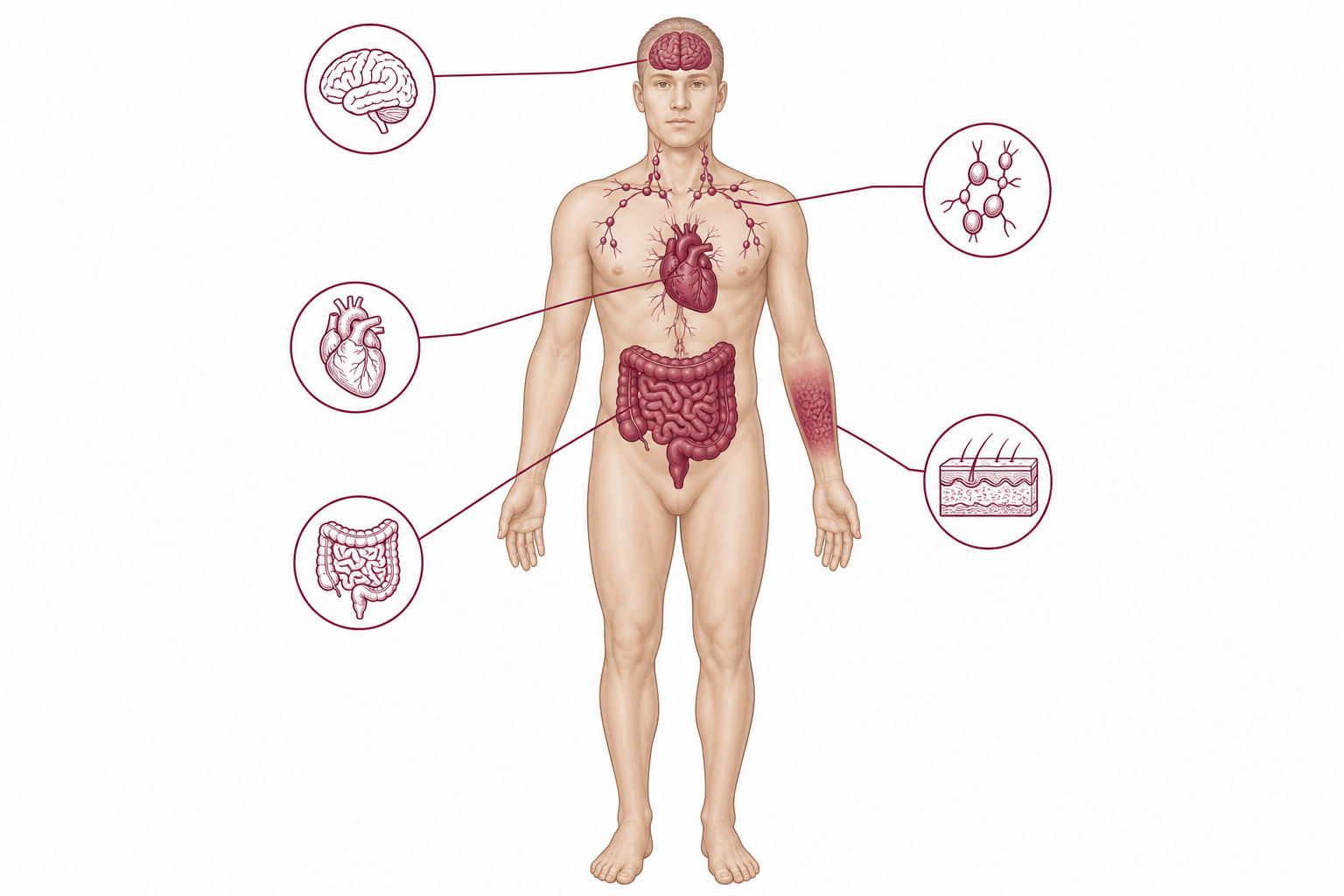
The immune system is where HIV does its first and most dramatic damage, but the virus does not stop there. Within days of infection it reaches the gut lining. Within weeks it crosses the blood-brain barrier. Researchers now describe HIV as a multi-system condition, because the inflammation and immune dysregulation it triggers reach into nearly every part of the body. Understanding these connections explains why someone with a fully suppressed viral load can still experience fatigue, brain fog, or gut symptoms that seem unrelated to the virus.
The sections that follow walk through the gut, the brain, and the skin one at a time, because each tells a different story about how HIV operates and what to watch for. Hormone regulation can shift too, sometimes affecting menstrual cycles in women, sometimes lowering testosterone in men. None of these effects proves a person has HIV on its own. Together, in someone who has had a possible exposure, they are worth taking seriously enough to test.
The Gut Lining: Where HIV Settles Within Days
The gut is the largest immune organ in the body. The majority of the body's lymphocytes live in or around the lining of the small intestine, organized into structures called gut-associated lymphoid tissue, or GALT. HIV reaches the gut within days of infection and depletes immune cells in the intestinal lining, often before any change shows up in a blood-based CD4 measurement.
That early gut damage matters for two reasons. The intestinal lining becomes leakier than it should be, allowing bacteria and bacterial fragments to cross into the bloodstream in a process called microbial translocation. The immune system reads those microbial signals as a constant low-grade infection, which drives the chronic inflammation that quietly damages other organs years later. At the same time, the gut microbiome shifts toward a less diverse and more inflammatory mix, and absorption of some nutrients drops.
The World Health Organization lists diarrhea among the signs that appear alongside swollen lymph nodes, weight loss, fever, and cough as HIV progresses (WHO, HIV and AIDS fact sheet). Beyond that headline symptom, the underlying problem is immune, not only digestive, which is why these symptoms can persist for months even on therapy that keeps blood viral load undetectable.
People with HIV, especially when untreated, often report loose stools that do not settle with the usual diet changes, new food intolerances, bloating with intermittent nausea, and fatigue that worsens after eating. The pattern points to immune disruption in the gut lining, not only a digestive complaint.
The Brain: HIV Crosses Early
HIV crosses the blood-brain barrier in the first few weeks after infection. Once inside the central nervous system, the virus infects certain immune cells, the microglia and perivascular macrophages, and triggers low-grade inflammation in surrounding brain tissue. Over time the cumulative effect is a spectrum of cognitive changes called HIV-associated neurocognitive disorder, or HAND, ranging from subtle memory or attention slips to more serious impairment in untreated cases.
The brain also acts as a reservoir. HIV can persist in nervous-tissue cells even when blood viral load is undetectable on therapy, which is part of why a small subset of people with well-controlled HIV still report cognitive symptoms (CDC, About HIV). Modern regimens penetrate the central nervous system better than older drugs, and severe forms of HAND have become much less common in people who start treatment early. The patterns people describe vary by which brain region is most affected, as the table below summarizes.
| Brain region most affected | What people commonly notice | When it tends to appear |
|---|---|---|
| Frontal lobe (executive function) | Slower decision-making, trouble with multi-step tasks, more impulsivity | Months to years after infection if untreated |
| Hippocampus (memory) | Forgetting recent details, harder time learning new information | Often during the chronic phase |
| Limbic system (emotion) | Mood swings, anxiety, irritability that feels out of proportion | Any stage; worsens without treatment |
The Skin: Often the Earliest Visible Sign
The skin is an immune organ. T cells live in it, and any time the immune system is under stress, the skin is one of the first places that stress shows. Many people with HIV develop a transient, faint, non-itchy rash on the chest, upper arms, or face during the acute phase. It can look like any other viral exanthem and usually resolves on its own within a few days, which is part of why it is so easily missed at the time.
As immune function declines, opportunistic skin conditions become more common. Recurrent shingles in someone under 50, persistent oral thrush (oral candidiasis), hard-to-treat seborrheic dermatitis on the face, scalp, or chest, severe or recurrent fungal infections, and unusual molluscum lesions all become more frequent in untreated HIV (A Comprehensive Review on HIV-Associated Dermatologic Manifestations, PMC). In advanced disease, Kaposi sarcoma, a cancer associated with co-infection by human herpesvirus 8, can produce purplish patches or nodules on skin or mucous membranes.
Most people on effective antiretroviral therapy never develop these advanced complications. Because skin changes are visible, the milder ones are often what finally prompts someone to see a clinician and get tested.
The early-infection HIV rash is typically faint and non-itchy, appears on the chest, upper arms, or face during the first two to four weeks after exposure, and resolves within a few days on its own. Because it looks like many other viral rashes, most people miss the connection at the time.
Chronic Inflammation and Long-Term Health
One of the most important shifts in HIV research over the past decade has been the recognition that chronic, low-grade inflammation is a defining feature of long-term HIV, even in people on successful antiretroviral therapy. The virus is suppressed, not erased. Small reservoirs of HIV remain in resting immune cells, and the body's continued response to those reservoirs produces a steady inflammatory signal the immune system never quite turns off.
That inflammation is linked to several long-term concerns. People living with HIV have a meaningfully elevated risk of heart disease compared with the general population, driven by chronic immune activation, inflammation, and the side effects of some HIV medicines (NIH HIVinfo, HIV and Heart Disease). Bone density tends to decline more quickly, especially in older adults. HIV-associated nephropathy is a specific kidney condition more common in people of African descent with untreated HIV, and liver enzymes can drift upward years before any symptom appears, especially alongside hepatitis B or C co-infection. Some studies describe an accelerated aging effect, sometimes called inflammaging, in which the body shows changes characteristic of older biology a decade or so earlier than expected.
HIV is highly treatable, and people diagnosed early now have life expectancies approaching those of the general population. What the inflammation research changed is the standard of care. Modern HIV providers monitor more than viral load and CD4 counts. They watch cardiovascular markers, bone density, mental health, kidney function, and metabolic indicators, because the decade-level outcomes of well-controlled HIV depend on whether that background inflammation is tracked and managed early. The organ systems most often affected are summarized below.
| System | What can change | Notes |
|---|---|---|
| Cardiovascular | Increased arterial inflammation, modestly higher heart-attack risk | Driven by chronic immune activation, not the virus alone |
| Kidneys | HIV-associated nephropathy and other kidney injury | More common in people of African descent; often reversible when caught early |
| Endocrine and reproductive | Lower testosterone, irregular menstrual cycles | Tied to systemic inflammation; usually improves on treatment |
| Liver | Mild liver-enzyme elevations | Worse when co-infected with hepatitis B or C |
| Bone | Faster loss of bone density | More pronounced in older adults |
Why HIV Often Hides in Plain Sight
One reason HIV is still diagnosed late is that early symptoms are easy to misread. Fatigue, a faint rash, brain fog, and recurrent yeast infections or oral thrush all tend to get blamed on overwork, dermatitis, stress, or skin sensitivity, and each can quietly point to immune disruption until the pattern accumulates. The image of HIV burned into popular memory, dating to the 1980s, is one of dramatic illness. The current picture, especially in someone caught early, is much quieter.
Public-health workers see the same pattern repeatedly. Someone tests positive after years of feeling generally off, often because a new partner or a routine screening prompts the test. Their CD4 count is lower than it should be, and their viral load is higher than it would have been a year earlier. Untreated HIV keeps damaging the immune system over time and raises the risk of serious illness (NHS, HIV and AIDS). Starting treatment as soon as possible after diagnosis is the standard recommendation, and even during very early infection it can begin to protect a person's health (NIH HIVinfo, When to Start HIV Medicines).
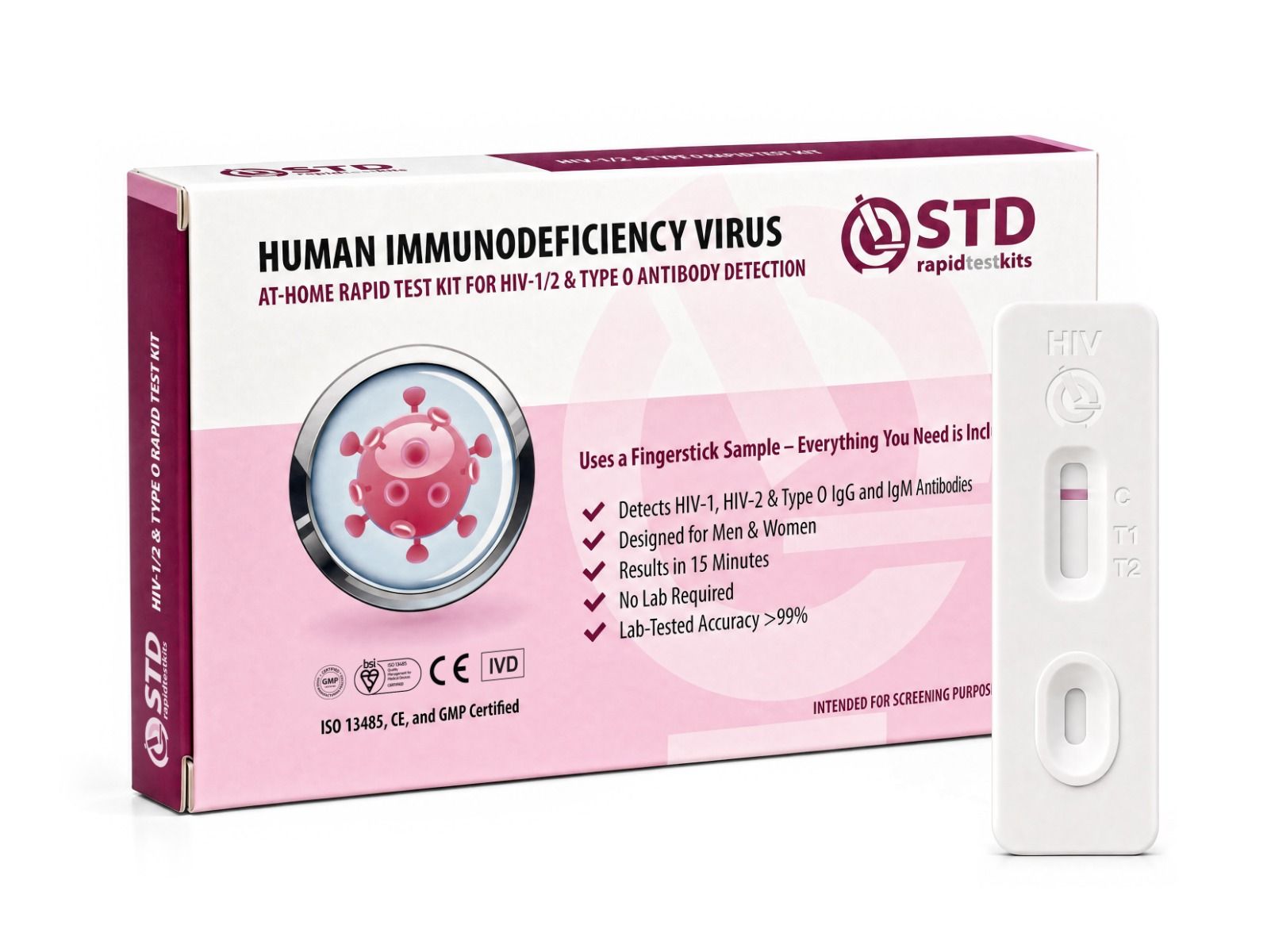
This is the practical case for testing earlier than you think you need to. A negative result is a useful baseline, and a positive result is no longer the news it once was, with treatment often available the same week. The U.S. Preventive Services Task Force recommends at least one HIV test for every adolescent and adult from age 15 to 65, with repeat testing for anyone who has ongoing risk factors. If you want to start at home, an at-home HIV test gives an early read in about 15 minutes. This site, stdrapidtestkits.com, sells the rapid tests mentioned here and recommends them by fit for your concern, not for commercial benefit.
People with HIV who take HIV medicine as prescribed and get and keep an undetectable viral load have effectively no risk of transmitting HIV to their HIV-negative sexual partners.
Common Myths About How HIV Affects the Body
Beliefs about HIV have lagged behind the science by about three decades. Most of what people still picture comes from the worst-case untreated outcomes of the early epidemic, not the everyday experience of someone diagnosed today. The myths that persist are often the ones that delay testing and treatment the most.
What People Get Wrong About HIV
Myth: If I had HIV, I would feel sick.
Fact: Roughly one-third of newly infected people have no acute symptoms at all. Many feel a vague flu for a week or two, then nothing notable for years.
Myth: HIV only affects the immune system.
Fact: Chronic inflammation from HIV reaches the gut, brain, heart, bone, and skin, even when daily medication keeps viral load undetectable.
Myth: Only certain groups get HIV.
Fact: HIV transmits through specific behaviors, not identities. Anyone with a possible exposure benefits from testing.
Myth: The side effects of treatment are worse than the disease.
Fact: Modern single-pill regimens have far fewer side effects than the drugs of the 1990s, and the alternative is progressive, permanent immune loss.
Myth: A positive test means a short life.
Fact: With early diagnosis and consistent treatment, life expectancy now approaches that of the general population.
HIV and Reinfection: Can You Get a Second Strain?
It is possible to acquire a second strain of HIV after already living with the virus. This is called superinfection, and while it is rare, it is real. The concern is that the second strain may be resistant to drugs in the current regimen, which can blunt suppression and force a change in treatment. Superinfection is most often documented in the first years after the original infection, when neutralizing immune responses to the first strain are still developing.
The practical implication is that prevention does not stop at diagnosis. Condoms, PrEP for HIV-negative partners, and routine partner testing all continue to matter for people living with HIV. The message that effective treatment makes HIV untransmittable applies in the direction of you not passing the virus on; it does not protect you from acquiring a different strain from someone with detectable HIV. This matters most in newer relationships, after a gap in treatment, or while waiting for full suppression on a new regimen.
Effective treatment stops you from transmitting HIV to others, but it does not protect you from acquiring a second strain from a partner whose virus is detectable. Condoms, partner testing, and PrEP for HIV-negative partners still matter after a diagnosis.
When and How to Test
If you have any reason to suspect a possible exposure, the simplest path is to test. Three options are widely available. Public-health clinics offer free or low-cost testing, often with same-day rapid results. Most pharmacies sell over-the-counter HIV self-test kits that use a finger-prick blood sample and give a result in about 15 minutes. Sexual health clinics and primary care offices can order lab-based antigen/antibody combination tests that detect HIV earlier than antibody-only tests (CDC, HIV Testing).
If your exposure was potentially within the last 72 hours, talk to a clinician or visit an emergency department about post-exposure prophylaxis, or PEP. PEP is a 28-day course of antiretroviral medication that can prevent HIV from taking hold if started in time. After that 72-hour window, the priority shifts back to testing on the right timeline.
A positive home result should always be confirmed with a lab test, since confirmation is the step that comes before any treatment conversation. A negative result taken soon after exposure should be repeated at the three-month mark. And if you are screening for one infection, it is worth considering broader screening at the same time, because HIV often shares exposure pathways with syphilis, hepatitis B, hepatitis C, herpes, chlamydia, and gonorrhea. A single combination panel from a set of at-home STI test kits can answer several of those questions in one sitting.
Can You Reverse the Damage?
Some of it, yes, and often a lot of it. With consistent antiretroviral therapy, CD4 counts climb, gut-barrier function partially recovers, energy improves, and many of the milder skin changes resolve. Inflammation drops, cardiovascular risk markers improve, and most people on effective treatment now have life expectancies approaching the general population.
Some changes are slower to reverse. Damage to brain white matter may not fully resolve, especially when treatment starts late, though choosing a regimen that penetrates the central nervous system well is worth discussing with an HIV specialist for anyone with cognitive symptoms. Cardiovascular risk does not return all the way to baseline, even on suppressive treatment. Bone density and certain hormonal shifts may need their own management alongside the core regimen. The split looks roughly like this.
| Effects that largely reverse on treatment | Effects that are slower or incomplete |
|---|---|
| CD4 count recovers toward the normal range over one to two years | Brain white-matter damage may not fully resolve if treatment starts late |
| Most milder skin changes improve or clear | Cardiovascular risk does not return all the way to baseline |
| Energy improves and gut-barrier function partially recovers | Bone-density loss may need its own management track |
| Inflammation markers such as CRP and IL-6 drop | Some hormonal shifts (testosterone, menstrual changes) may need targeted treatment |
What to Do If You Have Reason to Worry
If something about your body feels off and you cannot rule out an HIV exposure, the most useful next step is the simplest one: take a test. Tests are widely available, the at-home version is private, and a result in either direction gives you something concrete to act on. If you test positive, you join the millions of people whose HIV is well controlled on a single daily pill. If you test negative, you get a baseline you can revisit the next time the question comes up.
HIV stigma is older than the virus is treatable, and it still does measurable harm, mostly by delaying diagnosis. People who worry they will be judged at a clinic put off testing, and people who carry shame around an exposure avoid the conversation that would lead to a test. Both patterns create exactly the conditions HIV needs to keep doing damage: years of unsuppressed virus quietly weakening the immune system. Getting tested is not an admission of anything. It is a piece of routine adult health care, like a cholesterol panel or a dental cleaning.
Between tests, there are still useful steps. Talk with a sexual health clinician or your primary care doctor about your specific risk pattern: what to test for, how often, and whether pre-exposure prophylaxis (PrEP) makes sense for you. PrEP is a daily medication, also available as a long-acting injection in some places, that reduces the risk of getting HIV from sex by about 99% when taken as prescribed (HIV.gov, Pre-Exposure Prophylaxis (PrEP)). Vaccinations for hepatitis A and hepatitis B are recommended for many adults at risk for sexually transmitted infections. Take any symptom that genuinely concerns you to a clinician for evaluation. The interpretation belongs to the people trained to do it; the decision to ask the question belongs to you.
Should You Test, and When?
Was a possible exposure within the last 72 hours?
Yes: Ask a clinician or an emergency department about post-exposure prophylaxis (PEP) right away. PEP has to start quickly to work, then you test on the timeline below.
Has it been at least 23 days since the exposure?
Yes: Take an at-home rapid antibody test now for an early read, or a clinic antigen/antibody test (reliable from around 18 days). Confirm any positive result with a lab test.
Was your most recent negative test taken before the three-month mark?
Yes: Repeat the test at three months to confirm the negative result for that exposure.
No: A negative result at or after three months is reliable for that exposure. Ask a clinician about PrEP if you have ongoing risk factors.
Guidance only. A clinician can advise based on your specific situation.
Frequently asked questions
- Can HIV cause symptoms before a test turns positive?
- Yes. Acute HIV symptoms such as fever, sore throat, swollen lymph nodes, and body aches often appear within two to four weeks of exposure, but antibody-based home tests may not detect the virus reliably until 23 to 90 days after exposure. Symptoms can come earlier than reliable test detection, which is why a follow-up test at the three-month mark matters.
- What is usually the first sign of HIV?
- Roughly one-third of newly infected people have no acute symptoms at all. When symptoms do appear in the first two to four weeks, the combination that most distinguishes acute HIV from ordinary flu or mononucleosis is persistent swollen lymph nodes, especially in the neck, paired with a faint, non-itchy rash on the trunk. That pairing in someone with a possible recent exposure is worth testing for.
- Can HIV cause brain fog or memory issues?
- Yes. HIV crosses the blood-brain barrier early in infection, and the chronic inflammation associated with the virus is linked to attention, memory, mood, and sleep changes. These can persist even with suppressed viral load and are part of what HIV specialists now monitor alongside CD4 count and viral load.
- Does HIV affect digestion?
- Yes, and the gut is one of the earliest sites HIV affects, not a downstream consequence. Diarrhea, bloating, food intolerances, and post-meal fatigue can appear in the first weeks because HIV depletes the gut-associated lymphoid tissue (GALT) lining the small intestine before it shows up in blood-based immune markers. Symptoms sometimes persist on therapy because that gut immune tissue does not fully recover.
- Can HIV damage the heart or kidneys?
- Indirectly, yes. The chronic inflammation caused by untreated or poorly controlled HIV raises cardiovascular risk and contributes to a specific kidney condition called HIV-associated nephropathy. Both risks are reduced substantially with consistent antiretroviral therapy, though cardiovascular risk does not return all the way to baseline.
- What is a normal CD4 count and why does it matter?
- A typical adult CD4 count is roughly 500 to 1,200 cells per cubic millimeter of blood. Counts under 200 define AIDS and indicate severe immune impairment. The goal of antiretroviral therapy is to suppress viral load so that CD4 counts can recover and stay in a healthy range.
- Can people with HIV live a normal lifespan?
- Yes, particularly when treatment starts before significant immune damage. The remaining life-expectancy gap has narrowed steadily over the past two decades and is now measured in a few years for people who stay on therapy, with the largest gap among those who delay diagnosis. The practical change in daily care is that providers screen for cardiovascular, bone, and kidney issues earlier than they would in someone without HIV.
- How long after a possible exposure should I test for HIV?
- Most rapid at-home antibody tests are reliable from about 23 to 90 days after exposure. A negative result before three months should be repeated at the three-month mark for confirmation. Clinic-based antigen/antibody tests are reliable from around 18 days, and lab-based nucleic acid (NAT) tests can detect the virus around 10 to 33 days after exposure.
- U.S. Centers for Disease Control and Prevention. About HIV: how the virus targets CD4 cells, the stages of infection, the AIDS threshold (CD4 below 200), and testing-window guidance.
- U.S. National Library of Medicine, MedlinePlus. CD4 Lymphocyte Count: normal adult range of 500 to 1,200 cells per cubic millimeter and clinical use.
- U.S. National Institutes of Health, HIVinfo. Stages of HIV Infection and related fact sheets: acute infection, clinical latency, AIDS classification, heart-disease risk, and when to start treatment.
- U.S. Department of Health and Human Services, HIV.gov. Symptoms of HIV: about two-thirds develop acute flu-like symptoms, including fever, sore throat, swollen lymph nodes, and fatigue, while some have none.
- World Health Organization. HIV and AIDS fact sheet, including the systemic signs (swollen lymph nodes, weight loss, fever, diarrhoea, cough) that accompany progressive immune weakening.
- Altman K, et al. A Comprehensive Review on HIV-Associated Dermatologic Manifestations. PubMed Central. Names herpes zoster, oral candidiasis, seborrheic dermatitis, molluscum, and Kaposi sarcoma as skin conditions associated with HIV.
