







Quick Answer: In polyamorous dynamics, update your STD status every 1–3 months or after any new partner. Use time-based retesting (e.g., every 4–6 weeks) or event-based testing (before fluid bonding, group events, or new connections) to keep everyone safer.
Who This Article Is For (And Why It Matters)
If you're sleeping with more than one person, or even thinking about it, this article is for you. If your group chat has a shared calendar for weekend plans and testing updates, or if you're just now realizing you might need one, you're in the right place. Whether you identify as polyamorous, ethically non-monogamous, relationship anarchist, swinger, open, or still figuring it out, the basics of sexual health apply, but the way you manage them needs nuance.
This isn’t about shaming or fear. It’s about clarity, safety, and care. We’ll walk through how to handle STD testing as an ongoing process, not a one-time thing. We’ll talk through what happens when someone forgets, gets sick, or gets scared. We'll also help you avoid the common trap of mistaking “no symptoms” for “no risk.” Because in polyamory, the risks can be low, but the consequences of ignoring them ripple far beyond one hookup.
What Counts as “Up to Date” in Polyamorous Networks?
There’s no one universal standard for “updated STD status” across polyamory, but three models tend to show up most often in trusted dynamics:
First, there’s event-based testing, getting tested right before a new partner, before a group gathering, or before removing condoms or barriers (“fluid bonding”). It’s intuitive and partner-focused, but leaves gaps if exposure happens between tests.
Second, there’s time-based testing, usually every 4–6 weeks or once per quarter. This works well for people with stable partner numbers but fluctuating activity or inconsistent barrier use. It creates predictability and minimizes surprises.
Lastly, some polycules or clusters use rolling status models. This means everyone keeps a running log (sometimes in a shared doc or app) of when they last tested, what they were tested for, and whether they’ve had any new risk since then. It is clear, but it depends a lot on honesty and being able to test.
| Approach | How It Works | Best For | Drawbacks |
|---|---|---|---|
| Event-Based Testing | Test before new partners or milestones like fluid bonding | People who engage in occasional group sex or new connections | May miss silent infections from existing partners |
| Time-Based Testing | Test every 4–12 weeks, regardless of recent events | Established polycules with moderate to high activity | May feel redundant if no new exposure occurred |
| Rolling Status Logs | Shared logs of each person’s last test + new risks | Highly communicative, interconnected groups | Requires honesty, organization, and digital tools |
Table 1. Common models of keeping your STD status “current” in poly networks. Your dynamic may mix and match.

People are also reading: Do You Need to Worry About Herpes from Sharing a Water Bottle?
When “No Symptoms” Still Means Risk
Imagine this: your partner swears they feel fine. No itching, no bumps, no burning. But three weeks ago, they had a one-time thing with someone new. You trust them, but here's the deal. Chlamydia is often silent. Gonorrhea can clear on its own without ever announcing itself. Herpes and HPV can linger without symptoms for months or even years.
In open networks, symptom-based screening isn’t enough. You might feel okay, your partner might feel okay, and still a hidden infection could be spreading quietly. In fact, up to 80% of people with chlamydia don’t have symptoms. That’s why routine testing is more than just a precaution, it’s an act of ongoing consent.
We once spoke with a 28-year-old named Rosa, who felt fine after a weekend with her nesting partner and a mutual hookup. It wasn’t until a new partner suggested a test swap that she discovered she had asymptomatic gonorrhea. “I was floored,” she said. “I didn’t feel sick. I didn’t think I needed to test. But I could’ve given it to everyone.” Her story isn’t rare, and that’s exactly why testing rhythms matter, even when nothing feels off.
What to Test For (And When)
Not every test needs to be run every time, but skipping the essentials can leave you with a false sense of security. The standard polyamory “panel” usually includes chlamydia, gonorrhea, syphilis, HIV, and sometimes trichomoniasis, herpes, and hepatitis B/C. The exact list should reflect your risk level, types of sex you’re having, and whether you’ve had symptoms or new partners recently.
Some clinics and kits offer full panels, while others are à la carte. The most accurate tests are usually lab-based NAATs (nucleic acid amplification tests), especially for chlamydia and gonorrhea. But rapid tests, like the ones you can take at home, can give fast, highly sensitive results for certain STDs when timing is right.
| STD | Recommended Test | Sample Type | Retest Timing After Exposure |
|---|---|---|---|
| Chlamydia | NAAT (lab or home collection) | Urine or swab | 14 days post-exposure |
| Gonorrhea | NAAT | Urine or swab | 14 days post-exposure |
| Syphilis | Blood antibody test | Fingerstick or lab draw | 3–6 weeks post-exposure |
| HIV | Ag/Ab combo or NAAT | Blood or oral fluid | 2–6 weeks (most tests) |
| Herpes | Blood antibody or swab (if symptoms) | Blood or lesion swab | 4–12 weeks for antibody, ASAP if symptoms |
Table 2. Recommended test types, samples, and post-exposure windows for common STDs in polyamory contexts.
Not sure what to test for? Our homepage has a breakdown of discreet test kits by STD and symptom. If you’re feeling overwhelmed, the Combo STD Home Test Kit offers broad coverage, perfect for routine poly panel testing from home.
Check Your STD Status in Minutes
Test at Home with Remedium7-in-1 STD Test Kit
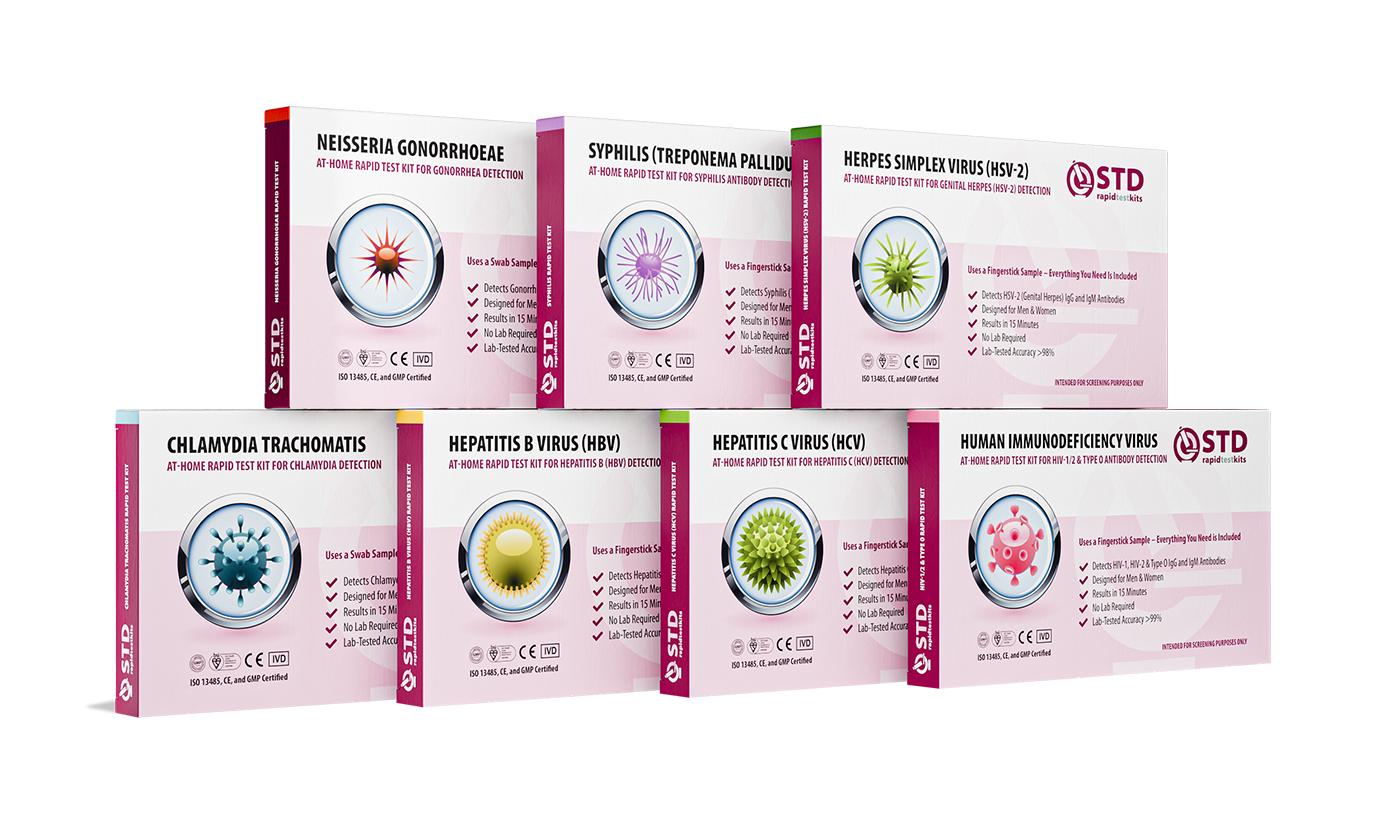
 For Men & Women
 Results in Minutes
 No Lab Needed
 Private & Discreet
Order Now $129.00 $343.00
For all 7 tests
How to Talk About Your Results Without Killing the Mood
“So… when’s the last time you tested?” isn’t exactly a sexy question. But it doesn’t have to kill the vibe. When you normalize STD talks early, and often, they become just another piece of intimacy. The key is tone, timing, and framing.
Marcelo, a 41-year-old in a four-person polycule, shares how his group handles it: “We treat testing like brushing our teeth. We share results in our Signal group. It’s not weird. It’s a way of showing we care.” His strategy? Casual first. “I’ll just say, ‘Hey, I’m planning to retest next week, want to swap results?’”
Try offering your status first, then asking: “I last tested on [date] and was negative for [list]. No new partners since, how about you?” Or: “I usually test every two months. Would you want to test together or swap results before we go barrier-free?” Framing the conversation around shared care, not mistrust, goes a long way.
And if you’re unsure how a new partner will react? That’s useful information too. Someone who avoids the topic or downplays it might not align with your health values, and it’s okay to set that boundary. You’re not being “paranoid”, you’re protecting everyone’s autonomy, pleasure, and peace of mind.
“But We’re Closed”, Why Testing Still Matters in Monogamish Polycule Models
It’s a common belief in “closed” polycules that once you’ve all tested and agreed to exclusivity within the group, you're done. But that assumes no one ever cheats, relapses on an open agreement, or makes a mistake. It assumes no new relationships, no casual slip-ups, no reactivations of latent infections like herpes.
Reality is messier. Even with high trust and emotional maturity, risk never drops to zero. HPV can lie dormant for years. Herpes can reactivate. Someone might forget a test or have a false negative. Life changes, people grow, feelings shift. That’s not a flaw, it’s human.
We once interviewed Jess, who thought her closed quad was airtight, until one member had a secret fling during a business trip. “We didn’t retest after the agreement,” she said. “We just assumed. I didn’t even think I needed to ask.” Months later, a routine pap smear flagged HPV. The lesson? Agreements are vital, but they’re not armor. Retesting, even in closed dynamics, is a kindness, not a crisis response.
Timing Is Everything: Why Window Periods Matter More in Polyamory
Testing isn’t just about whether you test, it’s about when. In polyamorous dynamics, window periods can quietly undermine even the best intentions. You might test right after a new partner and feel relieved by a negative result, only to find out weeks later that the test was simply too early to catch the infection.
Window periods are the time between exposure and when a test can reliably detect an infection. During this gap, you can feel completely fine and still pass something on. In monogamous dating, this risk is often contained. In polyamory, where connections overlap and timelines blur, early testing without follow-up can create a false sense of safety across an entire network.
Andre, 33, described it this way: “I tested five days after a threesome because I was anxious. Everything came back negative, so I didn’t retest. Six weeks later, another partner tested positive for chlamydia. We traced it back to me, but my first test just missed the window.” No one did anything wrong, but timing made all the difference.
This is why many poly-aware clinicians recommend layered testing: an early test for peace of mind, followed by a scheduled retest once the window period closes. It’s not overkill, it’s accuracy.
| Scenario | Initial Test | Follow-Up Test | Why It Matters |
|---|---|---|---|
| New partner, barrier use | 7–10 days post-exposure | 14–21 days post-exposure | Catches infections missed during early window |
| New partner, no barriers | 10–14 days post-exposure | 30–45 days post-exposure | Improves accuracy for silent infections |
| Group sex or multiple exposures | 14 days after last encounter | 6 weeks after final exposure | Accounts for staggered risk timelines |
Table 3. How window periods affect testing schedules in polyamorous scenarios.

People are also reading: Why Mississippi Leads the Nation in Congenital Syphilis, and How to Stop It
Testing Fatigue Is Real, Here’s How People Actually Manage It
One thing no one talks about enough? Testing burnout. Scheduling appointments, waiting for results, managing costs, and repeatedly having “the talk” can wear people down. In polyamory, where testing is frequent by design, fatigue can quietly lead to skipped tests or delayed follow-ups.
Naomi, 37, described hitting a wall after her third panel in two months. “I wasn’t avoiding testing because I didn’t care,” she said. “I was exhausted. Every test felt like reopening anxiety.” What helped was switching to predictable intervals and using at-home options that didn’t require time off work or awkward clinic visits.
This is where routine becomes protective. When testing is planned, every eight weeks, for example, it stops feeling like a response to fear and starts feeling like maintenance. Many people choose to align testing with paydays, calendar reminders, or shared polycule check-ins. The consistency reduces emotional load and makes conversations easier because everyone knows what to expect.
If access is the barrier, discreet at-home testing can be a game-changer. Using a reliable option from STD Rapid Test Kits allows you to test privately, on your schedule, without navigating clinics or insurance explanations. For people juggling multiple relationships, that convenience isn’t luxury, it’s sustainability.
Check Your STD Status in Minutes
Test at Home with Remedium6-in-1 STD Test Kit
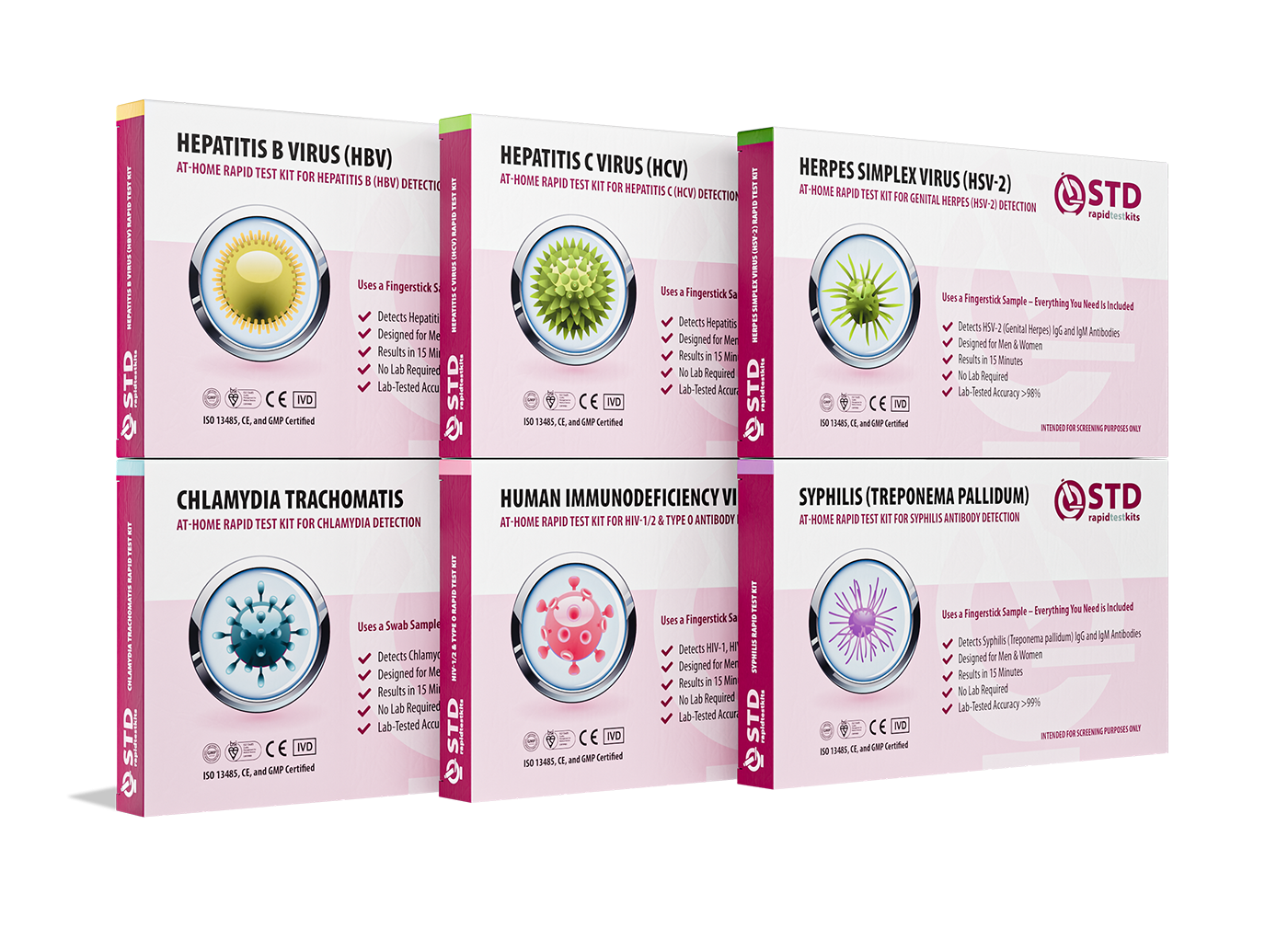 For Men & WomenResults in MinutesNo Lab NeededPrivate & Discreet
Order Now $119.00 $294.00
For all 6 tests
What Happens When Someone Tests Positive?
This is the moment everyone fears, but it doesn’t have to be catastrophic. A positive result doesn’t mean betrayal, irresponsibility, or failure. It means information. And information is what keeps polyamorous networks functioning safely.
When someone tests positive, the first step is clarity. Confirm the result if needed, especially for tests taken early in a window period. Most bacterial STDs are easily treatable, and many viral STDs are manageable with modern care. The second step is communication, calm, timely, and factual.
Elena, 29, remembers shaking while typing out a message to her partners after a positive gonorrhea test. “I thought everyone would panic or blame me,” she said. “Instead, they thanked me for telling them quickly.” Several partners tested, one caught it early, and the network paused new connections for a few weeks. No drama. Just care.
Healthy poly dynamics plan for this moment in advance. Many groups agree on what happens after a positive result: temporary barrier use, retesting windows, and pauses on new partners. When expectations are set early, a positive test becomes a logistical issue, not an emotional explosion.
If you need fast answers after a scare or exposure, an at-home option like the Combo STD Home Test Kit can help you move from panic to plan quickly, especially while waiting for confirmatory care.
FAQs
1. How often should I test if I have multiple partners?
Think of it like dental cleanings, only sexier. If you’re dating actively or have ongoing partners, testing every 1 to 3 months keeps everyone in the loop. Some people align it with new partners, some do it quarterly, and others build it into polycule rhythms like “STD check-ins on the full moon.” Do what fits your flow, but consistency matters more than perfection.
2. Is it weird to ask a new partner about their test history?
Not at all, and if it is, that’s probably a bigger flag than their last result. Try: “I usually swap test info before we hook up. Want to trade screenshots or test together?” Most people will be relieved you brought it up. If someone gets defensive or dodgy, that tells you a lot more than their test ever could.
3. What if I tested too early after a hookup?
Totally normal. Anxiety kicks in fast, but tests take time. If you tested 2–5 days after sex, that’s often too early for accurate results, especially for chlamydia, gonorrhea, or syphilis. Consider it a peace-of-mind check, not a final answer. Schedule a retest at the 2-week mark to close the window.
4. Do I really need to test if I used protection?
Condoms help, a lot, but they’re not magic. Skin-to-skin STDs like herpes and HPV can still spread even if everything stays wrapped. Plus, sometimes barriers slip, break, or get used inconsistently. Testing isn’t a punishment, it’s just a reset button that keeps your trust circle strong.
5. What if someone in my polycule tests positive?
Deep breath. It doesn’t mean anyone’s lying or reckless, it means someone got information, and that’s a gift. The move is: test yourself, pause new connections if needed, and communicate clearly. Most STDs are treatable or manageable. What matters most is how you show up after a result, not just before.
6. How do people actually keep track of all this?
Spreadsheets, Google Calendars, group chats with emojis, shared logs in apps like “Journl” or “Doxy”, there’s no one right way. Some polycules check in monthly: “Hey, anyone due for testing this week?” Others keep personal logs and update partners as needed. Make it part of your rhythm, like grocery runs or Spotify queue swaps.
7. Is at-home testing legit, or should I always go to a clinic?
At-home testing is totally legit, especially if it’s a quality kit using NAAT or antibody detection, like the ones from STD Rapid Test Kits. They're fast, discreet, and accurate when timed right. That said, always confirm any positive with a clinic test if possible, just to be sure.
8. Do people really test every time they get a new partner?
Some do. Some don’t. Many test before going barrier-free or before group events. It’s less about “rules” and more about agreements. You might say: “Before we ditch condoms, I’d love for us both to test and share results, cool?” That sets a tone of care, not control. Everyone wins when no one’s guessing.
9. What if I don’t have symptoms, do I still need to test?
Yep. Most STDs are sneakier than people think. Chlamydia and gonorrhea often show no signs, especially in people with vulvas. You could feel totally fine and still pass something along without knowing. Testing isn’t about panic, it’s about not leaving things to chance.
10. Is polyamory really riskier than monogamy?
Only if you count silence as safe. The truth? Plenty of monogamous folks don’t test unless there’s a scare. In polyamory, testing is often built into the culture, openly, regularly, and without shame. More partners doesn’t automatically mean more danger. More testing and more honesty? That’s the power move.
You Deserve Answers, Not Assumptions
Keeping your STD status up to date in polyamorous relationships isn’t about fear, it’s about care. It's about making a network where lying isn't punished, testing isn't frowned upon, and having fun doesn't mean giving up your health. There isn't a perfect formula, but you can build better rhythms, stronger habits, and clearer conversations.
If you're not sure where to start, use clarity as your starting point. Think about a regular testing schedule, be honest with your partners, and pick tools that make you feel safe without making you feel bad about it. It doesn't matter if you're on your sixth partner or your first poly experience. What matters most is that you know what you're doing, are intentional, and are ready to take care of yourself and others.
Don’t wait and wonder, get the clarity you deserve. This at-home combo test kit checks for the most common STDs discreetly and quickly.
How We Sourced This Article: We combined current guidance from leading medical organizations with peer-reviewed research and lived-experience reporting to make this guide practical, compassionate, and accurate.
Sources
1. CDC: STD Screening Recommendations
2. Getting Tested for STIs | CDC
3. STI Screening Recommendations | CDC
4. Clinical Guidance for STIs | CDC
5. Non‑monogamy: Risk Factor for STI Transmission | PubMed
6. Partnership Concurrency and Condom Use Study | NIH PMC
7. Sexually Transmitted Infections: Behavioral Counseling | USPSTF
8. STI Screening and Treatment Guidelines Compared | NCBI Bookshelf
About the Author
Dr. F. David, MD is a board-certified infectious disease specialist focused on STI prevention, diagnosis, and treatment. He blends clinical precision with a no-nonsense, sex-positive approach and is committed to expanding access for readers in both urban and off-grid settings.
Reviewed by: J. Linton, RN, MPH | Last medically reviewed: January 2026
This article is for information only and should not be used as medical advice.


