
Published: November 2025 | Last updated: May 2026 | Editorial review and quality control: Martina N.
You took the pill every day. You stayed on top of refills. You felt covered. And then a screening came back positive, and the story you told yourself about being responsible suddenly read differently. If that is where you are sitting today, the first thing worth saying out loud: this is a gap in how sex education talks about protection, not a personal failure. Hormonal birth control was designed for one job (pregnancy prevention), and the chemistry behind it does not touch the way STIs actually spread. The rest of this piece walks through what each method covers, how often to test, and how to layer protection.
Key Takeaways
- Hormonal birth control (pill, IUD, patch, ring, implant, shot) prevents pregnancy but offers zero protection against STDs. Only barrier methods, external condoms, internal condoms, and dental dams, reduce infection risk.
- If you are on the pill without condoms, the CDC recommends annual chlamydia and gonorrhea screening for sexually active women under 25, and every 3 to 6 months for anyone with new or multiple partners.
How Birth Control Works, and What It Was Never Designed To Do
Most modern birth control methods work by interrupting reproduction. The pill stops ovulation and thickens cervical mucus so sperm cannot reach an egg. Hormonal IUDs release progestin that thins the uterine lining and thickens cervical mucus. Copper IUDs trigger a local inflammatory response that is hostile to sperm. The shot, the ring, the patch, and the implant all use similar hormonal pathways.
None of these methods touch the part of the equation that matters for STDs. Infections like chlamydia, gonorrhea, syphilis, herpes, and HIV spread through skin-to-skin contact, mucous membrane contact, or bodily fluids. Hormonal contraception does not create a physical barrier between two people. It does not kill bacteria. It does not deactivate viruses. It is chemistry aimed at one specific outcome, and that is the only outcome it has been validated for.
The U.S. CDC is explicit on this point: only physical barriers reduce the risk of sexual transmission of HIV and other STIs. The pill, patch, ring, IUD, shot, and implant are all silent on infection.
Hormonal methods interrupt reproduction chemistry. Physical barriers interrupt physical contact. Only the second category addresses how infections actually spread between people.
What Actually Prevents STDs
To avoid pregnancy, you have to stop ovulation or block fertilization. To avoid an STD, you have to block the exposure itself: skin contact, mucous membrane contact, or fluid exchange. That is what physical barriers do, and it is why they are the only contraceptive category that pulls double duty.
External condoms are the most familiar option. Internal condoms (sometimes called female condoms) are pouches that line the vaginal or anal canal and reduce STI risk for both partners. Dental dams are thin sheets of latex or polyurethane placed over the vulva or anus during oral sex; they are underused, but they are the right tool for that exposure route.
No barrier is perfect. Skin-to-skin infections like HPV, herpes, and syphilis can transmit from areas a condom does not cover (the base of the shaft, the scrotum, the labia majora). Condoms still meaningfully reduce risk for these infections, and they are highly effective for fluid-borne infections like HIV, chlamydia, and gonorrhea when used correctly and consistently.
| Protection Method | Prevents Pregnancy | Protects Against STDs |
|---|---|---|
| The Pill | Yes | No |
| Hormonal IUD | Yes | No |
| Copper IUD | Yes | No |
| Implant, Shot, Patch, Ring | Yes | No |
| External Condoms | Yes (when used correctly) | Yes |
| Internal Condoms | Yes | Yes |
| Dental Dams | No | Yes (for oral sex) |
Why the Pill Can Feel Safer Than It Is
The pill solves one specific anxiety (am I going to get pregnant?), and once that anxiety is off the table, a lot of people stop thinking about protection at all. That is the trap. Pregnancy stress tends to be the loudest internal voice during sex; turn it down, and other risks get quieter too, even though those risks did not actually change.
Common rationalizations: “we are both clean,” “I have been on birth control for years,” “they would have told me if something were wrong.” Each of these treats infection like a moral category instead of a biological one. The bacteria do not know whether your cycles are stable. The virus does not care how committed you are. One unprotected encounter with someone who carries an asymptomatic infection is all it takes, and per CDC surveillance data many STIs remain asymptomatic for months or years, especially chlamydia.
Hormonal contraception is one layer of a complete approach. Adding barriers and routine screening covers the risks the pill was never designed to touch. You can run all three together without conflict, and most people who think about protection thoroughly end up doing exactly that.
Disclosure: this article is published by stdrapidtestkits.com, which sells the at-home STI testing kits referenced below. Kit recommendations here are based on fit-for-purpose for the reader’s concern.
Consistent and correct use of latex condoms is highly effective at preventing the sexual transmission of HIV and can reduce the risk of other sexually transmitted infections.
How Often Should You Test If You Are On Birth Control?
Routine STD screening should be part of your sexual health baseline. Being on hormonal birth control does not change the schedule; it just shifts the focus from monitoring for pregnancy to monitoring for infection. If anything, the absence of condoms while on the pill is a reason to test more often.
The CDC screening recommendations are clear: annual chlamydia and gonorrhea screening for all sexually active women under 25, and ongoing annual screening for women 25 and older with risk factors like new or multiple partners. Sexually active gay, bisexual, and other men who have sex with men should screen at least annually for HIV, syphilis, chlamydia, and gonorrhea, more often when there are multiple or anonymous partners. Everyone aged 13 to 64 should be tested for HIV at least once as a baseline.
The table below maps testing frequency to common scenarios. If you also have ongoing higher-risk HIV exposure (multiple partners, a partner with HIV, injection drug use), a clinician can discuss whether PrEP (pre-exposure prophylaxis) belongs in your prevention plan alongside barriers and routine screening.
| Scenario | Recommended Testing Frequency |
|---|---|
| On birth control, monogamous partner, no condom use | Every 6 to 12 months |
| On birth control, multiple partners, occasional condom use | Every 3 to 6 months |
| New partner (regardless of birth control) | Before first condom-free encounter |
| Symptomatic (discharge, pain, sores, spotting) | Right away, plus retesting at 3 months |
| After a known exposure or broken condom | Within the window period for each infection |
When You Trust Your Partner, but Not the Odds
Most people do not skip condoms out of recklessness. They skip them out of trust, which is the more dangerous failure mode because it feels reasonable in the moment. You like them. You believe them. You assume that if something were wrong, they would say so.
Trust is not a substitute for information. According to the CDC, chlamydia is often completely asymptomatic, particularly in men, who can carry and transmit it for months without noticing. Gonorrhea can present with no symptoms or with very mild ones that get mistaken for a UTI or a yeast infection. Herpes can shed virus during periods of zero visible symptoms. A partner can be entirely honest about their status and still be wrong about it.
A non-judgmental version of the testing conversation works in most relationships: “I am due for a screening, want to do it together?” or “I would feel better going condom-free if we both tested first.” Both of you get the same information at the same time, on the same Tuesday afternoon.
When to Retest After Treatment
If you have tested positive for chlamydia, gonorrhea, or trichomoniasis, the treatment itself is usually straightforward: a single dose or short course of antibiotics. The part that is less commonly discussed is what comes after.
The CDC STI treatment guidelines recommend retesting roughly 3 months after treatment for chlamydia, gonorrhea, and trichomoniasis, regardless of whether you believe your partner was treated. Reinfection is the single most common reason a previously treated person tests positive again. It happens when:
- Your partner was not treated at the same time.
- Sex resumed before the antibiotics fully cleared the infection (the CDC recommends waiting 7 days after a single-dose regimen).
- A new partner was a separate exposure source.
- A previous partner reinfected you.
Being on hormonal birth control does not reduce reinfection risk. The pill does not make antibiotics work faster, does not reduce bacterial shedding, and does not kill chlamydia. Consistent barrier use, mutual partner treatment, and the 7-day waiting period each lower the odds of a repeat positive at the 3-month mark.
The retest matters because untreated or repeatedly recurring chlamydia and gonorrhea can progress to pelvic inflammatory disease (PID), which the CDC links to infertility, ectopic pregnancy, and chronic pelvic pain. Persistent high-risk HPV infection is the primary cause of cervical cancer, which is why the HPV vaccine and routine Pap or HPV co-testing sit alongside STI screening as core prevention tools.
Wait at least 7 days after a single-dose antibiotic regimen before resuming sex. Retest at 3 months for chlamydia, gonorrhea, or trichomoniasis to catch reinfection.
Talking About Condoms When You Are Already On the Pill
The single most common objection to condom use in a hormonal-birth-control couple is some version of “But I thought you were on something.” It can land as a complaint, sometimes as an accusation. Most of the time it reflects a knowledge gap that you can fill in three sentences.
What works in practice: “I am on the pill, which handles pregnancy. Condoms handle the infections part. They are different things and I want both covered.” You are not asking permission, and you are not negotiating; you are stating a baseline.
If a partner reacts badly after that explanation, take the reaction at face value and decide accordingly.

Can Birth Control and Condoms Work Together?
Yes, and the combination is called dual protection. It is the safer-sex gold standard because each method handles a different category of risk: hormonal contraception for pregnancy, barriers for infection. They do not interfere with each other. Pill efficacy is not reduced by latex. Condom efficacy is not reduced by hormonal contraception.
The practical bonus is redundancy. If a pill is missed, the condom is still working. If a condom breaks, the hormonal method still cuts pregnancy risk down to near zero. Dual protection means a single point of failure does not cascade into both consequences at once.
For people who genuinely dislike the feel of standard condoms, options worth experimenting with include thin latex, polyisoprene (a good fit for latex allergies), well-lubricated varieties, and internal condoms positioned in advance. Each of these changes the experience meaningfully before you consider dropping barriers entirely.
A missed pill affects pregnancy protection only. A broken condom affects infection protection only. With dual protection in place, one failure on one side does not cascade into a problem on the other.
Got an STD On Birth Control? You Are Not Alone
It can feel disorienting. You did everything you were told was responsible: you took your pill, kept appointments, treated your sexual health like an adult. An STD still slipped through. The most common emotional response is shame, sometimes betrayal. Both of those reactions are understandable, and neither one is useful.
What is useful: getting treated promptly, telling recent partners so they can get treated too, and resuming protection more deliberately than before. The CDC and most state health departments offer partner notification services if you need help with that conversation; some let you notify anonymously. Retest at 3 months. Move forward.
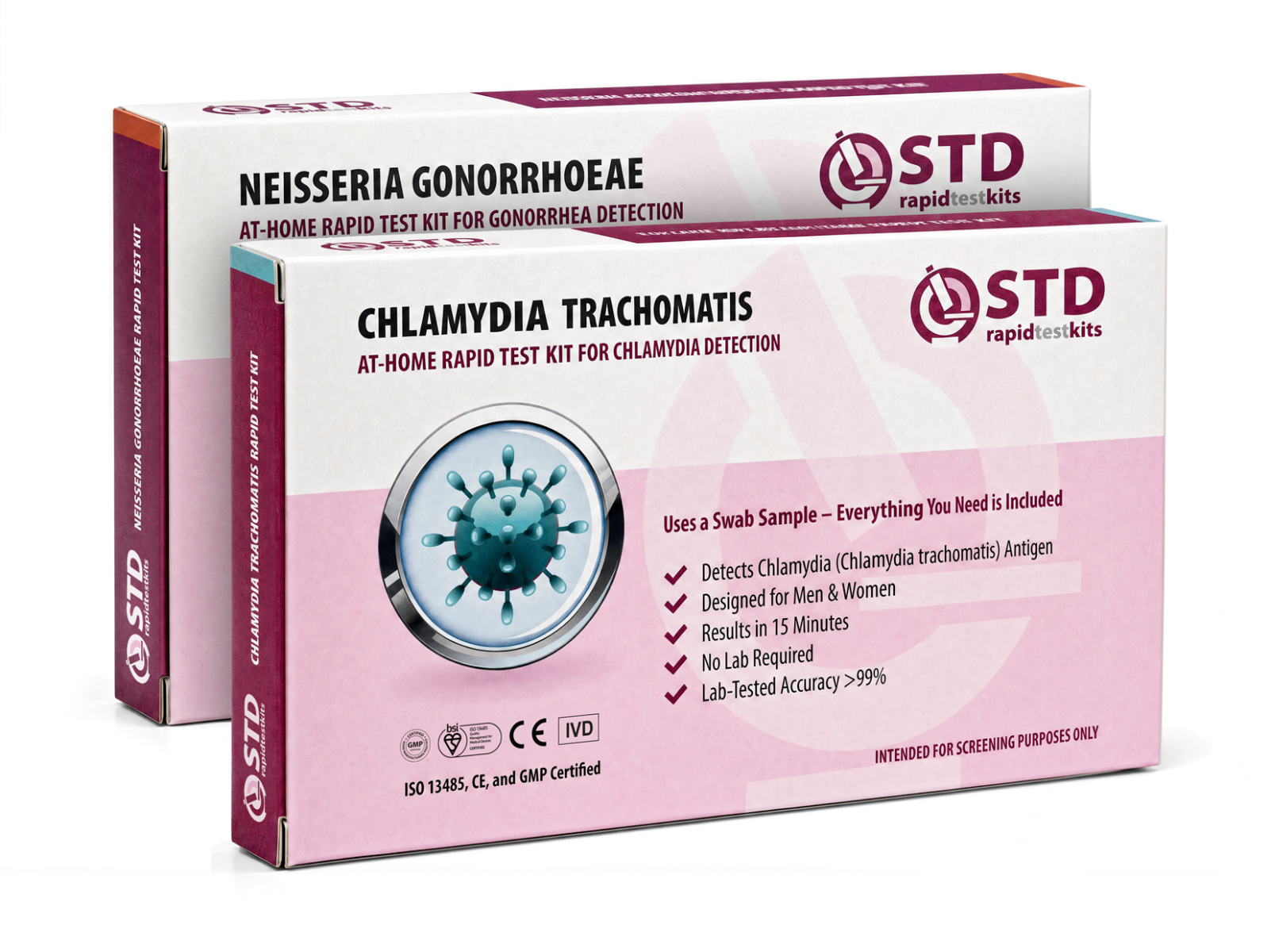
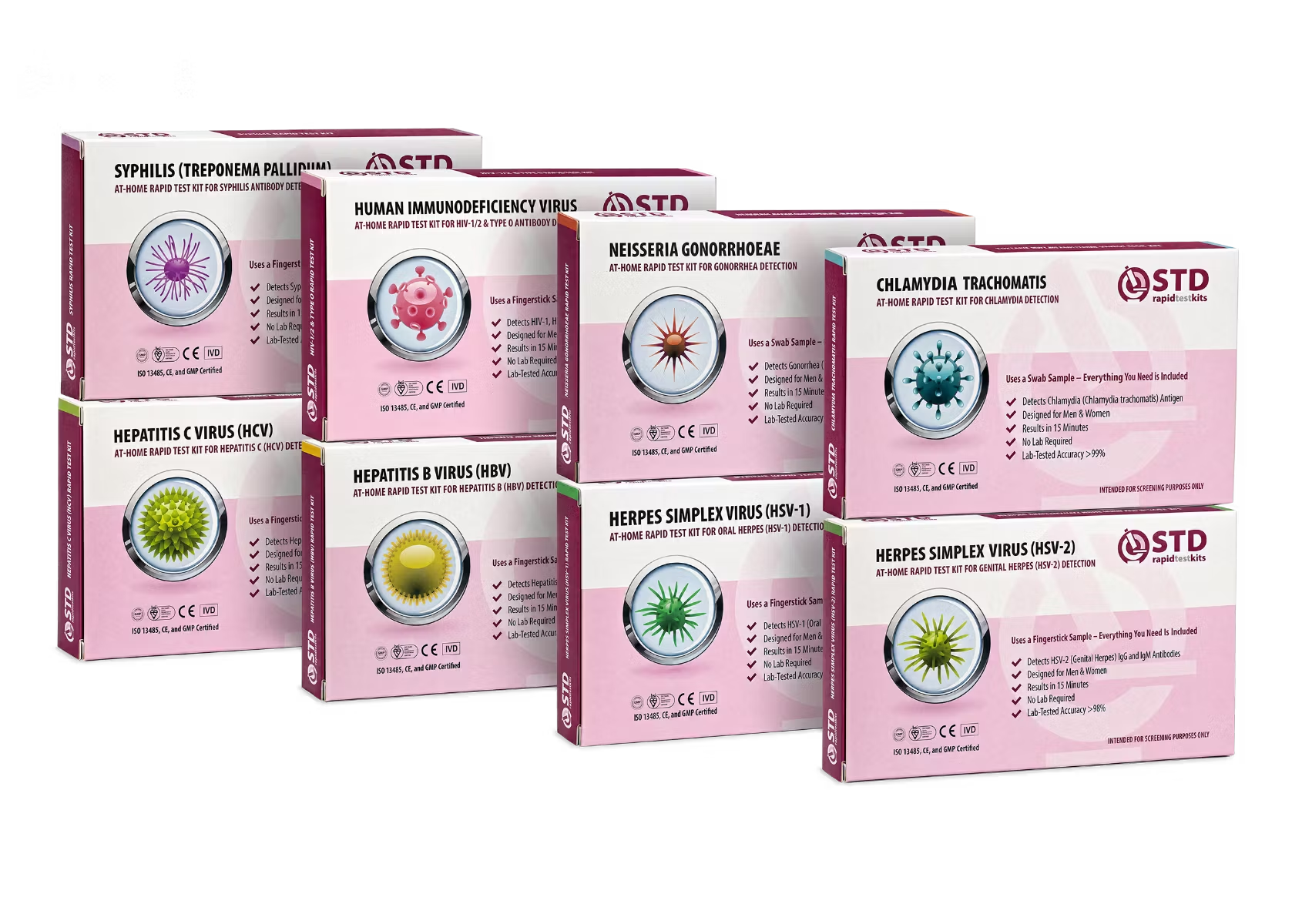
If you are still working out whether you were exposed at all, do not let uncertainty drag on. Most STIs have a defined window period (the time from exposure to when a test can reliably detect the infection). For chlamydia and gonorrhea, that window is usually 1 to 2 weeks. For HIV, it depends on the test: fourth-generation antigen-antibody tests are reliable by about 45 days post-exposure. Syphilis and herpes blood antibody tests typically need several weeks to read positive. A combo at-home test kit screens for multiple infections at once and is a reasonable starting point when you are inside those windows.
FAQs
- Can I really get an STD while on the pill?
- Yes, and it happens more often than sex-ed classes let on. The pill stops ovulation; it does not put any barrier between you and a partner during sex, and it does not kill the bacteria, viruses, or parasites that cause STIs. If you are not using condoms or another physical barrier, you are not protected against infection, regardless of how well-controlled your pregnancy risk is.
- Does an IUD protect against anything besides pregnancy?
- No. Hormonal and copper IUDs both sit inside the uterus and work locally to prevent fertilization. They do not reach the parts of the genital tract where sexual contact happens, and they do not block fluid exchange. For STI protection, you need a barrier method: external condoms, internal condoms, or dental dams for oral sex.
- My partner says they tested negative. Do I still need to test?
- It depends on when they tested and what they were tested for. Most standard STI panels do not automatically include herpes or HPV, and asymptomatic chlamydia or gonorrhea can develop between screenings. If it has been more than 3 to 6 months since their last full panel, or if either of you has had other partners since then, both of you should retest before going condom-free.
- How often should I get screened if I am not using condoms?
- For women under 25: at least once a year for chlamydia and gonorrhea per CDC guidance. For anyone with new or multiple partners (any gender): every 3 to 6 months. Annual HIV screening is the baseline for anyone sexually active, more frequent if you have known risk factors like a partner with HIV or injection drug use.
- I have no symptoms. Do I really need to test?
- Yes. Chlamydia is often completely asymptomatic, especially in men. Gonorrhea can present with no symptoms or very mild ones that look like a yeast infection or UTI. HPV is silent for years and often only surfaces on a Pap test. HIV can show as a brief flu-like illness or as nothing at all. If you have had unprotected sex since your last screening, schedule one regardless of how you feel.
- What if a condom broke and I am on the pill?
- For pregnancy, your hormonal method is still doing its job. For STIs, a broken condom means you may have had a meaningful fluid or skin-contact exposure. Get tested at the right window for each infection: roughly 1 to 2 weeks for chlamydia and gonorrhea, several weeks for HIV (depending on the test), syphilis, and herpes antibodies. If you had a high-risk exposure, talk to a clinic right away about HIV post-exposure prophylaxis (PEP), which has to be started within 72 hours of exposure.
- Is it weird to ask for condoms if I am already on birth control?
- No, it is textbook safer-sex practice. Asking for a condom while you are on the pill signals that you understand the two methods cover different risks and you want both covered. Most partners who care about your health get it immediately. If someone resists strongly against a 30-second ask, weigh that response carefully alongside everything else you know about them.
- How do I bring up STD testing without making it awkward?
- Make it mutual and routine. “I am due for my screening, want to do it together?” or “I would feel better going barrier-free if we both tested first” works in most relationships. Framed as a baseline, the conversation usually takes under a minute. If a partner reacts badly to a 30-second testing ask, the reaction itself is the information you needed.
How We Sourced This Article: Our article was constructed based on current advice from leading public-health and medical organizations (CDC and WHO), and then molded into plain English using the situations readers actually describe to us. We are a medical writing team, not clinicians, and we do not provide diagnosis or personalized clinical advice. For symptoms or treatment decisions, see a licensed provider.
- U.S. Centers for Disease Control and Prevention. Condoms and STDs fact sheet, covering the role of latex condoms in reducing HIV and other STI transmission and the explicit lack of STI protection from hormonal contraception.
- U.S. Centers for Disease Control and Prevention. Sexually transmitted infections (STIs) overview, with surveillance data on the asymptomatic nature of many STIs including chlamydia and gonorrhea.
- U.S. Centers for Disease Control and Prevention. STI screening recommendations, including annual chlamydia and gonorrhea screening for sexually active women under 25 and risk-based screening frequency for higher-risk populations.
- U.S. Centers for Disease Control and Prevention. STI treatment guidelines, including the 7-day post-treatment abstinence window and the 3-month retest recommendation for chlamydia, gonorrhea, and trichomoniasis.
- U.S. Centers for Disease Control and Prevention. About Pelvic Inflammatory Disease (PID), with clinical context on PID as a complication of untreated chlamydia and gonorrhea, plus long-term consequences including infertility, ectopic pregnancy, and chronic pelvic pain.
- World Health Organization. Sexually transmitted infections fact sheet, with global incidence figures and prevention guidance.
