






Quick Answer: Most school sex ed programs still omit key information about STD symptoms, testing timelines, and partner care, leaving millions at risk. Real prevention starts with real education.
This Isn’t Just About “The Talk”, It’s a Global Crisis
Sex education varies greatly around the world, and politics, religion, and shame often have more of an impact than science. Some countries, like Sweden and the Netherlands, have comprehensive, inclusive programs that lower the number of STDs among teens. However, many others are not up to par. Sex education is often incomplete, out of date, or completely missing in places like the US, the UK, India, and parts of Africa.
UNESCO's 2022 review found that more than 60% of the countries that were surveyed did not meet their own standards for comprehensive sexuality education (CSE). Most programs didn't go into enough detail about STD symptoms, how to test for them, or what to do if you get a positive result. Instead, they talked about abstinence, anatomy, and how to avoid getting pregnant, not how real people deal with sexual health.
Even when STDs are mentioned, they’re often framed as punishment or shame, not as common, manageable infections. That framing creates silence. And silence lets infections spread.
What Schools Teach, And What They Leave Out
To understand how badly most programs miss the mark, we looked at sex education standards and curriculums across multiple countries. Here's what we found when comparing what should be taught versus what usually is:
| STD Topic | What Schools Typically Teach | What’s Actually Needed |
|---|---|---|
| Symptoms | “Most STDs have symptoms” or general warnings about HIV/AIDS | Details on asymptomatic infections, oral and anal symptoms, discharge types, and what itching really means |
| Testing | Rarely mentioned or vaguely referred to as “seeing a doctor” | Clear info on when to test, at-home options, window periods, and retesting after exposure |
| Transmission | Usually only vaginal sex, condom-focused | Real talk about oral, anal, skin-to-skin transmission, and non-sexual pathways (e.g. herpes on shared items) |
| Partner Conversations | Almost never included | Scripts, consent language, and stigma-reducing strategies for disclosure and testing together |
| LGBTQ+ Inclusion | Often ignored or erased entirely | Inclusive education on risks and realities for all genders and orientations |
Table 1: Key areas where sex education falls short of preparing students for STD risk and prevention.

People are also reading: The Big 10: Most Common STDs Ranked by Risk, Symptoms, and How to Spot Them
When Education Fails, Confusion Fills the Gap
Samir, 22, googled “itchy bump after oral sex” at 2AM. His high school health class in South Africa didn’t cover oral transmission or HSV-1. “I thought herpes only happened to people who slept around,” he said. “I didn’t even know there were home tests.” He waited two months to get tested, by then, he had unknowingly passed the infection to someone else.
This isn’t rare. One of the biggest consequences of poor sex ed is not just fear, but delay. People delay testing because they don’t know when to do it, what symptoms matter, or how to interpret mild or non-obvious signs. Misconceptions picked up in high school, like “you can’t get chlamydia without sex” or “STDs always have symptoms”, lead to dangerous assumptions.
And those assumptions feed stigma, silence, and spread.
From Myths to Mistakes: Real STD Confusions We See Daily
At STD Rapid Test Kits, we track search terms and customer questions daily. Here are just a few of the real queries we’ve seen, almost all of which reflect gaps left by poor sex education:
| Common Question | What They Were Taught (or Not) | The Reality |
|---|---|---|
| “Can I get chlamydia from a toilet seat?” | Never addressed in class | No, chlamydia dies quickly outside the body. Direct sexual contact is needed. |
| “I tested negative at 5 days. Am I clear?” | They didn’t learn about window periods | Most tests aren’t accurate that soon, retesting at 14–21 days is often needed. |
| “My STD test was negative, but I still have symptoms” | They didn’t learn about false negatives or test types | Some infections can evade early tests or require different sample types |
| “What if I had symptoms but they went away?” | They were told “symptoms = infection,” nothing more | Many STDs have cycles or go dormant. Clearance doesn’t mean cure. |
Table 2: Real-world confusion rooted in what sex ed fails to explain about STD symptoms, testing, and transmission.
Check Your STD Status in Minutes
Test at Home with Remedium7-in-1 STD Test Kit
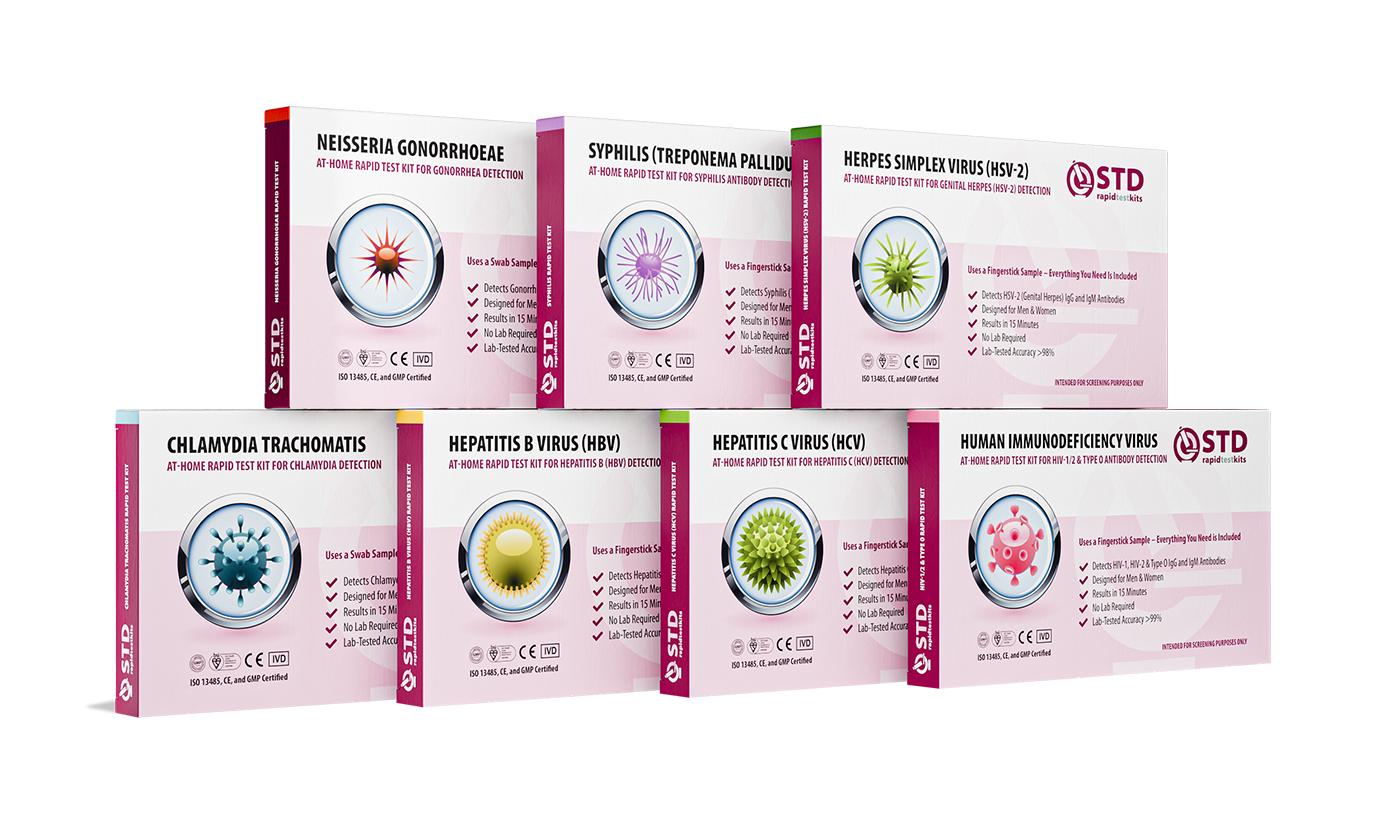
 For Men & Women
 Results in Minutes
 No Lab Needed
 Private & Discreet
Order Now $129.00 $343.00
For all 7 tests
Real Education = Real Prevention
It has been shown that comprehensive sex education (CSE) lowers the rates of STDs, delays the start of sexual activity, and encourages the use of condoms and testing. A 2021 review in JAMA Pediatrics found that programs that included honest, age-appropriate information about STDs, not just messages about not having sex, were always better at stopping infections and risky behavior.
But it’s not just about stats, it’s about empowerment. When young people understand how infections work, how testing helps, and what symptoms matter, they’re not just safer, they’re more confident, compassionate partners.
They ask before touching. They test before guessing. They treat before blaming.
Testing Should Be Taught, Not Taboo
It’s baffling how rarely testing gets mentioned in school sex ed, considering it’s the literal gateway to diagnosis and prevention. We teach about pregnancy tests, but not how to screen for herpes or syphilis or chlamydia, even though many of these infections are more common than teen pregnancies.
Imagine how many false assumptions could be avoided if students were simply taught:
- When to test (timing matters)
- How tests work (urine, swabs, blood)
- That many infections have no symptoms
- What to do with a positive result
Without this, many delay care or trust inaccurate results from testing too soon. And yet this is fixable.
If you’ve ever wondered, “Should I get tested even if I feel fine?” the answer is: probably, yes. If you’re sexually active, especially with new or multiple partners, regular screening is the responsible, stigma-breaking move.
Explore discreet test options here, or try a Combo STD Test Kit from home. Testing doesn’t have to be scary, it can be part of self-care.
What Silence Really Teaches: Shame, Stigma, and Silence
Lena, 26, didn’t talk to anyone about her persistent pelvic pain for weeks. When she finally went to a clinic, she learned she had pelvic inflammatory disease (PID) from untreated chlamydia. “I thought only people who ‘slept around’ got STDs. I was in a relationship. My school taught us to fear STDs, not understand them.”
That fear doesn’t just delay care. It shuts down conversations before they begin. Stigma grows where information is missing, and sex ed rarely addresses what it feels like to ask a partner to test, or how to respond if you test positive yourself.
Here’s what stigma often sounds like in real life:
- “If I ask to test, they’ll think I’m accusing them.”
- “I’m scared to know the results.”
- “I feel gross even bringing it up.”
- “I thought I was the only one who had this.”
These aren’t irrational fears. They’re learned responses, taught by silence. And the only way to unlearn them is with honest, inclusive, human-centered education.
Where Sex Ed Fails LGBTQ+ Youth Entirely
In many countries, including the U.S., sex ed is written for heterosexual, cisgender students. LGBTQ+ youth are often ignored, misrepresented, or actively erased from curriculums.
That means no discussion of anal sex risks, no STD testing guidance for trans people, and no acknowledgement that queer youth have sex, and deserve protection too.
Research by GLSEN shows that less than 9% of U.S. high schoolers receive sex ed that is inclusive of LGBTQ+ topics. That’s not just negligent, it’s dangerous. Men who have sex with men are disproportionately affected by syphilis, gonorrhea, and HIV, yet are rarely taught about screening guidelines in school.
One nonbinary teen put it this way: “My health teacher said ‘men and women’ like those were the only options. I just zoned out. Nothing in that room was about me.”

People are also reading: I Got Herpes and I Never Even Had Sex
What We Should’ve Been Taught Instead
If sex ed had done its job, here’s what Nyah, Samir, Lena, and probably you, would’ve heard before their first test, first partner, or first worry. Not fear tactics. Not diagrams on a projector. But actual tools for living, loving, and protecting your body and your partners’ bodies too.
You would’ve learned that herpes can be passed even when there are no sores, and that most people with it don’t even know. You’d know that chlamydia and gonorrhea are often silent, especially in people with vaginas, and that untreated, they can cause infertility or chronic pain. You would’ve heard about throat swabs. Rectal testing. At-home kits. Window periods. Partner talk.
Instead, many of us got the “if you have sex, you’ll get an STD and die” approach, or nothing at all. So we had to piece it together later, through panic Googling, awkward clinic visits, or hard lessons from symptoms that showed up too late.
But education doesn’t expire. You can reclaim it now.
Check Your STD Status in Minutes
Test at Home with Remedium6-in-1 STD Rapid Test Kit
 For Men & WomenResults in MinutesNo Lab NeededPrivate & Discreet
Order Now $119.00 $294.00
For all 6 tests
The Power of Knowing When to Test
Casey, 27, got tested five days after a one-night stand. It came back negative. Relieved, she moved on. But two weeks later, she had burning during urination and a strange sore. A follow-up test confirmed syphilis. “I didn’t know about testing windows,” she said. “If someone had just taught me that timing matters, I could’ve caught it sooner, and spared someone else the risk.”
Window periods aren’t just technical details, they’re the difference between false reassurance and true clarity. Here’s the general idea, simplified:
- Early testing (0–7 days): Might miss the infection entirely
- Ideal testing window (10–21 days): Depends on the STD and test type
- Retesting: If exposed again or symptoms develop, retest even after a negative
Most sex ed skips this completely. They say “get tested,” but not when, for what, or how often. That confusion drives delays, and makes people doubt their symptoms or assume one test equals lifetime clearance.
To be clear: testing early isn’t wrong. It can give peace of mind. But knowing when accuracy peaks lets you plan a smart retest if needed. It’s not about paranoia, it’s about power.
If You Missed the Sex Ed You Deserved, Start Here
You’re not alone if you feel like you’re playing catch-up. So many of us were given partial truths, shamed into silence, or never taught what to do beyond “don’t.”
If that’s you, here’s your re-entry ramp:
1. Start with facts. Find guides that actually talk to you, not down at you. Planned Parenthood and STD Rapid Test Kits are good starts.
2. Learn your exposure. Oral, anal, vaginal, all carry different risks. Skin-to-skin counts. Condoms reduce risk, but they’re not magic shields. Knowing your exposure helps guide which tests to take.
3. Time your test. The best time to test is 2 to 3 weeks after potential exposure, but some tests can detect earlier. Read up on window periods and plan a retest if needed. Don’t rely on “it’s been a week, I’m good.”
4. Talk to your partner(s). You don’t need perfect words, just honest ones. “I usually test every few months” or “I’d feel better if we both tested” can open the door to trust, not judgment.
5. Don’t panic if it’s positive. Most STDs are treatable. Some are manageable. All are more common than you think. Positive isn’t dirty, it’s just data. And data lets you heal and move forward.
And if your school never told you any of this? Consider this your permission slip to learn it now, with no shame, no stigma, and no apologies.
Take back control with a combo test kit, easy to use, private, and trusted by thousands who never got the education they deserved either.
FAQs
1. Why didn’t they teach us this in school?
Honestly? Politics, shame, and a deep discomfort with talking openly about sex. Many curriculums are written by people more concerned with controlling behavior than empowering students. That’s how we end up with fear-based messaging instead of real info on testing, timing, and symptoms.
2. Can I get an STD even if I used a condom?
Yup, though condoms reduce risk a lot, they’re not perfect. STDs like herpes and HPV can still spread through skin-to-skin contact. It’s like wearing shoes in the rain, you’ll be drier, but you might still get wet around the edges.
3. I tested negative, but I still feel weird down there. Now what?
You might’ve tested too early, or tested for the wrong thing. Some infections don’t show up right away, and others need a specific type of test (like a swab instead of urine). If something still feels off, trust that gut. A retest could give you answers.
4. Why is there so much shame around STDs?
Because sex ed told us STDs were punishment, not infections. It turned normal, treatable conditions into character flaws. But let’s be real: STDs don’t care if you’re “good” or “bad”, they care if you had exposure. That’s it.
5. Do I really need to test if I don’t have symptoms?
Yep, some of the most common STDs, like chlamydia, don’t show symptoms at all. You could feel totally fine and still pass it to someone else. Testing when you feel fine is actually one of the most respectful things you can do for your partners.
6. Is oral sex safe, or can you get STDs from it too?
Oral sex is still sex, and yes, it can transmit infections. Gonorrhea in the throat? Very real. Herpes from a cold sore? Also real. If your sex ed skipped this part, you’re not alone, but it’s why testing matters even without “real” intercourse.
7. How do I even bring up STD testing with a new partner?
Try something like: “Hey, I really like where this is going. I usually get tested before starting anything new, want to do that together?” Normalize it like brushing your teeth or wearing a seatbelt. Because it is.
8. I’m queer, and sex ed didn’t mention anything about people like me. Now what?
You’re right, it probably didn’t, and that’s not okay. LGBTQ+ folks often face higher STD risk, but get way less inclusive education. Check out resources like Planned Parenthood or CDC LGBTQ Health for testing info that actually fits your life.
9. How often should I be getting tested?
If you’re sexually active with new or multiple partners, every 3 to 6 months is a good rhythm. If you're in a closed relationship and both tested clean recently, you can space it out. But the moment something feels off? Test now, not later.
10. Where can I get tested without the awkward clinic drama?
Right here. STD Rapid Test Kits ships discreetly to your door, no waiting rooms, no nurse side-eye. Just answers you control, at your pace.
You Deserve Better Than Silence
You were never supposed to figure this out alone. If you weren’t taught how to recognize symptoms, when to test, or how to have safer sex, you weren’t the failure. The system was.
But you can take control now. Whether it’s testing after a new partner, checking up on an old scare, or learning how to protect someone you care about, every step you take is powerful.
Testing isn’t just about results. It’s about clarity, confidence, and care, for yourself and your partners. And if school didn’t teach you that, let this be your real health class.
This at-home combo test kit checks for the most common STDs discreetly and quickly. No awkward clinic visit. Just answers, delivered with respect.
How We Sourced This: We combined current guidance from leading medical organizations with peer-reviewed research and lived-experience reporting to make this guide practical, compassionate, and accurate.
Sources
1. WHO – What is Comprehensive Sexuality Education?
2. Guttmacher Institute – Sex and HIV Education
3. Rutgers – Teens Getting Less Sex Ed Than 25 Years Ago
4. Planned Parenthood – STDs and Safer Sex
5. UNFPA – Comprehensive Sexuality Education Overview
6. UNESCO – Comprehensive Sexuality Education: For Healthy, Informed Lives
7. ACOG – Comprehensive Sexuality Education Policy Overview
About the Author
Dr. F. David, MD is a board-certified infectious disease specialist focused on STI prevention, diagnosis, and treatment. He blends clinical precision with a no-nonsense, sex-positive approach and is committed to expanding access for readers in both urban and off-grid settings.
Reviewed by: Emily Navarro, MPH | Last medically reviewed: November 2025
This article is only for information and should not be used as medical advice.


