Published: December 2025 | Last updated: May 2026 | Editorial review and quality control: Martina N.
Hearing that a sexually transmitted infection has no cure can feel like the floor disappearing. The mind jumps to permanent damage, social fallout, a life narrowed by a single test result. In practice, the four viral STIs that medicine calls incurable look very different from that worst-case picture. Herpes, HPV, HIV, and hepatitis B all stay in the body long-term. Each one is now well within reach of modern treatment, prevention, and screening tools.
This guide walks through what each of these viruses does, how people manage them day to day, and where at-home and clinic testing fits in. None of it requires panic. Most of it just requires information.
Key Takeaways
- Herpes, HPV, HIV, and hepatitis B are the four viral STIs that current medicine cannot fully eradicate, but treatment can suppress symptoms, prevent transmission, and protect long-term health.
- Vaccines exist for HPV and hepatitis B; daily antiretroviral therapy keeps HIV undetectable and untransmittable; antivirals dramatically reduce herpes outbreaks. Knowing your status is the entry point to all of it.
Why Some STDs Cannot Be Cured (But Can Still Be Controlled)
The word incurable carries a heavy load, but in medicine it has a narrow meaning. Viral STIs like herpes and HIV integrate into the body’s own cells, including nerve tissue and immune cells. Removing every trace of that genetic material is beyond what current medicine can do.
Bacterial infections work differently. Antibiotics can clear chlamydia, gonorrhea, or syphilis because bacteria live and reproduce outside human cells. Viruses replicate inside our cells, which makes them much harder to eliminate without harming the host along with the pathogen.
What medicine can do, and does very effectively, is hold these viruses in check. Antiviral medications can suppress outbreaks, lower viral load, and reduce transmission risk. For HIV, treatment can drive the virus to undetectable levels in the blood, which means it cannot be passed to sexual partners. For hepatitis B, antivirals protect the liver from long-term damage.
Clinicians increasingly speak of these conditions as manageable chronic infections rather than terminal diagnoses.
Antibiotics clear bacterial STIs like chlamydia, gonorrhea, and syphilis because bacteria live outside human cells and can be killed without harming the host. Viruses replicate inside our own cells, so eliminating them without damaging the host is far harder. That biology is the reason herpes, HPV, HIV, and hepatitis B stay in the body long-term, while bacterial STIs can be cured outright with the right antibiotic course.
The Four Most Common Incurable STDs
Many sexually transmitted infections exist worldwide, but four viral infections are usually identified as the primary lifelong STIs. Each behaves differently in the body, and each has its own combination of prevention, screening, and treatment.
| STD | Type of Virus | Primary Symptoms | Treatment Approach |
|---|---|---|---|
| Herpes (HSV-1 / HSV-2) | Herpes simplex virus | Blisters, sores, itching; many cases asymptomatic | Antiviral medication to control outbreaks and reduce transmission |
| HPV | Human papillomavirus (200+ strains) | Genital warts or no symptoms; certain strains linked to cancers | Vaccination, screening, wart removal |
| HIV | Human immunodeficiency virus | Early flu-like symptoms, then immune decline if untreated | Antiretroviral therapy (ART) to undetectable viral load |
| Hepatitis B | Hepatitis B virus | Fatigue, nausea, jaundice; often silent | Vaccination, antiviral treatment, monitoring for chronic cases |
What are the 4 incurable STDs and how are they managed?
The four most commonly listed lifelong STIs are herpes (HSV-1 and HSV-2), human papillomavirus (HPV), HIV, and hepatitis B. All four are viral, so the body cannot fully eliminate them once infected. Each has effective management: daily antivirals for herpes, vaccination plus regular screening for HPV, antiretroviral therapy (ART) that suppresses HIV to undetectable levels, and antivirals plus monitoring for chronic hepatitis B. Vaccines prevent HPV and hepatitis B before exposure, and pre-exposure prophylaxis (PrEP) reduces the risk of acquiring HIV from sex by about 99% when taken as prescribed.
Herpes: The Infection Many People Have Without Knowing
Herpes is one of the most misunderstood infections in sexual health. Two related viruses cause it: HSV-1 and HSV-2. HSV-1 is the strain most often associated with cold sores around the mouth, while HSV-2 is more commonly linked to genital outbreaks. Both can appear in either location; the visual pattern of an outbreak depends as much on where the virus was first introduced as on which strain is involved.
For many people, herpes stays quiet. Some experience clusters of small painful blisters that crust over within a week or two. Others carry the virus for years without ever recognizing symptoms. The CDC notes that most people with genital herpes do not know they have it, partly because outbreaks can mimic razor irritation, ingrown hairs, or yeast infections (CDC: About Genital Herpes).
After infection, HSV travels along nerve fibers and stays dormant in nerve cells. Reactivation can be triggered by stress, illness, fatigue, hormonal shifts, or sometimes nothing identifiable. Antiviral medications such as acyclovir or valacyclovir reduce both the frequency and severity of outbreaks. Daily suppressive therapy can lower the risk of passing the virus to a partner when combined with condom use and avoidance of sex during active outbreaks. Pregnant patients with active genital outbreaks near delivery face a small risk of neonatal HSV transmission, which is why clinicians commonly offer suppressive therapy in the third trimester and review delivery options.
One practical reality: HSV-1 is extremely common. The World Health Organization estimates that about two-thirds of the global population under age 50 carries HSV-1, often acquired in childhood through ordinary contact like kissing or sharing utensils.
Herpes at a Glance
- WHO estimates about two-thirds of the global population under 50 carries HSV-1, most acquired in childhood through non-sexual contact.
- First outbreaks typically heal within 2 to 4 weeks; recurrences are usually shorter and milder than the initial episode.
- Daily suppressive antivirals (acyclovir or valacyclovir) substantially reduce outbreak frequency and lower transmission risk to a partner.
HPV: The Most Common STD on Earth
If herpes is misunderstood, HPV is often invisible. Human papillomavirus is a family of more than 200 related viruses. Some strains cause genital or skin warts, while others are linked to cancers of the cervix, anus, throat, vulva, vagina, and penis.
Most HPV infections cause no noticeable symptoms. The immune system clears the majority of HPV infections within one to two years on its own (CDC: Genital HPV Infection). What makes HPV concerning is not that any single infection is dangerous, but that persistent infection with certain high-risk strains can drive cell changes that develop into cancer over years or decades.
That is why doctors rarely talk about curing HPV. They focus on managing its consequences: removing visible warts when they appear, screening for cell changes through Pap and HPV tests, and preventing high-risk strains through vaccination.
The HPV vaccine is recommended by the CDC for routine vaccination through age 26 and via shared clinical decision-making through age 45. It protects against the strains responsible for most HPV-related cancers and most cases of genital warts. For people already exposed, regular cervical screening catches abnormal cells long before they become dangerous.
HPV is so common that nearly all sexually active men and women get it at some point in their lives.
HIV: From Diagnosis to Manageable Condition
Not long ago, hearing the words HIV positive often meant a short and difficult future. In the first decade of the epidemic, treatment options were limited and outcomes were severe. Modern medicine has completely changed that picture.
HIV attacks CD4 cells, which coordinate the immune system. Without treatment, the virus gradually weakens immune defenses and can progress to AIDS over many years. With treatment, that progression is no longer the default path.
Antiretroviral therapy (ART) suppresses HIV replication. People who start ART and stay on it can drive their viral load to undetectable levels, where standard blood tests can no longer measure the virus. The World Health Organization confirms that people on effective ART with sustained undetectable viral loads do not transmit HIV sexually (WHO: HIV and AIDS Fact Sheet). With consistent ART during pregnancy and delivery, vertical transmission from a pregnant parent to baby has also fallen to near zero in settings with full treatment access.
People on effective HIV treatment with a sustained undetectable viral load cannot transmit HIV through sex. This finding, summarized as U=U, is endorsed by the CDC, the WHO, and major HIV organizations worldwide. It is one of the most significant breakthroughs in modern sexual-health messaging.
Hepatitis B: A Liver Infection That Often Goes Unnoticed
Hepatitis B is a viral liver infection that spreads through blood, sexual contact, and from parent to child during birth. Unlike many STIs that affect skin or reproductive tissue, hepatitis B targets the liver directly.
Many adults who contract hepatitis B experience mild symptoms or none at all. When symptoms do appear, they can include fatigue, loss of appetite, nausea, abdominal discomfort, and jaundice (a yellowing of skin and eyes). For most healthy adults, the immune system clears the infection within about six months.
When hepatitis B becomes chronic, the focus shifts to protecting liver health. Long-term complications can include liver scarring (cirrhosis) and liver cancer. Antiviral medications suppress viral replication and help prevent these outcomes. The WHO estimates that around 254 million people worldwide live with chronic hepatitis B (WHO: Hepatitis B Fact Sheet).
Vaccination changes the picture entirely. The hepatitis B vaccine is highly effective at preventing infection when the full series is completed, which is why many countries now include it in routine childhood immunization schedules. New infections among younger generations have dropped substantially as a result.
The WHO estimates roughly 254 million people worldwide are living with chronic hepatitis B. The hepatitis B vaccine, given as a multi-dose series, is highly effective at preventing infection and is now part of routine childhood immunization in most countries. New infection rates among vaccinated generations have dropped substantially as a result.
Testing Matters Even When Symptoms Are Quiet
One of the trickier features of lifelong viral STIs is that symptoms often do not show up right away, or at all. Someone can carry an infection for months or years without realizing it. Routine testing is how that gap closes.
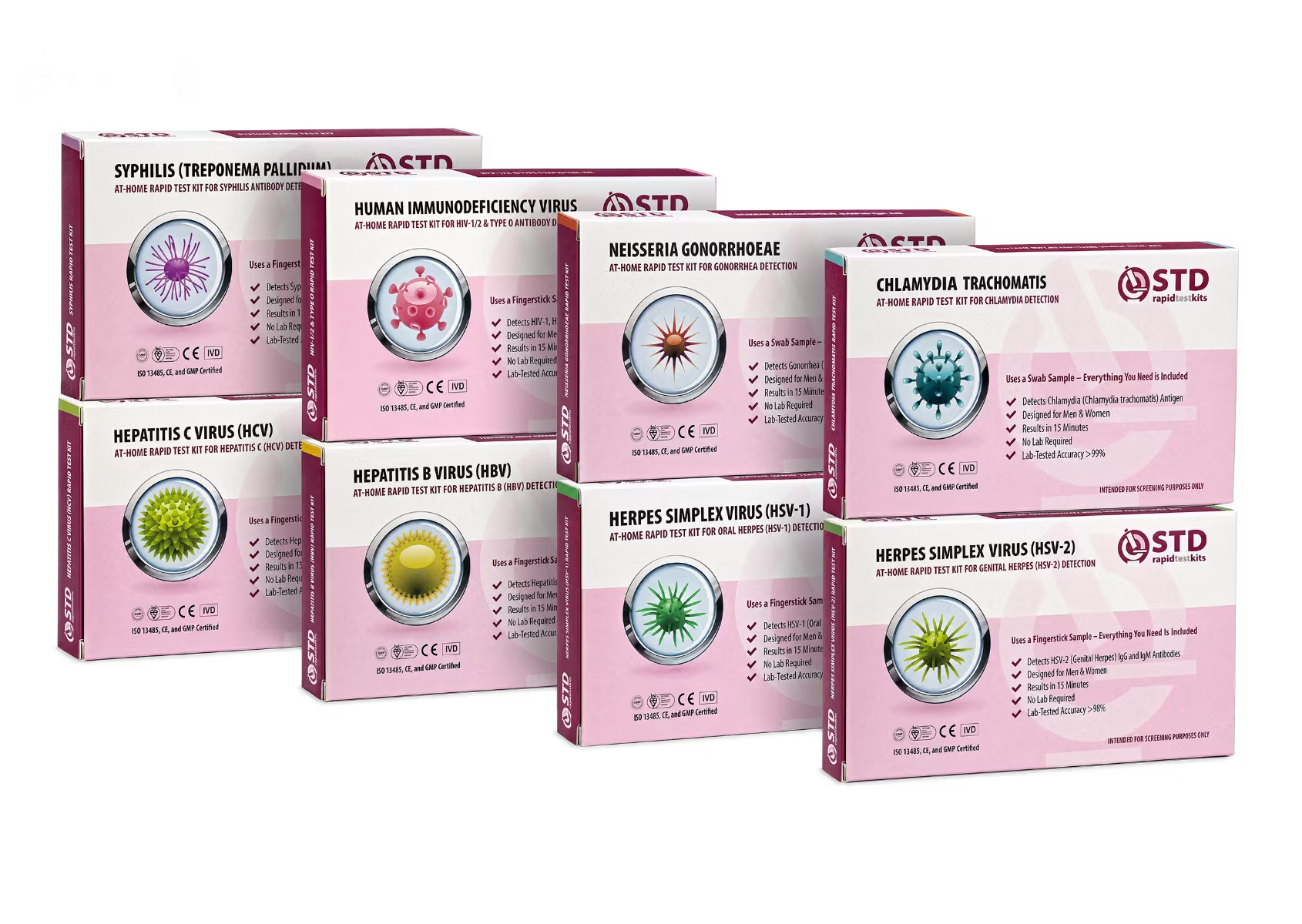
Screenings give people accurate information about their health and the ability to make informed choices about treatment, partners, and timing. Many people choose to test privately at home, which removes scheduling friction and adds privacy. At-home rapid kits use lateral-flow chemistry rather than the lab-based NAAT or PCR processes used in clinical settings. The two are complementary: lab tests offer higher analytical sensitivity, and rapid kits offer speed and accessibility for initial screening.
Confirmation testing through a clinical lab is the standard follow-up after a positive home result. A negative home result during the window period for a recent exposure may also need to be repeated later, since rapid tests cannot detect very recent infections.
How People Actually Live With Lifelong STDs
The emotional weight of a lifelong diagnosis tends to be heavier than the medical weight. People worry about relationships, stigma, fertility, dating, and how they will feel from day to day.
After the initial shock, most people find that daily life looks remarkably similar to how it did before. A person managing herpes might take a daily antiviral or treat outbreaks as they appear; someone with HIV usually takes one pill each morning; for many people with HPV, routine screening becomes the only ongoing commitment.
The biggest shift is often in perspective rather than in lifestyle. Many people become more proactive about their health, more direct in conversations with partners, and more attentive to what their body is telling them.

How Treatment Changes the Story
A common belief is that there is nothing to be done once someone has a lifelong viral STI. The reality is the opposite. Ongoing treatment is the single biggest factor in how someone lives with these infections and in whether they pass them to others.
| Infection | Primary Treatment | What Treatment Does |
|---|---|---|
| Herpes | Antiviral medications (e.g., acyclovir, valacyclovir) | Reduces outbreak frequency and severity, lowers transmission risk |
| HPV | Vaccination, screening, wart treatment | Prevents high-risk strains, detects abnormal cells early, removes visible warts |
| HIV | Antiretroviral therapy (ART) | Suppresses virus to undetectable levels; eliminates sexual transmission risk |
| Hepatitis B | Antiviral treatment, monitoring, vaccination for prevention | Protects liver, controls viral replication, prevents chronic complications |
Testing Windows: When to Check Your Status
Another confusing aspect of STI testing is timing. After an exposure, there is a period called the window period during which a test cannot reliably detect the infection. Doctors recommend testing on a schedule that accounts for these windows, since testing too soon can produce a false negative even when the virus is present.
| Infection | Typical Detection Window | Testing Method |
|---|---|---|
| Herpes (HSV-2 antibody) | About 4 to 12 weeks (sometimes longer) | Blood antibody test, or PCR swab of an active lesion |
| HPV | Varies; often months | Cervical Pap test or HPV DNA test |
| HIV (4th-generation antigen/antibody) | About 18 to 45 days | Antigen/antibody blood test; rapid antibody tests typically 23 to 90 days |
| Hepatitis B (surface antigen) | About 3 to 9 weeks | Blood test for HBsAg |
Confirming a Result
Window-period guidance helps people avoid both unnecessary worry after an exposure and false reassurance from a too-early test. If a first test is negative but the exposure was recent, retesting after the relevant window closes is the standard recommendation. Each kit’s instructions for use will state the validated window period for that specific assay; if the figure in the table above conflicts with the kit’s label, follow the label.
The Role of Honest Conversations With Partners
One of the most intimidating parts of a lifelong STI diagnosis is figuring out how to tell a partner. People often picture worst-case reactions. The conversation usually goes better than expected, especially when it starts with facts rather than apologies.
When the explanation includes what the infection is, how it is treated, and what specific steps lower transmission risk, the conversation tends to shift toward shared decision-making rather than fear. Couples where one partner has HIV and the other does not, sometimes called serodiscordant or mixed-status couples, maintain healthy relationships for decades when treatment and prevention are consistent.
The same applies to herpes. Many couples manage it by avoiding sexual contact during outbreaks, using condoms, and considering daily suppressive therapy when one partner has more frequent outbreaks. Once both partners understand what the virus actually does and what tools control it, the conversation often becomes calm and practical.
How Mixed-Status Couples Manage Risk
- Serodiscordant HIV couples: the partner with HIV stays on ART to maintain undetectable viral load (eliminates sexual transmission risk), and the HIV-negative partner can layer in daily oral PrEP or long-acting injectable PrEP for an additional ~99% reduction in acquisition risk.
- Herpes-discordant couples: avoid sex during active outbreaks, use condoms between outbreaks, and consider daily suppressive valacyclovir or acyclovir for the partner with HSV, which lowers the chance of asymptomatic shedding and transmission.
Reducing Risk and Protecting Your Health Going Forward
After learning about lifelong STIs, the natural next question is how to lower the risk of getting them. No single strategy works for everyone, and prevention is best understood as a layered set of choices rather than a single rule.
Condoms remain one of the most accessible barriers, reducing contact with infected fluids and skin. For infections that spread primarily through skin-to-skin contact (HSV and HPV), condoms reduce risk significantly but do not eliminate it, since the virus can be present on areas the condom does not cover. Avoiding sexual contact during active outbreaks adds another layer of protection for herpes.
Vaccination is the most powerful prevention tool currently available. HPV and hepatitis B vaccines have substantially reduced new infections in countries where they are part of routine schedules. For younger people, vaccination provides long-term protection against the strains responsible for the most serious complications. For HIV, daily oral PrEP and long-acting injectable PrEP (cabotegravir, brand name Apretude) reduce risk of acquisition by roughly 99% when used as prescribed (CDC: Preventing HIV with PrEP).
Routine testing rounds out the prevention picture. People who feel completely healthy still benefit from periodic screening, since several of these infections stay silent for long stretches.
Three Prevention Layers Worth Stacking
- Barrier protection: condoms reduce risk substantially for HIV and hepatitis B; they lower (but do not eliminate) risk for skin-contact viruses like HSV and HPV.
- Vaccination: HPV and hepatitis B vaccines prevent the strains responsible for most associated cancers and chronic infections.
- PrEP plus routine testing: oral or long-acting injectable PrEP cuts sexual HIV acquisition risk by about 99% when used as prescribed; periodic screening catches silent infections early.
Common Myths About Incurable STDs
Misinformation moves fast online, especially when topics involve sex and health. Several persistent myths about lifelong STIs continue to drive unnecessary fear and stigma. The three below come up most often in clinic conversations and online forums.
Myth 1: An incurable STI ends your relationships or sex life. Reality: many couples navigate these infections together for years without significant disruption. Treatment and open communication keep transmission risk low.
Myth 2: You will always know if you are infected. Reality: many people experience few or no symptoms. HPV often shows no signs at all. Herpes can stay dormant for long periods. HIV may produce only mild flu-like symptoms during acute infection, then go quiet for years. Hepatitis B is sometimes detected only through routine blood work.
Myth 3: People with lifelong STIs are irresponsible. Reality: anyone who has sex can acquire these viruses. Many people contract them from a single partner, sometimes from a partner who did not know they were infected.
You Deserve Answers, Not Anxiety
“Incurable STD” lands hard when it is the first thing someone hears. The mind tends to jump to the worst possible scenarios. Most of those scenarios do not match what these infections actually look like in daily life.
People living with herpes, HPV, HIV, or hepatitis B continue to build relationships, careers, and families. Medicine today focuses on control rather than cure, and in many cases that control is highly effective. Vaccines prevent some of these infections entirely; treatment makes the others nearly invisible in day-to-day life.
If your status is unclear, testing replaces uncertainty with information. Knowledge is the first step in any of the management plans described above, and often the most important.
Three Concrete Next Steps
- Get vaccinated if you are eligible: the HPV vaccine (routine through age 26, shared clinical decision-making through age 45) and the hepatitis B vaccine series prevent two of these four infections outright.
- Test to know your status: a clinic blood draw or a private at-home rapid kit gives you accurate information instead of guesswork, and routine screening catches silent infections early.
- Start (or stay on) treatment if you test positive: antivirals and ART control symptoms, lower transmission risk, and protect long-term organ health (most clearly, undetectable HIV viral load means the virus is not sexually transmissible).
FAQs
- What are the four incurable STDs?
- Incurable means the virus stays in the body permanently; it does not mean the infection goes untreated. The four lifelong viral STIs in this category are herpes (HSV-1 and HSV-2), HPV, HIV, and hepatitis B. Concretely: valacyclovir cuts the frequency and length of herpes recurrences and lowers the chance of passing the virus to a partner; the nine-strain HPV vaccine blocks the high-risk types behind most HPV-related cancers and most genital warts; antiretroviral therapy drives HIV viral load below the threshold standard blood tests can measure (which also eliminates sexual transmission); and antiviral treatment slows the liver damage that chronic hepatitis B can otherwise cause over decades.
- If an STD is incurable, will I always feel sick?
- Usually not. Most people with these infections feel completely normal most of the time. Herpes may cause occasional outbreaks, HPV often causes no symptoms at all, and people with HIV on treatment generally feel healthy. Many people are aware of the infection only during routine check-ups or daily medication.
- How common is herpes really?
- Very common. The World Health Organization estimates that about two-thirds of the global population under 50 carries HSV-1, often acquired in childhood through casual contact like kissing. Genital herpes (HSV-2, or HSV-1 in the genital area) is also widespread, and many people do not know they have it because the symptoms can be mild or absent.
- Can someone with HIV have a normal life expectancy?
- Yes. With consistent antiretroviral therapy, people with HIV can expect a near-normal life expectancy and a similar quality of life. When ART brings the viral load to undetectable levels, the virus cannot be sexually transmitted to partners. This is the U=U finding endorsed by the CDC, WHO, and major HIV organizations.
- Does HPV mean someone will get cancer?
- No. Most HPV infections never lead to cancer; the immune system clears the majority of them within about two years. Certain high-risk strains can cause cell changes over time, which is why screenings like Pap tests and HPV tests exist. The goal of screening is to catch abnormal cells early, before they cause harm.
- Is hepatitis B preventable?
- Yes, and that is the most encouraging piece of the picture. The hepatitis B vaccine is highly effective at preventing infection when the full series is completed. Many countries include it in routine childhood immunization schedules, which has substantially reduced new infections among younger generations.
- How do most people learn they have one of these infections?
- Sometimes through visible symptoms, but often through routine testing. Someone might notice a sore and get a swab test, or they might learn their status during a standard sexual-health screening or blood draw. Plenty of people discover an infection by accident during an unrelated check-up.
- Should I test if I feel completely fine?
- Yes. Many STIs, including all four lifelong viral ones, can stay quiet for months or years. Testing is not about assuming something is wrong; it is about knowing your status so that you can act early if needed and skip the worry if results are clear.
How We Sourced This Article: This guide draws on current public-health guidance from the U.S. Centers for Disease Control and Prevention, the World Health Organization, and major teaching-hospital resources, plus the FDA-cleared labeling of the at-home testing technologies referenced. Where specific figures are quoted, the source is linked inline. The article is editorial, not personal clinical advice; consult a licensed clinician for any individual decision.
- U.S. Centers for Disease Control and Prevention. About Genital Herpes: transmission, symptoms, and the role of asymptomatic shedding.
- U.S. Centers for Disease Control and Prevention. Genital HPV Infection Fact Sheet: prevalence, immune clearance, cancer links, and vaccination recommendations.
- World Health Organization. HIV and AIDS Fact Sheet: transmission, antiretroviral therapy, U=U, and global epidemiology.
- World Health Organization. Hepatitis B Fact Sheet: chronic infection statistics, transmission routes, vaccination, and treatment.
- World Health Organization. Herpes Simplex Virus Fact Sheet: HSV-1 and HSV-2 prevalence, transmission, and clinical course.
- U.S. Centers for Disease Control and Prevention. Preventing HIV with PrEP: oral and injectable PrEP effectiveness (about 99% reduction in HIV from sex when taken as prescribed).
- U.S. Centers for Disease Control and Prevention, National Prevention Information Network. Human Papillomavirus (HPV) Infection Basics: prevalence among sexually active adults.
