






Quick Answer: If you tested positive for gonorrhea, confirm your result if needed, avoid sex immediately, begin treatment as soon as possible, and notify recent partners, preferably within 24 hours. Don’t panic. It’s curable.
Hour 0 to Hour 1: Breathe, But Don’t Dismiss It
Let’s set the scene. You’re in your car, keys still in the ignition, parked outside the pharmacy. You just opened the envelope or read the rapid test instructions. There’s a tightness in your chest, maybe a bit of heat in your cheeks. You want to throw the test away and pretend it didn’t happen. This is the moment where many people ghost the problem entirely. But here’s the truth: gonorrhea is 100% treatable. What matters most right now is how you respond in the next few hours.
Give yourself five minutes. Breathe. Say out loud, “Okay, I’ve got this. I can deal with this.” Then, take stock of a few key things:
Did you use an at-home rapid test? If yes, make sure you followed the instructions exactly. Faint lines can be misleading, and reading the results after the recommended window can give false positives. According to the CDC, confirmatory testing is a best practice if your result was at-home and unexpected [CDC Gonorrhea Guidelines].
If your test came from a clinic or lab (NAAT/PCR), the result is considered highly accurate. No need to retest unless you’ve had recent exposure post-testing or the sample collection timing was early in the window period.
Next step? Plan your treatment, but don’t rush blindly. You’ve got time. And yes, that includes time to text a trusted friend or partner if you need a moment to vent.

People are also reading: Is That Faint Line a Positive Chlamydia Test? What It Really Means
Hour 1 to Hour 3: Make Sure You Read the Test Correctly
Many people misread rapid test kits in a panic. Shaky hands, anxious eyes, it’s easy to miss a line or misinterpret the window. Let’s pause for a moment and make sure that result was legit. If your result came from a home test, double-check the kit expiration date, timing instructions, and read window. Was it read within 10 minutes? Did you see two full lines in the control and test zones?
If it’s a faint second line and you’re unsure, compare the result to the photo guide that came with your kit. Still confused? Take a photo and call the manufacturer’s support line. Or, repeat the test using a new kit and clean collection process. Retesting within the hour is valid for most lateral flow tests as long as your urine or swab sample was freshly collected.
If you used a NAAT test from a lab, your result came via email or patient portal. These tests detect gonorrhea DNA and are considered the gold standard. If it says "positive," there’s very little chance it’s wrong. What you do next is more important than second-guessing the science.
Hour 3 to Hour 6: Contact a Medical Provider, Yes, Even If You Feel Fine
This is when many people freeze. You might be thinking, “I don’t have any symptoms, so maybe it’s not serious.” Or worse, “I’ll wait and see if it clears on its own.” But asymptomatic gonorrhea is common, especially in vaginal, rectal, or throat infections. Left untreated, it can lead to pelvic inflammatory disease (PID), infertility, or increased HIV risk. The infection doesn’t care if you feel normal.
Here’s the good news: Treatment is straightforward. The CDC currently recommends a single intramuscular dose of ceftriaxone (500 mg) for uncomplicated gonorrhea. Some clinics also prescribe oral azithromycin if there’s concern for co-infection with chlamydia. You can access treatment from:
- Your local urgent care or sexual health clinic
- A telehealth service offering STI treatment
- A mail-order prescription service (if confirmed by a provider)
Pro tip: Tell the provider your result type (rapid vs. lab), whether you’ve had symptoms, and when your last possible exposure was. This helps them tailor your treatment safely. If in-person care isn’t an option, many telehealth providers will prescribe antibiotics after a video visit and can ship them discreetly to your home.
Table 1: Gonorrhea Treatment and Testing Snapshot
| Category | Details |
|---|---|
| Test Accuracy | NAAT/PCR = 95–98% accuracy; Rapid test = ~85–90% when used correctly |
| Treatment | Single intramuscular dose of 500mg Ceftriaxone (per CDC) |
| Symptom Delay | Up to 10 days, or may be silent entirely (especially in rectal or throat infections) |
| Reinfection Risk | High if partner(s) are untreated; condomless sex within 7 days post-treatment |
| Retest Timing | Recheck after 3 months, or sooner if symptoms return or new exposure occurs |
Figure 1. Summary of gonorrhea testing and treatment facts. Data sourced from CDC and peer-reviewed STI treatment guidelines.
Hour 6 to Hour 12: Hit Pause on Sex, Even If You Feel Fine
This may feel obvious, but it needs to be said. Do not have sex, of any kind, after a positive test until treatment is complete and any partners are treated, too. Gonorrhea can be passed through oral, vaginal, or anal sex, even with fingers or toys if fluids are shared. And condoms? They help, but they’re not foolproof, especially if used inconsistently or incorrectly.
Let’s paint a picture: Taylor, 27, had a new partner a few weeks ago and used a home test after feeling off. The result was positive. But she didn’t feel sick and figured she'd wait a few days before seeing a doctor. That night, she hooked up with someone new, figuring the risk was low. A week later, her symptoms worsened and her new partner texted saying they had symptoms, too.
This is how reinfection and community spread happen. You’re not dirty or broken, but you are responsible. Holding off on intimacy for a few days is part of breaking the chain and protecting people you care about.
If your partner(s) don’t know their status or haven’t been treated, consider yourself still at risk, even if you get treatment. Reinfection is common, especially within the first few months.
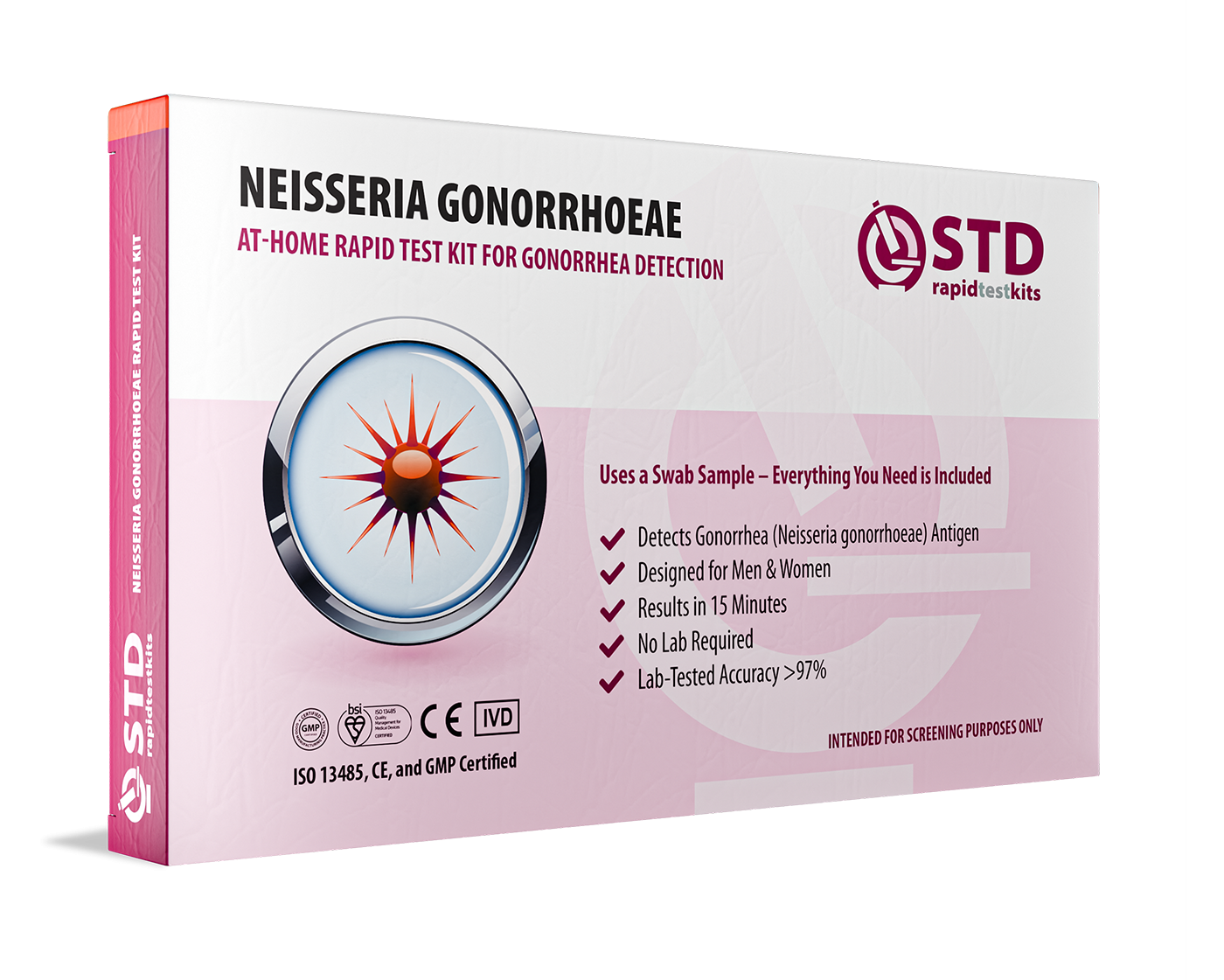
Still unsure what to do next? STD Rapid Test Kits offers discreet, at-home combo kits and treatment navigation so you’re not left hanging. You can explore test options or use our partner notification resources to make the next steps easier.
Check Your STD Status in Minutes
Test at Home with RemediumGonorrhea Test Kit
 For Men & Women
 Results in Minutes
 No Lab Needed
 Private & Discreet
Order Now $33.99 $49.00
Hour 12 to Hour 18: Tell the People Who Need to Know
This might be the hardest part of your day, harder than seeing the test result, harder than booking treatment. Because now it’s not just about your body. It’s about other people’s safety, your reputation, maybe even your relationship. But here’s the truth: telling your partners is an act of care. Not shame. Not blame. Care.
If you had sexual contact with someone in the past 60 days, oral, anal, vaginal, or anything involving genital fluids, they deserve to know. That’s not about punishment or guilt. It’s about preventing untreated spread and helping them avoid long-term damage, too.
Jules, 31, put off telling their ex-girlfriend for five days. “I kept making excuses, she probably already knew, she wouldn’t answer me anyway. But when I finally texted her, she said thank you. She was scared too and didn’t want to ask.” This happens more than you think. Shame blocks truth, and truth gets delayed. But the longer you wait, the more complicated it gets.
You don’t have to write a novel. You don’t have to apologize for being a human who had sex. You can use direct language, like: “Hey, I tested positive for gonorrhea. You might want to get tested too.” That’s enough.
If direct contact isn’t possible or safe, there are anonymous notification services available in many countries. Some clinics will help notify past partners without revealing your identity. There’s no one-size-fits-all method, but not telling at all isn’t the move.
Table 2: Ways to Notify Past Partners About Gonorrhea Exposure
| Notification Method | How It Works | Pros & Considerations |
|---|---|---|
| Direct Text or Call | You message them personally and share the diagnosis. | Fast and honest; emotionally hard but very effective. |
| Anonymous SMS Services | Sites like TellYourPartner.org send anonymous messages. | Discreet; avoids confrontation. May be ignored or seen as spam. |
| Clinic-Led Contact Tracing | Public health staff contact partners confidentially. | Professional and anonymous; slower turnaround. |
| Telehealth Provider Notification | Some services offer partner messaging post-consultation. | Convenient and linked to care; may require consent. |
Figure 2. Common partner notification pathways for gonorrhea exposure. Choose what fits your comfort, but take action within 24–48 hours when possible.
Hour 18 to Hour 24: Your Brain Might Spiral, Here’s What to Do
This is the part of the day when shame creeps in, right before bed, when everything’s quiet. You start replaying hookups in your mind. Wondering if you were stupid. Questioning your self-worth. Googling things like “will anyone ever date me again after gonorrhea.”
Here’s what no one tells you: this is incredibly common. The emotional weight of an STI diagnosis often hits hardest once the logistical stuff is handled. You’ve booked treatment. You’ve notified your partners. And now you’re sitting in the silence of your own thoughts.
Let’s ground this with facts. First, gonorrhea is curable. With a single dose of antibiotics, most people clear the infection completely within days. Second, you are not disgusting, broken, or unsafe to love. You are someone who had sex, like most adults, and who got an infection that’s been around for centuries. This is not a moral failure. This is biology plus timing.
Second, a positive test doesn’t mean you’re unsafe forever. Once treated and cleared, you can move forward. If you're worried about talking to future partners, rehearse how you’ll frame it:
“I got treated for gonorrhea a few months ago, and it reminded me how important regular testing is.”
That’s responsible. That’s attractive, honestly.
If spiraling thoughts won’t stop, do something physical, wash your sheets, take a walk, write out your feelings. Call a friend who won’t judge. Or journal about what you wish sex ed had taught you. Most of us didn’t get this info in school. That’s not your fault.
You deserve peace, and you’re allowed to sleep tonight without hating yourself. You handled a difficult truth. That’s courage.

People are also reading: UTI Symptoms That Turned Out to Be an STD
After the First Day: Preventing Reinfection and Knowing When to Retest
It’s the day after your diagnosis. The worst of the shock has passed, but now the questions change. When can I have sex again? Should I test again to make sure it’s gone? What if my partner never gets treated?
Let’s start with the rule you might not want to hear: no sex for at least seven days after treatment. This isn’t just about you, it’s about making sure you don’t pass the infection on or catch it right back from an untreated partner. According to the CDC, reinfection happens often when partners aren’t treated at the same time.
It happened to Marcus, 22. He took his shot of ceftriaxone and felt great within a couple days. But he didn’t wait the full week, and he hadn’t told his last hookup yet. A month later, same symptoms. Same diagnosis. Reinfection.
“I felt like an idiot,” he said. “I thought treatment meant I was good. But I just went back to square one.”
Prevention isn’t just about condoms or dental dams, though those help. It’s about timing, honesty, and follow-up. If you’re unsure your partner followed through with treatment, use protection until they confirm. And even if you feel 100% fine, consider retesting in a few months just to be safe.
Table 3: Gonorrhea Retesting Recommendations
| Scenario | Recommended Retest Window | Why It Matters |
|---|---|---|
| After completing treatment | 3 months (or sooner if symptoms return) | Detects reinfection or treatment failure |
| Partner refused or delayed treatment | 2–4 weeks post-sexual contact | Catches new exposure early |
| Symptoms return post-treatment | Immediately (retest + consult) | Rule out resistant strain or new STI |
| Pregnant or immunocompromised | Within 1 month of treatment | Confirms full clearance in higher-risk cases |
| Ongoing high-risk exposure | Every 3–6 months | Routine testing for prevention |
Figure 3. Recommended gonorrhea retesting windows based on risk and treatment scenario. Data adapted from CDC and WHO STI guidelines.
Okay, But When Can I Hook Up Again?
This is the follow-up question nearly everyone has, and it’s valid. We’re not going to pretend sex isn’t a huge part of your life, your identity, your relationships. But here’s the standard advice from medical professionals: wait at least seven full days after treatment, and only resume sex if your symptoms are gone and your partners are treated.
If you were treated with a single injection and had no complications, that waiting period gives your body time to clear the infection and prevents spread. If your provider used a different regimen or you had co-infections, follow their guidance on timing. And use protection for the next few months to give yourself an added layer of safety while your testing timeline resets.
If you’re worried about performance, rejection, or needing to “disclose” a past infection, remember this: you are more responsible and trustworthy now than most people. You know your status. You got treated. You notified people. That’s grown-up, attractive, and frankly, a green flag.
Still feeling uncertain? STD Rapid Test Kits offers combo test kits that can confirm your status post-treatment. Think of it as a way to rebuild confidence, not just in your body, but in your choices.
You’re Not a Statistic, You’re Someone Who Took Action
There are around 1.6 million gonorrhea cases diagnosed in the U.S. each year, but statistics don’t show you what it feels like to sit alone with your phone, Googling in the dark. They don’t reflect the people who cry, who text their friends, who walk into clinics feeling ashamed, and leave with their heads held a little higher.
This article isn’t about numbers. It’s about you. And right now, you’ve already done what many people delay for weeks, months, or even years. You tested. You learned the truth. You made a plan. That’s a big deal.
So if you’re looking for permission to forgive yourself, move forward, and be proud of what you’ve done today, here it is.
Check Your STD Status in Minutes
Test at Home with Remedium3-in-1 STD Test Kit
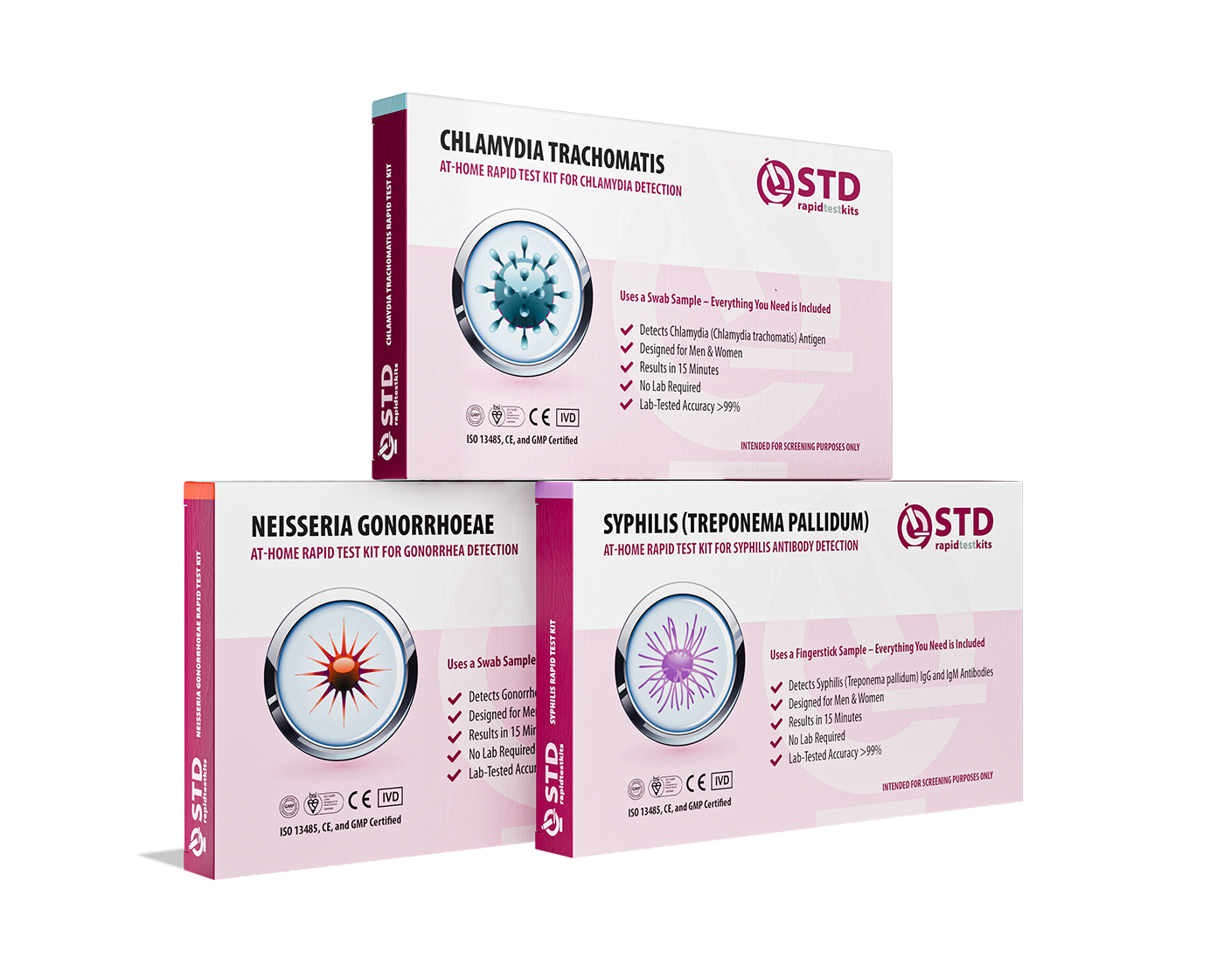 For Men & WomenResults in MinutesNo Lab NeededPrivate & Discreet
Order Now $69.00 $147.00
For all 3 tests
FAQs
1. Can gonorrhea just go away on its own?
It might seem like it does, especially if your symptoms fade. But nope, it doesn’t magically vanish. Untreated gonorrhea can linger quietly and cause serious problems down the line, like infertility or joint infections. Even if it feels like it’s “gone,” trust: it’s not. You need antibiotics to fully clear it.
2. I don’t have symptoms. Am I sure I actually have it?
Yup. Gonorrhea is sneaky like that. A lot of people never feel a thing, especially with throat or rectal infections. So yes, even if you feel totally normal, a positive test is still real. Treat it anyway. Silence isn’t safety here.
3. How long do I have to wait to have sex again?
Seven days. That’s the standard rule post-treatment. It gives your body time to clear the infection and protects your partners. Think of it as a reset period, not a punishment. Waiting a week now can save you a whole world of regret later.
4. Do I need to test again after I finish treatment?
Ideally, yes. Retesting around the three-month mark is smart, especially if you’re under 30 or have new partners. It’s not about doubting the meds; it’s about making sure nothing snuck back in through the side door.
5. My partner tested negative, but I tested positive. What gives?
A few possibilities. They might’ve tested too early. Or used the wrong kind of test. Or maybe you didn’t get it from them. STIs can sit quietly for weeks or months, so don’t let panic (or accusations) lead the convo. Focus on retesting and real talk.
6. Can I catch gonorrhea from oral sex?
Oh yes. It loves the throat. In fact, a lot of people have throat gonorrhea and don’t know it, no sore throat, no cough, nothing. But it still spreads. So don’t sleep on oral. It counts.
7. I have no idea how to tell my ex or hookup about this. Help?
It’s awkward, for sure. But it doesn’t have to be dramatic. You can literally text: “Hey, just wanted to let you know I tested positive for gonorrhea. You might want to get checked too.” That’s it. Short, respectful, honest. Or use an anonymous service if face-to-face isn’t safe.
8. One shot? That’s really all I need?
For most folks, yes. A single injection of ceftriaxone is the standard. But if you’ve got other STIs or special circumstances, your provider might add something else. The key is: don’t DIY this. Let a pro guide the treatment plan.
9. What if I get it again? Did I mess up?
Not at all. STIs aren’t a character flaw, they’re a consequence of exposure, not morality. Reinfection happens. You test, you treat, you move forward. That’s how real sexual health works.
10. Can I use an at-home test to double-check that I’m clear?
Yes, and it can be super empowering, just give your body a little time first. Wait at least two weeks post-treatment before testing again to avoid false reassurance. Go with a reliable at-home test (like the ones we offer) or a lab-based kit for extra peace of mind.
You Deserve Answers, Not Assumptions
Maybe this wasn’t how you pictured your week going. A positive gonorrhea test isn’t something anyone hopes for, but it’s also not the end of your story. You handled it. You’re learning. You’re making choices to protect yourself and others. That’s real health care.
If you’re still unsure about your status or want to retest after treatment, this at-home combo test kit checks for multiple STDs and gives results in minutes. No appointments. No waiting rooms. Just the answers you need to move forward.
How We Sourced This Article: We combined current guidance from leading medical organizations with peer-reviewed research and lived-experience reporting to make this guide practical, compassionate, and accurate. In total, around fifteen references informed the writing; below, we’ve highlighted six of the most relevant and reader-friendly sources.
Sources
1. CDC, 2021 STD Treatment Guidelines: Gonorrhea
3. Next Steps After Testing Positive for Gonorrhea or Chlamydia | CDC
4. CDC Treatment Guidelines for Gonorrhea in Adolescents and Adults
5. CDC Update: Gonococcal Infection Treatment Recommendations | MMWR
6. Updates on STI Management: Gonorrhea Treatment | AAFP
About the Author
Dr. F. David, MD is a board-certified infectious disease specialist focused on STI prevention, diagnosis, and treatment. He blends clinical precision with a no-nonsense, sex-positive approach and is committed to expanding access for readers in both urban and off-grid settings.
Reviewed by: J. Ramirez, NP-C | Last medically reviewed: October 2025
This article is for informational purposes and does not replace medical advice.


