
Quick Answer: Talking about STD testing with a new partner is best done before sexual contact, using calm, direct language like “I like to get tested regularly, would you be open to that too?” It builds trust, not tension.
The Moment No One Prepares You For
Jordan, 27, described it like this: “We were making out, things were escalating, and suddenly my brain just went, ‘Wait, testing.’ And I froze. I didn’t want to ruin the moment, but I also didn’t want to ignore it.”
“I kept thinking, if I say something, will they think I don’t trust them?”
This is the part no one really teaches. We talk about condoms, about protection, about “being safe”, but not about the actual conversation. The pause. The words. The fear of being misread. And yet, this is where real sexual health actually begins, not in a clinic, but in a moment of honesty between two people.
The truth is, bringing up STD testing doesn’t kill the mood. It shows something more profound: respect, self-awareness, and communication. But how you say it and when you say it can change how it sounds completely.
Why This Conversation Feels So Loaded (Even When It Shouldn’t Be)
There’s a reason this feels awkward, even if you logically know it shouldn’t. For decades, STD conversations have been tied to shame, secrecy, and assumptions. Saying “I want to get tested” can feel like saying “I think something’s wrong”, even when that’s not what you mean at all.
But here’s the reality: most sexually active adults will get tested at some point. Many infections like Chlamydia or Gonorrhea can be completely symptomless. Testing isn’t a reaction to risk, it’s a routine part of being sexually responsible.
And yet, culturally, we’re still catching up. That’s why people Google things like “is it weird to ask about STD tests” or “how to bring up STD testing without awkwardness.” Not because the act is unusual, but because the conversation hasn’t been normalized enough.
Reframing this is powerful. You’re not introducing suspicion. You’re introducing clarity. You’re not accusing, you’re collaborating.

Timing Matters More Than the Perfect Words
One of the biggest mistakes people make is waiting until the exact moment things turn physical. When you’re already halfway undressed or caught in the intensity of the moment, your brain is juggling desire, nerves, and now, suddenly, a serious conversation. That’s a tough place to communicate clearly.
The better move? Bring it up slightly before things escalate. Not hours in advance, not days later, just in that window where things are clearly heading toward intimacy but haven’t crossed into it yet.
Alina, 24, put it simply:
“I just said it while we were talking on the couch. Like, not during sex, not in a heavy way. Just… normal.”
This timing does something important. It removes pressure. It feels like part of getting to know each other, not like a last-minute interruption.
| Timing | What It Feels Like | Outcome |
|---|---|---|
| During sex | High pressure, awkward pause | Defensiveness or confusion |
| Right before intimacy | Slight tension but manageable | Usually productive |
| Casual conversation before escalation | Relaxed, mutual | Best outcome |
What to Actually Say (Without Overthinking It)
This is where people get stuck. Not because they don’t want to say something, but because they’re trying to find the perfect wording. The truth? There is no perfect script. But there are simple, grounded ways to say it that feel natural and confident.
You don’t need a speech. You need clarity.
| Approach Style | Example Line |
|---|---|
| Casual & Direct | “Hey, I usually get tested between partners. Just wanted to check where you’re at with that.” |
| Collaborative | “Would you be open to both of us getting tested before we hook up?” |
| Confidence-Based | “I like knowing my status, it helps me relax more.” |
| Light & Normalizing | “I feel like this is just part of adulting now, right?” |
Notice what all of these have in common: they’re not accusatory. They don’t assume anything about the other person. They center your own behavior and invite collaboration.
That’s the shift, from interrogation to shared responsibility.
What If They React Weirdly?
This is the fear underneath everything: What if they take it the wrong way?
And yes, sometimes people do react awkwardly. Not because you did anything wrong, but because they haven’t had this conversation before, or they’re carrying their own stigma around testing.
Rafael, 31, shared:
“At first I got defensive. I thought she was implying something. But then I realized, she was just being responsible. It actually made me trust her more.”
A weird reaction doesn’t mean the conversation failed. It often just means it’s new territory. Give it a second. Stay calm. Keep your tone steady.
If anything, their reaction gives you valuable information. Someone who shuts down or refuses to engage in basic sexual health conversations may not be someone you want to be vulnerable with physically.
This isn’t about passing a test, it’s about alignment.
Making Testing Part of the Experience (Not a Disruption)
When testing becomes a part of the flow instead of an interruption to it, things go from awkward to empowering.
Instead of positioning it as a barrier, “we can’t do anything until…”, you can frame it as something that actually enhances the experience. Clarity reduces anxiety. Knowing your status lets you be present instead of distracted.
This is also where practical options come in. A lot of people delay testing simply because they don’t want to deal with clinics, waiting rooms, or scheduling stress.
That’s why at-home testing has become a real turning point. It removes friction from the process and makes conversations easier because you’re not just raising a concern, you’re offering a solution.
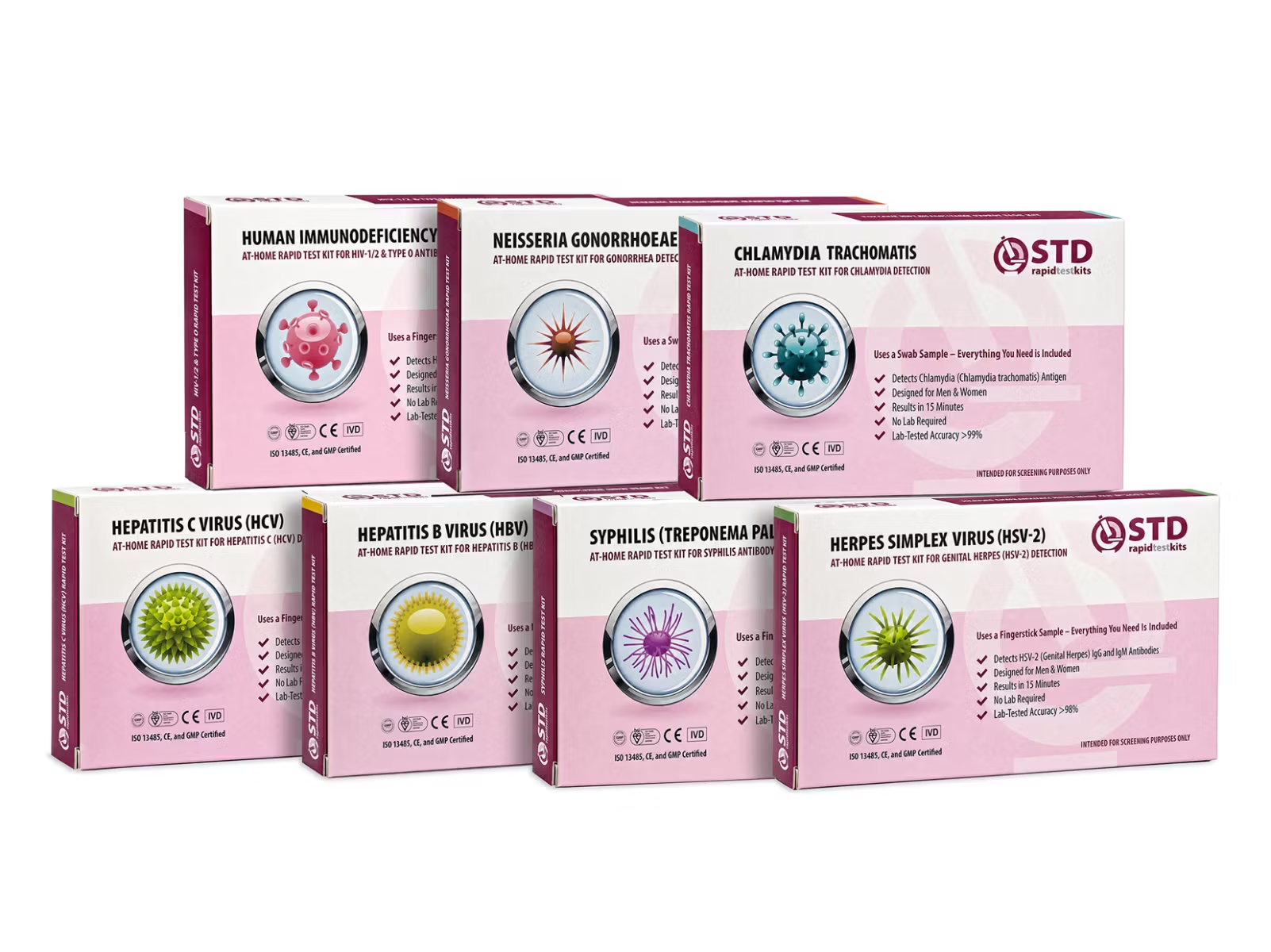
Take back control of your health without overcomplicating it. You can explore discreet, doctor-trusted options directly at STD Rapid Test Kits, including comprehensive panels like the at-home combo STD test kit that checks multiple infections at once.
When testing is accessible, the conversation becomes lighter. Less hypothetical. More actionable.
This Is What Confidence Actually Looks Like
There’s a quiet shift happening in how people approach sexual health. More honesty. More openness. Less pretending everything is fine just to avoid discomfort.
Talking about STD testing isn’t a red flag. It’s not a mood killer. It’s not an accusation. It’s a sign that someone is paying attention, to themselves, to you, and to the reality of how sex actually works.
And in a world where so many people avoid the conversation entirely, that kind of honesty stands out.
“It was honestly kind of attractive,” said Nia, 26. “Like, okay, you’re an adult. You care. That made me feel safer.”
This is what people don’t expect: when done right, this conversation doesn’t push people away. It builds trust faster than anything else.
Because at the end of the day, it’s not just about testing. It’s about how you handle real things, together, without pretending they don’t exist.
When It’s Casual, When It’s Serious, And Why the Approach Shifts
Not every connection lives in the same emotional space. The way you bring up STD testing with someone you’ve been on three dates with might feel different than how you approach it before a hookup. But the main point stays the same: you're still showing care, clarity, and limits.
Not honesty, but tone changes.
People often feel like they have to keep things "light" or stay away from anything that sounds serious when they are in more relaxed situations. But not talking about it doesn't help; it just makes things worse by putting off the moment until it feels even more awkward. In reality, a simple, relaxed sentence at the start works better than silence followed by tension.
Diego, 29, described this shift clearly:
“I used to think bringing it up would make things too serious. But now I just say it casually. And honestly? No one has ever reacted badly.”
In more serious or developing relationships, the conversation can go a little deeper. You might talk about testing history, past partners, or timelines. But even then, it doesn’t need to feel like a formal disclosure, it can still be grounded, mutual, and human.
| Situation | Tone | Example Approach |
|---|---|---|
| Hookup / casual | Light, direct | “Hey, I usually get tested between partners, just wanted to check in.” |
| Early dating | Open, curious | “When was the last time you got tested? I’m planning to go soon.” |
| Developing relationship | Collaborative | “Maybe we should both get tested just to be on the same page.” |
No matter the context, the goal isn’t to make it perfect, it’s to make it real.
The Myth That This “Kills the Mood”, And Why That’s Wrong
This is probably the biggest mental block people carry: the idea that talking about STD testing will instantly shift things from sexy to clinical. That it interrupts chemistry, replaces spontaneity with seriousness, or makes things feel “too real.”
But here’s what actually happens in most cases: it creates relief.
Because even if no one is saying it out loud, both people are usually thinking about risk on some level. And when someone names it, calmly, confidently, it removes the guesswork.
Instead of wondering, “Are we just ignoring this?” the conversation becomes, “Okay, we’re handling this.”
There’s also a deeper layer here. Sexual tension isn’t just about physical attraction, it’s about emotional safety. Feeling like you can trust someone, communicate with them, and be honest without things falling apart.
And paradoxically, that’s what makes things feel more, not less, intimate.
“It didn’t ruin the mood,” said Amira, 25. “It made me relax. Like, okay, we’re both adults here.”
What people often call a “mood killer” is actually just unfamiliar territory. Once it becomes normalized, it blends into the rhythm of getting to know someone.
When You’re Getting Tested, How to Share It Without It Sounding Like a Warning
There’s a subtle difference between saying “I’m getting tested” and accidentally making it sound like a red flag. The key is framing. Not in a manipulative way, but in a way that reflects your actual intention.
You’re not warning someone. You’re informing them. You’re including them in a decision that affects both of you.
This is where tone does most of the work. If you say it like it’s a big deal, it will feel like one. If you say it like it’s normal, it becomes normal.
Simple phrasing works best:
“I’m planning to get tested this week, I usually do between partners.”
“I like knowing my status before things move forward.”
“I’ve been meaning to get tested anyway, feels like the right time.”
None of these imply suspicion. None of them assign blame. They just establish a standard.
And often, that standard invites reciprocity without needing to ask directly.

Turning an Awkward Conversation Into a Shared Decision
The strongest version of this conversation isn’t just about you telling someone something, it’s about creating a sense of “we.” A shared decision. A mutual baseline.
This is where the dynamic shifts from potentially awkward to quietly powerful.
Instead of:
“I need to get tested.”
It becomes:
“Maybe we both should, just so we know.”
That small shift removes hierarchy. It removes the idea that one person is “bringing up a problem.” Now it’s just two people aligning before something new begins.
And practically, this is where having a clear next step helps. Not just the conversation, but what comes after it.
You don’t have to leave it hanging. You can anchor it in action.
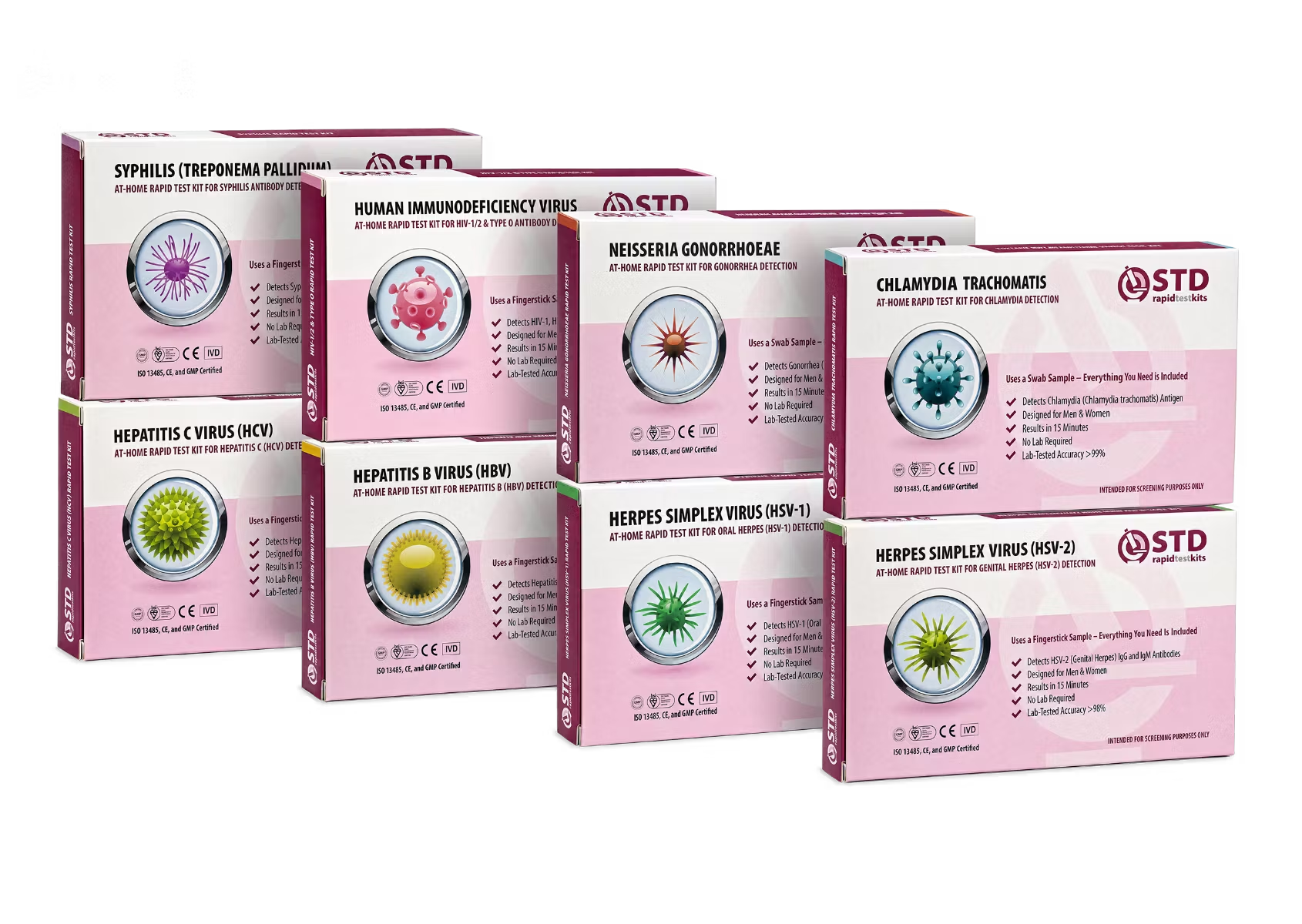
Don’t wait and wonder. If you’re already thinking about getting tested, make it simple and discreet with options like the at-home combo STD test kit, which allows you to check multiple infections without the stress of scheduling or clinic visits.
When you remove friction, you remove hesitation. And when you remove hesitation, these conversations stop feeling like obstacles, and start feeling like part of how you take care of yourself and each other.
What This Conversation Actually Signals About You
It’s easy to focus on the fear, how this might be perceived, whether it might go wrong, whether it might change the dynamic. But there’s another side to this that often gets overlooked.
This conversation signals clarity. It signals self-respect. It signals that you’re not just reacting in the moment, you’re thinking about consequences, about health, about the other person.
And for many people, that’s not just acceptable, it’s deeply attractive.
Because it shows you can handle real things. Not avoid them. Not gloss over them. But actually talk about them without turning them into drama.
That’s rare. And people notice it.
So if you’re sitting there, hesitating, wondering how to say it, this is the part to hold onto: you’re not introducing something awkward. You’re introducing honesty into a space where it usually doesn’t exist yet.
And that’s what sets the tone for everything that comes next.
When Silence Feels Easier, But Costs You More
There’s always the option not to say anything. To stay in the moment, let things unfold, and push the thought aside with a quiet “it’s probably fine.” A lot of people do this, not because they don’t care, but because the conversation feels heavier than the situation itself.
But here’s what tends to happen after: the overthinking kicks in. The “should I have said something?” spiral. The Googling at 2AM. The waiting, the second-guessing, the mental replay of every detail.
Leah, 30, put it bluntly:
“The five minutes of awkwardness I avoided turned into two weeks of anxiety.”
This is the trade-off no one talks about. Avoiding the conversation doesn’t remove the discomfort, it just delays it and usually amplifies it. What feels like protecting the moment can end up disrupting your peace afterward.
Saying something upfront doesn’t guarantee perfection. But it does give you something far more valuable: certainty.
What Happens After You Say It (And Why It’s Usually Better Than You Think)
Most people imagine worst-case scenarios, awkward silence, defensiveness, rejection. But in reality, responses tend to fall into a few predictable categories, and most of them are neutral to positive.
Some people will immediately agree. Some will admit they haven’t thought about it and need a moment. Some will ask questions. And yes, a small number might react poorly, but even that gives you clarity about compatibility.
| Reaction | What It Really Signals | What You Can Do |
|---|---|---|
| “Yeah, that makes sense” | Comfort + shared values | Move forward together |
| “I haven’t thought about it” | Inexperience, not resistance | Keep it low-pressure |
| Defensive or dismissive | Discomfort or stigma | Pause and reassess |
The most important thing is not to read too much into the first reaction. People often need a second to process something they weren’t expecting. What matters more is whether they can meet you in the conversation once the initial surprise passes.
Because ultimately, this isn’t just about testing, it’s about how someone handles communication when it actually matters.
You’re Allowed to Set This Standard (Even If No One Taught You How)
A lot of people hesitate because they feel like they’re “asking too much.” Like bringing up STD testing is somehow overstepping, especially early on. But that idea doesn’t come from reality, it comes from a lack of normalization.
No one formally teaches this. There’s no script in sex education about how to say, “Hey, I want us both to feel safe here.” So people assume they’re improvising something unusual, when in fact they’re just filling in a gap that should have been there all along.
Setting this standard doesn’t make you difficult. It makes you clear.
And clarity is what prevents miscommunication, resentment, and unnecessary risk down the line.
It also quietly filters for compatibility. Someone who respects this boundary is someone who understands shared responsibility. Someone who resists it may not be ready for the kind of openness that healthy intimacy requires.
FAQs
- 1. Is it weird to tell a new partner you’re getting tested?
- Not at all, it just feels weird because no one taught you how to say it. Most people are silently hoping the other person brings it up first. When you do, it usually lands as confidence, not awkwardness.
- 2. When is the right moment to bring it up without killing the vibe?
- Think “before things get physical, but after there’s clearly interest.” Not mid-hookup, not as a dramatic sit-down, just a normal moment where you’re already talking openly. The less you treat it like a big deal, the less it feels like one.
- 3. What if they think I’m accusing them of something?
- That usually comes down to wording. If you say “I like to get tested between partners,” it centers you, not them. You’re not pointing fingers, you’re setting a standard.
- 4. How do I actually say it without sounding rehearsed?
- Honestly, a little awkward is fine, it makes you human. Something like, “Hey, quick thing, I usually get tested before sleeping with someone new” works because it’s simple and real. You don’t need a speech, just a sentence.
- 5. Do I need to have results already before I say anything?
- Nope. You can bring it up while you’re planning to get tested. In fact, that often turns into a “we should both go” moment, which takes the pressure off you completely.
- 6. What if they dodge the conversation or change the subject?
- That’s a signal, not a coincidence. If someone can’t engage in a basic conversation about sexual health, that tells you something about how they handle uncomfortable topics. You’re allowed to slow things down or rethink the situation.
- 7. How can I suggest that we both get tested without making it a big deal?
- Be easygoing and welcoming. "Maybe we should both get tested just to be safe" sounds like you're working together, not against each other. You're not putting them on the spot; you're inviting them in.
- 8. Does this kind of conversation actually turn people off?
- Sometimes people worry it will, but more often, it does the opposite. It shows you’re thoughtful, aware, and not just running on autopilot. That’s attractive in a way that doesn’t get talked about enough.
- 9. Do I have to share my full sexual history too?
- No, you get to choose your level of detail. You can talk about testing and current status without unpacking your entire past. Honesty matters, but so do your boundaries.
- 10. Is at-home testing something I can bring up casually?
- Yes, and it actually makes the conversation easier. Saying “I’ve been thinking of just doing one of those at-home tests” gives the conversation direction. It turns a potentially awkward topic into something practical and solvable.
You Deserve Clarity, Not Guesswork
When you talk about STD testing, it's not just about saying the right thing; it's also about making the choice to be clear instead of confused. That pause, when you think about whether or not to bring it up, is the sign. It means you care enough to pause instead of just going along with the moment.
You don’t need perfect timing or perfect wording. You just need to be real. Say it simply, say it calmly, and let the conversation be what it is, two people figuring things out together instead of pretending everything’s already figured out.
Don’t wait and wonder. If testing is already on your mind, follow through with something discreet like the Combo STD Home Test Kit. It’s private, fast, and gives you the kind of clarity that makes everything else feel easier.
How We Sourced This Article: This guide blends clinical STD testing guidelines with real-world communication patterns seen in dating, sexual health counseling, and behavioral research. We looked at reliable medical sources like the CDC, WHO, and peer-reviewed studies on sexual communication to make sure the information was correct and to show how people really think and talk in these situations. The goal is simple: give you language that works in real life, not just in theory.
- Centers for Disease Control and Prevention – STD Prevention
- Planned Parenthood – STD & Safer Sex
- NHS – Sexually Transmitted Infections Overview
- World Health Organization – STI Fact Sheet
- CDC – Getting Tested for STDs
- NHS – Visiting an STI Clinic
- CDC – HIV Testing Overview
