
Published: September 2025 | Last updated: May 2026 | Editorial review and quality control: Martina N.
Why is syphilis screened during pregnancy?
Syphilis can cross the placenta and infect a developing baby with no symptoms in the parent. Screening at the first prenatal visit, repeated around 28 weeks and at delivery in higher-risk areas, lets providers treat with benzathine penicillin G in time to prevent miscarriage and congenital infection. Most results are negative.
Prenatal syphilis screening rarely lands on anyone's emotional radar at a first OB visit. The lab order goes in with a stack of others, the blood draw takes thirty seconds, and most patients never think about it again. That quiet routine is exactly the point. Every major obstetric guideline, from the U.S. Centers for Disease Control and Prevention to the American College of Obstetricians and Gynecologists to the World Health Organization, treats universal syphilis screening as baseline prenatal care, because catching the infection early is the single most reliable way to stop it from reaching the baby.
This guide walks through what the screening actually checks, why providers repeat it later in pregnancy, what a reactive result means, and what to do if testing confirms an active infection. The headline is reassuring: most screenings are negative, and when treatment is needed, it works. Penicillin given at least 30 days before delivery prevents almost all maternal-to-fetal transmission, even as congenital syphilis cases in the U.S. have climbed to nearly 4,000 reported cases in 2024 (CDC overview of congenital syphilis).
Key Takeaways
- Untreated syphilis in pregnancy can cause miscarriage, stillbirth, or lifelong newborn complications, but penicillin given at least 30 days before delivery prevents transmission in the great majority of cases when started early.
- CDC and ACOG recommend screening at the first prenatal visit, again around 28 weeks of gestation, and a third time at delivery for patients in higher-incidence areas, with new partners, or with new symptoms.
Why Every Pregnant Patient Gets a Syphilis Test
Syphilis is a bacterial infection caused by Treponema pallidum, a corkscrew-shaped organism that spreads primarily through direct contact with a syphilis sore during sexual activity. Here is the part most people do not realize: the bacterium can sit in the bloodstream for months or years without producing a single obvious symptom. No sore, no rash, no fever, no warning that anything is happening at all (CDC syphilis overview).
During pregnancy, that silence carries weight. Treponema pallidum can cross the placenta and infect the developing baby, a transmission pattern called congenital syphilis. Without treatment, it can lead to miscarriage, stillbirth, premature delivery, low birth weight, or serious newborn complications including bone deformity, hearing loss, and neurological damage.
The reason every pregnant patient is offered the test, regardless of age, marital status, neighborhood, or sexual history, is straightforward: risk cannot be reliably predicted by appearance or by self-report. Universal screening removes the guesswork. It is a public-health convention built on decades of evidence, not a personal accusation about the patient sitting in front of the clinician.
Older risk-based screening approaches, where clinicians decided who to test based on a patient interview, missed too many cases. Universal screening offers the same test to every pregnant patient at the first prenatal visit so that no infection slips through because of stigma, incomplete history, or assumptions about who is at risk.
The Quiet Nature of Syphilis: When No Symptoms Still Means Risk
Syphilis without symptoms during pregnancy is common. The infection moves through stages, and the early ones can be deceptively mild. A primary chancre, the painless sore that appears at the site of infection, often heals on its own and disappears entirely. Genital chancres can hide inside the vagina, on the cervix, or in the anal canal where they go completely unseen. The secondary stage may bring a non-itchy rash, sometimes on the palms and soles, alongside mild fever, swollen lymph nodes, or patchy hair loss, then fade after a few weeks. After that, syphilis can become latent and completely silent, while still active in the body (WHO syphilis fact sheet).
Many patients learn they have syphilis only because of a routine prenatal blood test. They feel fine, they have no rash, and they are not thinking about an infection. The screening result is the first signal that anything is wrong. Identifying latent or asymptomatic syphilis is the whole purpose of universal testing, and it is the reason providers test even patients who feel certain the test will be negative.
What the latent stage looks like
- A primary chancre is typically painless and heals on its own within 3 to 6 weeks, often without the patient ever noticing it.
- The secondary stage may produce a non-itchy rash on the palms or soles, mild fever, fatigue, or patchy hair loss, then fade.
- Latent syphilis produces no symptoms at all but remains transmissible to a developing baby.
- A reactive prenatal blood test is often the first signal that any of this happened.
How Syphilis Affects Pregnancy: What the Data Shows
U.S. surveillance data shows that congenital syphilis cases have risen for the twelfth consecutive year, reaching nearly 4,000 reported cases in 2024 (CDC STI annual surveillance summary). Public-health analysts trace most cases to late or missed prenatal screenings, compounded by gaps in care access during the pandemic years.
The placenta is not a sealed barrier. It is a selective filter that lets oxygen, nutrients, and antibodies pass to the fetus. Pathogens circulating in the maternal bloodstream can use the same pathway, and T. pallidum is small and motile, so it crosses efficiently. The earlier the maternal infection, and the more active the bacteria are at the time of pregnancy, the higher the chance of severe complications. WHO data (WHO syphilis fact sheet) shows that 50 to 80 percent of pregnancies with untreated, late-treated, or wrongly treated syphilis result in adverse birth outcomes including stillbirth, neonatal death, prematurity, and low birth weight.
The good news is that treatment with benzathine penicillin G during pregnancy is highly effective at preventing congenital infection when given at the appropriate stage and dose (CDC syphilis-in-pregnancy treatment guidelines).
| Stage of Maternal Infection | Likelihood of Transmission to Fetus | Risk Without Treatment |
|---|---|---|
| Primary or Secondary Syphilis | High (bacterial load peaks in these stages) | Significant risk of miscarriage, stillbirth, or neonatal infection |
| Early Latent Syphilis | Possible despite no symptoms | Moderate to high risk of congenital infection |
| Late Latent Syphilis | Lower but still present | Possible long-term complications for newborn |
Why You Might Be Tested More Than Once
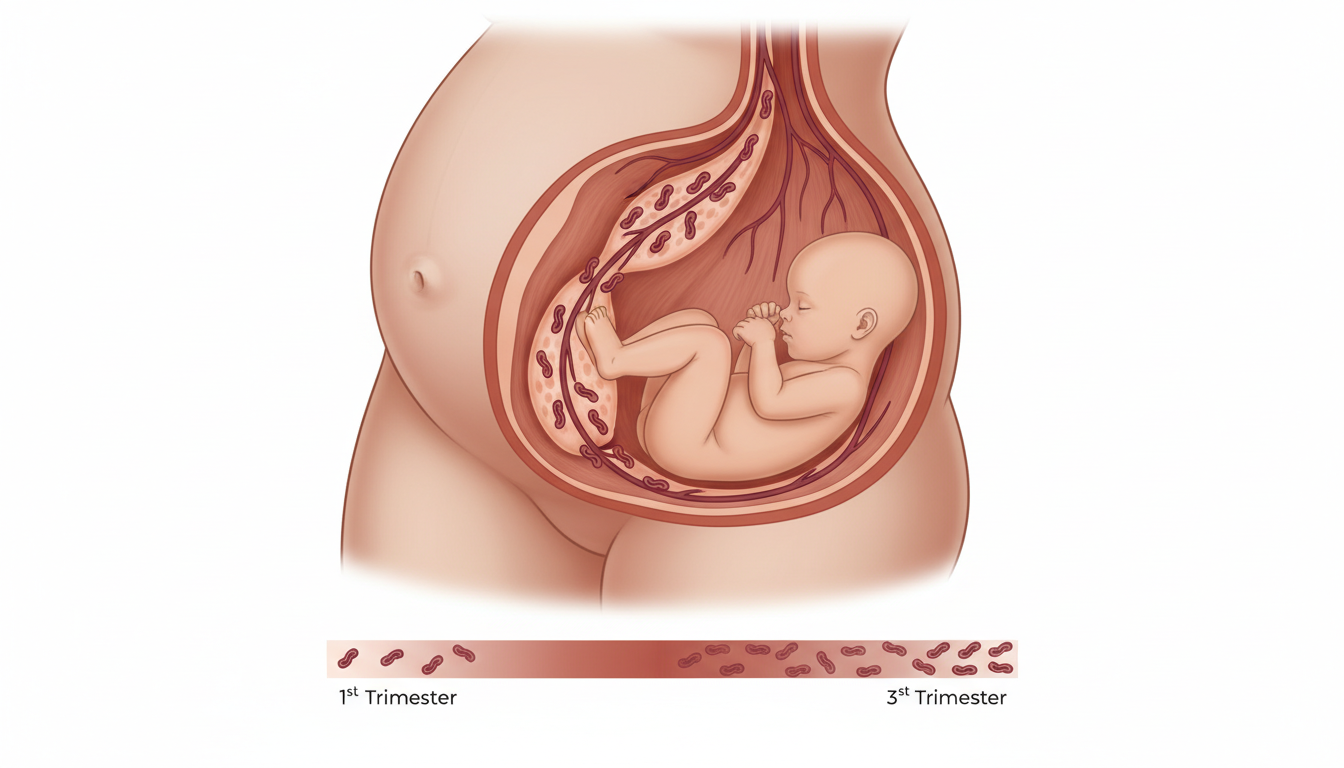
If you have noticed that syphilis testing happens at the first prenatal visit and sometimes again in the third trimester, you are not imagining it. Syphilis blood tests look for antibodies the immune system makes in response to the infection, and antibodies take time to develop. After exposure, it can take 3 to 6 weeks (occasionally longer) before standard tests turn positive. This delay is called the window period.
A negative result at week 10 reflects your status at week 10. It does not protect against an exposure that happens at week 22. The CDC recommends repeat screening at 28 weeks and at delivery for patients living in areas with rising syphilis rates, for patients with new sexual partners during pregnancy, and any time clinical suspicion is warranted (CDC treatment guidelines). The American College of Obstetricians and Gynecologists echoes this schedule in its 2024 practice advisory, so the recommendation is consistent across major U.S. obstetric authorities.
Many clinical guidelines and some state laws now call for third-trimester screening in all pregnant patients, not only those identified as higher-risk, in response to the recent rise in congenital syphilis cases (CDC summary of prenatal syphilis screening laws).
What the Prenatal Blood Test Actually Checks
Syphilis screening during pregnancy is a blood test that looks for antibodies the immune system produces in response to Treponema pallidum. Two test types are used in combination, and most labs run them in a sequence rather than choosing between them (CDC syphilis testing guidance). Plain-language background on what the lab is checking and how to read a result also appears on the NIH MedlinePlus syphilis topic page (NIH MedlinePlus: Syphilis).
A treponemal test (such as TP-PA, FTA-ABS, or syphilis-specific EIA) detects antibodies that are specific to the syphilis bacterium. Once positive, these antibodies usually remain positive for life, even after successful treatment. A non-treponemal test (typically RPR or VDRL) detects markers associated with active infection, and the result can be quantified as a titer that rises with active disease and falls after effective treatment.
Most labs now use what is called the reverse-sequence algorithm: a treponemal test first, with reactive results confirmed by a non-treponemal titer. The combination reduces false positives and provides a baseline titer for tracking treatment response. If a screening result is reactive, confirmatory testing follows before any treatment decision is made.
| Test Type | What It Detects | Why It Matters in Pregnancy |
|---|---|---|
| Treponemal Test (TP-PA, FTA-ABS, EIA) | Antibodies specific to the syphilis bacterium | Confirms exposure, stays positive for life |
| Non-Treponemal Test (RPR or VDRL) | Markers of active infection, reported as a titer | Guides treatment decisions and monitors response |
What Happens If You Test Positive While Pregnant?
This is where anxiety often spikes. Patients imagine worst-case outcomes, replay every conversation, and brace for news about the baby. Most of those fears do not materialize. A positive screening test in pregnancy is a signal to act quickly, and the action that follows is straightforward and effective.
Treatment for syphilis during pregnancy is benzathine penicillin G, given by intramuscular injection. The CDC and WHO both designate it as the only treatment proven to cross the placenta and treat the fetus alongside the parent (CDC pregnancy treatment guidelines). The dose and number of injections depend on the stage of syphilis. Primary, secondary, or early latent syphilis (less than one year of duration) is treated with a single 2.4 million unit injection. Late latent syphilis or syphilis of unknown duration requires three weekly injections totaling 7.2 million units. Tertiary syphilis with eye, brain, or heart involvement is treated with hospital-based intravenous penicillin under specialist care.
Treatment that begins at least 30 days before delivery has the best track record for preventing fetal infection. CDC guidelines describe treatment given within 30 days of delivery as inadequate, which means even later treatment still reduces severity for the baby and changes the newborn's evaluation plan. Once treatment is complete, providers monitor non-treponemal titers over the rest of pregnancy to confirm the infection is resolving. This site sells rapid at-home syphilis tests; the option below is designed as a private between-visit screening complement, not a replacement for the lab work your OB orders.
No other antibiotic reliably crosses the placenta to treat the fetus. Doxycycline, tetracycline, and azithromycin are either unsafe in pregnancy or do not protect the baby. Patients with a documented penicillin allergy are typically referred for a supervised in-hospital desensitization procedure so that benzathine penicillin G can still be given safely. The protocol is short, well-established, and treated as part of the treatment plan rather than a workaround.
Why Congenital Syphilis Cases Are Rising
Congenital syphilis was nearly eliminated in the United States by the early 2000s. The reversal since 2012 has been steep enough that local jurisdictions including Houston and parts of California have declared public-health emergencies. Public-health analyses point to several overlapping factors: a national rise in syphilis among adults of reproductive age, pandemic-era disruptions to routine prenatal care, and persistent gaps in healthcare access in rural and tribal communities (CDC STI surveillance summary).
Geography is part of the story. In wide stretches of the country, the closest full-service obstetric clinic may be hours away. When every appointment means time off work, fuel costs, and sometimes navigating winter roads, repeat screenings become a question of feasibility, not just willingness. Some states, including South Dakota, have seen congenital syphilis rates climb high enough that public-health teams have launched targeted outreach in partnership with tribal health organizations and the CDC.
Stigma compounds the access problem. In small communities, a pregnant patient may delay a clinic visit because she dreads a familiar face in the waiting room or worries that word will travel. The combination of distance, scheduling friction, and quiet shame is what turns a preventable infection into a missed diagnosis. Universal screening at every prenatal visit, including third-trimester re-testing in higher-risk areas, is the public-health response to all three barriers at once.
Distance. In rural counties and on many reservations, the nearest full-service obstetric clinic can be one to three hours away.
Scheduling friction. Time off work, fuel costs, childcare, and winter weather turn a single appointment into a half-day commitment, and a repeat appointment into two.
Stigma. In small communities, a familiar face in the waiting room can delay a visit until symptoms force the issue, by which point transmission risk to the baby is higher.
Congenital Syphilis: What It Can Mean for a Newborn
The phrase congenital syphilis sounds heavy because it is. It refers to a baby infected with Treponema pallidum during pregnancy. Here is what often gets lost in fear-based headlines: congenital syphilis is preventable in the great majority of cases when maternal screening and treatment happen on time.
Babies infected in the womb fall into one of three patterns. Some are stillborn or die shortly after birth. Some survive with visible signs at birth. Some appear healthy at delivery and develop signs in the weeks, months, or years that follow. Early congenital syphilis, with signs in the first two years of life, can include a persistent runny nose (sometimes blood-tinged, called snuffles), a widespread rash with peeling skin on the palms and soles, an enlarged liver and spleen often with jaundice, bone inflammation that causes pain on movement of an arm or leg (called pseudoparalysis), and low birth weight or failure to thrive.
Late congenital syphilis, with signs after age two, is rare today in regions with prenatal screening, but it explains the constellation described in older medical literature: notched permanent teeth (Hutchinson teeth), bone changes such as a high-arched palate or saber shins, sensorineural deafness, and inflammation of the cornea (interstitial keratitis) that can affect vision. Delayed presentation is part of why providers take screening so seriously, and why some newborns are screened at delivery even when the maternal record looks clean.
Standard newborn evaluation workup
- Non-treponemal blood test on the infant, with the result compared against the parent's titer at delivery.
- Physical exam looking for rash, hepatomegaly, snuffles, or signs of bone tenderness.
- Long-bone X-rays in selected cases to evaluate for periostitis (inflammation of the bone lining).
- Lumbar puncture to test cerebrospinal fluid when the parent's treatment was inadequate, undocumented, or recent.
| Outcome Without Treatment | When It May Occur | Risk Reduction With Early Treatment |
|---|---|---|
| Miscarriage or Stillbirth | Any stage of pregnancy | Substantial when treated early |
| Preterm Birth | Second or third trimester | Substantial |
| Newborn Infection (Congenital Syphilis) | At Birth | Very substantial; most cases preventable |
| Delayed Developmental Complications | Infancy or early childhood | Reduced when maternal infection is treated promptly |
False Positives in Pregnancy: When the Result Is Scary but Not Final
Pregnancy changes the immune system, and certain non-treponemal screening tests can occasionally return false-positive results in pregnant patients, in patients with autoimmune conditions, or in patients with recent viral infections. Seeing the word "reactive" on a patient portal before confirmatory labs come back can feel terrible.
This is exactly why the layered testing approach exists. Screening tests are designed to be sensitive, meaning they catch as many possible infections as they can, sometimes at the cost of an occasional false alarm. Confirmatory tests then determine whether the infection is truly present and active. The two-step process protects patients from missed diagnoses and from unnecessary treatment.
If your initial screen is reactive, your provider will order confirmatory testing before any treatment decision is made.
A reactive screening result in pregnancy is the start of a clarification process, not a final verdict. Confirmatory testing, including a treponemal-specific assay and quantitative non-treponemal titers, sorts true infections from false positives before any treatment is started.
Partner Treatment and Why It Matters During Pregnancy
If a pregnant patient tests positive, partner treatment becomes part of the conversation. Partner treatment matters because reinfection during pregnancy can put the baby right back at risk after the parent has been successfully treated. Reinfection late in pregnancy is one documented pathway to congenital cases that occur even in patients who completed prenatal treatment.
Partners are evaluated and, when indicated, treated empirically based on the timing of their last sexual contact with the index patient. Lookback windows extend from three months for primary syphilis to as long as twelve months for late or unknown-duration cases. Most U.S. health departments offer confidential partner-notification services through their STI program. A disease-intervention specialist can contact your partner on your behalf, share that they may have been exposed, and offer free testing without disclosing your identity. Many jurisdictions also allow expedited partner therapy, where a prescription is given to the index patient to pass along. The medical recommendation is steady: treat both partners when indicated, prevent reinfection, continue prenatal care, and move forward with information rather than assumption.
Partner notification at a glance
- Partners with sexual contact in the 90 days before a primary, secondary, or early latent diagnosis are typically treated empirically (presumptively), even before their own test results return, because of the high probability they are also infected.
- For late or unknown-duration syphilis, the lookback extends as far as twelve months and partners are tested first, then treated based on results.
- Empiric treatment exists because untreated partners are the leading source of reinfection during pregnancy, and reinfection puts the baby right back at risk.
- State and county health departments can handle notification anonymously when a direct conversation feels hard.
Is an At-Home STD Test Safe During Pregnancy?
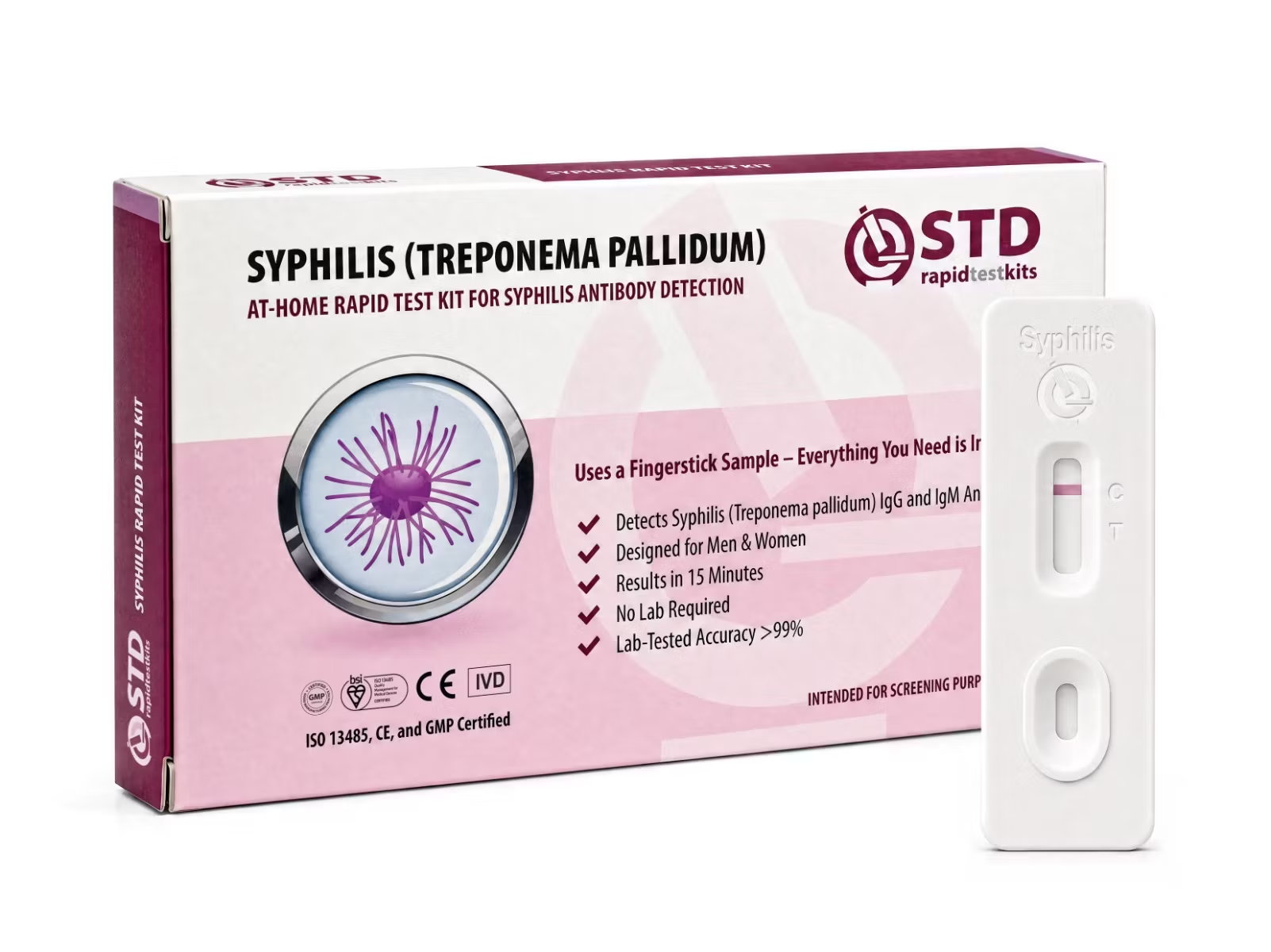
Lab-confirmed testing ordered through your prenatal provider remains the gold standard for clinical decisions during pregnancy. Titers, confirmatory assays, and treatment management all run through that channel. An at-home rapid syphilis test is a lateral-flow blood antibody test, not a NAAT or a quantitative titer, and it cannot replace the lab work your OB orders.
What an at-home test can do is give you a private, fast screening check between prenatal visits if you have had a possible exposure or simply want reassurance. The sample is a fingerstick drop of blood, and results read in about 15 minutes. The same window-period math applies: a rapid test taken within the first 3 weeks after a new exposure may not yet be reactive even with infection present. If the result is reactive at any point, the next step is calling your prenatal provider for confirmatory testing, not self-treating. If the result is negative and you have had no recent exposure, you have a baseline to share with your OB at the next visit.
For patients who value privacy and convenience between appointments, a discreet at-home option can help bridge the gap without replacing prenatal care.

When Is Syphilis Screening Done During Pregnancy?
Most providers screen for syphilis at the very first prenatal visit, typically between weeks 8 and 12, as part of a panel of routine blood tests. The vial gets drawn alongside checks for HIV, hepatitis B, blood type, and a few other routine markers. Most patients never notice it specifically.
That early timing is intentional. If an infection is present, identifying it in the first trimester gives providers the maximum window to treat and prevent transmission. The earlier the treatment, the stronger the protection for the baby.
The CDC recommends repeat screening at 28 weeks and again at delivery for patients in areas with high rates of congenital syphilis, for patients with new partners during pregnancy, or any time clinical suspicion arises. ACOG's 2024 practice advisory mirrors this schedule, and NHS guidance follows a similar pattern of early screening with repeat testing as indicated (NHS syphilis information).
| Pregnancy Stage | Typical Screening Timing | Purpose |
|---|---|---|
| First Trimester | Initial prenatal visit (weeks 8 to 12) | Detect existing infection early |
| Third Trimester | Around 28 weeks (in higher-risk regions) | Identify new infections acquired during pregnancy |
| Delivery | At birth (in higher-risk areas or with no prior care) | Protect the newborn immediately if needed |
What If You Had Syphilis Before Pregnancy?
Some patients test positive on a treponemal assay because they were treated for syphilis years earlier. Treponemal-specific antibodies can remain positive for life, even after successful treatment. A positive treponemal test, on its own, does not mean the patient is currently infected.
This is where confirmatory testing and careful interpretation matter. Providers use quantitative non-treponemal titers (RPR or VDRL) and the patient's treatment history to determine whether the infection is current or historical. If treatment was completed previously and there is no evidence of active disease, no additional therapy is typically required during the pregnancy. Share your treatment history with your prenatal provider and bring documentation if you have it.
A positive treponemal test plus a low or non-reactive non-treponemal titer (RPR or VDRL) usually points to past, treated infection rather than active disease. A positive treponemal test plus a rising or four-fold-higher non-treponemal titer points to active or reinfected disease and prompts treatment. Your provider interprets the two results together; titer trends matter more than any single number.
What This Means for You Right Now
Seeing syphilis on your lab panel is routine, not a judgment. The odds strongly favor a negative result, and if treatment turns out to be needed, it works: effective, widely available, and almost always sufficient to protect the baby when started in time.
If your next prenatal appointment feels far away and a new exposure is on your mind, an at-home rapid syphilis screen can offer a practical interim check. A negative result with no recent exposure is reasonable reassurance until your next prenatal visit. A reactive result is a signal to call your OB the same day, not in two weeks. If your partner has questions, bring them into the conversation. If you need additional reassurance, lean on your prenatal provider rather than late-night search engines that surface worst-case anecdotes.
Your next steps
- Confirm your prenatal provider ordered syphilis screening at your first visit. If you are not sure, ask at your next appointment, or call the office and request it be added.
- If you are at 28 weeks or beyond, ask whether repeat third-trimester testing is recommended for your area, or if you have had a new partner since your first screen.
- If your result is reactive, call your OB the same day rather than waiting for the next scheduled appointment. Confirmatory testing and any treatment work best on a short clock.
- Make sure your partner is evaluated and treated when indicated. Reinfection during pregnancy is one of the documented pathways to congenital cases even after the parent has been treated.
Untreated syphilis in pregnancy may lead to severe negative consequences, such as stillbirth, neonatal death, prematurity, low birth weight and life-long health problems to the infected infant.
Frequently asked questions
- I feel completely fine. Why am I being tested for syphilis?
- Latent-stage syphilis produces no pain, no visible sore, and no systemic symptoms, and it is responsible for a meaningful share of prenatal diagnoses each year. You can feel healthy and still carry an active infection that could pass to the baby. Screening is not about how you feel; it is about what might be happening invisibly so it can be treated before it reaches the baby.
- What if my screening result comes back reactive?
- Your provider orders a treponemal-specific confirmatory test and a quantitative RPR or VDRL titer. Those two results together determine whether the screen flag reflects a true active infection or a false positive, and treatment only begins after confirmation. The hours of waiting can be hard, but the layered testing is doing what it was designed to do.
- If I test positive, does that mean my baby is infected?
- Not automatically. Transmission risk depends on the stage of your infection and the timing of treatment. The earlier syphilis is detected and treated with penicillin (at least 30 days before delivery is the CDC-defined adequate window), the more dramatically the risk to the baby drops. Many pregnancies with timely treatment result in completely healthy newborns.
- Why do I need a third-trimester syphilis test if my first one was negative?
- Syphilis exposure can happen at any point in a 40-week pregnancy, and antibodies take 3 to 6 weeks to appear after a new exposure. A first-trimester negative result only reflects that moment. Re-testing around 28 weeks is the safety net for anything acquired since. The CDC and ACOG both recommend third-trimester screening for patients in higher-risk areas, for those with new partners during pregnancy, or any time clinical suspicion arises.
- What if I test positive close to my due date?
- Treatment is still worth pursuing immediately. The 30-day window before delivery is the standard for adequate maternal treatment, but treatment closer to delivery still reduces severity for the baby and changes the newborn's evaluation plan. Your delivery team will coordinate with pediatrics so the baby is evaluated and treated as needed at birth.
- Are at-home syphilis tests safe to use during pregnancy?
- Yes. The fingerstick blood draw itself is safe, and an at-home rapid test is useful as a screening complement between prenatal visits, not a replacement for the confirmatory lab work your OB orders. Any reactive at-home result should be followed up with your prenatal provider for titers and treatment planning.
- If a baby is born with congenital syphilis, can it be treated?
- Yes, and most treated infants do well long-term. Standard treatment is a 10-day course of intravenous or intramuscular penicillin in the hospital, followed by outpatient follow-up titers every two to three months until the test becomes nonreactive. The earlier treatment starts after birth, the lower the risk of long-term problems with bone, eye, ear, or neurological development.
- Can I breastfeed if I had syphilis during pregnancy?
- Yes, in nearly all cases. Once you have been treated and you do not have an active syphilis lesion on or near the nipple, breastfeeding is safe. Penicillin clears the bloodstream infection, and the bacterium does not pass through breast milk independently. Your provider will confirm timing based on your treatment course and any active lesions.
- U.S. Centers for Disease Control and Prevention. Syphilis: about, transmission, stages, and clinical overview.
- U.S. Centers for Disease Control and Prevention. About Congenital Syphilis: provides the 2024 case count of nearly 4,000 (highest annual figure since 1994) and the framing that timely testing and treatment are the core measures that prevent the condition.
- U.S. Centers for Disease Control and Prevention. STI treatment guidelines: syphilis during pregnancy, including the first-prenatal-visit, 28-week, and delivery screening schedule, the 30-day-before-delivery adequacy rule, and benzathine penicillin G dosing.
- World Health Organization. Syphilis fact sheet covering transmission, stages, pregnancy consequences (including the 50 to 80 percent adverse-outcomes statistic for untreated cases), and global epidemiology.
- U.K. National Health Service. Syphilis: symptoms, diagnosis, treatment, and pregnancy considerations.
- U.S. National Institutes of Health, MedlinePlus. Syphilis topic page: plain-language overview of syphilis testing, stages, and treatment for general readers.
