
Published: August 2025 | Last updated: May 2026 | Editorial review and quality control: Martina N.
Arkansas is in the middle of a sustained rise in two of the country's most consequential sexually transmitted infections. Syphilis and HIV cases have been climbing across the state for several years, with the steepest increases concentrated in younger adults, rural counties, and pregnant patients. The biology of these infections has not changed. What has changed is how easily they slip past the screening points where they used to be caught.
This article walks through what the public health surveillance data actually shows, why so many cases reach diagnosis late, what early symptoms tend to look like, and where at-home rapid testing fits into the gap. Routine clinic-based screening still matters and is usually the more accurate first step. For people who would otherwise skip testing entirely, a discreet self-test at home is often the difference between catching an infection early and finding out months later from a preventable complication.
Key Takeaways
- Syphilis cases in Arkansas have more than doubled over the past several years, and HIV diagnoses remain among the higher per-capita rates in the country.
- Both infections frequently progress with no symptoms, or only easy-to-miss ones, so testing is the only reliable way to know your status.
What the surveillance data actually shows
The Arkansas Department of Health publishes annual STI surveillance reports, and the trend lines for syphilis are unmistakable. Reported cases have more than doubled compared to the late 2010s, with the steepest growth in primary and secondary syphilis (the early, infectious stages). Congenital syphilis cases, transmitted from mother to baby during pregnancy, have also climbed sharply, reflecting gaps in prenatal screening and late-pregnancy diagnoses (Arkansas Department of Health, STI prevention program).
HIV moves more slowly in headline terms, but Arkansas continues to rank among states with persistently elevated per-capita diagnosis rates. The federal Ending the HIV Epidemic initiative has flagged several Arkansas counties as priority jurisdictions because new diagnoses remain stubbornly higher than the national baseline (AHEAD: America's HIV Epidemic Analysis Dashboard). Two patterns repeat in the data: most newly diagnosed people had not been tested in the previous year, and a meaningful share were diagnosed at a stage that suggests the infection had been present for months or longer.
National context matters here. The CDC's 2023 STI surveillance summary reported that primary and secondary syphilis cases nationwide have nearly doubled over five years, with the South carrying a disproportionate share of the increase. Arkansas sits inside that regional pattern rather than standing apart from it (CDC sexually transmitted infections statistics).
| Indicator | Arkansas trend | National context |
|---|---|---|
| Primary and secondary syphilis cases | More than doubled vs. the late 2010s | Nearly doubled nationwide over five years |
| Congenital syphilis | Rising sharply; flagged in CDC Southern surveillance | Steepest increases in the South |
| HIV new-diagnosis rate | Persistently above the national baseline | Several AR counties named EHE priority jurisdictions |
Why these infections hide better than people expect
The single biggest reason syphilis and HIV keep spreading in Arkansas is that both can cause no symptoms during the most contagious stages. Syphilis has four progressive stages, and the primary stage is often a single painless sore (called a chancre) that heals on its own within three to six weeks. Many people never see it; the chancre can sit on the cervix, inside the vagina, in the mouth, or in the rectum. The infection then moves into a secondary stage, which can include a body rash, mouth sores, swollen lymph nodes, and flu-like fatigue. Those symptoms also resolve without treatment, which is the deceptive part. The infection has not gone away. It has simply gone quiet (CDC syphilis information).
HIV follows a similar pattern in its earliest weeks. Two to four weeks after infection, roughly two-thirds of people develop what clinicians call acute HIV syndrome: a flu-like illness with fever, sore throat, swollen glands, and sometimes a rash. The remaining third have nothing at all, or symptoms so mild they get attributed to a cold or work stress. After that early phase passes, HIV typically causes no obvious symptoms for years, while the immune system continues to take damage that earlier treatment would have prevented (CDC HIV basics).
Two structural factors sit on top of biology. The first is access. Several Arkansas counties have no dedicated sexual health clinic, and reaching the closest one can mean a multi-hour round trip plus time off work. The second is stigma. Public health researchers studying HIV testing in the South have repeatedly documented that fear of being seen at a clinic, fear of disclosure to family or church community, and lack of insurance are stronger predictors of delayed testing than risk behavior itself.
- Access: Several Arkansas counties have no dedicated sexual health clinic. Reaching one can mean a multi-hour round trip and time off work.
- Stigma: Fear of being recognized at a clinic, family or community disclosure, and lack of insurance are stronger predictors of delayed testing in the South than risk behavior itself.
Early signs that get missed
Public health workers and clinicians in Arkansas routinely encounter the same misread symptoms. A small painless sore on the genitals, the lips, or the inside of the mouth gets attributed to a razor cut, an ingrown hair, or a canker sore. A faint rash on the palms or soles, which is a hallmark of secondary syphilis, gets dismissed as an allergic reaction or eczema. Painless swollen lymph nodes get noticed and forgotten. None of these signs are dramatic, which is exactly why they get missed.
For HIV, the early window can resemble any viral illness: a few days of fever, sore throat, fatigue, headache, and sometimes a faint maculopapular rash on the trunk. People recover and move on. By the time symptoms return, often years later, the immune system has already taken significant damage that earlier treatment would have prevented.
A few patterns are worth knowing in advance:
- A painless sore that heals on its own does not mean the infection is gone. Syphilis is treated with antibiotics regardless of whether the chancre is still visible.
- A rash that does not itch is more suspicious for syphilis than a rash that does. Itchy rashes are usually allergic or fungal; a flat, faintly pink rash on the palms or soles is the textbook secondary-syphilis pattern.
- Flu-like illness within a month of a new sexual partner is worth taking seriously, especially when paired with neck or armpit lymph nodes that stay swollen for more than a week.
- Many people have syphilis or HIV without ever noticing a single one of these signs. Asymptomatic cases are common, and they are the reason routine screening exists.
None of this is a substitute for a clinical assessment. It is a starting point for deciding whether to test now, rather than waiting for something obvious that may never appear.
When testing changes the outcome for syphilis
Syphilis is curable. Caught in the primary or secondary stage, treatment is typically a single intramuscular dose of long-acting penicillin, with additional doses for late-latent or unknown-duration cases. The hard part is the diagnosis, not the treatment. The CDC and the U.S. Preventive Services Task Force both recommend syphilis screening for all sexually active adults at increased risk and for everyone who is pregnant, ideally at the first prenatal visit and again at 28 weeks and at delivery in areas with elevated rates. Arkansas qualifies as one of those areas (CDC syphilis information).
Standard syphilis blood tests detect antibodies the body makes in response to the infection. These antibodies are typically detectable about three weeks after exposure, with most people testing positive by six weeks. A test taken right after a possible exposure can miss an early infection, which is why repeat testing at six to twelve weeks is the conservative approach when the exposure is recent.
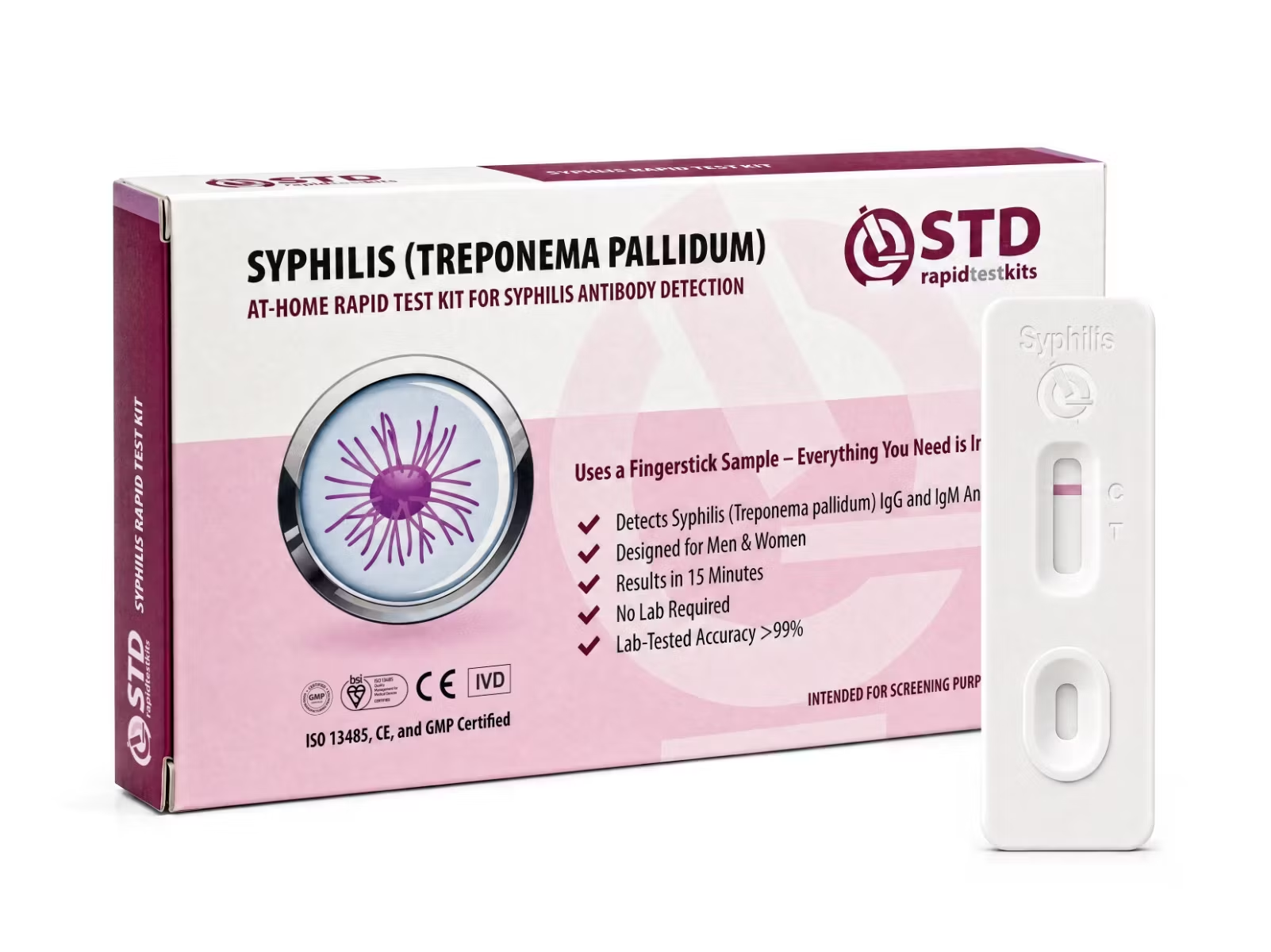
At-home rapid syphilis tests use the same antibody chemistry in a fingerstick lateral-flow format. They are screening tools, not confirmatory ones; a positive home test should be followed by a clinic-run treponemal and non-treponemal panel, which is also how a lab confirms a clinic-collected sample. The screening role is the value: a positive home result tells you to seek treatment now, and a negative result after the appropriate window provides meaningful reassurance.
This article is published by stdrapidtestkits.com, which sells at-home STI testing kits. We recommend products based on fit-for-purpose for the reader's concern, not commercial benefit. Clinic-administered testing remains the more accurate first option when it is accessible to you.
When to test for HIV and what the window periods mean
HIV testing technology has improved substantially in the last decade, but the window period (the time between infection and when a test can reliably detect the virus) still varies by test type. Lab-based fourth-generation antigen and antibody combination tests typically detect HIV within 18 to 45 days of exposure. Rapid antibody-only tests, including most at-home and point-of-care formats, generally detect HIV within 23 to 90 days, with most people testing positive between three and twelve weeks (CDC HIV testing guidance).
What that means in practice: a rapid antibody test taken three days after a high-risk exposure cannot reliably exclude HIV. The conservative window is three months. For people who want an earlier answer, lab-based HIV RNA testing can detect the virus within roughly ten to fourteen days, but those tests are clinic-administered, not home kits. The CDC also recommends that anyone with a recent high-risk exposure be evaluated for post-exposure prophylaxis (PEP), which is a 28-day course of antiretrovirals that must start within 72 hours of exposure to be effective.
For routine screening (no specific recent exposure), the CDC recommends HIV testing at least once in adulthood for everyone aged 13 to 64, and annually for people with ongoing higher-risk activity. Arkansas's Ending the HIV Epidemic plan has expanded free testing access through community health centers and several county health units, with home test kits offered through some outreach programs.

How at-home rapid HIV tests fit in
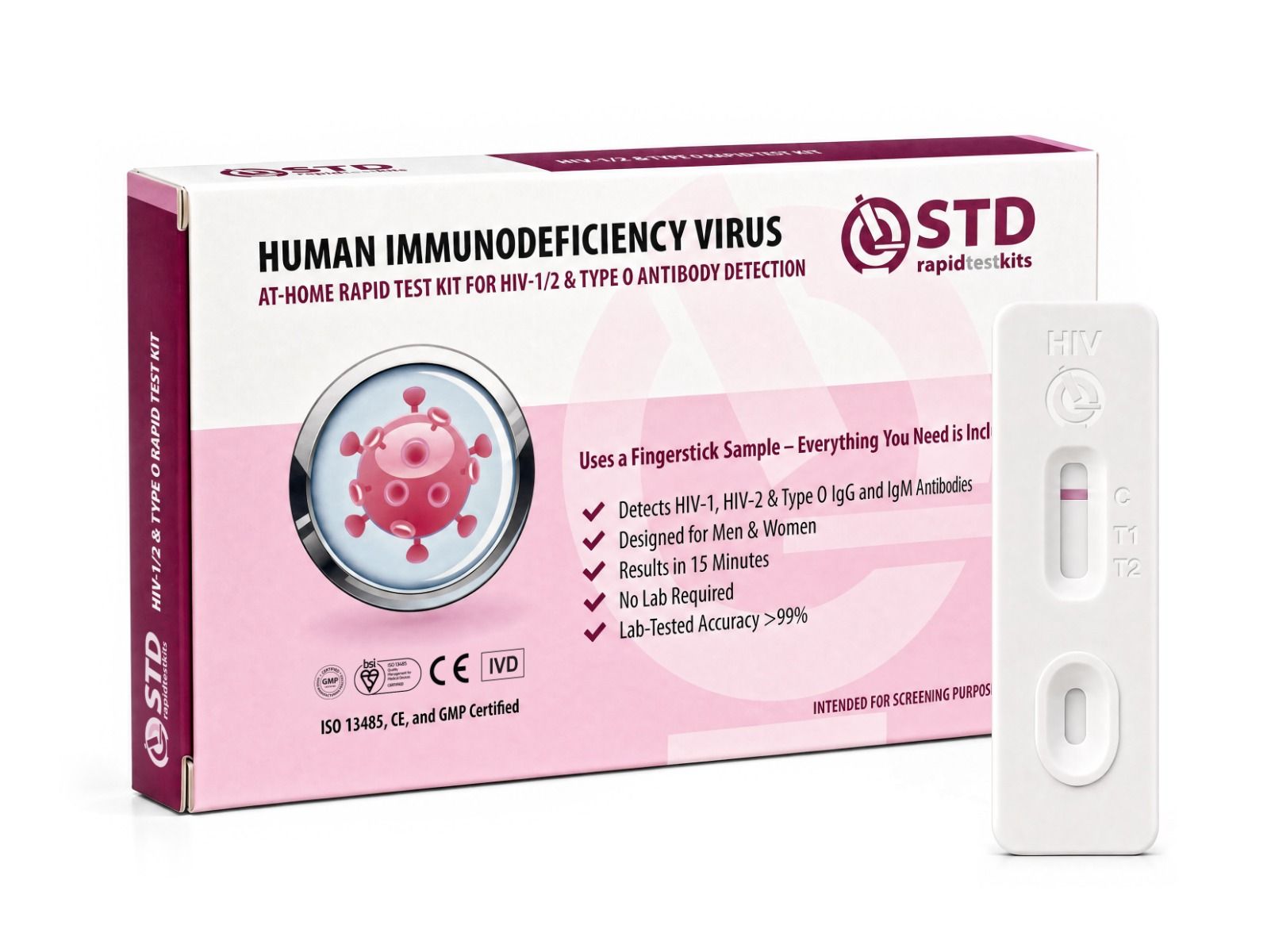
At-home HIV rapid tests are FDA-cleared for self-use and have published sensitivity and specificity figures comparable to other rapid antibody tests when used after the recommended window. Two practical points are worth flagging: read the kit's window-period guidance carefully because it varies by manufacturer, and treat any reactive result as a screen rather than a diagnosis. Confirmation is a follow-up clinic test or a telehealth-coordinated lab order, both of which Arkansas providers can arrange without an in-person visit in many counties.
For Arkansas residents, the practical priority is getting tested at all, then following the right confirmation and treatment path afterward. Clinic testing remains the more accurate first option, especially with fourth-generation panels that shorten the window period. Home testing fills the gap for people who would otherwise not test at all, or who would delay testing for months because of distance, work hours, cost, or fear of being recognized at a local clinic. Both routes end at the same place if a result is reactive: confirmatory lab testing followed by treatment.
After a result, positive or negative
Treat a reactive home result as a prompt for confirmatory lab testing and treatment, never as a standalone verdict. For syphilis, confirmation is a two-step lab panel (a treponemal test plus a non-treponemal RPR or VDRL). For HIV, confirmation is typically a fourth-generation lab antigen and antibody test followed by an HIV-1 versus HIV-2 differentiation assay. Both pathways are routine for Arkansas clinics and can often be coordinated through telehealth.
Treatment for both infections is highly effective when started early. Most early-stage syphilis cases clear with a single dose of benzathine penicillin G, with longer courses for late-latent or tertiary disease. The CDC keeps the regimen straightforward; the limiting factor is reaching the clinic, not the medication itself.
For HIV, modern antiretroviral therapy (ART) is one daily pill for most patients. People who start ART early and maintain an undetectable viral load have a normal life expectancy and cannot transmit HIV sexually. The U=U principle (Undetectable = Untransmittable) is supported by multiple large studies and is now standard guidance from the CDC and the World Health Organization.
A negative result after the appropriate window period is meaningful too. If the test was taken too early, repeating after the full window is the correct next step. If the timing was right, a negative result is the answer most people are looking for, and it also opens the door to a sensible prevention plan: condoms, regular screening, and (for people with ongoing higher-risk activity) PrEP, a daily pill that reduces the risk of acquiring HIV by more than 99 percent when taken consistently.
Four steps after any home-test result
- Confirm a reactive result with a clinic lab panel before drawing conclusions.
- Start treatment promptly when confirmation is positive: penicillin for syphilis, daily ART for HIV.
- Repeat a negative result if the test was taken inside the kit's window period.
- Build a prevention plan after a confirmed negative: condoms, regular screening, and PrEP for ongoing higher-risk activity.
Where to start in Arkansas
The state's main public-sector entry points are the local county health units (most offer free or low-cost STI testing), federally qualified community health centers, and several university-affiliated clinics around Little Rock, Fayetteville, and Jonesboro. The Arkansas Department of Health publishes a county-by-county directory and has expanded telehealth-supported testing as part of the state HIV plan (Arkansas Department of Health).
For people who would otherwise skip testing entirely (because of distance, work hours, fear of being recognized at a clinic, or the cost of a clinic visit), at-home rapid kits are the practical alternative. The kit ships in unmarked packaging, the test takes about fifteen minutes from sample to result, and any reactive result becomes the trigger for clinic confirmation rather than the end of the process.
The practical priority is getting tested at all, then following the right confirmation and treatment path afterward. For Arkansas residents in counties without easy clinic access, a home test is often the route that makes that happen, with a follow-up plan ready if a result is reactive.
Many people with sexually transmitted infections experience few or no symptoms. Without testing, infections can persist undetected and be passed to others.
Frequently asked questions
- Can syphilis go away on its own without treatment?
- No. The visible symptoms of primary and secondary syphilis (the chancre, the rash) often resolve on their own within weeks, but the infection remains in the body and continues to progress through latent and tertiary stages. Antibiotic treatment is required to clear the infection.
- What does early HIV feel like?
- Roughly two-thirds of newly infected people develop a flu-like illness two to four weeks after exposure, with fever, sore throat, swollen lymph nodes, fatigue, and sometimes a faint rash. The remaining third have no noticeable symptoms. Symptom presence or absence is not a reliable way to rule HIV in or out; testing is.
- How long after exposure should I test for HIV?
- For most at-home rapid antibody kits, the reliable testing window opens around three weeks after exposure and most results are conclusive by twelve weeks. Lab-based fourth-generation tests can shorten that window to roughly 18 to 45 days. If the exposure was recent and high-risk, talk to a clinician about post-exposure prophylaxis (PEP) within 72 hours, which works before the testing window even opens.
- Is a syphilis rash itchy?
- Usually no. The classic secondary-syphilis rash is flat or slightly raised, faintly pink to copper-colored, and often appears on the palms or soles. The lack of itching is one reason it gets dismissed as harmless and is overlooked.
- Can you have syphilis without any symptoms?
- Yes. Many people pass through the primary and secondary stages with sores or rashes that go unnoticed, and a substantial share of cases reach diagnosis only in the latent stage during routine screening. Asymptomatic syphilis is precisely why screening pregnant patients and at-risk adults is recommended.
- Are at-home HIV rapid tests accurate?
- FDA-cleared at-home HIV rapid antibody tests have sensitivity and specificity figures comparable to other rapid antibody tests when used after the recommended window period. They are reliable screens. Any reactive result should be confirmed with a fourth-generation lab test.
- Can I get syphilis or HIV from oral sex?
- Yes for both, though risk varies by act and by who is HIV-positive or syphilis-positive in the encounter. Syphilis can transmit through direct contact with a chancre on the lips, mouth, or genitals. HIV transmission through oral sex is lower-risk than vaginal or anal sex but is documented, especially when the giving partner has a higher viral load or oral injuries are present.
- Do I need to tell my partner if I test positive?
- Arkansas, like most states, has partner notification programs that help index patients tell partners anonymously through the health department if they prefer. Telling partners is part of stopping ongoing transmission and getting them treated; many clinics will assist with the process so it does not fall entirely on the patient.
- U.S. Centers for Disease Control and Prevention. HIV basics, signs and symptoms, testing, and transmission overview.
- U.S. Centers for Disease Control and Prevention. Syphilis information, including stages, screening recommendations, and treatment.
- U.S. Centers for Disease Control and Prevention. Sexually transmitted infections statistics and surveillance summaries.
- Arkansas Department of Health. STI prevention program and county-by-county testing access.
- AHEAD: America's HIV Epidemic Analysis Dashboard. National overview and interactive state data, including Arkansas priority-jurisdiction status.
- Arkansas Department of Health. State health department main directory and program access.
