
Published: December 2025 | Last updated: May 2026 | Editorial review and quality control: Martina N.
Most people who get Hepatitis B never notice the day they were exposed. Symptoms, when they come at all, can show up anywhere from six weeks to six months later. Many adults never feel anything. That gap between exposure and visible illness is exactly why timing your test matters more than waiting for symptoms to confirm what happened.
Hepatitis B has three separate clocks: the incubation period (exposure to the first symptoms), the window period (exposure to when a blood test reliably detects the virus), and the resolution timeline (how long until your body clears it, if it does). Confusing one for another is how people test too early, get a falsely reassuring negative, and miss the chance to start follow-up care. This guide spells out each clock so you can plan a test, recognize the symptoms that actually matter, and know what to do if a result comes back positive.
Key Takeaways
- Acute Hepatitis B symptoms usually appear 60 to 150 days after exposure (average 90 days), but at least half of adult infections produce no noticeable symptoms at all.
- A blood test for Hepatitis B becomes reliable around four weeks after exposure, with a confirmatory retest at three months for full clarity.
When Do Hepatitis B Symptoms Actually Start?
The CDC's clinical overview puts the incubation period for Hepatitis B at 60 to 150 days, with an average of about 90 days from exposure to the first sign of illness (CDC clinical overview of Hepatitis B). A small minority feel flu-like symptoms as early as six weeks. Others never feel anything despite a confirmed active infection.
Three factors stretch or compress that window:
- Age at exposure. Infants and young children almost never develop visible acute symptoms, yet they are far more likely to develop chronic infection. Adults are the opposite: more likely to feel sick, less likely to retain the virus long-term.
- Immune status. A weaker immune response often means fewer symptoms but slower clearance of the virus. People living with untreated HIV, transplant recipients, and patients on chemotherapy all sit in this category.
- Viral load at exposure. A larger inoculum (for example, a needlestick from a high-viral-load source) tends to mean faster onset. A low-titer exposure can delay onset by weeks.
Even when symptoms appear, they often look generic. The CDC estimates that fewer than half of acute adult cases produce noticeable symptoms during the acute phase, which is why universal screening at certain life events (pregnancy, new HIV diagnosis, entry into care for substance use disorders) catches so many otherwise silent infections. The takeaway: do not let "I feel fine" stand in for a test after a real exposure. The biology does not synchronize the way intuition expects.
| Phase | Timing post-exposure | Typical duration | What is happening |
|---|---|---|---|
| Incubation | 0 to 6 weeks | Variable | Virus replicates; HBsAg may start to appear in blood; no symptoms yet |
| Prodromal | 6 to 12 weeks | 1 to 4 weeks | Fatigue, appetite loss, low-grade fever, joint aches |
| Icteric | 7 to 16 weeks | 2 to 8 weeks | Jaundice, dark urine, pale stool, right-upper-quadrant pain (about 30 percent of adult cases) |
| Resolution or transition | 3 to 6 months | Clears or becomes chronic | Acute symptoms fade; bloodwork decides whether the infection cleared or persists |
What Symptoms Look Like in Real Life
Hepatitis B symptoms creep in slowly rather than hitting like a respiratory virus. Fatigue is usually the first complaint. People describe it as a heavy, can't-explain-it tiredness that does not respond to a weekend of rest. Appetite drops next. Food tastes off, fatty meals trigger nausea, and unintentional weight loss can start before the person registers what is happening.
By the second or third week of symptoms, the picture often shifts to liver-specific signs:
- Yellow tint to the whites of the eyes, then to the skin (jaundice)
- Dark, tea-colored urine that does not lighten with hydration
- Pale or clay-colored stools
- Aching pain or fullness under the right rib cage, where the liver sits
- Nausea, occasional vomiting, especially after fatty meals
- Joint pain that comes and goes, sometimes mimicking a viral arthritis
- Skin rash or hives (less common but reported, particularly during the prodrome)
Children and many adults skip every one of these. They feel a stretch of "off" days and move on, while the virus quietly establishes infection. Pregnancy is another situation where Hepatitis B almost always produces no symptoms but matters enormously: an undetected case in a pregnant person can transmit to the newborn during delivery, which is the entire reason a HBsAg test is on every prenatal panel (CDC clinical signs of Hepatitis B).
When jaundice appears, it usually peaks within one to two weeks and resolves over four to eight weeks. Most adult cases recover with rest and supportive care. The few that progress to severe (fulminant) hepatitis, less than 1 percent of acute adult cases, deteriorate quickly and need hospital care. Warning signs that warrant the emergency room: confusion, sudden severe abdominal pain, vomiting blood, black or tarry stools, or rapidly deepening yellow color with extreme drowsiness.
How quickly do Hepatitis B symptoms show up after exposure?
Most people who develop symptoms feel them between 60 and 150 days after exposure, with an average of 90 days. Roughly half of adult infections cause no symptoms at all. A blood test for the Hepatitis B surface antigen (HBsAg) becomes reliable around four weeks post-exposure, with a confirmatory retest at three months for full clarity.
Why Feeling Sick and Testing Positive Are Two Different Clocks
Symptom timing and test timing are governed by separate biology. The incubation period is how long until your body's reaction makes you feel ill. The window period is how long until a blood test can reliably detect the virus or your immune response to it. The two windows do not line up neatly.
For Hepatitis B, the surface antigen (HBsAg) becomes detectable in blood as early as one week and is typically positive by about four weeks after exposure. Core antibody (anti-HBc) follows shortly after, signaling exposure regardless of whether the infection is active or has cleared. Surface antibody (anti-HBs) develops later, sometimes only after the virus has cleared, and is the marker of immunity. A clinician reading a full panel uses the combination of these three markers, not any single test, to place a patient on the timeline.
The practical rules:
- A negative HBsAg test in the first two weeks after exposure does not rule out infection. The window is still open.
- A negative HBsAg test at three months after exposure, with no further exposure, is reliable.
- Symptoms that arrive before a positive test do not mean the test is wrong. They usually mean retest in two to four weeks; the virus has not yet seroconverted at high enough levels to register.
- A positive HBsAg confirms current infection but does not yet distinguish acute from chronic. Six-month follow-up bloodwork settles that question.
The opposite mistake is also common: a person feels great, assumes they are fine, and skips testing entirely. Chronic carriers can feel perfectly well for years. If you had a real exposure and feel fine, the practical move is bloodwork at four weeks and again at three months rather than waiting for your body to signal something is wrong.
| Timing concept | What it measures | Why it matters for testing |
|---|---|---|
| Incubation period | Exposure to first symptoms (60 to 150 days; average 90) | Symptoms are not a reliable signal of when to test |
| Window period | Exposure to first reliable positive test (about 4 weeks for HBsAg) | A negative test before the window closes can be a false reassurance |
| Seroconversion | When the body produces anti-HBs antibodies (weeks to months after HBsAg appears) | Confirms either natural clearance or vaccine-induced immunity |
| Acute-to-chronic cutoff | HBsAg still positive at 6 months after exposure | Marks the transition from acute infection to chronic carrier state |
When to Test for Hepatitis B After an Exposure
For the cleanest picture, test at two points: about four weeks after the exposure and again at three months. The first catches the majority of acute infections; the second confirms either clearance or detects the late-window cases. If you remain at ongoing risk (new partners, shared injection equipment, occupational blood exposure), continue routine screening every 6 to 12 months as part of a standard STI panel.
If your exposure happened in the last 24 hours and you are unvaccinated, do not wait for symptoms or a test. Hepatitis B post-exposure prophylaxis (Hepatitis B immune globulin plus the first vaccine dose) is most effective when started within 24 hours. The general windows are up to 7 days for sexual exposure and up to 14 days for percutaneous (needlestick) exposure (CDC Hepatitis B program). Call your provider, an urgent care clinic, or a sexual health clinic the same day; starting within 24 hours gives PEP its best chance of preventing the infection from taking hold.
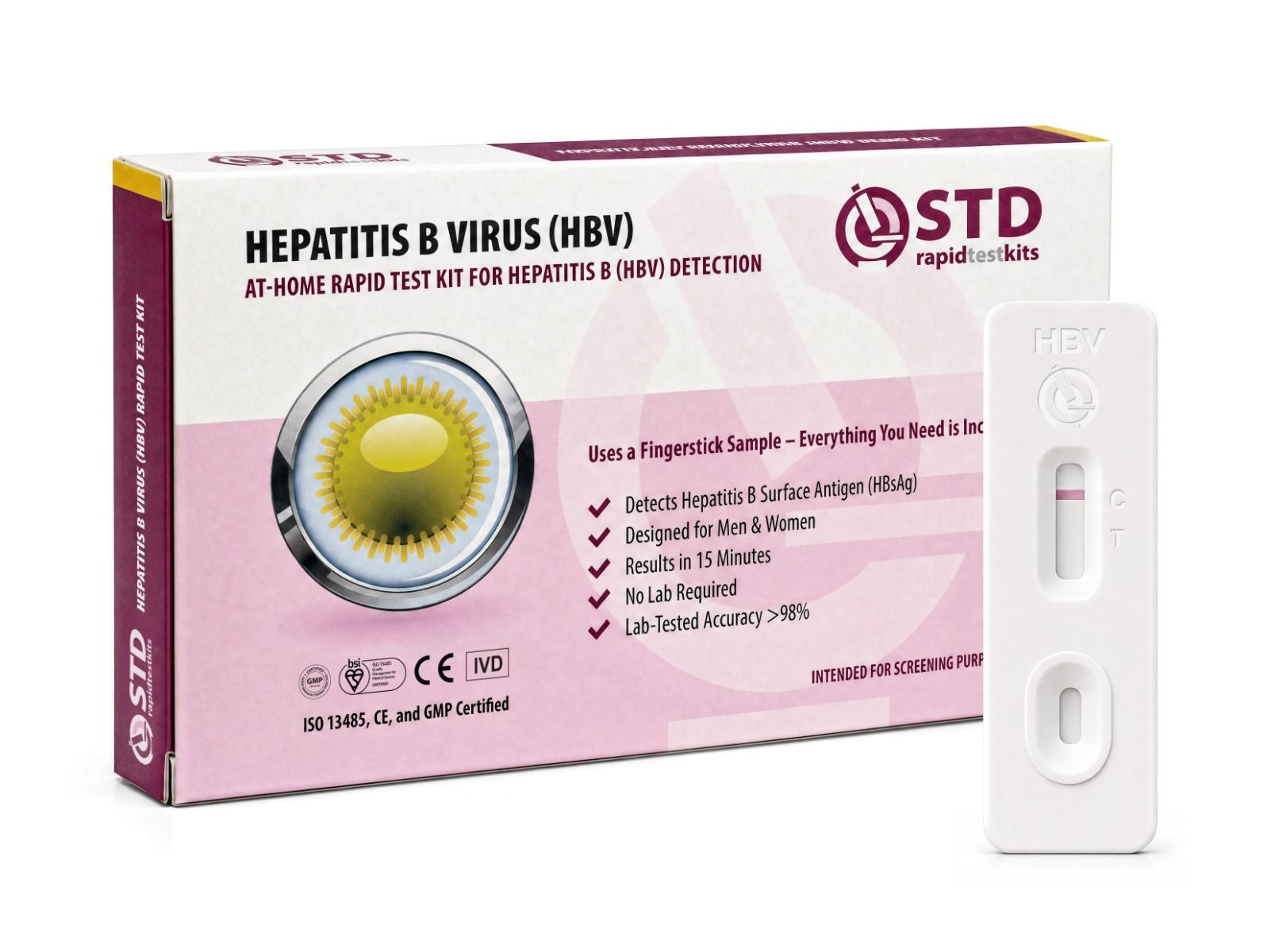
If your exposure was not high-acuity but you want clarity, an at-home rapid Hepatitis B test from day 30 onward gives you a first read in privacy. Confirm any positive with a clinic-based panel, and confirm any negative with a three-month retest if you had a known high-risk exposure. Doctors typically order a four-marker confirmatory panel: HBsAg, anti-HBs, anti-HBc total, and anti-HBc IgM. Each one tells a different part of the story, and reading them together is what distinguishes a fresh infection from an old healed one or a vaccine response.
One scenario that catches people off guard: travelers returning from regions with high Hepatitis B prevalence (parts of sub-Saharan Africa, the western Pacific, East Asia) sometimes test positive on a routine pre-employment or insurance screen with no obvious exposure they remember. If that is you, the bloodwork pattern usually points to a long-resolved past infection, not a fresh one. Do not panic before the panel comes back.
Editorial note: stdrapidtestkits.com sells the at-home rapid tests referenced in this article. We recommend kits based on fit for the reader's concern, not on commercial benefit.
Acute Hepatitis B vs Chronic Hepatitis B
Acute Hepatitis B is the first six months after infection. In healthy adults, about 90 to 95 percent of acute infections clear without antiviral treatment as the immune system develops surface antibodies. HBsAg becomes negative, anti-HBc IgG persists for life as a marker of past exposure, and anti-HBs becomes positive as a marker of immunity. People who clear acute Hepatitis B almost never re-acquire active infection from a new exposure.
The remaining 5 to 10 percent of adult infections become chronic, defined as HBsAg still positive six months after exposure. Chronic Hepatitis B can stay quiet for years. Many people feel completely well. The damage shows up on lab work (elevated liver enzymes, sometimes intermittently), imaging (fatty changes, early fibrosis on ultrasound or elastography), and eventually, in a subset of patients, cirrhosis or hepatocellular carcinoma. The progression is slow but real, and it is the reason chronic carriers need lifelong follow-up even when nothing feels wrong.
The age at which infection happens drives the chronic-versus-acute split sharply. For adults diagnosed in the acute phase, the six-month bloodwork result drives the entire management plan: HBsAg negative at six months with anti-HBs positive means the infection has cleared and the person has lifelong immunity; HBsAg still positive means chronic infection and a shift to long-term monitoring. The public-health math behind universal infant vaccination and prenatal HBsAg screening follows from the same age-and-chronicity relationship: the earlier the exposure, the harder the virus is to clear, so the strategy is to prevent exposure altogether at the highest-risk ages.
Chronic Hepatitis B risk by age at infection (CDC)
- Infants infected at birth: approximately 90 percent develop chronic infection.
- Children infected between ages 1 and 5: approximately 30 percent develop chronic infection.
- Older children and adults: 5 to 10 percent develop chronic infection; about 95 percent of infected adults recover completely.
How Long Does Hepatitis B Stay in Your Body?
For acute cases that clear, the virus typically becomes undetectable in blood within 4 to 6 months. The body retains immunological memory afterward: anti-HBc IgG persists for life and anti-HBs persists in most people, meaning a future exposure usually causes no new clinical infection.
For chronic cases, the virus can persist for decades. Even when blood levels are low (the "inactive carrier" or HBeAg-negative chronic state), the viral genome sits in a long-lived form inside liver cell nuclei called covalently closed circular DNA (cccDNA). cccDNA is the reason a true cure for Hepatitis B does not yet exist: current antivirals suppress new viral particles but do not eliminate this hidden reservoir. Reactivation becomes a real risk when the immune system is suppressed by chemotherapy, organ transplant medications, untreated HIV, or certain biologic drugs for autoimmune disease. Patients about to start any of these therapies are routinely screened for past Hepatitis B exposure for exactly this reason; if the screen is positive, prophylactic antivirals are started before the immunosuppression begins.
Persistence is also why chronic Hepatitis B requires lifelong monitoring even when the person feels well. Hepatologists typically schedule periodic liver function tests, HBV DNA viral loads, and liver imaging (ultrasound or transient elastography) to screen for hepatocellular carcinoma in higher-risk patients such as those with cirrhosis, a family history of liver cancer, or certain viral genotypes (Hepatitis B Foundation patient resources). For people with stable inactive chronic Hepatitis B, this monitoring is the entire management plan. For people with active replication or rising enzymes, antiviral therapy is added.

What to Do If You Test Positive
A positive Hepatitis B result is not a worst-case scenario. The first step is confirmation. A rapid at-home test detects the surface antigen, which is a strong signal, but a positive result should be followed by a clinic-based confirmatory panel that breaks the result into surface antigen (HBsAg), surface antibody (anti-HBs), total core antibody (anti-HBc), core antibody IgM (anti-HBc IgM), and a quantitative HBV DNA viral load.
That panel places you in one of four categories:
- Acute infection. HBsAg positive, anti-HBc IgM positive. Manage with rest, hydration, follow-up labs at 3 and 6 months. Most adult cases clear without antiviral treatment.
- Resolved past infection. HBsAg negative, anti-HBc positive, anti-HBs positive. No active infection, lifelong immunity, no transmission risk to partners.
- Vaccination-only immunity. HBsAg negative, anti-HBc negative, anti-HBs positive. Vaccinated and protected, no exposure history.
- Chronic infection. HBsAg positive for more than 6 months. Refer to hepatology or infectious disease for monitoring and possible antiviral therapy.
For acute Hepatitis B, most adults need rest, hydration, and follow-up bloodwork. Specific antiviral treatment is rarely required unless the liver shows signs of severe damage (rising bilirubin, falling albumin, prolonged clotting times). Avoid alcohol entirely while symptomatic. Stop or substitute acetaminophen and other medications that strain the liver, in consultation with your provider.
For chronic Hepatitis B, current first-line antivirals (tenofovir disoproxil, tenofovir alafenamide, entecavir) effectively suppress viral replication and lower the long-term risk of cirrhosis and hepatocellular carcinoma, though they do not eliminate the virus from the body (Hepatitis B Foundation: approved drugs for adults). Treatment decisions depend on viral load, liver enzyme patterns, age, and evidence of liver fibrosis. Not every chronic carrier needs medication; many are monitored without treatment for years.
Notify recent sexual partners and anyone you have shared needles with. They can test and, if not yet infected, receive PEP and vaccination. Many state health departments offer anonymous partner-services programs that handle the notification on your behalf if you would prefer not to make the calls directly. Vaccinated partners are at very low risk; unvaccinated partners benefit most from a same-week appointment.
Approximately 90 percent of infected infants and 30 percent of children infected between 1 to 5 years will remain chronically infected with HBV. By comparison, approximately 95 percent of infected adults recover completely from HBV infection and do not become chronically infected.
FAQs
- How long after exposure do Hepatitis B symptoms appear?
- Symptoms, when they occur at all, typically appear 60 to 150 days after exposure. The more actionable number is four weeks post-exposure, when an HBsAg blood test becomes meaningful. Half of adult infections produce no symptoms, so waiting to feel sick before testing risks missing the window for early detection and, if you are unvaccinated, for post-exposure prophylaxis.
- Can you have Hepatitis B with no symptoms at all?
- Yes. Roughly half of adults with acute Hepatitis B have no symptoms or only vague ones like mild fatigue. Many chronic cases stay silent for years and are only discovered through routine bloodwork, prenatal screening, or pre-employment panels. The absence of symptoms tells you nothing about whether you carry the virus.
- How soon after exposure can a Hepatitis B test detect infection?
- The surface antigen (HBsAg) typically becomes detectable around four weeks post-exposure, sometimes as early as one week. A confirmatory test at three months is the medical standard. If you test before four weeks, treat a negative result as preliminary and retest later.
- Does Hepatitis B always cause jaundice?
- No. About 30 percent of symptomatic adult cases develop visible jaundice. The other 70 percent either stay subclinical or have only mild non-specific symptoms like fatigue and appetite loss. The absence of jaundice does not mean the infection is mild or that the liver is unharmed.
- If I had symptoms but they faded, am I in the clear?
- Not automatically. Acute symptoms fade as the immune system gets the virus under control, but they can fade for two different reasons: the body cleared the infection, or the infection settled into a chronic carrier state. Six-month follow-up bloodwork settles it. HBsAg negative at six months means cleared; HBsAg still positive means chronic.
- Can the Hepatitis B vaccine still help if I have already been exposed?
- Yes, when started early. Hepatitis B post-exposure prophylaxis (Hepatitis B immune globulin plus the first dose of the vaccine series) is most effective within 24 hours of exposure. The window extends to about 7 days for sexual exposure and 14 days for needlestick. Call a clinic the same day if you can, even before you have a test result.
- Can you catch Hepatitis B more than once?
- After natural clearance or completion of the vaccine series, most people develop lasting immunity through surface antibodies. If your anti-HBs titer fades over decades, your doctor may recommend a booster, but you do not re-acquire active disease from a previously cleared infection. Reactivation of a hidden chronic infection during immunosuppression is a separate scenario and is the reason providers screen before chemotherapy or biologic therapy.
- Is it safe to have sex if I have chronic Hepatitis B?
- Yes, with two precautions: use condoms, and make sure your partners are vaccinated. The Hepatitis B vaccine is more than 95 percent effective in healthy adults, so a fully vaccinated partner is at very low risk regardless of your viral load. Disclose your status so partners can verify their own vaccination history, and avoid sharing toothbrushes, razors, or any item that could carry blood.
- U.S. Centers for Disease Control and Prevention. Hepatitis B program landing page covering surveillance, transmission, vaccination, post-exposure prophylaxis, and prevention guidance.
- U.S. Centers for Disease Control and Prevention. Clinical overview of Hepatitis B for healthcare providers, including incubation period (60 to 150 days), serologic markers, and age-stratified chronic-infection probabilities (90 percent of infants; 30 percent of children aged 1 to 5; 5 to 10 percent of older children and adults).
- U.S. Centers for Disease Control and Prevention. Clinical signs and symptoms of acute and chronic Hepatitis B.
- World Health Organization. Hepatitis B fact sheet covering global epidemiology, transmission, testing recommendations, treatment, and prevention.
- Hepatitis B Foundation. Approved antiviral drugs for adults with chronic Hepatitis B, including tenofovir disoproxil, tenofovir alafenamide, and entecavir.
- Hepatitis B Foundation. Patient-facing resources on living with Hepatitis B, monitoring schedules, treatment options, and partner notification.
