







Quick Answer: Strong vaginal odor is most commonly caused by bacterial vaginosis (BV), but it can also be linked to infections like trichomoniasis or changes in vaginal pH. If the smell is new, persistent, or paired with discharge or irritation, testing is recommended.
This Isn’t Just “Bad Hygiene”, Your Body Is Shifting
Let’s clear something up immediately: a strong vaginal odor is almost never about being “dirty.” Vaginas are self-cleaning ecosystems, and when the smell changes, it usually means the balance inside has shifted, not that you’ve done something wrong.
Inside the vagina, there’s a delicate mix of bacteria that keeps everything stable. When that balance tips, because of sex, new partners, products, hormones, or even stress, the scent can change. Sometimes subtly. Sometimes in a way that makes you pause mid-day and wonder if anyone else can notice it too.
One patient described it like this: “It wasn’t just stronger, it was different. Like something wasn’t right, even though nothing else hurt.” That instinct matters. Your body doesn’t always scream, it often whispers first.
What Different Vaginal Odors Can Actually Mean
Not all odors point to the same cause. The type of smell, and what comes with it, can help narrow things down.
| Odor Type | Possible Cause | Other Clues |
|---|---|---|
| Fishy | Bacterial vaginosis (BV) | Thin discharge, stronger after sex |
| Musty or foul | Trichomoniasis | Irritation, green/yellow discharge |
| Sour or tangy | Normal pH variation | No discomfort |
| Rotten or very strong | Possible retained object or infection | Sudden, intense change |
The key is pattern recognition. A one-time change after sex? That can happen. A smell that sticks around for days or keeps coming back? That’s when it’s worth paying attention.
The Most Common Culprit: BV (And Why It’s So Misunderstood)
If you’re Googling “why does my vagina smell bad,” most roads lead here, and for good reason. Bacterial vaginosis (BV) is the leading cause of strong vaginal odor in women of reproductive age.
BV isn’t an STD, but it’s closely tied to sexual activity. New partners, multiple partners, or even just changes in sexual patterns can disrupt the vaginal microbiome. That disruption allows certain bacteria to overgrow, producing that unmistakable fishy smell.
What makes BV tricky is how subtle it can be. Many people don’t feel pain. There’s often no itching. Just a shift in scent and maybe a change in discharge. It’s easy to ignore, or second-guess, until it lingers.
“I kept thinking it would go away on its own,” one 27-year-old shared. “But every time I had sex, the smell came back stronger. That’s when I realized it wasn’t random.”
The good news? BV is treatable. But it doesn’t usually fix itself, and over-the-counter products often miss the mark because they don’t address the bacterial imbalance directly.

People are also reading: Herpes Outbreak? These Test Kits Also Come with Real Support
When It’s Not BV: The STD Conversation No One Wants (But Needs)
This is the part people hesitate to think about, but it matters. Some sexually transmitted infections can make you smell bad, especially if you have other symptoms as well.
Trichomoniasis is the main one to know here. A parasite causes it, and it often makes the smell stronger and worse than normal BV. The discharge may look different, sometimes yellow-green or frothy, and irritation is more common.
Other infections like chlamydia or gonorrhea don’t usually cause strong odor on their own, which is why they’re often missed. You can have them without any smell at all. That’s why odor alone isn’t enough to rule things in, or out.
Here’s the real takeaway: if there’s a new smell and any change in your sexual history, testing isn’t overreacting, it’s clarity.
What Actually Triggers These Changes (Even When You’re Careful)
One of the most frustrating parts of this experience is feeling like you did everything “right” and it still happened. That’s because vaginal balance is sensitive, and a lot of normal things can shift it.
| Trigger | Why It Matters |
|---|---|
| Sex (especially unprotected) | Semen alters vaginal pH |
| New partner | Introduces new bacteria |
| Douching or scented products | Disrupts natural balance |
| Hormonal changes | Affects vaginal environment |
| Antibiotics | Kill good bacteria too |
This is why changes in smell don't always mean infection, but they shouldn't be ignored if they last. It matters what the situation is. Timing is important. And patterns are the most important thing.
“Do I Need to Get Tested?”, Here’s the Honest Answer
If you’re asking that question, you’re already paying attention, and that’s a good thing.
You don’t need to panic-test every time something feels slightly off. But there are clear moments where testing makes sense. If the smell is strong, new, and sticking around for more than a few days, that’s one. If it’s paired with discharge changes, irritation, or discomfort, that’s another.
And if there’s been a new partner, or even just uncertainty, testing becomes less about fear and more about information. Knowing what’s going on puts you back in control.
For many people, the barrier isn’t willingness, it’s access, privacy, or timing. That’s where at-home options can shift things.
Take back control of your health. You can explore discreet, doctor-trusted options at STD Rapid Test Kits without waiting weeks for appointments or navigating awkward conversations.
Check Your STD Status in Minutes
Test at Home with Remedium7-in-1 STD Test Kit
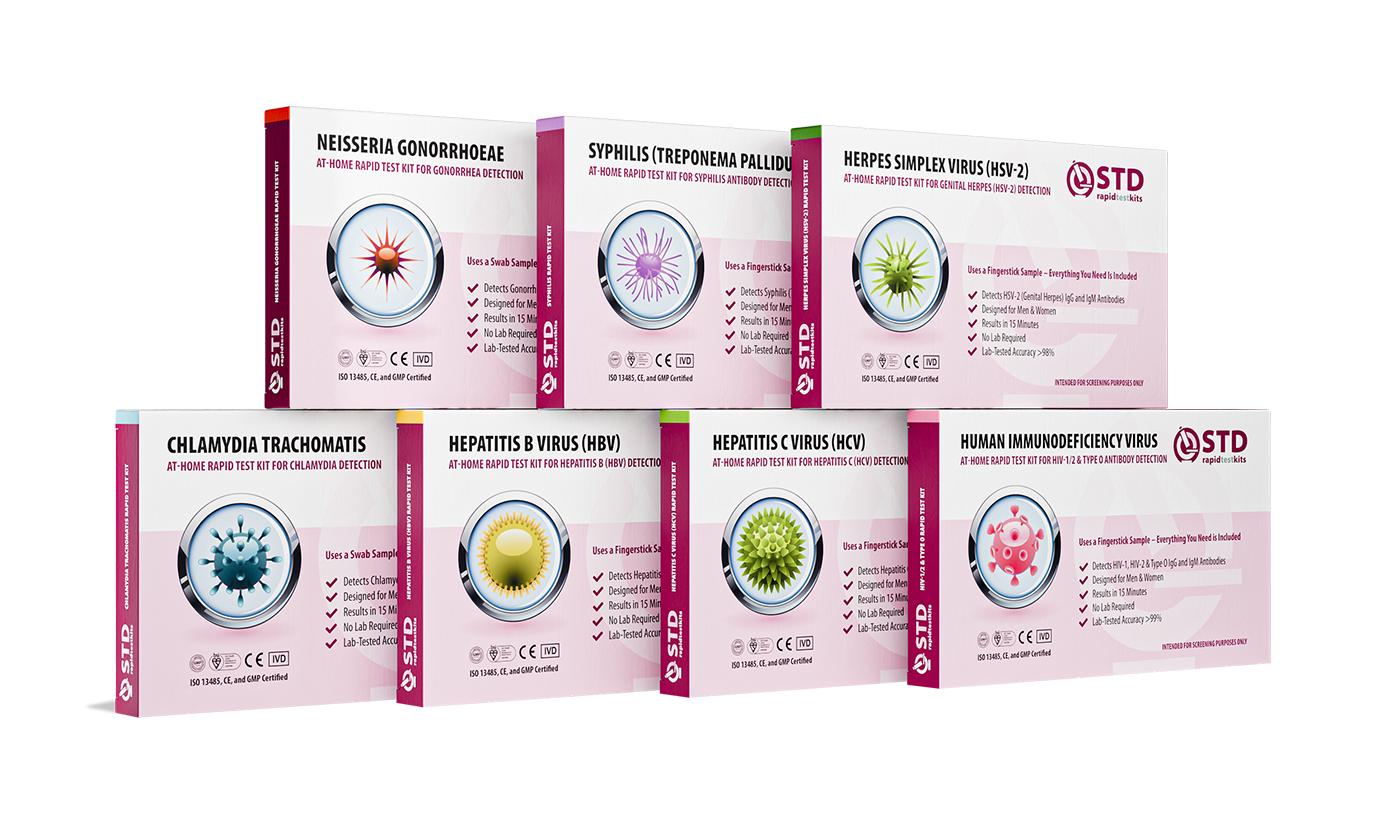
 For Men & Women
 Results in Minutes
 No Lab Needed
 Private & Discreet
Order Now $129.00 $343.00
For all 7 tests
What Not to Do When You Notice a Strong Odor
When something feels off down there, the instinct is to fix it fast. Most people head straight to scented washes, wipes, or home remedies they saw online. The problem is, these often make things worse, not better.
Douching is one of the biggest culprits. It might temporarily mask the smell, but it disrupts the natural bacteria even more, giving harmful bacteria space to grow. The same goes for heavily fragranced soaps or “feminine hygiene” sprays that promise freshness but deliver imbalance.
One woman put it bluntly: “I kept trying to clean it away, but the more I did, the stronger it got.” That cycle is incredibly common. The issue isn’t cleanliness, it’s chemistry.
If there’s an infection or imbalance, covering it up won’t solve it. You need to identify what’s actually causing the change.
How to Tell If It’s BV, an STD, or Something Else
This is where things can feel confusing, because symptoms overlap. But there are patterns that help you get closer to an answer before testing.
BV tends to show up quietly. The smell is the main signal, often described as fishy, especially after sex. Discharge may be thin and grayish, but irritation is usually minimal or absent.
Trichomoniasis, on the other hand, is louder. There are often visible signs like itching, burning, or unusual discharge that may look yellow-green or frothy, along with a stronger, more unpleasant smell.
And then there’s the in-between space, cases where there’s odor but no other obvious symptoms. That’s where people get stuck. It could still be BV. It could be a mild imbalance. Or it could be something that hasn’t fully developed yet.
The truth is, smell alone can’t diagnose you. It can guide you, but confirmation comes from testing.
What Happens If You Ignore It?
Sometimes the smell fades on its own, especially if it was triggered by something temporary like sex or a short-term pH shift. But when it doesn’t, ignoring it can lead to longer-term issues.
Untreated BV, for example, can increase susceptibility to other infections, including STDs. Trichomoniasis won’t resolve without treatment and can continue to cause irritation and transmission risk to partners.
This isn’t about fear, it’s about trajectory. Small imbalances can stay small if addressed early. Left alone, they can become more disruptive, both physically and emotionally.
The earlier you understand what’s happening, the easier it is to fix.
Testing Isn’t About Worst-Case Scenarios, It’s About Clarity
There’s a moment most people hit where curiosity turns into low-grade anxiety. You start checking more often. Googling more specific questions. Wondering if you should do something or just wait it out.
This is where testing changes the experience entirely. Instead of guessing, you get a clear answer. And most of the time, the answer leads to something manageable and treatable.
At-home testing has made that step a lot more accessible. No waiting rooms. No awkward conversations. Just straightforward information you can act on.
If you want a broad check that covers common infections linked to odor and discharge changes, a combo test is often the most efficient route. This at-home combo STD test kit screens for multiple infections at once, helping you rule things out, or catch something early.
“I didn’t realize how much mental space it was taking up until I finally tested,” one user said. “The relief of just knowing was bigger than I expected.”

People are also reading: Can You Get Herpes If You're a Virgin? Yes, Here's How
What This Feels Like in Real Life (And Why It Messes With Your Head)
People don’t usually talk about this part, but it matters. A strong vaginal odor isn’t just physical, it gets in your head fast. You start adjusting how you sit, how close you stand to people, whether someone might notice. It turns something private into something that feels visible, even when it’s not.
One patient described it like this: “I kept thinking other people could smell it, even though logically I knew they probably couldn’t. It made me hyper-aware of my body in a way I’d never felt before.”
That mental loop, notice, question, Google, repeat, is incredibly common. And the longer you don’t have an answer, the louder it gets. Not because the symptom is getting worse, but because uncertainty fills in the gaps.
This is why clarity matters more than perfection. You don’t need to diagnose yourself. You just need to move from guessing to knowing.
How Long Is Too Long to Wait?
There’s no exact timer, but there is a pattern. If a smell shows up and disappears within a day or two, especially after sex, that’s usually just a temporary shift in pH. Your body recalibrates, and things go back to baseline.
But if you’re hitting day three, four, five, and it’s still there or becoming more noticeable, that’s when it stops being a passing change and starts looking like an imbalance or infection.
Another sign is repetition. If the odor keeps coming back after sex, or after your period, that’s not random. That’s a pattern. And patterns are your body’s way of saying something isn’t stabilizing on its own.
You don’t have to rush to urgent care over it. But you also don’t need to sit with it for weeks hoping it resolves if it clearly isn’t.
The Quiet Risk of Waiting It Out
Most people delay testing for the same reason: it doesn’t feel “serious enough.” There’s no pain, no fever, nothing dramatic. Just a smell that’s… off. Easy to downplay. Easy to postpone.
But some of the most common infections don’t come in loud. BV can linger. Trichomoniasis can persist. And while they’re both treatable, they don’t typically disappear without the right intervention.
There’s also a secondary layer people don’t always think about. An untreated imbalance can make the vaginal environment more vulnerable to other infections. It’s not just about the smell, it’s about what that imbalance allows over time.
This isn’t about fear. It’s about momentum. Addressing something early keeps it simple. Waiting often just stretches out the timeline.
If You’re Trying to “Figure It Out” Before Testing, Read This
It’s completely normal to try to self-assess first. Everyone does it. You compare symptoms, read forums, try to match what you’re experiencing to what others describe.
The problem is, symptoms don’t always follow clean scripts. BV doesn’t always smell exactly the same for everyone. Trichomoniasis doesn’t always come with obvious irritation. And normal variations can sometimes feel more dramatic than they actually are.
So what ends up happening is this half-certainty. You think you know what it is, but you’re not fully sure. Enough to worry, not enough to act. That’s the most uncomfortable place to be.
Testing cuts through that. It replaces “I think” with “I know.” And once you know, the next step becomes obvious, whether that’s treatment, reassurance, or just moving on without that background stress.
Check Your STD Status in Minutes
Test at Home with Remedium6-in-1 STD Rapid Test Kit
 For Men & WomenResults in MinutesNo Lab NeededPrivate & Discreet
Order Now $119.00 $294.00
For all 6 tests
The Part No One Says Out Loud: This Is Extremely Common
If this is happening to you, you are not the exception, you are the norm. Vaginal odor changes are one of the most searched and experienced symptoms in sexual health. It just doesn’t get talked about openly.
That silence creates this illusion that something unusual is happening, when in reality, millions of people go through the exact same thing at different points in their lives.
“I thought I was the only one dealing with this,” one 31-year-old said. “Then I mentioned it to a friend and she was like, yeah, that happened to me last year.”
That’s usually how it goes. Quietly common. Rarely discussed. Completely manageable once you actually address it.
The shift happens when you stop treating it like something mysterious or embarrassing, and start treating it like what it is: a signal you can respond to.
FAQs
1. Why does my vagina suddenly smell… different?
Usually, it’s a shift in your vaginal pH, most often from BV or sex-related changes. It can happen after something as normal as a new partner or even your period. If it sticks around longer than a few days, your body’s probably asking for a closer look.
2. Okay but real talk, does a fishy smell mean I have an STD?
Not automatically. That classic fishy smell is way more commonly BV than an STD. But here’s the honest part: some infections can overlap in symptoms, so if there’s any doubt, testing clears it up fast instead of letting your brain spiral.
3. I don’t have itching or pain, just odor. Should I still care?
Yeah, this is actually how BV shows up for a lot of people, quiet, no drama, just a smell that wasn’t there before. No pain doesn’t mean no issue. It just means your body is being subtle about it.
4. Why does it smell stronger after sex?
Semen changes your vaginal pH, which can amplify odor temporarily. Think of it like throwing off the balance for a bit. If the smell fades within a day or two, that’s normal. If it lingers or keeps happening, that’s when BV starts to enter the chat.
5. Be honest, can I just wash it away?
I get the instinct, but no. Over-washing or using scented products usually makes things worse, not better. This isn’t a surface issue, it’s about internal balance. You can’t scrub your way out of that.
6. What if it’s been a week and it’s still there?
That’s your cue. At that point, it’s less likely to be a temporary fluctuation and more likely something like BV or an infection that needs treatment. The longer you wait, the more uncomfortable and unsure you will be.
7. Can I have an STD without any smell at all?
Absolutely. Most STDs are actually pretty quiet, no smell, no obvious symptoms. That’s why relying on odor alone can give a false sense of security. Testing fills in the gaps your senses can’t.
8. This is embarrassing… do people usually wait before getting checked?
All the time. You’re in very good company. A lot of people wait, Google, overthink, and only test when it doesn’t go away. There’s no judgment here, just a chance to shorten that whole cycle next time.
9. What’s the fastest way to stop stressing about it?
Get an answer. Seriously. Once you know what’s going on, everything gets simpler, whether it’s treatment, reassurance, or just moving on. The unknown is always worse than the outcome.
10. If it is BV or something similar, is it a big deal?
Not in the way your anxiety might be telling you. BV is extremely common and very treatable. It’s more of a “handle it and move on” situation than a life-altering diagnosis.
You Deserve Clarity, Not Guesswork
A strong vaginal odor can feel small on paper, but in real life, it lingers in your thoughts. You notice it at random moments. You question it. You replay recent choices. That mental loop is often more exhausting than the symptom itself.
The goal isn’t to panic over every change. It’s to understand what your body is signaling. If the smell showed up after sex and faded, that’s one thing. If it’s sticking around, getting stronger, or paired with discharge, that’s different. Each detail helps separate a temporary shift from something that needs attention.
Don’t wait and wonder. If infection is even a possibility, start with something simple and private like the Combo STD Home Test Kit. You get real answers without the spiral, and you can move forward knowing exactly what you’re dealing with.
How We Sourced This Article: This guide combines clinical recommendations from organizations like the CDC, NHS, and Mayo Clinic with peer-reviewed research on vaginal microbiome balance and STI symptom patterns. We also incorporated real-world patient experiences and common symptom-search behavior to reflect how people actually interpret and respond to changes like vaginal odor.
Sources
1. Centers for Disease Control and Prevention – Bacterial Vaginosis Fact Sheet
2. Centers for Disease Control and Prevention – Trichomoniasis Fact Sheet
3. NHS – Bacterial Vaginosis Overview
4. World Health Organization – Trichomoniasis Fact Sheet
5. American College of Obstetricians and Gynecologists – Vaginitis FAQ
6. Planned Parenthood – What Is Bacterial Vaginosis?
7. Cleveland Clinic: What Causes Vaginitis, How to Treat It, and How to Avoid It
About the Author
Dr. F. David, MD is a board-certified infectious disease specialist who works to prevent, diagnose, and treat STIs. He combines clinical precision with a direct, sex-positive approach that prioritizes clarity, privacy, and patient empowerment.
Reviewed by: Elena R. Morales, MD, OB/GYN | Last medically reviewed: March 2026
This article is not meant to give you medical advice; it's meant to give you information.


