
Published: November 2025 | Last updated: May 2026 | Editorial review and quality control: Martina N.
Are at-home herpes tests accurate?
Yes, when you use a rapid lateral-flow blood antibody test at the right point in the window: 6 to 12 weeks after a suspected exposure for an initial screen, with a 12 to 16 week confirmation for HSV-2 if doubt remains. These kits detect IgG antibodies to HSV-1 or HSV-2 from a fingerstick blood drop and produce a result in about 15 minutes. They screen for past or chronic infection, not active sores. If you currently have a lesion, a clinic-administered PCR/NAAT swab of the lesion within 48 to 72 hours is the more sensitive test for that specific situation.
Few sexual-health questions carry as much built-in dread as “could this be herpes?” The infection itself is often mild and very common. The testing process, by contrast, has historically been confusing, inconsistently offered at clinics, and weighed down by stigma. At-home herpes testing changes the access problem. It does not change the underlying biology, which means timing, sample type, and result interpretation still matter as much as they always did. The goal of this guide is simple: explain what an at-home herpes test can and cannot do, when the result is trustworthy, and what to do next regardless of which line shows up.
Key Takeaways
- At-home rapid herpes kits are fingerstick blood antibody tests, not lesion swabs. They tell you whether your immune system has produced HSV-1 or HSV-2 antibodies, not whether a current sore is herpes.
- Wait at least 6 to 12 weeks after a suspected exposure before trusting a negative, with a confirmation pass at the 12 to 16 week mark for HSV-2 if doubt remains. Earlier testing can miss a real infection because antibodies have not yet developed.
Who actually benefits from home herpes testing
Home testing serves three groups especially well. The first is people whose nearest sexual-health clinic is far, expensive, or hard to access during work hours. The second is people who would test more often, or at all, if the experience felt private. The third is people whose general practitioner would not run an HSV antibody test on request, since many primary-care guidelines specifically advise against routine HSV serology in asymptomatic adults (the U.S. Preventive Services Task Force reaffirmed its Grade D recommendation against routine screening in 2023, citing the false-positive rate in low-prevalence populations).
That last point matters more than it sounds. If you ask for an STI panel at a typical clinic, herpes is usually not included. You have to ask for it specifically, and even then a clinician may decline because of the false-positive concern. An at-home rapid kit lets you make the screening decision yourself when you have a specific reason to know, such as a partner disclosure or a recurring symptom you want to investigate. If you want to skip the wait entirely, you can order an at-home herpes test and run it on your own schedule. Disclosure: this site sells at-home STI test kits, so product links here reflect editorial suitability for the reader's concern, not paid placement.
None of that changes the underlying limits of the test. It still cannot see an infection your immune system has not yet responded to, and it still cannot distinguish a true positive from a cross-reactive false positive in every case.
Most “standard” clinic STI panels exclude HSV serology by default, citing the false-positive concern in low-prevalence populations. If you want a herpes blood test as part of a clinic workup, you usually have to ask for it specifically, and a clinician may still decline. The at-home test exists partly to close that access gap.
What rapid at-home herpes tests actually measure
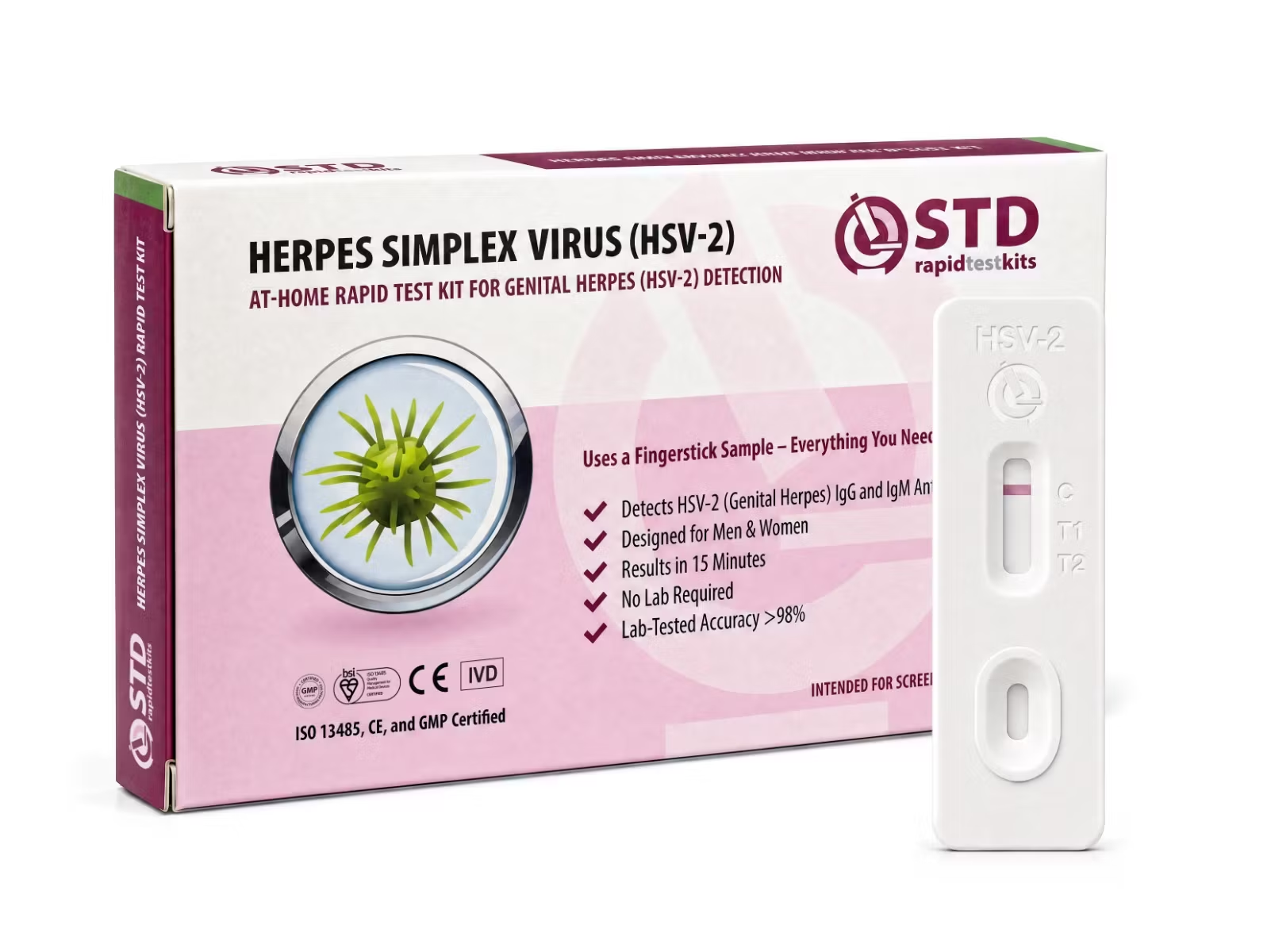
Almost every credible at-home herpes test sold to consumers is a lateral-flow blood antibody test. You collect a fingerstick blood drop, place it on a cassette with a buffer solution, and read the result through a small viewing window 10 to 15 minutes later. The mechanism is the same one used by COVID-19 rapid antigen cassettes and by pregnancy strips: capillary action draws the sample across a strip impregnated with capture antibodies, which produce a visible colored line if the target is present.
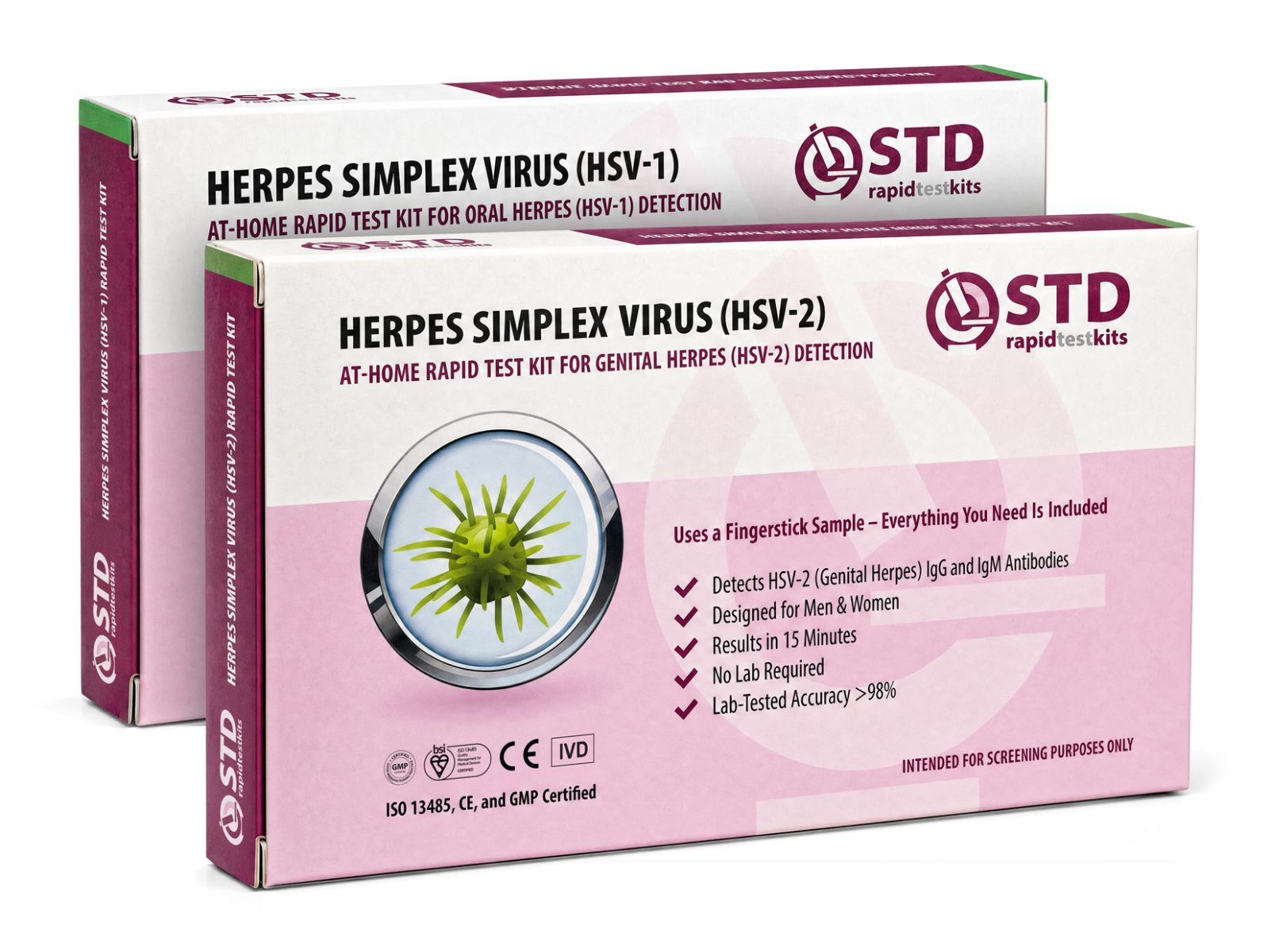
The target in this case is type-specific IgG antibody, either to HSV-1 or to HSV-2. That has two consequences worth understanding before you test. First, the test cannot work until your immune system has produced antibodies, which is the whole reason a window period exists. Second, the test does not analyze a lesion or a swab from a suspect sore. If you have an active blister or ulcer right now, the most informative test is a direct PCR or NAAT swab of that lesion, which is performed at a clinic and detects viral DNA rather than your immune response. We do not sell that kind of swab. If your concern is an active sore, the right step is a clinic visit, not an antibody kit.
The two test types answer different questions. An antibody test answers “have I been infected at some point.” A lesion PCR answers “is this specific sore caused by HSV.”
Our at-home herpes kits are rapid lateral-flow immunoassays. Lab-based testing uses different chemistry: ELISA for confirmatory antibody work, or PCR/NAAT for direct viral detection from a lesion swab. Lateral-flow rapid tests are excellent for at-home screening, but a positive result is generally worth confirming with a lab antibody panel before making major decisions. The two methods are complementary, not equivalent.
Which test fits which moment
The mismatch between test type and clinical moment is where most testing mistakes happen. Knowing which tool fits your situation prevents the most common error: using the wrong one and then over-trusting the result.
Viral testing of an active lesion is what a clinician does when you arrive with a visible sore. They swab the lesion, and the lab runs nucleic acid amplification testing (NAAT), typically PCR, to detect HSV DNA directly in the sample. The CDC's herpes testing guidance notes this approach “works best,” and the American Academy of Family Physicians describes PCR as the preferred test for active lesions, with sensitivity and specificity greater than 95%. Sensitivity is highest in the first 48 to 72 hours after a sore appears, before the lesion begins to crust over. We do not sell at-home lesion swab kits. If a sore appeared in the last few days, a same-week clinic appointment will give you a faster, more sensitive answer than any blood test ordered to your door.
Type-specific IgG serology on a blood sample is what every rapid at-home herpes kit does, including ours. The strength of serology is that it tells you whether you carry the virus at all, including infections you never noticed. The limitation is timing: antibodies take weeks to develop, so a blood test taken on day three of a first-ever outbreak can read negative even when the infection is real.
| Test Type | What It Detects | When It Fits Best | Typical Limitation |
|---|---|---|---|
| Viral PCR or NAAT (clinic swab) | HSV DNA from a sample of the active lesion itself | Day 1 to day 3 of a visible sore, before crusting | Requires an active sore and a clinic visit. Not available as an at-home kit on this site. |
| Type-specific IgG serology (at-home blood) | Antibodies your immune system produced against HSV-1 or HSV-2 | 6 to 12 weeks (often longer for HSV-2) after exposure, or to confirm a past or chronic infection | Reads negative inside the window period. HSV-2 IgG can produce false positives in low-prevalence settings; confirmatory testing may be needed. |
The window period: why timing changes the answer
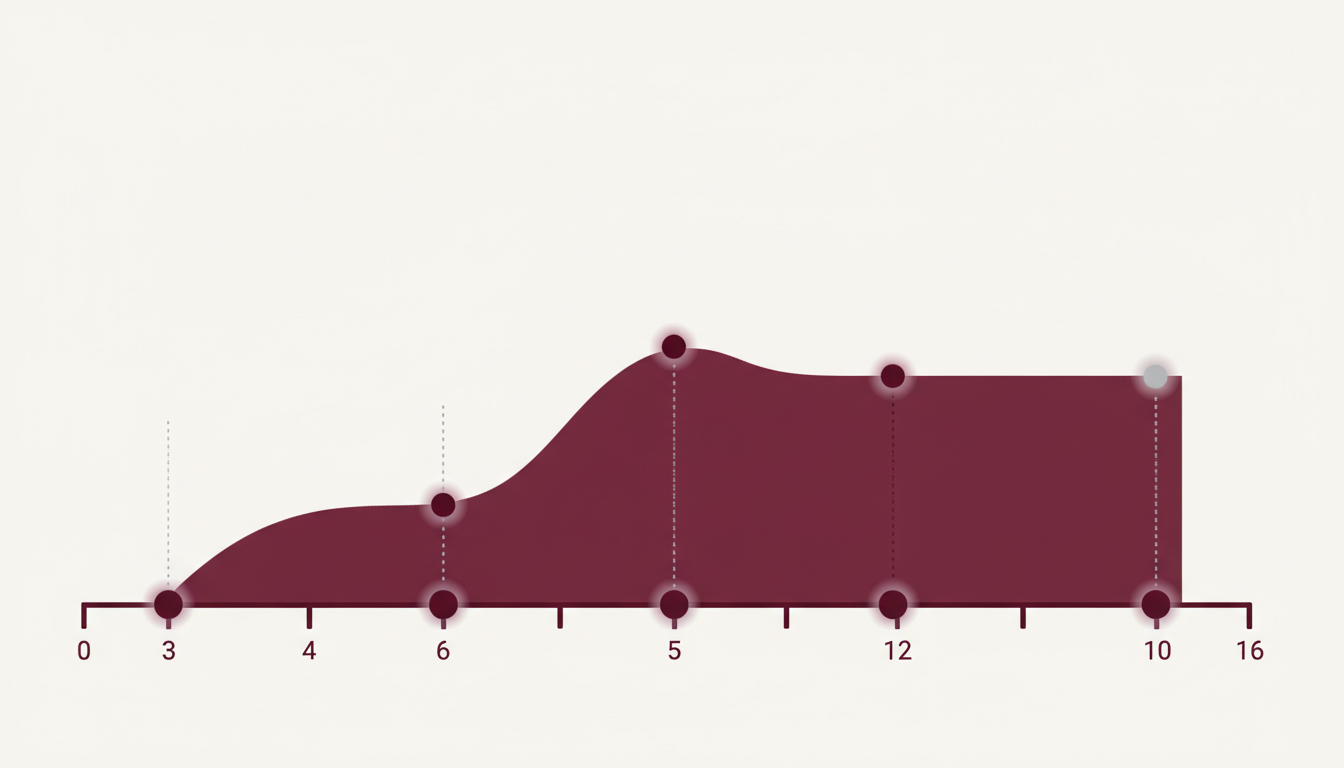
The single biggest reason at-home herpes tests get a bad reputation is that people test too early. Antibody tests cannot detect anything until your body has produced antibodies, which takes weeks. According to U.S. Centers for Disease Control and Prevention herpes testing guidance, IgG antibodies typically develop within several weeks after infection but can take 16 weeks or longer in a small number of cases. The American Academy of Family Physicians clinical review describes a window of roughly two weeks to six months, with repeat serologic testing sometimes needed when an early result is negative. HSV-1 antibodies typically develop sooner, often within three to six weeks. HSV-2 is the slower of the two, which is why 6 to 12 weeks is the practical sweet spot for a reliable screen and 12 to 16 weeks is the safer confirmation point.
Test before that window, and a negative does not mean very much. Most people who eventually seroconvert do so by week 6, but a meaningful minority do not until week 12, and a small number even later. If your reason for testing is a specific recent exposure (a condom break, a partner disclosure), the most useful approach is to wait. If you cannot tolerate the wait, test now for a baseline and again at week 12, with a final pass at four to six months if doubt remains. A negative at week 12 is genuinely informative. A negative at week 2 is not.
Symptomatic people are a partial exception. If you have an active sore right now, a lesion PCR done at a clinic can confirm herpes within days, regardless of the antibody window. That is the better tool for active symptoms. The home antibody test answers a different question, which is whether HSV antibodies are present in your blood at all.
Using the test correctly
The mechanics are straightforward, but small mistakes can cause invalid results. Here is the sequence that produces the most reliable readings.
- Wash your hands with warm water and soap. Warm hands give you a better blood drop, which is the single most common failure point.
- Open the kit on a clean, well-lit surface. Lay out the cassette, the lancet, the buffer vial, and the alcohol swab where you can see them.
- Wipe a fingertip (the side of your ring finger or middle finger usually works best) with the alcohol pad. Let it air dry. Wet alcohol can dilute the blood drop and shift the result.
- Use the lancet once and discard it immediately. Squeeze the finger gently from the base toward the tip to encourage a single round drop of blood, not multiple small ones.
- Transfer the blood to the sample well using the pipette or dropper provided. Most kits need a specific number of drops or a specific fill line; under-filling is a common cause of invalid results.
- Add the buffer drops as instructed and start a timer. Read the result at the time stated on the instructions, usually 10 to 15 minutes. Reading earlier or later can both produce wrong answers.
- Pick a focused 20 minutes. Do not run the test when you are exhausted, intoxicated, or in a hurry. Concentration matters for hitting the fill line and starting the timer correctly.
- Read in good light on a white background. Faint test lines vanish under warm or low light, which is the most common cause of misread negatives. Phone flashlight against a sheet of printer paper works well.
Reading the result, including the awkward middle ground
Every cassette shows a control line (marked C) and a test line (marked T). The control line confirms the test ran correctly. If you see no control line, the test is invalid and you need to repeat it with a fresh kit. That is true regardless of what the test line does.
If only the control line shows, the result is negative. If both lines show clearly, the result is a presumptive positive and worth confirming. Faint second lines are where most readers get stuck. A faint test line can mean a real low-titre positive (early seroconversion, low antibody load) or it can mean a borderline non-specific reaction. The right move is not to interpret a faint line as a definitive answer either way. Photograph the cassette, retest in two to four weeks, and consider a confirmatory lab antibody panel.
| What you see | What it means | What to do next |
|---|---|---|
| Only the control line (C) | Negative for the antibody tested | If within 12 weeks of exposure, retest at week 12 to confirm |
| Clear control + clear test line (C + T) | Presumptive positive | Confirm with a lab antibody panel and discuss management with a clinician |
| Faint test line | Indeterminate; could be early seroconversion or non-specific reaction | Photograph, retest in 2 to 4 weeks, and consider lab confirmation |
| No control line | Test invalid | Discard and run a fresh kit |
When to retest, and what that looks like
A single home antibody test is a useful starting point. It is not always a final diagnosis, and certain patterns specifically benefit from a confirmation pass.
An early negative after a known exposure is not a final answer. If the test came back non-reactive within the first few weeks, the IgG may simply not have developed yet. The CDC's herpes testing page notes that blood tests have timing and false-positive limitations that providers should discuss with patients. A practical retest schedule for HSV-2 looks like this: repeat at 12 weeks, then again at four to six months if the situation is still uncertain. HSV-1 antibodies usually develop faster, often within three to six weeks, but waiting until the full window closes gives the most reliable read on either type.
A weakly positive HSV-2 result in a low-risk context calls for a different kind of follow-up. The University of Washington National STD Curriculum's review of HSV serologic testing reports that some commercial HSV-2 IgG assays carry low specificity, that discordance between tests is common, and that positive predictive value can be poor at lower index values. For a positive serologic result that does not match clinical symptoms, confirmatory testing with a different assay (typically a Western blot performed at a reference laboratory) is the recommended follow-up. A primary-care provider or sexual-health clinic can order that confirmatory test when a rapid result and the clinical picture do not align.
What an antibody test cannot tell you
An at-home herpes test is a screening tool, and screening tools have known limits worth understanding before you read your result.
An antibody test cannot date your infection. A positive HSV-2 IgG today says you carry antibodies; it does not say whether the infection is six weeks old or six years old. People often want a result that exonerates a current partner or implicates a past one. Antibody serology cannot do that. The only way to approximate timing is sequential testing across a known exposure window.
An antibody test also cannot diagnose a specific sore. The blood test tells you whether your body has antibodies somewhere in your system. If you have a current lesion that needs explaining, the diagnostic test for that lesion is a PCR/NAAT swab performed at a clinic, not a blood antibody screen.
HSV-2 antibody tests in particular carry a documented false-positive issue at low antibody levels. The U.S. Preventive Services Task Force cited this concern as a primary reason for its recommendation against routine HSV screening in asymptomatic adults: low-positive HSV-2 IgG results can be falsely reactive, especially in populations with low pre-test probability of infection. The practical implication: a clear positive in someone with a high-risk exposure is meaningful. A weakly positive result in someone with no risk factors deserves a confirmatory test before you act on it.
- Low pre-test probability: no known exposure, no symptoms, and a weak or borderline positive line on a rapid test. Confirm with a different assay before treating the result as a diagnosis.
- Confirmatory option: a Western blot at a reference laboratory, ordered by a primary-care provider or sexual-health clinic, is the most specific follow-up for ambiguous HSV-2 IgG results.
HSV-1 versus HSV-2: why the type matters
The two herpes simplex viruses behave differently enough that distinguishing them affects what you do next. World Health Organization data estimate that roughly 3.8 billion people under age 50 (about 64%) carry HSV-1 worldwide, while around 520 million people aged 15 to 49 (about 13%) live with HSV-2.
HSV-1 is the strain most people know as the cold-sore virus. It traditionally lives orally, usually picked up in childhood through non-sexual contact, and recurrences tend to be on the lips. It can also be transmitted to the genitals through oral sex, and a growing share of new genital herpes cases are HSV-1 rather than HSV-2. Genital HSV-1 typically recurs less frequently and sheds less often than genital HSV-2, which is genuinely useful information for partner-disclosure conversations.
HSV-2 is more strongly associated with genital infection. It tends to recur more often and shed asymptomatically more often than HSV-1, which is why it is the strain most clinicians worry about for transmission risk. Asymptomatic shedding is the main reason genital herpes spreads between people who think neither of them has it. HSV-2 is also the strain most strongly linked to neonatal herpes risk during childbirth, which is why pregnant people with a known HSV-2 status get specific monitoring.
If you only test for one strain, the choice depends on your exposure pattern. Concern centered on a cold-sore partner or oral exposure points toward an HSV-1 test. Concern centered on a genital exposure or a partner disclosure of genital herpes points toward an HSV-2 test. A combined panel covers both at once when you are not sure which exposure pattern fits.
| Trait | HSV-1 | HSV-2 |
|---|---|---|
| Most common primary site | Oral (cold sores on lips) | Genital |
| Typical transmission route | Non-sexual contact in childhood; oral-to-genital via oral sex | Genital-to-genital sexual contact |
| Recurrence frequency at the genital site | Lower; outbreaks tend to thin out over time | Higher; multiple outbreaks per year is common in the first few years |
| Asymptomatic viral shedding | Less frequent | More frequent, the main driver of unknowing transmission |
When the at-home result is not the final word
The home result is not always the final word. Some readings need clinic follow-up before you treat them as a diagnosis, and the warning below summarizes the patterns that specifically apply.
A clear positive in a high-risk context (recent exposure, partner disclosure, recurring symptoms) is more straightforward. The home test is doing what it was designed to do. The next step is a conversation with a primary-care provider or sexual-health clinic about antiviral suppression therapy options, partner-notification practicalities, and any symptom management.
- Active visible lesion. Antibody tests cannot diagnose what a specific sore is. A clinic-administered PCR/NAAT swab of the lesion within 48 to 72 hours can.
- Faint or borderline positive in a low-risk context. Confirm with a lab antibody panel (Western blot if available) before you treat the result as a diagnosis.
Privacy when you live with other people
The privacy advantage of home testing is real but practical. Kits ship in unmarked outer packaging without disease names on the box. Credit card statements show the parent company name rather than the product category, so a shared card or family billing alert will not reveal the purchase. The lancet and used cassette can be sealed in the original packaging and disposed of in regular household waste. Results live nowhere by default; nothing is shared with insurers, primary-care records, or partner-notification systems unless you yourself share them.
If you live with roommates or family who track packages, schedule the delivery for a window when you will be home, or use a friend's address. Run the test in a quiet 20-minute window with the bathroom or sink nearby. A bathroom is honestly the best venue: privacy, hand-washing sink, mirror lighting, and a flat surface for the cassette.
One harder case: if you are in a relationship where a partner controls your communications or movement, weighing whether to test alone is a safety question, not just a privacy one. A sexual-health clinic visit, even though it feels less private than home testing, may actually be safer because it gives you a separate location and a clinician to disclose concerns to.

If the result is positive: what comes next
A confirmed positive HSV result is a manageable medical fact, not a sentence. The first practical step after confirmation is a conversation with a clinician about antiviral options. According to the CDC STI Treatment Guidelines, suppressive therapy reduces the frequency of genital herpes recurrences by 70 to 80 percent among patients who have frequent recurrences, and lowers asymptomatic shedding meaningfully, which reduces transmission risk to partners. The standard regimens use acyclovir, valacyclovir, or famciclovir. Episodic therapy (taking antivirals at the first sign of an outbreak) is the alternative for people who have infrequent recurrences.
The second practical step is partner notification. The framing that helps most readers is: this is information your partner needs to make their own informed choice, similar to disclosing any other medical condition that affects intimate contact. Plenty of people in serodiscordant relationships (one partner with HSV, one without) maintain stable, satisfying sex lives using a combination of antiviral suppression, condom use, and avoiding contact during prodromal symptoms or active outbreaks. The transmission risk in those circumstances is real but lower than people often assume.
The third practical step is emotional. Most people who test positive feel some version of grief, even if their day-to-day life will not change much. Talking to a peer support community (online forums for people living with herpes are surprisingly active and helpful) often does more than talking to a generalist clinician for this part of the process. The American Sexual Health Association and the NHS genital herpes page both publish straightforward, non-stigmatizing patient information worth bookmarking.
After exposure, it can take up to 16 weeks or more for current tests to detect infection.
The stigma question, briefly
Herpes is one of the most common viral infections on the planet. WHO estimates put HSV-1 prevalence at roughly two-thirds (about 64%) of people under 50 globally, and HSV-2 at around 13 percent of people aged 15 to 49 worldwide. Most carriers do not know they are infected because symptoms are mild, infrequent, or absent; the CDC similarly notes that most people with genital herpes have no symptoms or only very mild ones. The stigma attached to the diagnosis vastly exceeds the medical severity in nearly every case. That gap between perceived and actual significance is the single biggest reason people avoid testing in the first place.
- HSV-1: roughly 3.8 billion people under age 50 worldwide carry it (about two-thirds, or 64%, of that age group).
- HSV-2: roughly 520 million people aged 15 to 49 worldwide carry it (about 13 percent of that age group).
- Most carriers do not know they are infected because symptoms are mild, infrequent, or absent.
Source: World Health Organization Herpes simplex virus fact sheet.
What to do next
Where you are in the timeline, and what the result shows, decides the right next move. Use the quick guide below to match your situation to a concrete step, then act on it rather than waiting on uncertainty.
Your next step, by situation
Do you have a visible sore right now?
Yes: Book a clinic appointment for a PCR/NAAT lesion swab within 48 to 72 hours. That is the more sensitive test for a current lesion, and it is not a sample type we sell at home.
Has it been fewer than 6 to 12 weeks since the suspected exposure?
Yes: Wait until the window closes, then run the at-home rapid blood test. If you tested early for a baseline and it was negative, retest at the 12-week mark, and again at four to six months for HSV-2 if doubt remains.
Did the test read as a clear positive?
Yes: Book a telehealth or clinic appointment to discuss antiviral options and partner notification, and confirm the result with a lab antibody panel.
No: A clear negative after the full window is reliable. A faint or borderline line is indeterminate: request a Western blot from a provider before treating it as a diagnosis.
Guidance only; a healthcare provider can advise based on your specific situation.
Frequently asked questions
- How soon after exposure can I trust an at-home herpes test?
- Twelve weeks is the reliable threshold for HSV-2 serology. Test earlier only to establish a baseline, then retest at week 12 regardless of the first result. If a 16-week window would ease remaining doubt, common after a condom-break exposure, one final pass at that point closes out almost all seroconversions. HSV-1 antibodies usually develop faster, often within three to six weeks.
- Can I get a useful result from an at-home blood test during my first outbreak?
- Often, no, not yet. Antibodies typically take several weeks to develop after a new infection, and a blood test taken in the first days of a first-ever outbreak frequently reads negative even when herpes is actually present. The CDC and AAFP both recommend retesting outside the window if clinical suspicion is high. For a visible lesion right now, a clinic-administered viral PCR swab from the sore itself within 48 to 72 hours is the more sensitive option.
- Do your home herpes kits use a swab or a blood sample?
- All of our rapid herpes tests are fingerstick blood antibody kits. They detect IgG antibodies to HSV-1, HSV-2, or both, depending on which product you pick. We do not currently sell at-home lesion swab kits. For an active sore that needs same-week testing, a clinic visit is the appropriate route.
- Should I test for both HSV-1 and HSV-2?
- For most people who want a complete picture, yes. Both types can cause oral or genital lesions, and the type distinction matters for transmission counseling, recurrence expectations, and partner conversations. A combined panel that detects both types in one fingerstick draw is usually the most informative starting point. If your concern is narrowly an oral cold-sore exposure or narrowly a genital exposure, a single-type test fits.
- What does a faint test line mean?
- A faint T line is indeterminate. Photograph it immediately, because the color fades within the read window. Skip a second rapid home test and go straight to a lab confirmatory panel; a Western blot at a reference laboratory is the most specific resolution for an ambiguous rapid result, and the CDC STI guidelines recommend it specifically for low-index positives.
- Is the at-home test as accurate as a lab test?
- For HSV-1 or HSV-2 antibodies in your blood, used after the proper window, rapid lateral-flow tests perform well as a screening tool. Labs use ELISA chemistry with slightly higher analytical sensitivity at low antibody levels, and reference laboratories can run Western blot for confirmation. Most clinicians recommend confirming a presumptive home positive with a lab panel before making major decisions.
- Will herpes show up on a routine STI panel at a clinic?
- Rarely, and for a specific reason: USPSTF Grade D guidance discourages routine HSV serology in asymptomatic adults because available tests produce enough false positives in low-prevalence populations to create net harm. Clinicians follow this by default. If you have a specific reason to know, such as a partner disclosure, recurring symptoms, or a known exposure, request the test explicitly; some clinicians will still decline. An at-home rapid kit is the practical alternative.
- Will my home test result show up on insurance or my medical record?
- Not from us. We do not bill insurance, and we do not report results to any external healthcare system. If you choose to share the result with a primary-care provider for treatment or confirmatory testing, that becomes part of your record at their discretion, but the initial test stays private and under your control.
- If I test positive at home, can I get an antiviral prescription?
- Not directly through us; we sell the test, not the prescription. With a positive result you can book a telehealth appointment or a visit with a primary-care doctor or sexual-health clinic, who can prescribe acyclovir, valacyclovir, or famciclovir for either episodic or suppressive use, depending on your situation. The CDC's STI Treatment Guidelines describe the standard regimens.
- Is herpes curable?
- No, but it is highly manageable. The CDC STI Treatment Guidelines report that suppressive antiviral therapy reduces recurrence frequency by 70 to 80 percent among patients who have frequent recurrences. Many people with HSV go through long stretches with no symptoms and a stable sex life with minimal precautions.
- U.S. Centers for Disease Control and Prevention. Herpes testing guidance, including the statement that it can take up to 16 weeks or more after exposure for current tests to detect infection, and that viral testing of a lesion sample works best.
- U.S. Centers for Disease Control and Prevention. STI Treatment Guidelines, herpes simplex virus infections section, including the 70 to 80 percent suppressive-therapy recurrence-reduction figure and the acyclovir, valacyclovir, and famciclovir regimens used for episodic and suppressive therapy.
- U.S. Centers for Disease Control and Prevention. About Genital Herpes; supports the statement that most people with genital herpes have no symptoms or only very mild symptoms.
- World Health Organization. Herpes simplex virus fact sheet, including global prevalence estimates of approximately 3.8 billion HSV-1 infections (64%) in people under 50 and 520 million HSV-2 infections (13%) in people aged 15 to 49.
- U.S. Preventive Services Task Force, published in JAMA. 2023 reaffirmation of the Grade D recommendation against routine serologic screening for genital herpes simplex virus infection in asymptomatic adolescents and adults, citing the false-positive rate of available tests in low-prevalence populations.
- American Academy of Family Physicians. Genital herpes clinical review (June 2016) covering PCR sensitivity and specificity greater than 95% for active lesions, the two-week-to-six-month antibody window, and serologic interpretation guidance. The PCR-performance and window-period figures remain stable and consistent with current CDC guidance (source 1).
- University of Washington National STD Curriculum. HSV serologic testing options literature review; supports the discussion of low specificity and false-positive risk for HSV-2 IgG assays at lower index values, and the role of Western blot as confirmatory testing.
