
Published: September 2025 | Last updated: May 2026 | Editorial review and quality control: Martina N.
Can STDs affect a baby during pregnancy?
Yes. Six infections (syphilis, HIV, herpes, chlamydia, gonorrhea, and hepatitis B) carry the highest vertical transmission risk and drive the prenatal treatment plan. Hepatitis C is also screened during pregnancy, with lower direct transmission risk and postpartum treatment for the parent. Routine prenatal screening at the first visit catches all seven while treatment is still straightforward. When detected and treated early, the vast majority of pregnancies continue normally and the baby is born uninfected.
The question surfaces at some point in nearly every pregnancy: can an STD pass to my baby? Sometimes it arrives as a surprise at the first prenatal visit, when the screening panel includes tests for sexually transmitted infections alongside blood typing and gestational labs. Sometimes it arrives earlier, in a quiet late-night search about STDs during pregnancy before the first appointment is even scheduled. The honest answer has two parts. Yes, a handful of sexually transmitted infections can pass from a pregnant person to a baby during pregnancy, delivery, or (in the case of HIV) through breastfeeding. No, transmission is far from inevitable.
The CDC's prenatal STI screening guidelines are built around catching infections before they can cause harm, and most pregnancies with a treated infection continue normally. This guide covers what each infection can do during pregnancy, what your provider screens for and when, what happens after a positive result, what newborn symptoms pediatricians watch for, and when at-home STI test kits can give you a private answer before or between clinic visits.
Key Takeaways
- Routine prenatal screening at the first visit catches the seven STIs most relevant to pregnancy while there is time to treat all of them.
- When detected early, the vast majority of these infections can be treated in pregnancy without affecting the baby or changing the delivery plan.
How an Infection Can Reach a Baby
Transmission happens through one of three routes, and which route applies depends on the infection.
The first is across the placenta. Some pathogens cross from the parent's bloodstream into the fetal circulation while pregnancy is ongoing. Syphilis is the clearest example: the bacterium Treponema pallidum can reach the fetus at almost any point in pregnancy, which is why the CDC's congenital syphilis resource stresses early detection. An infection passed this way is called a congenital infection, and it can start affecting the baby long before delivery.
The second is during delivery. As a baby passes through the birth canal, it can contact bacteria or virus in genital fluids or on active lesions. Chlamydia, gonorrhea, and herpes simplex virus spread mostly this way.
The third is after birth, through close contact or breast milk. HIV is the main concern here, though combination antiretroviral therapy has reduced that risk dramatically when treatment continues through and after delivery.
Different routes call for different responses. A placental infection like syphilis is treated with antibiotics that cross the placenta to protect the fetus. A delivery-route infection like herpes is managed with antivirals before labor and, when needed, a planned cesarean section.
Placental: the pathogen crosses from the parent's bloodstream into the fetal circulation. Syphilis is the prime example.
Birth-canal: the baby contacts bacteria or virus during vaginal delivery. Chlamydia, gonorrhea, and active genital herpes fit this pattern.
Postnatal: breast milk or close contact in the early days of life. HIV is the main concern, and antiretroviral therapy substantially lowers the risk.
Which STDs the Prenatal Panel Catches
Seven infections drive the screening conversation during pregnancy. Five are tested routinely at the first visit; the remaining two are added based on age, risk profile, or symptoms.
Chlamydia is the most commonly reported bacterial STI in the United States. Untreated chlamydia in pregnancy raises the risk of preterm rupture of membranes and preterm birth, and a newborn exposed during delivery can develop conjunctivitis or pneumonia. Treatment is a single dose of azithromycin, safe throughout pregnancy (CDC prenatal STI treatment guidelines).
Gonorrhea poses similar risks. Newborn exposure can cause gonococcal ophthalmia neonatorum, a serious eye infection that threatens vision within days if untreated. A single intramuscular dose of ceftriaxone is the standard pregnancy treatment.
Syphilis is the highest-priority infection on the prenatal panel. The bacterium can cross the placenta at any stage and cause congenital infection affecting bone, brain, hearing, and vision. Penicillin is the only treatment proven to prevent congenital syphilis.
Herpes (HSV-1 and HSV-2) rarely affects the fetus during pregnancy itself. The highest-risk scenario is a new (primary) outbreak near delivery, when the parent has not yet developed protective antibodies. Suppressive antivirals starting around 36 weeks reduce outbreak risk at labor (CDC genital herpes resource).
HIV once carried a perinatal transmission rate as high as 15 to 45 percent without treatment, depending on feeding practices. Three strategies now work together to lower that figure to under 1 percent: antiretroviral therapy brings the parent's viral load to undetectable levels during pregnancy; delivery is planned with HIV status in mind, including cesarean when viral load is not fully suppressed; and the baby receives preventive medication for two to six weeks after birth (HIV.gov). Breastfeeding decisions are individualized: in the United States, formula feeding is generally recommended to eliminate the remaining transmission risk through breast milk, while in settings where formula is unavailable, shared decision-making with a clinician is the standard approach.
Hepatitis B can transmit to a newborn at birth. Prevention is immediate: the baby receives the hepatitis B vaccine plus hepatitis B immune globulin (HBIG) within 12 hours of delivery, which prevents chronic infection in the vast majority of exposed newborns (CDC perinatal hepatitis B guidance).
Hepatitis C carries a lower vertical transmission risk and is monitored during pregnancy. Treatment for the parent typically happens postpartum, with newborn follow-up to confirm clearance.
| Infection | What it can do during pregnancy | Standard treatment in pregnancy |
|---|---|---|
| Chlamydia | Preterm birth risk; newborn eye and lung infection | Azithromycin; test of cure after treatment |
| Gonorrhea | Newborn eye infection; rare bloodstream infection | Ceftriaxone; retest after treatment |
| Syphilis | Congenital infection; stillbirth if untreated | Penicillin; serial titers to confirm response |
| Genital herpes (HSV) | Neonatal herpes if active lesions at delivery | Antiviral suppression from 36 weeks; cesarean if active lesions |
| HIV | Transmission in pregnancy, at birth, or via breast milk | Combination antiretroviral therapy; infant prophylaxis after birth |
| Hepatitis B | Chronic liver infection in baby if untreated | Newborn vaccine plus immune globulin within 12 hours of birth |
| Hepatitis C | Lower transmission risk; monitored | Postpartum treatment for parent; newborn follow-up |
Why Congenital Syphilis Leads the Watch List
Among the infections obstetricians track, syphilis stands apart. The bacterium can cross the placenta as early as the first trimester. Untreated, congenital syphilis can cause miscarriage, stillbirth, low birth weight, organ damage, bone deformities, and neurological complications.
Congenital syphilis is no longer rare. According to the CDC's congenital syphilis surveillance data, U.S. cases have more than tripled in recent years, with nearly 4,000 reported in 2024, the highest annual count since 1994. Globally, the World Health Organization estimated that 1.1 million pregnant women were infected with syphilis in 2022, resulting in more than 390,000 adverse birth outcomes.
Syphilis is also one of the most preventable congenital infections when found early. A blood test at the first prenatal visit, repeated in the third trimester in higher-risk settings, catches it in time for a single course of injectable benzathine penicillin G. The treatment is decades old, inexpensive, and effective. When congenital cases still happen, the gap is almost always late or absent screening rather than treatment failure.
Nearly 4,000 U.S. congenital syphilis cases were reported in 2024, the highest count since 1994 (<a href="https://www.cdc.gov/syphilis/about/about-congenital-syphilis.html" target="_blank" rel="noopener noreferrer">CDC surveillance</a>). Cases have more than tripled in recent years, even though one course of penicillin in pregnancy reliably prevents transmission.
What the CDC Recommends and When
The CDC's screening guidelines for pregnant patients set the schedule most U.S. obstetric practices follow. Screening is universal rather than symptom-based because most STIs during pregnancy produce no symptoms at all. A person can feel completely healthy and still carry an infection that would benefit from treatment. Pregnancy itself makes the symptom problem worse: hormonal shifts change vaginal discharge, alter urination patterns, and produce normal pelvic pressure that can mimic an infection or mask one (WHO STI fact sheet).
At the first prenatal visit, providers typically test for HIV, syphilis, hepatitis B (HBsAg), hepatitis C, and chlamydia. Gonorrhea is added for patients younger than 25 or with elevated risk factors.
In the third trimester, syphilis is rescreened where rates are high or when risk factors are present. Chlamydia and gonorrhea are rescreened for patients under 25 or those with new or multiple partners. HIV is rescreened in higher-prevalence areas.
At delivery, a rapid HIV test may run if prenatal screening was incomplete. Newborns of HBsAg-positive parents receive the hepatitis B vaccine plus immune globulin within 12 hours of birth.
Catching infections at first contact gives the longest possible runway for treatment, and a second look near delivery picks up anything acquired during the pregnancy.
| Pregnancy stage | Standard tests | Why this timing |
|---|---|---|
| First prenatal visit | HIV, syphilis, hepatitis B, hepatitis C, chlamydia | Maximum time for treatment before delivery |
| First visit (under 25 or risk factors) | Add gonorrhea | Higher prevalence in younger patients |
| Third trimester | Repeat syphilis where required; rescreen chlamydia, gonorrhea, HIV by risk | Catches infections acquired during pregnancy |
| Near labor | Herpes symptom and lesion review | Decides need for suppressive antivirals or cesarean |
| At delivery | Newborn hepatitis B vaccine plus immune globulin if parent positive | Prevents perinatal hepatitis B transmission |

What Happens After a Positive Result
A positive screening test in pregnancy almost never means a crisis. It means a treatment plan starts.
For bacterial infections (chlamydia, gonorrhea, syphilis, trichomoniasis), the response is a course of an antibiotic chosen for safety in pregnancy. Azithromycin handles chlamydia. Ceftriaxone handles gonorrhea. Penicillin is the only proven treatment for preventing congenital syphilis; patients with severe penicillin allergy are desensitized in a clinical setting so they can still receive it.
For viral infections, the approach varies. Herpes is managed with antiviral medication (valacyclovir or acyclovir), started around 36 weeks if there is a history of outbreaks. HIV is managed with combination antiretroviral therapy, ideally started preconception or as early in pregnancy as possible, targeting an undetectable viral load before labor. Hepatitis B is prevented in the newborn through vaccination and immune globulin at birth.
Follow-up testing matters as much as the initial treatment. CDC guidelines recommend a test of cure or repeat testing for chlamydia and gonorrhea in pregnancy because reinfection is common when a partner has not been treated. Syphilis follow-up uses serial nontreponemal titers to confirm a four-fold decline.
Partner notification and treatment is a routine part of CDC guidance. If only one person in a relationship is treated, the infection often returns. Most obstetric practices help coordinate partner care, either directly or through public health referrals.
Penicillin is the only antibiotic proven to prevent congenital syphilis. Patients with documented severe allergy are referred for in-clinic desensitization so they can still receive it safely. No alternative antibiotic has equivalent evidence for protecting the fetus.
Herpes and the Question of Delivery Mode
Herpes simplex virus is the one infection that most directly shapes how a baby is delivered, and the clinical framework is narrower than most patients expect.
The highest-risk scenario is a primary outbreak in the third trimester. A new infection means the parent has not yet developed antibodies to pass to the baby, and the virus is shedding heavily. Neonatal herpes in this scenario is rare but serious; the disseminated and central nervous system forms carry the greatest risk of long-term complications.
Recurrent herpes (in someone who carried the virus before pregnancy) is much less dangerous because protective antibodies have crossed the placenta. The decision around delivery turns on whether visible lesions are present when labor starts.
Suppressive antiviral therapy, started around 36 weeks for anyone with a known herpes history, reduces the chance of an outbreak at labor. When active lesions or prodromal symptoms are present once labor begins, CDC genital herpes guidance recommends cesarean delivery to reduce neonatal transmission risk. This is a decision made at the time of labor, not in advance based on diagnosis alone.
Most people with a herpes history deliver vaginally without problems. The cesarean recommendation applies specifically to active lesions at the time of labor. Mentioning any herpes history at the first prenatal visit is what allows the suppressive plan to be in place by 36 weeks.
Primary outbreak near delivery: highest risk. The parent has no protective antibodies to pass to the baby, and viral shedding is heavy. Suppressive antivirals and cesarean delivery when lesions are active are the standard response.
Recurrent herpes with prior antibodies: much lower risk. Maternal antibodies cross the placenta and offer partial protection. Vaginal delivery is typical unless active lesions are present at labor onset.
Newborn Safeguards Built Into Routine Care
Even with screening, treatment, and planned delivery, hospitals run a second layer of protection in the first hours of life.
The most universal example is antibiotic eye ointment (typically erythromycin) applied within the first hour of birth. This single low-cost step prevents ophthalmia neonatorum from gonorrhea or chlamydia exposure during delivery, and has been standard in U.S. hospitals since the late 19th century. It is applied to every newborn, not only as a response to a specific positive test.
Newborns of parents with hepatitis B receive the hepatitis B vaccine plus hepatitis B immune globulin within 12 hours of birth (CDC perinatal hepatitis B guidance). This pairs with the standard birth-dose hepatitis B vaccine that all U.S. newborns receive.
Babies whose parents have HIV receive antiretroviral prophylaxis after birth, with timing and duration based on parental viral load at delivery. Combined with maternal therapy, perinatal HIV transmission in the U.S. now sits at roughly 1 percent or less (HIV.gov).
Babies with suspected congenital syphilis are evaluated for symptoms, lab markers, and imaging, then treated with intravenous or intramuscular penicillin per CDC protocols. Pediatric infectious disease teams are routinely involved when treatment is needed.
What Newborn Symptoms Pediatricians Watch For
For most exposed babies, especially when prenatal treatment happened, there are no symptoms at all. When symptoms do appear, pediatricians know the patterns, and recognition usually happens in the first hours or days of life rather than at home.
Congenital syphilis can produce a characteristic copper-colored maculopapular rash (small flat or slightly raised spots) on the palms and soles, sometimes accompanied by persistent nasal congestion called snuffles, an enlarged liver, or low birth weight. Neonatal herpes typically appears as clusters of small fluid-filled blisters on the skin, scalp, or near the eyes, often in the first one to two weeks of life. Gonococcal conjunctivitis usually shows up two to five days after birth as marked eyelid swelling with thick yellow-green discharge, while chlamydial conjunctivitis tends to appear later, around five to fourteen days, with milder watery or mucopurulent discharge.
None of this is something a parent is expected to diagnose at home. These patterns guide the pediatric team on where to look, and they explain why a hospital visit in the first weeks of life is the right move when something looks off.
Newborn Symptoms That May Signal a Congenital STI
Most exposed newborns show no symptoms when prenatal treatment happened on time. The patterns below help pediatric teams decide what to evaluate.
- Copper-colored rash on palms or soles (congenital syphilis) Common
- Persistent nasal congestion or snuffles (congenital syphilis) Common
- Eyelid swelling with thick yellow-green discharge, appearing 2 to 5 days after birth (gonococcal conjunctivitis) Common
- Clustered fluid-filled blisters on skin, scalp, or near the eyes in the first 1 to 2 weeks (neonatal herpes) Less common
- Mild watery eye discharge appearing 5 to 14 days after birth (chlamydial conjunctivitis) Less common
- Cough or rapid breathing in the first weeks of life (chlamydial pneumonia) Less common
- Enlarged liver or spleen (syphilis or hepatitis B) Less common
Testing Before or Between Prenatal Visits
Some people want to check their status before they see an obstetrician. Reasons vary: a recent change in partner, a delayed first appointment, a wait for a clinic slot, or simply wanting a private answer first. Knowing your status before becoming pregnant simplifies treatment planning and reduces the surprise factor at the first prenatal visit.
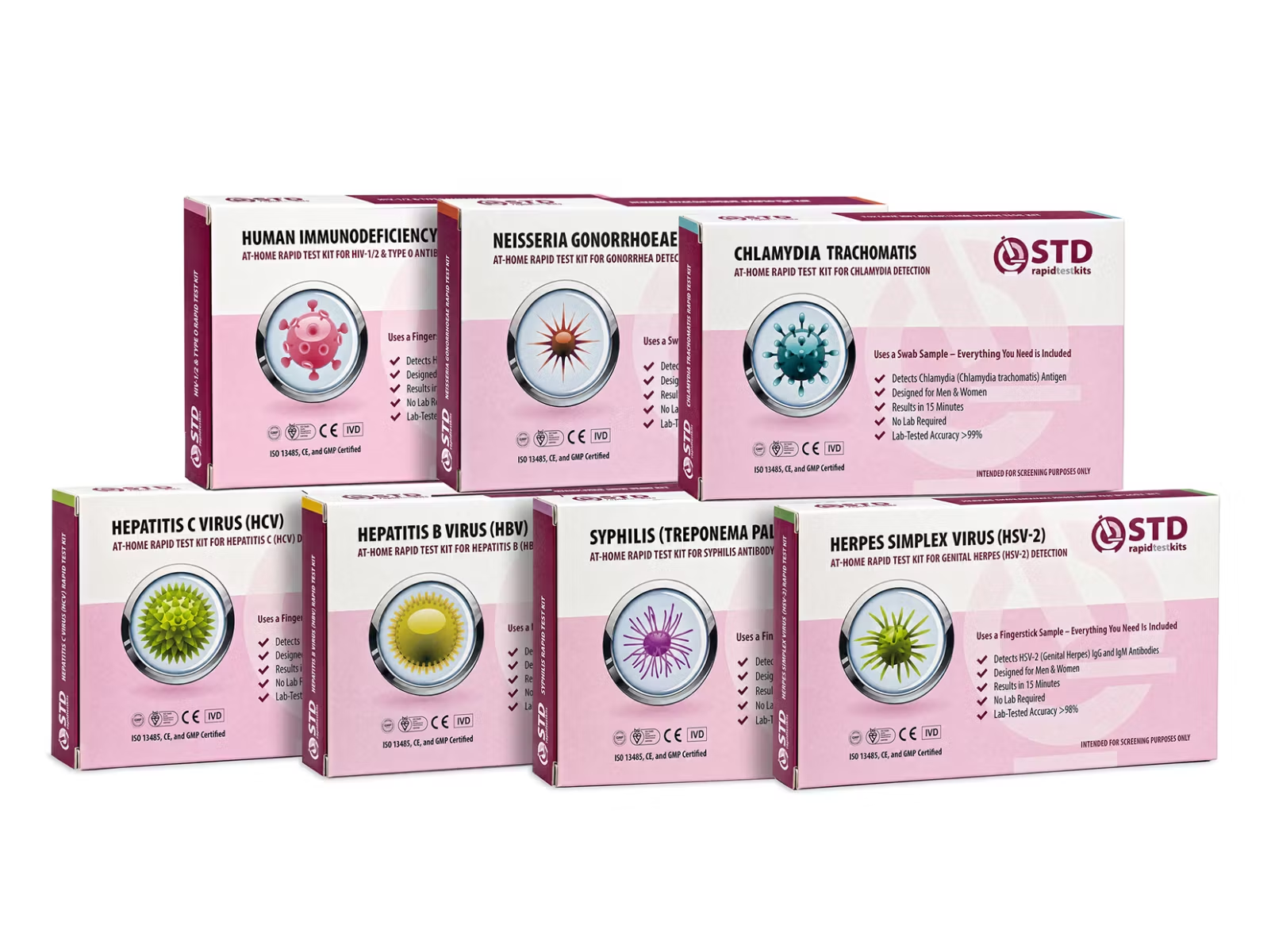
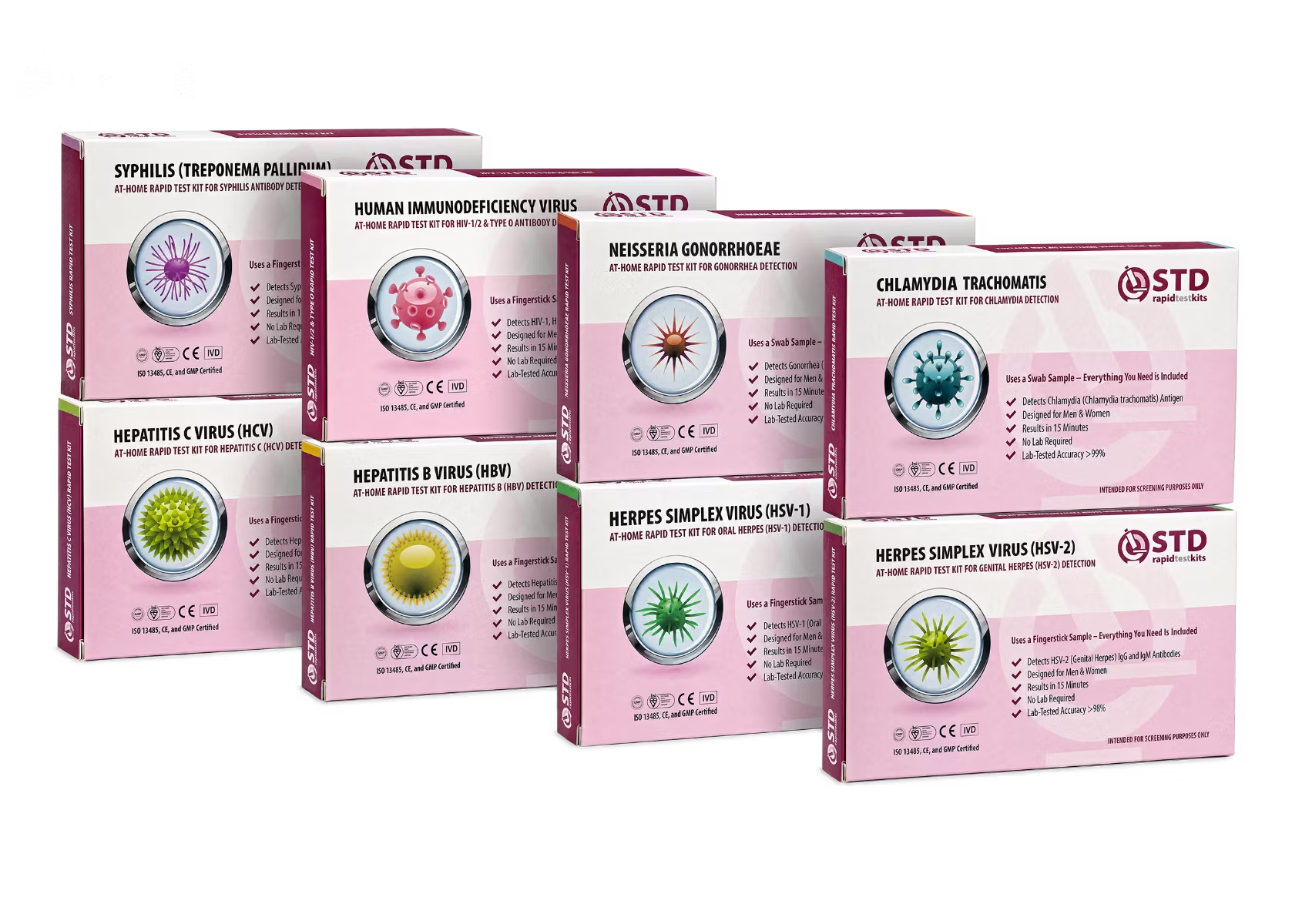
At-home rapid STI tests are useful here, with one important caveat. The tests sold for home use are lateral-flow immunoassays, not the same as the laboratory NAAT or PCR tests a clinic runs. Lateral-flow tests give a fast read at home, typically in about 15 minutes. They work well for screening when the timing falls within the window period for the specific infection. A lab NAAT for chlamydia or gonorrhea remains the higher-sensitivity confirmation tool. For HIV, syphilis, and hepatitis, lab testing remains the standard for diagnostic confirmation.
Window periods to keep in mind when timing a home test:
- Chlamydia and gonorrhea: most tests reliable from about 1 to 2 weeks after exposure.
- Syphilis: antibody testing typically reliable from about 3 to 6 weeks after exposure.
- HIV: rapid antibody tests typically reliable from about 3 to 12 weeks; a lab fourth-generation antigen-antibody test detects infection faster.
- HSV-2 antibodies: usually detectable about 12 weeks after exposure, sometimes longer.
A positive at-home result should be confirmed in clinical care, and a negative result inside the window period should be repeated once the window has cleared. Whatever the result, share it with the prenatal provider. Pregnancy treatment depends on confirmatory testing and on antibiotic or antiviral choices safe at the relevant gestational stage. The NHS emphasizes that many STIs produce no symptoms, which is why screening on a schedule rather than waiting for a complaint is the standard approach in both the UK and the US.
(This article is published by stdrapidtestkits.com, which sells at-home STI testing kits. We recommend products based on fit-for-purpose for the reader's concern, not commercial benefit.)
What Expecting Parents Can Do to Reduce Risk
Preventing congenital STIs comes down to a few clear, well-supported steps.
Get screened early. Prenatal STI testing is recommended at the first prenatal visit, ideally in the first trimester, with repeat testing later in pregnancy in higher-risk settings.
Consider testing before conception. Knowing your status before becoming pregnant simplifies treatment planning and removes the surprise factor at the first prenatal visit.
Follow the full treatment plan. Single-dose treatments work because the timing is right. Partial or incomplete treatment does not protect the baby the same way.
Encourage partner testing and treatment. Treating only one partner is the most common reason a treated infection comes back during pregnancy. If a partner has not been tested and treated, reinfection during pregnancy is a real possibility.
Use barrier protection consistently if either partner has a new or untreated infection during the pregnancy, especially close to delivery for genital herpes.
Why Most Pregnancies With a Treated Infection End Healthy
One number captures the larger pattern: with combination antiretroviral therapy, perinatal HIV transmission in the United States has dropped to about 1 percent or less (HIV.gov). That direction holds across the other infections on the prenatal panel.
Treated chlamydia and gonorrhea rarely affect the baby. Treated syphilis prevents congenital infection when penicillin is started early enough in pregnancy. Suppressive herpes therapy and informed delivery planning prevent most neonatal herpes. Hepatitis B birth-dose vaccination prevents most perinatal transmission.
The CDC states it directly: "Pregnancy does not provide women or their babies protection against STIs," and when an infection is acquired during pregnancy, it "can be more serious, even life-threatening" (CDC STIs and Pregnancy). The risk to a baby tracks the timing of detection, not the diagnosis itself. If you want to check your status before your first prenatal visit, or between visits, an at-home rapid test can give you a fast, private read. Share any result with your provider so confirmatory testing and pregnancy-safe treatment can start without delay.
Should You Test Before Your First Prenatal Visit?
Are you planning a pregnancy or newly pregnant with your first prenatal visit still weeks away?
Yes: An at-home rapid test now gives you a baseline for the key infections (chlamydia, gonorrhea, syphilis, HIV, hepatitis B, hepatitis C, and HSV-2). Share any result with your provider at the first visit.
Have you or your partner had a new sexual contact since your last STI screen?
Yes: Test now and ask your partner to test at the same time. Reinfection during pregnancy is the most common reason a treated infection comes back.
No: Your prenatal panel at the first visit will cover the standard screen. Mention any past STI history so your provider can plan repeat testing or suppressive therapy as needed.
A starting point for decision-making, not a substitute for the prenatal panel your provider will order.
FAQs
- Can babies be born with STDs?
- Yes, though it is less common than headlines suggest. Six infections (syphilis, HIV, herpes, gonorrhea, chlamydia, and hepatitis B) can pass directly from a pregnant person to a baby during pregnancy or delivery; hepatitis C is also screened, with lower transmission risk. Routine prenatal testing catches these infections early so they can be treated before reaching the baby. With timely treatment, most babies are born uninfected.
- If I have an STD while pregnant, does my baby definitely get it?
- No. Most STIs do not automatically pass to a baby, and treatment dramatically reduces transmission for the ones that can. Once a treatment plan is in place, transmission usually does not happen at all.
- Can I have an STD during pregnancy with no symptoms at all?
- Yes, often. Chlamydia and gonorrhea in particular are usually silent in early infection. Hormone changes in pregnancy can also mask or mimic symptoms, which is why providers test on a schedule rather than waiting for symptoms to appear.
- Can an untreated STD cause a miscarriage or stillbirth?
- Some untreated infections, particularly syphilis, can cause pregnancy loss and stillbirth. The key word is untreated. Once detected, syphilis is treated with penicillin, and the vast majority of pregnancies continue without complication. Bacterial infections like chlamydia and gonorrhea are also cleared quickly when caught early.
- Does a herpes diagnosis mean I cannot have a vaginal birth?
- Most people with a herpes history deliver vaginally. Antiviral suppression starts around 36 weeks of pregnancy; cesarean comes into play only when active lesions or prodromal symptoms are present at the start of labor. A herpes diagnosis on its own does not change the delivery plan.
- What is the actual risk of HIV passing from parent to baby today?
- With combination antiretroviral therapy throughout pregnancy and infant prophylaxis for 2 to 6 weeks after birth, U.S. perinatal HIV transmission has dropped to less than 1 percent. Before ART became standard, untreated rates ran as high as 15 to 45 percent depending on feeding practices.
- Are newborns tested for STDs after birth?
- Sometimes, especially when exposure is known or suspected. Pediatricians may run blood tests, monitor symptoms, or provide preventive medication. In most cases, prenatal treatment has already addressed the issue before the baby arrives, so post-birth testing is targeted rather than universal.
- Can I use an at-home STI test while pregnant?
- Yes, for screening. At-home rapid tests use a self-collected sample and can provide an early answer when timing falls within the window period for that infection. Confirm any positive result with your prenatal provider, since pregnancy treatment requires confirmatory testing and pregnancy-safe medication choices.
- U.S. Centers for Disease Control and Prevention. STI screening and treatment guidelines for pregnant patients, including recommended infection-specific testing panels by trimester and pregnancy-safe regimens.
- U.S. Centers for Disease Control and Prevention. Congenital syphilis: surveillance data showing case counts more than tripling in recent years and reaching nearly 4,000 reported cases in 2024.
- U.S. Centers for Disease Control and Prevention. STIs and Pregnancy: overview of vertical transmission risks and the principle that pregnancy does not protect against STIs.
- U.S. Centers for Disease Control and Prevention. Genital herpes overview, including neonatal transmission risk during delivery and the role of suppressive antivirals and cesarean delivery.
- HIV.gov. Preventing mother-to-child transmission of HIV: less-than-1-percent perinatal transmission rate with antiretroviral therapy throughout pregnancy plus 2 to 6 weeks of infant prophylaxis.
- World Health Organization. Sexually transmitted infections fact sheet: global STI prevalence, the 2022 syphilis-in-pregnancy estimate of 1.1 million infections and over 390,000 adverse birth outcomes, and screening rationale.
- U.S. Centers for Disease Control and Prevention. Perinatal hepatitis B clinical overview: recommendation that infants born to HBsAg-positive people receive HepB vaccine and HBIG within 12 hours of birth.
- National Health Service (UK). Sexually transmitted infections: overview of STI types, symptom patterns, and the principle that many STIs are asymptomatic, supporting schedule-based screening.
