
Published: November 2025 | Last updated: May 2026 | Editorial review and quality control: Martina N.
Pegging is real sex, and like every other kind of sex it can pass on sexually transmitted infections. The strap-on is silicone or glass or hard plastic rather than skin, yet it still moves between mucous membranes, still carries fluids, and still rubs against the delicate lining of the anus or vagina. That contact is what infections need. Many people grew up with sex education that focused on penises, vaginas, and ejaculation, so the idea that a toy could transmit chlamydia, gonorrhea, herpes, HPV, or hepatitis simply never came up. The biology is straightforward, and so are the protective steps: use a barrier on the toy, clean it properly between bodies, and test on a schedule that matches your sex life. The next several sections walk through how transmission actually happens during pegging, which materials are safer, when to test, and what to do if a result comes back positive.
Key Takeaways
- Pegging can transmit chlamydia, gonorrhea, herpes, HPV, hepatitis B, and HIV when toys are shared between people or switched between the anus and vagina without a fresh barrier.
- Use a new condom on the toy for each partner and each orifice, then test 2 to 3 weeks after a new exposure, or every 3 to 6 months with multiple partners.
How STDs Actually Spread During Pegging
The anus is lined with thin, vascular tissue that tears easily under friction. Most of those tears are microscopic and invisible to the eye, and they heal quickly, but during play they are open routes into the bloodstream and lymphatic system. A pathogen sitting on the surface of a strap-on, whether picked up from a previous partner, a previous orifice, or the toy's storage drawer, only has to be present at the right moment to enter. That mechanism is identical to penile-vaginal or penile-anal sex; the material of the inserted object does not change the biology of the receiving tissue.
Transmission during pegging happens along four broad routes. Toys carry fluids and skin cells from one body to another when they are shared without a new barrier. Anal microtears give bacteria and viruses a direct entry point. Switching from anus to vagina (or vice versa) without cleaning the toy moves rectal bacteria into a vaginal environment where they cause infection even when no STI is involved. And skin-to-skin contact between the receiver's external genitals, the giver's harness or thighs, or the base of the toy can spread infections that do not need penetration at all, including herpes simplex virus and human papillomavirus. The Centers for Disease Control and Prevention notes that any sexually active person can acquire an STI, and that includes people whose sex lives revolve around toys rather than intercourse.
What follows is a quick map of the everyday scenarios where transmission becomes possible.
| Scenario | How Infection Can Spread |
|---|---|
| Reusing a strap-on between partners without cleaning or a fresh condom | Direct transfer of fluids and bacteria such as chlamydia and gonorrhea |
| Anal microtears during vigorous or under-lubricated penetration | Open entry route for viruses including HIV, hepatitis B, and herpes |
| Switching the toy from anus to vagina mid-session | Rectal bacteria (E. coli, anaerobes) enter the vagina, often causing UTIs or bacterial vaginosis even without an STI |
| Storing toys uncovered in a shared drawer | Skin and surface bacteria accumulate on porous materials, ready to transfer on next use |
| Skin-to-skin contact at the base of the toy or harness | HPV and herpes can spread without penetration, from genital skin to genital skin |
Toy Materials and Cleaning: Most People Get This Wrong
A rinse under warm water and a pat dry is the most common cleaning routine, and it is not enough. Whether a strap-on can be reliably cleaned depends almost entirely on what it is made of. Porous materials hold onto fluids, bacteria, and viruses in microscopic surface gaps that no soap can reach. Non-porous materials can be sanitized to a much higher standard, but only if the right method is used. Plug-in or battery-powered toys add another layer of caution because they cannot be boiled or submerged.
The table below summarizes the most common strap-on materials and the cleaning method that fits each one. Always defer to the manufacturer's care instructions if they differ from this general guide, especially for motorized toys.
| Material | Non-Porous? | STI Risk If Not Cleaned Properly | Recommended Cleaning |
|---|---|---|---|
| 100% medical-grade silicone | Yes | Low with correct care | Boil 3 to 5 minutes, or wash with mild soap and water; toy cleaner between sessions |
| Jelly rubber, PVC, vinyl | No | High; surface holds bacteria | Always use a fresh condom; replace when worn |
| ABS hard plastic | Yes | Moderate; surface scratches harbor germs | Antibacterial toy cleaner; do not soak motorized parts |
| Borosilicate glass or stainless steel | Yes | Low | Dishwasher upper rack, boil, or 10% bleach soak |
| TPR / TPE thermoplastic | No | High | Condom strongly recommended every use |
Why a Condom on the Strap-On Solves Most of This
Putting a condom on a silicone strap-on can feel strange the first time, because the visual logic of condoms is tied to ejaculation and pregnancy. The biological logic is different. Condoms work by interrupting surface contact and fluid transfer between two bodies. That mechanism is the same whether the inserted object is a penis, a finger, or a piece of silicone that picked up bodily fluids the last time it was used.
A fresh condom on the toy for each partner, and each orifice, takes care of nearly every transmission scenario covered in the table above. It eliminates the question of whether the toy was cleaned thoroughly enough between sessions. It prevents rectal bacteria from being carried straight into the vagina if play moves between openings. It blocks herpes shedding or HPV particles that may be present on the toy's surface from a previous partner. And it removes the need to deep-clean a porous toy that probably cannot be fully sanitized anyway.
Condoms also work as a hygiene shortcut even in monogamous play. Monogamy reduces the chance of new infections, but it does not undo what was acquired before. Many sexually transmitted infections stay asymptomatic for weeks to months, and some, like HSV-2 and HPV, can stay in the body for years. The World Health Organization estimates that more than one million curable STIs are acquired every day worldwide among people aged 15 to 49, and a large share of those infections are silent on the day they are passed on. Using a condom on the toy is the simplest way to make that uncertainty stop mattering.
For couples who only use toys with each other and have both tested negative after their last outside partner (with the appropriate window period factored in), a barrier on the toy is optional rather than essential. For anyone whose situation does not match that description, it is the easy default.

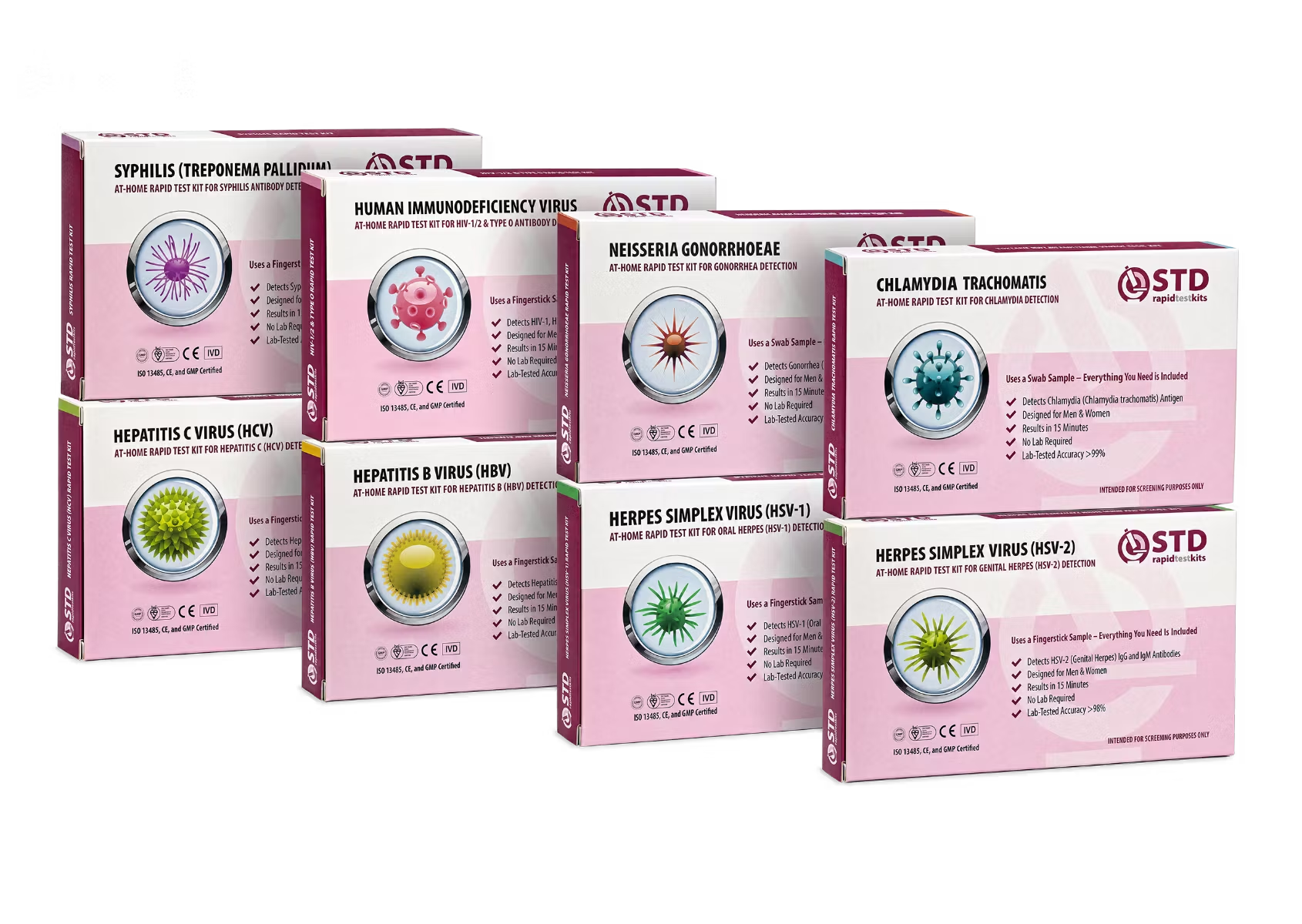
This site sells rapid at-home STI test kits. The panel below covers the main infections that pegging can transmit; choose a kit only if it actually fits your concern.
Symptoms to Watch For After Pegging
Most sexually transmitted infections do not produce loud, unmistakable symptoms. Chlamydia, trichomoniasis, and HPV can stay completely silent for weeks or longer. Herpes can present as nothing more than a brief itch that gets dismissed as friction. Gonorrhea in the rectum often causes only mild discomfort that is easy to confuse with constipation or hemorrhoids. None of that means infection is absent; it just means the body is not raising an obvious flag yet.
That said, certain signs in the days or weeks after a pegging session are worth paying attention to. If any of the following appear, the next step is testing rather than guessing. Symptoms alone cannot reliably distinguish an STI from a non-infectious cause like a small fissure or irritation from lubricant ingredients. A test, whether at home or at a clinic, gives a definite answer and a definite next step. The list below covers the symptoms most often missed because they are easy to attribute to something else.
- Burning or stinging during bowel movements or urination
- Unusual discharge from the anus or vagina, especially if it has an unfamiliar color or odor
- Bumps, sores, blisters, or warts near the rectum, vulva, or perineum
- Itching that persists after thorough washing
- Flu-like symptoms within a few weeks of exposure: fatigue, low-grade fever, swollen lymph nodes (often the first signs of acute HIV or hepatitis)
- Anal bleeding that lasts more than 24 hours or returns repeatedly
- Pelvic or lower abdominal pain in someone with a uterus, which can signal pelvic inflammatory disease
When and Why Testing Matters Even If You Only Use Toys
One of the quieter shifts in sexual health over the last decade has been the recognition that infection follows behavior, not labels. A growing number of people who test positive for chlamydia, gonorrhea, or HSV-2 report no "traditional" intercourse in their recent history; they share toys, have oral sex, or have intimate skin-to-skin contact without any penetration. The infection does not check the category, it just takes the route available.
For anyone whose sex life includes pegging, the testing question is the same as for anyone else: what are you doing, how often, and with how many partners. A simple framework works for most people:
- Steady partnership, both tested at the start, toys not shared outside the relationship: a yearly screen is usually enough.
- Multiple partners, shared toys, or inconsistent barrier use: a combination panel every 3 to 6 months keeps surprises rare.
- After a specific new exposure where a barrier was missed: test about 2 weeks later for chlamydia and gonorrhea, 3 to 6 weeks for syphilis, and 4 to 12 weeks for HIV depending on the test technology used.
- New symptoms, or a partner who tests positive: test immediately regardless of the schedule.
One practical note about sample type: at-home rapid swab kits are validated for genital self-collection, not rectal samples. If your specific concern is rectal chlamydia or gonorrhea from receptive anal play, a clinic-administered rectal swab NAAT is the appropriate test; an at-home swab panel will not detect a rectal-only infection.
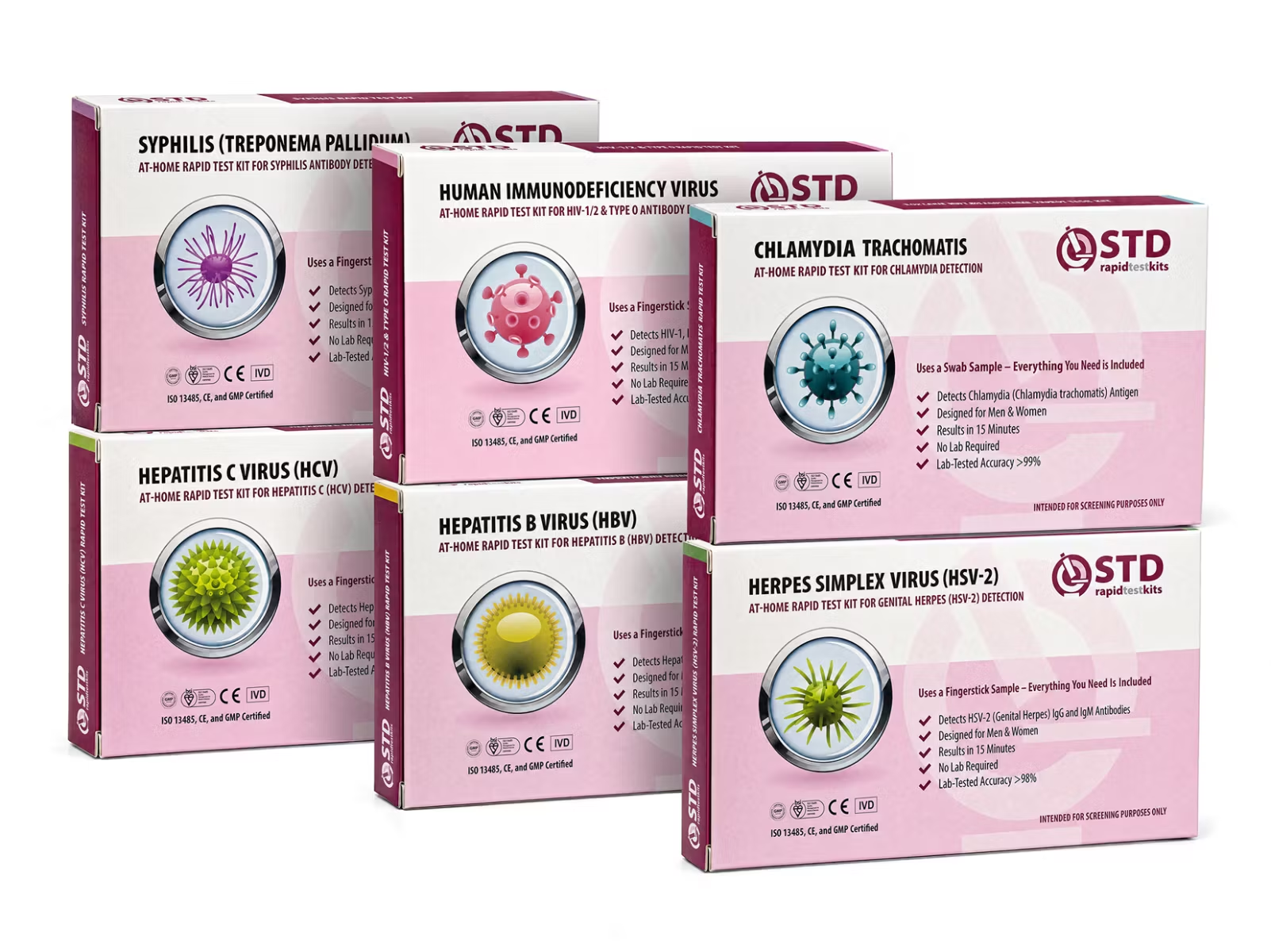
At-home rapid tests for STIs are lateral-flow immunoassays. They are not the same as laboratory NAAT or PCR tests, which run a different chemistry and tend to detect infection slightly earlier in the window period. The two are complementary: a rapid panel at home is a fast screen with privacy and convenience, and a positive result is worth confirming with a lab test through a clinician when possible. Both approaches are part of CDC-recommended STI screening practice; the right tool depends on what is available and how quickly someone needs an answer.
If You Test Positive After Pegging
A positive result on a rapid test is information, not a verdict. Almost every common sexually transmitted infection is treatable, and most bacterial ones are curable with a short course of antibiotics. Chlamydia and gonorrhea clear with a single course of treatment. Syphilis is curable at every stage with the right antibiotic regimen. Hepatitis B has effective antiviral options and is largely preventable with a vaccine. HIV is managed long-term with antiretroviral therapy that brings viral load to undetectable, which also means untransmittable. Herpes and HPV cannot be cured but can be managed; HPV often clears on its own within one to two years, and herpes outbreaks become less frequent over time and can be suppressed with daily medication.
The practical next steps after a positive home test are: confirm with a clinician or telehealth provider (many at-home kits include a follow-up consultation), start treatment promptly, and notify recent partners so they can test too. Partner notification feels uncomfortable but it is how transmission chains break. Health departments in many regions offer anonymous partner notification services, where they contact past partners on behalf of the person who tested positive, without naming them.
After treatment for chlamydia or gonorrhea, the CDC recommends waiting at least 7 days after completing the antibiotic course before having sex again, and retesting roughly three months later to confirm that no reinfection has occurred. Reinfection through a shared toy is one of the most common reasons treatment appears to "fail": the partner was not treated, or the toy was not sterilized, and the infection cycles back. Treating both partners at the same time and sterilizing or replacing any toys used during the infected period prevents that loop.
What treatment looks like for the main infections
- Chlamydia and gonorrhea: cleared with a single course of antibiotics; retest about 3 months later.
- Syphilis: curable at every stage with the appropriate antibiotic regimen.
- Hepatitis B: managed with antivirals; preventable with the hepatitis B vaccine.
- HIV: treated with antiretroviral therapy that brings viral load to undetectable (untransmittable).
- HPV: most infections clear on their own within 1 to 2 years; vaccination prevents most high-risk types.
- Herpes: outbreaks become less frequent over time and can be suppressed with daily medication.
Partners, Consent, and Talking About Safer Pegging
Most awkwardness around safer-sex conversations comes from treating them as separate from the sex itself. Asking "when did you last test?" or "can we use a condom on the toy?" can feel like breaking a spell. In practice, it is part of the negotiation that any kind of intentional sex, especially sex involving toys, harnesses, or any kink dynamic, already requires. Talking about cleaning routines, fresh condoms, and recent testing is no more disruptive than agreeing on a safeword or a stopping cue.
For anyone new to pegging, the script gets easier with repetition. The three openers below cover most pre-play and mid-play situations. They signal care, not suspicion, and they create a baseline that benefits both people: the receiver gets less risk of infection and irritation, and the giver gets the comfort of knowing nothing is being carried back from a previous session or partner.
- "Let us put a fresh condom on the toy."
- "Want to test together before next time?"
- "Can we pause and clean this before we switch holes?"
More than 1 million curable sexually transmitted infections (STIs) are acquired every day worldwide in people 15–49 years old, the majority of which are asymptomatic.
Frequently Asked Questions
- Can you actually get an STD from pegging?
- Yes. If a strap-on goes from one body to another, or from one orifice to another, without a fresh condom or proper cleaning, it can carry bacteria like chlamydia and gonorrhea, and viruses like herpes, HPV, and hepatitis B. Skin-to-skin contact around the harness can also transmit HPV and HSV without any penetration at all.
- Do I really need to use a condom on a strap-on?
- If the toy is shared between people, switched between the anus and vagina, or used with someone whose STI status is uncertain, yes. A fresh condom for each partner and each orifice is the simplest way to interrupt transmission. For a strictly monogamous couple who both tested negative after the relevant window period, it becomes optional rather than essential.
- Can herpes or HPV survive on a sex toy?
- Herpes simplex virus can survive briefly on moist surfaces, long enough to transfer to a new partner if the toy is used again without cleaning. HPV is also transmitted through skin-to-skin contact and can be present on the base of a toy or on the harness. Both are reasons to use a barrier or sanitize non-porous toys between uses.
- How do I clean a strap-on so it does not pass anything?
- It depends on the material. 100% medical-grade silicone, glass, and stainless steel can be boiled or washed with soap and water and reliably sanitized. Porous materials like jelly rubber, PVC, and TPR cannot be fully sanitized, so a fresh condom every use is the safer choice. Motorized toys should be cleaned with a toy-safe spray and never submerged.
- We only use toys, not intercourse. Do we still need to test for STIs?
- Yes. Sexually transmitted infections follow behavior, not categories. If toys move between bodies, orifices, or partners, they can transmit infection. Many STIs are also asymptomatic, so testing is the only reliable way to know. A routine screening every 6 to 12 months is reasonable for a steady partnership, more often if you have multiple partners.
- How long after a pegging session should I wait before testing?
- The safest rule is to set a calendar reminder rather than testing immediately. Each infection has its own detection window: chlamydia and gonorrhea become reliably detectable around two weeks after exposure, syphilis takes three to six weeks, and HIV needs at least four weeks for fourth-generation antigen-antibody tests and up to twelve weeks for some antibody-only rapid strips. Testing before the window closes risks a false negative that delays treatment, which is more harmful than waiting a few extra days.
- Can I get an STI from fingering after pegging?
- Possibly, especially if the same hand or glove moves from the anus to the vulva without washing. Bacteria and some viruses do not need a full sex act to be transferred; a film of fluid on a finger is enough. Hand-washing or a fresh glove between body areas is the easiest fix.
- What test should I use if I am worried after a pegging session?
- A combination panel that covers the most common STIs in one kit is the simplest starting point. Look for a multi-test that includes at minimum chlamydia, gonorrhea, syphilis, and HIV; broader 6-in-1 or 8-in-1 kits add hepatitis B, hepatitis C, and herpes. Confirm any positive result with a clinician or laboratory test before starting treatment. At-home rapid swabs sample genital sites only; if your concern is specifically rectal chlamydia or gonorrhea, a clinic-administered rectal NAAT is the right test.
Our article was constructed based on current advice from the most prominent public health and medical organizations, and then molded into simple language based on the situations that people actually experience. We cross-checked window periods, treatment timelines, and toy-material guidance against CDC, WHO, and NHS published guidance, and matched product framing to the rapid at-home lateral-flow tests sold on this site.
- U.S. Centers for Disease Control and Prevention. About Sexually Transmitted Infections (STIs): overview of transmission routes, symptoms, and testing recommendations.
- U.S. Centers for Disease Control and Prevention. Preventing HIV with Condoms: guidance on condom use during anal sex and with sex toys.
- World Health Organization. Sexually Transmitted Infections (STIs) fact sheet: global incidence figures, including the 'more than 1 million curable STIs per day among people 15 to 49' statistic.
- U.S. Centers for Disease Control and Prevention. STI Prevention: practical guidance on barriers, partner notification, and screening cadence.
- U.S. Centers for Disease Control and Prevention. Chlamydia: transmission, screening, and treatment guidance underlying the chlamydia-specific claims in this article.
- NHS. Sexually Transmitted Infections (STIs): overview of prevention, testing windows, and treatment.
