
Published: December 2025 | Last updated: May 2026 | Editorial review and quality control: Martina N.
You woke up with a hangover and a gap in last night's memory. Maybe you had sex. Maybe a condom was used. Maybe it wasn't. Now you're staring at an at-home test kit or a clinic website wondering whether testing right now, while your head is pounding and your thoughts are foggy, will even give you a real answer.
Short version: alcohol does not change how an STD test works. Whether you are using a rapid at-home test or heading to a clinic for lab testing, alcohol does not change how the test chemistry reads your sample. Your timing changes the result far more than your sobriety does. Most sexually transmitted infections need days or weeks after exposure before they become detectable, regardless of how clear-headed you feel at the moment of testing.
This guide walks through what alcohol does and does not do to STD testing, when to test after a risky encounter, what to do if you already tested too early, and how to read a result you aren't sure you can trust. It's written for people who would rather not wait in a clinic queue while still smelling faintly of last night's bar.
Key Takeaways
- Alcohol does not affect the chemistry of a rapid STD test. What affects accuracy is whether you test before or after the infection's window period closes.
- If you tested within a few days of a hookup and got a negative result, treat it as a placeholder. Retest at 2 to 3 weeks for chlamydia and gonorrhea, at 6 weeks for syphilis, and at 12 weeks for a truly definitive HIV antibody result.
Can You Take an STD Test While Hungover?
Yes. Being hungover does not invalidate the test itself. Your immune system might be mildly dehydrated or inflamed from last night's drinks, but the changes are too small to alter how a rapid lateral-flow strip detects antibodies, antigens, or pathogen DNA. The reagents do their job the same way whether you are sober or recovering.
What alcohol does interfere with is the part of testing that happens before the strip even gets wet. A pounding head and foggy memory make it harder to recall when the exposure happened, whether protection was used, and whether what you are feeling right now is a hangover or an early infection symptom. Common hangover signs (headache, nausea, muscle aches, fatigue) overlap with early STD signs in ways that send some people into panic spirals and lull others into false reassurance.
So the answer is layered: yes, you can take a test while hungover and trust the chemistry. The timing of that test relative to your exposure matters far more than how sober you are when you read the result.
The reagents inside a rapid test do not care whether you drank last night. What changes the result is whether the infection has had enough time to become detectable since the exposure happened.
What Actually Determines a Reliable Result: The Window Period
Every STD has a window period, the time it takes after exposure for the infection to become detectable by a given test. Test before that window closes and you'll likely get a negative that does not mean anything, regardless of your blood alcohol content. As different infections become detectable at different points, the right interval depends on both the infection and the test type used; the CDC's HIV testing guidance illustrates this with concrete windows for rapid antibody, antigen/antibody, and NAAT testing.
For at-home rapid lateral-flow tests (the kind sold for self-collection), the testable windows below align with CDC and NHS guidance for the underlying infections. Specific home-test sensitivity is published on each kit's data sheet; treat the table as orientation rather than a guarantee for any one product.
| Infection | Earliest Useful Test | Best Retest Window |
|---|---|---|
| Chlamydia (genital swab) | 7 days post-exposure | 2 to 3 weeks |
| Gonorrhea (genital swab) | 5 to 7 days | 2 weeks |
| Trichomoniasis (vaginal swab, women) | 1 to 2 weeks | 2 to 3 weeks |
| Syphilis (blood antibody) | 3 to 4 weeks | 6 to 12 weeks |
| HIV (rapid antibody) | 3 to 4 weeks | 12 weeks |
| Hepatitis B (blood antibody) | 4 to 12 weeks | 12 weeks |
| Herpes / HSV-2 (blood antibody) | 4 to 8 weeks | 12 to 16 weeks |
Why Each Infection Has a Different Detection Window
Three things worth pulling out. First, gonorrhea and chlamydia show up earliest because the bacteria multiply quickly at the genital infection site, so a swab can pick them up within a couple of weeks. Second, HIV antibody tests need the longest window because seroconversion (the moment your immune system produces detectable antibodies) takes weeks, and a truly definitive HIV antibody negative requires waiting closer to 12 weeks. Third, the herpes blood-antibody test is the most variable, and a definitive answer often needs the longer end of the window.
If you tested within hours or a day of a hookup, you almost certainly tested too soon. Set a phone reminder to retest at the correct window. Hungover or sober, the test cannot see what is not yet present in detectable amounts.
Herpes blood-antibody tests are the most variable of the common at-home options. A definitive HSV-2 result often requires waiting closer to the 12-to-16-week end of the window. If your specific concern is herpes exposure, plan a retest at three months for confidence in a negative.
What to Do After a Drunk Hookup, Based on How Much Time Has Passed
The decision tree below covers the main scenarios. None of it depends on whether you are still hungover. All of it depends on how many days have passed since the encounter.
Fewer than 5 days ago: most STDs are still incubating. A test now will likely come back negative even if you are infected. Two reasonable moves are available: take a baseline test now and plan a follow-up at the proper interval, or wait and test once at the right window. Skip the home test and seek immediate care if you have severe symptoms (burning urination, sores, abnormal discharge) or if the encounter may not have been consensual. Sexual assault evaluations have time-sensitive components that home kits cannot replicate.
Seven to 14 days ago: a rapid swab test for chlamydia and gonorrhea has a fair chance of detecting infection at this point. You can self-test with reasonable confidence for those two. HIV and syphilis still need a longer wait; plan to retest at 6 weeks for syphilis and at 12 weeks for a definitive HIV antibody result.
Over 2 weeks ago: the windows for the fastest-detecting bacterial STIs (chlamydia, gonorrhea, trichomoniasis) have closed or are close to closing. A multi-panel test gives you usable information at this point, with the understanding that syphilis, HIV, and herpes still need longer waits for a definitive negative.
After 6 weeks: the windows for the bacterial STIs (chlamydia, gonorrhea, syphilis, trichomoniasis) have closed, and this is a reliable checkpoint for a broad bacterial screen. A negative result on those is meaningfully reassuring. HIV and herpes antibody tests still benefit from a follow-up retest at the 12-week mark for a truly definitive negative, since antibody seroconversion can take up to about 90 days.
After 12 weeks: every common STI window for at-home rapid testing has closed. A negative result here is meaningfully reassuring across the full panel. A positive result gives you a clear next step, which is confirmation testing at a clinic followed by treatment.

What If You Already Tested While Still Drunk?
If you took a self-test within hours of drinking or while still under the influence, two things to think about. First, alcohol does not deactivate the test's reagents. The chemistry still works. Second, your ability to follow the instructions might have been compromised. Shaky hands, blurry reading of the result window, contaminated samples, misread timing, all of these can produce a false result that has nothing to do with whether you are actually infected.
If the test was taken correctly but within a few days of exposure, the most likely issue is timing rather than alcohol. The window period had not closed yet. The right move is to repeat the test at the proper interval (see the table above).
If the test was taken under conditions where you cannot be sure you followed the steps cleanly, repeat it sober. Wash your hands, read the package insert again, set a timer for the read window, and do not try to interpret a result that falls outside the test's stated read time. Most rapid tests give a result window of 10 to 20 minutes during which the strip is valid. Outside that window, strips can drift into faint false-positive or false-negative patterns that mean nothing.
For blood-based fingerstick tests, heavy alcohol the night before causes mild dehydration and peripheral vasoconstriction that can make it harder to get a usable blood drop. Drink water, let yourself rehydrate for a few hours, and warm your hands before pricking.
One note before the panel below: this article is published by stdrapidtestkits.com, which sells at-home STI testing kits. We recommend kits based on fit for the reader's concern, not commercial benefit.
Mixing Alcohol with Treatment, If You Test Positive
Most bacterial STDs (chlamydia, gonorrhea, syphilis, trichomoniasis) are treated with antibiotics. Some of those antibiotics interact noticeably with alcohol; others don't, but pausing drinking during treatment is still the safer default.
The single biggest interaction to know about is metronidazole, used for trichomoniasis and bacterial vaginosis. The 2021 CDC STI Treatment Guidelines recommend avoiding alcohol during metronidazole therapy and for 24 hours after the last dose because the combination causes a disulfiram-like reaction: severe nausea, vomiting, headache, and flushing.
For other commonly-prescribed antibiotics (doxycycline, azithromycin, ceftriaxone), the interaction with alcohol is less dramatic. Heavy drinking can still slow recovery and load up your liver while it is also processing the antibiotic, so pause drinking until you have finished the course.
If you are prescribed metronidazole (often for trichomoniasis or bacterial vaginosis), avoid all alcohol during the course and for 24 hours after the last dose. Combining the two reliably causes severe nausea, vomiting, headache, and flushing. The CDC's treatment guidelines flag this specifically.
Can Alcohol Mask Early STD Symptoms?
Temporarily, yes. Alcohol is a central nervous system depressant. It dulls your perception of mild discomfort and shifts how you read your own body. A low-grade fever from an early infection can feel indistinguishable from a hangover. Dehydration reduces both urine output and vaginal or penile discharge, so two of the earliest common signs (frequent urination, abnormal discharge) can be muted while you are recovering from a night out.
That muting effect fades as your body metabolizes the alcohol. Twelve to twenty-four hours later, symptoms may suddenly become more obvious, or you may discover that what felt like a hangover is something else. Watch for these signals once you are sober: burning during urination, unusual discharge, genital sores or bumps, painful intercourse, or a low-grade fever that lingers past the usual hangover window. The NHS's STI symptoms overview lists these as the most common early signs worth following up on with testing.
If something still feels off 24 to 48 hours after drinking, treat it as a reason to test.
How to Use an At-Home Test Properly When You're Still Recovering
The mechanics of an at-home rapid test depend on you following the instructions exactly. That gets harder when your hands are unsteady and you are reading through a brain fog. A few practical adjustments make the difference between a result you can trust and one you will need to redo.
Hydrate first. A glass of water and an hour of waiting helps with hand steadiness and (for fingerstick blood tests) blood flow at the fingertip.
Read the package insert once before you start. Notice the exact result-read window. Most rapid tests give a window of 10 to 20 minutes during which the result is valid. Outside that window, the strip can drift into false patterns.
Set a phone timer for the read time. Don't trust yourself to track minutes by feel after a hangover.
For swab tests (chlamydia, gonorrhea, trichomoniasis, HPV), collect the sample as the insert specifies. Vaginal self-swab tests require a clean swab, the correct insertion depth, and the right rotation count. Read the steps before you start, not as you go.
For fingerstick blood tests (HIV, syphilis, hepatitis, herpes), use the lancet on the side of your finger pad rather than the tip. Warm hands give better blood flow; rinse them under warm water first if your circulation feels sluggish.
If you cannot focus enough to follow those steps, wait a few hours.
When to Skip the At-Home Test and See a Clinic Instead
At-home rapid tests are useful screening tools, not lab-grade diagnostics. Lateral-flow chemistry trades some analytical sensitivity for speed, privacy, and convenience. Several situations call for a clinic visit instead of, or in addition to, a self-test.
You have visible symptoms. Sores, unusual discharge, burning urination, pelvic pain. A clinician can examine the site, take a proper sample, and prescribe treatment the same day.
The exposure may not have been consensual. Sexual assault forensic exams have time-sensitive components and clinical and legal documentation needs that home tests cannot provide. The NHS STI guidance and equivalent US clinics offer specialized support for these situations.
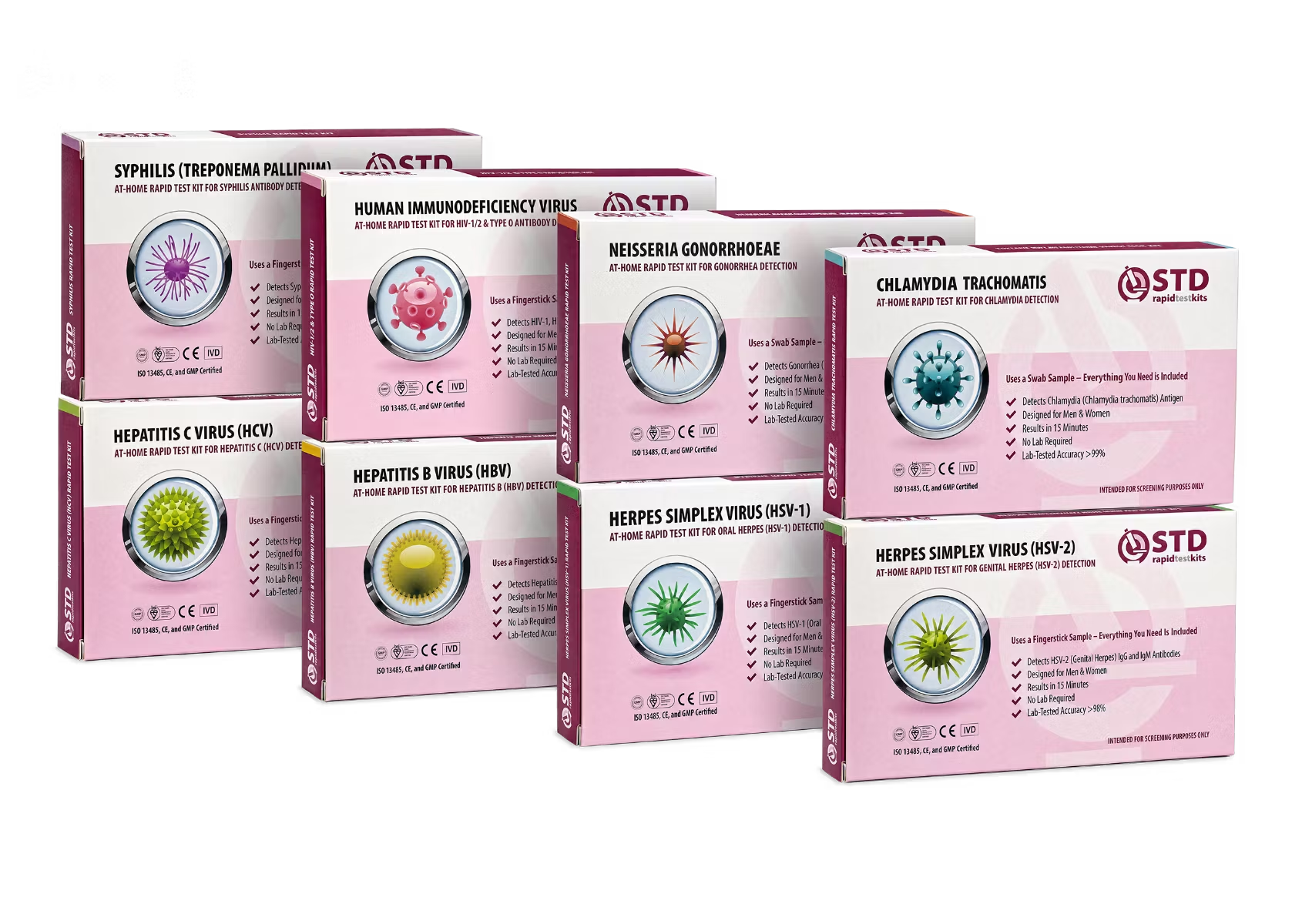
You need a test we do not sell at home. Lab NAAT for confirmation of a positive result, pharyngeal (throat) swab for oral exposure to gonorrhea or chlamydia, or a rectal swab for receptive anal exposure all need clinic collection. Our at-home rapid kits are validated for genital self-swab and fingerstick blood samples only. Throat and rectal sites are not covered by any home kit on the market, and that limitation matters most for high-risk exposures.
You're pregnant or planning pregnancy. STI testing in pregnancy follows specific schedules and should be coordinated with prenatal care.
You need follow-up monitoring for a previous positive (chronic hepatitis B, treated syphilis, HIV). Those require labs your home kit cannot replicate.
For everything else (post-hookup peace-of-mind testing, regular screening, retesting after the window has closed), at-home rapid kits give you a private result without the clinic wait.
Seek in-person forensic care immediately rather than testing at home. Sexual assault exams have time-sensitive evidence-collection components plus access to PEP, emergency contraception, and trauma-informed support that home kits cannot provide. RAINN's hotline (1-800-656-HOPE) can connect you with a local resource if you don't know where to start.
If You're Reading This Still Hungover
Start with hydration and honesty. What do you remember? What do you not remember? Was a condom used? Did it stay on? Did you see any visible symptoms on your partner? If those answers are shaky or absent, treat the situation as a possible exposure. Not guaranteed. Not risk-free either.
Wait until you're steady enough to collect a proper sample, then test. If you're within the first 3 to 5 days post-exposure, set a phone reminder to retest at the 2-week mark for chlamydia and gonorrhea, at 6 weeks for syphilis, and at 12 weeks for a definitive HIV antibody result. Consider writing down what happened (who, when, where, what protection was or wasn't used) so that if something changes you have a record. That's not about blame; it's about being able to take the next step from a more informed position.
If this kind of morning is recurring, and alcohol is frequently part of unprotected or questionable sex, it may also be worth thinking about what care looks like long term. That could mean therapy, harm-reduction tools, a different friend group, or simply keeping test kits on hand so you are never stuck waiting through a window period without options.
Next steps if last night is fuzzy
- Hydrate and write down what you remember about the encounter, including whether protection was used.
- Test once you are steady, or set a phone reminder for the right window if it is too soon.
- Retest at 2 to 3 weeks for chlamydia and gonorrhea, at 6 weeks for syphilis, and at 12 weeks for a truly definitive HIV antibody negative.
- Go to a clinic if symptoms develop, the encounter was non-consensual, or you need a test (throat, rectal, lab NAAT) we don't sell.
Frequently Asked Questions
- Is my STD test result valid if I took it while still drunk?
- The chemistry of a rapid test is not affected by alcohol in your system. What matters is whether you followed the instructions correctly and whether enough time has passed since exposure. If you ran the test cleanly and you are past the window period for the infection you are testing for, the result is meaningful. If your hands were shaking, you read the result outside the read-time window, or you couldn't focus on the steps, retest once you are clear-headed.
- How long should I wait to test after drunk sex?
- It depends on the infection. For chlamydia and gonorrhea, the earliest useful test is around 7 days post-exposure, with 2 to 3 weeks being more reliable. Syphilis is best confirmed at the 6-week mark. HIV antibody tests need closer to 12 weeks for a truly definitive negative (CDC guidance notes antibody tests can take up to about 90 days), and HSV-2 antibody tests need 12 to 16 weeks. Anything earlier may give you a false negative that does not actually rule out infection.
- Can alcohol mask early STD symptoms?
- Temporarily, yes. Alcohol blunts perception of mild discomfort and dehydration reduces discharge, so subtle signs (low-grade fever, mild burning, unusual discharge) can feel like part of the hangover. Once the alcohol clears your system, symptoms often become more obvious. If something still feels off 24 to 48 hours after drinking, treat it as a reason to test.
- What if I don't remember whether protection was used?
- Treat the encounter as a potential exposure. Plenty of people wake up unsure, and testing gives you information rather than worry. Plan a test at the right window for the most common STIs (chlamydia and gonorrhea at 2 to 3 weeks, syphilis at 6 weeks, HIV at 12 weeks), and seek same-day care if you have symptoms.
- Can I drink alcohol during STD treatment?
- It depends on the medication. Metronidazole (used for trichomoniasis and bacterial vaginosis) interacts strongly with alcohol and can cause severe nausea, vomiting, and flushing. The CDC's treatment guidelines recommend avoiding alcohol during the course and for 24 hours after the last dose. For other antibiotics like doxycycline or azithromycin, alcohol is less risky but still slows recovery. Pause drinking until the course is finished.
- I tested negative the morning after, am I in the clear?
- A test taken within 24 hours of exposure is too early for nearly every STI to register, so a negative there means the test couldn't see anything yet rather than that you are uninfected. Treat the morning-after result as a baseline and retest at the right window before you trust that negative.
- Do at-home rapid tests work as well as lab tests?
- At-home rapid lateral-flow tests are screening tools. They are useful, private, and convenient, but lab tests using NAAT or PCR technology are more analytically sensitive, especially for asymptomatic infections. A negative rapid test taken at the right window is reassuring. A positive result on a rapid test should be confirmed at a clinic with a lab-grade test before starting treatment.
How We Sourced This Article: We combined current guidance from leading medical organizations (CDC STI testing guidance, CDC STI treatment guidelines, NHS) with the published data sheets for at-home rapid lateral-flow tests. Where window-period figures vary between sources, we used the more conservative end so readers don't trust a negative result earlier than the evidence supports.
- U.S. Centers for Disease Control and Prevention. HIV testing overview and window periods for different test technologies, including antibody-test detection windows of up to about 90 days.
- U.S. Centers for Disease Control and Prevention. Sexually Transmitted Infections Treatment Guidelines (2021), including metronidazole and alcohol interaction guidance.
- U.S. Centers for Disease Control and Prevention. Getting Tested for STIs: who should be tested and how often.
- NHS. Sexually transmitted infections (STIs): symptoms, when to seek care, and clinic-based testing.
- RAINN (Rape, Abuse & Incest National Network). National Sexual Assault Hotline and clinic finder.
