
Published: August 2025 | Last updated: May 2026 | Editorial review and quality control: Martina N.
Burning that will not quit. An itch that flares the morning after sex. A bump that was not there yesterday, a rash that does not itch, a sore throat that the strep swab did not catch. The frustrating truth is that very different problems trigger nearly identical sensations on genital skin, in the urethra, and in the throat. That overlap is what fuels the late-night search spiral and what makes self-diagnosis unreliable.
This guide pairs nine familiar feels with the infections most likely behind them, what to track in the cluster of symptoms (not just one), and the specific test that ends the guessing game. Treat skin comfort while you collect samples; relief and clarity are not rivals, and waiting for an appointment in silence is not a virtue.
Key Takeaways
- Burning, itching, discharge, and bumps overlap across STIs and non-STI conditions; the cluster of symptoms plus exposure history matters more than any single sensation.
- Site-matched testing settles it: NAAT swabs at every body site you have sex, lesion PCR for visible sores, and blood tests for HIV and syphilis.
Why Everything Feels the Same (and How to Read It Anyway)
The urethra, vulva, penis, and perianal skin share nerve pathways, so different problems trigger the same handful of sensations: burn, sting, itch, ache. Friction from sex, tight clothes, new soaps, or a recent course of antibiotics adds noise to the signal. Fixating on one symptom rarely helps. Track the cluster instead: timing after exposure, the presence and color of any discharge, odor, sores versus smooth bumps, fever or swollen lymph nodes, and whether comfort measures move the needle in 48 to 72 hours.
Below, each section pairs a familiar feel with the infections most likely behind it, plus the test that confirms what is going on. The U.S. Centers for Disease Control and Prevention recommends matching the test to the body site you have sex at: genital, throat, and rectal swabs are not interchangeable, and urine testing alone misses extragenital infections (CDC STI Treatment Guidelines). Use the structure that follows as a map, not a substitute for an exam.
When you describe symptoms to a clinician (or to yourself), capture all five dimensions:
- Timing: days or weeks since the exposure that worries you.
- Discharge: present or absent, and if present: color, consistency, odor.
- Skin findings: sore versus smooth bump versus rash; itchy or not; one spot or scattered.
- Systemic signs: fever, fatigue, swollen lymph nodes, rash on palms or soles.
- Response to comfort care: does antifungal cream, hydration, or rest move the needle in 48 to 72 hours?
Burn When You Pee: UTI vs Chlamydia and Gonorrhea
How it feels: a sharp burn at the urethral opening, urgency that hits suddenly, frequency in tiny amounts, sometimes lower belly pressure. Discharge is often absent or minimal early on, which is why many people assume a simple urinary tract infection. The CDC notes that chlamydia is often asymptomatic, and when symptoms do appear, a burning sensation when peeing and abnormal discharge are the most common (CDC Chlamydia Basics).
- More UTI-like: strong urge to urinate tiny amounts, cloudy or foul-smelling urine, flank pain or fever (a possible kidney infection, seek same-day care).
- More STI-like: a recent new partner, urethral discharge that runs white, yellow, or green, rectal or throat symptoms after oral or anal sex, testicular or pelvic aching alongside the burn.
- Test to end doubt: urine culture for UTI; urine or swab NAAT for chlamydia and gonorrhea, including throat and rectal sites if you have sex there. Co-infection happens; ordering both is reasonable when the picture is mixed.
Do now: skip leftover antibiotics. They can blunt symptoms enough to mask a missed STI without curing it, and antibiotic-resistant strains of gonorrhea are increasing per the CDC (CDC Gonorrhea Basics). Hydrate, manage pain with over-the-counter analgesics, and book testing.
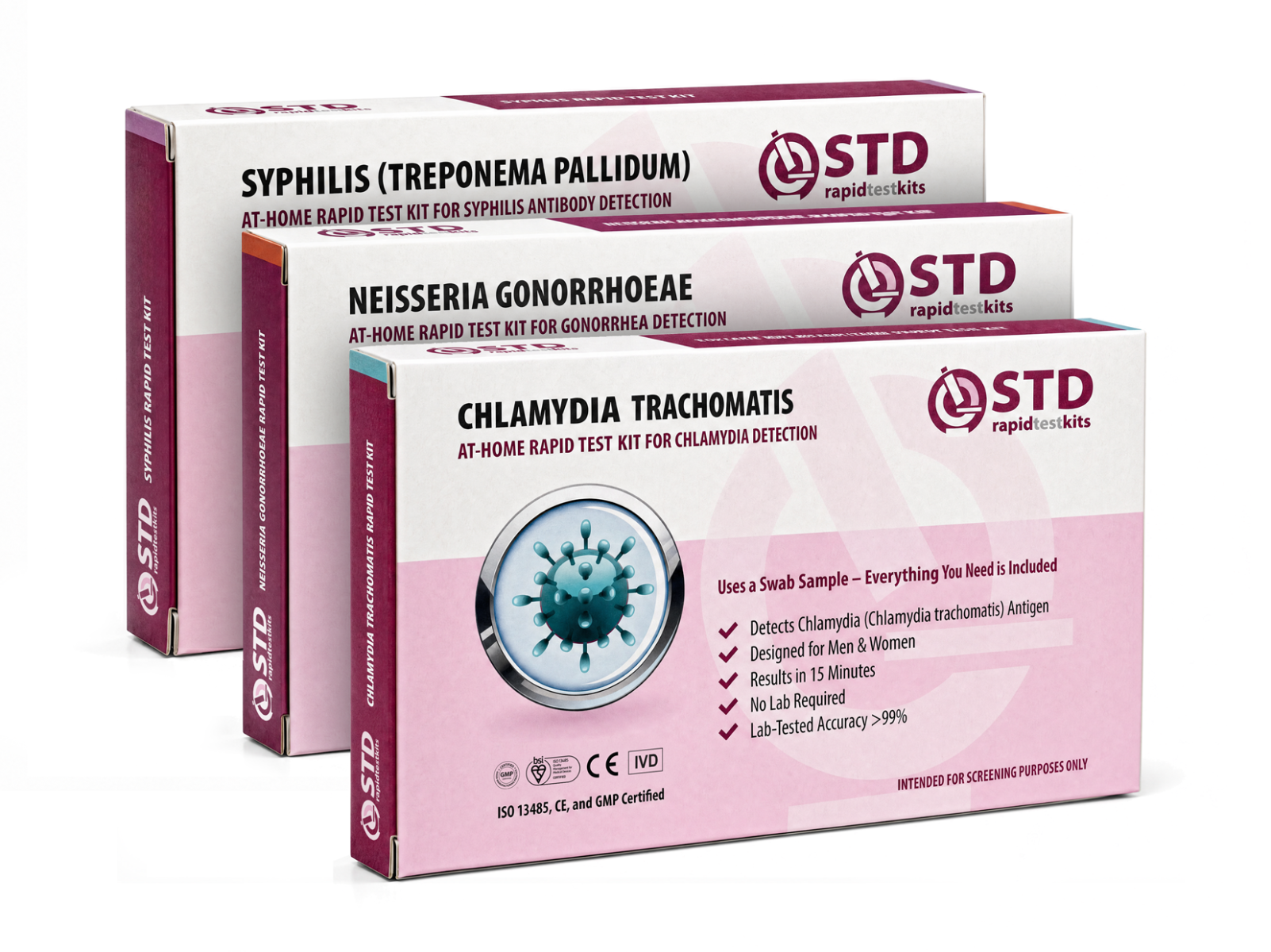
For reference, this site sells rapid at-home STI kits; we recommend products by fit, not by commission, and we say so plainly when the right test is one we do not sell.
Intense Itch, Shiny Red Skin: Yeast vs Herpes
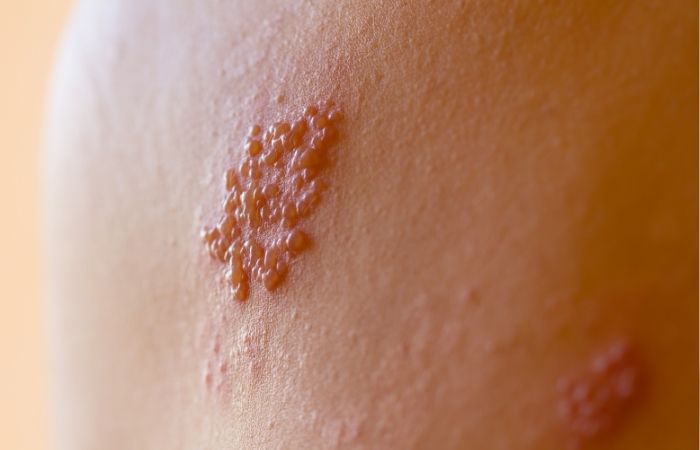
How it feels: itch or burn on contact, shiny red patches (or dusky and violaceous on brown and Black skin), tiny fissures, sometimes clumpy white discharge under the foreskin or vaginally. Symptoms flare after sex, workouts, or anything that traps moisture, which makes blame games easy and inaccurate.
- More yeast-like: shiny, moist plaques with satellite pinpoint dots; improvement within 48 to 72 hours on an over-the-counter azole antifungal; triggers include moisture, antibiotics, uncontrolled diabetes, or pregnancy.
- More herpes-like: a localized tingle that escalates to burn, then grouped blisters or shallow erosions that crust over a few days; pain on contact; tendency to recur in the same spot. Tender groin lymph nodes can accompany a first outbreak.
- Test to end doubt: a clinical exam (with a possible KOH wet mount) for yeast; lesion swab PCR for herpes when blisters or erosions are present. Type-specific blood antibody testing supports the diagnosis when no active lesion is available, but it does not tell you when transmission occurred.
Do now: try an antifungal plus a dryness routine if yeast looks likely. If there are blisters, deep ulcers, or pain that wakes you up, swab now. PCR sensitivity drops as sores crust, so the early window is the accurate one.
Fishy Odor or Frothy Discharge: BV vs Trichomoniasis
How it feels: more odor than pain. Vulvovaginal itching ranges from none to moderate. Partners may notice irritation after sex, and these two conditions are commonly confused, sometimes coexisting with other STIs. Bacterial vaginosis is not technically an STI; trichomoniasis is. Treatment paths differ, so guessing wastes time and money.
- More BV-like: thin, gray or white discharge with a fishy odor that strengthens after sex; minimal external soreness; flares after a new partner, douching, or a course of antibiotics that disrupted vaginal flora.
- More trich-like: yellow-green frothy discharge, vulvar irritation, sometimes spotting after sex. Penis-owners frequently have minimal symptoms or only urethral irritation, which is why partner notification matters.
- Test to end doubt: a vaginal swab NAAT panel detects trichomoniasis and BV-associated organisms together. For penis-owners, a urethral or urine NAAT for trich is the right tool. Note: our at-home trich kit is validated for vaginal self-swab only; male readers needing a trich test should see a clinic.
Do now: skip scented washes, douches, and pH gimmicks; they can worsen dysbiosis. Get a swab panel (self-collection is often offered) and treat precisely. The wrong medicine can make things worse and miss trichomoniasis entirely.
Our at-home trichomoniasis kit is validated for vaginal self-swab only. Male readers who need a trich test should visit a clinic that offers urethral or urine NAAT. Treatment is curative once the right test confirms the cause.
Smooth Bumps: Genital Warts (HPV) vs Molluscum vs Skin Tags
How it feels: usually no pain, mostly the unsettling sight of new bumps. Friction makes them tender, but day to day they are quiet. Because they do not burn or ooze, many people ignore them or assume they are normal skin variants.
- More HPV-wart-like: soft, flesh-colored bumps that may cluster or look cauliflower-like; surface is irregular; can enlarge or multiply over weeks. HPV vaccination through age 26 is routine, with shared clinical decision-making through age 45 per current ACIP guidance.
- More molluscum-like: dome-shaped, smooth bumps with a central dimple. Lesions may appear in linear streaks where skin was rubbed or shaved, an autoinoculation pattern (DermNet NZ Molluscum Contagiosum).
- More skin-tag-like: soft, pedunculated flaps in high-friction zones (groin folds, inner thigh); stable in size; the same color as surrounding skin.
- Test to end doubt: a clinical exam is primary. Biopsy is reserved for atypical, fast-growing, or pigmented lesions. Run a standard STI panel if exposure risk exists, since coinfections are not unusual.
Do now: do not pick or shave over bumps. Picking spreads molluscum and irritates warts. Use barriers during sex and book an evaluation. Cryotherapy, topical agents, and minor in-office removal can settle the question and reduce spread. Note: our at-home HPV kit is validated for vaginal self-swab; male readers needing HPV testing should see a clinic.
Three smooth bumps at a glance
- HPV genital wart: irregular surface, may cluster or look cauliflower-like, can multiply over weeks. Sexually transmitted.
- Molluscum contagiosum: smooth dome with a central dimple, often in linear streaks along scratched or shaved skin. Caused by a poxvirus, spreads by skin contact.
- Skin tag: soft pedunculated flap on a tiny stalk, stable in size, in high-friction zones such as groin folds. Not an infection.
Shaving Bumps: Razor Burn and Folliculitis vs Herpes
How it feels: after grooming or friction, tiny red bumps pop up. Some itch, some are tender. Because herpes can begin as small papules before vesicles appear, early outbreaks are routinely mislabeled as ingrown hairs.
- More folliculitis-like: bumps centered on hair follicles, sometimes with a tiny white pustule cap; improves within days using warm compresses and a pause on shaving; no progression to grouped blisters.
- More herpes-like: a localized tingle that turns to burn, then grouped blisters that erode and crust; pain that out-paces the size of the lesions; recurrence at the same site over months. Low-grade aches and tender groin nodes can accompany a first outbreak.
- Test to end doubt: swab PCR of any fresh blister or erosion. If lesions are gone or healing, type-specific blood antibody testing can support the diagnosis. Pair with NAAT for chlamydia and gonorrhea if exposure risk exists.
Do now: pause shaving and waxing, switch to loose fabrics, and avoid picking. If there is any blistering or significant pain, get a same-day swab before lesions dry out. PCR is most accurate while the sore is wet.
Lesion swab PCR is most accurate while the blister is fresh and wet. Once a sore crusts over, sensitivity drops sharply: act before healing, not after. If you suspect a first outbreak, get the swab the same day.
Mystery Rash (Often Without Itch): Syphilis vs Drug Rash vs Pityriasis Rosea
How it feels: spots on the trunk or limbs that itch little or not at all. Because the rash is not dramatic, people chalk it up to detergent, sun, or stress, especially when it shows up weeks after a hookup. The CDC describes the secondary syphilis rash as appearing rough, red, or reddish-brown, often on the palms of the hands and the bottoms of the feet (CDC Syphilis Basics).
- More syphilis-like: diffuse coppery or violaceous macules and papules; possible involvement of palms and soles; sometimes a sore throat, patchy hair loss, low fever, or mucous patches in the mouth; a history of a prior painless genital, anal, or oral sore that healed on its own. Syphilis is widely known in public health as a great imitator because its presentations overlap so many other conditions.
- More drug-rash-like: onset days to weeks after starting a new medication; symmetric pink-red macules; improvement when the offending drug stops; itch is more common than with syphilis.
- More pityriasis-rosea-like: a single "herald patch" appears first, followed by smaller oval lesions in a Christmas-tree distribution on the back; mild itch at most; common in younger adults and often self-resolves over six to eight weeks.
- Test to end doubt: a non-treponemal blood screen (RPR or VDRL) plus a treponemal confirmatory test for syphilis. Review new medications with a clinician for drug eruptions, and a dermatology exam settles unclear patterns.
Do now: if the palms or soles are involved, or you remember a prior painless sore, prioritize syphilis testing. Photograph the rash in natural light to track changes over days, and pause new skin products until evaluated.

Sore Throat After Oral: Strep vs Oral Gonorrhea vs Mono
How it feels: scratchy or painful swallowing after a hookup. Several infections mimic each other in the throat. The at-home rapid kits we sell on this site do not include a pharyngeal swab; for throat-site STI testing, see a clinic with NAAT capability.
- More strep-like: high fever, tender front-neck nodes, no cough, dramatic tonsillar exudates, onset over 24 to 48 hours.
- More oral-gonorrhea-like: recent oral sex with a new partner, sore throat with or without pus, a negative rapid strep test, partners with urethral or rectal gonorrhea. Pharyngeal gonorrhea is frequently asymptomatic, which is why the CDC recommends site-specific NAAT screening for people who give oral sex (CDC STI Treatment Guidelines).
- More mono-like: profound fatigue, swollen posterior neck nodes, sore throat lasting one to two weeks or more; sometimes an enlarged spleen that needs activity restrictions.
- Test to end doubt: rapid strep with culture; throat NAAT for gonorrhea and chlamydia at a clinic; mono spot or EBV serology if symptoms drag.
Do now: if strep is negative but the sore throat lingers after oral sex, ask specifically for throat NAAT swabs. Treating the wrong bug wastes time and quietly maintains transmission.
| Feature | Strep | Oral Gonorrhea | Mono |
|---|---|---|---|
| Onset speed | Sudden, 24 to 48 hours | Variable, often over a few days | Gradual |
| Fever | Often high | Mild or absent | Often present, low to moderate |
| Lymph nodes | Tender front-neck (anterior) | Front-neck possible | Posterior neck, often large |
| Rapid strep | Positive | Negative | Negative |
| Right test | Throat culture | Clinic throat NAAT | Mono spot or EBV serology |
Deep Pelvic or Testicular Ache: Epididymitis and Prostatitis vs Chlamydia and Gonorrhea
How it feels: a dull ache low in the pelvis or perineum, or one-sided testicular pain that worsens with movement and ejaculation. Sometimes urinary frequency or a low burn shows up without visible discharge. Because the discomfort is internal, lifting, cycling, or a bad night of sleep gets the blame, and STI testing gets delayed.
- More epididymitis-like (often STI-driven under age 35): gradual unilateral testicular pain and swelling; relief when the scrotum is elevated; a recent new partner; possible urethral drip on a morning squeeze.
- More prostatitis-like: perineal pressure, painful ejaculation, weak urinary stream; may follow a UTI or extended cycling; can be bacterial, inflammatory, or pelvic-floor-driven.
- Test to end doubt: urine and urethral NAAT for chlamydia and gonorrhea; urinalysis with culture; an exam to check epididymal tenderness; scrotal ultrasound if pain is severe to rule out torsion or abscess.
Do now: new pain plus a new partner means STI NAAT testing comes first, even if you also had a heavy lifting day. Severe scrotal pain or fever calls for same-day care; testicular torsion is time-sensitive and needs surgery within hours.
Untreated syphilis in the secondary stage commonly produces a rough, red or reddish-brown rash that may appear on the palms of the hands and the bottoms of the feet.
Flu-Like (With or Without Rash): Acute HIV vs Flu and COVID vs Mono
How it feels: fever, sore throat, body aches, swollen nodes, and sometimes a faint, non-itchy rash. The "I think I have the flu" feeling. After a recent high-risk exposure, this cluster should prompt testing rather than waiting. Acute HIV can look identical to common viral syndromes in the first weeks after exposure, and the diagnosis changes the entire treatment story (CDC HIV Testing).
- More acute-HIV-like: fever plus sore throat plus generalized lymph nodes plus a faint rash, two to four weeks after exposure; night sweats, mouth ulcers, or diarrhea; no obvious alternative diagnosis.
- More flu-or-COVID-like: sudden high fevers, cough, congestion, known local respiratory outbreaks; positive rapid antigen or PCR for influenza or SARS-CoV-2.
- Test to end doubt: a lab-based 4th-generation HIV antigen and antibody combination test, with reflex RNA/NAAT for very early infection; a respiratory viral panel; a broader STI panel if the exposure context warrants. Per the CDC, 4th-generation antigen/antibody lab tests detect HIV within 18 to 45 days after exposure (roughly three to six weeks); very early testing should be repeated at six weeks and three months to confirm a negative.
Do now: if timing aligns with a recent exposure, do not wait for symptoms to pass. Early HIV diagnosis enables rapid treatment and changes downstream transmission risk. Post-exposure prophylaxis is an option within 72 hours of high-risk exposure if you act fast.

The Testing Playbook: Site-Matched and Window-Aware
Symptoms overlap; tests do not. When you are sorting through mixed signals, combine site-specific swabs with blood work rather than relying on a single sample. Ask for genital, throat, and rectal NAAT based on the body sites you have sex at. Add blood tests for syphilis and HIV. Treat skin comfort in parallel; topical care for yeast, dermatitis, or razor irritation does not interfere with NAAT or serology results (NHS STIs overview).
Clarity beats catastrophizing. Test what matches your sex acts, treat what you can see and feel, and let the labs do the rest.
- First move at home: a discreet multi-infection screen narrows the field. Our 7-in-1 rapid kit covers the major blood- and swab-detectable infections without a clinic visit.
- Clinic follow-up: add throat and rectal NAAT swabs, syphilis confirmatory testing, and targeted exams for visible lesions. We do not sell pharyngeal or rectal swab tests; for those sample types, see a clinic with NAAT.
- Window-period awareness: chlamydia and gonorrhea NAAT is reliable around one to two weeks after exposure; HIV antigen-antibody tests detect within 18 to 45 days; syphilis serology takes three to six weeks. Test now, and book a follow-up at the recommended interval if the first round is negative.
When to Stop Guessing and Test Today
Mixed symptoms make it tempting to wait one more day. Certain patterns call for immediate testing instead. New partners plus burning urination or new discharge: get a NAAT panel for chlamydia and gonorrhea now. Grouped blisters or any open sore: swab for herpes before lesions crust, because PCR sensitivity drops as they heal. A non-itchy rash on the trunk or palms and soles, especially after a past painless sore: prioritize blood testing for syphilis without delay.
- High-priority combos: urethral discharge with a new partner; a painless sore followed weeks later by a diffuse rash; a sore throat after oral sex with a negative rapid strep; testicular pain plus swelling.
- Site-matched testing: swab where you have sex. Genital, throat, and rectal sites need their own NAAT swabs; urine alone misses extragenital infections.
- Window-period follow-ups: if you tested very early, book a repeat test at the recommended interval. A negative early test is not a final answer.
You do not have to choose between comfort care and clarity. Treat skin irritation while you collect accurate samples. Topical care does not interfere with results, and silent waiting in agony is not a virtue.
FAQs
- How soon after sex can I test for chlamydia and gonorrhea?
- For most people 7 to 14 days is the earliest reliable window for NAAT testing. If you tested at day 5 or earlier, book a follow-up regardless of the initial result, especially if symptoms persist. Asymptomatic infections still transmit, so do not wait for symptoms to confirm.
- My throat hurts after oral sex but strep is negative. What should I do?
- Ask specifically for throat NAAT swabs for gonorrhea (and sometimes chlamydia). A rapid strep test does not detect STIs. Pharyngeal gonorrhea is often asymptomatic and is missed without site-specific swabbing. We do not sell pharyngeal swab kits; this one needs a clinic visit.
- How do I tell yeast from herpes when both itch?
- If blisters or shallow erosions appear, swab for PCR immediately, sensitivity drops fast as sores crust. If only itch and shiny redness with no blistering, try an over-the-counter azole antifungal for 48 to 72 hours; herpes will not improve on antifungals, so persistent symptoms point you back to PCR or a clinic exam.
- Can a UTI and an STI happen at the same time?
- Yes. Co-infection is possible, which is why urine culture and STI NAAT are reasonable to order together when symptoms overlap. Self-treating with leftover antibiotics can mask an STI without curing it.
- What does a syphilis rash look like?
- Usually a non-itchy, diffuse rash on the trunk and limbs, often involving the palms and soles. On brown and Black skin it may appear violaceous, coppery, or gray rather than bright red. Confirmation is by RPR or VDRL blood test plus a treponemal confirmatory test.
- When is HIV testing reliable after exposure?
- Per the CDC, lab-based 4th-generation antigen and antibody combination tests detect HIV within 18 to 45 days of exposure (roughly three to six weeks). Schedule a follow-up at six weeks to three months if you tested very early or remain at risk. RNA NAAT can detect even earlier and is used for suspected acute HIV.
- I see smooth bumps. Is it HPV, molluscum, or a skin tag?
- HPV warts are often soft and irregular or cauliflower-like. Molluscum lesions are smooth domes with a central dimple and may appear in lines along scratched or shaved skin. Skin tags are soft pedunculated flaps in high-friction zones. A clinical exam settles it; cryotherapy or topical treatment reduces spread.
- What is balanitis and how is it different from an STI?
- Balanitis is inflammation of the head of the penis (or under the foreskin). It is most often non-infectious, triggered by irritants, soaps, or hygiene patterns, though yeast and some STIs can mimic or cause it. A clinical exam usually settles whether the cause is irritation, candida, or an STI such as herpes; testing follows from there.
- U.S. Centers for Disease Control and Prevention. STI Treatment Guidelines covering chlamydia, gonorrhea, syphilis, herpes, trichomoniasis, BV, and pharyngeal/rectal site testing.
- World Health Organization. Sexually transmitted infections fact sheet covering global epidemiology and overall STI burden.
- National Health Service (UK). Sexually transmitted infections overview covering symptom patterns, testing, and treatment.
- U.S. Centers for Disease Control and Prevention. HIV Testing reference covering 4th-generation antigen/antibody window of 18 to 45 days and RNA NAAT for acute infection.
- U.S. Centers for Disease Control and Prevention. Chlamydia Basics covering asymptomatic infection, urinary burning, and abnormal discharge as presenting symptoms.
- U.S. Centers for Disease Control and Prevention. Gonorrhea Basics covering symptoms, drug-resistant strain trends, and site-specific transmission.
- U.S. Centers for Disease Control and Prevention. Syphilis Basics covering primary and secondary stages and the rough red or reddish-brown rash on palms and soles.
- DermNet NZ. Molluscum contagiosum reference covering dome-shaped umbilicated lesions and autoinoculation pattern.
