
Published: September 2025 | Last updated: April 2026 | Editorial review and quality control: Martina N.
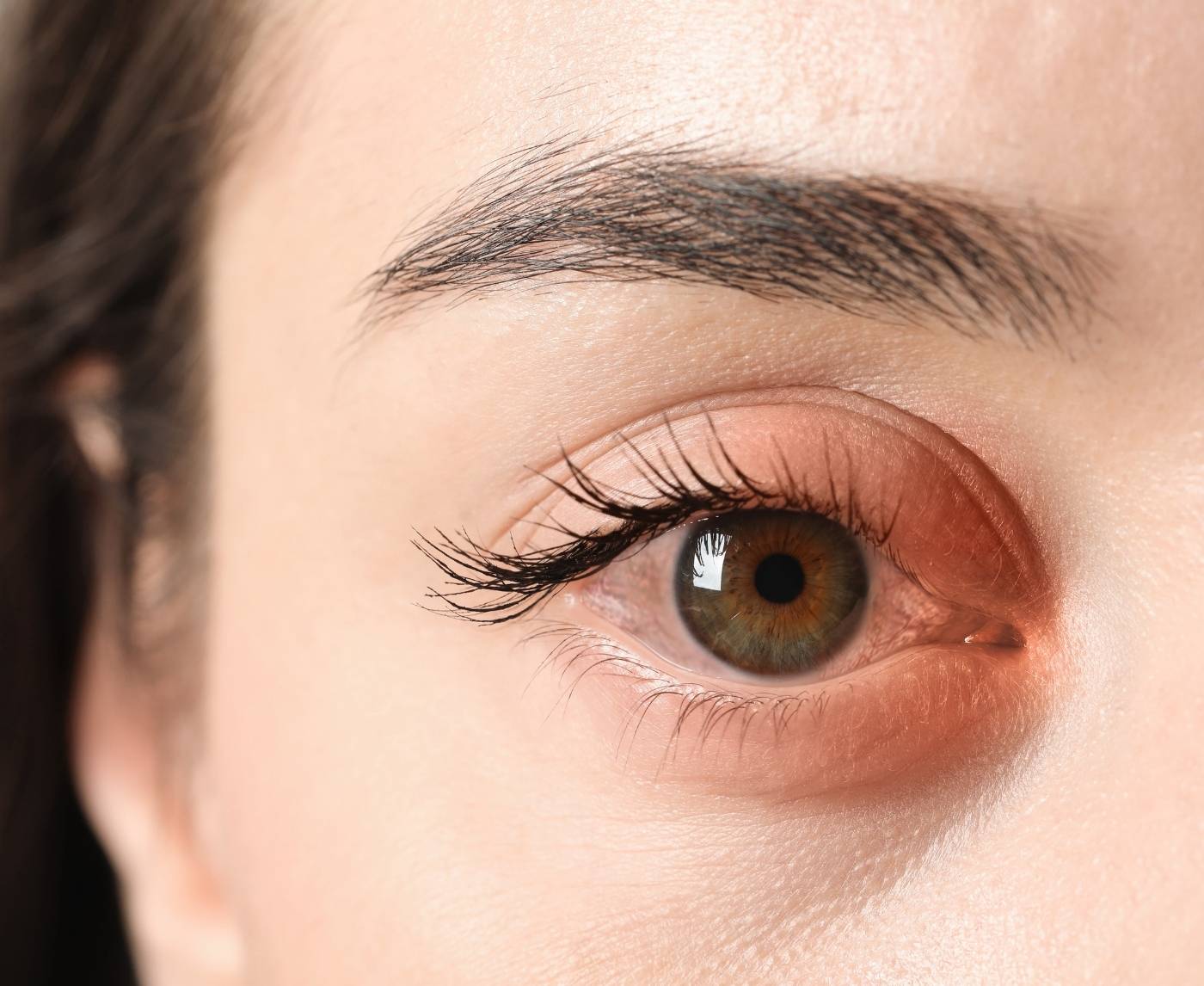
Most red, irritated eyes are not sexually transmitted. The vast majority will be viral conjunctivitis, allergies, dry eye, or routine bacterial pink eye that clears with a few days of care. So if you came here worried because your eye looks rough this morning, the odds are still on your side.
What this article is for is the smaller group whose timing makes the question reasonable. The eye started acting up within a few days of recent sexual contact. The discharge is thicker than feels normal. A standard urine or genital swab came back negative, but the eye is still red, swollen, or painful, and nobody has explained why. That's the situation where a sexually transmitted infection in the eye genuinely belongs on the list.
Can you have an STD in your eye if everything else feels fine?
Yes. Chlamydia, gonorrhea, and herpes simplex virus can all infect the eye through hand-to-eye transfer or direct fluid exposure, even when you have no genital symptoms. Standard urine and genital swab tests do not sample the conjunctiva, so a negative result there does not rule out an ocular infection. If your eye is red, painful, swollen, or producing thick discharge after recent sexual contact, see a clinician for an in-person exam and ask specifically about a conjunctival swab. Pair that with a systemic STI screen so a concurrent genital infection isn't missed.
Key Takeaways
- A negative genital STI test does not rule out an eye infection. Conjunctival swabs and corneal samples are separate orders from the routine urine NAAT or genital swab most clinics run by default.
- Eye redness with thick discharge, pain, or light sensitivity within days of sexual contact deserves same-day medical evaluation, not over-the-counter drops or a wait-and-see week.
Yes, STDs Can Reach the Eye Even Without Genital Symptoms
The surface of your eye is mucous membrane tissue, biologically the same category as the throat, urethra, vagina, and anus. Bacteria and viruses adapted to colonize one mucous surface can also colonize another if they reach it. The eye does not have a special force field that keeps sexually transmitted organisms out.
The most common transmission pathway is not dramatic. It is hands. After genital contact, infectious material lands on fingers, then transfers to the face when you rub an itch, wipe a watery eye, or adjust contact lenses. The CDC's clinical overview of conjunctivitis specifically notes that viral conjunctivitis is very contagious and mostly spread through hand-to-eye contact by hands or objects that are contaminated with the virus. The same physics applies to chlamydia and gonorrhea organisms; the eye does not need an injury, only contact.
Direct fluid exposure is the second route. Genital fluids that reach the face during sex can inoculate the conjunctiva straight away. The third route is autoinoculation, the clinical word for transferring organisms from one site on your own body to another. If you have a genital chlamydia infection (often silent, per CDC's chlamydia fact sheet) and rub your eye after using the bathroom or after sex, the eye can be inoculated by your own hands.
Adult inclusion conjunctivitis, the formal name for chlamydia of the eye in adults, is a recognized clinical entity with management considerations distinct from routine bacterial pink eye. Gonococcal conjunctivitis in adults is rarer but more aggressive. Both are documented by the CDC's STI treatment guidelines, which include site-specific recommendations for ocular gonorrhea (CDC: Gonococcal Infections Among Adolescents and Adults).
Three ways an STI organism reaches the eye
- Hand-to-eye transfer: infectious material on fingers ends up on the conjunctiva when you rub an itch, wipe a watery eye, or adjust contact lenses after genital contact.
- Direct fluid exposure: genital fluid that reaches the face during sex can inoculate the conjunctiva straight away.
- Autoinoculation: organisms move from your own genital site to your own eye via your hands, sometimes hours after the original sexual contact.
Pink Eye Versus an STI-Related Eye Infection
Both conditions can start the same way: redness, watering, mild irritation, low-volume discharge. That overlap is exactly why so many STI eye infections get treated as routine conjunctivitis at first. The differences emerge over a few days as the infection progresses, and the timing and severity tend to be the most useful clues.
| Feature | Typical pink eye (viral or routine bacterial) | STI-related eye infection |
|---|---|---|
| Common context | Recent cold or respiratory illness, sick contacts at home or work, contact-lens hygiene slip | Recent sexual contact, new partner, oral sex, or known partner exposure |
| Eye affected | Often starts in one eye, then spreads to the other within a day or two | May stay in one eye for longer, especially with chlamydial conjunctivitis |
| Discharge character | Watery (viral) or mild mucus (routine bacterial) | Thick, mucopurulent, yellow-green, returns within minutes of wiping in gonococcal cases |
| Pain or light sensitivity | Grittiness, mild irritation; sharp pain is uncommon | Sharp pain or photophobia raises concern for corneal involvement and needs urgent care |
| Response to drugstore drops | Often improves within 48 to 72 hours of supportive care | Minimal or no improvement; sometimes worsens if steroid drops are used |
| Other body clues | Cough, sore throat, runny nose | Burning urination, genital discharge, pelvic pain, recent partner diagnosis |
The Three STIs That Most Often Reach the Eye
When clinicians talk about STIs in the eye, three pathogens cover almost every adult case: Chlamydia trachomatis, Neisseria gonorrhoeae, and herpes simplex virus (HSV-1 or HSV-2). Each presents differently, carries a different urgency level, and needs a different testing path.
Chlamydia of the eye (adult inclusion conjunctivitis). Tends to smolder rather than explode. Redness and mucopurulent discharge linger for days or weeks, often in one eye, with a gritty foreign-body sensation that doesn't quit. Over-the-counter drops do nothing useful. Treatment usually involves systemic antibiotics, not just eye drops, because adult inclusion conjunctivitis frequently coexists with a silent genital infection that also needs treatment. Chlamydia is a common bacterial STI in the U.S., and many genital infections cause no symptoms at all, which is part of why ocular cases get missed (CDC chlamydia fact sheet).
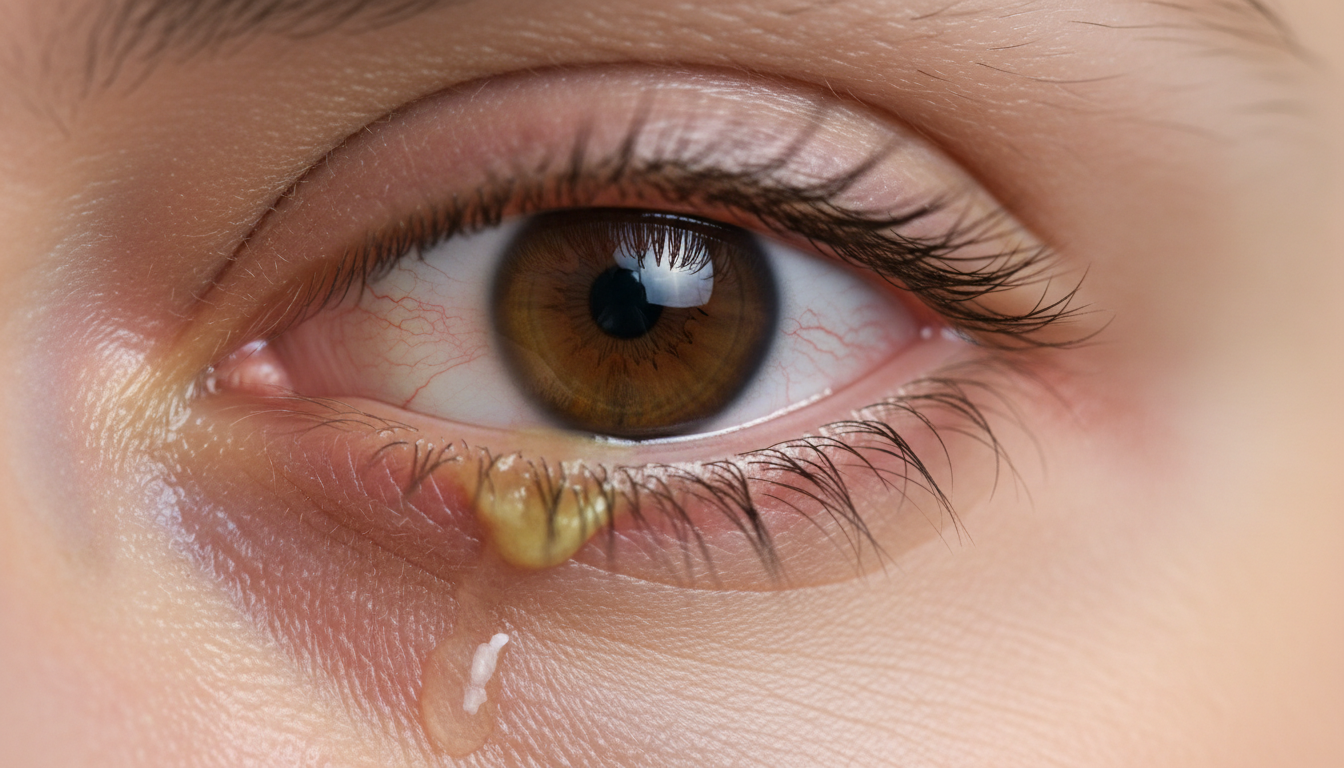
Gonorrhea of the eye (gonococcal conjunctivitis). The aggressive one. Within 24 to 48 hours of exposure, the eye can develop dramatic eyelid swelling and copious thick yellow-green pus that returns almost immediately after being wiped away. Untreated, gonococcal conjunctivitis can ulcerate the cornea and cause vision loss within days. The CDC's adult gonorrhea guideline lists ceftriaxone 1 g intramuscular as the recommended single-dose treatment for gonococcal conjunctivitis, with infectious disease specialist consultation considered because the evidence base is small (CDC: Gonococcal Infections Among Adolescents and Adults).
Herpes of the eye (ocular HSV, herpes keratitis). Ocular herpes announces itself with pain and light sensitivity rather than discharge. A foreign-body sensation, watery tearing, sharp discomfort, and difficulty tolerating bright light are common. Sometimes a small skin vesicle appears on the eyelid or near the eye. Recurrent ocular HSV can scar the cornea; the CDC notes that severe HSV keratitis can lead to corneal scarring or blindness if left untreated, and calls it a major cause of blindness worldwide (CDC: HSV Keratitis). Steroid eye drops can dramatically worsen herpes keratitis, which is one reason DIY drop reuse is risky.
Red Flags That Push This Into Same-Day Care
Most situations can wait until tomorrow's clinic appointment. A few cannot. Some signs change the urgency from routine evaluation to same-day or even emergency-room care, because they suggest the cornea is involved or the infection is moving fast.
- Sharp, deep, or rapidly worsening eye pain
- Light sensitivity (photophobia) that makes normal indoor lighting unbearable
- Vision changes: blurriness, halos, partial vision loss in the affected eye
- Heavy thick discharge that returns within minutes of wiping
- Significant eyelid swelling, especially with redness spreading onto the surrounding skin
- Symptoms worsening hour by hour rather than improving
Untreated gonococcal conjunctivitis can ulcerate the cornea within days, and herpes keratitis can scar permanently. Vision is not the body part to gamble on at home.
Why Standard STI Tests Often Miss Eye Infections
This is the part that catches most people off guard. They get tested, the results come back negative, and they assume the eye must be something else. Then the eye keeps misbehaving, and nobody can explain why.
The mismatch is mechanical. Most clinic STI panels and most at-home rapid kits sample three things: urine, blood, and genital swabs. None of those samples touches the conjunctiva. If the infection is concentrated in the eye, with no concurrent colonization elsewhere, a standard test can come back negative while the actual organism is sitting in the very tissue that is currently red and swollen.
Three specific scenarios show this gap most clearly, and they come up over and over in clinic notes.
If eye symptoms are present, ask the clinician explicitly for a conjunctival swab, an ocular culture, or a PCR test of eye fluid. These are separate orders from the urine or genital panel, and many providers will not run them unless you mention sexual exposure as part of the history. Saying "I had recent oral sex with a new partner and now my eye is doing this" is not oversharing; it changes which tests get ordered and shortens the time to a correct diagnosis.
Three scenarios where a standard panel comes back clean but the eye stays infected
- Oral-sex exposure: organisms can settle in throat or eye tissue without ever populating the genital tract, so a urine NAAT comes back negative.
- Autoinoculation: organisms move from a partner's genitals to your own eye via your hands, with no exposure to your own genital tract at all.
- Very recent or low-load genital infection: bacterial counts sit below the test's detection threshold even though active infection is underway.
How Testing Should Actually Work When Your Eye Is Involved
The cleanest approach is two parallel tracks rather than one sequential one.
Track one is the eye itself. An in-person clinician evaluates the eye, examines the cornea (often with fluorescein staining if HSV is suspected), and orders a conjunctival swab or ocular culture if STI etiology is on the table. This is the only way to identify the specific organism actually sitting on the conjunctiva. Urgent care can sometimes start this; an ophthalmologist or ophthalmology-savvy ER will do it more thoroughly.
Track two is systemic screening. A blood and genital STI panel run in parallel catches any concurrent infection elsewhere in the body. Adult inclusion conjunctivitis frequently coexists with genital chlamydia, even when the genital infection is silent. Treating only the eye while leaving a genital reservoir untreated invites reinfection and risks missing partners who also need testing and care.
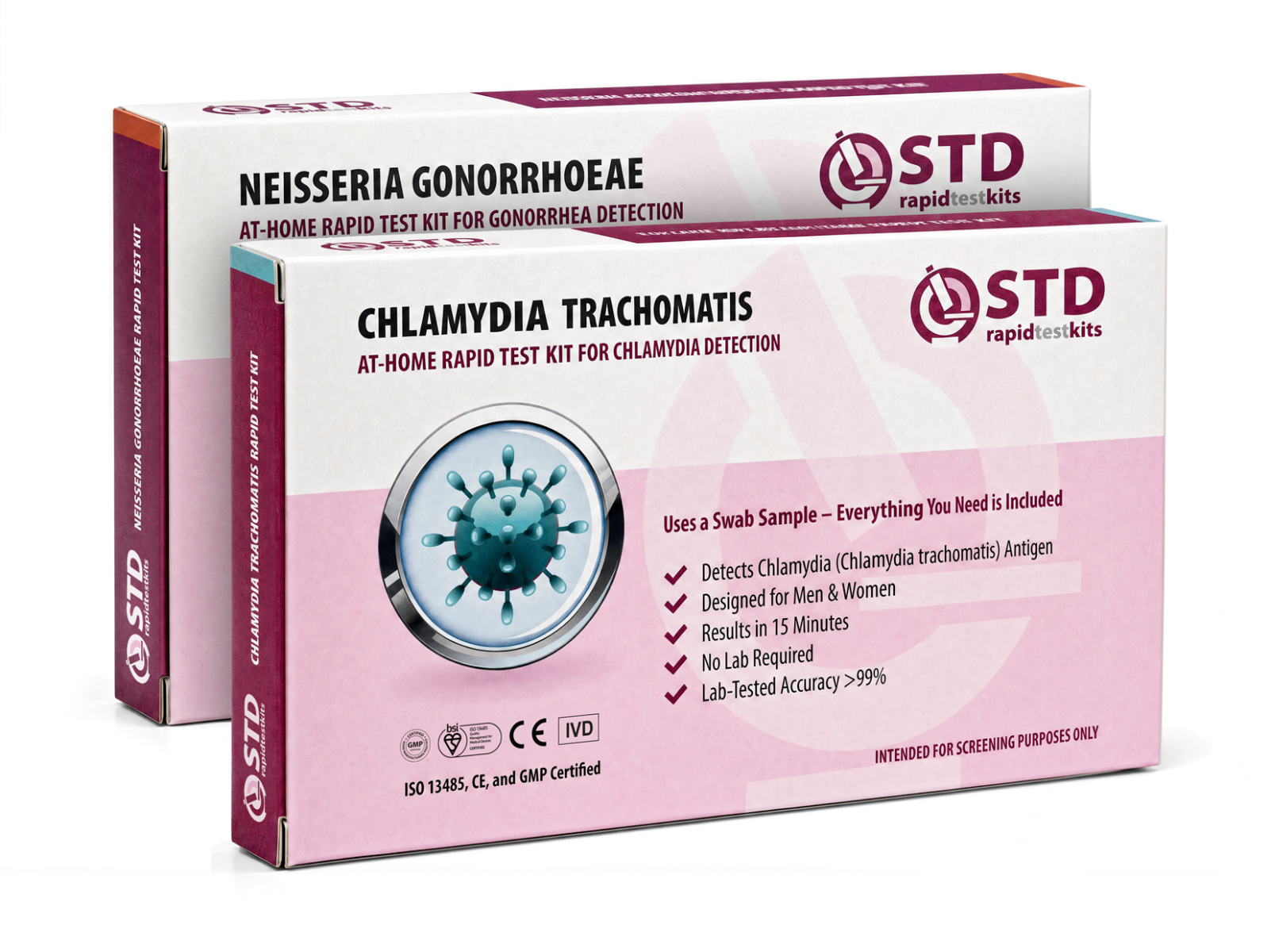
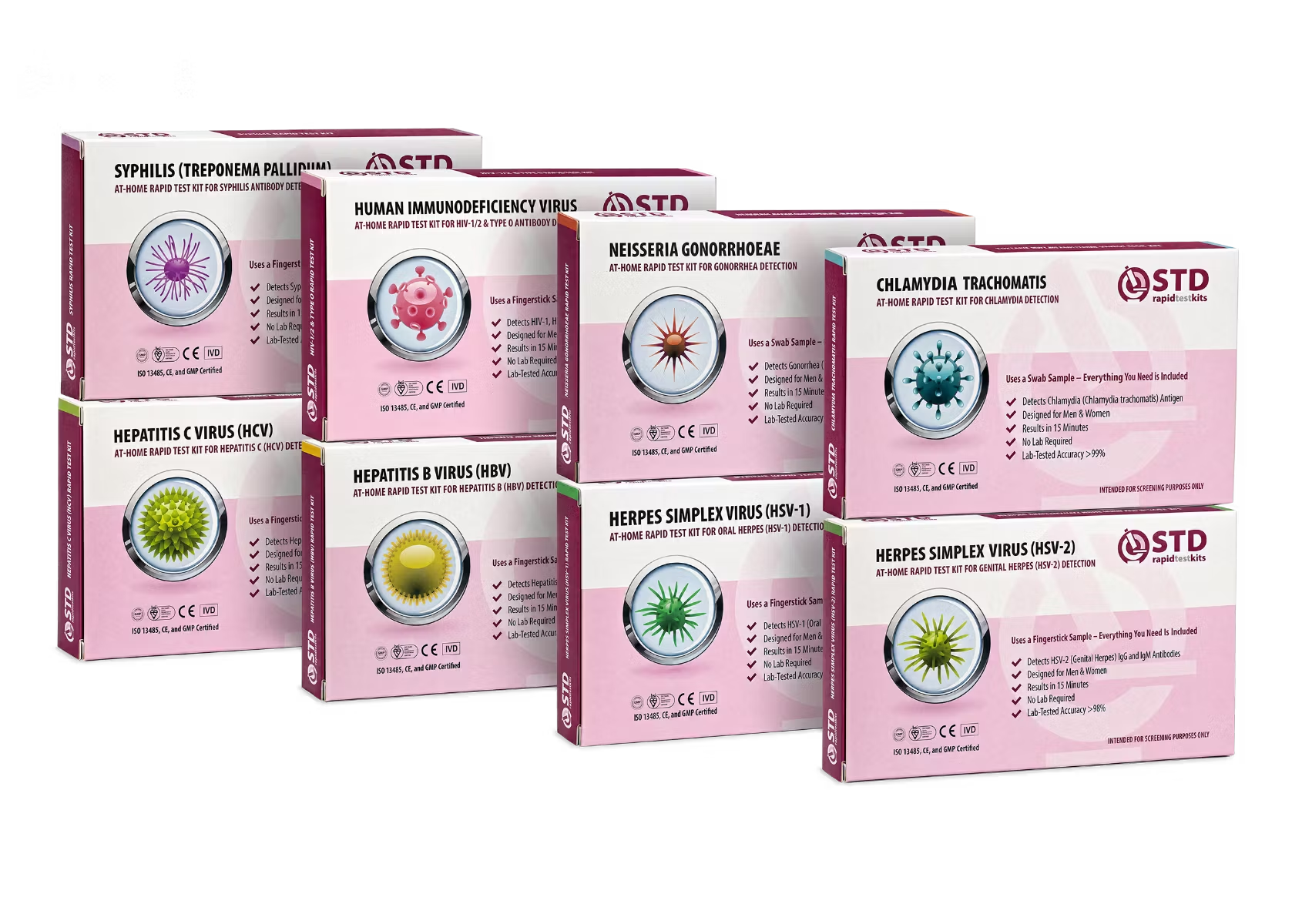
At-home rapid kits cover track two efficiently. They are lateral-flow immunoassays that screen blood or self-collected swab samples for the most common systemic STIs at home in 15 to 20 minutes. They cannot test eye fluid; that requires a clinician with the right equipment. But they answer the systemic exposure question privately, on your own timeline, and produce results you can bring into the eye appointment as context. Below is a quick decision guide for matching the situation to the smartest next step.
| Your situation | Smart next step | Why it helps |
|---|---|---|
| Mild redness plus cold or respiratory symptoms | Hygiene, pause contacts, monitor 48 to 72 hours | Most cases are viral and resolve with supportive care |
| Red eye plus thick discharge plus recent sexual contact | Same-day clinic visit; ask explicitly for a conjunctival swab plus systemic STI screen | Bacterial STI conjunctivitis often needs systemic antibiotics, not just drops |
| Eye pain, light sensitivity, or vision changes | Urgent care or ER same day | Possible corneal involvement; early treatment reduces lasting damage |
| Eye symptoms plus genital symptoms (discharge, burning, sores) | Full STI panel and clinical evaluation, both sites | Catches concurrent infection, prevents reinfection cycles |
| You want quick private answers on systemic exposure while arranging eye care | At-home rapid screen for chlamydia, gonorrhea, HIV, syphilis, plus same-day or next-day clinic for the eye | Two parallel answers in less time than one sequential workup |
What to Do Tonight Before You're Seen
While you wait for an appointment or assess whether to head to urgent care, a few choices keep things from getting worse. None of them treat the underlying infection, but they stop you from accidentally spreading the infection to your other eye, to a partner, or to a housemate, and they avoid making active infection worse with the wrong over-the-counter product. The CDC's clinical overview of conjunctivitis emphasizes hand hygiene and avoidance of shared eye-area items as the highest-yield home behaviors (CDC: Clinical Overview of Conjunctivitis).
- Stop wearing contact lenses now. Contacts trap bacteria against the cornea and accelerate damage from any active infection. Throw out the pair you were wearing when symptoms started; do not put fresh ones in until a clinician clears you. Wear glasses if you have them.
- Treat your hands like the main vector they are. Wash them frequently, especially before and after touching your face. Hand hygiene is the single most effective behavior to slow conjunctivitis spread.
- Don't share towels, washcloths, pillowcases, or eye makeup. Any of those can carry the infection to your other eye, to a partner, or to housemates. Use a separate, clean towel for your face and a fresh pillowcase each night while symptoms are active.
- Skip leftover prescription drops. The medication you have from a previous infection may be wrong for what's happening now, and steroid drops in particular can dramatically worsen herpes keratitis. A clean, cool compress is fine for comfort but treats nothing on its own.
- Wipe down glasses, frames, phone screens, and remotes. Anything your hands touch repeatedly carries organisms back to your face all evening. A quick wipe with soap and water (or appropriate screen cleaner) cuts the loop.
How to Tell a Partner Without Spiraling
If recent sexual contact preceded your eye symptoms, a partner conversation belongs on the to-do list, even before you have a confirmed diagnosis. The framing matters less than the timing.
A direct, low-drama version sounds like this: "I'm being seen for an eye infection that might be related to an STI exposure. I wanted you to know so you can watch for symptoms and consider testing if anything changes." That sentence does not assign blame, does not require a confession of certainty, and gives the other person what they need to act on their own behalf.
If a confirmed STI diagnosis comes back later, follow-up notification is appropriate, and partner treatment is often part of the clinician's plan. Many U.S. state and city health departments offer anonymous partner notification services if a direct conversation is not feasible. The NHS has a similar partner-notification framework in the UK (NHS: Sexually Transmitted Infections).
Viral conjunctivitis is very contagious and mostly spread through hand-to-eye contact by hands or objects that are contaminated with the virus.
Where At-Home Testing Helps and Where It Doesn't
At-home rapid STI tests are designed for two situations: routine screening when symptoms are absent, and parallel screening when clinical care is also happening. They are not a substitute for an in-person ophthalmologic exam when the eye is actively symptomatic.
At-home rapid kits fit one clear use case in this scenario: systemic parallel screening while you arrange in-person eye care. If a kit returns positive for chlamydia or gonorrhea, the clinician evaluating your eye has immediate diagnostic context and can start systemic treatment without waiting on lab turnaround. If the kit is negative, the clinician focuses the ocular workup more confidently on either an isolated eye infection or a non-STI cause.
What a home kit cannot do: detect organisms that are sitting only on the conjunctiva, evaluate the cornea, or rule out herpes keratitis (which requires a corneal exam, often with fluorescein staining). Home testing is a parallel track, not a replacement for the eye-specific care a clinician provides. If your concern is broader than chlamydia and gonorrhea, a multi-infection panel covers more ground in one go and reduces back-and-forth re-testing.
Where it helps:
- Answering the systemic exposure question privately while you arrange clinic care for the eye itself.
- Giving the clinician evaluating your eye immediate context if a result comes back positive.
- Catching a silent concurrent genital infection that the eye symptom may be flagging.
Where it doesn't help:
- Detecting organisms that are sitting only on the conjunctiva (a clinician's swab is the only way).
- Evaluating the cornea or ruling out herpes keratitis (requires fluorescein staining and a slit-lamp exam).
- Replacing same-day care for a painful, vision-changing, or rapidly worsening eye.
FAQs
- Can someone's saliva alone give me an STD in my eye?
- It can, though it's uncommon. If a partner has oral chlamydia or pharyngeal gonorrhea, organisms in their saliva can reach your eye through hand-to-eye contact, fluid splash near the face during sex, or shared items used right after intimate contact. Your eye doesn't need an injury for this to happen; the conjunctiva is mucous membrane, and these organisms colonize mucous membranes for a living.
- What does gonococcal conjunctivitis look like in adults?
- It tends to escalate fast, often within 24 to 48 hours of exposure. Eyelid swelling can be dramatic enough that the eye barely opens. Discharge is thick, yellow-green, and copious; wiping it away buys you minutes before it returns. Pain is usually significant. This is the presentation that needs same-day care, because the cornea can ulcerate within days if untreated. The CDC recommends a single intramuscular dose of ceftriaxone with specialist consultation considered.
- How is chlamydial conjunctivitis treated differently from regular pink eye?
- Routine bacterial pink eye often clears with topical antibiotic drops. Adult inclusion conjunctivitis (chlamydia in the eye) usually doesn't, because it frequently coexists with a genital infection and the body needs systemic antibiotics, not just drops, to clear both reservoirs. Partner treatment is typically part of the plan, because reinfection from an untreated partner is a common reason chlamydial conjunctivitis comes back.
- Can ocular herpes really cause permanent eye damage?
- In severe or recurrent cases, yes. The CDC describes HSV keratitis as a major cause of corneal blindness worldwide, with severe untreated infections leading to scarring of the cornea or blindness. Most individual cases treated promptly do not progress that far, which is the point: the longer it sits without antiviral treatment, the higher the risk. Pain, light sensitivity, or any vision change after recent sexual or oral contact is a reason to be seen, not a reason to wait.
- How soon after exposure would an STD eye infection show up?
- Gonococcal conjunctivitis often appears within 24 to 48 hours of exposure, sometimes faster. Chlamydial conjunctivitis can take a week or longer to declare itself, because the organism replicates more slowly. Herpes keratitis often follows a primary or recurrent HSV episode and may appear within days of a known cold sore or genital outbreak. "It's been three days since the hookup" doesn't rule any of them in or out by itself; what the eye looks like and how it's behaving matters more than the calendar.
- Do I need an STI test if my eye is the only thing acting up?
- Worth doing, yes. An eye infection can be a clue that a genital infection is sitting silently in the background, particularly with chlamydia, which is asymptomatic in many people. Screening covers that possibility, lowers the chance of partner reinfection, and gives the clinician treating your eye more diagnostic context. It's not because you did something wrong; it's because eye and genital sites can carry the same organism with very different symptom profiles.
- Will antibiotic eye drops alone clear an STI eye infection?
- Sometimes, but often not enough on their own. Bacterial STIs that reach the eye usually need systemic antibiotics (oral or intramuscular) to clear the body fully, with topical treatment as adjunct. Drops aimed at routine bacterial pink eye may not even target the right organism. This is one reason "I tried leftover drops from last year" tends to backfire; the wrong medication for the wrong infection wastes time and lets the cornea sit at risk.
- Can I spread it to my other eye or to other people?
- Yes, primarily through hands and shared items. Use a clean towel and washcloth, change pillowcases nightly while symptoms are active, and don't share eye makeup or contact lens solutions. No contact lenses until a clinician clears you. Wash hands before and after touching your face. The CDC's conjunctivitis hygiene guidance is straightforward on this: hand-to-eye contact is how it spreads, so hand hygiene is how you stop it.
Bottom Line: Symptom-Driven Testing Is Smart Testing
Most red eyes are not sexually transmitted, and the goal here is not to convince anyone otherwise. The goal is to make sure that when an eye STI is the actual cause, it gets caught quickly instead of sitting under three rounds of the wrong drops. The combination that works is in-person eye evaluation with the right swab plus parallel systemic STI screening. Vision is too high-stakes to ride out at home, and the systemic infections behind ocular symptoms are too treatable to leave undiagnosed.
If your eye is acting up after recent sexual contact and a standard test came back negative without explaining anything, that's the moment to ask for the conjunctival swab specifically and to screen the rest of your body in parallel. The reassurance you came for, or the diagnosis you actually need, comes from matching the test to the tissue that's symptomatic.
Your next four steps, in order
- Stop wearing contact lenses tonight; switch to glasses until a clinician clears you.
- Book a same-day or next-day clinic visit and ask explicitly for a conjunctival swab or ocular culture, not just a urine or genital STI panel.
- Run an at-home systemic STI rapid screen in parallel so the clinician has chlamydia and gonorrhea exposure context at the appointment.
- Notify recent sexual partners with a brief, blame-free message so they can monitor symptoms and consider their own testing.
- U.S. Centers for Disease Control and Prevention. Clinical Overview of Conjunctivitis (Pink Eye), including transmission via hand-to-eye contact and contaminated objects.
- U.S. Centers for Disease Control and Prevention. About Pink Eye (general public guidance on transmission and hygiene).
- U.S. Centers for Disease Control and Prevention. STI Treatment Guidelines: Gonococcal Infections Among Adolescents and Adults, including the dedicated section on gonococcal conjunctivitis treatment.
- U.S. Centers for Disease Control and Prevention. What Causes HSV (Herpes Simplex Virus) Keratitis, including the risk of corneal scarring and blindness from severe untreated infections.
- U.S. Centers for Disease Control and Prevention. About Chlamydia (fact sheet describing chlamydia as a common STI and noting that many genital infections cause no symptoms).
- World Health Organization. Sexually transmitted infections (STIs) fact sheet, including global burden estimates for chlamydia and gonorrhea among adults aged 15 to 49.
- U.K. National Health Service. Sexually transmitted infections (STIs) overview, including partner notification framework.
