







Quick Answer: Delaware’s sex ed requirements don’t cover common STDs like HPV or herpes, but at-home STD test kits offer accurate, private ways to detect them, and fill the education gap with real health information.
When the Curriculum Stops Short
Delaware requires health education in public schools, but “comprehensive” doesn’t always mean complete. According to the Sexuality Information and Education Council of the United States (SIECUS), Delaware mandates HIV prevention education but doesn’t require medically accurate information on all STDs. It doesn’t have to be inclusive. It doesn’t have to mention pleasure or consent. And it definitely doesn’t have to cover what students actually face once they leave the classroom.
In real life, the gaps show. In one 2024 focus group from a Wilmington community clinic, high school seniors were asked to list STDs they’d heard of. Over 70% couldn’t name more than two. Herpes? Not mentioned once. HPV? One student guessed it was “a form of HIV.” But these aren’t rare conditions. According to the CDC, nearly 1 in 2 sexually active people will contract an STD by age 25, and many won't know it.
Sex ed that avoids the word “herpes” does more than just protect parental comfort. It leaves teens like Jared guessing, and sometimes, Googling with fear in their chest. That’s where at-home kits step in.

People are also looking for: Can Syphilis Cause Miscarriage? What Doctors Often Miss
What At-Home Test Kits Actually Provide
Unlike school health classes, at-home STD kits don’t skip the “scary stuff.” They tell you exactly what they test for, usually including chlamydia, gonorrhea, syphilis, HIV, trichomoniasis, and yes, herpes. Some also offer HPV testing, especially for individuals with a cervix.
Depending on the kit, you might collect a urine sample, a vaginal swab, or a fingerprick blood sample, all from your bathroom, dorm, or bedroom. Results are often ready within 15–30 minutes for rapid tests, or 1–3 days for lab-based mail-ins.
The biggest difference? These kits don't rely on permission slips, embarrassed teachers, or outdated slideshows. They rely on science, and put the power back in your hands.
| Feature | School Sex Ed (Delaware) | At-Home STD Test Kit |
|---|---|---|
| Mentions Herpes or HPV | Rarely | Included in most combo kits |
| Explains Asymptomatic Transmission | Not required | Yes, built into kit info and instructions |
| Protects Privacy | Limited in school setting | Fully private, no one else sees results |
| Offers Actionable Steps | General advice only | Yes, results + retest + treatment info |
| Cost | Covered by school funding | Varies ($30–$150) |
Figure 1. Comparing what school sex ed vs home testing actually provides.
The Real STDs Missing From Sex Ed
When we talk about “sex ed,” most people imagine pregnancy prevention, maybe a diagram or two, and a warning about HIV. But what about the actual STDs young people are most likely to catch?
Take herpes. Over half of Americans have HSV-1, the virus that causes oral herpes. Around 1 in 8 carry HSV-2, the more common genital form. Yet many school programs exclude herpes entirely. Why? Because it’s incurable? Because it’s stigmatized? Or because administrators fear backlash?
Then there's HPV, the most common STI in the country. It's linked to multiple cancers, and there’s a vaccine, but many schools don't teach students how it spreads or how to test for it. Planned Parenthood reports that some HPV strains cause no symptoms but can still transmit easily, and cause cancer years later. That’s not something a teenager should have to find out alone.
What if they didn’t have to?
6-in-1 STD At-Home Rapid Test Kit screens for the most common STDs, including the ones schools skip. It’s confidential, quick, and built for real life, not outdated curriculum.
What Symptoms Don’t Mean, And What School Doesn’t Say
“You’d know if you had something.” That’s the myth echoing in health classes, locker rooms, and even some outdated textbooks. But here’s the truth: many STDs have no symptoms at all, especially in their early stages. And this isn’t a rare edge case; it’s the norm.
According to the CDC’s factsheet on chlamydia, up to 70% of women and 50% of men with chlamydia won’t show symptoms. Herpes can lie dormant for years. HPV often causes no outward signs until abnormal pap results, or worse, cancer, appear.
But Delaware’s sex ed requirements don’t mandate comprehensive symptom education. So what are teens told? That STDs are gross. That if something’s wrong, you’ll feel it. That condoms solve everything. The nuance, about viral latency, about visual-only transmission like genital warts, about partner notification, isn’t just lost. It’s never there to begin with.
And when those gaps collide with real-life symptoms, it’s not curiosity that fills them. It’s fear. Shame. Silence. Or worse: nothing at all.
Check Your STD Status in Minutes
Test at Home with Remedium6-in-1 STD Rapid Test Kit

 For Men & Women
 Results in Minutes
 No Lab Needed
 Private & Discreet
Order Now $119.00 $294.00
For all 6 tests
“I Thought I Was Clean Because I Was a Virgin”
Nyah, 20, had never had vaginal or anal sex. She’d kissed, she’d shared vapes, and once, nervously, at a party, had received oral sex. Months later, a small blister near her genitals made her panic. Her school’s sex ed class had told her STDs only came from intercourse. She hadn’t even known herpes could be passed that way.
“I thought I was safe,” she said, “because I hadn’t ‘gone all the way.’ No one ever explained that you can get herpes from skin contact or oral.”
After a scary and judgmental clinic visit, she turned to an online support forum, where someone recommended a home test. She ordered a rapid test for herpes and chlamydia. One came back positive. But so did something else: her sense of control. “It was weirdly empowering,” she said. “Like, okay, now I know. Now I can take care of it.”
Why Accuracy and Autonomy Matter More Than Ever
At-home test kits aren’t perfect, but neither is a school system that pretends HPV doesn’t exist or that herpes only happens to “certain” people. The best kits now rival lab testing in accuracy, especially for common bacterial infections like chlamydia and gonorrhea. Some even include FDA-cleared devices for herpes antibodies or syphilis screening.
The key advantage? You don’t need to ask anyone’s permission. Not a parent. Not a principal. Not a doctor. You can test on your time, in your space, and get results with clear next steps, no side-eye from reception, no waiting room, no assumptions.
| Test Type | Detection Window | Privacy Level | Best For |
|---|---|---|---|
| Rapid Fingerprick | ~2 weeks post exposure | High (no lab involvement) | Quick herpes, HIV, syphilis check |
| Urine Sample | 7–14 days post exposure | Moderate–High | Chlamydia, gonorrhea screening |
| Mail-In Swab | 7+ days post exposure | High (lab-verified) | Multi-STD combo testing |
Figure 2. Different STD home test types and what they’re best suited for.
Don’t Wait for Permission to Know What’s Going On
Delaware’s curriculum may be slow to catch up, but you don’t have to wait for lawmakers or lesson plans to care for your health. Whether you're navigating hookups, figuring out a new relationship, or just feeling something off in your body, testing is clarity. And clarity is freedom.
This isn’t about panic. It’s about precision. You’re not “dirty” for wanting to know. You’re not paranoid. You’re responsible. You’re human. And in a state where herpes isn’t even mentioned in most classrooms, getting tested is one of the most powerful things you can do.
Your body deserves the full story, not the edited version handed out at 16.
Don’t leave your sexual health up to outdated slideshows or shy teachers. Explore at-home STD tests that give you real answers, on your terms.
“Negative” Doesn’t Always Mean Safe, When Retesting Matters
Let’s talk about the false sense of security that bad sex ed breeds. Many people believe if they test negative once, they're “clean”, a word loaded with stigma to begin with. But in reality, the timing of your test matters just as much as the result. If you test too soon after exposure, especially with a rapid test, your body might not have produced detectable levels of antibodies yet. That’s not your fault, but it is something sex ed rarely explains.
Most home kits include a testing window chart. But if yours didn’t, or if your school never taught you what a “window period” is, here’s the bottom line:
For chlamydia and gonorrhea, test at least 7 days after possible exposure. For herpes and syphilis, wait 14–21 days for best accuracy. For HIV, some rapid tests detect infection as early as 2 weeks, but accuracy improves after 4–6 weeks.
If you tested early and got a negative result, that’s a great start, but not a full stop. Retesting after 2–4 weeks, or following a new exposure, gives you real clarity. It’s not overkill. It’s ownership.
People are also reading: Do I Have to Tell Someone I Might Have Given Them an STD?
“I Got a Negative. Then I Got Symptoms.”
Jordan, 22, had what he called “a responsible hookup.” He used protection, asked questions, and even took a home test five days after. It came back negative. “I felt like I did everything right,” he said. Two weeks later, a burning sensation during urination, and a call from his partner, suggested otherwise. A retest showed a positive result for chlamydia.
“No one told me tests have a timing issue,” he said. “In health class, they made it seem like a yes/no thing, like a pregnancy test.”
That misunderstanding could have led to unknowingly infecting someone else. Instead, the second test allowed Jordan to get treatment and have honest conversations with partners.
False negatives aren’t common with good kits, but they’re not impossible, especially if you test too early. The key is not just to test once, but to test smart. And nothing in most school curriculums teaches that.
Why At-Home STD Testing Is Health Care, Not Hysteria
It’s easy to dismiss at-home kits as a panic buy. But they’re not just tools for when something goes wrong. They're a form of proactive care, especially for those who never got the full picture from school, doctors, or even partners.
In a state like Delaware, where many districts follow outdated or abstinence-heavy frameworks, home kits fill in what the system has failed to offer: agency. And for people who are queer, nonbinary, survivors, or simply private, testing at home can feel safer than testing anywhere else.
This is not a reaction. It’s a plan.
When schools won’t say the word “herpes,” test kits do more than educate. They empower.
If you're ready to take that step, browse our full range of tests, from single-infection kits to comprehensive panels. Fast, private, and made to meet you where sex ed didn’t.
Check Your STD Status in Minutes
Test at Home with Remedium10-in-1 STD Test Kit
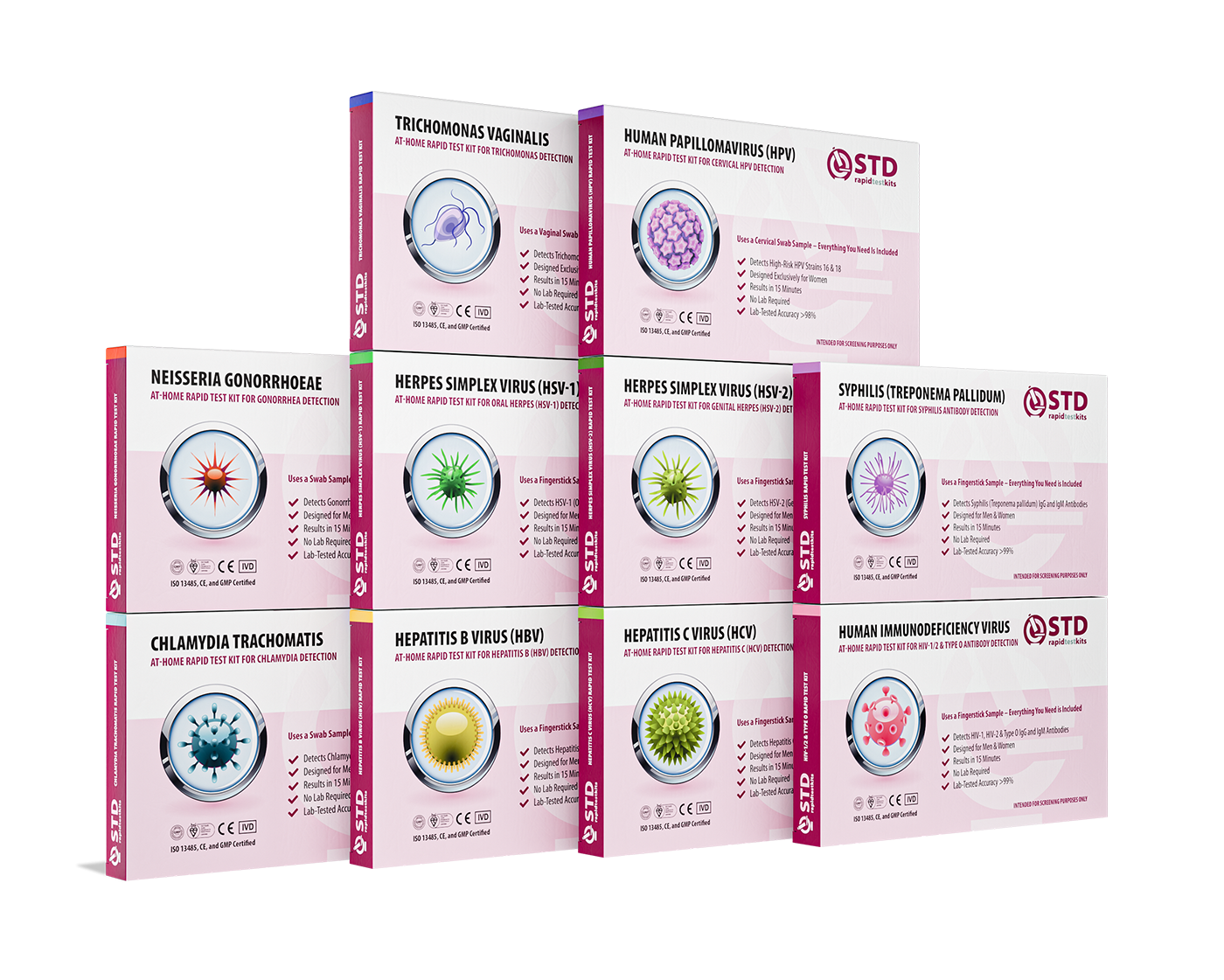
 For WomenResults in MinutesNo Lab NeededPrivate & Discreet
Order Now $189.00 $490.00
For all 10 tests
FAQs
1. Does Delaware actually teach about STDs in sex ed?
Technically, yes. But realistically? Not the full story. Delaware requires HIV education and some basic info on prevention, but there’s no rule saying schools have to cover common infections like herpes, HPV, or even the concept of asymptomatic STDs. So while you might leave class knowing what a condom is, you’re probably not walking out prepared for what real sexual health looks like.
2. Is it true you can get an STD even if you’ve never had “real” sex?
100%. And this one throws people all the time, because sex ed tends to act like “sex” only means penis-in-vagina. But STDs like herpes, HPV, and even syphilis can spread from skin contact, oral sex, or even sharing toys. One reader told us she got HSV-1 from a college makeout marathon. She’d never even taken off her underwear.
3. How do I know if a home STD test is legit?
Look for FDA clearance or CE certification, and make sure it explains the timing window for each test. Not all kits are created equal, some are rapid (results in 15–30 minutes), while others mail your sample to a lab. Want a shortcut? We’ve already done the vetting here.
4. Why didn’t anyone tell me that herpes is this common?
Because stigma is a hell of a silencer. Over half of American adults have some form of herpes, but schools often skip it entirely. There’s no vaccine, it’s not deadly, and it’s sexually transmitted, so it gets ignored. But that doesn’t make it rare. It just means people are silently carrying shame for something that should be discussed like any other skin condition.
5. What if I tested negative, but something still feels off?
Trust your gut. You may have tested too early, or for the wrong infection. Herpes, for instance, doesn’t always show up on rapid tests until your body creates enough antibodies, which can take a few weeks. If you’ve got symptoms or a weird feeling in your body, retest. You’re not being paranoid. You’re being proactive.
6. Can I use these kits even if I live at home and don’t want anyone knowing?
Totally. Most at-home STD kits ship in discreet packaging, no brand names, no medical labels. You can take the test in your room, bathroom, car, wherever you feel safe. And results go directly to you, not your parents or insurance. That privacy isn’t a loophole. It’s your right.
7. Does every STD panel include herpes and HPV?
Nope, and that’s a common trap. Many “standard” panels check for chlamydia, gonorrhea, syphilis, and HIV, but skip herpes and HPV unless you request them. So always read the fine print or pick a combo kit that spells it out. If you’ve had oral or skin contact with someone and you’re unsure, include those two.
8. If I test positive, am I supposed to tell my partner?
Ethically, yes. Legally, it depends on the infection and your state. But emotionally? Honesty matters, and the conversation doesn’t have to be awful. Some test kits and clinics offer anonymous partner notification tools, or scripts you can use if it feels overwhelming. You’re not alone in this part, either.
9. What’s the deal with retesting? Do I really have to?
If your exposure was recent, yeah, you probably should. A single test gives you a snapshot, but a follow-up (usually 2–4 weeks later) confirms accuracy, especially if the first was within the early window. Think of it like checking your credit after suspicious activity, one check is smart, two is safer.
10. Can I trust the results from a $40 kit?
Surprisingly, yes, if it’s from a reputable brand. Price doesn’t always equal quality here. Some of the best rapid tests for HIV and syphilis are cheap, fast, and shockingly easy to use. Just make sure you’re using the kit properly (wash your hands, follow timing, don’t cheat the clock), and you’ll get solid results. When in doubt? Retest or go lab-grade.
You Deserve Answers, Not Assumptions
Sex ed in Delaware may skip over the STDs you’re most likely to face, but that doesn’t mean you have to stay in the dark. At-home STD tests are more than just a workaround. They’re a way to reclaim knowledge, protect partners, and stay ahead of infections that don’t wait for permission slips.
Don’t settle for silence. Don’t wait until symptoms force your hand. And don’t let a school’s gaps dictate your health decisions. This combo test kit checks for the most common STDs discreetly and quickly, with no waiting room, no lectures, and no shame.
How We Sourced This Article
How We Sourced This Article: We combined current guidance from leading medical organizations with peer-reviewed research and lived-experience reporting to make this guide practical, compassionate, and accurate. In total, around fifteen references informed the writing; below, we’ve highlighted six of the most relevant and reader-friendly sources. Every external link in this article was checked to ensure it leads to a reputable destination and opens in a new tab, so you can verify claims without losing your place.
Sources
1. Delaware’s Sex Education Laws – Sex Education Collaborative
2. What to Know About At-Home STD Tests | WebMD
3. Delaware Programs Combat Teen STI Rates | PMC
4. Home Self-Testing Kits: Helpful or Harmful? | PMC
5. At-Home STD Testing vs. In-Clinic Testing: Pros and Cons | EHG Health
6. Are At-Home STI Tests as Accurate as Clinic Tests? | FirstPoint MD
About the Author
Dr. F. David, MD is a board-certified infectious disease specialist who works to stop, diagnose, and treat STIs. He combines clinical accuracy with a straightforward, sex-positive attitude and is dedicated to making his work available to more people, both in cities and in rural areas.
Reviewed by: K. Singh, NP-C | Last medically reviewed: September 2025
This article is for informational purposes and does not replace medical advice.


