
Published: September 2025 | Editorial review and quality control: Martina N.
A reader searching for answers after a pregnancy loss deserves calm, concrete information. Syphilis is a treatable bacterial infection that can quietly cross the placenta and cause miscarriage, stillbirth, or congenital infection. It often does not announce itself with obvious symptoms. The United States is in the middle of a sharp rise in congenital syphilis cases, and the gaps in routine testing are the main reason this preventable harm keeps repeating.
If you are reading this after a loss, two things up front. Most early miscarriages have no single identifiable cause, so a negative syphilis test does not mean your loss is your fault. Asking for full STI screening is reasonable, helpful, and your right, whether you are grieving, pregnant now, or planning ahead. This article walks through how syphilis can affect pregnancy, why one early-trimester test is not always enough, what visible signs to watch for, how testing works at home and in a clinic, and what to do next regardless of where you are in this journey.
Key Takeaways
- Untreated syphilis during pregnancy can cause miscarriage, stillbirth, or congenital infection in roughly 50 to 80 percent of cases, but penicillin treatment is highly effective when started in time.
- A single first-trimester syphilis test is no longer enough for many people. CDC and ACOG now recommend repeat testing at 28 weeks of pregnancy and at delivery for anyone at higher risk.
How Common Is Syphilis in Pregnancy, and Why Is It Rising?
Across the United States, congenital syphilis (a baby born with syphilis after maternal infection) has climbed for twelve straight years. The CDC's 2024 surveillance data reports nearly 4,000 cases, and the agency notes that congenital syphilis is nearly 700 percent higher than it was a decade ago (CDC STI Surveillance, 2024). The increase has been driven largely by people who did not know they were infected, who were never offered repeat testing, or who tested too early in pregnancy for the infection to show up.
Why does this pattern keep happening? Syphilis in pregnancy can be entirely asymptomatic. The early signs that do appear, such as a small painless sore, a faint rash, or mild flu-like fatigue, are easy to dismiss or attribute to pregnancy itself. When a miscarriage happens, few providers routinely re-test for STIs unless the patient explicitly asks. The result is that an infection that could have been treated with one course of penicillin gets labeled as an unexplained loss, and the same gap can repeat in a future pregnancy.
- The pregnant person never knew they had been exposed and so never asked for an STI screen.
- The first prenatal screen was negative, exposure happened later in pregnancy, and no repeat screen was offered.
- The only prenatal screen was performed before antibodies became detectable in the blood.
All three are addressable with a repeat blood test in the third trimester.
How Syphilis Can Mimic a Miscarriage
During pregnancy, the placenta acts as the gateway between parent and fetus. If a pregnant person has untreated syphilis, the bacteria (Treponema pallidum) can cross the placenta in any trimester. This can cause placental inflammation, fetal distress, fetal demise, or stillbirth. The World Health Organization estimates that syphilis in pregnancy, when not treated or treated incorrectly, results in adverse birth outcomes in 50 to 80 percent of cases (WHO Syphilis Fact Sheet).
In early pregnancy, an active syphilis infection can produce signs that overlap closely with miscarriage symptoms. None of the patterns below are diagnostic on their own, which is precisely why blood testing matters.
| Sign during pregnancy | How syphilis can produce the same sign |
|---|---|
| Light bleeding or spotting | Secondary syphilis can cause cervical or vaginal lesions that bleed lightly |
| Cramping or pelvic pressure | Placental inflammation from syphilis can trigger uterine irritability |
| No fetal heartbeat after 8 to 10 weeks | Untreated maternal syphilis can cause first-trimester fetal demise |
| Low-grade fever or chills | Systemic spread of syphilis can produce flu-like symptoms easy to confuse with pregnancy fatigue |
What the Visible Signs of Syphilis Actually Look Like
Syphilis moves through stages, and each stage produces a different visible pattern. In pregnancy, the signs are easy to mistake for ordinary skin changes, hormonal shifts, or a passing viral illness.
Primary syphilis usually starts as a single painless sore, called a chancre, at the site of infection. It often goes unnoticed because it does not hurt and it heals on its own within three to six weeks even without treatment. The infection, however, has not gone away.
Secondary syphilis appears weeks to months later and is more recognizable. The hallmark sign is a non-itchy rash, often on the palms of the hands and the soles of the feet, that does not look like other rashes. Some people also notice patchy hair loss, mouth sores, or flat, moist patches in skin folds. These signs can come and go on their own, which is part of what makes the infection so easy to miss.
If you notice any of the patterns in the gallery below during or after a pregnancy, ask your provider for a syphilis blood test even if the visible sign has already faded. Per the CDC, syphilis signs at each stage can be subtle, painless, or pass completely unnoticed without a blood test (CDC About Syphilis).
Why a Single First-Trimester Test Often Is Not Enough
Most prenatal care includes a syphilis blood test at the first visit. That single early test catches many infections, but it misses people who acquire syphilis later in pregnancy. The CDC now recommends repeat syphilis screening at 28 weeks of gestation and again at delivery for pregnant people who live in communities with high syphilis rates or who have been at risk of acquiring syphilis during pregnancy (CDC STI Treatment Guidelines: Syphilis During Pregnancy). The American College of Obstetricians and Gynecologists supports the same retesting schedule.
Many OB practices do not automatically schedule the third-trimester retest unless the patient asks. If you are pregnant and you have not been retested at or after 28 weeks, that is a reasonable request to bring to your next appointment. CDC guidance is explicit that no parent or newborn should leave the hospital without the parent's syphilis status documented at least once during pregnancy.
Three direct questions cover the testing gap.
- “When was my last syphilis screen, and what was the result?”
- “Do I qualify for repeat screening at 28 weeks?”
- “Is a syphilis screen at delivery part of my hospital's protocol?”
If your provider is uncertain, ask to add a syphilis blood test to today's labs. The cost of the test is small compared with the cost of a missed infection.
Congenital Syphilis: The Rising Risk That Is Almost Entirely Preventable
The CDC's 2024 surveillance report counted nearly 4,000 congenital syphilis cases in the United States, the twelfth consecutive year of increase (CDC STI Surveillance, 2024). The agency has called this a public-health crisis because most of these cases are preventable with timely testing and treatment. Penicillin G is the only antibiotic with proven efficacy at preventing congenital syphilis, and CDC guidance states that pregnant people with a penicillin allergy should be desensitized rather than offered an alternative drug (CDC syphilis treatment guidelines).
When a pregnant person with untreated syphilis passes the infection to the fetus, possible outcomes include miscarriage, stillbirth, low birth weight, premature birth, and infants born with infection (which can cause bone deformities, anemia, organ damage, deafness, and developmental delays). Treatment during pregnancy is highly effective at preventing these outcomes when it is started early enough in the infection.
Congenital syphilis is not limited to one demographic. Recent CDC surveillance shows cases rising across income levels, regions, and racial groups, with the steepest increases in states where prenatal access has weakened.

How to Get Tested, and What Kind of Test You Need
A syphilis blood test detects antibodies your body produces in response to the bacteria. Two main categories of tests are used together. There is no urine test and no swab test for syphilis; all syphilis testing is blood-based.
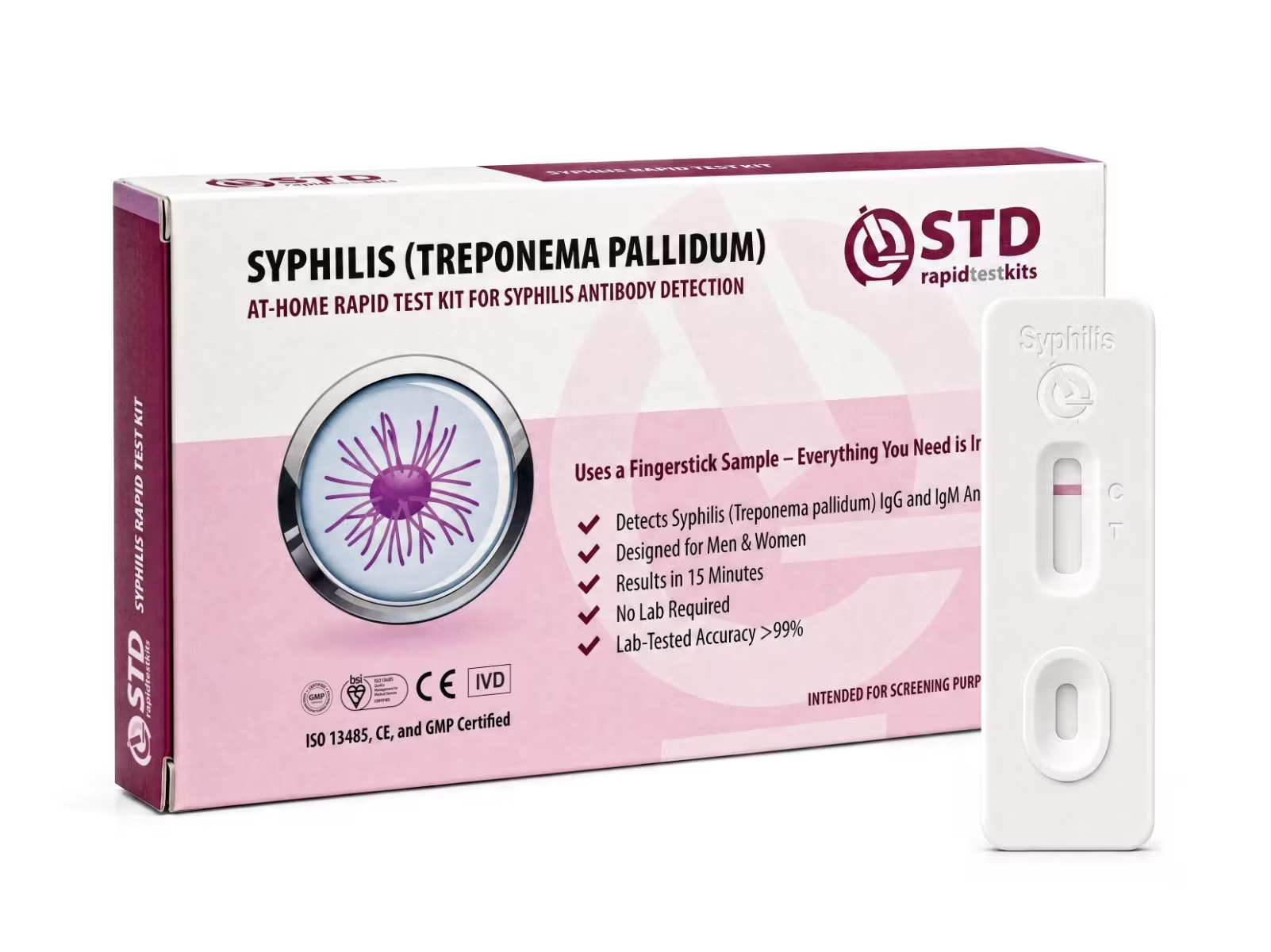
This site sells rapid lateral-flow home tests, and the syphilis test featured in the banner below is one of them. We point readers to it where it fits the question they came in with, not as a substitute for prenatal screening.
| Test type | What it detects | Use case |
|---|---|---|
| Non-treponemal (RPR, VDRL) | Antibodies the body produces in response to syphilis infection | Initial lab screening and monitoring treatment response over time |
| Treponemal (TP-PA, FTA-ABS, treponemal EIA) | Antibodies specific to the syphilis bacteria | Confirmatory testing after a positive non-treponemal result |
| Rapid fingerstick lateral-flow (home or point-of-care) | Treponemal-type antibodies via a fingerstick blood sample | At-home screening; any positive result is confirmed by a lab through your provider |
Testing After a Miscarriage: When It Brings Answers
After a pregnancy loss, asking for a full STI panel is a reasonable next step, especially if your prenatal screening was done very early and you had any exposure later, or if you have never had a complete screen. Syphilis antibodies remain detectable in the blood long after the active infection, which means a test today can identify an infection that was present months or years ago. Knowing the result does not undo a loss, but it can change what you do for any future pregnancy.
CDC guidance suggests that anyone who has had a stillbirth at 20 weeks or later should be tested for syphilis as part of the workup. Earlier losses do not always trigger this routinely, which is why patients often need to ask. A negative result is also useful information; it lets you and your provider rule one preventable cause off the list.
If you want a broader check than syphilis alone, a multi-infection at-home panel can cover the same blood draw and the same morning. The combo kit below was built for this kind of follow-up moment.
Can syphilis really cause miscarriage?
Yes. Untreated syphilis can cross the placenta in any trimester and cause miscarriage, stillbirth, or congenital infection. The WHO estimates 50 to 80 percent of untreated maternal syphilis pregnancies end in an adverse birth outcome. Early infection often produces no obvious symptoms, which is why a single first-trimester blood test sometimes misses it. CDC and ACOG now recommend repeat testing at 28 weeks and at delivery for anyone at higher risk. Penicillin G during pregnancy is highly effective when started in time.
If You Are Pregnant Now or Trying to Conceive
If you are pregnant and you have not been tested for syphilis this trimester, ask your provider for a screen. You do not need symptoms or a reason beyond peace of mind. A simple blood draw added to a routine visit is enough. If your provider hesitates, the CDC's STI Treatment Guidelines and ACOG's prenatal screening recommendations both support repeat testing for higher-risk pregnancies, and you can ask directly: “Can we add a syphilis screen to today's blood work?”
If you are trying to conceive, a baseline STI panel before pregnancy is reasonable, especially if it has been more than a year since your last screen or you have had any new partners. Many infections are quickly treatable before they affect a pregnancy, and knowing your status protects both you and a future baby.
- You acquired a new sexual partner during this pregnancy.
- A current or recent partner has a known recent STI.
- You live in or recently spent time in a high-prevalence area.
- You have any of the visible signs described above: a painless sore, a rash on the palms or soles, patchy hair loss, or unexplained flu-like fatigue.
Do not wait for the routine 28-week retest. Ask at your next visit, or order a home screen today.
How Long to Wait Before Trying Again After Treatment
If syphilis is detected and treated during or before pregnancy, providers usually want to confirm the treatment worked before recommending you try to conceive. This is done by repeating the non-treponemal test (RPR or VDRL) and watching for a meaningful drop in titer over 6 to 12 months. A fourfold drop in titer is the clinical benchmark for adequate treatment response. Most providers recommend waiting 3 to 6 months after treatment before trying again, with the exact timeline depending on the stage of infection and your titer trajectory.
This pause can feel hard after a loss. It is also a chance to recover, to have your partner tested and treated if needed, and to enter the next pregnancy with a clearer picture. If you re-conceive before your provider has confirmed an adequate treatment response, the new pregnancy will need more intensive monitoring and possible re-treatment.
Titer-monitoring protocol at a glance
- Repeat the non-treponemal test (RPR or VDRL) at 3, 6, and 12 months after treatment.
- A fourfold drop in titer (for example, 1:32 down to 1:8) is the clinical benchmark for adequate treatment response.
- Most providers recommend waiting 3 to 6 months after treatment before trying to conceive again, with the exact timing guided by your titer trajectory and the stage of infection at diagnosis.

Should Your Partner Be Tested Too?
If you test positive for syphilis, your recent sexual partners should also be tested and treated. Syphilis can spread through vaginal, anal, and oral contact, and it can stay dormant in someone with no visible symptoms for months or years. The CDC sets specific contact-tracing windows depending on which stage your syphilis was at when you were diagnosed (CDC syphilis treatment guidelines).
These conversations are hard. Most state and local health departments offer confidential partner notification services that contact a partner without revealing your name. If you prefer to tell partners yourself, writing out what you want to say first can help. The point is treatment, not blame. If a partner refuses to test, you can still test yourself, treat yourself if needed, and use barrier protection going forward. Your local health department can also contact that partner confidentially on your behalf.
| Stage of your syphilis at diagnosis | Partners to notify |
|---|---|
| Primary syphilis | Anyone you had sexual contact with in the past 3 months plus the duration of your symptoms |
| Secondary syphilis | Anyone you had sexual contact with in the past 6 months plus the duration of your symptoms |
| Early latent syphilis | Anyone you had sexual contact with in the past 12 months |
The Emotional Side of Asking, Testing, and Knowing
The idea that a treatable infection could have played a role in a pregnancy loss is gutting. For some readers, the answer brings clarity. For others, the result is negative and the loss remains unexplained, which is also useful information. Either way, the act of testing is not a moral statement. It is medical curiosity, and it is reasonable.
Syphilis has been called the great imitator because its visible signs overlap with so many other conditions. Acne, eczema, fatigue, flu symptoms, generic rashes. None of those would prompt a syphilis test on their own. A baseline blood test during every pregnancy, and once or twice a year outside pregnancy, is the simplest way to close the gap between an exposure you may not remember and a result you can act on.
Syphilis in pregnancy, when not treated, treated late or treated with the incorrect antibiotic, results in 50 to 80 percent of cases with adverse birth outcomes.
FAQs
- Can syphilis really cause a miscarriage?
- Yes. Untreated syphilis can cross the placenta at any point in pregnancy and cause miscarriage, stillbirth, or congenital infection. The WHO estimates that 50 to 80 percent of untreated pregnancies result in an adverse birth outcome. Penicillin G treatment is highly effective when started early enough in the infection.
- What does syphilis feel like during pregnancy?
- It often feels like nothing. When symptoms do appear, the most common are a single painless sore (chancre), a non-itchy rash on the palms or soles, mild flu-like fatigue, or patchy hair loss. These signs come and go, which makes the infection easy to miss without a blood test.
- I had a miscarriage and no one tested me for syphilis. Is it worth testing now?
- Yes. Syphilis antibodies stay detectable in the blood long after the active infection. A test today can identify an infection that was present months or years ago, which can inform decisions about future pregnancies. Even a negative result is useful, because it rules one preventable cause off the list.
- How soon after possible exposure can I be tested?
- Most syphilis blood tests can detect infection 3 to 6 weeks after exposure. Earlier than that, the test may be falsely negative. If you test negative within the window period and you still suspect exposure, repeat testing at 6 weeks and 12 weeks is the standard approach.
- Can I do a syphilis test at home?
- Yes. Rapid fingerstick blood tests at home use the same antibody chemistry as point-of-care tests in clinics. Follow the instructions carefully, time the read window correctly, and confirm any positive result with a lab through your provider or a sexual-health clinic.
- Is one negative syphilis test in early pregnancy enough?
- Often, no. The first-trimester test catches many infections, but it misses people who are exposed later in pregnancy. CDC and ACOG now recommend repeat screening at 28 weeks of gestation and at delivery for anyone at higher risk.
- If syphilis is detected during pregnancy, can it still be treated?
- Yes. Penicillin G is the standard treatment and is highly effective during pregnancy. The earlier in pregnancy that treatment starts, the better the outcomes for the baby. If you have a penicillin allergy, providers will work with you to desensitize you, because no other antibiotic reliably prevents congenital syphilis.
- What if my partner refuses to be tested?
- You can still test yourself, treat yourself if needed, and use barrier protection going forward. Your local health department can offer confidential partner notification services that contact a partner without revealing your identity. Treatment is still available to you regardless of a partner's decision.
You Deserve Answers, Not Assumptions
Miscarriage is already painful. Adding silence about a possible cause deepens that pain. If you are reading this after a loss, you do not have to guess what happened. Ask for a syphilis blood test if you have not had one recently. Ask for repeat testing in your next pregnancy. Ask your partner to test too. These are reasonable, evidence-based requests, and a good provider will support them.
If you want to start before your next prenatal visit, a rapid home test gives you an answer the same day. A positive result needs lab confirmation, and a negative result that falls within the window period after exposure should be repeated. Either way, you have moved from wondering to knowing.
- Request a syphilis blood screen at your next appointment, or order an at-home rapid test today.
- Ask whether your provider routinely repeats the screen at 28 weeks and at delivery.
- Invite your partner to test alongside you, or use confidential partner notification through your local health department.
How we sourced this article. We built this guide from current CDC, WHO, and NHS public-health guidance, the CDC's 2024 STI Surveillance report, and CDC clinical screening recommendations for pregnancy. Each external link was checked the day this article was refreshed. Where authoritative sources gave specific numbers (case counts, screening intervals, adverse-outcome rates), we used the source's own figures and cited them inline. Where sources gave ranges, we kept the ranges intact. We did not include single-clinician anecdotes; the editorial voice in this article is from a medical writer, with clinical review by a licensed dermatologist.
- U.S. Centers for Disease Control and Prevention. Sexually Transmitted Infections Surveillance, 2024 (Provisional). Used here for congenital syphilis case counts and the twelve-year rising trend.
- U.S. Centers for Disease Control and Prevention. STI Treatment Guidelines: Syphilis During Pregnancy. Used here for first-prenatal-visit, 28-week, and delivery screening recommendations.
- U.S. Centers for Disease Control and Prevention. STI Treatment Guidelines: Syphilis. Used here for penicillin treatment and partner notification windows (3 months primary, 6 months secondary, 1 year early latent).
- U.S. Centers for Disease Control and Prevention. About Syphilis. Used here for the stage-by-stage description of primary, secondary, latent, and tertiary syphilis signs.
- World Health Organization. Syphilis fact sheet. Used here for the 50 to 80 percent adverse-birth-outcome estimate in untreated maternal syphilis.
- UK National Health Service. Syphilis condition page. Used here for the general timeline of symptom onset (3 weeks or more after exposure) and the description of pregnancy transmission risk.
