Can You Get an STD From Rimming? Oral-Anal Sex Risks Explained
Most sex education skips rimming and oral-anal contact, and most STI testing protocols default to a urine cup that misses every pharyngeal infection. This is a calm walk-through of what oral-anal and oral-genital contact can transmit, what to ask for at testing, and what an at-home rapid kit can and cannot answer about a recent exposure.



- Oral and pharyngeal STIs are usually silent. A persistent sore throat after an oral or oral-anal exposure warrants a site-specific test, not just a strep swab.
- Throat-swab testing for chlamydia and gonorrhea is clinic-administered. Our at-home rapid kits cover the genital and bloodwork side of the same exposure event.
Published: July 2025 | Last updated: April 2026 | Editorial review and quality control: Martina N.
School sex education tends to stop at penetrative intercourse. Public-health testing protocols often follow the same script, defaulting to a urine cup and skipping site-specific swabs. That is why oral and pharyngeal STIs go missed for so long. Rimming and oral sex are real transmission routes for several common infections, and the right test depends on which body site was actually exposed.
This is a clear walk-through of what oral-anal and oral-genital contact can transmit, what the symptoms tend to look like (when they show up at all), what to ask for at your next testing appointment, and what an at-home rapid kit can and cannot answer about a recent exposure.
Can rimming and oral sex transmit STIs?
Yes. Confirmed transmission routes through oral-anal or oral-genital contact include gonorrhea, chlamydia, herpes (HSV-1 and HSV-2), syphilis, HPV, hepatitis A and B, and intestinal pathogens like Giardia and Shigella. HIV transmission through rimming is documented but rare. Most oral and pharyngeal infections are asymptomatic, which is why testing after a known exposure matters more than waiting for symptoms.
Key Takeaways
- Oral and pharyngeal STIs are usually silent. A persistent sore throat after an oral or oral-anal exposure warrants a site-specific test, not just a strep swab.
- Throat-swab testing for chlamydia and gonorrhea is clinic-administered. Our at-home rapid kits cover the genital and bloodwork side of the same exposure event.
What Rimming Involves and Why the Route Matters
Rimming, sometimes called anilingus or oral-anal contact, is oral stimulation of the anus. It is more common than survey data tends to capture, partly because of stigma and partly because researchers rarely ask the question. Rimming itself carries a distinct microbial profile; the surrounding tissue harbors organisms that oral-genital contact rarely encounters.
The anal canal is colonized by gut flora, and that flora occasionally includes pathogens that do not normally live in the mouth. Three categories of organism can move from the anal area to a partner's mouth, throat, or digestive tract:
- Bacteria with sexually transmissible patterns like Neisseria gonorrhoeae and Chlamydia trachomatis, which can colonize the rectum and the pharynx.
- Viruses like herpes simplex virus, human papillomavirus, hepatitis A, hepatitis B, and (rarely) HIV.
- Enteric pathogens like Giardia, Shigella, Cryptosporidium, and hepatitis A virus, which travel via the fecal-oral route.
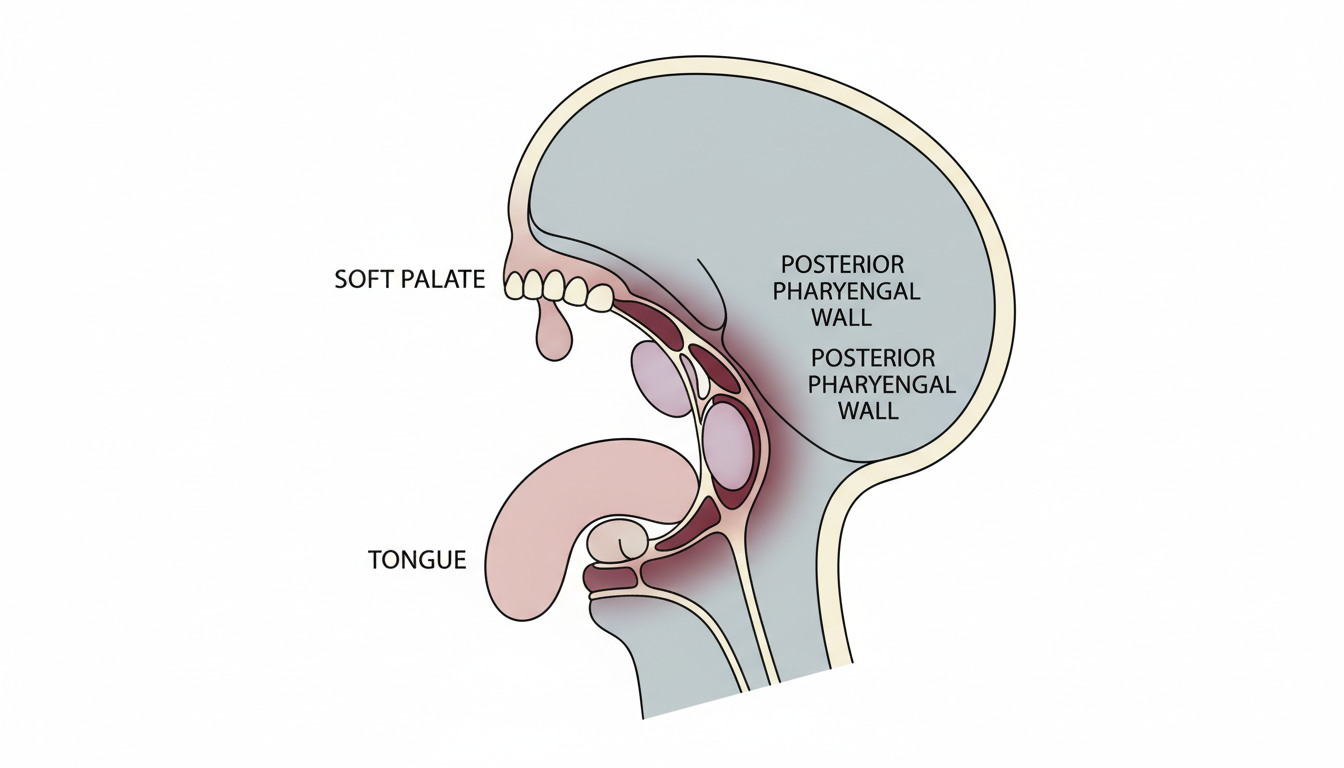
The mouth itself is not a passive recipient. Tiny abrasions from brushing, flossing, dental work, gum disease, or hot food create entry points. The pharynx behind the tonsillar pillars is particularly hospitable to N. gonorrhoeae, which is why throat gonorrhea outpaces oral chlamydia in most prevalence studies (CDC sexually transmitted infections program).
Oral Gonorrhea: The Most Common Pharyngeal STI
Pharyngeal gonorrhea is the single most-detected oral STI in routine extragenital screening. Most cases produce no symptoms, which is exactly why screening matters. People who only test based on how they feel will miss the majority of these infections.
When symptoms do appear, they tend to mimic ordinary sore throat:
- A sore throat that lasts longer than a typical viral infection.
- Pain or difficulty swallowing.
- Swollen lymph nodes in the neck.
- Redness, white patches, or lesions on the tonsils.
The harder problem with pharyngeal gonorrhea is treatment. Neisseria gonorrhoeae has developed resistance to nearly every antibiotic class once used against it, and pharyngeal infections are notably harder to clear than urethral or cervical ones. The CDC's STI Treatment Guidelines recommend a single 500 mg intramuscular dose of ceftriaxone for uncomplicated pharyngeal infection, with a test-of-cure swab seven to fourteen days later, specifically because pharyngeal cure rates lag behind genital ones.
Diagnosis requires a throat swab analyzed by NAAT (nucleic acid amplification testing), which is the laboratory gold-standard method. Urine tests do not detect pharyngeal infection. Most U.S. clinics do not run a throat swab unless the patient asks, so naming the exposure clearly during your visit is what gets the right swab ordered.
A note on the product mentions that follow: stdrapidtestkits.com publishes this article and sells rapid lateral-flow at-home test kits. The kit picks throughout this article are based on what actually fits each section's exposure pattern.
Pharyngeal gonorrhea is harder to clear than genital gonorrhea, and resistance to first-line treatments has shrunk the available options. Always finish the prescribed course and return for a test-of-cure swab when your provider asks.
Oral Chlamydia: The Silent Throat Infection
Pharyngeal chlamydia is less common than pharyngeal gonorrhea but worth screening for after the same exposures. Chlamydia trachomatis infects the throat through unprotected oral sex with someone who has a genital or rectal chlamydia infection. Like its pharyngeal cousin, oral chlamydia is overwhelmingly silent.
When the throat infection does cause symptoms, they overlap heavily with viral pharyngitis:
- A persistent sore throat that does not resolve with rest, fluids, or honey.
- Erythema (redness) and edema (swelling) of the back of the throat, sometimes with painful swallowing (odynophagia).
- White patches on the tonsils that can be mistaken for strep, particularly when they fail to clear after antibiotics aimed at strep.
- Tender, swollen lymph nodes along the neck.
- Less commonly, a low-grade fever paired with the sore throat.
The diagnostic standard is a throat swab analyzed by NAAT, the same workflow as pharyngeal gonorrhea. CDC chlamydia clinical guidance notes that pharyngeal infection is generally cleared with the same azithromycin or doxycycline regimen used for genital chlamydia, but the full course matters. Incomplete treatment leaves the patient vulnerable to ongoing transmission.
Oral chlamydia can co-exist with a genital chlamydia infection in the same person, and clearing one does not always clear the other. Without a throat swab order, a treated genital infection can be reinfected by an untreated pharyngeal one.
Treating a known genital chlamydia infection does not automatically clear a pharyngeal one. If oral exposure was part of the same exposure event, ask for a throat swab alongside the genital sample. Skipping the throat sample is the single most common reason for a frustrating reinfection cycle weeks after antibiotics.
Herpes: HSV-1, HSV-2, and Asymptomatic Shedding
Herpes simplex virus comes in two types, and the old textbook split (HSV-1 above the waist, HSV-2 below) is increasingly out of date. HSV-1 now causes a meaningful share of new genital herpes cases, and HSV-2 occasionally shows up orally. Either virus can transfer through rimming or oral-genital contact in either direction.
Cold sores around the mouth (most often HSV-1) shed virus for several days during an outbreak and intermittently between outbreaks; genital and anal HSV-2 sheds asymptomatically for the same reason a partner with no visible sores can still transmit the virus.
CDC herpes guidance notes that a swab of an active lesion (PCR or viral culture) gives the most direct answer when sores are present. Without lesions, a type-specific antibody blood test is the available option, with the caveat that HSV antibodies take roughly 6 to 12 weeks to develop after a new infection.
Our at-home herpes panels are blood antibody tests. They are useful 12 weeks or more after a possible exposure, when antibody levels have had time to climb. They are not the right tool for an active oral or genital lesion, which a clinician should swab in person for direct viral detection.
HPV and Throat Cancer: The Silent Long-Game Risk
Human papillomavirus is the most common sexually transmitted infection on the planet. Most HPV infections clear on their own within one to two years and never cause anything more than a transient immune blip. The minority that persist matter, because high-risk strains (most prominently HPV 16) are the leading cause of oropharyngeal cancers in the United States.
The CDC's HPV program places oral HPV transmission firmly in the oral-sex and oral-anal contact category. There is no validated routine screening test for oral HPV in asymptomatic adults; the protective tool is vaccination, not testing.
The vaccine (Gardasil 9 in the U.S.) covers nine of the highest-risk strains, including those most associated with oropharyngeal cancer. It works prophylactically, so the earlier in life it is given, the better. For an adult past 26, vaccination still has value if previous coverage of these strains was incomplete.
Persistent oral lesions, hoarseness lasting more than three weeks, or a lump in the neck after years of oral-sex history warrant in-person ENT evaluation, not a home test.
HPV vaccination at a glance
- Routine HPV vaccination is recommended through age 26 for everyone (catch-up included).
- Adults 27 through 45 who were not adequately vaccinated earlier should make a shared decision with a clinician.
- Gardasil 9 covers nine high-risk strains, including the ones most associated with oropharyngeal cancer.
Syphilis Chancres in the Mouth Are Easy to Miss
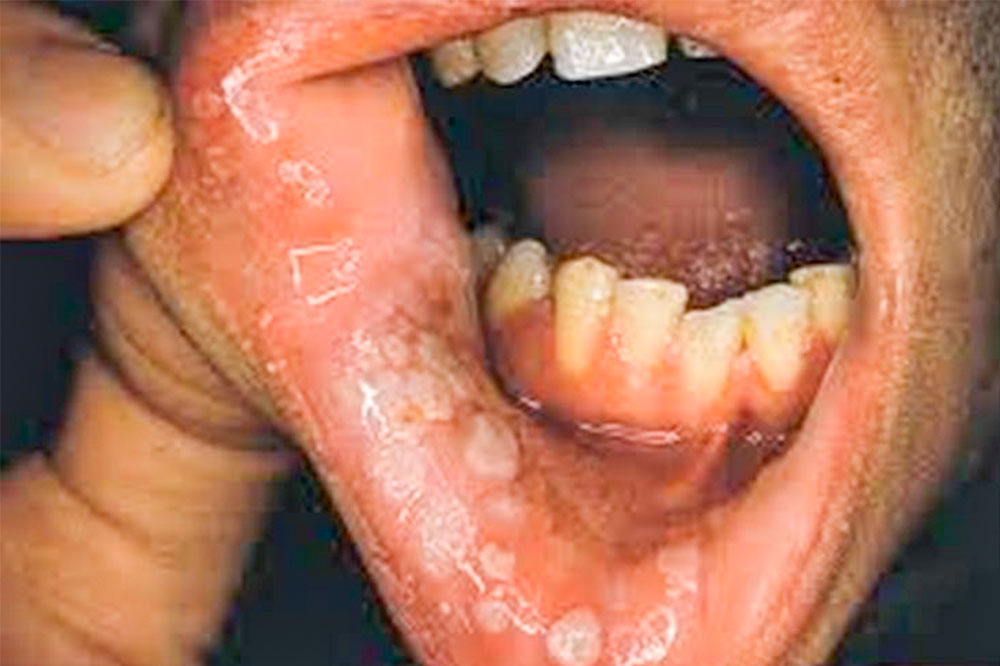
U.S. syphilis case rates have climbed sharply over the last decade, and oral chancres are part of why early infection is so often missed. The first stage of syphilis (primary syphilis) is a single painless ulcer (called a chancre) at the site of bacterial entry. When that site is the lip, gum line, tongue, tonsil, or back of the throat, the lesion rarely brings someone to a doctor on its own.
- The lesion is painless, so it does not interfere with eating or drinking the way a canker sore does.
- The location is often hidden behind the tonsillar pillars or under the tongue, where the patient cannot see it without a mirror.
- The lesion heals on its own in three to six weeks, even untreated, which gives the false impression of a resolved problem while the bacteria continue spreading internally.
Untreated syphilis progresses through secondary, latent, and tertiary stages over months to years, with neurological and cardiovascular complications in late disease. Diagnosis at any stage is by blood test, and treatment for early infection is a single intramuscular dose of benzathine penicillin G, per CDC syphilis treatment guidance.
If you have had unprotected oral sex or rimming and notice any painless ulcer in the mouth, lip, or throat that lasts more than a few days, get a clinical exam plus a syphilis blood test. The antibody window after a new infection runs roughly three weeks to three months.
Hepatitis A and B: Liver Infections That Travel Oral-Anal Routes
Hepatitis A is a fecal-oral virus. Most U.S. cases trace back to contaminated food or water, but sexual transmission through rimming is well documented, particularly during community outbreaks. Hepatitis B transmits through blood and sexual fluids and is also passed during oral-anal contact when there is mucosal damage on either side.
Per the CDC viral hepatitis program, both viruses have effective vaccines, and adult vaccination coverage in the U.S. is well below the level public-health experts would prefer.
Symptoms of acute viral hepatitis (when they appear) overlap across both virus types:
- Nausea, loss of appetite, or vomiting.
- Right-upper-quadrant abdominal discomfort.
- Jaundice (yellowing of the eyes or skin) and dark urine.
- Pale-colored stool.
- Profound fatigue.
Both infections are detectable in blood. Hepatitis B can become chronic in roughly 5 percent of adult cases and lead to long-term liver disease and increased liver-cancer risk. Hepatitis A almost never becomes chronic but can cause severe acute illness in people with underlying liver problems.
If you have a history of oral-anal contact and have not been vaccinated against hepatitis A or B, that is the cleanest preventive lift available. Talk to a primary care provider or a sexual-health clinic about the two-dose hepatitis A series and the three-dose hepatitis B series.
The Advisory Committee on Immunization Practices recommends universal hepatitis B vaccination for all adults age 19 through 59. Adults 60 and up share the decision with their provider based on individual risk. The series is three doses; coverage is lifelong once complete.
Parasites and Gut Pathogens: The Non-STI Side of Rimming
Several gut pathogens travel along the same oral-anal route as hepatitis A and cause illness that looks more like food poisoning than an STI:
- Giardia lamblia: a parasite causing watery diarrhea, gas, abdominal cramping, and nausea, often lasting two or more weeks if untreated.
- Shigella: a bacterial infection causing fever, cramping, and bloody or mucus-streaked diarrhea. The CDC has tracked clusters of antibiotic-resistant Shigella in some communities since the mid-2010s.
- Cryptosporidium: a parasite causing prolonged watery diarrhea, particularly persistent in people with weakened immune systems.
- Hepatitis A: included again here because it spreads by the same fecal-oral mechanism even though the disease itself is hepatic.
If you develop diarrheal illness in the days or weeks after oral-anal contact, the cause may be infectious rather than dietary. Stool studies (sometimes called an O&P, or ova-and-parasites, exam, or a multiplex GI PCR panel) can identify the responsible organism. Most of these infections respond to a short course of targeted antibiotics or anti-parasitics.
Diarrhea, cramping, or bloody stools that persist for more than a few days after oral-anal contact are a reason to ask your provider for a stool study (O&P exam or multiplex GI PCR panel). You do not need to disclose the specific exposure to get the test ordered, only the GI symptoms.
Can You Get HIV From Rimming?
HIV transmission through rimming alone is rare. The receptive partner (the one being rimmed) is not exposed to a high-viral-load fluid. The performing partner (the one rimming) takes in trace amounts of mucosal fluid and possibly blood from a partner's anus, which is the higher-risk side of the act.
Conditions that nudge that low risk upward:
- Bleeding gums, recent dental work, or oral ulcers in the performing partner.
- An active anorectal infection (gonorrhea, chlamydia, herpes, syphilis) in the receptive partner, which increases viral load and mucosal vulnerability on both sides.
- Menstrual blood when oral contact extends to vaginal tissue.
- The receptive partner has a high HIV viral load (newly diagnosed and untreated, or treatment-non-adherent).
The CDC's HIV risk-by-activity estimates place receptive oral sex with a partner who has HIV at a very low absolute risk per act, and rimming is generally considered lower than that. People in ongoing-exposure risk profiles should ask a clinician about pre-exposure prophylaxis (PrEP).
For testing, a fourth-generation HIV antigen-antibody test detects most new infections by 18 to 45 days after exposure. Our at-home rapid HIV test is an antibody-based assay with a longer window: a result at three months is considered conclusive for a recent exposure.
Pre-exposure prophylaxis (PrEP) reduces sexual HIV acquisition risk by about 99 percent when taken as prescribed, per <a href="https://www.cdc.gov/hiv/">CDC HIV prevention guidance</a>. Anyone with ongoing exposure risk can ask any primary care provider or sexual-health clinic for a PrEP prescription; many cities offer no-cost or sliding-scale access.
How to Lower the Risk Without Removing the Pleasure
Realistic risk reduction is a layered set of small choices, not a single rule:
- Barriers: A dental dam (or a condom cut open into a flat sheet) placed between mouth and anus is the most direct barrier for rimming. Flavored versions exist; unscented latex sheets work for those with sensitivities.
- Showering before: A pre-rim shower with mild soap reduces the surface bacterial load and is a courtesy, not a guarantee.
- Avoid rimming during outbreaks or GI illness: Visible cold sores, anal lesions, or active diarrhea are absolute pause-the-evening conditions for either partner.
- Don't brush or floss right before: Toothbrushing creates microscopic gum abrasions that briefly raise transmission risk for both bloodborne and mucosal pathogens. Mouthwash without alcohol is a reasonable substitute in the immediate hour before.
- Vaccinate against hepatitis A and B: Two short vaccine series eliminate two of the bigger viral risks on this list.
- Discuss HPV vaccination: If you are under 27 and unvaccinated, or 27 to 45 and partially protected, this is worth a clinic conversation.
None of this requires removing intimacy from sex. Most of it just asks for a small front-loaded honesty about what you do, so the right tools are within reach.
The hepatitis A and hepatitis B vaccine series, plus the HPV vaccine for those eligible, eliminate three of the bigger viral risks on this list. None of them require ongoing maintenance once the series is complete, and most insurance plans cover them as part of routine adult care.
What to Ask For at Testing (And What an At-Home Kit Can Answer)
Name the body sites involved when you check in at a sexual-health appointment. That single step determines which swabs the clinician orders, and it is the difference between a comprehensive panel and a urine cup that misses every pharyngeal infection.
For someone with a recent rimming or oral-sex exposure, the comprehensive panel looks like:
- Pharyngeal swab for chlamydia and gonorrhea (NAAT laboratory testing).
- Rectal swab for chlamydia and gonorrhea, if the receptive partner had anal exposure.
- Genital test (urine or vaginal swab) for chlamydia and gonorrhea, since multi-site infection is common.
- Blood tests for HIV, syphilis, and (if not previously confirmed positive) hepatitis B and hepatitis C.
- Hepatitis A and B antibody titers if vaccination status is unclear.
- Type-specific HSV-2 antibody test if there are symptoms or specific concern. Routine asymptomatic herpes screening is not currently recommended by the CDC for the general population.
- Stool study if there are GI symptoms.
Our at-home rapid kits cover the systemic and genital side: blood-based tests for HIV, syphilis, hepatitis B, hepatitis C, and HSV antibodies, plus genital-swab tests for chlamydia, gonorrhea, and (for women) trichomoniasis and HPV. They are useful once the relevant testing window has passed.
We do not sell pharyngeal (throat) or rectal swab kits. If your most relevant exposure was oral-anal contact and you want to rule out throat or rectal chlamydia and gonorrhea specifically, that is a clinic visit. Our kits cover the systemic and genital side of the same exposure event in parallel.
More than 1 million curable sexually transmitted infections (STIs) are acquired every day worldwide in people 15-49 years old, the majority of which are asymptomatic.
When Symptoms Show Up Where You Are Not Expecting Them
Most STI education focuses on what infection looks like in the genitals. After rimming or oral sex, the relevant body real estate is different. Watch for:
- A sore throat that does not resolve in two weeks.
- Persistently swollen lymph nodes in the neck or under the jaw.
- White patches, ulcers, or unusual lesions on the tongue, soft palate, or tonsils.
- Mouth ulcers that come back, persistent gum bleeding, or unexplained bad breath.
- Unexplained fatigue, low-grade fever, or nausea in the days to weeks after a possible exposure (often the first sign of acute HIV, hepatitis A, or hepatitis B).
- Anal itching, discharge, or bleeding (which can suggest rectal STI in the receptive partner).
None of these symptoms is specific to STI alone. Most sore throats are viral, most fatigue traces to sleep or stress, and most lymph node swelling comes from a recent cold. Patterns matter: a single symptom alone is rarely the right reason to test, but a symptom that follows a known exposure and does not resolve is a reason to ask for site-specific testing (NHS sexual health guidance).
If You Are Worried After a Recent Exposure
The honest path is the one with the fewest assumptions in it. Get a clinical exam if there is a visible lesion, a non-resolving symptom, or recent exposure that warrants pharyngeal or rectal swabs. Order an at-home rapid panel for the systemic side (HIV, syphilis, hepatitis, herpes antibodies) once the relevant testing windows have passed.
Most exposures do not result in infection. Most infections that do happen are treatable. Testing costs little. An untreated syphilis or HIV infection compounding silently for months costs considerably more.
Frequently Asked Questions
- Can you really get an STI from rimming?
- Yes, and the transmission list is longer than most people realise. Beyond the common sexual infections (gonorrhea, chlamydia, herpes, syphilis, HPV, hepatitis A and B), rimming can move gut pathogens like Giardia, Shigella, and Cryptosporidium via fecal-oral contact. HIV transmission through rimming alone is documented but ranks as low-risk compared to penetrative sex.
- What does oral gonorrhea feel like?
- Most pharyngeal gonorrhea infections cause no symptoms at all. When symptoms appear, they look like a stubborn sore throat with painful swallowing, redness, and sometimes white patches on the tonsils. A throat swab is the only way to confirm it.
- How long after a rimming exposure should I test?
- It depends on the test. Rapid lateral-flow chlamydia and gonorrhea swabs (genital sample) are useful from about 14 days after exposure. A fourth-generation HIV test detects most new infections by 18 to 45 days. Antibody-based home HIV and HSV tests are most reliable at three months. Syphilis becomes detectable on a blood test roughly three weeks to three months after exposure.
- Do dental dams actually work?
- They reduce direct mucous-membrane contact, which lowers transmission risk for everything that crosses skin or mucosa: herpes, HPV, syphilis, and most enteric pathogens. They do not eliminate risk, particularly when there is bleeding or torn tissue, but they are the most direct barrier available for rimming.
- Can herpes spread between mouth and anus without visible sores?
- Yes. HSV sheds asymptomatically between outbreaks, and a partner with no visible sores can still pass the virus. This is part of why HSV is so widespread; transmission is not limited to active outbreaks.
- Why isn't oral HPV routinely tested?
- Most HPV infections clear on their own and there is no validated screening test for asymptomatic oral HPV. The protective tool is vaccination (Gardasil 9), which covers nine high-risk strains including the ones most associated with oropharyngeal cancer. Persistent symptoms warrant ENT evaluation rather than home testing.
- Should I tell my doctor I do oral-anal sex?
- If you want accurate testing, yes. Providers do not order pharyngeal or rectal swabs unless they know the exposure pattern. Naming the activity is what gets the right swabs ordered. Your privacy is protected; the information is part of your medical record but not shared casually.
- Can I test for oral STIs at home?
- For pharyngeal chlamydia and gonorrhea specifically, no: those require a clinic-administered throat swab analyzed by NAAT. At-home rapid kits cover the systemic side (HIV, syphilis, hepatitis B, hepatitis C, herpes antibodies) and genital-swab side (chlamydia, gonorrhea, plus HPV and trichomoniasis for women) of the same exposure event.
- U.S. Centers for Disease Control and Prevention. Sexually Transmitted Infections program: clinical guidance, treatment recommendations, and surveillance data for chlamydia, gonorrhea, syphilis, and herpes.
- U.S. Centers for Disease Control and Prevention. HIV basics: per-act risk estimates by exposure type, testing window guidance, and PrEP overview.
- U.S. Centers for Disease Control and Prevention. Viral Hepatitis program: hepatitis A and B vaccination guidance, transmission routes, and acute symptom patterns.
- U.S. Centers for Disease Control and Prevention. HPV program: vaccination guidance through age 26 and shared clinical decision-making for ages 27 to 45.
- World Health Organization. Sexually transmitted infections (STIs) fact sheet, including the global daily-incidence figure and the asymptomatic-majority statement.
- U.K. National Health Service. Sexually transmitted infections overview: symptom patterns, testing options, and when to seek clinical evaluation.