
Published: August 2025 | Last updated: May 2026 | Editorial review and quality control: Martina N.
Most women learn to recognize chlamydia by its better-known signs: unusual vaginal discharge, burning during urination, spotting between periods. Far fewer learn that the same bacterium can quietly settle in the rectum, where it can cause almost nothing for weeks or months. That silence is the reason rectal chlamydia in women is one of the most underdiagnosed sexually transmitted infections in the United States.
This article walks through the signs that often get dismissed as hemorrhoids or friction, how rectal infection can happen without anal sex, when testing is reliable after a possible exposure, and what site-specific screening means in practice. The goal is plain: enough information that a reader can decide, calmly and accurately, whether testing makes sense.
Key Takeaways
- Rectal chlamydia in women is frequently asymptomatic, and standard genital-only screening can miss it even when an infection is present.
- Testing 7 to 14 days after a possible exposure provides the most reliable rectal NAAT result, per CDC laboratory diagnosis guidance.
Why So Many Women Miss Rectal Chlamydia
Chlamydia trachomatis is the most commonly reported bacterial sexually transmitted infection in the United States, according to the Centers for Disease Control and Prevention. The CDC and the World Health Organization both note that genital infection often presents with no symptoms, and the same is true at the rectal site.
Studies of women diagnosed with genital chlamydia have repeatedly found concurrent rectal infection even among women who report no anal sex. The implication is not that anyone has done something unusual. It is that bacteria can be transferred along genital tissue, by fingers, by shared sex toys, or by wiping front to back during a genital infection. Anatomy alone is enough.
The result is an infection that frequently goes undetected because the only test ordered is a vaginal swab or urine sample. If exposure could have included the rectal area, the rectum needs its own swab.
What Rectal Chlamydia Actually Feels Like
Many women feel nothing. That is the most common presentation. When symptoms do show up, they tend to be subtle enough that most people brush them off as a passing irritation.
The patterns that come up most often: itching that feels deeper than surface skin, a sense of pressure or fullness in the rectum, a small amount of discharge that does not look like stool but also does not match typical vaginal discharge, and discomfort during bowel movements. The NHS chlamydia overview notes that rectal infection may cause discomfort and discharge, while emphasizing that many cases are asymptomatic.
Light bleeding can also occur with rectal inflammation. Because bright red blood on toilet paper is so strongly associated with hemorrhoids in the public mind, this symptom is the one most likely to be dismissed without testing.
| Symptom | Rectal Chlamydia | Hemorrhoids |
|---|---|---|
| Itching | Common, often feels internal | Common, typically external or surface-level |
| Mucus-like discharge | Possible | Uncommon |
| Pain during bowel movements | Possible, especially with inflammation | Common if swollen |
| Bleeding | Light spotting possible | Bright red bleeding common |
| Often no symptoms at all | Very common | Less common |
What are the signs of rectal chlamydia in women?
Roughly half of rectal chlamydia infections cause no noticeable symptoms. When symptoms do appear, the most common are mild rectal itching, mucus-like discharge, a sensation of pressure or fullness, discomfort during bowel movements, and light spotting. These overlap heavily with hemorrhoid symptoms, which is why site-specific testing matters more than symptom intensity. Rectal NAAT testing is most reliable from day 7 onward after a possible exposure, with peak accuracy around day 14.
Rectal Infection Without Anal Sex
One of the most common reactions when rectal STI screening is suggested is, “But I have never had anal sex.” This belief delays a lot of testing that would have come back useful.
Rectal infection does not require penetrative anal sex. During vaginal intercourse, infected fluids can reach the perianal area. Fingers and shared sex toys can transfer bacteria between sites. Even routine hygiene, such as wiping front to back during an active vaginal infection, can move organisms toward the rectum. None of this is unusual behavior. It is anatomy.
Research summarized in the CDC STI Treatment Guidelines for chlamydial infections notes that extragenital sites, including the rectum, are commonly affected in women and that screening based on reported sexual practices alone may miss infections. The takeaway is straightforward: if exposure could have reached the area, the area can be infected.
Common routes of rectal exposure that have nothing to do with penetrative anal sex:
- Spread of infected vaginal fluids to the perianal area during intercourse.
- Finger or shared sex toy transfer between vaginal and anal sites.
- Wiping front to back during an active vaginal infection.
- Genital-to-anal contact without penetration.
When Silence Is the Only Symptom
The asymptomatic rate for rectal chlamydia in women is high. Multiple peer-reviewed studies estimate that roughly half of rectal infections cause no recognizable symptoms, and some series report higher figures. That is not a rare scenario. That is a typical one. The CDC treatment guidelines for chlamydial infections note that asymptomatic infection is the norm for chlamydia across infection sites.
Asymptomatic infection is the reason testing matters more than symptom-checking. Without detection, rectal chlamydia can persist for months. The CDC notes that untreated chlamydia raises the risk of reinfection, can contribute to inflammation that increases susceptibility to other infections, and can be passed to sexual partners even when the infected person feels well.
Proactive testing after a new partner, after unprotected sex, or after any exposure that could have reached the rectal area is not paranoia. It is the only reliable way to catch an infection designed to stay quiet.

How Testing for Rectal Chlamydia Actually Works
The laboratory gold standard for chlamydia detection is the nucleic acid amplification test, or NAAT, which identifies the bacterium’s genetic material. NAAT is the method recommended in the CDC STI screening recommendations for both genital and rectal samples in women.
A rectal NAAT is collected with a swab inserted about 2 to 3 cm into the anal canal. Most women describe the process as briefly awkward rather than painful. The swab is shallow and quick. Self-collected rectal swabs have been shown to perform comparably to provider-collected swabs in clinical and research settings, which is why some sexual health services now offer them through a telehealth mail-collection model.
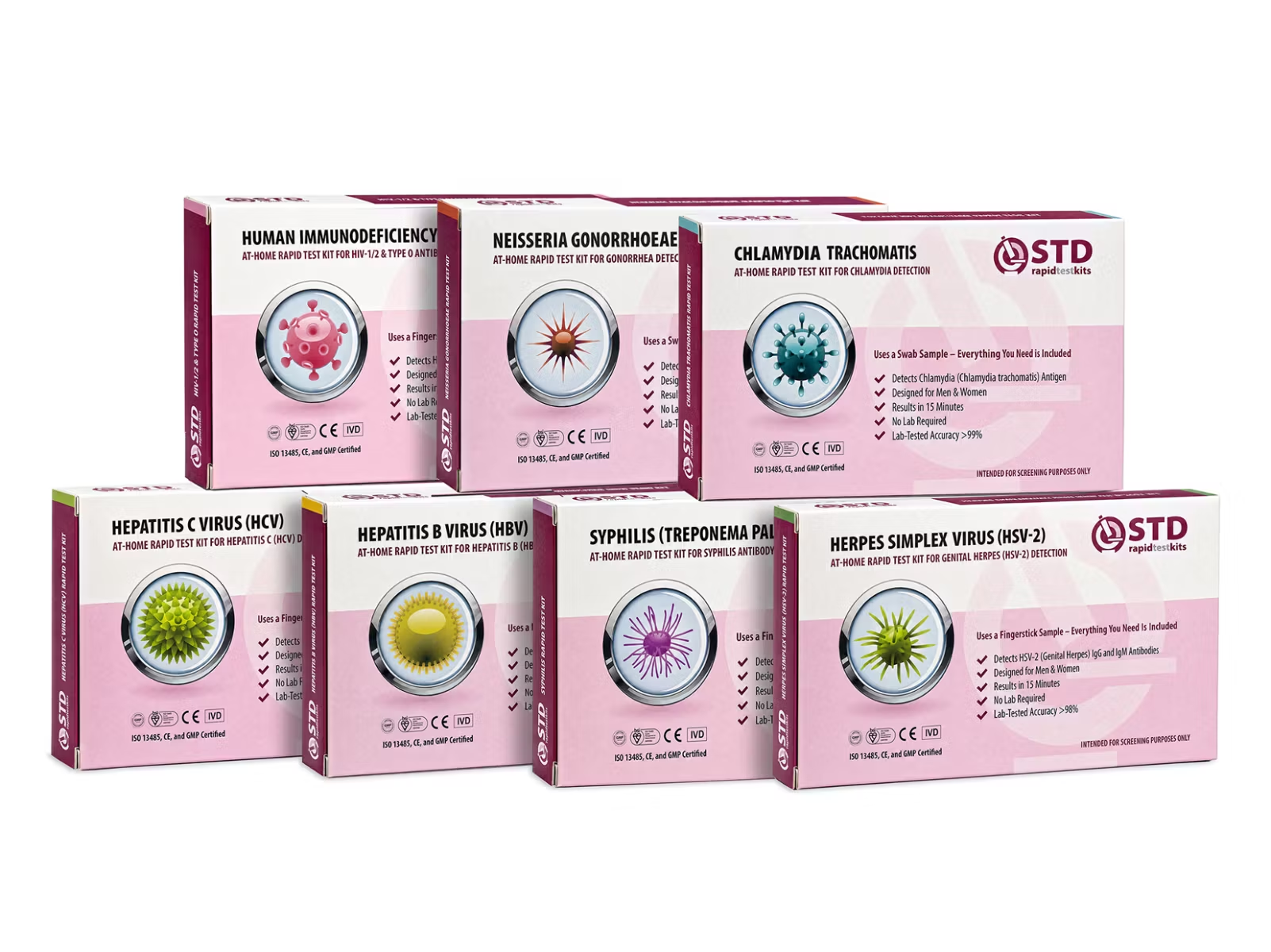
One practical clarification matters here. The at-home rapid lateral-flow kits sold on this site are validated for genital self-swab samples (vaginal or penile) and fingerstick blood. They are not validated for rectal sample collection. Rectal NAAT testing is currently available through clinic visits or, in some regions, through telehealth mail-in services that ship a rectal collection kit for lab processing. The principle to keep in mind: if exposure reached the rectum, the test needs to be a rectal NAAT sample. A vaginal or urine sample will not catch an infection that lives only in the rectum.
A vaginal swab or urine sample will not detect a rectal infection. Only a rectal NAAT swab tests the rectal site. If exposure could have reached the rectum, ask your provider or sexual health service specifically for rectal NAAT collection.
Timing Matters More Than Panic
The impulse to test the morning after a worrying exposure is understandable. Biology does not cooperate with that timeline. Bacteria need time to replicate to levels a test can reliably detect.
For chlamydia, NAAT testing typically becomes reliable from about day 7 after exposure, with accuracy improving through day 14. A negative result on day 3 does not always mean the infection is absent. It may mean the test was run before the bacterium had time to reach detectable levels.
This is the difference between incubation and the window period. Incubation is when symptoms might appear, if they appear at all. The window period is when a test can reliably detect infection. With rectal chlamydia, symptoms may never arrive, so the window period is the figure that matters.
| Days Since Possible Exposure | What is Happening Biologically | Test Reliability | Recommended Action |
|---|---|---|---|
| 0 to 5 days | Bacteria may be present but at low levels | Low to moderate | Wait if possible unless symptoms are severe |
| 7 to 10 days | Bacterial load increasing | Good detection rate | Testing is reasonable |
| 14 days or more | Infection well established if present | High reliability | Optimal testing window |
| 30 days or more | Persistent infection if untreated | High reliability | Test and begin treatment promptly if positive |
What Happens If Rectal Chlamydia Is Left Untreated
Untreated rectal chlamydia does not always escalate into dramatic symptoms. More often it lingers quietly, which is part of why so many infections persist for months before they are caught. Chronic, low-level inflammation can still cause problems, and the CDC notes that untreated chlamydia raises the risk of transmission to partners and increases the chance of reinfection after future exposure.
When genital infection coexists with rectal infection, untreated chlamydia can also contribute to pelvic inflammatory disease, with downstream risks for tubal scarring, chronic pelvic pain, and reduced fertility. The CDC STI Treatment Guidelines for chlamydial infections describe these complications and outline the treatment approach.
Treatment itself is straightforward when the infection is detected. A short course of antibiotics, completed in full, is highly effective. The most important steps are taking every dose and pausing sexual contact until treatment finishes and any sexual partners have been treated as well.
For rectal chlamydia in non-pregnant adults, the CDC currently recommends doxycycline 100 mg orally twice daily for 7 days as the preferred regimen. Complete the full course, pause sexual contact until treatment finishes, and follow up with retesting at 3 months to catch reinfection.
Why Doctors Do Not Always Test Rectally
A detail many women find surprising: clinic providers do not automatically test rectally during a general “STD screening” visit. Most routine screenings default to a urine sample or vaginal swab. Unless the patient mentions rectal exposure or symptoms, rectal testing may not be ordered at all.
This is not a failure of medicine. It is a limit of the default protocol. The CDC frames rectal screening as a shared decision between patient and provider, meaning the conversation typically starts with you raising your exposure history. Patients who have had anal sex, genital-to-anal contact, shared sex toys, or any symptoms suggestive of rectal infection can request rectal screening directly. Studies in clinical infectious disease journals have repeatedly shown that genital-only testing misses a meaningful fraction of rectal infections in women.
The practical step is simple: if there is any reason to suspect rectal exposure, ask your provider or sexual health service specifically for a rectal NAAT swab. It is not oversharing. It is accurate care.
A routine STI screen rarely includes a rectal swab unless you ask. A simple sentence is enough: “I’d like a rectal NAAT in addition to the vaginal or urine sample, because of a possible exposure.” You do not need to detail what happened. Saying you would like the rectal site included is sufficient for the provider to add it to the panel.
Testing From Home: What Is and Is Not Possible
For many women, the obstacle to getting tested is not information. It is logistics. Busy schedules, small towns where every clinic visit is visible, insurance concerns, and discomfort about discussing rectal symptoms at a front desk all delay testing.
Here is the honest scope of at-home testing as it stands. For a rectal NAAT specifically, a clinic visit or a telehealth mail-in NAAT service is the right route. The rapid lateral-flow kits sold on this site collect samples through genital self-swab (vaginal or penile) or fingerstick blood, not through rectal swab. They are a different technology category from the lab-processed NAAT testing that the rectal site requires.
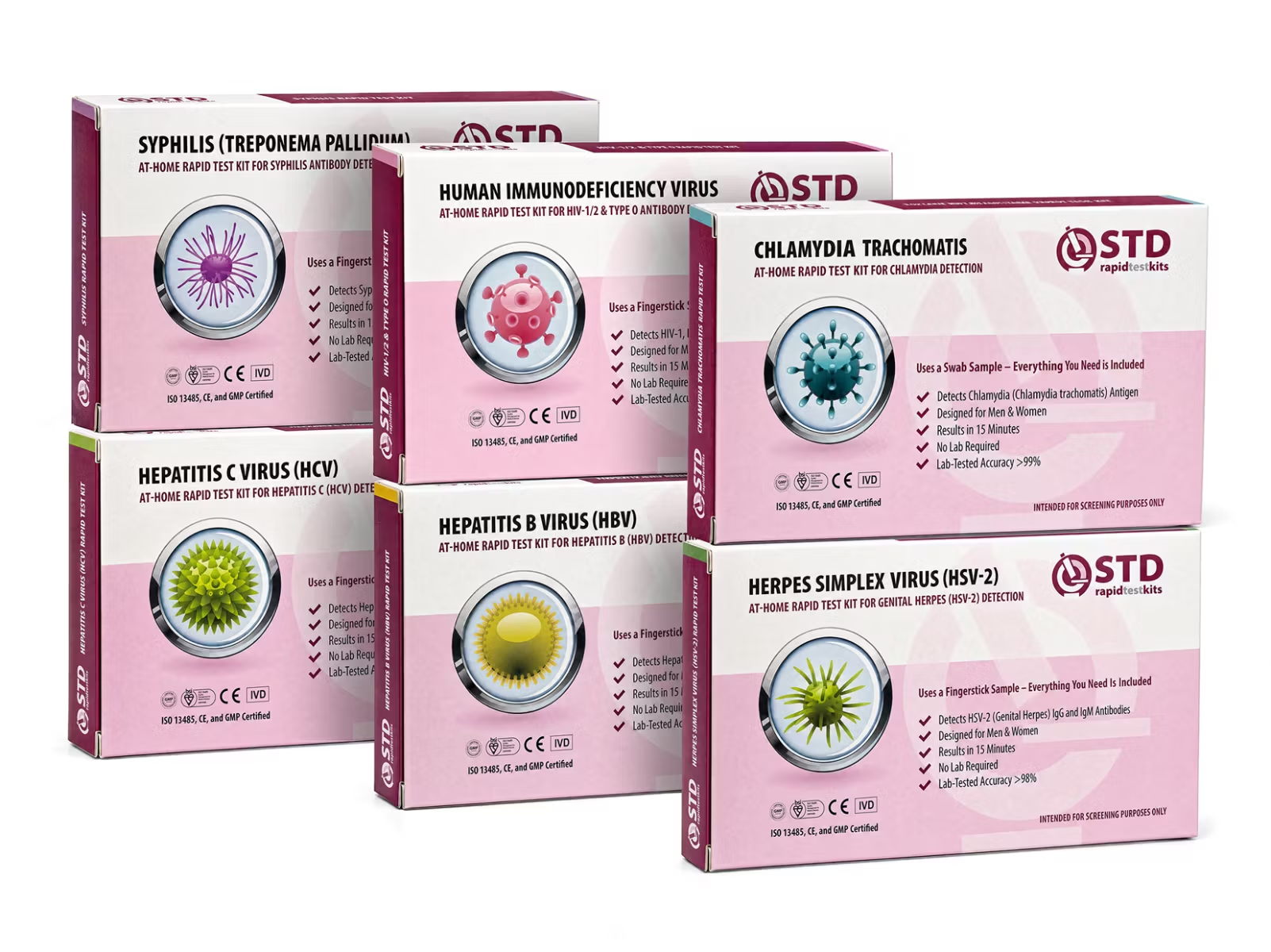
What at-home rapid testing can cover is the adjacent STI risk from the same exposure event: genital chlamydia, gonorrhea, syphilis, HIV, hepatitis B, hepatitis C, and herpes. If you are arranging a rectal NAAT through a clinic or telehealth service and also want broader reassurance about the bloodwork and genital-site picture, the multi-infection panels on this site can run in parallel.

Retesting, Reinfection, and the “Am I Clear Now” Question
Finishing the antibiotic course feels like the end of the story. For chlamydia, it is usually the end of the active infection. It is not the end of the screening conversation. The CDC recommends retesting roughly three months after treatment. The reason is reinfection, which is common when a sexual partner was not treated at the same time. Antibiotic failure itself is uncommon when the full course is completed.
Testing too soon after treatment can produce confusing results. Residual bacterial DNA from a cleared infection can occasionally trigger a positive NAAT result for several weeks. The CDC advises waiting at least three weeks after completing treatment if a test of cure is being considered, and three months for routine retesting.
If symptoms persist after a full antibiotic course, that does not necessarily mean treatment failed. It could be lingering inflammation, a different infection such as gonorrhea, or a non-infectious cause like an anal fissure. The right next step is a follow-up appointment rather than self-diagnosis.
- Wait at least 3 weeks after finishing antibiotics before a test of cure is run (residual DNA can cause false positives earlier).
- Schedule a routine retest at 3 months to catch reinfection, which is the most common reason for a repeat positive.
- A routine test of cure is not required for uncomplicated cases in non-pregnant adults.
Other Rectal Infections to Rule Out
Rectal discomfort does not automatically mean chlamydia. Several other infections and non-infectious conditions can cause overlapping symptoms, which is part of why clinical testing matters.
Gonorrhea can colonize the rectum and cause discharge, irritation, or pain with bowel movements. Genital herpes can produce painful sores around the anus that are sometimes mistaken for fissures. In rare cases, primary syphilis presents with a painless rectal lesion that can be missed entirely. And then there are the non-STI causes: hemorrhoids, anal fissures, mild proctitis from irritants, and inflammatory bowel conditions, all of which can mimic infection.
The point is not to assume the worst at every itch. It is to recognize that symptoms persisting beyond a couple of days deserve a test rather than guesswork.
| Condition | Common Symptoms | Often Asymptomatic | Testing Method |
|---|---|---|---|
| Chlamydia | Mild itching, discharge, discomfort with bowel movements, light bleeding | Very common | NAAT rectal swab |
| Gonorrhea | Discharge, irritation, possible soreness | Common | NAAT rectal swab |
| Herpes (HSV) | Painful sores, burning, tingling | Less common during outbreaks | Swab of active lesion or blood antibody test |
| Hemorrhoids | External swelling, bright red bleeding, surface itching | No | Physical exam |
| Anal fissure | Sharp pain with bowel movement, small linear tear | No | Physical exam |
Chlamydial infection is most often asymptomatic, particularly in women. Annual screening is recommended for all sexually active women under 25 years of age and for older women at increased risk.
Prevention and Partner Care
Prevention does not require assumptions about anyone’s sex life. The CDC’s screening guidance and the WHO chlamydia fact sheet both emphasize the same handful of measures: consistent condom or barrier use during vaginal and anal contact, cleaning shared sex toys between uses, and routine STI screening when there are new or multiple partners.
If a test returns positive, partner notification is part of responsible care rather than an accusation. A short message such as, “I tested positive for chlamydia and wanted you to know so you can get tested too,” is enough. Most adults respond better to calm clarity than to elaborate explanations. Some health departments also offer expedited partner therapy, which lets a clinician prescribe treatment for a partner without an in-person visit.
- Use condoms or barriers consistently during vaginal and anal contact.
- Wash shared sex toys between uses and between partners.
- Wipe front to back, especially during an active vaginal infection, to reduce perianal spread.
- Schedule routine STI screening when starting with a new partner or after unprotected exposure.
- If a partner tests positive, ask about expedited partner therapy with your provider.
You Deserve Clarity, Not Guesswork
Rectal chlamydia in women is common, frequently silent, and easy to misattribute to hemorrhoids or friction. Testing is not a sign of recklessness. It is the only reliable way to catch an infection that tends to avoid attention.
If a recent exposure is on your mind, or if subtle symptoms have outlasted the few days that usually mean simple irritation, a rectal NAAT after the 7- to 14-day window is the clearest path to an answer. That route runs through a clinic visit or a telehealth mail-in NAAT service. For the broader picture, at-home rapid panels can cover genital chlamydia, gonorrhea, syphilis, HIV, and related bloodwork in parallel. Whatever route fits your situation best, information lowers anxiety far more reliably than waiting and wondering.
Frequently Asked Questions
- How would I know if I have rectal chlamydia?
- Often you would not. About half of rectal chlamydia infections in women cause no noticeable symptoms. When symptoms do appear, the most common are mild internal itching, a mucus-like discharge, a sense of pressure or fullness, discomfort during bowel movements, or light spotting. If something feels subtly off after a new partner and does not resolve within a few days, testing is more reliable than guessing.
- How can I tell rectal chlamydia from hemorrhoids?
- You usually cannot from symptoms alone, which is one reason rectal chlamydia is so often missed. Hemorrhoids tend to produce surface itching and bright red bleeding visible on toilet paper. Rectal chlamydia is more often described as deeper itching, mucus-like discharge, or a feeling of pressure. If the discomfort lingers beyond a few days, a rectal NAAT swab is the only way to know for sure.
- I have never had anal sex. Can I still have rectal chlamydia?
- Yes. Rectal infection does not require penetrative anal sex. Bacteria can be transferred from genital fluids through fingers, shared sex toys, or routine wiping during a vaginal infection. Women without a history of anal sex have repeatedly tested positive at the rectal site, sometimes when the vaginal test is negative.
- How soon after a possible exposure should I test?
- For chlamydia NAAT testing, day 7 is a reasonable starting point and day 14 gives stronger reliability. Testing earlier than day 5 can return a false negative because the bacterium may not have replicated to detectable levels yet. If anxiety is high, testing at day 7 with a follow-up around day 14 is a practical approach.
- Can I get a rectal chlamydia test at home?
- Rectal NAAT testing currently runs through clinic visits or, in some regions, through telehealth mail-in services that ship a rectal collection kit for lab processing. The rapid lateral-flow at-home kits sold on this site collect genital self-swab and fingerstick blood, which are different sample types. If a rectal NAAT is what you need, a clinic or a telehealth mail-NAAT provider is the right route.
- Can I test positive rectally and negative vaginally?
- Yes, and this surprises many people. Chlamydia can colonize specific sites without spreading to others. A negative vaginal or urine test does not rule out a rectal infection if exposure could have reached the rectal area. This is the reason CDC guidance supports site-specific screening based on reported sexual practices and symptoms.
- Do I need to retest after treatment?
- The CDC recommends retesting approximately three months after treatment. Reinfection is common, often because a sexual partner was not treated at the same time. A standard test of cure is not routinely recommended for uncomplicated chlamydia in non-pregnant adults, but the three-month retest catches reinfection before it spreads further.
- How do I talk to a partner about a positive result?
- Keep it short and factual. A simple message such as, “I tested positive for chlamydia and wanted to let you know so you can get tested too,” is sufficient. Most adults respond better to calm clarity than to elaborate explanations. Some local health departments also offer expedited partner therapy, which can simplify treatment access for partners.
How We Sourced This Article: Our article was constructed based on current advice from the most prominent public health and medical organizations, including the U.S. Centers for Disease Control and Prevention, the World Health Organization, and the UK National Health Service, and then molded into simple language based on the situations that women actually experience when considering rectal STI testing.
- U.S. Centers for Disease Control and Prevention. About Chlamydia: epidemiology, transmission, and asymptomatic infection in women.
- U.S. Centers for Disease Control and Prevention. STI Treatment Guidelines: Chlamydial Infections, including treatment regimens, extragenital site considerations, and sequelae of untreated infection.
- U.S. Centers for Disease Control and Prevention. STI Screening Recommendations: indications for extragenital and site-specific NAAT screening, including shared clinical decision-making for rectal testing in women.
- World Health Organization. Chlamydia Fact Sheet: global prevalence and asymptomatic infection patterns.
- UK National Health Service. Chlamydia overview: symptoms across infection sites including rectal infection, plus testing and treatment guidance.
