





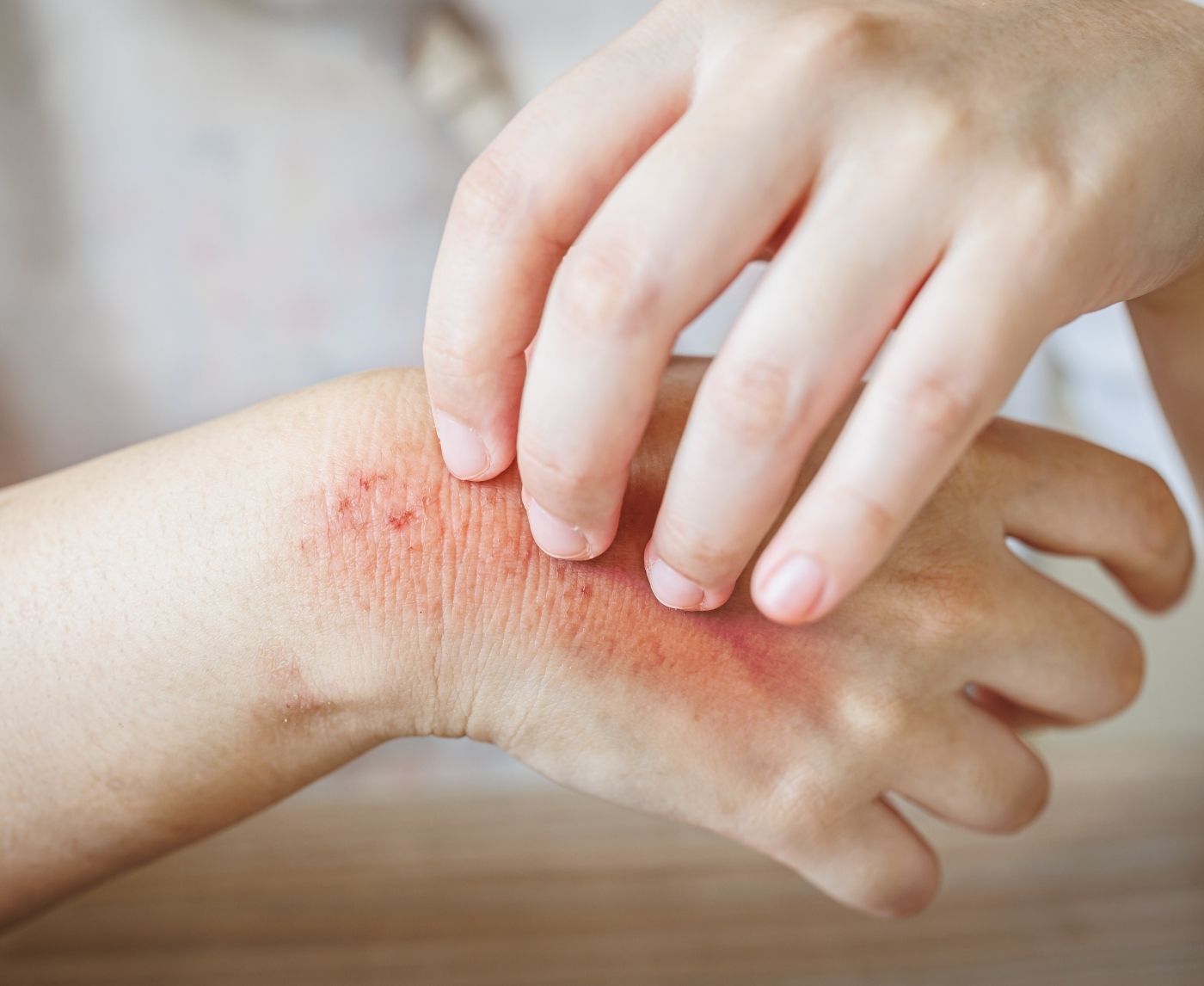

Quick Answer: Rash after sex is usually caused by friction or an allergic reaction, especially if it appears within hours. If the rash develops days later, spreads, forms sores, or comes with other symptoms, STD testing may be appropriate.
This Isn’t Always an STD, But Timing Is Everything
Let’s start with something grounding. Skin reacts quickly. Infections usually do not. That difference alone can calm a lot of fear.
Friction burns and irritant rashes often show up within minutes to hours. You might feel rawness immediately after sex or notice redness the next time you use the bathroom. The skin may feel warm, tight, or slightly swollen. It can look dramatic but remain superficial.
In contrast, infections like Herpes or Syphilis have incubation periods. According to guidance from the CDC, symptoms typically develop days to weeks after exposure, not within the hour. That delay is critical. It helps you separate what your body is reacting to versus what might be replicating inside it.
Think of it like this: irritation is a protest. Infection is a process.
What Friction Burn Actually Looks Like
Marcus, 28, thought he had contracted something serious. “It was red and kind of shiny. It burned when I walked,” he said. “I kept Googling STD rash pictures and convincing myself it was herpes.”
What he described was classic mechanical irritation. The night before had been enthusiastic. There had been minimal lubrication. The next morning, his skin responded exactly how friction-prone skin responds, inflamed but intact.
Friction burn after sex usually appears as diffuse redness rather than distinct blisters. The surface may feel tender or slightly swollen. It often improves significantly within 24 to 72 hours if you avoid further irritation.
It does not typically form clustered fluid-filled blisters. It does not ulcerate. And it does not progressively worsen over several days without continued friction.
| Feature | Friction Burn | STD-Related Rash |
|---|---|---|
| Onset | Within minutes to hours | Usually days to weeks after exposure |
| Appearance | Diffuse redness, irritation | May include sores, blisters, ulcers, or patterned rash |
| Pain Level | Surface tenderness | Can include deep pain or tingling before lesions |
| Progression | Improves within 2–3 days | May worsen before healing |
People are also reading: How to Tell a New Partner You’ve Had an STD
Allergic Reaction After Sex: The Overlooked Culprit
Jasmine, 24, described her experience like this: “It felt itchy almost immediately. Not painful, just insanely itchy. I thought maybe I wasn’t clean enough. I felt embarrassed.”
She wasn’t unclean. She was allergic.
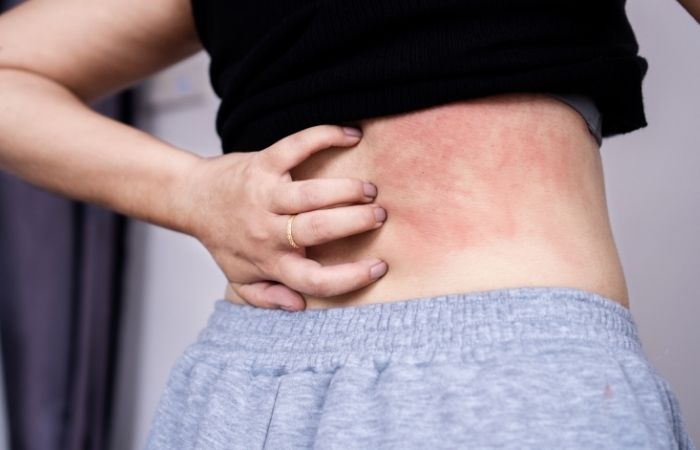
Sensitive people may develop contact dermatitis from scented wipes, latex condoms, spermicides, lubricants, and even semen. Shortly after being exposed to an irritant or allergen, contact dermatitis frequently manifests as redness, itching, mild swelling, or small raised bumps, according to the Mayo Clinic.
The key word is shortly. Allergic reactions typically develop quickly, often within hours. They may extend slightly beyond the immediate area of contact. If you used a new condom brand, tried a warming lubricant, or switched soaps before sex, your skin may simply be reacting.
Allergy rashes don't have incubation periods like infections do. They also do not create systemic symptoms like fever or swollen lymph nodes. Once the triggering product is removed, the rash usually begins improving within a few days.
When It Might Be an Infection
Now let’s talk about the scenarios that deserve more attention.
If the rash appears several days after sex, especially if it begins as tingling or tenderness before visible lesions, infections move higher on the list. Herpes commonly presents as grouped blisters that can rupture and crust. The NHS notes that first outbreaks may be accompanied by flu-like symptoms and swollen glands.
Syphilis can begin as a single painless ulcer called a chancre. It may go unnoticed if it’s internal or small. Later stages can cause a body-wide rash, including on palms and soles, which looks very different from simple irritation.
Yeast infections and bacterial imbalances can also cause post-sex redness and itching. These are not always sexually transmitted but can be triggered by changes in vaginal pH after intercourse.
Timing, again, is your compass. Immediate irritation suggests mechanical or allergic cause. Delayed, evolving symptoms suggest infection.
The 24-Hour Rule vs The 3-to-10-Day Window
Here’s a practical framework. If redness or itching begins within the first 24 hours and improves by day three, friction or allergy is likely. If symptoms begin between three and ten days later, especially after unprotected sex or skin-to-skin contact, STD testing becomes more reasonable.
This does not mean you should panic-test immediately. Most infections have testing windows. For example, nucleic acid tests for Chlamydia and Gonorrhea are most reliable about 7 to 14 days after exposure. Blood tests for Syphilis take longer to turn positive.
Testing too early can produce false reassurance. Testing at the right time produces clarity.
| Symptom Timing | Most Likely Cause | Testing Recommendation |
|---|---|---|
| Within hours | Friction or allergic reaction | Monitor 48–72 hours before testing |
| 3–10 days later | Possible infection | Consider STD testing based on exposure |
| Weeks later | Systemic infection possible | Seek medical evaluation and testing |
If you are unsure and anxiety is taking over your day, peace of mind matters. Discreet options are available through STD Rapid Test Kits, including multi-panel kits that screen for common infections without a clinic visit.
Testing is not an admission of guilt. It is an act of self-respect.
Check Your STD Status in Minutes
Test at Home with Remedium7-in-1 STD Test Kit

 For Men & Women
 Results in Minutes
 No Lab Needed
 Private & Discreet
Order Now $129.00 $343.00
For all 7 tests
“It’s Itchy But There’s No Discharge”, Does That Mean It’s Not an STD?
This is one of the most common panic searches online: itchy after sex no discharge. People assume infection always equals fluid, odor, or something visibly dramatic. That assumption isn’t always accurate.
Lena, 31, described sitting on the edge of her bathtub, Googling in a towel. “There was redness and itching, but nothing else. No discharge. No sores. I kept thinking, if it were an STD, wouldn’t there be more?”
Not necessarily. Some infections are subtle in the beginning. Early Herpes can start with tingling or burning before blisters appear. Mild yeast infections may cause irritation before noticeable discharge develops. Even Chlamydia can be entirely asymptomatic while still transmissible.
Absence of discharge does not automatically rule out infection. But presence of discharge is not required for irritation either. That’s why timing and lesion pattern matter more than a single symptom.
Oral Sex Changes the Pattern
Skin-to-skin contact during oral sex introduces a different set of possibilities. Saliva contains enzymes. Teeth create micro-abrasions. Facial hair can cause friction. If a rash appears exactly where there was contact and within hours, mechanical irritation is often responsible.
However, oral transmission of Herpes is common. A partner with a cold sore, even one barely visible, can transmit HSV-1 to genital skin. In those cases, symptoms usually appear two to twelve days later, not immediately. The delay is part of the biological replication process.
If redness appears right away and fades quickly, irritation wins. If lesions appear days later and cluster into fluid-filled blisters, testing becomes important.
Heat Rash, Razor Burn, or Something Else?
Sometimes sex is not even the direct cause. Heat, sweat, shaving, tight clothing, and gym workouts can create overlapping irritation patterns.
Andre, 35, assumed he had contracted something during a weekend trip. “I had shaved the day before, then we had sex, then I wore tight jeans in the heat. When bumps showed up, I panicked.”
Those bumps turned out to be folliculitis, inflamed hair follicles triggered by shaving and sweat. They looked alarming but were unrelated to infection.
Here is where pattern recognition helps.
| Condition | Appearance | Typical Trigger | Resolution Time |
|---|---|---|---|
| Friction burn | Red, raw, diffuse irritation | Dry sex or prolonged activity | 1–3 days |
| Contact dermatitis | Red, itchy, slightly raised patches | Latex, lube, scented products | 2–5 days after removal of trigger |
| Folliculitis | Small pimple-like bumps around hair follicles | Shaving, sweat, tight clothing | Several days to a week |
| Heat rash | Tiny clustered bumps in sweaty areas | Moisture and friction | Improves with cooling and dryness |
When a Rash Is More Concerning
There are specific features that shift the scale toward infection rather than irritation.
Herpes testing is necessary if you observe blisters that are filled with fluid, burst, and crust, especially in clusters. It is crucial to get evaluated for syphilis if you notice a single firm ulcer that is painless and persistent. If the rash spreads beyond the genital area or involves palms and soles, medical assessment should not be delayed.
Systemic symptoms are also important. Fever, body aches that accompany a rash, fatigue, or enlarged lymph nodes are signs of something more serious than a simple rash.
In these cases, testing is not about paranoia. It is about responsible care.
The Emotional Spiral Is Real
Let’s acknowledge something no medical chart captures well: the psychological weight of a genital rash.
People often replay the sexual encounter in forensic detail. Was the condom on the whole time? Did skin touch skin? Did I ask enough questions? Shame creeps in fast, even when nothing irresponsible occurred.
This is where grounded decision-making matters. A rash appearing the next morning after vigorous sex is biologically unlikely to be a newly acquired STD. The body does not work that quickly. That knowledge alone can reduce anxiety.
At the same time, ignoring delayed or evolving symptoms because of denial does not protect anyone either. Balance is the goal.

People are also reading: Dating With an STD? Here's How to Tell Them Without Losing Them
Testing Without the Waiting Room
If your rash appeared within the higher-risk window and you want clarity without scheduling a clinic visit, at-home testing can bridge that gap. Multi-panel screening kits allow you to test for common infections privately, with clear instructions and discreet shipping.
For instance, a complete solution such as the Combo STD Home Test Kit simultaneously checks for several common infections. It is especially useful when symptoms are ambiguous and you want broader reassurance.
Testing does not label you. It informs you.
What If It Goes Away?
This question matters more than people admit. If the rash disappears in two days, does that mean you are in the clear?
Often, yes. Irritation-related rashes resolve quickly when the trigger stops. But certain infections can produce mild initial symptoms that fade before recurring. Herpes, in particular, can present with subtle first outbreaks that go unnoticed or are mistaken for irritation.
If you had a high-risk exposure and even a mild rash appeared within the 3-to-10-day window, testing remains reasonable, even if symptoms fade.
Peace of mind is preventative medicine.
How Long Does an STD Rash Last?
Duration is one of the most overlooked clues.
I once spoke with someone who said, “It showed up, it freaked me out, and then it just… faded. So I told myself it couldn’t be anything serious.” That reaction is human. It is also sometimes incomplete.
Friction burns typically improve within 48 to 72 hours. Allergic reactions may take several days but steadily calm once the irritant is removed. In contrast, STD-related rashes often follow a pattern. They evolve before they resolve.
A primary Herpes outbreak can last 7 to 14 days, sometimes longer. Lesions usually begin as blisters, then open, then crust. Syphilis chancres may persist for weeks before healing on their own. Secondary syphilis rashes can last several weeks if untreated.
Infection tends to have a narrative arc. Irritation usually does not.
The Recurrence Question: One-Time Event or Repeat Pattern?
If a rash appears once after a particularly intense encounter and never returns, friction or contact dermatitis is likely. But if similar lesions recur in the same spot, especially during stress or illness, viral infection becomes more plausible.
Carla, 29, described what she thought was repeated razor burn. “It kept happening in the same place. Always after a long week at work. I finally got tested.” Her results confirmed Herpes. The stress-triggered pattern made sense in hindsight.
Recurrent patterns are rarely mechanical. Skin does not randomly re-injure itself in identical clusters without repeated trauma.
If something keeps coming back, it deserves testing.
Location Matters More Than People Realize
Where the rash appears can narrow possibilities.
Friction burns often show up along areas of direct rubbing: inner thighs, labia majora, shaft of the penis, or around the base where movement was greatest. Allergic reactions may extend slightly beyond the exact contact area but remain surface-level.
Herpes lesions frequently cluster in localized patches. They can appear internally or externally and may be preceded by tingling. Syphilis chancres may be solitary and firm. Yeast-related irritation typically centers around moist folds and may be accompanied by thick discharge.
Pattern, again, tells the story your anxiety cannot.
Protected Sex Does Not Eliminate All Risk
This is a delicate truth. Condoms reduce risk dramatically for many infections. They do not eliminate skin-to-skin transmission entirely.
If you had protected intercourse but later developed a rash in an uncovered area, such as the base of the penis or outer labia, skin-to-skin viruses remain a possibility. That does not mean you were reckless. It means biology has edges.
At the same time, friction from condoms themselves can cause redness, particularly in people sensitive to latex. Distinguishing between a latex reaction and a viral rash often comes down to timing. Latex irritation tends to appear quickly and symmetrically along areas of contact.
Infections do not usually present within hours of condom removal.
When to Seek Immediate Medical Care
Most post-sex rashes are not dangerous. However, some indicators require immediate attention.
Medical evaluation shouldn't wait for at-home testing if you have severe pain, trouble urinating, ulcers that spread, a high fever, or a rash with systemic symptoms. A primary care visit or urgent care is suitable.
Likewise, if you are pregnant, immunocompromised, or managing another chronic condition, erring on the side of evaluation is wise.
Caution is not weakness. It is informed self-protection.
Check Your STD Status in Minutes
Test at Home with Remedium6-in-1 STD Rapid Test Kit
 For Men & WomenResults in MinutesNo Lab NeededPrivate & Discreet
Order Now $119.00 $294.00
For all 6 tests
Making the Final Call: A Calm Decision Framework
Here is a grounded way to approach it.
If the rash appeared within hours of sex, feels raw rather than blistered, and improves within two to three days, irritation is most likely. Monitor it. Avoid further friction. Skip harsh soaps. Let skin recover.
If the rash appeared days later, forms sores or blisters, persists beyond a week, or recurs in a similar pattern, testing is appropriate. Choose a window that aligns with accurate detection rather than testing impulsively the next morning.
If anxiety alone is the dominant symptom, testing for peace of mind is still valid. Emotional relief is part of health.
You Deserve Clarity, Not Guesswork
There is something powerful about replacing panic with information. A rash after sex can mean many things. Most of them are temporary and non-infectious. Some require treatment. None require shame.
If your exposure timeline and symptoms align with possible infection, discreet testing is available through STD Rapid Test Kits. You can explore targeted tests or broader panels depending on your situation.
Uncertainty is heavier than most results.
FAQs
1. I noticed redness literally an hour after sex. There’s no way that’s an STD… right?
Take a breath. Most sexually transmitted infections simply don’t move that fast. Your skin can react within minutes. Viruses and bacteria need time to replicate. If something showed up within an hour or two, especially after intense friction or a new product, irritation is far more likely than infection.
2. It’s itchy but there are no blisters. Does herpes always blister?
Not always, but blisters are common. Early Herpes often starts with tingling or burning before fluid-filled bumps appear. If you’re just dealing with surface-level itch that improves quickly, irritation or yeast is more likely. If you start seeing clustered blisters that crust over, that’s when testing makes sense.
3. I used a condom. How could I possibly have an STD?
Condoms dramatically reduce risk. They are one of the best prevention tools we have. But some infections spread through skin-to-skin contact outside the area a condom covers. That doesn’t mean protection “failed.” It means biology isn’t binary.
4. What if the rash disappeared in two days? Should I still test?
If it vanished quickly and hasn’t returned, friction or contact dermatitis probably explains it. Skin irritation tends to calm down fast once you stop aggravating it. If it appeared within the typical 3-to-10-day infection window and you had higher-risk exposure, testing can still offer peace of mind, even if symptoms fade.
5. Can lube really cause that much irritation?
Absolutely. Warming, flavored, or scented lubricants are common culprits. Even products you’ve used before can start irritating you if your skin barrier is compromised. Bodies change. Sensitivities evolve. It’s not dramatic, it’s dermatology.
6. Why does everything online make every rash sound like herpes?
Because anxiety clicks. And because people search when they’re scared. In reality, most genital rashes are not STDs. But herpes is common enough that it shows up in search results constantly. The key difference is evolution, herpes lesions change over days. Friction usually just fades.
7. If my partner has no symptoms, does that mean I’m safe?
I wish it were that simple. Many infections, especially Chlamydia and Gonorrhea, can be silent. Someone can feel perfectly fine and still carry bacteria. That’s why testing is about information, not blame.
8. Could this just be anxiety making it worse?
Anxiety can absolutely amplify sensation. When you’re hyper-focused, every tingle feels ominous. That doesn’t mean the rash isn’t real. It just means your nervous system is on high alert. Clarity, whether through observation or testing, usually quiets that spiral.
9. How do I stop obsessively checking it?
Set boundaries with yourself. Check once in the morning and once at night. Constant inspection increases irritation and fuels anxiety. Skin heals better when you leave it alone. So does your mind.
10. Is testing overkill if I just want reassurance?
No. Testing is not a confession. It’s data. If a simple at-home test will let you sleep tonight, that’s not overreacting. That’s taking control.
Before You Spiral, Pause Here
A rash after sex can feel like a verdict. It is not. In most cases, it is skin reacting to friction, moisture, or a product your body simply did not love. Those reactions are common and temporary.
When symptoms follow a delayed timeline, evolve into blisters or ulcers, recur in patterns, or accompany systemic signs, testing becomes the responsible next step. Not because you did something wrong. Because health is proactive.
If you want discreet answers without sitting in a waiting room, the Combo STD Home Test Kit offers private screening for common infections. You can also explore all available options through STD Rapid Test Kits and choose what fits your situation.
You deserve information. You deserve calm. And you deserve care without shame.
How We Sourced This Article: The Centers for Disease Control and Prevention's most recent clinical guidelines, NHS resources, and peer-reviewed infectious disease literature on incubation times and dermatological presentations were used to create this guide. To ensure accuracy and clarity, we examined viral lesion patterns, common differential diagnoses, and medical explanations of contact dermatitis.
Sources
1. CDC – Genital Herpes Fact Sheet
3. NHS – Genital Herpes Overview
4. Mayo Clinic – Contact Dermatitis
5. World Health Organization – Sexually Transmitted Infections Fact Sheet
8. Mayo Clinic – Genital Warts (HPV): Symptoms and Causes
About the Author
Dr. F. David, MD is a board-certified infectious disease specialist focused on STI prevention, diagnosis, and treatment. He combines clinical rigor with a sex-positive, stigma-aware approach to public health education.
Reviewed by: Clinical Review Team | Last medically reviewed: February 2026
This article should not be used as a substitute for medical advice; it is meant to be informative.


