
Published: October 2025 | Last updated: May 2026 | Editorial review and quality control: Martina N.
Choosing how to test for an STI is rarely just about which kit is most accurate. It is about your timeline, your budget, your privacy, and the kind of peace of mind that lets you move on with your day. A rapid at-home test, a clinic-collected NAAT, and a mail-in lab kit all serve different jobs at different moments. The right call depends on when you were exposed, whether symptoms are present, what your insurance covers, and how comfortable you feel walking into a clinic.
This guide compares the three main testing routes most people consider: rapid lateral-flow tests (including the at-home kits this site sells), laboratory NAAT/PCR tests, and mail-in self-collection panels. By the end you will know which one fits your situation, when to use more than one, and what the window periods actually mean for a result you can trust.
Key Takeaways
- Match the test to your timeline, not the marketing. Rapid at-home tests, lab NAAT/PCR tests, and mail-in panels each solve different problems at different moments.
- Window periods matter more than test brand. Testing too early returns a misleading negative even with the most sensitive lab on the market.
Three Ways to Test, Three Different Jobs
There is no single best STD test. There is the test that fits your timeline, your symptoms, and your access to care. Each option earns its place in different scenarios.
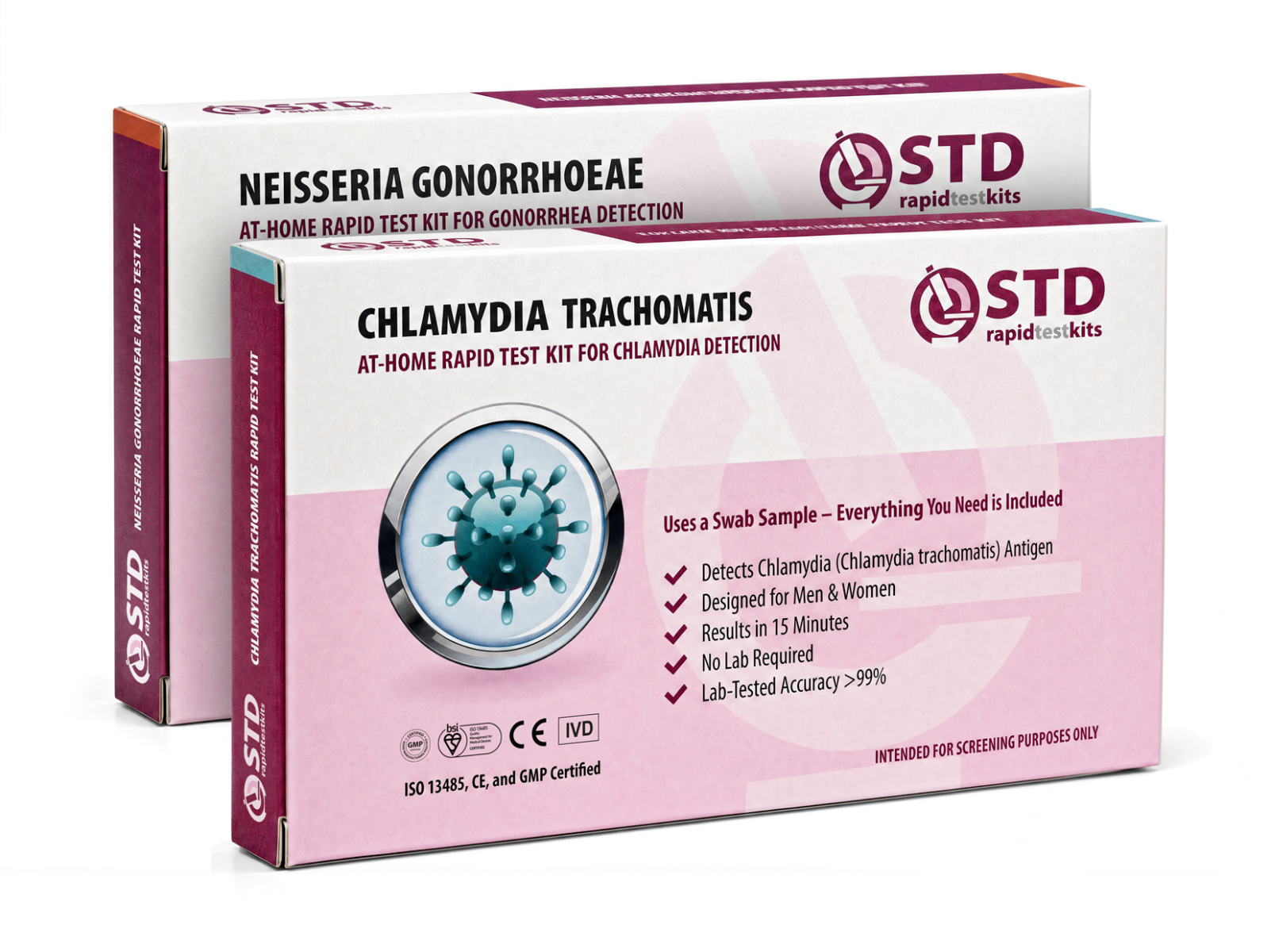
Rapid lateral-flow tests work like a home pregnancy test. You collect a sample (a fingerstick blood drop, a self-collected swab, or saliva depending on the kit), apply it to a cassette, and read the result in 10 to 20 minutes. The chemistry detects either antibodies your immune system has produced or specific antigens shed by the infection. Modern at-home kits cover HIV, syphilis, hepatitis B, hepatitis C, chlamydia, gonorrhea, trichomoniasis, HPV, and herpes once the appropriate window period has passed. They give you privacy, speed, and a result you can act on the same hour.
Laboratory NAAT or PCR tests use a different chemistry. Instead of looking for your immune response, they amplify and detect the genetic material (DNA or RNA) of the infection itself. That gives them very high analytical sensitivity, especially in the first days after exposure when an antibody-based test may still read negative. NAAT is the U.S. Centers for Disease Control and Prevention's recommended diagnostic test for chlamydia, with the agency stating NAATs are the most sensitive tests for the relevant specimens (CDC chlamydia treatment guidelines). The trade-off is turnaround (typically 1 to 3 business days), cost (often $50 to $300 per panel uninsured), and the need to either visit a clinic or collect a sample at home and ship it back.
Mail-in self-collection panels sit between the two. You collect the sample at home (urine, swab, or dried blood spot), seal it in a prepaid envelope, and a partner laboratory runs a NAAT or serology test on it. Sensitivity matches a clinic-drawn sample as long as the specimen stays stable in transit. Many services bundle a telehealth follow-up if your result is positive. For people in rural areas, those without a primary care provider, or anyone who finds clinic visits emotionally taxing, this is often the most realistic option.
The right choice depends on what question you are trying to answer. Did something happen yesterday and I cannot stop spiraling? A rapid test once the window opens, plus a follow-up after the longest window closes, is reasonable. Do I have symptoms right now? A clinic NAAT (or a mail-in NAAT if a clinic is impractical) gets you to treatment faster. I have not tested in two years and just want a clean snapshot? Any of the three works once you are outside the window period for everything you are checking.
| Test Type | Best For | Turnaround | Main Limitation |
|---|---|---|---|
| Rapid lateral-flow (at-home) | Privacy, speed, mid-to-late screening | 10–20 minutes | Less sensitive in the earliest days; needs the window period to close |
| Lab NAAT / PCR (clinic) | Earliest detection, symptomatic cases, partner notification | 1–3 days | Higher cost without insurance, requires a clinic visit |
| Mail-in self-collection panel | Discreet lab-grade result without a clinic visit | 5–7 days end to end | Sample integrity depends on shipping; not instant |
How Accurate Are These Tests, Actually?
Accuracy gets thrown around as a single number, but it really has two sides: sensitivity (the share of infected people the test correctly flags as positive) and specificity (the share of uninfected people it correctly clears). High sensitivity means few false negatives. High specificity means few false alarms. A useful test needs both, and they shift depending on the chemistry, the sample, and how long it has been since exposure.
For at-home rapid lateral-flow tests run after the appropriate window period, modern kits hit sensitivity in the mid-to-high 90s and specificity above 99% across most STIs. Public-health labs use these same kits in outreach programs, and FDA-cleared at-home rapid tests have undergone clinical performance review before commercial release. The CDC notes the FDA-approved HIV self-test as one example, with the agency listing it among the available HIV testing options (CDC HIV testing guidance). Our rapid kits are screening tools: a positive result is meaningful and worth confirming with a lab, and a negative result outside the window period is reliable evidence that you are not currently infected with what the test screens for.
Laboratory NAAT/PCR is a different category of test, not a better version of the rapid one. It looks for the genetic fingerprint of the infection itself, so it can detect chlamydia, gonorrhea, or HIV days earlier than antibody-based tests can. The CDC labels NAAT the most sensitive test for chlamydia and recommends it as the preferred diagnostic, and clinicians reach for it first when symptoms are present or when a partner has tested positive. Sensitivity is in the high 90s; specificity is similarly high.
The most common reason a test "fails" is rarely the chemistry. It is the timing. A perfectly engineered HIV antibody assay run on day 7 of exposure can return a clean negative even when the virus is replicating, because the immune system has not yet produced detectable antibodies. The same person tested at the right window period on the same kit will read positive. The chemistry did its job both times. The window period is what changed.
This is why we frame at-home rapid tests as screening tools rather than as substitutes for lab confirmation. Used at the right time, they are reliable, private, and fast. Used too early, they are simply asking the wrong question of your body, and so is any other antibody-based test run that early.
Our home rapid kits are lateral-flow immunoassays. They are not NAAT/PCR tests, and they are not labeled as NAAT-equivalent. The two technologies answer different questions: NAAT looks for the infection's genetic material (very sensitive in the earliest days), and lateral-flow looks for your immune response or specific antigens (highly reliable once the window period has closed). Both are accurate when used for what they were designed for.
Window Periods: Why Timing Beats Brand
The window period is the gap between exposure and the moment a test can reliably detect the infection. Test the day after a risky encounter, and even the most sensitive NAAT can miss it. Test after the window has closed, and a $20 rapid kit will likely catch it. Knowing the window is more useful than knowing which brand to buy.
Window periods vary by infection and by test type. NAAT/PCR tests, which detect the pathogen's genetic material directly, generally close their window first. Antibody-based tests (most rapid kits, plus some lab tests) need your immune system to mount a response, which takes longer. Antigen tests sit in between: they detect a viral protein rather than DNA, so they pick up infection earlier than antibody tests but later than NAAT.
The CDC's HIV testing guidance spells out the windows for HIV in detail: a NAT (HIV RNA) test can detect infection 10 to 33 days after exposure, a fourth-generation antigen/antibody lab test detects HIV 18 to 45 days after exposure, and an antibody-only test (including most home rapid kits) reaches reliable detection 23 to 90 days after exposure. The wide ranges reflect biological variation across people, not test failure.
For chlamydia and gonorrhea, NAAT can detect the bacteria within a few days of exposure, but most clinical guidelines recommend waiting around 14 days from exposure for the most reliable result. Syphilis serology becomes reliably positive 3 to 6 weeks after the chancre appears, and PCR on a chancre swab is positive earlier when a lesion is present. Trichomoniasis NAAT is reliable from about 5 to 7 days after exposure; rapid swab tests need closer to 14 days.
The practical takeaway: write down the date of the exposure that worried you, count forward, and test when each infection's window has closed. Testing on day 2 after a stressful encounter is rarely informative. Testing on day 14 (chlamydia, gonorrhea, trichomoniasis), day 30 (syphilis), and day 90 (HIV antibody) builds a far more trustworthy picture.
| Infection | NAAT/PCR earliest reliable | Antibody/rapid earliest reliable | Conservative retest |
|---|---|---|---|
| HIV | 10–33 days (NAT) / 18–45 days (4th-gen lab) | 23–90 days (antibody / rapid) | 12 weeks for full clearance |
| Chlamydia | 3–7 days | ≈ 14 days (rapid swab) | Repeat at 3 months post-treatment |
| Gonorrhea | 3–7 days | ≈ 14 days (rapid swab) | Repeat at 3 months post-treatment |
| Syphilis | Lesion PCR when chancre present | 21–42 days (rapid serology) | 6 weeks if first test was negative inside window |
| Trichomoniasis | 5–7 days | 7–14 days (rapid swab) | 14 days if symptoms persist |
When and Why You Might Retest
One test is often not the end of the story, especially if the first test was close to the exposure date. Retesting is rarely paranoia or a sales tactic. It is how the math of window periods plays out in practice.
Three common situations call for a follow-up test. First, you tested before all the relevant windows had closed. If you took a rapid HIV test 21 days after a possible exposure, you are at the early end of the antibody window and a confirmatory test at 6 to 12 weeks adds a layer of certainty. Second, your symptoms persisted or returned after a negative result. Persistent burning, discharge, or genital sores after a clean test deserves a re-evaluation, ideally with a NAAT on the relevant sample. Third, your initial test was positive on a screening kit and you need a confirmatory lab to start treatment.
The CDC also recommends a retest about three months after treatment for chlamydia or gonorrhea. Reinfection from an untreated partner is more common than a treatment failure, so the follow-up test catches new exposures rather than confirming the original cure (CDC chlamydia overview). For HIV, anyone with ongoing risk should test at least annually, and people with multiple recent partners or a partner with HIV may benefit from a 3-month or 6-month rhythm.
The pattern that works for many people is a two-step rhythm: a rapid test soon after a worry to ease anxiety in the short term, followed by a confirmatory test once the longest relevant window has closed. The first test gives you a starting answer. The second test gives you the clean confirmation you actually want.
| Situation | Initial test | Recommended follow-up | Why |
|---|---|---|---|
| Recent worry, no symptoms | Rapid panel at day 14+ | Confirmatory antibody test at 12 weeks | Clears the longest window (HIV antibody) |
| Symptoms after a negative result | Any (already done) | Clinic NAAT immediately | Catches early-window infections rapid may miss |
| Treated for chlamydia or gonorrhea | Confirmatory NAAT at diagnosis | Repeat NAAT at 3 months | CDC recommendation for reinfection screening |
| Ongoing exposure (new partners, no condoms) | Periodic screening | Annually, or every 3–6 months in higher-risk profiles | Catches new acquisitions early |
Privacy, Cost, and the Real-World Factors
Test choice is rarely a clean clinical decision. Insurance, geography, work schedules, and stigma all push people toward (or away from) different routes.
Cost varies wildly. A clinic-run NAAT panel through a primary care visit may be fully covered if you are insured and the clinic is in-network. Without insurance, the same panel can run $150 to $300 plus the visit fee. Mail-in self-collection panels typically cost $90 to $200 depending on how many infections are included. At-home rapid kits cost less per infection (often $20 to $40 for a single-infection kit, $80 to $150 for a multi-test panel) but are usually not reimbursed by insurance. The CDC's free or low-cost STD testing locator can identify clinics that screen on a sliding scale.
Privacy is non-negotiable for many readers. In a small town where the clinic receptionist knows your family, a mail-in or at-home test is not just convenient. It is the difference between testing and not testing. Trans, non-binary, and queer readers in particular sometimes describe past clinic encounters that involved misgendering, intrusive questioning, or staff who treated their sexual health concerns with suspicion. At-home testing routes around all of that. The kit arrives in unbranded packaging, the result stays on your phone or kitchen counter, and you decide who else sees it.
Stigma still drives delay. Fear of judgment is widely cited as a reason people delay STI testing for years, and the global STI burden remains substantial: WHO estimates more than one million new curable STIs are acquired daily worldwide. A discreet route reduces that delay, which means infections are caught earlier, treated faster, and transmitted less often. The route to a test (clinic, mail-in, at-home) matters far less than whether someone tests in the first place.
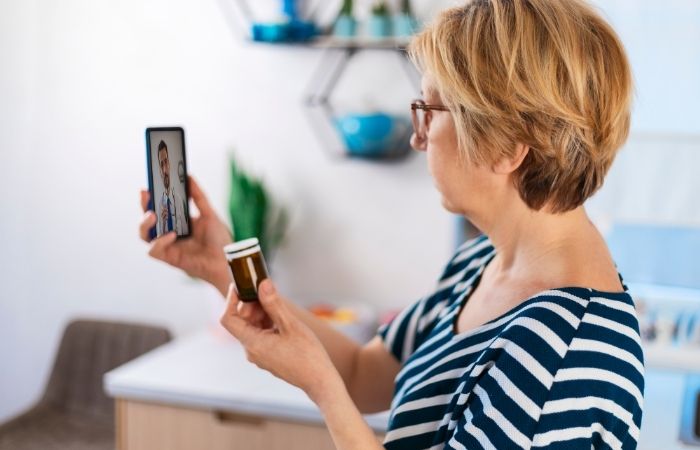
Telehealth has changed the after-result picture too. Many mail-in services and some at-home kit providers now bundle a free clinical consult if your result is positive, with prescriptions sent to your local pharmacy. You can move from worried to tested to treated without an in-person visit, which removes one of the largest practical barriers to STI care.
What to Do After You Test
How you handle the result matters as much as which test you used.
If your result is negative, take a breath. If you tested inside any relevant window period, mark a calendar reminder for the appropriate follow-up date. Negative results from inside the window are not fully reassuring on their own, and a single retest after the longest window closes will move you from "probably fine" to "confirmed fine."
If your result is positive, the next step is confirmation, not panic. Most rapid screening tests have small false-positive rates, especially for less common infections. A confirmatory lab test (typically a NAAT or a more specific serology) verifies the result before treatment begins. For chlamydia and gonorrhea, treatment is usually one round of antibiotics. For syphilis, a single penicillin injection treats early-stage infection. HIV is treated with daily antiretroviral therapy, which today suppresses the virus to undetectable (and untransmittable) levels in most people who take it consistently. Hepatitis C now has direct-acting antiviral cures that work in 8 to 12 weeks for most genotypes (NHS hepatitis C treatment guidance).
Telling sexual partners is part of the process for most curable STIs, and it is the single most effective way to prevent reinfection. Many state health departments offer anonymous partner notification services, and some clinics will reach out on your behalf. A short text along the lines of "I tested positive for X, you should get tested too" is enough; partners do not need your medical history to act on it.
The emotional piece matters too. A positive STI result is information, not a verdict on your character. Most STIs are treatable, many are curable, and the people who handle them well are usually the ones who acted on the result quickly rather than the ones who avoided testing.
Disclosure: stdrapidtestkits.com sells the rapid at-home kits recommended in this guide. Recommendations are based on fit for the reader's concern, not commercial benefit.
Choosing What Fits Your Situation
The honest answer to "which STD test is best?" is that several tests are best, depending on the moment you are in. Five common situations and the test that usually fits each:
- Worried after a recent encounter, no symptoms. Wait until day 14, then run a rapid panel for chlamydia and gonorrhea. Plan a confirmatory HIV test at 12 weeks for full clearance.
- Symptoms now (burning, discharge, sores). See a clinic for a NAAT-based diagnostic. If a clinic is genuinely impractical, a mail-in NAAT panel is the next-best route, but do not delay.
- Routine annual screening, no specific worry. Any of the three options works. Pick the route you will actually follow through on. The best test is the one you complete.
- Starting a new relationship, mutual baseline. A multi-infection panel run after each partner's last possible window has closed gives both of you a clean snapshot. Lab or rapid both work.
- Confirming a previous positive. Use a clinic NAAT or partnered telehealth service. Treatment depends on confirmation, not on the screening result alone.
None of these answers requires perfection. They require that the test you take answers the question you are asking, at the right time, in a setting you will actually finish. That is what "peace of mind" looks like in 2026: a clear question, the right tool, a real answer, and the next step already lined up.
No HIV test can detect HIV immediately after infection. After someone gets HIV, it takes time before an HIV test can detect it. The window period is the time between potential HIV exposure and when a test can accurately detect HIV.
Why a Multi-STI Panel Often Makes Sense for Routine Screening
If you are screening because you simply have not tested in a while, or because a relationship is changing, a multi-infection panel is usually a better fit than a single-infection test. STIs cluster: someone exposed to one is statistically more likely to have been exposed to others, and the marginal cost of testing for several at once is low compared to running each test separately.
The CDC's adult STI screening recommendations cover chlamydia, gonorrhea, syphilis, HIV, and (for some risk profiles) trichomoniasis and viral hepatitis. A panel that covers most of those at once produces a single result envelope you can act on. It also avoids the false reassurance of a clean chlamydia test that did not check for syphilis or HIV.
For people with female anatomy, an additional consideration is HPV screening. Our HPV at-home kit is validated for vaginal self-swab and is a useful adjunct to the recommended cervical cancer screening schedule, not a replacement for it. For male readers, HPV testing is not part of routine screening; talk to a clinician if you have lesions or a partner with a recent abnormal Pap result.
What This Site Covers, and What It Does Not
Our catalog covers:
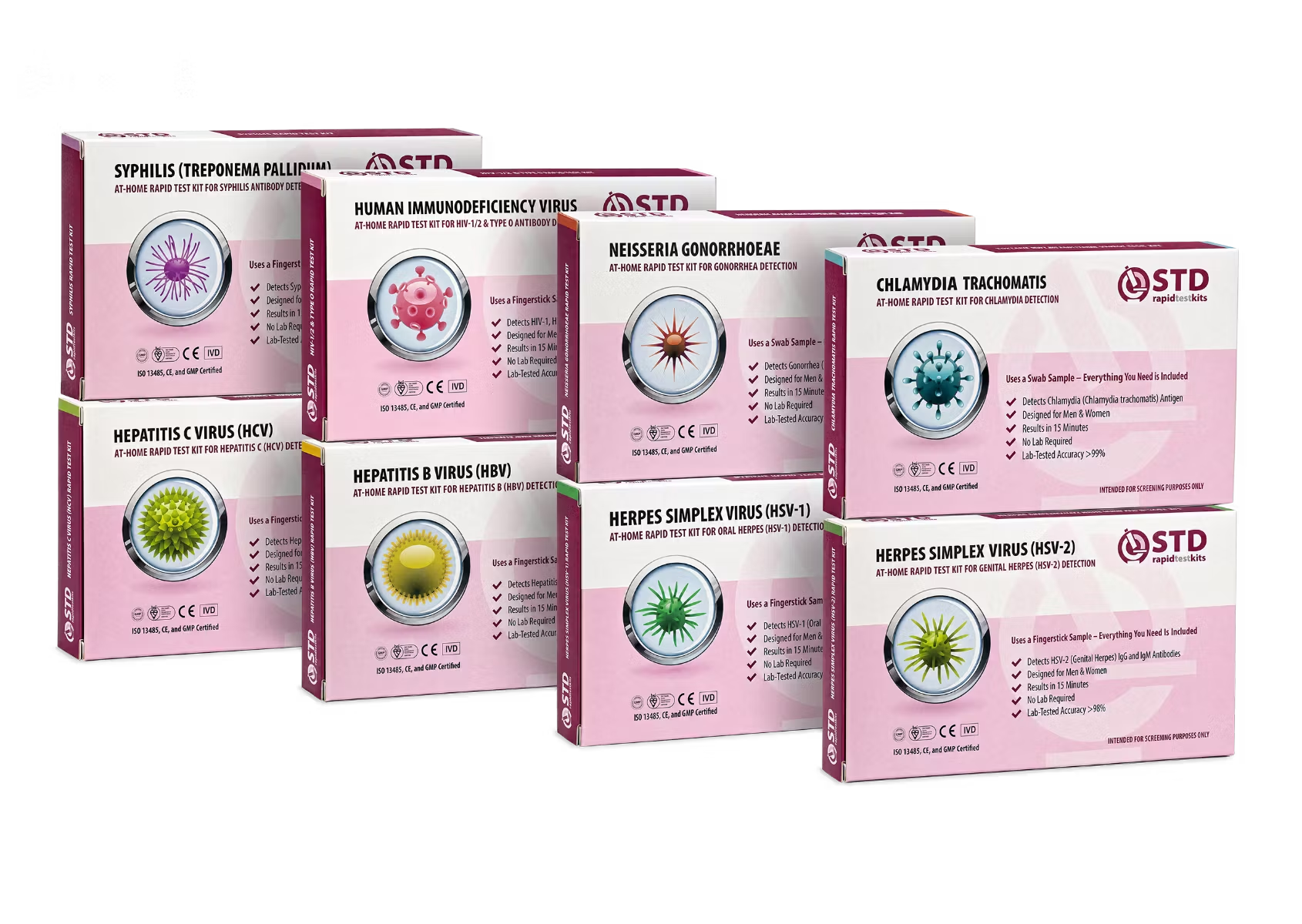
- Genital swab rapid tests for chlamydia, gonorrhea (any gender), trichomoniasis (women only), and HPV (women only).
- Fingerstick blood rapid tests for HIV, syphilis, hepatitis B, hepatitis C, and herpes (HSV-1, HSV-2, or combined antibody panel).
- Combination kits spanning 2-in-1 through 10-in-1, drawn from the above.
What we do not sell, and what to do instead: throat or pharyngeal swabs (clinic only), rectal swabs (clinic only), urine-sample tests, and lab-processed mail-in NAAT panels. If your concern is specifically a throat or rectal exposure, our genital and blood-based kits will not give you the answer you need. Visit a clinic for the appropriate sample type.
Our trichomoniasis and HPV swab kits are validated for vaginal self-swab only. Male readers concerned about either should see a clinic. Everything else in the catalog is validated for any gender.
- Throat, rectal, and urine-sample testing require a clinic. We do not sell these sample types.
- Trichomoniasis and HPV at-home kits are validated for vaginal self-swab only. Male readers should see a clinic.
- Mail-in lab-processed NAAT panels are not part of our catalog. Several third-party services offer them.
Frequently Asked Questions
- How soon after sex can I test?
- It depends on what you are testing for. NAAT/PCR labs can detect chlamydia and gonorrhea within a few days of exposure, with most clinicians recommending day 14 for the most reliable result. HIV NAT tests detect infection 10 to 33 days after exposure; rapid antibody HIV kits are reliable from 23 to 90 days post-exposure per CDC guidance. Syphilis serology becomes reliably positive 3 to 6 weeks after a chancre appears. If a recent encounter is keeping you up, an early rapid test plus a confirmatory test once the longest window has closed is the calmer approach.
- Are at-home rapid tests reliable?
- Modern FDA-cleared at-home rapid tests reach mid-to-high 90s sensitivity and 99%+ specificity once the appropriate window period has passed. They are designed as screening tools: a positive result is meaningful and worth confirming with a lab, and a negative result outside the window period is reliable evidence you do not currently have what the kit screens for. They are less sensitive in the earliest days after exposure than a NAAT, which is why timing matters more than brand.
- What if my rapid test is positive?
- A positive screening result is information, not a final diagnosis. Most positives are accurate, but a small false-positive rate exists for any test. Confirm the result with a clinic NAAT (for chlamydia, gonorrhea, or trichomoniasis) or a confirmatory serology (for HIV, syphilis, or hepatitis). Most STIs are treatable: chlamydia and gonorrhea are usually one round of antibiotics, syphilis is a penicillin injection if caught early, hepatitis C now has direct-acting antiviral cures, and HIV is managed with daily antiretroviral therapy that suppresses the virus to undetectable levels in most people.
- Can I get treatment after a mail-in or at-home positive?
- Yes. Many mail-in services bundle a free telehealth consult with a positive result, with prescriptions sent to your local pharmacy. Some at-home rapid kit providers offer the same. If your kit does not, your local urgent care, primary care provider, Planned Parenthood, or state STI clinic can prescribe based on a confirmatory test. The CDC's free clinic locator helps if you are uninsured.
- How private are at-home and mail-in kits?
- Quite private. Kits arrive in unbranded packaging, the result stays on your phone or kitchen counter, and you decide who else sees it. Mail-in services use prepaid return envelopes with no test name visible. If you live with others, you can ship to a friend's address or a package locker. For trans, non-binary, or queer readers who have had bad clinic experiences, this route avoids in-person friction entirely.
- Do I need to tell my partner if I test positive?
- Yes. Notification is the single most effective way to prevent reinfection (yours and theirs) and to stop further transmission. You do not need to share medical history; a short text saying you tested positive and they should get tested too is enough. Many state health departments offer anonymous notification services if direct contact feels unsafe. Some clinics will reach out on your behalf.
- I have no symptoms. Should I still test?
- Yes, especially if it has been a year or more since your last test, if you have new partners, or if you are starting a new relationship. Most chlamydia infections in women are asymptomatic, gonorrhea is often silent in both men and women, and HIV can be carried for years before symptoms appear per CDC guidance. Testing is the only way to know your status; symptoms are an unreliable signal.
- What's the difference between rapid, NAAT/PCR, and mail-in tests?
- Rapid tests look for your immune response (antibodies) or specific antigens, give a result in 10 to 20 minutes, and run at home. NAAT/PCR tests look for the infection's genetic material directly, run in a lab, and return results in 1 to 3 days; they are typically the most sensitive in the earliest days after exposure. Mail-in tests are NAAT-based but use a sample you collect at home and ship to a lab, combining lab-grade sensitivity with at-home privacy at the cost of 5 to 7 days turnaround. Each fits a different moment.
Our article was constructed based on current advice from the most prominent public health and medical organizations, and then molded into simple language based on the situations that people actually experience. We cross-checked window-period numbers and screening recommendations against CDC, WHO, and NHS root-domain pages, and we cite each specific quantitative claim inline.
- U.S. Centers for Disease Control and Prevention. Chlamydia Treatment Guidelines, recommending NAAT as the most sensitive and preferred diagnostic test, with retest at three months post-treatment.
- U.S. Centers for Disease Control and Prevention. HIV Testing, including window periods for NAT, fourth-generation antigen/antibody, and antibody-only tests, plus FDA-approved HIV self-tests.
- U.S. Centers for Disease Control and Prevention. About Chlamydia, covering asymptomatic infection and the three-month retest recommendation.
- U.S. Centers for Disease Control and Prevention. Gonorrhea Treatment Guidelines, NAAT as the recommended diagnostic test for gonorrhea across urogenital and nongenital sites.
- World Health Organization. Sexually Transmitted Infections fact sheet, including global STI burden statistics (more than one million new curable STIs acquired daily).
- U.K. National Health Service. Hepatitis C treatment, covering the 8-to-12-week direct-acting antiviral cure pathway.
