
Published: September 2025 | Last updated: April 2026 | Editorial review and quality control: Martina N.
Hepatitis C earned its reputation as a silent infection for a reason. Most new infections cause no obvious symptoms in the first months, and many people never feel sick until the virus has already started inflaming the liver. That is why the question of when to test matters more than whether you feel fine. The right test, taken at the right time, gives you a real answer; the same test, taken too early, can give a falsely reassuring negative.
This guide walks through what at-home and lab tests actually detect, how soon after exposure they become reliable, what counts as a real exposure, and what to do if your first result is negative or positive. The goal is a clear plan, not panic.
When is the best time to test for Hepatitis C after a possible exposure?
For at-home rapid antibody tests and most clinic antibody tests, results are most reliable from about 8 to 12 weeks after exposure. Lab-based HCV RNA testing (also called NAT or PCR) can detect the virus earlier, often within 1 to 2 weeks, and is used by clinicians when very recent exposure is suspected. If you test before 8 weeks and the result is negative, plan a follow-up antibody test at 12 weeks to confirm.
Key takeaways
- Antibody tests, including at-home rapid kits, become reliable around 8 to 12 weeks after exposure. Earlier testing has a real chance of a falsely reassuring negative.
- Hepatitis C is curable. Direct-acting antiviral pills clear more than 95% of cases (WHO), with treatment courses typically running 8 to 12 weeks for most patients per the NHS.
What counts as a Hepatitis C test?
Two test types do most of the work in screening and diagnosis, and they answer different questions.
HCV antibody tests look for antibodies your immune system makes after meeting the virus. They tell you whether you have ever been exposed. They do not, on their own, confirm an active infection. Antibody tests come in three main formats: lab venous draws, rapid lateral-flow fingerstick tests (the technology our at-home kit uses), and oral-fluid rapid tests run in clinics.
HCV RNA tests, also called NAT or PCR, look for the virus itself. They confirm an active, current infection and can detect Hep C earlier than antibody tests. RNA testing is laboratory-based and is not available as a true at-home rapid kit. The CDC's screening flow uses an antibody test first, then RNA only if antibody is positive (CDC Hepatitis C testing guidance).
For most readers asking when to test after a possible exposure, the antibody test is the practical screening tool. RNA testing is the confirmatory tool, ordered by a clinician after a positive antibody screen, or used early when there is reason to suspect very recent infection.
Our at-home kit is a rapid lateral-flow blood antibody test. Labs use NAT or PCR for the molecular RNA test. The two technologies are complementary, not interchangeable. The home kit is a fast, private screen for past or current exposure. A reactive result is your signal to get an RNA test through a clinic to confirm active infection.
Why symptoms are not a reliable signal
Acute Hepatitis C is asymptomatic in roughly 70 to 80 percent of new infections, according to the CDC's Hepatitis C clinical pages. When symptoms do appear, they typically show up 2 to 12 weeks after exposure and look like a generic viral illness: fatigue, low-grade fever, nausea, joint or muscle aches, dark urine, or a mild yellowing of the eyes (jaundice). None of those are specific to Hep C, and none are common enough to rely on as a screening signal.
The harder reality is that about half of acutely infected adults clear the virus on their own within six months. The other half develop chronic Hepatitis C, which is also usually symptom-free for years while the virus quietly inflames the liver. The World Health Organization estimates that around 50 million people are living with chronic HCV worldwide, with a large share undiagnosed.
About 70 to 80 percent of new HCV infections cause no symptoms in the acute phase. Chronic HCV is also typically silent for years. Roughly 50 million people live with chronic Hepatitis C worldwide, and a large fraction do not know they are infected. Testing decisions should follow exposure history and screening guidelines, not how you feel.
The Hepatitis C window period
The window period is the gap between exposure and the point at which a test can reliably detect infection. It depends on which test you use.
HCV RNA appears in blood roughly 1 to 2 weeks after infection, which is why labs can use it for early screening when there is a high-risk exposure. HCV antibodies typically take 4 to 10 weeks to appear, with most people seroconverting by 12 weeks. The CDC notes that the great majority of infected people will have detectable antibodies by 6 months (CDC Hepatitis C testing).
The table below shows when each test type becomes reliable.
| Test type | What it detects | Earliest reliable detection | Best accuracy |
|---|---|---|---|
| Lab HCV RNA (NAT or PCR) | Active virus in the blood | 1 to 2 weeks after exposure | From 4 weeks onward |
| Lab HCV antibody (venous draw) | Past or current immune response | About 6 to 8 weeks | 12 weeks and beyond |
| At-home rapid antibody (fingerstick) | Same target as lab antibody test | About 8 to 12 weeks | 12 weeks and beyond |
Exposure scenarios and what they mean for testing
Hepatitis C is bloodborne. Most transmission today happens through shared injection or drug-prep equipment, but other percutaneous (through-the-skin) exposures count too. The risk per exposure varies a lot, and that affects how aggressively you should test. The CDC estimates the average risk of HCV transmission from a single healthcare needlestick involving a known HCV-positive source at about 1.8 percent. The table below summarizes common scenarios and a reasonable testing approach.
| Exposure scenario | Approximate risk level | Suggested testing |
|---|---|---|
| Sharing needles or injection-drug equipment | Highest non-occupational risk for HCV | See a clinician for an early lab RNA test if recent; antibody test at 12 weeks |
| Healthcare needlestick injury from a known HCV-positive source | About 1.8% per exposure on average per CDC | Follow occupational protocol: baseline test, then 3 and 6 month follow-ups |
| Tattoo or piercing at an unlicensed shop | Low to moderate | Antibody test at 12 weeks |
| Shared razors, toothbrushes, or nail clippers with possible blood contact | Low but documented | Antibody test at 12 weeks if there was visible blood |
| Unprotected sex with a partner whose status is unknown | Very low for vaginal or penile sex; higher with anal sex, rough sex with bleeding, HIV co-infection, or active STI | Antibody test at 12 weeks; full STI panel |
| Sexual assault with possible blood-to-blood contact | Variable; treat as high-risk | Immediate medical consult, baseline RNA, then 12-week and 6-month follow-up |
At-home rapid testing vs clinic or lab testing
Both routes work; they answer slightly different versions of the question.
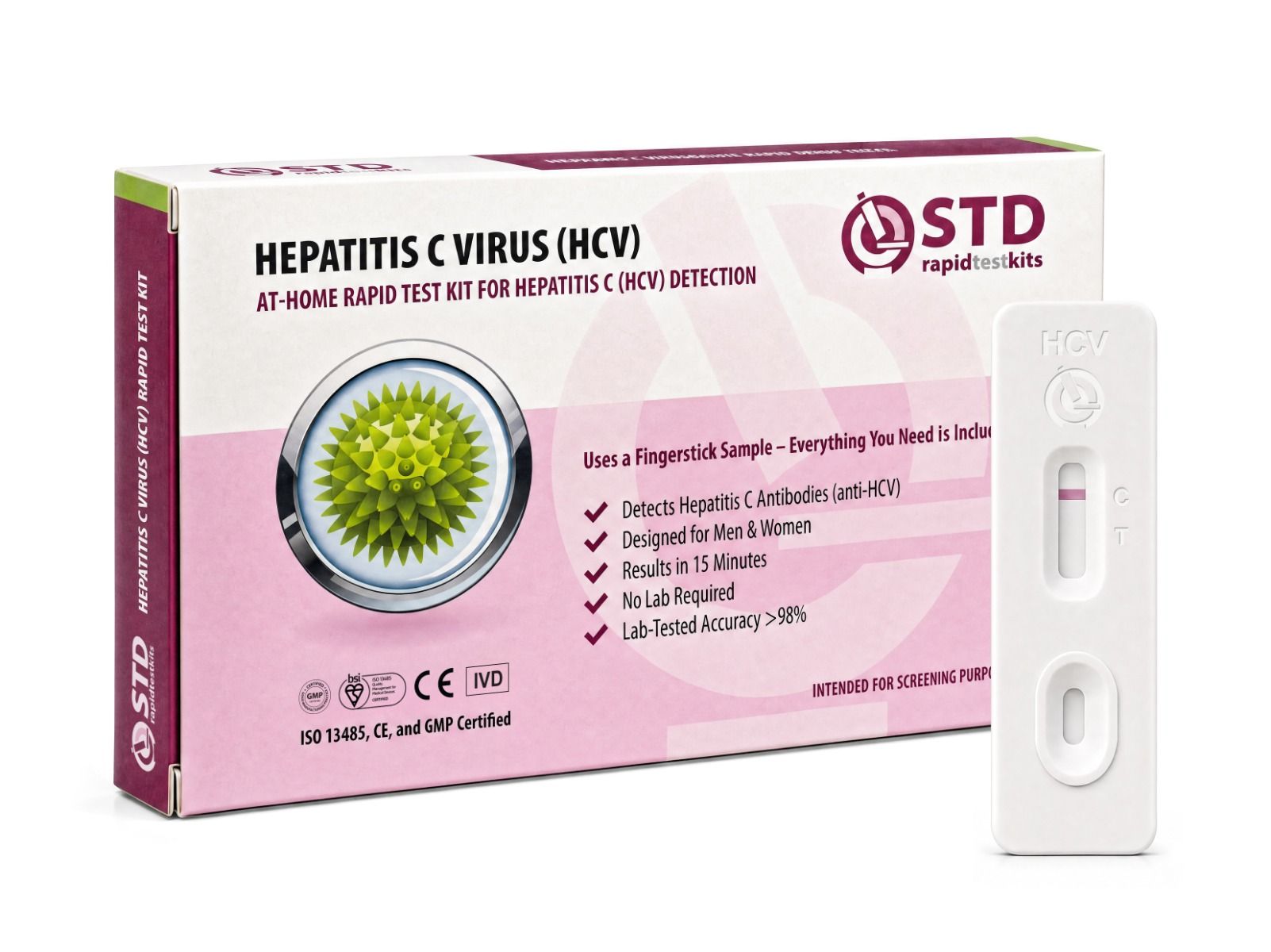
An at-home rapid lateral-flow Hep C test uses a fingerstick blood drop on a cassette and gives a result in about 15 minutes. It detects HCV antibodies. It is private, fast, and does not require an appointment. The trade-off: it screens for past or current exposure, not active infection. A reactive (positive) at-home result needs a clinic-ordered RNA test to confirm.
A clinic visit can run RNA testing earlier in the window, can pair Hep C testing with a full STI and liver panel, and can move directly into treatment if needed. It is the right route after a high-risk exposure, when you have unexplained fatigue or jaundice, when you are pregnant, or when you have a known co-infection like HIV.
One simple rule: if your exposure was recent and high-risk (needle sharing, healthcare needlestick, sexual assault), see a clinician now and ask about RNA testing. For routine screening 8 to 12 weeks after a lower-risk exposure, an at-home antibody test is a reasonable first step.
stdrapidtestkits.com sells at-home rapid Hepatitis C kits; the product linked below the next table is one of them. We recommend products based on fit for the reader's concern, not commercial benefit.
| Route | Privacy | Turnaround | Best for |
|---|---|---|---|
| At-home rapid lateral-flow antibody | Very high | About 15 minutes | Routine screening 8 to 12 weeks after a low-to-moderate exposure |
| Clinic or lab antibody plus reflex RNA | Moderate | Same day to 7 days | Confirming a reactive home result, baseline pre-treatment workup |
| Clinic RNA after recent high-risk exposure | Moderate | 1 to 5 days | Needle-stick, sharing equipment, sexual assault, or symptomatic acute illness |
If your first test was negative, when to retest
A negative result is reassuring only if it was timed correctly. Two situations call for a follow-up test.
You tested before 8 weeks. The antibody response simply may not have built up to a detectable level yet. Plan a confirmatory test at 12 weeks. If the original concern was a needle-stick or another high-risk exposure, a clinician may also order a lab RNA test in the interim.
You have ongoing or repeat exposure, for example, you inject drugs, share equipment, or have a sexual partner living with Hep C. The CDC recommends regular retesting for people with continued risk. The U.S. Preventive Services Task Force also recommends one-time screening for all adults aged 18 to 79, even without identified risk (USPSTF Hepatitis C screening). Universal screening exists because so many infections are silent and treatment is so effective.
If your first negative test was before week 8 after a known exposure, retest at week 12. If you remain at ongoing risk (shared injection equipment, partner with HCV, healthcare exposure), discuss an annual screening cadence with your clinician.
What happens if you test positive
A reactive at-home antibody result is a strong signal to follow up, not a final diagnosis. The next step is a clinician-ordered HCV RNA test to determine whether the virus is currently active in your blood. About one in four people who test antibody-positive are not currently infected, because they cleared the virus on their own (CDC Hepatitis C clinical overview).
If RNA testing confirms an active infection, treatment is straightforward by today's standards. Direct-acting antivirals (DAAs) cure more than 95 percent of cases (WHO Hepatitis C fact sheet), with most patients completing an 8-to-12-week course of oral pills per the NHS Hepatitis C overview. Patients with cirrhosis may require a longer course; a specialist will advise. Treatment is often available through primary care, infectious-disease clinics, public-health departments, or telehealth providers, and many state Medicaid programs cover it.
Cure is also a public-health win: clearing your infection eliminates the risk of passing it on, lowers your long-term risk of cirrhosis and liver cancer, and resolves most extra-hepatic complications.
Hepatitis C infection is curable using oral antiviral medicines. Antiviral treatment is successful in curing more than 95% of persons with hepatitis C infection.
The bottom line
If you think you may have been exposed to Hepatitis C, the most important number is the calendar. An antibody test before 8 weeks can miss the infection; the same test at 12 weeks gives a result you can trust. Lab RNA testing fills the early-window gap when timing matters and risk is high. And modern Hep C is a curable infection, which is why screening today is so much more useful than it was a decade ago.
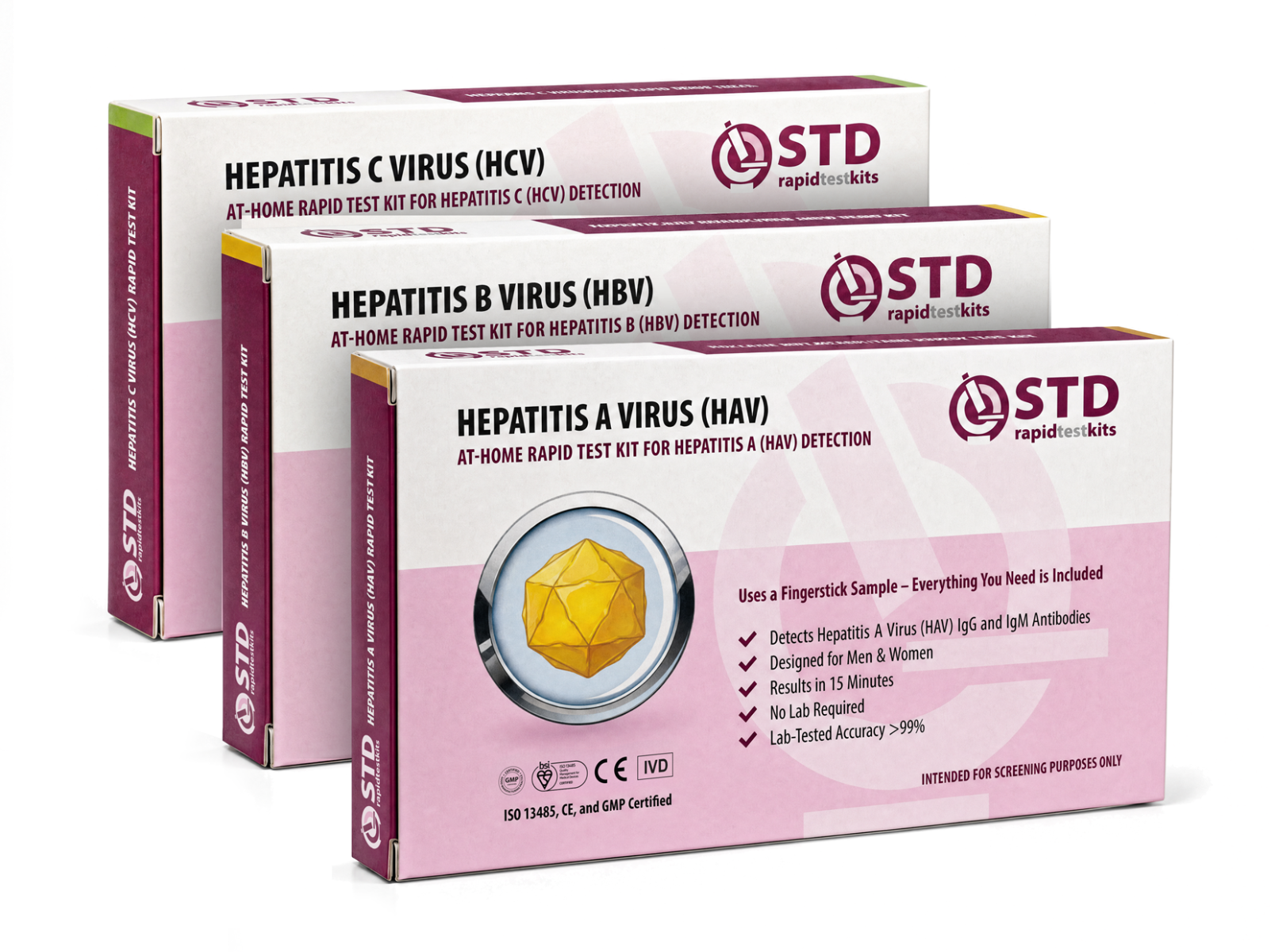
The right next step depends on when you were exposed, how high the risk was, and whether you can wait for the antibody window to close. For most readers, that means a follow-up test at 12 weeks if the first one was early, plus a confirmatory RNA test if anything comes back reactive. If your exposure event could have included other bloodborne viruses, screening for Hepatitis B alongside Hepatitis C is worth considering, since they share many transmission routes.
How recent was the exposure? Within the last 8 weeks, an antibody test now may give a falsely reassuring negative; consider a clinician-ordered RNA test or wait for the 12-week window. How high was the risk? Needle-stick, shared injection equipment, or sexual assault warrants seeing a clinician now, not waiting. Could the same exposure have involved Hep B too? If yes, a combined Hep B and Hep C screen at the 12-week mark is more efficient than running two separate tests.
Frequently asked questions
- How early after exposure can a Hepatitis C test detect infection?
- Lab HCV RNA can detect the virus 1 to 2 weeks after exposure. Lab antibody tests are usually reliable from about 6 to 8 weeks. At-home rapid lateral-flow antibody tests are most reliable from 8 to 12 weeks. If you need the earliest possible answer, ask a clinician about an RNA test.
- Can you really have Hep C without any symptoms?
- Yes. Roughly 70 to 80 percent of new infections cause no symptoms in the acute phase, and chronic infection is usually silent for years. The virus can quietly inflame the liver while you feel completely well, so exposure history, not how you feel, should drive the testing decision.
- What is the difference between an antibody test and an RNA test?
- An antibody test shows whether your immune system has ever responded to Hepatitis C, so it answers the question of past or current exposure. An RNA test (NAT or PCR) detects the virus itself in your blood, so it confirms whether the infection is active right now. Antibody is the standard first screen; RNA is the confirmatory test.
- I tested negative at 4 weeks. Am I in the clear?
- Not yet. Antibody tests are not reliable that early. Plan a follow-up antibody test at 12 weeks. If the exposure was high-risk and you cannot wait, see a clinician about an RNA test in the meantime.
- Are at-home rapid Hepatitis C tests accurate?
- Rapid lateral-flow antibody tests have high specificity when used inside their window period. Sensitivity drops if you test too early. They screen for HCV antibodies; any reactive (positive) result should be confirmed by a clinician-ordered RNA test, which is the only way to know whether the virus is currently active.
- Should I get tested even if I have no obvious risk factors?
- Yes, at least once, even with no known exposure. Universal screening for adults aged 18 to 79 exists because so many HCV infections are silent and modern direct-acting antiviral treatment is so effective that catching and curing the infection population-wide is the right call regardless of identified risk.
- Can Hepatitis C be transmitted through sex?
- Sexual transmission of Hepatitis C is possible but uncommon for vaginal or penile sex. Risk goes up with anal sex, rough sex that causes bleeding, having an active STI, or HIV co-infection. If your only exposure concern is sex with a low-risk partner, the at-home antibody test at 12 weeks is a reasonable plan.
- If I test positive, what does treatment look like?
- After confirmation by RNA testing, most people start oral direct-acting antivirals (DAAs). The NHS reports treatment usually runs 8 to 12 weeks for most patients (patients with cirrhosis may require a longer course; a specialist will advise). The WHO reports cure rates above 95 percent, and side effects are typically mild. Treatment is available through primary care, infectious-disease clinics, public-health departments, and telehealth providers, and is widely covered by insurance and Medicaid.
- U.S. Centers for Disease Control and Prevention. Hepatitis C clinical overview, transmission routes, asymptomatic acute infection rates, antibody-then-RNA screening flow, and average needlestick transmission risk (about 1.8 percent per exposure).
- World Health Organization. Hepatitis C fact sheet: global prevalence (around 50 million chronic infections), DAA cure rates above 95 percent, perinatal and bloodborne transmission.
- U.S. Preventive Services Task Force. Hepatitis C virus infection in adolescents and adults: one-time screening recommendation for all adults aged 18 to 79.
- U.K. National Health Service. Hepatitis C overview: transmission routes, testing process, and direct-acting antiviral treatment courses typically running 8 to 12 weeks for most patients.
- Mayo Clinic. Hepatitis C symptoms and causes: incubation timing of symptoms (2 to 12 weeks), chronic-versus-acute progression, complication risks including cirrhosis and liver cancer.
