

Published: December 2025 | Last updated: April 2026 | Editorial review and quality control: Martina N.
Penile discharge is one of the most common reasons men land on a sexual-health website at 2 a.m. Something looks off. The underwear has a stain. There's a sticky feeling that wasn't there yesterday. The brain rushes ahead of the facts. Most discharge has a treatable cause; some of it has nothing to do with sex at all. The goal here is to give you the calm, evidence-based version of what color usually means, how fast symptoms appear after exposure, and when testing is the right next step. Patterns and timing are what point clinicians toward the right answer, and most of those patterns are well-mapped.
Is penile discharge always a sign of an STD?
No, but it's one of the most common early signals. Yellow or green discharge after a new partner most often points to gonorrhea. White or cloudy discharge often points to chlamydia, although bacterial UTIs and prostatitis can look similar. Gonorrhea symptoms typically appear about 1 to 2 weeks after exposure, sometimes sooner; chlamydia can take from 1 week to several months, and often produces no symptoms at all. Color alone cannot diagnose the cause. A lab or rapid test is the only reliable way to confirm what is going on.
Key Takeaways
- Yellow or green discharge after a new partner most often signals gonorrhea. White or cloudy discharge points to chlamydia, but bacterial UTIs and prostatitis can produce similar fluid.
- Gonorrhea symptoms commonly appear about 1 to 2 weeks after exposure (NHS), and chlamydia can take from 1 week to several months. Many infections produce no symptoms, so testing after a new exposure beats waiting for obvious signs.
What Penile Discharge Actually Is
Discharge means fluid coming from the urethra, the tube that carries urine and semen out of the penis. When that tube becomes inflamed, the lining produces extra mucus and releases white blood cells. The combination is what shows up at the tip of the penis: cloudy, yellow, white, or sometimes clear fluid.
Inflammation of the urethra has a clinical name, urethritis. According to the CDC's STI Treatment Guidelines, urethritis is most often caused by Chlamydia trachomatis or Neisseria gonorrhoeae, the bacteria behind chlamydia and gonorrhea. Other organisms, including Mycoplasma genitalium and Trichomonas vaginalis, account for many of the remaining cases. Some urethritis has no clear infectious cause and is labeled non-gonococcal urethritis (NGU).
This is why discharge looks the way it does. Yellow or green tones come from neutrophils, the immune cells that flood inflamed tissue. White or cloudy discharge usually has fewer neutrophils and more mucus. Clear fluid often means the body is producing extra secretion but the immune response is mild, or that the fluid is pre-ejaculate rather than discharge at all.
One practical note: the same urethra carries both urine and semen, so urinary tract infections, prostate issues, and sexually transmitted infections can all produce fluid at the same opening. The cause is identified by the timing, the accompanying symptoms, and a lab test.
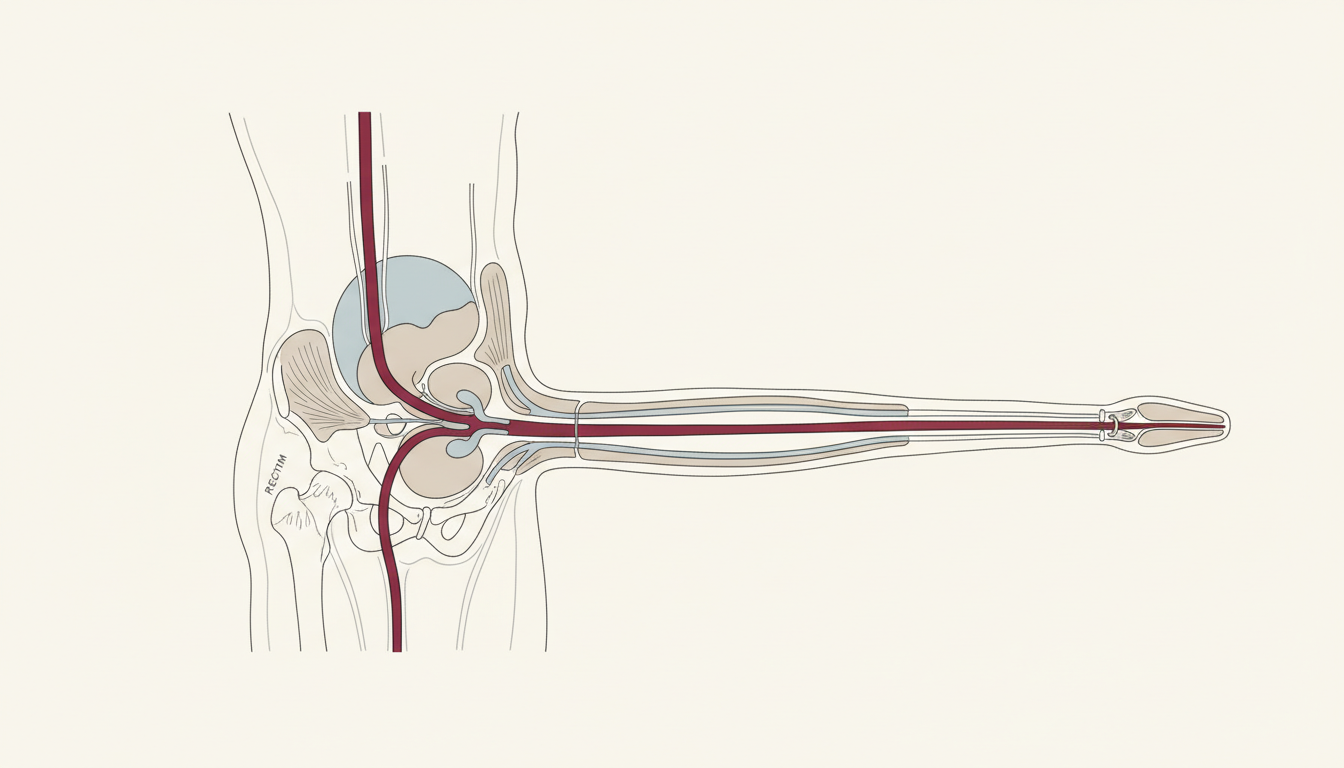
White or Cloudy Discharge: Often Chlamydia, Sometimes Not
White discharge can look milky, slightly gray, or like diluted semen. It's often most visible in the morning or after the first urination of the day, and it can leave a stain in underwear without any pain attached.
In men with sexual exposure in the previous one to several weeks, white or cloudy discharge most often points toward chlamydia. The NHS chlamydia page describes the typical male presentation as a white, cloudy, or watery discharge from the tip of the penis, sometimes with a burning sensation when urinating. According to the CDC's chlamydia fact sheet, most people with chlamydia have no symptoms at all; when symptoms do appear in men, mild penile discharge is the most common.
That said, white discharge isn't a chlamydia-only signature. Gonorrhea sometimes presents with a thinner white fluid in early infection, before the classic yellow appears. Bacterial urinary tract infections can produce cloudy fluid that looks similar. Prostatitis, an inflammation of the prostate gland that can cause urinary changes and perineal or testicular discomfort per the NHS prostatitis page, is occasionally associated with discharge as well.
The clearest hint that white discharge is something to test is persistence. Discharge from a new soap, condom material, or aggressive sex without lubricant usually fades within a day or two. Discharge that keeps showing up morning after morning, with or without pain, is asking to be checked.
If white discharge is brief (under 48 hours), painless, and tracks back to a clear non-sexual trigger like a new soap or rough sex, watching it for a day or two is reasonable. If it persists past 48 hours, recurs in the morning across multiple days, or comes with burning urination after a recent new partner, treat it as a testing trigger.
Yellow or Green Discharge: Most Often Gonorrhea
Yellow discharge is the version most men recognize as something is wrong. It tends to be thicker, sometimes sticky, and may carry a faint odor. When the color shifts toward green, clinicians become even more confident that gonorrhea is the cause.
The CDC gonorrhea fact sheet describes the classic male presentation as discharge from the penis along with burning during urination. The NHS gonorrhoea page notes that symptoms in men usually start around 2 weeks after infection, although they can sometimes take much longer to appear. The color comes from the same place as in any pus: dead and dying neutrophils, bacterial debris, and protein-rich fluid pushed out of the inflamed tissue.
Two important caveats. First, not every gonorrhea infection in men produces dramatic symptoms. Some men have only mild discharge or a faint stinging when they urinate. Some have nothing at all. Second, gonorrhea's tendency toward antibiotic resistance is a real concern; the CDC tracks resistance to several drug classes and updates first-line treatment recommendations regularly. That is why a positive test is followed by a prescribed antibiotic and a recheck rather than self-treatment.
If the discharge is yellow or green and you've had a new sexual partner in the last few weeks, especially without consistent condom use, the math heavily favors testing for both gonorrhea and chlamydia at the same time. Co-infection is common enough that most clinicians screen for both whenever they screen for one.
Most people who have chlamydia have no symptoms. If symptoms develop, they may not appear until several weeks after sex with an infected partner.
Clear Discharge: Sometimes Normal, Sometimes Not
Clear discharge is where confusion peaks. The Cowper's glands, two small structures near the prostate, produce a slippery clear fluid called pre-ejaculate during sexual arousal. Pre-ejaculate is normal, harmless, and exists to lubricate the urethra and neutralize residual acidity from urine. If clear fluid only appears during arousal and stops afterward, it is almost always pre-ejaculate.
The harder cases involve clear fluid that shows up unprompted, with no arousal trigger and no obvious cause. Clear discharge that appears outside of arousal can be an early-stage symptom of chlamydia, which often starts watery before turning cloudy, or, less often, early gonorrhea or NGU. It can also reflect mild urethral irritation from a new soap, body wash, fragranced laundry detergent, or condom material.
Two patterns push clear discharge into test-it territory: persistence beyond a few days, and any companion symptoms (a burning sensation when urinating, tingling at the tip of the penis, or pelvic discomfort). On its own, brief clear fluid that resolves quickly and only appears with arousal usually does not need a test. Persistent clear fluid does.
When clear discharge needs a test
- It appears outside of sexual arousal and persists for more than a couple of days.
- It comes with burning urination, tingling at the tip of the penis, or pelvic discomfort.
- You have had a new partner in the last few weeks, even if the discharge feels mild.
How Fast Does Discharge Show Up After Exposure?
The timing question gets asked more than any other. The ranges vary by infection, but the overlap is predictable enough to be useful.
Gonorrhea moves relatively quickly. Per the NHS gonorrhoea page, symptoms in men usually start around 2 weeks after infection, although they can occasionally appear within a few days or take much longer. Chlamydia moves more slowly: symptoms, when they appear at all, can show up anywhere from 1 week to several months after exposure (NHS chlamydia page). Trichomoniasis can take 5 to 28 days, and Mycoplasma genitalium often produces persistent low-grade symptoms with no clear onset window at all.
- Discharge appearing within 24 hours of sex is more likely irritation than infection. Bacteria need time to multiply.
- Discharge appearing several days to two weeks after a new partner with burning urination favors gonorrhea.
- Discharge appearing one to several weeks after a new partner with mild or no pain often points to chlamydia.
- Persistent low-grade discharge weeks later, especially after antibiotic treatment, raises suspicion for Mycoplasma genitalium or NGU.
Testing has its own timing rules. Lab nucleic acid amplification tests (NAATs) for chlamydia and gonorrhea become reliably positive a few days after symptoms begin. Most clinicians recommend testing 5 to 7 days post-exposure at the earliest for symptomatic patients, with peak accuracy from 2 weeks onward.
| Infection | Typical symptom onset | Earliest reliable test window | Peak accuracy |
|---|---|---|---|
| Gonorrhea | Around 1 to 2 weeks (sometimes longer) | 5 to 7 days post-exposure | 7 to 14 days |
| Chlamydia | 1 week to several months (often none) | 7 days post-exposure | 14 days and later |
| Trichomoniasis | 5 to 28 days | Symptom-based | Variable |
| Mycoplasma genitalium | Variable, often persistent | Symptom-based, NAAT only | Clinical follow-up |
Other Symptoms That Travel With Discharge
Discharge rarely shows up alone. The companion signs help narrow what is likely going on:
- Burning during urination (dysuria). Common with both chlamydia and gonorrhea, although gonorrhea tends to produce a sharper sting. UTIs cause similar burning, often with strong urinary urgency.
- Increased frequency or urgency of urination. More typical of UTIs and prostatitis than of chlamydia or gonorrhea.
- Testicular pain or swelling. Suggests the infection has spread to the epididymis, the coiled tube at the back of the testicle. Epididymitis is one of the main complications of untreated chlamydia or gonorrhea in men, per the NHS.
- Pelvic or perineal pressure. The ache between the legs that won't go away. Points more toward prostatitis than urethritis.
- Visible sores, blisters, or ulcers. Discharge plus genital lesions raises questions about herpes (HSV-2), syphilis, or other infections that need their own testing pathway. Discharge isn't typical of these conditions, but co-infection happens.
- Fever, chills, or feeling generally unwell. A red flag suggesting the infection has spread beyond the urethra. Same-day clinical evaluation is the right call.
The pattern matters more than any single symptom. Discharge plus burning urination plus a recent new partner is a different conversation than discharge plus pelvic pressure with no recent sexual contact.
Discharge accompanied by fever, chills, severe testicular pain or swelling, or feeling generally unwell points to spread beyond the urethra. These are not at-home-screen scenarios. See a clinician or urgent care the same day.
When It's Probably Not an STD
Not every drip is an infection. Several non-sexual causes produce discharge or discharge-like fluid:
- Mechanical irritation. Long sexual sessions, vigorous masturbation without lubricant, or friction from tight clothing can inflame the urethral opening enough to produce mild clear fluid. The fluid usually resolves within a day or two once the irritant stops.
- Soap, lube, or condom sensitivity. Fragranced shower gels, scented body washes, certain spermicidal lubricants, and latex sensitivity can all cause urethral irritation. Switching to a fragrance-free product and seeing whether the discharge stops is a reasonable first step.
- Urinary tract infection. UTIs are less common in men than in women, but they happen, especially with prostate enlargement or recent catheter use. Cloudy, foul-smelling urine and burning urination are the typical signs; sometimes that gets misread as discharge.
- Prostatitis. The NHS prostatitis page lists urinary changes, perineal pressure, and pain in the testicles or scrotum as features. Bacterial prostatitis needs antibiotics; chronic non-bacterial prostatitis is managed differently. Discharge can occur but is not the dominant feature.
- Pre-ejaculate. Normal, expected, harmless. The clue is that it appears with arousal and stops afterward.
The defining test is persistence. Irritation typically clears once the trigger stops. Bacterial infection does not.
Irritation vs infection: the practical test
- Irritation usually clears within 24 to 48 hours once the trigger (soap, lube, friction) stops.
- Bacterial infection persists, often recurs in the morning, and tends to pick up burning or testicular discomfort over the following days.
- Persistence past 48 hours with no obvious non-sexual trigger is the cue to test.
When Testing Makes Sense
The threshold for testing is lower than most people assume. You do not need dramatic symptoms or a clear smoking-gun exposure. Reasonable triggers include:
- Discharge that lasts longer than 48 hours with no obvious non-sexual cause.
- Burning during urination, especially after a new partner in the last month.
- Any visible sore, blister, or ulcer in the genital area.
- A partner letting you know they have tested positive for an STI.
- Routine screening if you have had a new partner, multiple partners, or condomless sex since your last test.
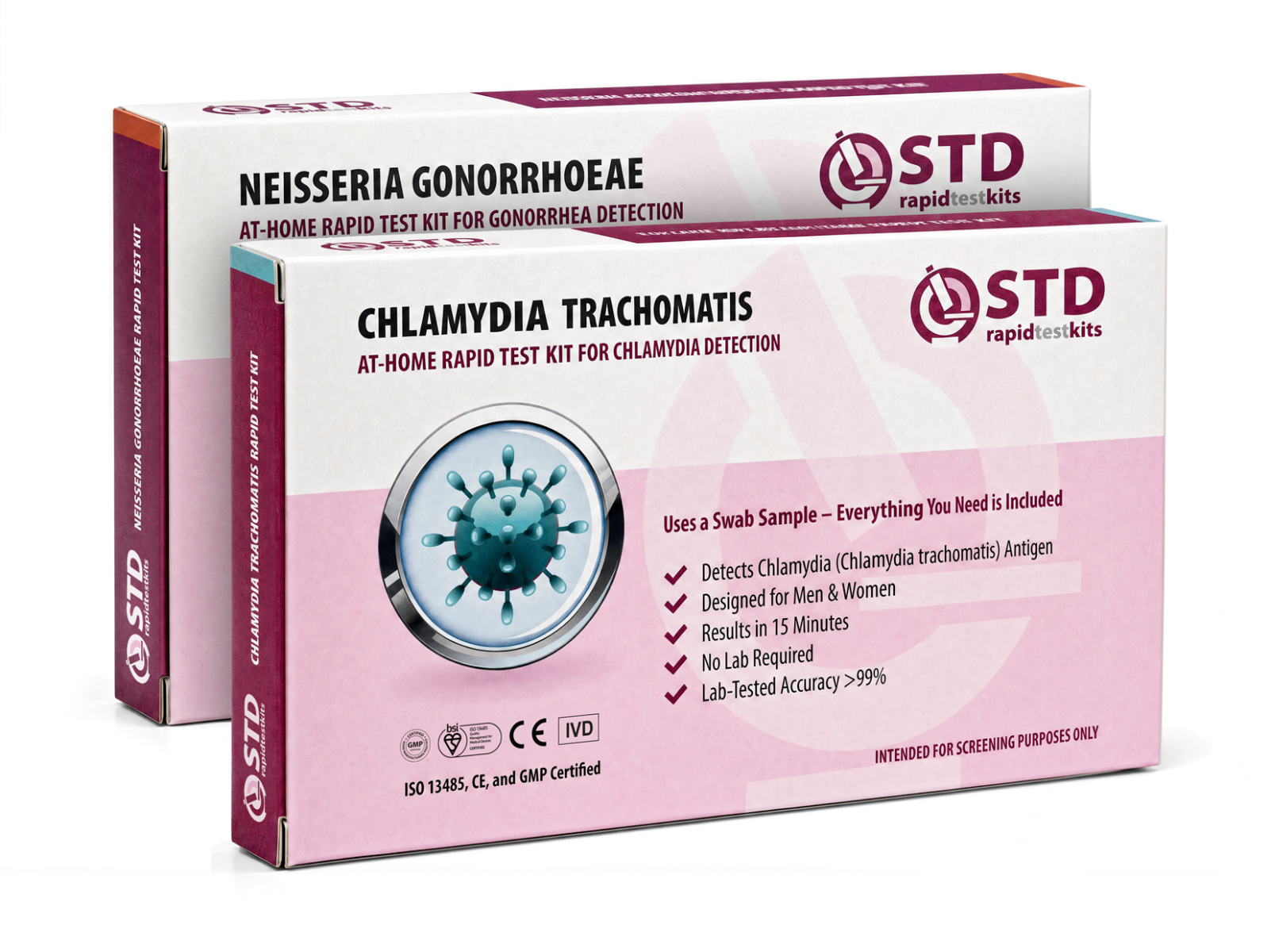
Testing options for chlamydia and gonorrhea fall into two broad categories. Laboratory NAATs (nucleic acid amplification tests, the clinical gold standard) are usually performed on a urine sample or a urethral swab and detect bacterial DNA with very high sensitivity. Rapid lateral-flow tests, including the at-home version we sell, use a self-collected swab and produce a result in about 15 minutes. Lateral-flow chemistry is a screening tool rather than a diagnostic equivalent of a NAAT; it is useful for catching active infection at home, and a positive result is worth confirming with a clinic NAAT and a prescription for treatment.
What we do not sell: urine-only NAAT panels and pharyngeal or rectal swabs. If your exposure was oral or anal and you want a swab from those sites specifically, a clinic visit is the right call.
This article is published by stdrapidtestkits.com, which sells at-home STI testing kits. Recommendations here are based on what fits the reader's concern, not commercial benefit. Our at-home tests are rapid lateral-flow screens; lab NAATs remain the diagnostic standard for chlamydia and gonorrhea, and a positive home result is worth confirming with a clinic test and prescribed treatment.
If the Test Comes Back Positive: What Treatment Looks Like
First, the steady-state news. Chlamydia and gonorrhea are bacterial infections, and bacterial infections are treated with antibiotics. The CDC's STI Treatment Guidelines outline the current first-line regimens. Chlamydia is typically treated with doxycycline 100 mg twice daily for 7 days. Gonorrhea is treated with a single 500 mg intramuscular ceftriaxone injection, often given alongside doxycycline if chlamydia hasn't been ruled out.
Three things matter once you start treatment, finishing the course, abstaining from sex, and notifying recent partners. The CDC also recommends a follow-up test, sometimes called a test of cure, about 3 months after treatment for chlamydia and gonorrhea. The purpose is mostly to catch reinfection rather than treatment failure. Reinfection from an untreated partner is the most common reason a person tests positive a second time within a year.
Three things to do after starting treatment
- Finish the full antibiotic course even if symptoms improve within a few days.
- Wait at least 7 days after completing treatment before sex.
- Notify any partners from the last 60 days so they can test and treat.
If the Test Is Negative but Discharge Continues
A negative chlamydia and gonorrhea result with persistent discharge is a different conversation, not a brick wall. The most common explanations:
- Tested too early. If the test was done within a few days of exposure, retesting at 14 days or later catches infections the first test missed.
- Mycoplasma genitalium. An increasingly recognized cause of urethritis, often missed because routine STI panels do not include it. A clinician can order a specific NAAT.
- Trichomoniasis. Less common in men than in women, but possible, especially with persistent low-grade discharge. Note: our at-home trichomoniasis kit is validated for vaginal self-swab only, so a clinic visit is the right route for male testing.
- Non-gonococcal urethritis (NGU) without an identified organism. Sometimes treated empirically with doxycycline.
- Prostatitis or other non-infectious urethritis. A clinician's evaluation, possibly including a urine culture and a prostate exam, is the next step.
The takeaway: discharge that does not resolve deserves continued investigation. A negative test is one piece of information, not a final verdict when symptoms persist.
Negative chlamydia and gonorrhea tests do not close the case if discharge keeps coming. A clinician can run a urine culture, test for Mycoplasma genitalium, and check for prostatitis. Persistence is the signal to widen the workup, not to wait it out.
Other Infections Worth Screening For After Unprotected Sex
Discharge is one of the louder signals an STI sends, but several common infections produce no discharge at all. If the exposure that worried you is recent and condomless, a broader screen is worth considering:
- HIV. Per the CDC's HIV testing page, lab-based fourth-generation antigen/antibody tests are reliable from about 18 to 45 days after exposure; rapid finger-stick antigen/antibody versions extend that window to 18 to 90 days.
- Syphilis. Often silent in early stages. Blood-test detectable from about 3 to 6 weeks post-exposure.
- Hepatitis B and C. Sexually transmissible, and most people who carry these viruses do not know they are infected. Routine in any broad sexual-health panel.
- Herpes (HSV-1, HSV-2). Antibody tests are most reliable 12 weeks or more after exposure. Useful for confirming long-term carrier status; less useful for acute lesions, which are diagnosed by direct testing of the sore at a clinic.
If discharge is the symptom that brought you here but the broader picture is condomless sex with someone whose status you do not know, a multi-infection home panel is the more practical option than running through several individual kits one at a time.
Product: STD-6KIT-ATH-2025
The Emotional Side of Noticing Discharge
Most men do not panic about the fluid itself. They panic about what it might mean: a partner conversation, a clinic visit, the imagined judgment of a healthcare worker, the fear of finding out something serious. Those fears are normal. They are also disproportionate to the medical reality.
Bacterial STIs are common. The CDC reports more than 1.5 million chlamydia cases and several hundred thousand gonorrhea cases annually in the United States. Public health surveillance numbers underestimate the real total because most cases go unreported. Having one of these infections is a statistical event, not a moral failing.
The most useful frame is this: discharge is information. The body is telling you something is happening at the urethra. Patients commonly describe the days before testing as harder than the result itself, regardless of what the result turns out to be.
If a clinic visit feels too heavy as a first step, an at-home rapid test gives you a way to convert worry into a specific question. A positive screening result still means a clinic follow-up for prescribed treatment, but you walk in knowing what to ask for instead of guessing.
An at-home rapid test will not replace a clinician, but it converts an open-ended worry into a specific question. The result, whatever it shows, is a piece of information you can act on, share with a partner, or take to your provider.
FAQs
- Can STDs cause discharge from the penis?
- Yes. Gonorrhea, chlamydia, trichomoniasis, and Mycoplasma genitalium are the most common bacterial causes. The first three account for the large majority of cases of penile discharge in men with recent sexual exposure.
- What does the color of discharge tell me?
- Color narrows the possibilities but does not diagnose. Yellow or green discharge most often signals gonorrhea. White or cloudy discharge often points to chlamydia, but UTIs and prostatitis can produce similar fluid. Clear discharge can be normal pre-ejaculate or early-stage chlamydia or gonorrhea. Testing is the only way to confirm.
- How soon after exposure can discharge appear?
- Gonorrhea moves fastest. The NHS puts the typical male onset at around 2 weeks, though some men notice symptoms within a few days. Chlamydia is slower and quieter, anywhere from 1 week to several months, and many men never develop symptoms at all. Watching the calendar is unreliable. A window-period-aware test is more useful than waiting for symptoms to declare themselves.
- Is clear discharge always normal?
- No. Clear discharge during sexual arousal that resolves quickly is almost always pre-ejaculate and harmless. Clear discharge that appears unprompted, persists more than a couple of days, or comes with burning urination warrants testing.
- Can I have an STD without any discharge?
- Yes. Most chlamydia infections in men are asymptomatic, and a notable fraction of gonorrhea infections are too. That is why testing after a new exposure beats waiting for symptoms.
- Will the discharge go away on its own?
- Mild irritation can resolve on its own once the trigger stops. Bacterial infections like chlamydia and gonorrhea typically do not. Untreated, they can spread to the epididymis and prostate, increase HIV transmission risk, and remain contagious for months.
- Can I test at home for the cause of discharge?
- Yes, for chlamydia and gonorrhea. Our rapid lateral-flow tests use a self-collected swab and produce a result in about 15 minutes. They are screening tools rather than lab equivalents; a positive result is worth confirming with a clinic NAAT and prescribed treatment. We do not sell male trichomoniasis kits or pharyngeal/rectal swabs, so for those samples a clinic is the right route.
- Should I stop having sex while I figure this out?
- Yes, until you have tested and (if positive) completed treatment plus the recommended 7-day post-treatment wait. Pausing is not a punishment; it protects partners and shortens the chain of reinfection.
- U.S. Centers for Disease Control and Prevention. Chlamydia: basic fact sheet. Source for chlamydia symptom prevalence in men and the statement that most chlamydia infections are asymptomatic.
- U.S. Centers for Disease Control and Prevention. Gonorrhea: basic fact sheet. Source for the male presentation of penile discharge with painful urination as the typical symptomatic picture.
- U.S. Centers for Disease Control and Prevention. STI Treatment Guidelines. Source for first-line antibiotic regimens (doxycycline for chlamydia, ceftriaxone 500 mg IM for gonorrhea), 7-day post-treatment abstinence, and 60-day partner-notification window.
- U.S. Centers for Disease Control and Prevention. HIV testing: types and window periods. Source for the 18-to-45-day lab antigen/antibody window and 18-to-90-day rapid finger-stick window.
- U.K. National Health Service. Gonorrhoea. Source for the male symptom-onset window of around 2 weeks after infection and the typical symptom profile (penile discharge, burning urination, sore testicles).
- U.K. National Health Service. Chlamydia. Source for the male discharge description (white, cloudy, or watery), the 1-week-to-several-months symptom-onset range, and epididymitis as a complication of untreated chlamydia.
- U.K. National Health Service. Prostatitis. Source for prostatitis as a non-STD cause of urinary changes and perineal or testicular pain.
