
Published: June 2025 | Last updated: April 2026 | Editorial review and quality control: Martina N.
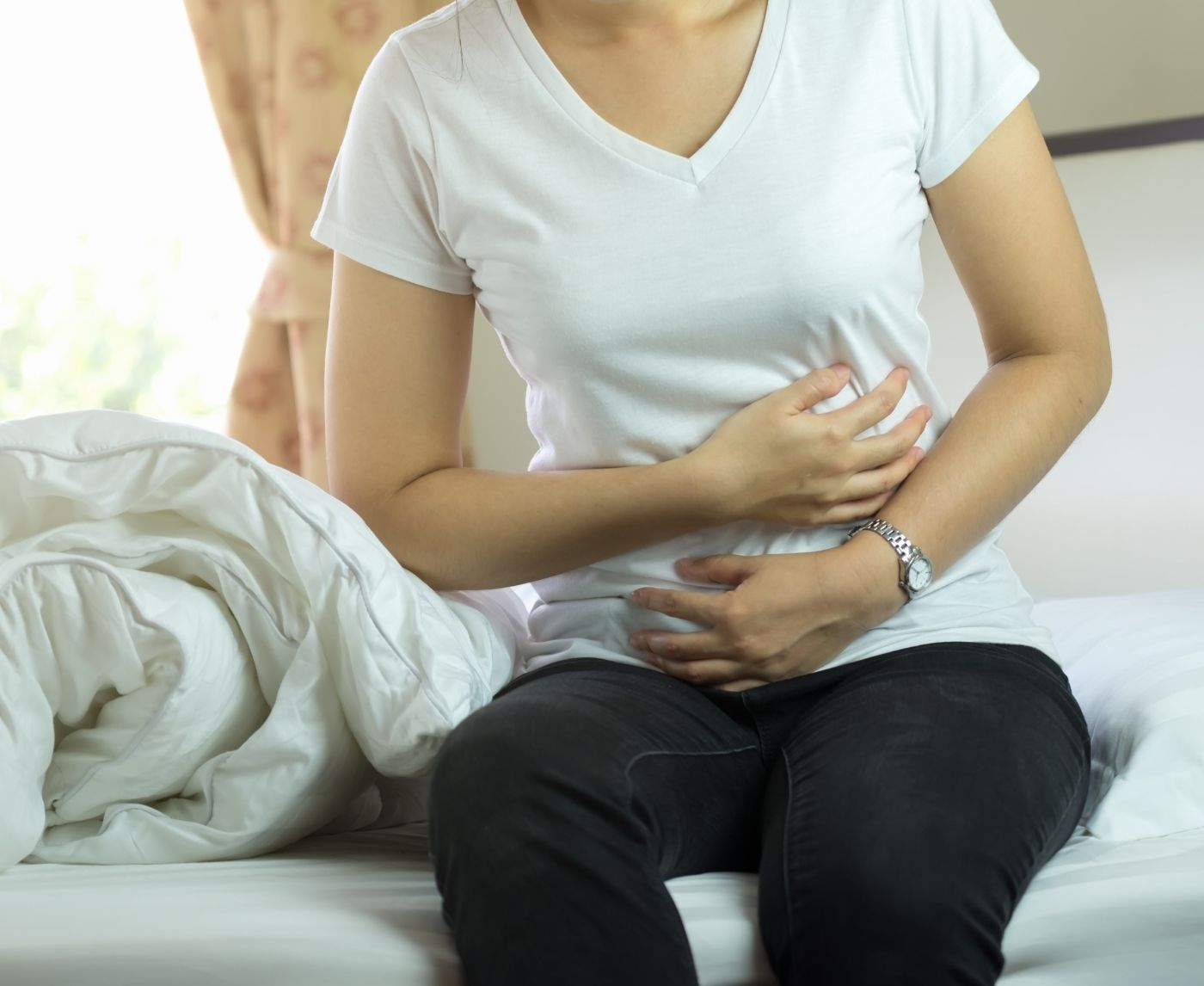
Pelvic pain after sex is one of the most common reasons people search for sexual-health information online, and one of the hardest to interpret without help. The pelvis houses the bladder, cervix, uterus, fallopian tubes, ovaries, and the muscles of the pelvic floor, and any of these can produce pain that feels almost identical to the others. From sensation alone, lower abdominal pain after sex rarely points to a single cause.
This guide walks through the three infectious possibilities most people worry about (a urinary tract infection, an early chlamydia or gonorrhea infection, or developing pelvic inflammatory disease) plus the non-infectious causes that often get missed, like ovarian cysts, endometriosis, and pelvic floor muscle tension. It also covers when at-home testing actually helps and when a clinic visit is the better next step.
Is pelvic pain after sex always an STD?
No. Pelvic pain after sex can be caused by a urinary tract infection, by early chlamydia or gonorrhea, or by developing pelvic inflammatory disease, but it can also be non-infectious (ovarian cysts, endometriosis, pelvic floor muscle tension). For chlamydia and gonorrhea, lab nucleic acid testing is most reliable from about 7 to 14 days after exposure. If pain follows a new partner or unprotected sex, testing within that window is the fastest way to rule out the infectious causes.
Key Takeaways
- Chlamydia and gonorrhea can cause pelvic pain without producing visible discharge or fever, especially in early stages.
- Lab NAAT testing is most reliable from day 7 to 14 after exposure; testing earlier can miss an active infection.
Why the Pelvis Sends Mixed Signals
The pelvis is one of the most crowded regions in the body. The bladder sits forward, the uterus and cervix sit centrally, the ovaries flank them on either side, and the pelvic floor muscles support the whole structure from below. Nerves that report pain from these organs share spinal pathways, so the brain often registers a vague lower abdominal signal rather than a precise location.
That overlap is why the same dull ache can mean very different things. A urinary tract infection irritates the bladder. An early infection of the cervix from chlamydia or gonorrhea can spread upward into the uterus and fallopian tubes, triggering pelvic inflammatory disease. Pelvic floor muscles, irritated by stress or rough penetration, can spasm and stay tight for hours.
UTI, STD, or PID? Pattern Recognition
Each condition has a typical fingerprint, even when the underlying ache feels similar. A urinary tract infection usually appears within 24 to 48 hours of sex, with burning urination, urgency, and a constant sense of needing to go even right after going. Cloudy urine and a stronger smell are also common, per the Mayo Clinic UTI overview.
Early chlamydia or gonorrhea is quieter. Many people have no symptoms at all in the first weeks. When symptoms appear, they often start as a dull pelvic ache, mild discomfort during deeper penetration, light bleeding after sex, or only slightly increased discharge. The CDC chlamydia overview notes that most women with chlamydia have no symptoms at all in early stages.
Pelvic inflammatory disease typically builds over days or weeks. The pain becomes deeper and more persistent, often worsens with movement or sex, and may include abnormal bleeding, painful urination, or fever. The CDC PID overview notes that early symptoms can be mild or even vague, which is why so many cases get caught late.
| Condition | Typical Onset | Pain Pattern | Other Common Signs |
|---|---|---|---|
| UTI | 24 to 48 hours after sex | Pressure or burning low in pelvis | Burning urination, urgency, cloudy urine |
| Chlamydia or gonorrhea | 5 to 14 days after exposure | Dull pelvic ache, pain during deeper sex | Often none; sometimes mild discharge or post-sex bleeding |
| Pelvic inflammatory disease | Gradual over days to weeks | Deeper pain, worse with movement or sex | Variable; possible fever, abnormal bleeding, painful urination |
How an Untreated STD Becomes PID
Pelvic inflammatory disease usually starts as something simpler. The bacteria that cause chlamydia and gonorrhea infect the cervix first. If those infections go untreated, they can travel upward into the uterus and fallopian tubes, where they trigger inflammation across a much larger area. That migration can take weeks, and the early symptoms often feel deceptively mild.
Not everyone with an untreated infection develops PID, and bacterial STIs treated promptly with antibiotics rarely escalate. Long-term complications from PID, including chronic pelvic pain, ectopic pregnancy, and reduced fertility, are uncommon when infections are caught and treated within the first few weeks. Risk climbs with repeated or prolonged untreated infections; the CDC estimates that roughly 1 in 8 women with a history of PID have trouble getting pregnant later, and the risk of fallopian tube scarring rises with each repeat episode. Prompt antibiotic treatment at the first sign of infection is the most reliable way to prevent those outcomes. The World Health Organization's STI fact sheet names untreated chlamydia and gonorrhea among the major causes of PID-related infertility in women.
What the Numbers Actually Say
- Treated within a few weeks of infection, chlamydia and gonorrhea rarely escalate to PID or long-term complications.
- Of women who do develop PID, the CDC estimates about 1 in 8 will have difficulty getting pregnant later, with risk rising for repeat or prolonged untreated infections.
- Tubal scarring (the mechanism behind ectopic pregnancy and infertility) accumulates over time, which is why early treatment changes outcomes so dramatically.
Timing Changes the Story
When the pain started, relative to the most recent sexual encounter, narrows the possibilities quickly. Pain that begins within 24 hours of sex usually has a mechanical cause: friction, dryness, deep penetration, or pelvic floor tension. Pain that emerges 5 to 14 days after unprotected sex falls within the typical incubation window for chlamydia and gonorrhea. Pain that builds gradually over weeks raises concern for ascending infection or another underlying issue.
Test timing matters as much as symptom timing. Lab nucleic acid amplification tests (NAATs) for chlamydia and gonorrhea reach reliable sensitivity around day 7 to 14 after exposure. Testing on day two or three can produce a false negative simply because the bacterial load has not built up enough to detect.
Home rapid tests use lateral-flow strip technology rather than NAAT. They are useful for screening within the same window, with the caveat that lab NAAT remains the higher-sensitivity gold standard. A positive at-home result is worth confirming with a clinic NAAT, and a negative at-home result with persistent symptoms is worth a retest at the two-week mark or a clinic follow-up.
| Days Since Sex | What It Might Mean | Testing Reliability |
|---|---|---|
| 1 to 3 days | Friction, irritation, or very early infection | Low for most STI tests |
| 5 to 7 days | Possible early bacterial STI | Moderate for NAAT |
| 7 to 14 days | Peak detection window for chlamydia and gonorrhea | High |
| 14 or more days | Persistent symptoms warrant clinical evaluation | High; retest if negative but pain continues |
When It's More Likely a UTI Than an STD
Sex is one of the most common UTI triggers, especially in people with shorter urethras, because friction can move bacteria toward the bladder. UTIs tend to announce themselves clearly: stinging or burning during urination, a feeling of needing to go even seconds after going, lower pelvic pressure, and sometimes cloudy or strong-smelling urine.
If your post-sex pelvic pain comes mainly with bladder symptoms and urinary urgency, a UTI is statistically more likely than an STI. UTIs respond quickly to a short antibiotic course, often within 24 to 48 hours of starting treatment.
One important caveat: a UTI does not rule out an STI. Both can occur at the same time, and burning urination is a symptom of gonorrhea as well as of bladder infections. If a recent partner is new, or protection broke or wasn't used, comprehensive testing covers both possibilities at once rather than treating one and missing the other.
Disclosure: stdrapidtestkits.com sells the rapid home tests linked throughout this article. We recommend kits based on fit-for-purpose for the reader's concern, not commercial benefit.

Non-Infectious Causes Worth Considering
Many cases of pelvic pain after sex are not infectious at all. Three causes account for most non-infectious presentations: ovarian cysts, endometriosis, and pelvic floor muscle tension. Each has a different feel.
Ovarian cysts. Small fluid-filled sacs form on the ovaries as part of the normal menstrual cycle, and most disappear without symptoms. Larger cysts can shift during intercourse, producing a sudden sharp jab on one side of the pelvis followed by a dull ache. Cyst pain is usually one-sided, not accompanied by discharge or fever, and tends to fade over hours or days. Severe one-sided pain with nausea or vomiting is different and needs same-day care, since it can signal a ruptured cyst or ovarian torsion.
Endometriosis. When tissue similar to the uterine lining grows outside the uterus, it responds to hormonal cycles by inflaming the surrounding pelvic structures. The result is often a deep cramping pain during or after sex that lingers for hours, painful periods, and chronic pelvic aches that have a monthly rhythm.
Pelvic floor muscle tension. The muscles that support the bladder, uterus, and rectum can tighten, strain, or spasm, especially under stress, anxiety, or after prior painful experiences. The discomfort feels different from infection: a deep aching pressure rather than a stabbing pain, often improving with warmth, pelvic floor physical therapy, or relaxation techniques.
The distinguishing patterns: cyst pain arrives suddenly and on one side, endometriosis pain tracks the menstrual cycle, muscle tension loosens with heat or relaxation rather than antibiotics, and STI-related pain tends to follow a recent exposure, sometimes with light post-sex spotting as a secondary clue.
Deep Pain vs Surface Pain Tells a Story
Where the pain sits matters as much as when it started. A useful clinical question is whether it feels raw and stinging at the vaginal opening, or deep, like something is being bumped from inside.
Surface-level pain at the opening usually points to mechanical causes: friction, dryness, micro-tears, or vulvar irritation. Lubrication, slower entry, and time tend to resolve it. Deep internal pelvic pain during or after sex is a different signal. It can come from cervical inflammation due to chlamydia or gonorrhea, from early pelvic inflammatory disease, from an ovarian cyst that gets nudged during intercourse, or from endometriosis lesions in the pelvis.
Deep pain that started after a new partner, especially with no obvious mechanical cause, is one of the more meaningful clues for cervical infection. The cervix has fewer pain nerves than skin, so it can be inflamed without producing a sharp sensation. Bleeding after sex, even light spotting, is another quiet sign worth noticing.
When pelvic pain follows sex, two questions usually point toward the answer. Where does the pain sit? Surface or entrance pain is usually mechanical (friction, dryness, vulvar irritation); deep internal pain points more toward the cervix, uterus, or ovaries. Did this start after a new partner or unprotected encounter? If yes, infectious causes (chlamydia, gonorrhea, early PID) move higher on the list. If no and the pattern is recurring or hormonally timed, non-infectious causes (cysts, endometriosis, pelvic floor tension) move higher.
Red Flags That Need Same-Day Care
Most pelvic pain after sex is mild and self-limiting, but a small number of presentations need urgent evaluation. The signs below can point to advanced PID, a ruptured ovarian cyst, ectopic pregnancy, or appendicitis (which sits in the same anatomical neighborhood and frequently mimics pelvic infection).
Severe pain that prevents standing upright, fever above 101°F (38.3°C), fainting, shoulder pain combined with abdominal pain, heavy vaginal bleeding, or sudden one-sided sharp pain with nausea or vomiting. These can signal advanced PID, a ruptured ovarian cyst, ectopic pregnancy, or appendicitis, all of which need urgent evaluation.
Choosing the Right Test for Your Situation
If pelvic pain is your main symptom, the two infections most worth ruling out are chlamydia and gonorrhea. They are common, often silent, and the most likely infectious cause of pelvic inflammatory disease. Depending on the type of exposure, screening for trichomoniasis, syphilis, or HIV may also make sense, especially if there are multiple recent partners or a known exposure event. The NHS PID overview notes that early diagnosis allows PID to be treated effectively with antibiotics, and that most complications occur when infection goes untreated.
Lab NAAT remains the gold-standard analytical sensitivity for chlamydia and gonorrhea, and clinics offer urine or vaginal swab options. Home rapid tests use lateral-flow strip chemistry; they are useful for screening, especially when privacy or scheduling is a barrier. A positive home result should be confirmed with a lab NAAT before starting treatment, and a negative home result with persistent symptoms is worth a clinic follow-up or retest at the two-week mark.
A note on at-home scope: our trichomoniasis swab is currently validated for vaginal self-swab only, and we do not sell urine-sample STI tests; for those, see a clinic.
If Testing Is Negative but Pain Continues
A negative result, taken at the right time after exposure, is a strong signal that the most likely infectious causes have been ruled out. If pelvic pain continues after a properly timed negative test, the diagnostic net needs to widen.
The most common next steps are a urinalysis to confirm or exclude a UTI, a pelvic ultrasound to look for ovarian cysts or fibroids, a pelvic exam to assess for cervical motion tenderness (a classic sign of PID), and a closer look at hormonal patterns or musculoskeletal causes. Endometriosis can take time to diagnose because the patches of tissue do not always show up on a single imaging study; a clinician familiar with chronic pelvic pain is the right person to coordinate that workup.
The progression of the pain matters too. Pain that is steadily improving over a few days is reassuring. Pain that stays flat or worsens deserves clinic evaluation rather than continued waiting.
Partner Conversations and Stigma
If testing confirms a chlamydia or gonorrhea infection, the conversation with a current or recent partner is part of treatment, not blame. Many infections are silent, which means a partner can carry one without knowing. Clear, factual phrasing tends to lower defensiveness more than vague language does: explain what you tested for, share the result, and ask the partner to test as well so both people can be treated if needed.
Treating an STI as a moral finding rather than a medical one is one of the main reasons people delay testing, and delay is what most reliably leads to complications. UTIs and PID work the same way: bacterial accidents and treatable medical conditions, not character flaws. A short window of clarity (test, treat, notify) is usually all that separates a quiet recovery from a complicated one.
Most people who have chlamydia have no symptoms. If you do have symptoms, they may not appear until several weeks after you have sex with an infected partner.
Bottom Line
Pelvic pain after sex deserves attention, not minimization. The infectious causes (UTI, chlamydia, gonorrhea, developing PID) are treatable, especially when caught early. The non-infectious causes (cysts, endometriosis, pelvic floor tension) are manageable with the right diagnosis. The hardest part is usually the uncertainty between them.
If a new partner, unprotected sex, or persistent symptoms are part of the picture, testing within the appropriate window removes the largest unknowns. If urgent symptoms appear, same-day care is the right move. In every other situation, time and pattern recognition usually point to the answer, and a single well-timed test resolves the rest.
FAQs
- Can chlamydia or gonorrhea cause pelvic pain without any discharge?
- Yes. Both infections often produce no visible discharge in early stages, especially in women. Pelvic pain, painful sex, or post-sex spotting can be the only signal. The CDC's chlamydia overview notes that most women with chlamydia have no symptoms at all initially, and gonorrhea behaves similarly. Pain combined with a recent unprotected exposure is enough reason to test, regardless of whether discharge is present.
- How quickly do chlamydia or gonorrhea symptoms appear after exposure?
- Symptoms, when they appear at all, usually start 5 to 14 days after exposure. Pain that begins within 24 hours of sex is more likely to be mechanical (friction or pelvic floor tension) than infectious. Pain emerging in that 5 to 14 day window aligns with bacterial STI incubation. Pain that builds gradually over weeks raises concern for ascending infection.
- How do I tell a UTI from an STD when both can cause pelvic pain?
- UTIs tend to be loud about urination: stinging when peeing, urgency, the feeling of needing to go right after going, sometimes cloudy urine. STIs are quieter; chlamydia and gonorrhea often only produce mild pelvic ache or pain during sex with little urinary involvement. They can also occur together, which is why testing covers both possibilities when there is recent risk exposure.
- Can pelvic inflammatory disease happen without fever?
- Yes, and this catches many people off guard. Early PID can be relatively quiet: a dragging pelvic ache, pain during deeper penetration, light spotting after sex. Fever and dramatic abdominal pain appear in some cases but not all. Persistent or worsening pelvic pain after a recent unprotected exposure deserves evaluation even without fever.
- I tested negative right after sex. Should I retest later?
- Yes, if you tested within the first three or four days. NAATs for chlamydia and gonorrhea need bacterial load to build up; reliable detection kicks in around day 7 and is strongest between days 7 and 14. A negative result taken before that window is worth repeating at two weeks if symptoms continue.
- Can I get an STD even with a condom?
- Less likely, but yes. Condoms dramatically reduce risk for infections spread through fluids (HIV, gonorrhea, chlamydia), but they do not cover the entire genital area. Skin-to-skin infections like herpes and HPV can still transmit through uncovered skin, and condoms can slip or fail without anyone noticing. Pelvic pain after protected sex is statistically less likely to be STI-related than after unprotected sex but is not impossible.
- What if my pain is not from infection?
- Common non-infectious culprits include ovarian cysts (sudden one-sided sharp pain), endometriosis (deep cramping that tracks the menstrual cycle), and pelvic floor muscle tension (a diffuse pressure that eases with heat or relaxation). If a properly timed STI test is negative and pain continues, a urinalysis, pelvic ultrasound, or pelvic exam often clarifies the cause.
- When should I stop self-monitoring and see a clinician?
- Pain that worsens over three to five days, interferes repeatedly with sex, or keeps returning is enough reason to book a clinic appointment. Same-day emergency care is appropriate for the more dramatic signs (severe pain, high fever, fainting, shoulder pain alongside abdominal pain, or sudden one-sided sharp pain with nausea), since those can signal advanced PID, an ectopic pregnancy, or a ruptured cyst.
- U.S. Centers for Disease Control and Prevention. Chlamydia fact sheet, including symptom prevalence and testing guidance.
- U.S. Centers for Disease Control and Prevention. Gonorrhea fact sheet, including symptom and screening information.
- U.S. Centers for Disease Control and Prevention. Pelvic Inflammatory Disease (PID) overview, including how PID develops from untreated STIs and the 1-in-8 PID-related infertility estimate.
- World Health Organization. Sexually transmitted infections fact sheet, including the role of untreated chlamydia and gonorrhea in PID-related infertility.
- NHS. Pelvic Inflammatory Disease (PID) overview, including symptoms, complications, and testing guidance.
- Mayo Clinic. Urinary tract infection symptoms and causes, including post-sex UTI risk factors.
