
Published: October 2025 | Last updated: May 2026 | Editorial review and quality control: Martina N.
Burning when you pee, urgency, that nagging sense that something is off, and then a urine test that comes back "normal." It is one of the most disorienting moments in personal health. Your body keeps saying something is wrong. The lab paperwork says nothing is.
Here is the part that rarely gets explained clearly: a standard urine dipstick is built to detect a routine urinary tract infection. It is built narrowly, around the bacterial pattern of a typical UTI, and that leaves a sizeable list of other causes invisible to the same test. That gap, between what was tested and what was actually checked, is where most people get either falsely reassured or unnecessarily alarmed. This guide walks through what a basic test misses, the most common hidden causes, and how to get from "negative" to an actual answer.
Key Takeaways
- A negative UTI test rules out a routine bacterial bladder infection. It does not rule out chlamydia, gonorrhea, urethritis, herpes, irritation, or testing too early after exposure.
- If symptoms persist, the next step is matching the right test to the right cause, rather than assuming nothing is wrong.
Why a "Normal" Urine Test Doesn't Rule Out Everything
A standard urinalysis or dipstick looks for a specific pattern: bacteria, white blood cells, nitrites, leukocyte esterase (an enzyme white blood cells release during infection), sometimes blood. Those markers point toward a common urinary tract infection caused by bacteria like E. coli. When that pattern is absent, the lab calls the test negative for a UTI. That result is accurate within its narrow scope.
Several conditions cause near-identical symptoms (burning, urgency, frequency, discomfort at the urethra) yet produce a different pattern on lab tests, or no pattern at all on a dipstick. Sexually transmitted infections are the biggest category here. Chlamydia and gonorrhea are detected with nucleic acid amplification tests (NAATs), which require a separate, specific order from your clinician. They will not show up on a routine dipstick. The U.S. Centers for Disease Control and Prevention notes that chlamydia in particular is frequently asymptomatic, and when symptoms do appear, dysuria (painful urination) is one of the most common ones (CDC, STI overview).
Herpes can also cause burning during urination, especially early in an outbreak before visible sores appear, and it will not show up in a urine sample at all (herpes diagnosis uses lesion swabs or blood antibody testing). Urethritis (inflammation of the urethra) can be bacterial, viral, irritative, or have no identifiable cause on initial workup, and lab findings vary case by case.
| Condition | Shows on basic urine dipstick? | What it actually needs |
|---|---|---|
| Routine bacterial UTI | Yes (typically) | Standard dipstick + urine culture |
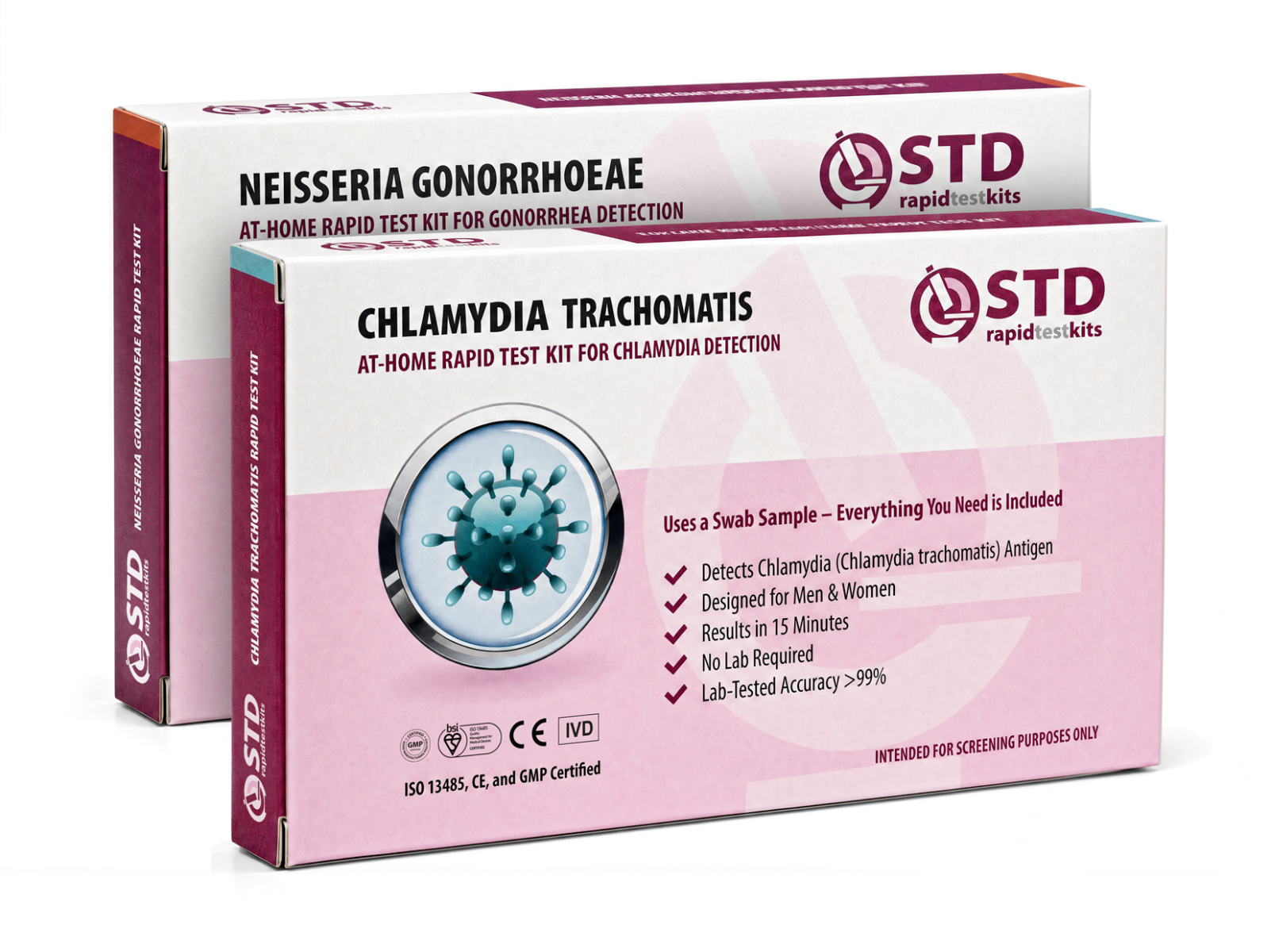
| Chlamydia | No | NAAT on urine, vaginal, or urethral swab |
| Gonorrhea | No | NAAT on urine, vaginal, or urethral swab |
| Herpes (HSV-1 or HSV-2) | No | Lesion swab when sores present, or blood antibody test |
| Trichomoniasis | No | Vaginal swab NAAT (for vaginal anatomy) |
| Non-infectious urethritis | Sometimes | Clinical evaluation, often diagnosis of exclusion |
When "Negative" Doesn't Mean "Clear"
A test result is a snapshot, not a verdict. It reflects what was detectable at that exact moment, using that specific method, looking for that specific thing. Three things commonly make a negative result misleading:
The wrong test was ordered. A urine dipstick checks for UTI markers. If no one specifically ordered an STI panel, your sample was not screened for chlamydia, gonorrhea, or anything else outside the standard urinalysis. This happens often in walk-in clinics where the visit is short and the default workup is narrow.
The test was done too early. Every infection has a window period: the time between exposure and when a test can reliably detect it. Test inside that window and the result can be negative even when the infection is present.
The infection is low-level or intermittent. Some infections cycle in detectability. A single negative sample on a borderline case is not the same as ruled out.
The more useful question is simpler: what exactly was tested, and when was the sample taken?
Burning when you pee but the UTI test was negative. What's going on?
The most common hidden causes are sexually transmitted infections (chlamydia, gonorrhea, sometimes herpes), non-bacterial urethritis, irritation from soaps, lubricants, or condoms, dehydration, and testing inside the window period before an infection became detectable. The next step is a targeted STI test (NAAT for chlamydia and gonorrhea) plus a clinical look at non-infectious causes, rather than dismissing the symptom because the UTI result was normal.
Testing Windows: Why Timing Changes the Result
This is the part most people are not told clearly. You can have an infection, feel symptoms, and still test negative if your body has not yet reached the threshold where the test can pick it up. The infection is real, the test just cannot see it yet.
Window periods differ by infection and by test type. For chlamydia and gonorrhea, NAATs are typically reliable about one to two weeks after exposure (CDC STI guidance). For herpes, lesion swabs are most useful when active sores are present; blood antibody tests take weeks because the body needs time to produce detectable antibodies. For HIV, fourth-generation antigen-antibody tests are usually reliable around four to six weeks after exposure, sometimes a bit longer for full confirmation.
If you tested within a few days of a possible exposure and the result was negative, that result is not a definitive clear. For chlamydia and gonorrhea, the practical implication is holding off on a retest until at least day 7 to 14 after the exposure date.
| Infection | Symptoms may start | Reliable test window |
|---|---|---|
| Chlamydia | 5 to 14 days after exposure | Approximately 1 to 2 weeks after exposure (NAAT) |
| Gonorrhea | 2 to 7 days after exposure | About 1 week after exposure (NAAT) |
| Herpes (lesion swab) | 2 to 12 days after exposure | When active sores are present |
| Herpes (blood antibody) | Same range as above | Weeks after exposure, sometimes longer |
| HIV (4th-gen antigen-antibody) | Variable, often 2 to 4 weeks | About 4 to 6 weeks for high reliability |
Causes That Aren't Infections at All
Not every case of burning urination is caused by an infection. A meaningful share of dysuria has a non-infectious explanation, and these can feel almost identical to a UTI or STI. They will also not show up on any standard test, because there is nothing microbial to find: the discomfort is real even when the underlying cause is chemical or mechanical.
Chemical or product irritation. Scented soaps, bubble baths, body washes, intimate wipes, douches, certain laundry detergents, scented condoms, spermicides, and some lubricants can irritate the urethra and surrounding tissue. The signature pattern: symptoms started or worsened shortly after introducing a new product. Removing the trigger usually clears symptoms within days.
Friction from sex. Vigorous sex, prolonged sex, or sex without sufficient lubrication can mechanically irritate the urethra. The classic clue is burning that flares the day after intercourse and resolves over a day or two.
Dehydration. Concentrated urine is more acidic and more irritating. If urine is dark and fluid intake has been low, a sting on urination can simply be your body asking for more water. Hydration improves the symptom within a day in most cases.
Pelvic floor dysfunction. Chronically tight or uncoordinated pelvic floor muscles can produce burning, urgency, and pressure that mimic a UTI. This is more common than people realize, especially in those with chronic stress, prior pelvic pain, or a history of repeated negative UTI tests. Pelvic floor physical therapy is the appropriate treatment here; antibiotics will not help.
Interstitial cystitis / bladder pain syndrome. A chronic bladder condition that produces UTI-like symptoms without infection. It tends to be diagnosed after other causes are ruled out, often by a urologist.
| Cause | What it feels like | Diagnostic clue |
|---|---|---|
| Product irritation (soaps, lube) | Generalized burning during urination | Started after a recent product change |
| Friction from sex | Burning that flares the day after intercourse | Resolves over 24 to 48 hours |
| Dehydration | Sharp, concentrated sting | Dark urine, low fluid intake; improves with hydration |
| Pelvic floor dysfunction | Pressure, burning, urgency without infection | Worse with stress, often history of negative UTI tests |
| Interstitial cystitis | Chronic UTI-like symptoms, no infection on testing | Persistent over weeks to months; specialist evaluation |
Reading Your Symptoms Without Spiraling
When something feels off in your body, your brain fills in the blanks fast, especially after a search-engine deep dive. The way to slow that down is to track the symptom honestly rather than just the worst-case label for it.
A few questions usually narrow things meaningfully:
- Timing within urination. Burning at the start of the stream often points to urethral irritation or inflammation. Burning throughout, or at the end, often points to bladder involvement.
- Pattern over the day. Constant burning regardless of hydration leans toward infection or inflammation. Burning only after sex or after using a new product leans toward irritation. Burning that eases with water leans toward dehydration or concentration.
- Other symptoms. Unusual discharge, odor, lower abdominal pain, fever, pelvic pain, or new sores raise the priority for clinical evaluation. Burning paired with new lesions specifically raises concern for herpes.
- Recent exposure. A new partner, recent unprotected sex, or a partner who has been diagnosed with an STI changes the testing math significantly.
Bring those four answers to a clinician or to a home test and the conversation shifts from "I have burning" to a specific pattern someone can act on.
Burning that started within a few days of a new soap, body wash, lubricant, or condom is almost always product irritation. Stop the suspect product for three to four days before reaching for more tests. If the symptom clears, you have your answer for free.
What to Actually Do Next
If your urine test was negative and the symptom has not gone away within a couple of days, here is a practical sequence rather than the usual "see a doctor" handoff.
1. Confirm what was actually tested. Call back or check the patient portal. Ask specifically: was this a urinalysis only, or was a chlamydia and gonorrhea NAAT also ordered? If only a dipstick was done, STI screening has not yet happened.
2. If there was potential STI exposure, get a targeted STI test. NAATs for chlamydia and gonorrhea on urine or a self-collected swab are the standard. The World Health Organization estimates more than one million curable STIs are acquired globally each day, many of them in people with mild or no symptoms (WHO STI fact sheet).
3. Mind the window period. If exposure was recent, retest at the appropriate window rather than testing repeatedly inside it. A negative test two days after exposure carries far less information than a negative test two weeks later.
4. Audit the obvious irritants. Any new soap, body wash, lubricant, laundry detergent, or condom in the last week or two? Stop it for several days and see whether the symptom improves. This is free, fast, and rules out a surprisingly common cause.
5. Increase fluid intake for 48 hours. Treat hydration as a baseline check that runs alongside the other steps. If concentrated urine was a contributor, drinking more water will partially or fully resolve the symptom within a day or two.
6. If symptoms persist, escalate. Persistent burning, recurrent burning, worsening burning, or burning with fever, pelvic pain, or new lesions calls for a clinical evaluation rather than a wait-it-out approach.
Before ordering a second test, call the clinic (or open the patient portal) and ask which tests were actually run on your sample. Many walk-in visits default to a dipstick only and never include chlamydia or gonorrhea NAAT unless someone specifically asks. That single phone call often saves a week of guessing.
When It's Time to See a Clinician
Self-monitoring has a ceiling. There is a point where the question shifts from "what is this?" to "I need someone to help me figure this out," and recognizing that moment quickly is part of taking care of yourself.
Bring in a clinician when:
- Burning has lasted more than two or three days without improvement.
- Symptoms keep coming back after each round of testing or treatment.
- You notice new sores, blisters, or visible skin changes.
- You have fever, chills, flank pain, or vomiting (these suggest a possible kidney infection and need urgent care).
- You are pregnant.
- You have repeated negative tests but real, persistent discomfort. This is when specialist evaluation (urology, gynecology, or pelvic-floor physical therapy) becomes the right next step rather than another round of the same dipstick.
That visit means asking a different set of questions: a pelvic or genital exam, a urethral swab or culture, possibly imaging, and where chronic or unexplained symptoms persist, a referral to a urologist, gynecologist, or pelvic-floor physical therapist.

When a Broader STI Screen Makes Sense
For some readers the chlamydia-and-gonorrhea question is the whole picture: one recent exposure, one specific concern, one targeted test. For others the picture is wider. If you have had more than one recent partner, if you do not know a partner's STI status, if you have not been screened in a year or more, or if the symptom timeline does not line up cleanly with a single suspected exposure, a broader panel can answer the question faster than back-to-back single-infection tests.
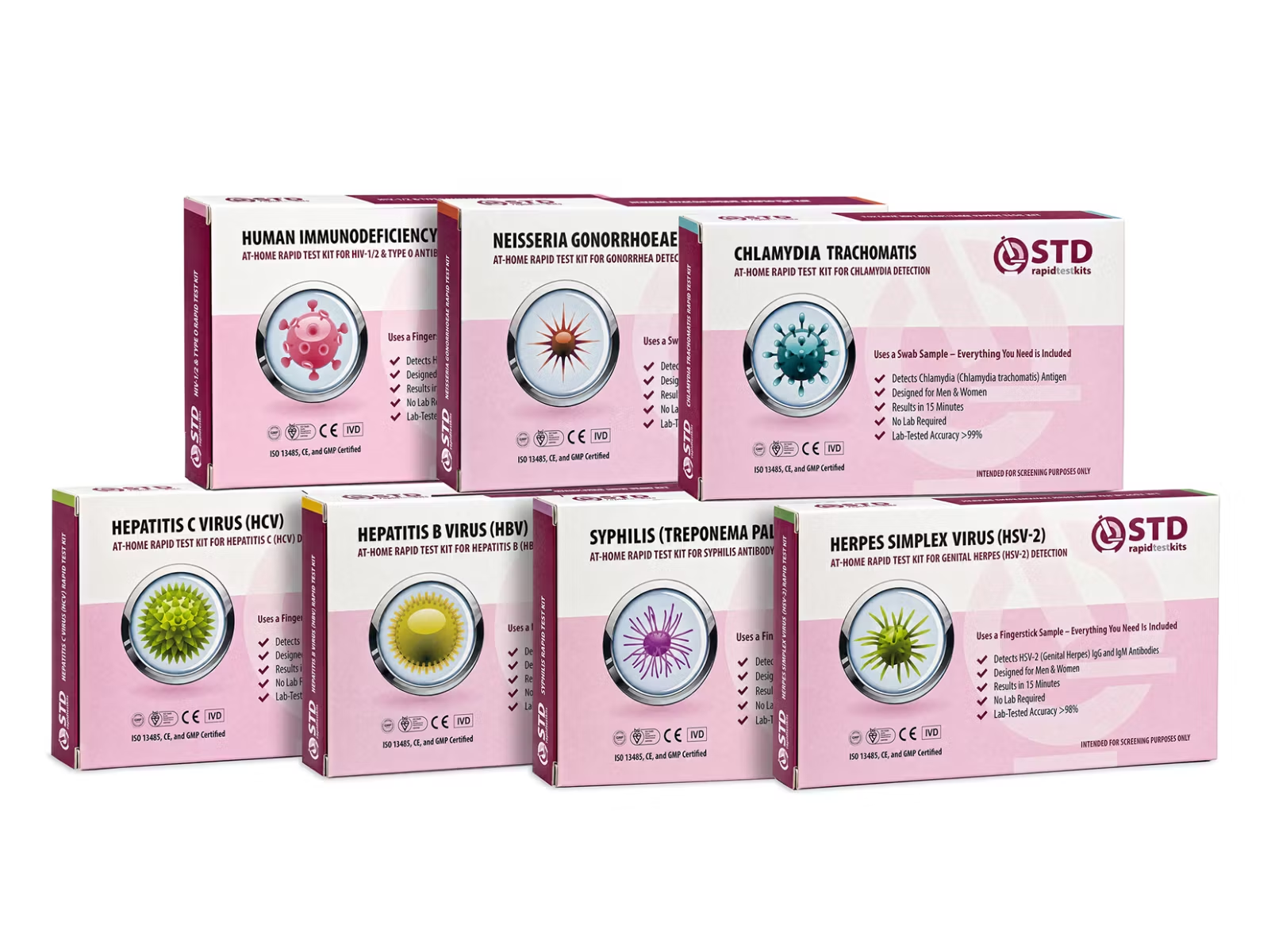
A 7-in-1 home screen covers chlamydia, gonorrhea, HIV, syphilis, hepatitis B, hepatitis C, and herpes in one go. It is more useful when the question is "where do I actually stand across the common ones?" rather than "is it specifically chlamydia or gonorrhea?" Either path is reasonable; the choice depends on how wide the uncertainty is.
The Real Takeaway: A Negative Test Is Information, Not a Verdict
A negative urine test tells you exactly one thing: a routine bacterial urinary tract infection was not detected in that sample, on that day. It does not tell you what else could be causing the symptom. It does not rule out chlamydia, gonorrhea, herpes, urethritis, irritation, dehydration, or pelvic-floor involvement. Treating "negative" as a final answer when symptoms persist is one of the most common reasons people end up in a months-long loop of discomfort and confusion.
The shift that helps is reframing the question. Instead of "is something wrong with me?" the more useful question is "what has not been ruled out yet?" That second version points to a concrete next step: a different test, a different sample type, a different specialist, or a careful audit of recent exposures and irritants.
Most people who have an STI have no symptoms. The only way to know for sure is to get tested.
FAQs
- Why does it burn when I pee but my urine test says everything is normal?
- Chlamydia, gonorrhea, herpes, non-bacterial urethritis, and chemical irritation from soaps or lubricants can all cause the same burning, and none of them show on a standard dipstick. A negative dipstick rules out one category (routine bacterial UTI), without ruling out the whole list of things that can produce these symptoms.
- Could I still have an STI even though my test was negative?
- Yes, especially if the test was done early after exposure (inside the window period) or if STI screening was not actually included. Routine UTI workups do not check for chlamydia and gonorrhea unless those tests are specifically ordered. If recent sexual exposure is plausible, a targeted STI test is the next step regardless of the urinalysis result.
- Which STIs cause burning urination most often?
- Chlamydia and gonorrhea are the most common bacterial causes. Herpes can cause burning urination, particularly early in an outbreak, sometimes before visible sores appear. Trichomoniasis can cause similar symptoms in people with vaginal anatomy. Mycoplasma genitalium is a less commonly tested but increasingly recognized cause of urethritis.
- Do I really need to test again if it is still bothering me?
- If symptoms persist beyond a couple of days and a new test would land at an appropriate window (typically one to two weeks after exposure for chlamydia and gonorrhea), retesting at that point is reasonable. Repeatedly testing inside the same window is not useful. The point of retesting is to time it correctly, rather than to do it more often.
- Can soap, lubricant, or condoms really cause this?
- Yes. Scented soaps, intimate wipes, douches, spermicides, certain lubricants, and some condoms can irritate the urethra. The clue is timing: if the burning began shortly after introducing a new product, that product is the most likely cause. Stopping it for several days usually resolves the symptom.
- What kind of test should I actually be asking for?
- If a routine urine dipstick was already done and was negative, ask for a chlamydia and gonorrhea NAAT (the standard molecular test for those infections). If exposure history or symptoms suggest herpes, that needs a different test: a lesion swab when sores are present, or a blood antibody test weeks after exposure. Be explicit. Do not assume an STI panel was included by default.
- When does this need to become a clinical visit rather than a home check?
- Visit a clinician if symptoms last more than two or three days without improvement, if you notice new sores or visible lesions, if there is fever, flank pain, vomiting, or pelvic pain, if you are pregnant, or if repeated negative tests have not explained persistent symptoms. The last one in particular often calls for evaluation by a urologist, gynecologist, or pelvic-floor physical therapist.
- U.S. Centers for Disease Control and Prevention. Sexually transmitted infections: overview, testing guidance, and surveillance data, including the role of dysuria as a common symptom of chlamydia and gonorrhea.
- World Health Organization. Sexually transmitted infections (STIs) fact sheet: global incidence, common symptoms, and the frequency of asymptomatic infection.
- U.K. National Health Service. Non-gonococcal urethritis: causes, symptoms, and the distinction between bacterial and non-bacterial urethral inflammation.
- U.K. National Health Service. Cystitis: symptoms of bladder infection, when to contact a pharmacist or clinician, and guidance across different patient groups.
- U.S. Centers for Disease Control and Prevention. Genital herpes: symptoms, including dysuria during outbreaks, and diagnostic testing.
- U.S. National Library of Medicine, MedlinePlus. Dysuria (painful urination): differential diagnosis and clinical evaluation.
