
Published: October 2025 | Last updated: May 2026 | Editorial review and quality control: Martina N.
The first time a sharp burn shows up after sex during pregnancy, it can feel alarming. People search for answers somewhere between worry and frustration, wondering whether the discomfort means an infection, a hormonal change, or something the baby should know about. Pain after sex during pregnancy is common and usually traceable to one of a small handful of causes. Some are mechanical and fade on their own. Others, like urinary tract infections or sexually transmitted infections, need testing and treatment. The trick is reading the pattern.
Key Takeaways
- Hormonal sensitivity, vaginal dryness, and pelvic-floor tension explain most short-lived burning or soreness after sex during pregnancy.
- Persistent burning, painful urination, fever, unusual discharge, or pelvic pressure point toward a UTI, vaginal infection, or STI and call for prompt testing.
Why Pregnancy Changes How Sex Feels
Pregnancy reshapes the pelvis in ways that change how sex feels long before a bump shows. Blood volume rises substantially over nine months, and most of that extra flow is routed through the uterus, cervix, and vaginal walls. Tissues that were neutral before pregnancy can become swollen, tender, and quick to react to friction. Many people describe a deep awareness of the pelvic region, almost like a low hum that did not exist before.
Estrogen and progesterone keep adjusting the local environment too. Estrogen thickens the vaginal lining, which sounds protective, but it also makes the lining more reactive to contact. Progesterone relaxes smooth muscle, which can change how the pelvic floor responds to penetration. Some pregnancies bring extra natural lubrication; others bring dryness, especially in the first trimester when hormone shifts are most chaotic and again in late pregnancy when the body is preparing for delivery.
Bacteria notice the difference too. Slower urine flow and a softer vaginal lining together raise the odds of urinary and vaginal infections that are less common outside pregnancy.
Stress and fatigue add another layer. Pelvic-floor muscles tighten when a body is anxious or exhausted, and a tightened pelvic floor makes sex feel different even when nothing is medically wrong. None of this means infection. It means the body is rewiring on a schedule no one explained in advance.
Still, pregnancy does not turn off the rest of physiology. The same conditions that cause pain after sex when not pregnant, urinary tract infections, yeast overgrowth, bacterial vaginosis, chlamydia, gonorrhea, and trichomoniasis, can still happen. Pregnancy raises the odds of a few of them.
- Blood volume rises by roughly 30 to 50 percent over the nine months, with much of that flow routed through the pelvis.
- Estrogen thickens the vaginal lining and makes it more reactive to contact.
- Progesterone relaxes smooth muscle, including the urinary tract, which slows urine flow.
- The cervix sits lower and softens earlier than people expect, meaning it is more easily contacted during sex.
- Lubrication can swing either way: more for some, less for others, often unpredictably.
When the Cause Is Hormones or Physical Sensitivity
The most common reason for pain after sex during pregnancy is the simplest one. Tissues are more sensitive. The cervix sits lower and is more easily contacted. The labia and vaginal walls have more blood flow. Penetration that felt comfortable before pregnancy can leave a lingering ache or burn afterward, especially if sex was longer than usual or if positions pressed on the cervix.
This kind of discomfort tends to fade. Within minutes to a few hours, the sensation eases. Nothing else changes about the body. No fever, no unusual discharge, no burning when urinating, no pain when sitting still. The next time, things may feel completely different depending on the day's hormones and the position used.
Small changes help here. Switching to side-lying positions takes weight off the cervix. Slowing the pace gives muscles time to relax. Adding a water-based lubricant compensates when natural lubrication dips. Most couples figure out a comfortable approach by mid-pregnancy and the discomfort stops registering as a worry.
Pain in this category comes and goes with the act itself rather than building into a longer pattern. If symptoms like burning urination or unusual discharge show up alongside, the cause is probably somewhere else.
UTIs During Pregnancy: A Common Hidden Cause
Urinary tract infections are one of the most common reasons pregnant people feel a sharp burn after sex, and they are easy to miss because some pregnancies are full of small bladder weirdness anyway. The growing uterus presses on the bladder, which means it never fully empties. Pregnancy hormones, especially progesterone, slow the flow of urine through the ureters. Bacteria that would normally be flushed out have more time to multiply (CDC: urinary tract infection overview).
Sex makes this worse mechanically. The urethra in female anatomy sits just above the vaginal opening, so penetration can push bacteria from the perineum upward into the bladder. A few hours later, the result is the classic UTI signature: a stinging burn when urinating, the sense of needing to pee constantly even when the bladder is nearly empty, and a dull pressure low in the abdomen.
The difference between hormonal irritation and a UTI shows up in how the symptoms behave outside the bedroom. Hormonal sensitivity passes when sex ends. A UTI keeps making itself known every hour. Many people notice the pattern, sex one night, burning urination the next morning, and recognize it because they have had a UTI before.
Untreated UTIs in pregnancy can climb to the kidneys, which is the reason providers take them seriously. Treatment is usually a short course of pregnancy-safe antibiotics selected by a clinician. Pyelonephritis, the kidney-infection version, is uncomfortable and raises pregnancy risks, and prompt antibiotic treatment is what keeps a bladder infection from getting there.
| Symptom | How It Feels | When It Appears |
|---|---|---|
| Burning with urination | Sharp or stinging sensation while peeing | Often within hours of sex |
| Constant urge to urinate | Feeling like you need to pee even when little comes out | Throughout the day |
| Lower abdominal pressure | A dull ache or pressure low in the belly | Persistent until treated |
| Cloudy or strong-smelling urine | Noticeable change in urine appearance or odor | Throughout the infection |
| Mild fever or back pain | Suggests the infection may be reaching the kidneys | Call the prenatal provider promptly |
Vaginal Infections That Can Cause Pain After Sex
Yeast infections are surprisingly common in pregnancy. The same hormonal shifts that change everything else also alter the vaginal microbiome, raising sugar content in vaginal secretions and creating conditions that Candida species love. Many people experience at least one yeast overgrowth during pregnancy. The symptoms are itching, a thick white discharge, irritation that worsens with friction, and sometimes a burning sensation that lingers after sex.
Bacterial vaginosis (BV) is the other common vaginal imbalance. BV is less an infection than a shift in the resident bacteria, with anaerobic species outgrowing the protective lactobacilli. The classic sign is a thin grayish discharge with a strong odor, often more noticeable after sex. The CDC's BV fact sheet states that pregnant people with BV are more likely to deliver early or have a baby with low birth weight, so screening matters when symptoms appear (CDC: About Bacterial Vaginosis).
Both conditions are treatable with medications considered safe during pregnancy when a clinician selects them. The instinct to try over-the-counter yeast treatments is understandable, but pregnancy is a time when a provider should sign off on what goes near the cervix. Self-treating BV with yeast cream does nothing for BV and delays the right treatment by a week or more.
Yeast infection usually brings itching as the loudest symptom, a thick white cottage-cheese discharge, and burning that worsens with friction. Odor is mild or absent.
Bacterial vaginosis usually brings little itching, a thin grayish discharge, and a distinct fishy odor that often gets stronger after sex.
The two need different medications and a provider can confirm which is which with a quick swab.
Could It Be an STD?
Sexually transmitted infections can happen during pregnancy and can cause burning, pelvic discomfort, or pain after sex. The frustrating part is that many of them, chlamydia and gonorrhea especially, often produce no symptoms at all in the early weeks (CDC chlamydia overview, CDC gonorrhea overview). Trichomoniasis, the third infection on this short list, is more likely to cause itching, frothy discharge, and irritation that worsens with intercourse.
The CDC recommends STI screening early in pregnancy, usually at the first prenatal visit, for everyone. Repeat testing later in pregnancy is suggested when there is new exposure or ongoing risk (CDC: STIs and Pregnancy). This is why most pregnant people have already been tested by the time they wonder if pain after sex points to an infection.
Symptoms overlap between UTIs, yeast infections, and STIs, which is the reason testing matters more than guessing. Burning, unusual discharge, and pelvic pressure can each come from any of these conditions, and without a sample, even an experienced clinician will not be able to tell from history alone.
Untreated STIs in pregnancy carry specific risks. Chlamydia and gonorrhea can cause neonatal eye infections and pneumonia if a baby is exposed during delivery. Syphilis can cross the placenta and cause congenital syphilis, a condition CDC surveillance has tracked rising sharply over the past decade. Trichomoniasis has been associated with preterm birth and low birth weight; the CDC's trichomoniasis fact sheet notes that pregnant people with trich are more likely to deliver early and have babies with low birth weight (CDC: About Trichomoniasis). None of these outcomes are common when infections are identified and treated. Routine prenatal screening catches most before they reach the baby.
A note on context here: this site sells rapid at-home STI test kits, so there is a commercial interest behind any recommendation to screen. That said, prenatal STI testing is a standard CDC recommendation regardless of who provides the test, and a clinic visit is the right path for anyone who already has a positive at-home result or who needs treatment confirmed in pregnancy.
| Condition | Typical Symptoms | Why Testing Matters in Pregnancy |
|---|---|---|
| Urinary tract infection | Burning urination, bladder pressure, frequency | Untreated UTIs can reach the kidneys and trigger preterm labor |
| Yeast infection | Itching, thick white discharge, post-sex burning | Pregnancy-safe antifungals work; OTC self-treatment is not always right |
| Bacterial vaginosis | Thin grayish discharge, fishy odor after sex | CDC links BV in pregnancy to preterm and low-birth-weight delivery |
| Chlamydia | Often silent; mild pelvic pain or discharge | Can cause neonatal eye infection and pneumonia at delivery |
| Gonorrhea | Burning, discharge, pelvic discomfort, often silent | Same neonatal exposure risks at delivery as chlamydia |
| Trichomoniasis | Itching, frothy discharge, irritation during sex | Associated with preterm birth and low birth weight per CDC |
When Pain After Sex Is Usually Normal
Not every sensation after sex during pregnancy needs to be investigated. Some discomfort is part of the body adjusting to its new tenant. Mild soreness that disappears within an hour or two, with no other symptoms and no pattern of getting worse over time, is almost always mechanical.
Pregnancy puts the pelvic floor under steady pressure. The uterus grows, the round ligaments stretch, and the pelvic-floor muscles work harder to support extra weight. After sex, those muscles can complain in a way that feels foreign. The complaint usually quiets within a few hours of rest.
Adjusting positions away from anything that compresses the abdomen or cervix often resolves the issue. Slowing down during foreplay gives the body more time to lubricate and relax. Lubrication helps when natural moisture is inconsistent, which it often is during pregnancy. None of this implies anything is wrong. It implies the body is asking for a slightly different approach.
The pain to take seriously is the kind that does not pack up and leave. When discomfort persists for more than a day, returns predictably, or comes with new symptoms like burning urination or unusual discharge, the workup shifts from comfort adjustments to a urine sample and a vaginal swab.
- Switch to side-lying or other positions that take weight off the cervix.
- Slow the pace and lengthen foreplay so natural lubrication has time to build.
- Add a water-based lubricant. Skip scented or warming products during pregnancy.
- Give the body 24 to 48 hours between sessions if discomfort lingered last time.
- If soreness persists more than a day, call the prenatal provider.
Signs You Should Get Checked
Some patterns deserve a phone call to the prenatal provider rather than a wait-and-see approach. Burning that lasts more than a few hours, pain during urination, unusual or strong-smelling discharge, fever, chills, or pressure in the lower back or pelvis are signs that an infection may be brewing. None of these are emergencies on their own, but together they form a picture that calls for testing within a day or two.
Bleeding after sex deserves its own line. A small amount of spotting in early pregnancy after intercourse is not uncommon because the cervix is more vascular, but anything heavier or accompanied by cramping should be evaluated promptly. The cervix's increased blood supply makes light contact bleeding possible, while heavier bleeding could signal placental issues that need imaging.
Pain that radiates to the back, comes in waves, or is accompanied by reduced fetal movement in pregnancies far enough along to feel kicks is in a different category. That kind of pain is a call to the labor-and-delivery triage line, not a wait-for-the-next-appointment situation.
- Burning when you urinate, or a constant urge to pee that does not pass
- Fever, chills, or back pain that suggest a kidney infection
- Unusual, strong-smelling, or colored discharge
- Heavy bleeding after sex (light spotting alone is often benign during pregnancy)
- Pelvic pressure or cramping that does not ease within a few hours
- Reduced fetal movement in pregnancies far enough along to feel kicks
None of these are typically emergencies in isolation, but in combination they justify a same-day call. Providers expect these questions and would rather hear them early.
How Doctors Usually Figure Out the Cause
When a pregnant patient reports pain after sex, clinicians work through a short list. They ask about timing (does the burn show up during sex or hours after?), about urination (does it sting or feel urgent?), about discharge (any change in color, smell, or consistency?), and about other symptoms (fever, fatigue, back pain). The pattern usually points toward a likely cause before any test is ordered.
Routine prenatal care already includes STI screening at the first visit, usually a urine sample for chlamydia and gonorrhea and a blood draw for HIV, syphilis, and hepatitis B. Some of these are repeated later in pregnancy depending on risk factors (CDC STI Treatment Guidelines). When a patient describes burning or pain after sex, the workup is more targeted: a urine sample for UTI, a vaginal swab for yeast or BV, and STI retesting if exposure since the last screen is possible.
Most of this assessment can be done in a single visit. Urine dipstick gives a same-visit hint for UTI. A wet mount under a microscope can identify yeast and trichomonas within minutes. Results from urine culture and STI nucleic acid amplification tests typically come back in one to three days. Treatment, when needed, can start immediately for UTIs and yeast infections, and within a day or two for STIs.
Prenatal providers field similar questions every day. The conversation is usually shorter than people expect and most of it happens before any swab is opened.
| Test | What It Checks For | Sample Type | Typical Turnaround |
|---|---|---|---|
| Urine dipstick + culture | Bacteria in the urinary tract | Urine | Dipstick same visit; culture in 1 to 3 days |
| Wet mount microscopy | Yeast, trichomonas, BV clue cells | Vaginal swab | Same visit |
| STI NAAT (chlamydia, gonorrhea) | Genetic material from each organism | Vaginal swab or urine | 1 to 3 days |
| Blood draw | HIV, syphilis, hepatitis B | Blood | 1 to 3 days |
| Pelvic exam | Visible cervical lesions, discharge, bleeding | Direct visual exam | Same visit |
Small Changes That Can Reduce Discomfort
Once infection has been ruled out and the discomfort looks mechanical, small adjustments do most of the work. The pelvic floor in pregnancy tightens easily, especially in the third trimester when fatigue and anxiety compound each other. Slow stretching, gentle pelvic-floor relaxation exercises (some prenatal providers refer to pelvic-floor physical therapy for this), and a few minutes of warm-up before sex can change how comfortable penetration feels.
Positions that keep weight off the abdomen and cervix help most. Side-lying spooning, the receiving partner on top with control over depth and pace, and modified positions that avoid deep thrusting are common pregnancy-friendly choices. The most comfortable position is the one that does not produce lingering soreness for that specific body on that specific day.
Lubrication is worth its own line. Pregnancy hormones change natural lubrication levels in unpredictable ways. Water-based lubricants are safe and reduce friction without disrupting the vaginal microbiome. Avoid scented or warming lubricants during pregnancy because they can irritate already-sensitive tissue.
Communication is the underrated piece. Many couples report that talking about what feels good and what does not, in real time, removes most of the anxiety that compounds physical discomfort. Pregnancy is a body in motion. What works in week 12 will not necessarily work in week 32.

When Testing Becomes the Safest Option
Persistent discomfort, recurring burning, or any combination with discharge, fever, or urinary symptoms moves the situation from comfort adjustments to clinical evaluation. Testing is the fastest route to clarity. A urine sample handles UTIs. A vaginal swab handles yeast, BV, and trichomonas. STI screening covers chlamydia, gonorrhea, syphilis, and HIV. Within a few days, the cause is usually clear and treatment, when needed, has begun.
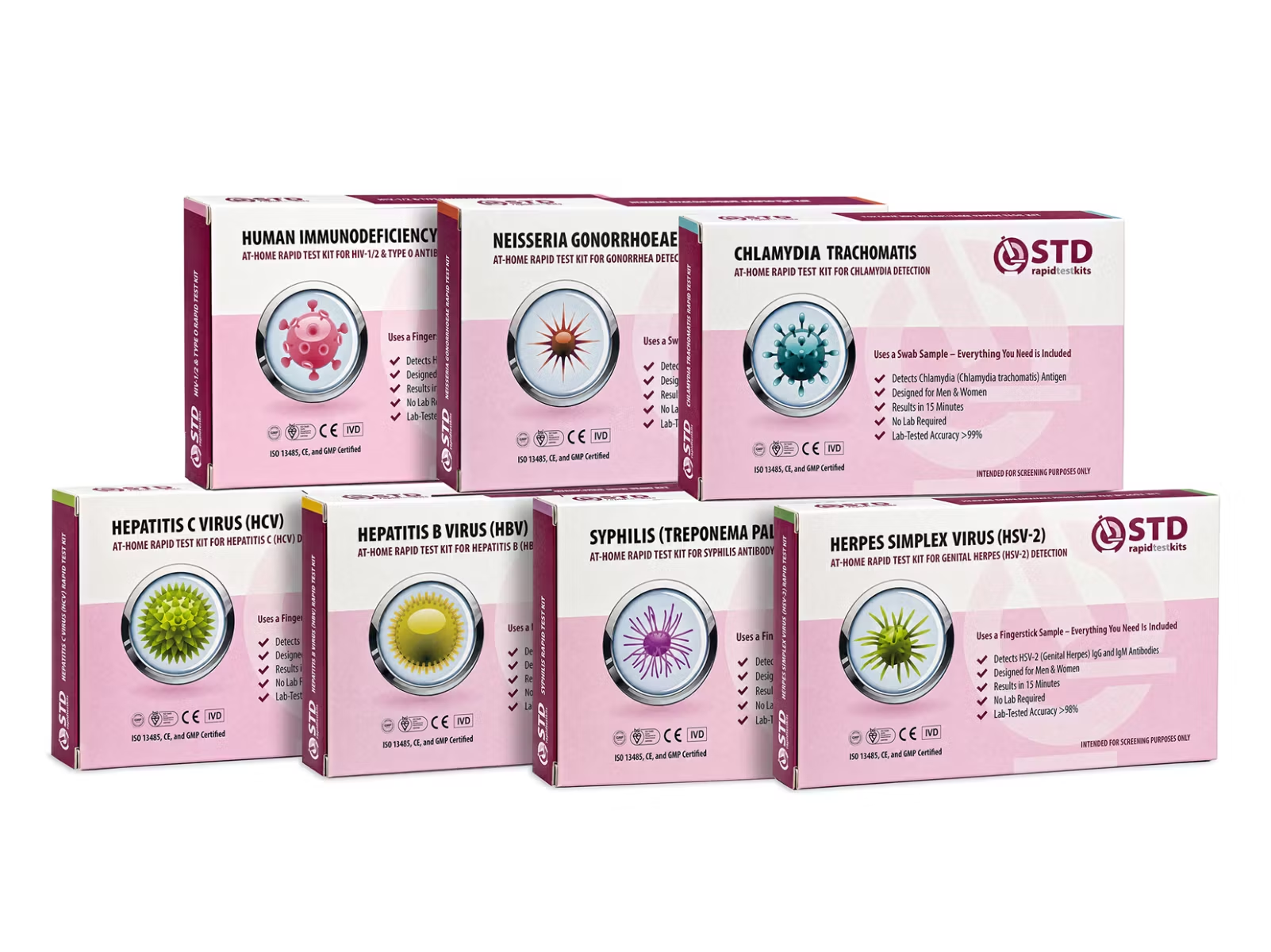
For people who want a starting point before a clinic visit, private at-home rapid screening can help map what is going on. A multi-infection home test covers the most common STIs through self-collected samples (vaginal swab or fingerstick blood depending on the panel) and produces results in fifteen minutes per cassette. These rapid lateral-flow tests are screening tools, not lab-grade NAATs, so a positive result should be confirmed with the prenatal provider. They are useful for ruling several infections out quickly while a clinic appointment is being arranged.
Negative results bring their own value. When a panel comes back clear, the conclusion shifts toward hormonal, mechanical, or stress-related causes, and the comfort adjustments described earlier become the focus. Either way, a result narrows the cause down within a few days and lets treatment, if any, begin promptly.
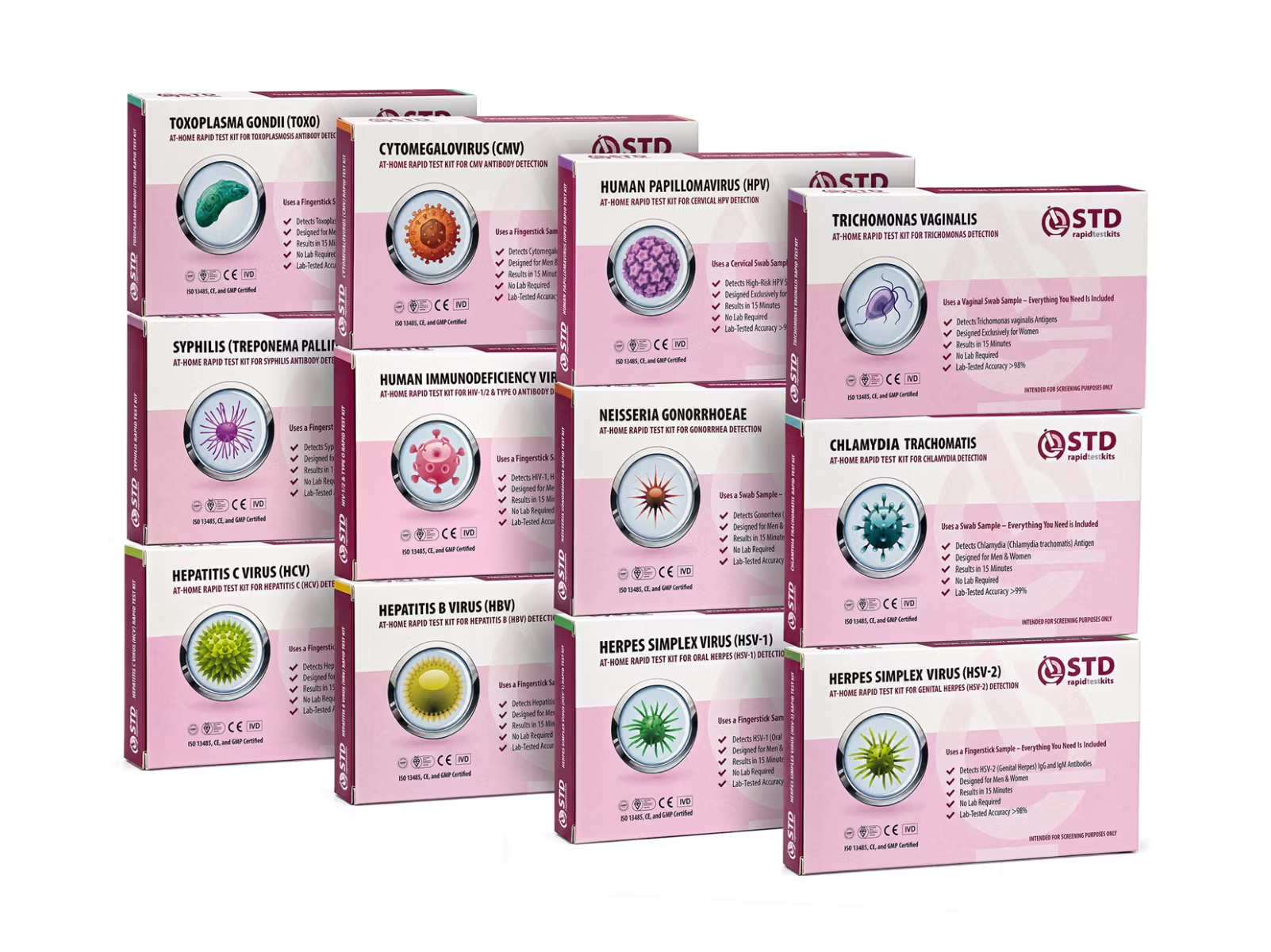
All pregnant women should be tested for HIV, syphilis, hepatitis B, and chlamydia at the first prenatal visit. Pregnant women under age 25 or at increased risk should also be tested for gonorrhea.
Pregnancy Sex Should Not Feel Like a Mystery
Pain after sex during pregnancy almost always has a simple explanation. Most of the time, it is hormones and the body adjusting to a body inside a body. Sometimes it is a UTI, a yeast overgrowth, or an STI that needs treatment. The boundary between the two is persistence. If discomfort fades and stays gone, the cause was almost certainly mechanical. If it lingers, returns, or arrives with friends like fever, discharge, or burning urination, testing brings answers in a day or two.
The pregnancy itself is not made fragile by sex. The cervix is not the front door to the uterus in any practical sense, and the baby is well-shielded by amniotic fluid and the muscular uterine wall. What changes is the surrounding tissue, the bladder behavior, and the local bacterial balance. Reading those changes is the work of the next nine months.
When in doubt, asking is the right move.
- Short-lived soreness after sex with no other symptoms is almost always hormonal or mechanical.
- Burning urination, fever, unusual discharge, or pelvic pressure point toward an infection and call for a urine sample and a vaginal swab.
- Routine prenatal STI screening covers most of what could be missed; ask whether yours is up to date.
- At-home rapid screens are useful for ruling several infections out quickly, but a positive result should always be confirmed with your prenatal provider.
Frequently Asked Questions
- Is it normal for sex to hurt a little during pregnancy?
- Often, yes. Increased pelvic blood flow and a more sensitive cervix can make penetration feel different even when nothing is medically wrong. If the soreness fades within a few hours and is not accompanied by burning urination, fever, or unusual discharge, it is usually mechanical. If the pain keeps showing up every time or lasts more than a day, it is worth a call to the prenatal provider.
- Why does it burn after sex when I am pregnant?
- Burning can come from friction alone, because pregnancy tissue is softer and more reactive. It can also signal a urinary tract infection, especially if the burn returns when you urinate. Yeast overgrowth and STIs are the other candidates. The combination of symptoms usually points to which one: burning during urination plus pelvic pressure leans UTI; itching plus thick discharge leans yeast; symptoms with a new partner exposure leans toward an STI screen.
- Can a UTI really start after sex during pregnancy?
- Yes, and it is common. Sex can push bacteria from the perineum into the urethra. Pregnancy slows urine flow and the growing uterus presses on the bladder, so bacteria have more time to multiply. Many people notice the pattern: sex one night, burning urination the next morning. UTIs in pregnancy are usually easy to treat with pregnancy-safe antibiotics chosen by a clinician, and treating promptly prevents the infection from reaching the kidneys.
- How do I know if it might be an STI instead of a UTI or yeast?
- Symptoms overlap a lot, which is why testing matters more than guessing. STIs like chlamydia and gonorrhea often produce no symptoms at all in the early weeks. When symptoms do appear, they can include pelvic pain, unusual discharge, or irritation during sex. The fastest way to tell the difference is a vaginal swab plus urine sample. Most prenatal panels already include this screening at the first visit.
- Can painful sex during pregnancy hurt the baby?
- In a typical pregnancy, no. The baby is cushioned by amniotic fluid and sealed off by the cervix. Sex itself does not reach the developing fetus. What clinicians care about is whether the pain is signaling an infection, because untreated infections can affect pregnancy outcomes. The discomfort matters as a clue more than as a direct danger.
- Why does pregnancy make everything feel more sensitive down there?
- Hormones run the show. Estrogen increases blood flow to the pelvis, thickens the vaginal lining, and makes tissues more reactive. Progesterone relaxes smooth muscle and changes pelvic-floor tone. The cervix sits lower and softens earlier in pregnancy than people expect. Tissues swell slightly, nerves become more responsive, and ordinary sensations feel stronger. For some people this makes sex feel better. For others, it creates tenderness that lingers afterward.
- What can make sex more comfortable during pregnancy?
- Slowing the pace, taking longer for arousal, and using a water-based lubricant cover most cases. Side-lying positions keep weight off the abdomen and cervix. Avoiding deep thrusting and using positions where the receiving partner controls depth and angle reduces post-sex soreness. Skip scented or warming lubricants, which can irritate already-sensitive tissue.
- When should I actually call my prenatal provider?
- Call within a day if burning after sex lasts more than a few hours, painful urination is present, discharge looks or smells different, you develop fever or chills, or pelvic pressure stays for more than a few hours. Light spotting after sex in early pregnancy is often benign, but heavier bleeding or bleeding with cramping should be evaluated the same day. Providers ask about painful sex routinely; there is no awkward way to bring it up.
Our article was constructed based on current advice from the most prominent public health and medical organizations, including the Centers for Disease Control and Prevention, the World Health Organization, and MedlinePlus from the U.S. National Library of Medicine. The clinical guidance has then been molded into simple language based on the situations that pregnant readers actually experience when they search for answers about pain after sex. We do not provide individualized medical advice; if symptoms concern you, see your prenatal provider.
- U.S. Centers for Disease Control and Prevention. STI Treatment Guidelines, including screening recommendations during pregnancy.
- U.S. Centers for Disease Control and Prevention. Urinary Tract Infection overview, including risk factors and pregnancy-related considerations.
- World Health Organization. Fact sheet on Sexually Transmitted Infections, including risks during pregnancy.
- U.S. Centers for Disease Control and Prevention. STIs and Pregnancy: screening timing and neonatal exposure risks for chlamydia, gonorrhea, syphilis, HIV, and hepatitis B.
- U.S. Centers for Disease Control and Prevention. About Bacterial Vaginosis: BV during pregnancy is linked to premature delivery and low birth weight.
- U.S. Centers for Disease Control and Prevention. About Trichomoniasis: pregnant people with trichomoniasis are more likely to deliver early and to have babies with low birth weight.
- U.S. Centers for Disease Control and Prevention. Chlamydia overview, symptoms and screening.
- U.S. Centers for Disease Control and Prevention. Gonorrhea overview, symptoms and screening.
- MedlinePlus (U.S. National Library of Medicine). Urinary tract infections: symptoms, causes, and general background.
