Published: August 2025 | Last updated: May 2026 | Editorial review and quality control: Martina N.
Can you get hepatitis from oral sex?
Yes. Hepatitis A and Hepatitis B both transmit during oral sex. Hep B is present in semen, vaginal fluid, blood, and saliva, and is far more infectious per exposure than HIV. Hep A spreads via the fecal-oral route, which makes rimming the primary oral-sex risk. Hep C through oral sex is rare but documented when blood is involved. Vaccines protect against A and B; Hep C has no vaccine but is now curable.
Oral sex gets called low-risk often enough that most people round it down to no-risk. For hepatitis specifically, that rounding is wrong. Hepatitis A and Hepatitis B both transmit during oral contact at rates that are easy to underestimate, and Hepatitis C, while rare through oral sex, has documented cases when blood is in the picture. The result is a real-world risk pattern that doesn't match the casual oral-is-safer advice most readers grew up with.
The basic risk math comes down to which virus you mean and what kind of contact happened. Hepatitis A doesn't care about blood; it travels through the fecal-oral route, so oral-anal contact (rimming) is the main concern. Hepatitis B travels through blood, semen, vaginal fluids, and saliva, and it's startlingly hardy: the virus can remain infectious on dried surfaces for days, far longer than HIV, which means a single small entry point in the mouth is enough. Hepatitis C needs blood-to-blood contact to transmit, so oral sex is generally low risk for it, though bleeding gums, dental work, mouth ulcers, or menstruation during oral sex can all push the risk up.
Oral sex isn't dangerous in any meaningful sense, but the framing of oral-is-safe isn't accurate enough to base your sexual health decisions on. The good news is the protective steps are simple: get vaccinated for A and B, avoid oral when there's mouth or genital injury, use barriers when it makes sense, and test on the right schedule after a known exposure. The rest of this guide explains how each part of that works, including where the anxiety usually outpaces the medical reality.
Key Takeaways
- Hepatitis A and B both transmit during oral sex; Hepatitis C is rare through oral sex but possible when blood is involved.
- Vaccination for Hep A and Hep B plus testing on the right window-period schedule (6 to 12 weeks for Hep B, 8 to 11 weeks for Hep C) handles most of the practical risk.
Hepatitis A, B, and C: three different viruses, three different risks
The word hepatitis just means liver inflammation. The three viruses that share the name behave differently, transmit through different fluids, and respond to different prevention tools. Treating them as one thing is where most of the confusion about oral-sex risk comes from.
Hepatitis A is a short-term liver infection that almost always clears on its own within a few months. Per the CDC's hepatitis program, it spreads through the fecal-oral route: contaminated food, contaminated water, and direct oral-anal contact. Sexual transmission happens, especially during rimming, and there's a safe, effective two-dose vaccine.
Hepatitis B is the one most people get wrong. It's a sexually transmitted infection by the CDC's own definition, and it transmits through blood, semen, vaginal fluid, and saliva. The virus is unusually robust and stays infectious on dried surfaces for days. There's a two-dose or three-dose vaccine that protects most people for life when they complete the series.
Hepatitis C is primarily a blood-to-blood virus. Most new cases worldwide come from sharing injection-drug equipment or, historically, from unscreened blood transfusions. Sexual transmission, including through oral sex, is documented but uncommon, and the risk concentrates in scenarios involving visible blood. There's no Hep C vaccine, but modern direct-acting antivirals cure roughly 95% of cases in 8 to 12 weeks.
| Virus | Main route | Oral-sex risk | Vaccine |
|---|---|---|---|
| Hepatitis A | Fecal-oral (food, water, rimming) | Real, mainly through oral-anal contact | Yes, 2 doses |
| Hepatitis B | Blood, semen, vaginal fluid, saliva | Real; transmits through tiny mouth or genital entry points | Yes, 2 or 3 doses |
| Hepatitis C | Blood-to-blood (mostly injection drug use) | Low, but documented when blood is involved | No, but curable with antivirals |
How hepatitis transmits during oral sex
The mechanism varies by virus, and understanding it makes the risk concrete instead of abstract.
Hepatitis A. The virus lives in the digestive tract and is shed in stool, including microscopic amounts that aren't visible. Rimming (oral-anal contact) is the most direct route, but oral-genital contact after a partner has had recent anal contact can also transfer enough material to infect. Public-health agencies have responded to repeated Hepatitis A outbreaks among gay and bisexual men in several countries since 2017 by recommending routine Hep A vaccination for sexually active adult men.
Hepatitis B. HBV is present in semen, pre-ejaculate, vaginal fluid, blood, and (in lower concentrations) saliva. During oral sex, transmission happens when those fluids meet a small entry point: bleeding gums after flossing, a paper-thin gum injury from brushing, a cracked lip, an unhealed dental procedure, a canker sore, or microscopic tears on the genitals. Receiving oral sex from a partner with bleeding gums also exposes the receiver, because saliva mixed with even tiny amounts of blood is infectious. Penetration isn't required, and ejaculation isn't required.
Hepatitis C. HCV transmits through blood-to-blood contact, so oral sex is only a meaningful risk when blood is present. The most relevant scenarios are oral sex during menstruation, oral sex involving a partner with active gum disease or a recent dental procedure, and rough oral play that draws blood from either partner. The CDC notes that HCV sexual transmission risk is highest among men who have sex with men, particularly those living with HIV.
- Hepatitis A: fecal-oral contact, including rimming or oral sex right after anal contact.
- Hepatitis B: any fluid exchange (semen, pre-ejaculate, vaginal fluid, blood, saliva) meeting a tiny mouth or genital entry point.
- Hepatitis C: blood-to-blood only. Oral sex is low risk unless visible blood is involved.
Why Hepatitis B deserves the most attention
If you remember one comparison from this article: HBV is substantially more infectious per exposure than HIV, because viral concentrations in blood and bodily fluids are orders of magnitude higher. That difference is the reason oral sex is a real route for Hep B even though the same act is much lower risk for HIV.
The viral load in an infected person's blood and bodily fluids is extraordinarily high, often hundreds of millions of viral copies per milliliter of blood, compared to thousands or tens of thousands for HIV. Even a microscopic amount of fluid carries enough virus to infect. HBV is also environmentally stable: it remains infectious on dried surfaces for days, far longer than HIV, which degrades rapidly outside the body. That stability means shared razors, toothbrushes, and contaminated equipment all become plausible transmission paths in addition to direct sexual contact.
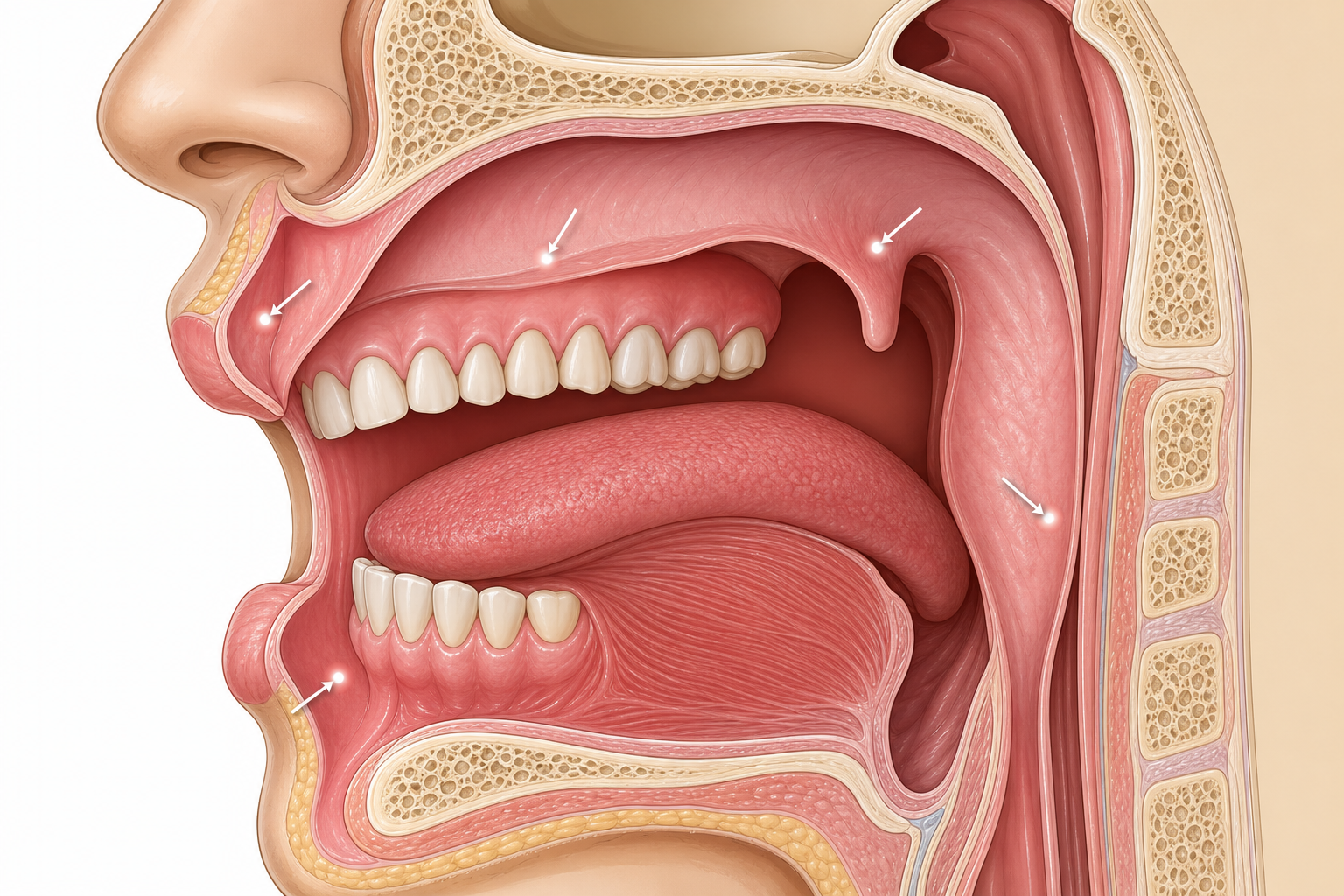
The other awkward fact about Hepatitis B: most acute infections are silent. The CDC estimates that about half of newly infected adults have no symptoms during the acute phase, and the rest typically have mild, non-specific complaints (fatigue, dark urine, upper-abdominal discomfort, mild fever) that get attributed to other causes. Knowing where on the oral mucosa the virus can enter (gum line, lip mucosa, inner cheek, soft palate) makes the prevention checklist further down this article easier to follow.
Symptoms and incubation windows
Each virus has a different incubation period, the time between exposure and symptom onset, when the virus is multiplying silently. Knowing the windows helps with two things: figuring out whether a recent exposure could explain how you feel right now, and timing tests so they're accurate.
Public-health sources commonly report the typical incubation periods as:
- Hepatitis A: 15 to 50 days, average 28 days. Symptoms (when they appear) include fatigue, loss of appetite, nausea, abdominal pain, dark urine, and jaundice (yellowing of the eyes or skin). Most adults clear the virus within a few months without specific treatment.
- Hepatitis B: 60 to 150 days, average 90 days. Acute infection often has no symptoms; when symptoms occur they overlap with Hep A and may include joint pain and oral signs (mouth ulcers, bleeding gums, a metallic taste). The WHO Hepatitis B fact sheet notes that the great majority of healthy adults clear an acute HBV infection on their own; chronic infection develops in a small fraction.
- Hepatitis C: 14 to 180 days, with symptoms (when they appear) typically arriving 4 to 10 weeks after exposure. Most acute Hep C infections are asymptomatic. Without treatment, more than half of adult cases become chronic, but modern antivirals cure most chronic cases.
One thing worth flagging: a sore throat the morning after oral sex is almost never an early hepatitis sign. Hepatitis B and C symptoms don't usually localize to the throat, and Hepatitis A symptoms take weeks to appear. A scratchy throat the next day is much more likely to be irritation, a viral cold, or strep, none of which are STIs.
Hepatitis symptoms that warrant testing
Acute hepatitis is often silent, especially with Hep B and Hep C. Symptoms (when they appear) overlap heavily with the flu and other viral illnesses, so the only way to know is to test.
- Fatigue that doesn't resolve with rest, lasting more than a few days Common
- Loss of appetite, nausea, or vague upper-right abdominal discomfort Common
- Dark (tea-colored) urine, sometimes with pale stools Common
- Jaundice: yellowing of the whites of the eyes or skin Less common
- Mild fever, joint pain, or a generalized achy feeling Less common
- Itchy skin without an obvious rash, especially in chronic Hep B or C Less common
- Metallic taste, mouth ulcers, or bleeding gums (more typical with Hep B) Rare
- No symptoms at all; roughly half of acute Hep B and most acute Hep C infections present silently Common
When and how to test after a possible exposure
Window periods are the times after exposure when a test becomes reliably accurate. Testing too early can produce a false negative because the body hasn't yet produced detectable antibodies or the virus hasn't reached detectable levels.
Standard guidance for the three hepatitis viruses:
- Hepatitis A: If you have symptoms, test promptly; the IgM anti-HAV antibody appears around the time symptoms start and stays detectable for several months. If a known partner was diagnosed and you're asymptomatic, testing at 4 to 6 weeks post-exposure is reasonable.
- Hepatitis B: Standard guidance recommends initial screening at 6 to 12 weeks after a possible exposure, with a follow-up at 6 months for higher-risk exposures. Standard panels look for HBsAg (surface antigen, indicates active infection), anti-HBs (surface antibody, indicates immunity from vaccination or past infection), and anti-HBc (core antibody, indicates past or current infection).
- Hepatitis C: Initial antibody screening becomes reliable around 8 to 11 weeks post-exposure for most people, with follow-up confirmation at 6 months. A reactive antibody test should always be confirmed with an HCV RNA (PCR) test to distinguish current infection from cleared past infection. RNA testing can pick up infection earlier, around 2 to 3 weeks after exposure, which is useful if a clinic wants to confirm a suspected acute case sooner.
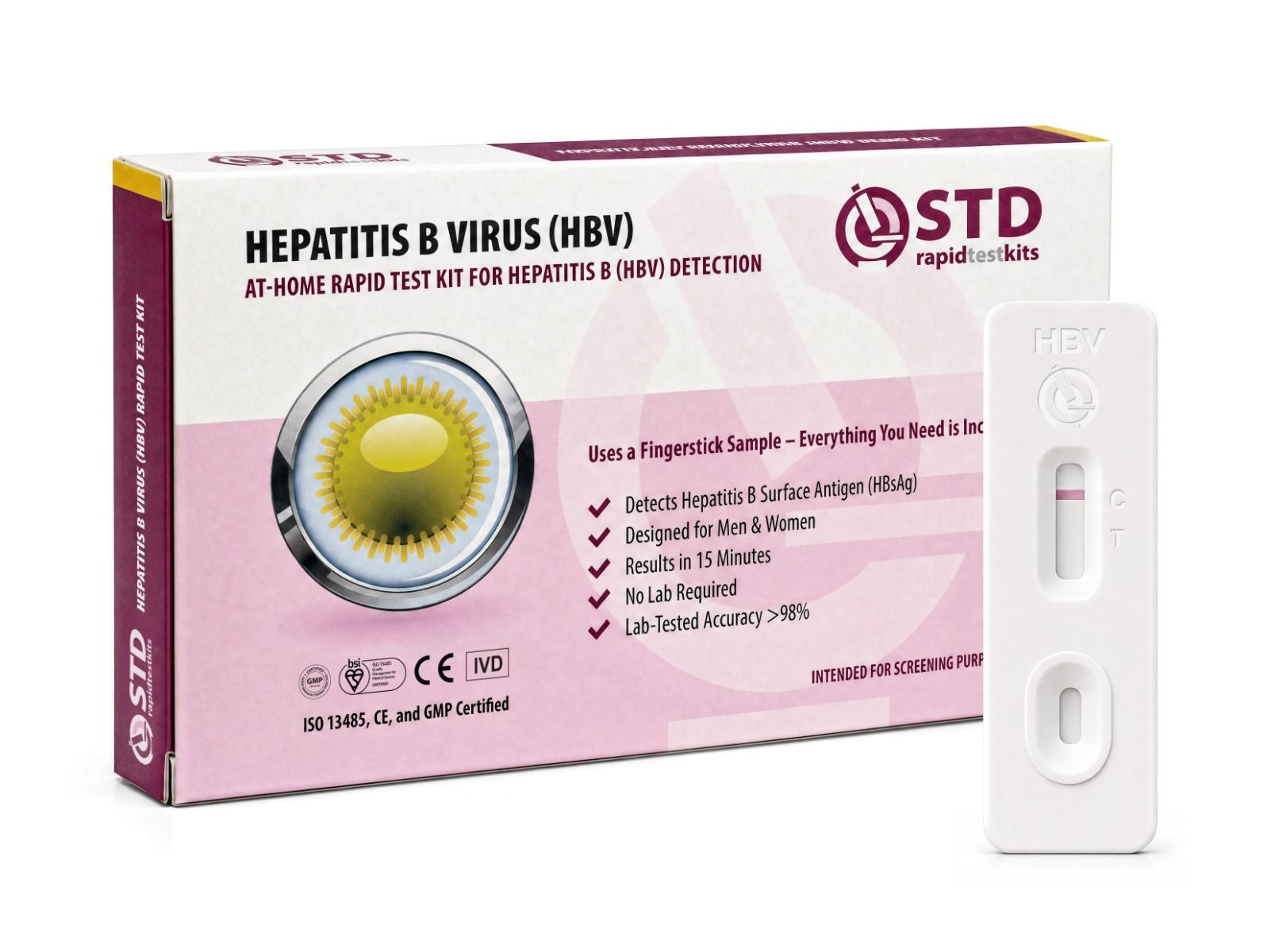
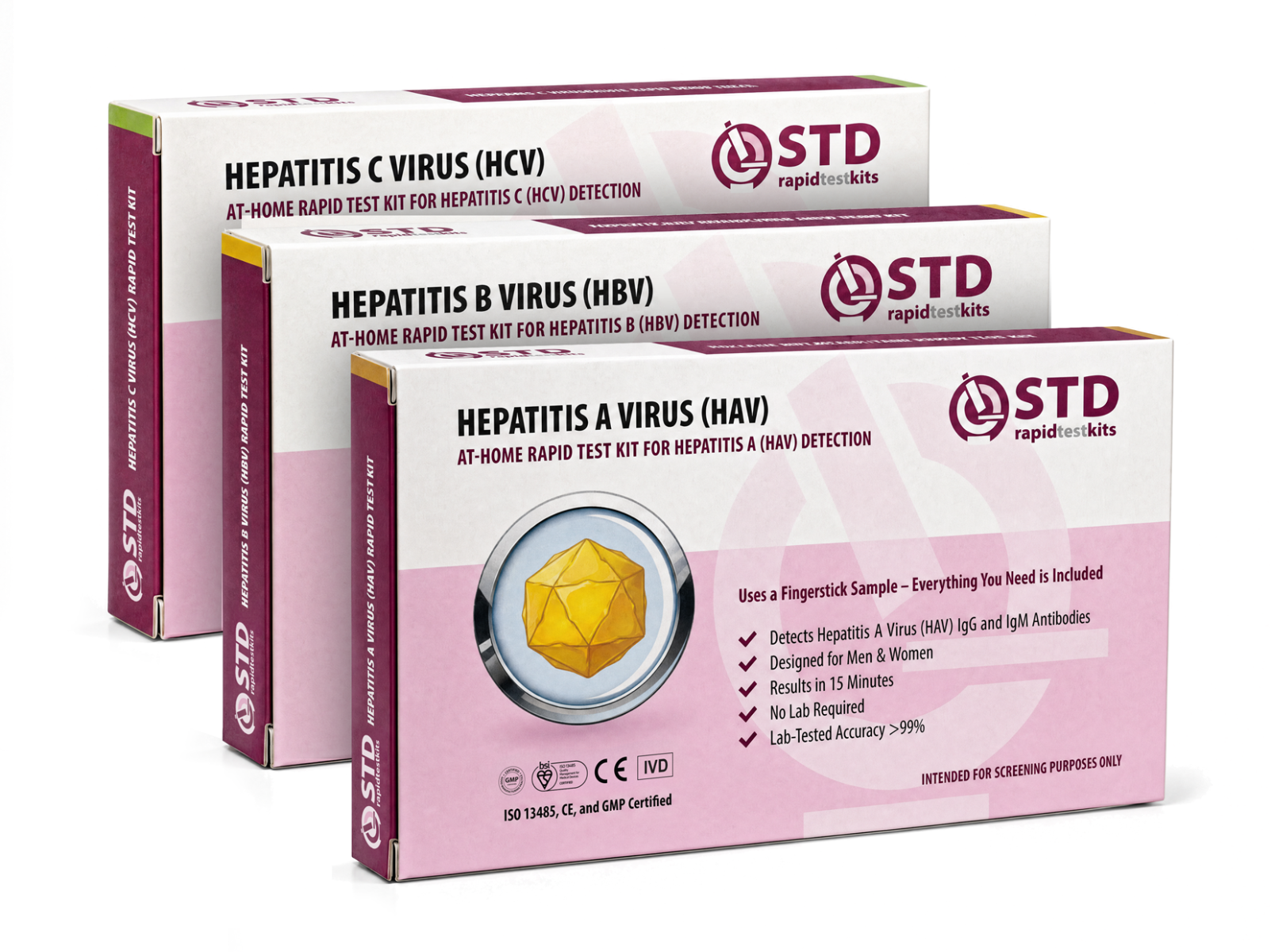
stdrapidtestkits.com sells rapid at-home lateral-flow STI test kits, including dedicated Hepatitis B and Hepatitis C panels. Our Hep B and Hep C kits screen at home with rapid lateral-flow chemistry from a fingerstick blood sample. They're a private first step; a positive result is worth confirming at a clinic or lab with the more sensitive PCR or antigen panels labs use. We don't currently offer an at-home Hepatitis A kit; if Hep A is your specific concern, see a clinic or primary-care provider for an IgM anti-HAV blood test. This article is published by stdrapidtestkits.com, which sells at-home STI testing kits. We recommend products based on fit-for-purpose for the reader's concern, not commercial benefit.
- Hepatitis A: if symptomatic, test promptly (IgM anti-HAV appears around symptom onset). Asymptomatic exposure: 4 to 6 weeks.
- Hepatitis B: initial screening at 6 to 12 weeks post-exposure, follow-up at 6 months for higher-risk exposures.
- Hepatitis C: antibody screening reliable around 8 to 11 weeks, confirmation at 6 months. HCV RNA (PCR) testing can detect infection earlier (around 2 to 3 weeks) but isn't a typical first-line at-home screen.
Hepatitis C through oral sex: where the risk actually comes from
Hepatitis A and Hepatitis B are the two hepatitis viruses where oral sex is a meaningful exposure route. Hepatitis C sits at a different point on the spectrum, and the difference is worth unpacking because the gap between "rare" and "zero" is where most reader anxiety lives.
CDC clinical guidance describes sexual transmission of HCV as uncommon in the general population, with oral sex carrying lower documented risk than anal sex or sex with multiple partners, based on the risk factors the CDC identifies as elevating HCV sexual-transmission risk. Saliva alone does not carry enough virus to be a meaningful transmission route, which is why deep kissing isn't on any HCV risk list. The route opens only when blood enters the picture: gums that bleed visibly during oral sex, a fresh canker sore or recent dental injury, menstrual blood during oral-vaginal contact, or rough oral play that draws blood from either partner. A long-running heterosexual-couples study published in PubMed Central followed serodiscordant couples and found extremely low rates of HCV transmission via vaginal and oral sex without blood exposure, which is useful context for the long-term-partner case.
The risk concentrates most clearly in men who have sex with men (particularly those living with HIV, where sexually transmitted HCV has been most consistently documented) and in any encounter where one partner carries an acutely elevated HCV viral load combined with a visible blood exposure point. For most encounters that don't fall into one of those patterns, the per-act risk during oral sex is very low. The table below compares relative risk by activity.
| Sexual activity | Relative risk of Hepatitis C | Factors that raise the risk |
|---|---|---|
| Kissing | Effectively zero | Saliva does not transmit HCV |
| Oral sex | Very low | Bleeding gums, mouth ulcers, menstrual blood |
| Vaginal sex | Low | Rough sex, presence of blood, no barrier |
| Anal sex | Higher | Fragile mucosal tissue, microbleeding, no barrier |
| Sharing injection equipment | Very high | Direct blood-to-blood exposure |
Hepatitis C testing options: antibody, RNA, and rapid kits
If a possible exposure has you spiraling, the timing of which test you order matters as much as which test it is. Hepatitis C has three main testing pathways and they differ on when each becomes reliable.
Antibody tests are the standard first-line screen and detect your body's immune response to HCV. They become reliable around 8 weeks post-exposure and reach best accuracy at 11 to 12 weeks. RNA (PCR) tests detect the virus directly in blood and can return a positive result as early as 2 to 3 weeks after exposure, which is why clinics use them when an acute infection is strongly suspected and they can't wait for antibody seroconversion. Rapid at-home Hep C test kits use lateral-flow antibody chemistry on a fingerstick blood sample and follow the same antibody window: most reliable at 8 to 12 weeks and beyond. The comparison below summarizes when each test type performs well.
Hepatitis C testing methods compared
| Feature | Antibody test (lab) | RNA / PCR test (lab) | Rapid home test |
|---|---|---|---|
| Sample | Venous blood | Venous blood | Fingerstick blood |
| What it detects | HCV antibodies | HCV viral RNA directly | HCV antibodies |
| Earliest reliable detection | 8 weeks | 2 to 3 weeks | 8 to 12 weeks |
| Best accuracy from | 11 to 12 weeks | 4 to 6 weeks | 12 weeks and beyond |
| Setting | Clinic or lab | Clinic or lab | At home, private |
| Confirmatory step | Reactive result needs RNA confirmation | Definitive for active infection | Reactive result needs lab antibody + RNA |
RNA testing closes the window earliest but isn't a first-line at-home screen; rapid kits sit on the antibody timeline.
Vaccines and post-exposure prophylaxis
The most reliable way to make hepatitis A and B exposure non-events is vaccination before exposure. Both vaccines are safe, effective, and widely available.
The Hepatitis B vaccine has been part of the routine U.S. childhood immunization schedule since 1991, when ACIP recommended universal infant vaccination. Adults born in the U.S. before 1991 are unlikely to have received the infant series and may not have been offered the vaccine in adolescence either, which includes most adults currently in their mid-30s and older. The CDC's Hepatitis B program now recommends universal vaccination for all adults aged 19 through 59, and for adults 60 and older with risk factors. The vaccine is given as either a 2-dose or 3-dose series; protection is generally considered lifelong for healthy people who complete the series and develop antibodies.
The Hepatitis A vaccine is given as a 2-dose series, with the second dose 6 months after the first. The CDC recommends it for all children, all international travelers to areas where Hep A is common, and all sexually active gay and bisexual men.
If you've already been exposed to Hep B and weren't vaccinated, post-exposure prophylaxis is available. The CDC recommends starting the Hep B vaccine series and, for higher-risk exposures, a single dose of Hepatitis B Immune Globulin (HBIG) within 24 hours and ideally within 7 days. Talk to a clinic or urgent-care provider as soon as you learn about the exposure. There's no equivalent post-exposure vaccine for Hepatitis C, but early detection still matters because today's antivirals can cure most chronic infections.
Hep A and Hep B vaccine schedules
- Hep B (3-dose series): doses at 0, 1, and 6 months; the most common adult schedule.
- Hep B (2-dose Heplisav-B series): doses at 0 and 1 month; FDA-approved for adults 18 and older.
- Hep A (2-dose series): second dose 6 months after the first.
- Hep B post-exposure: start vaccine within 24 hours; HBIG within 7 days for higher-risk exposures.
- After completing the Hep B series, ask for an anti-HBs titer to confirm seroconversion.
What to do if you test positive
A positive hepatitis test is a medical condition with clear next steps, not a moral verdict. The follow-up varies by virus.
Hepatitis A. Most cases resolve on their own within a few weeks to months. Treatment is supportive: rest, fluids, and avoiding alcohol and acetaminophen while the liver recovers. You'll be infectious for roughly 2 weeks before symptoms start through about 1 week after jaundice appears, so disclosing to recent close contacts so they can get vaccinated or get a booster is the priority.
Hepatitis B. A positive result needs follow-up labs to distinguish three states: acute infection (likely to clear within 6 months), chronic infection (lasting longer than 6 months and requiring monitoring), and resolved infection with immunity (no active infection, but past exposure). Your provider will repeat HBsAg, anti-HBc, and HBV DNA testing over time. Acute Hep B in healthy adults usually clears on its own; chronic Hep B has effective antiviral medications that suppress the virus and protect the liver long-term, per the NHS Hepatitis B page.
Hepatitis C. A reactive antibody test should be confirmed with an HCV RNA test. If RNA-positive, you have a current infection and are a candidate for direct-acting antiviral treatment, which cures roughly 95% of cases in 8 to 12 weeks. If antibody-positive but RNA-negative, you cleared a past infection and aren't currently infectious, though you can be reinfected.
Across all three: tell recent partners so they can get tested and (for Hep A and B) vaccinated. A short, honest message is enough: "I just tested positive for hepatitis. I wanted to let you know so you can get tested and look after yourself."
After a positive result
- Hep A: supportive care (rest, fluids, no alcohol or acetaminophen) and notify recent close contacts so they can get vaccinated.
- Hep B: repeat HBsAg and anti-HBc testing at the 6-month mark to distinguish acute from chronic infection.
- Hep C: confirm a reactive antibody result with an HCV RNA (PCR) test before starting direct-acting antivirals.
Lower-risk oral sex without losing intimacy
The protective steps are small adjustments that lower the per-encounter risk substantially without changing what intimacy feels like. The list that follows pulls out the highest-impact ones, ordered by how much they shift the math. Vaccination dwarfs every other measure in effect size; the rest of the list is about managing the residual risk vaccination does not cover.
Practical protective steps
- Get vaccinated. The single highest-impact protection. Once you've completed the Hep A and Hep B vaccine series and seroconverted, those two viruses become non-issues for your sex life.
- Skip oral when there's mouth injury. Bleeding gums, recent dental work, canker sores, cold sores, oral piercings still healing: these are entry points. Wait until tissue is healed.
- Don't brush or floss in the hour before oral sex. Brushing causes microscopic gum bleeding even when nothing is visible. Alcohol-free mouthwash is fine.
- Use a barrier when the situation calls for it. Flavored condoms for oral-genital contact, dental dams or a cut-open condom for oral-vaginal or oral-anal contact. Especially important with a new partner, an unknown-status partner, or any oral-anal contact.
- Avoid oral sex during a partner's menstrual period if Hepatitis C is a specific concern; menstrual blood is the relevant exposure.
- Test on the right schedule. An at-home Hepatitis B and C combo kit is a reasonable first step after a known exposure once the window period has passed; confirm any reactive result at a clinic.
LGBTQ+ communities: specific risk patterns
The hepatitis A and B vaccines matter especially for gay and bisexual men because of documented outbreak patterns. The CDC has tracked multiple Hepatitis A outbreaks in this population since 2017, and the agency now routinely recommends both Hep A and Hep B vaccination for all sexually active gay and bisexual men, regardless of HIV status.
For lesbian and bisexual women, the public-health data is sparser, which has meant testing and vaccination conversations get skipped more often. The actual exposure routes are real: Hepatitis B and A can transmit through shared sex toys, oral-vaginal contact involving menstrual blood, and oral-anal contact. The same vaccination logic applies, and the same testing windows apply.
For people living with HIV, sexual transmission of Hepatitis C through oral and anal sex appears at higher rates than in the general population. The CDC recommends regular HCV screening for HIV-positive men who have sex with men, with screening intervals based on individual risk patterns. If you're on PrEP or living with HIV, ask your provider how often you should be screened for HCV specifically.
The CDC has tracked multiple Hepatitis A outbreaks among gay and bisexual men since 2017, prompting routine Hep A and Hep B vaccination recommendations for all sexually active MSM regardless of HIV status. For people living with HIV, regular HCV screening is also recommended because oral and anal sexual transmission of Hepatitis C appears at higher rates in this population.
Talking to a partner about testing or status
The conversation gets easier when it's framed as mutual care rather than accusation. People generally respond better to "I want both of us to feel good and stay healthy" than to "I'm worried you might have something." If you're disclosing a positive test result, plain and short is best:
"I just got my test results back and I'm positive for Hepatitis B. I didn't know when we were together, and I wanted to tell you directly so you can get tested and decide what to do. There's a vaccine, and there's also post-exposure care that can help if it's been less than a week. Happy to share what I learned."
If direct disclosure feels hard, anonymous partner-notification services exist (search "tell your partner anonymously" plus your state) and can send a notification on your behalf without revealing your identity.
Per the <a href="https://www.who.int/news-room/fact-sheets/detail/hepatitis-b" target="_blank" rel="noopener noreferrer">WHO Hepatitis B fact sheet</a>, HBV is transmitted through blood, semen, vaginal fluids, and saliva. Even microscopic fluid contact with a small mucosal entry point can start an infection in an unvaccinated person, which is why oral sex with bleeding gums or a fresh dental injury sits on the relevant exposure list.
Your next steps
Whether you're sorting through a recent exposure or planning longer-term sexual-health care, four practical actions cover the bulk of the hepatitis risk a sexually active reader can manage on their own.
Your next steps after a possible exposure
- Get vaccinated for Hep A and Hep B if you haven't already. A simple anti-HBs titer test after the series confirms protection.
- After a possible exposure, test for Hep B at 6 to 12 weeks and Hep C at 8 to 12 weeks; earlier tests can miss seroconversion.
- Confirm any reactive rapid-test result with a clinic lab antibody or PCR test before assuming a diagnosis.
- Notify recent partners so they can test and, for Hep A and Hep B, get vaccinated within the post-exposure window.
FAQs
- Can you get hepatitis from oral sex without ejaculation?
- Yes for Hepatitis B. The virus is present in pre-ejaculate, vaginal fluid, blood, and saliva, so transmission can happen during oral contact even if no one finishes. For Hepatitis A, ejaculation is irrelevant; the route is fecal-oral (rimming). For Hepatitis C, ejaculation also isn't the deciding factor; the deciding factor is whether blood is present.
- How rare is Hepatitis C from oral sex, exactly?
- Rare enough that the CDC describes oral-only sex as low risk for HCV in the general population. Most documented oral-sex HCV transmission has involved visible blood (menstrual blood, gum disease, dental injury) or has occurred in HIV-positive men who have sex with men. If neither partner has any blood exposure during oral sex, the per-act risk is very low.
- Hepatitis B can live in saliva, so can I get it from kissing?
- HBV is present in saliva but at much lower concentrations than in blood, semen, or vaginal fluid. Casual kissing is generally not considered a meaningful transmission route. The risk rises if both partners have open mouth sores or actively bleeding gums, where saliva mixes with blood. Sharing toothbrushes or razors is a more practical concern than kissing.
- How soon after a possible exposure should I get tested?
- If you had a one-time exposure with no symptoms, the earliest reliable test for Hep B is around 6 weeks out; for HCV, around 8 weeks. Testing before those points is likely to produce a false negative. Set a phone reminder for the right date and test then. For higher-risk exposures, repeat at 6 months to clear the longer window.
- If I was vaccinated for Hep B as a kid, am I still protected?
- Probably yes, if you completed the full series and live in a country that started routine infant vaccination before you were born (1991 in the U.S.). Immunity is generally lifelong for people who seroconverted. If you're uncertain, ask your provider for a Hep B surface-antibody (anti-HBs) titer test; a result above 10 mIU/mL confirms protection. A booster is reasonable if your titer is low and your exposure risk is high.
- What if my gums were bleeding during oral sex?
- This is the classic raised-risk scenario. Bleeding gums create a direct entry point for Hepatitis B and a small one for Hepatitis C if your partner's fluids carry the virus. That doesn't mean infection is automatic; transmission still requires the other person to be infectious. The right next step is to wait through the relevant window period (6 to 12 weeks for Hep B, 8 to 11 weeks for Hep C) and test. If the exposure was recent and high-risk, see a clinic about Hep B post-exposure prophylaxis within 24 hours.
- My rapid Hep C home test came back negative but I'm still anxious. What now?
- If you tested before the 8-to-12-week antibody window closed, a negative result isn't yet conclusive. Plan to retest at 12 weeks for solid reassurance. If you've passed 12 weeks and the test is still negative, that's a strong negative; you can confirm with a clinic antibody test or RNA PCR for additional certainty. Persistent anxiety past a clear negative is worth talking through with a clinician separately from the test result.
- Can I still have sex if I test positive for Hepatitis B?
- Yes, with disclosure and protection. Vaccinated partners are protected. Use barriers with unvaccinated or unknown-status partners until they complete the vaccine series and seroconvert. Avoid sharing razors, toothbrushes, or anything that might carry blood. If your infection is chronic, regular liver monitoring with your provider is part of the long-term plan.
- U.S. Centers for Disease Control and Prevention. Viral hepatitis program: overview pages for Hepatitis A, B, and C, including transmission routes, incubation windows, and recommended testing.
- U.S. Centers for Disease Control and Prevention. Viral hepatitis among sexually active adults: clinical guidance on transmission, testing intervals, and vaccination.
- World Health Organization. Hepatitis B fact sheet: global burden, transmission routes, prevention, and treatment summary.
- UK National Health Service. Hepatitis B information page: transmission, symptoms, vaccination, treatment for chronic infection, and post-exposure care.
- UK National Health Service. Hepatitis C information page: transmission, testing, antiviral treatment, and cure rates.
- Vandelli C, Renzo F, Romanò L, et al. HCV Partners Study: prospective study of sexual transmission of Hepatitis C in long-term monogamous heterosexual couples (PubMed Central / National Library of Medicine).
