Published: August 2025 | Last updated: May 2026 | Editorial review and quality control: Martina N.
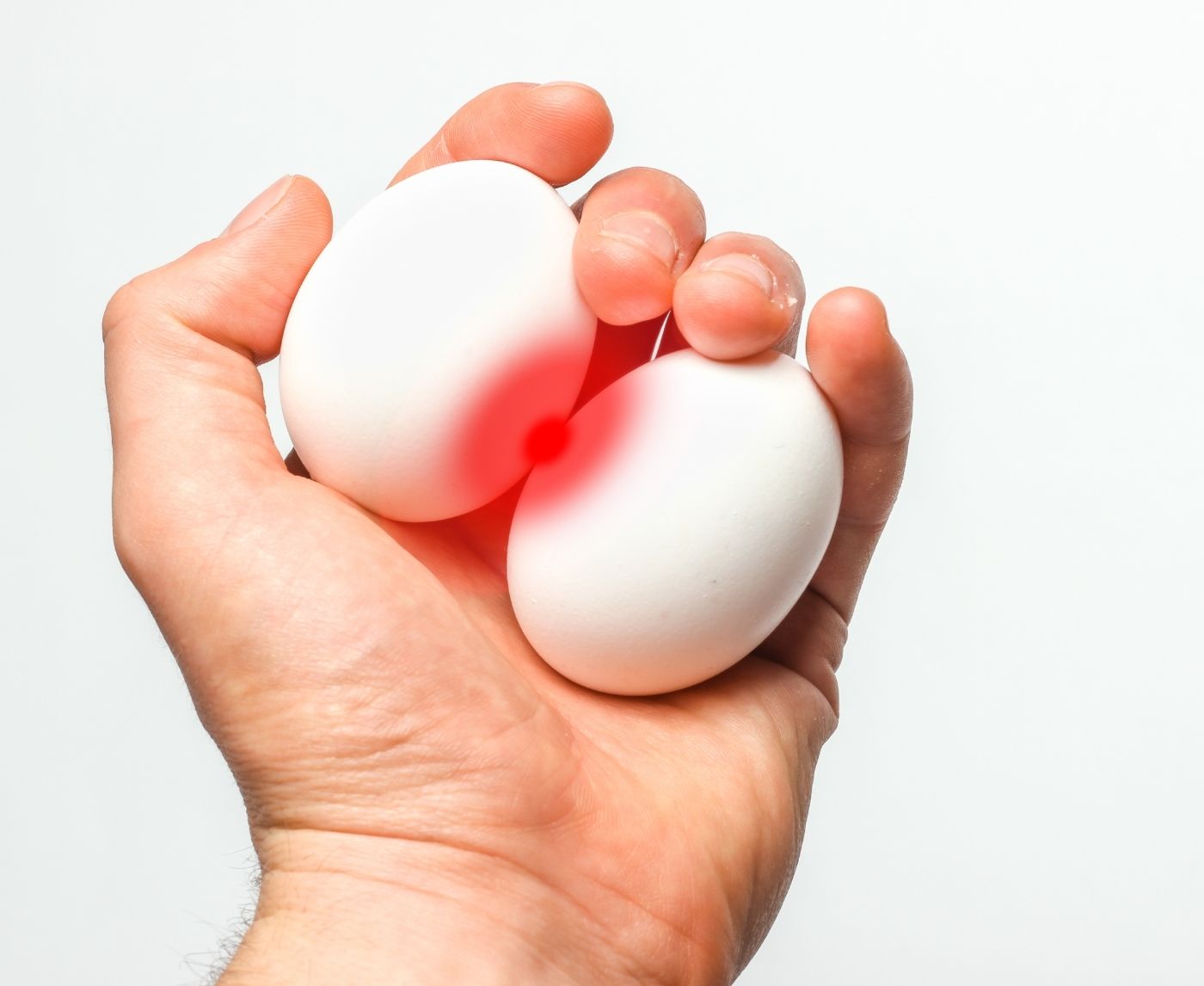
If one testicle starts aching a few days after sex, your mind probably jumps to worst-case scenarios. Gonorrhea is one of them, and the worry is not paranoid. The infection can travel from the urethra to the epididymis, the coiled tube behind each testicle, and cause one-sided pain, swelling, and a heavy ache that gets worse instead of better.
This guide walks through what gonorrhea-related testicle pain actually feels like, how soon after sex it can start, what other conditions look similar (some genuinely urgent), and what to do next. The reassuring part: when gonorrhea is the cause, treatment is straightforward and pain usually starts easing within 48 hours of antibiotics. The harder part: ignoring it can damage fertility and, rarely, spread into the bloodstream. Either way, you do not have to guess. Testing options are private, fast, and do not require a clinic visit.
Key Takeaways
- Gonorrhea can inflame the epididymis (the coiled tube behind each testicle), causing one-sided pain, swelling, and a heavy ache. This is called gonococcal epididymitis and it usually appears 7 to 21 days after exposure.
- Pain that builds gradually over several days, often with burning urination or a urethral drip, fits the gonorrhea pattern. Pain that hits suddenly and severely needs an ER visit to rule out testicular torsion.
Why gonorrhea can hit one testicle and not the other
Most untreated gonorrhea infections in people with penises start the same way. Bacteria settle in the urethra (the tube carrying urine from the bladder). Initial symptoms, when they show up, are usually a strange drip or burning during urination. Many cases cause no symptoms at all, which is one reason urethral gonorrhea is often missed in the first few weeks per the CDC's gonorrhea fact sheet.
If the infection is not treated, the bacteria can travel up the vas deferens (the tube that carries sperm) and reach the epididymis. The epididymis is a tightly coiled tube behind each testicle where sperm mature and are stored. When bacteria inflame it, the result is called epididymitis, and the pain almost always hits one side first because the infection takes the path of least resistance up one vas deferens. The opposite side may follow days later if the infection is not stopped; unilateral pain is the typical opening picture.
The pain is not always dramatic at first. People describe it as a heavy ache, a feeling of pressure, or a tenderness that gets worse when they sit down or walk. The scrotum on the affected side may look red or swollen. Touching the back of the testicle, where the epididymis sits, is usually the most painful spot. A low-grade fever sometimes appears once the inflammation peaks.
The Mayo Clinic epididymitis page notes that bacterial epididymitis caused by sexually transmitted infections is the most common type in men between 14 and 35. The CDC STI Treatment Guidelines specifically recommend testing for gonorrhea and chlamydia in anyone in that age range presenting with epididymitis symptoms. Both infections can cause the same picture and they frequently travel together, which is why combo testing is the standard first step rather than testing for one at a time.
- Unilateral onset is normal. Gonococcal epididymitis almost always hits one side first because the bacteria travel up a single vas deferens at a time.
- The pain sits behind the testicle. The epididymis is a coiled tube on the back surface of each testicle. Tenderness on that specific spot, more than the testicle itself, is the classic exam finding.
Timing: how soon after sex could it start?
The window between exposure and symptoms is the part that confuses people most. Urethral gonorrhea symptoms (burning, discharge) typically appear 2 to 7 days after sex. Epididymitis from the same infection usually shows up later, between 7 and 21 days, because the bacteria have to migrate up the reproductive tract first.
Here is how the timeline tends to unfold:
| Stage | Common Symptoms | Time After Exposure |
|---|---|---|
| Initial urethral infection | Mild burning, possible discharge, or no symptoms at all | 2 to 7 days |
| Urethritis progresses | Clearer drip, urinary urgency, may resolve in some people | 7 to 14 days |
| Spread to epididymis | One-sided testicle pain, swelling, heaviness, sometimes low-grade fever | 7 to 21 days |
Biology does not always follow schedules
Some people never get urinary symptoms and only notice once their testicle starts hurting. Others get a brief drip that fades, assume they were fine, and then develop epididymitis weeks later. If you had condomless oral, vaginal, or anal sex and a testicle is now hurting, the timing window is plausible whether or not the rest of the textbook symptoms showed up.
What does not fit the gonorrhea pattern: pain that started during sex, peaked instantly, and felt sharp rather than gradual. That kind of pain is much more likely to be muscular strain, a varicocele flaring, or (rare but urgent) testicular torsion. The next section covers how to tell the difference.
Pain that hits its peak in minutes, especially during or right after activity, is not the gonorrhea picture. Sudden 10-out-of-10 testicle pain points to torsion, trauma, or a vascular event and warrants an immediate in-person evaluation. Gradual buildup over days fits gonococcal epididymitis; instant-onset agony does not.
Gonorrhea epididymitis vs other causes of testicle pain
Not every ache after sex is an STI. The testicles are a referred-pain hotspot, meaning problems in nearby structures (the inguinal canal, the lower back, the prostate, the spermatic cord) can all radiate down. Sorting the cause is mostly about timing, what the pain feels like, and what other symptoms are riding along with it.
The clearest red flag for an emergency, rather than an STI, is sudden severe pain with no warning. Testicular torsion happens when the spermatic cord twists and cuts off blood flow to the testicle. It is most common in adolescents and younger men, peaks at night or after physical activity, and can cause loss of the testicle within 6 hours if not surgically corrected. If a testicle just turned into a 10-out-of-10 pain in minutes, especially with nausea or vomiting, that is an ER call, not an at-home test.
Here are the patterns that distinguish the common causes:
| Condition | Pain Type | Other Clues |
|---|---|---|
| Gonorrhea or chlamydia epididymitis | Throbbing, gradual, one-sided, worse over days | Burning urination, possible discharge, low-grade fever |
| Testicular torsion | Sudden, severe, often nighttime | No urinary symptoms; scrotum may look high or twisted; nausea |
| Trauma or strain | Sharp at onset, sore with movement | Recent impact, lifting, vigorous sex, or sports |
| Inguinal hernia | Pressure or aching, worse standing or coughing | Visible bulge in the groin; eases when lying down |
| Varicocele | Dull ache, heaviness, worse in heat or after standing | Bag-of-worms texture above the testicle, more common on the left |
How to read the clues at home
If urinary symptoms are present (burning, urgency, cloudy or bloody urine, or a urethral drip), the odds shift heavily toward infection. If they are absent and the pain matches a clear physical trigger (a hard workout, a long bike ride, rough sex), an STI is less likely but not impossible, especially if there was a condomless exposure in the past three weeks.
You often cannot tell the cause from pain alone. The context matters: when the pain started in relation to sex, whether there are urinary symptoms, whether a fever appeared, and what the last sexual exposure looked like. Testing is what closes the loop.
- Urinary symptoms present (burning, urgency, cloudy urine, urethral drip): get a gonorrhea and chlamydia test as soon as the exposure window allows (5 days or more).
- No urinary symptoms and a clear physical trigger (heavy lifting, long bike ride, rough sex): ice, scrotal support, and ibuprofen for 48 hours are reasonable first steps. If the pain does not ease, test anyway, since asymptomatic gonorrhea is common.
Getting tested without a clinic visit
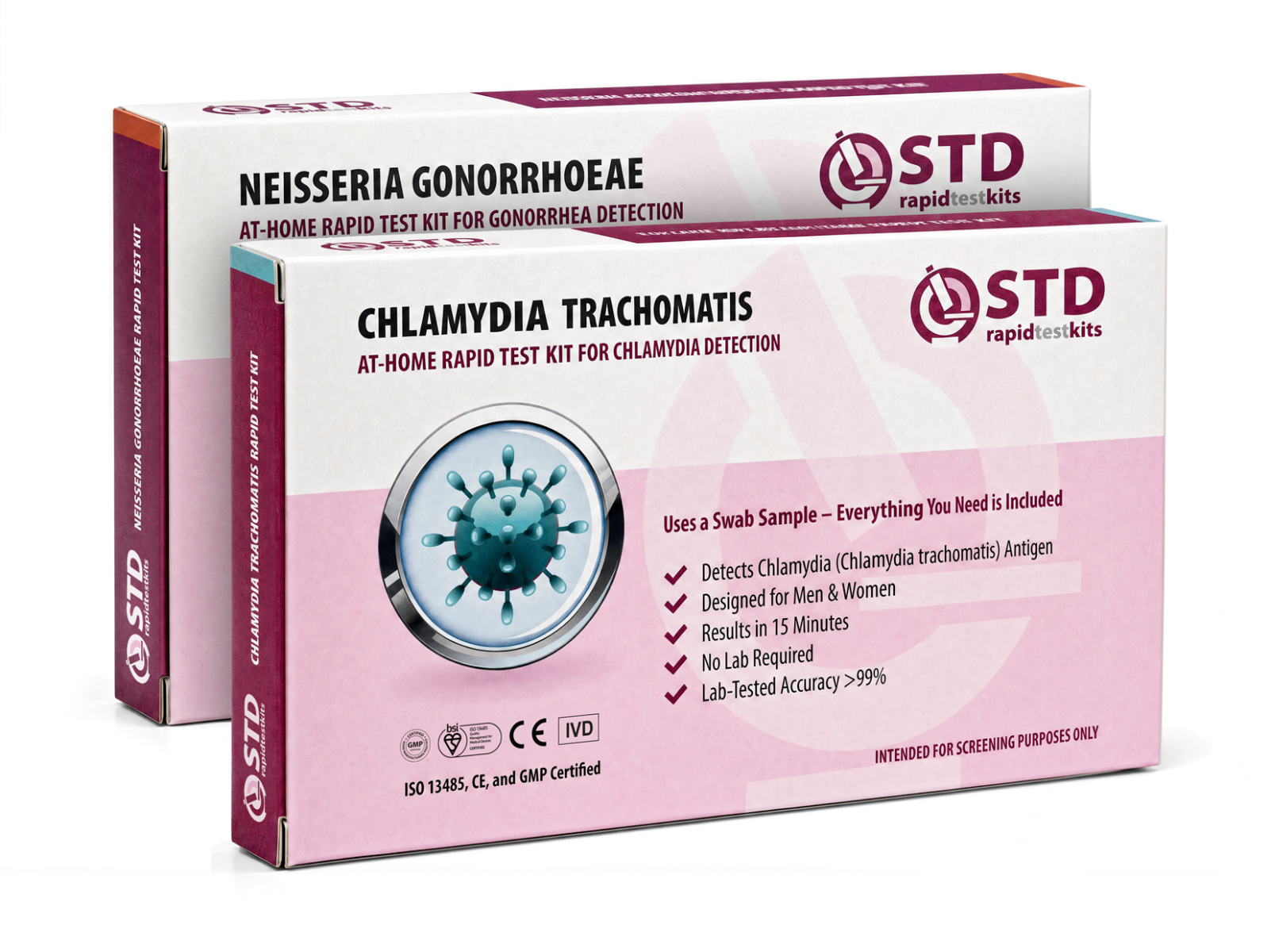
If the pain is moderate and you can urinate without difficulty, the next step is testing rather than guessing. Modern rapid home tests look for gonorrhea (and chlamydia, with a combo kit) using a self-collected sample. Results take about 15 minutes per the test instructions.
Two timing details matter:
- The test window. Rapid lateral-flow tests detect bacterial antigens, which need to be present in the sample at sufficient levels to register. For gonorrhea, that is usually reliable starting 5 to 7 days after exposure, with peak detectability around the 14-day mark. Testing on day 1 or 2 after sex is too early.
- Confirmation. Lateral-flow tests are excellent screening tools. Laboratory NAAT (nucleic acid amplification testing) remains the analytical gold standard for STI diagnosis, especially in asymptomatic infections. A positive at-home result is best confirmed at a clinic before treatment, and a negative result with persistent symptoms warrants a retest at a lab.
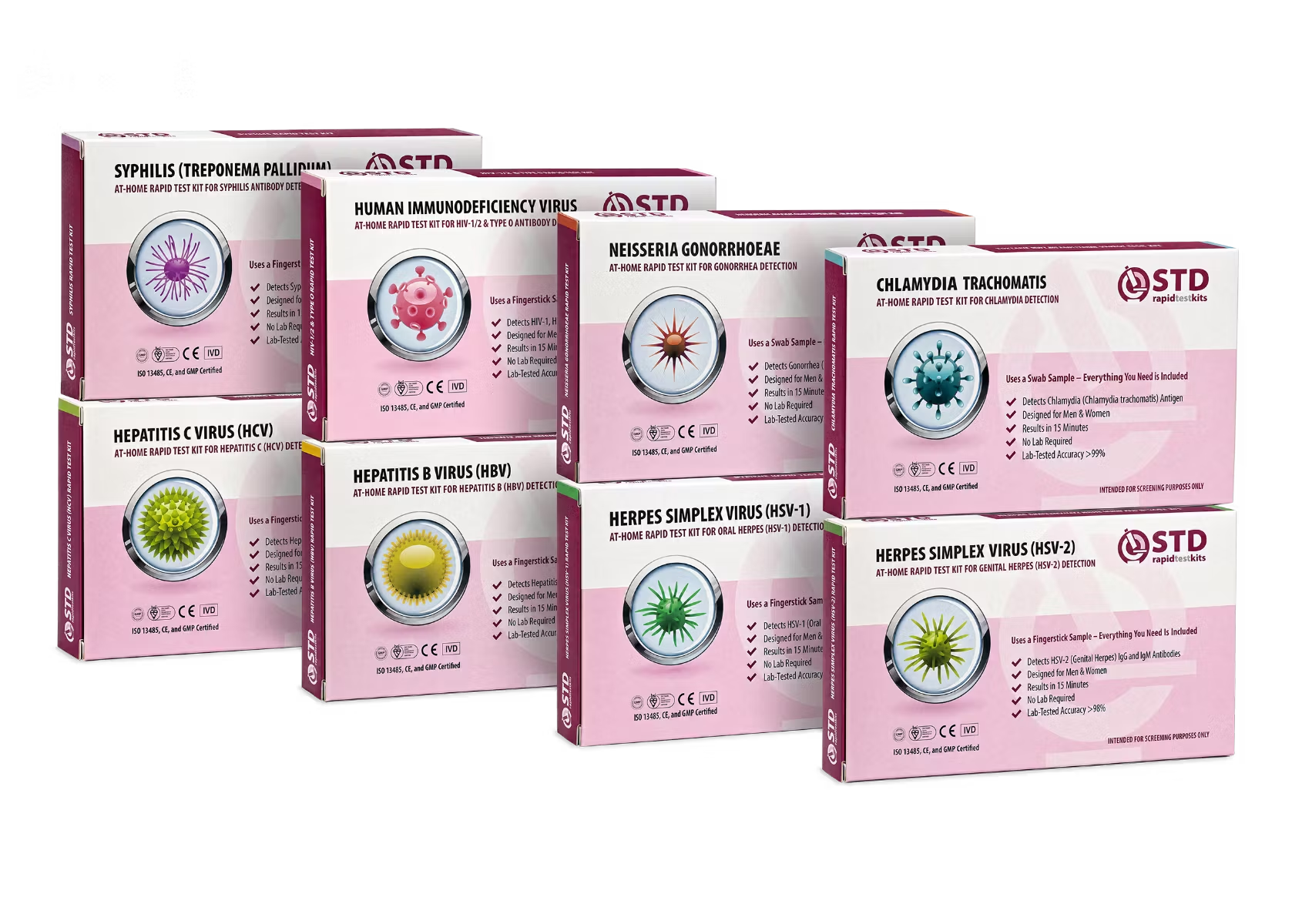
For most people in this situation, the practical move is to order a combo gonorrhea and chlamydia test or a broader multi-STI panel, since both bacteria can cause the same testicle pain and both can be present at once.
The kit below is sold by this site (stdrapidtestkits.com). Product recommendations on this page are matched to the testing question the article addresses, not to commercial priority.
What treatment looks like
Gonorrhea and chlamydia are both bacterial, which is why they respond reliably to antibiotics. The current CDC-recommended regimen for epididymitis in men under 35 is a single intramuscular dose of ceftriaxone plus a 10-day course of oral doxycycline per the CDC STI Treatment Guidelines. Older patients or those with a confirmed enteric exposure may receive a different regimen.
Pain usually starts easing within 24 to 48 hours of the first dose. Full resolution of swelling can take 1 to 2 weeks. Scrotal elevation (supportive briefs rather than loose boxers) and ice packs in the first few days help with comfort. Anti-inflammatory drugs like ibuprofen or naproxen are typical adjuncts.
- Pain that worsens in the first 72 hours. This can mean abscess formation, treatment failure (gonorrhea has growing antibiotic resistance), or a misdiagnosis like torsion that was missed at first visit. Follow up immediately.
- Persistent ache after the antibiotics finish. Some inflammation can take weeks to fully settle. If a low-grade ache continues past 3 weeks, scrotal ultrasound imaging is the usual next step.
- Sex during recovery. Hold off on sex for at least 7 days after the regimen finishes and until any partners are tested and treated, to avoid reinfecting each other.
When testicle pain needs the ER, not a home test
A handful of presentations are surgical emergencies. Recognizing them is the difference between a saved testicle and a lost one. If any of the following describes the situation, go to the emergency department now rather than testing at home.
- The pain hit 10 out of 10 within minutes, especially at night or after activity (possible testicular torsion). Time-to-treatment under 6 hours preserves the testicle in most cases.
- Fever above 39°C (102°F), shaking chills, or severe abdominal pain spreading from the groin.
- A hard, painless or tender lump that feels clearly different from the rest of the testicle.
- Significant trauma followed by pain that does not ease in an hour, or visible bruising and rapid scrotal swelling.
What happens if gonorrhea epididymitis goes untreated
The stakes for ignoring this are not theoretical. Long-term untreated gonorrhea in the male reproductive tract has three main consequences.
Fertility. Persistent epididymal inflammation can scar the duct, leading to partial or complete obstruction. Bilateral involvement is uncommon but possible, and bilateral obstruction can cause obstructive azoospermia (sperm production continues but sperm cannot exit). The risk rises with the length of delay before treatment, which is why the urgency in CDC guidance reflects more than just symptom relief.
Chronic pain. A scarred or repeatedly inflamed epididymis can become a permanent ache. Chronic epididymalgia is hard to treat and tends to flare with activity or sexual function.
Disseminated gonococcal infection (DGI). When gonorrhea bacteria enter the bloodstream, the result is a recognizable triad: small pustules on the hands and feet, joint pain (especially wrists, ankles, and knees), and tenosynovitis (inflammation of tendon sheaths). DGI is uncommon, though it is a medical emergency requiring intravenous antibiotics per CDC STI Treatment Guidelines.
The reassuring side: gonorrhea responds to a single treatment course. The infection does not have a chronic carrier state the way herpes or HIV does. Once it is cleared, it is gone. Reinfection only happens with a new exposure.
Men younger than 35 years who have acute epididymitis usually have sexually transmitted bacterial infection caused by C. trachomatis or N. gonorrhoeae. Testing for these organisms is recommended at the time of diagnosis.
Retesting, reinfection, and partner notification
Two things tend to surprise people after gonorrhea treatment.
Retesting at 3 months. CDC recommends testing again about 90 days after treatment. The goal is catching reinfection from an untreated partner; the original infection itself does not return once cleared by antibiotics. A separate test-of-cure at 7 to 14 days is only recommended in specific cases (pharyngeal gonorrhea, persistent symptoms, or pregnancy).
Partner notification. Anyone you had sex with in the 60 days before symptoms started should be told and tested. This is not optional in a public-health sense. Untreated partners are the single biggest driver of reinfection. Several options exist:
- Direct conversation. Best when the relationship is current or recent.
- Anonymous notification services. Tools like TellYourPartner.org or your state health department's partner-services counselor can send notification without revealing your identity.
- Expedited partner therapy (EPT). In states where EPT is legal (most of the US), a provider can prescribe treatment for your partner without seeing them. You deliver the prescription or medication. Useful for partners who lack easy access to care.
The hardest part of partner notification is rarely the logistics, it is the conversation. Public-health counselors who do this for a living suggest keeping it short, leading with the test result rather than emotional context, and not assigning blame. Most partners respond better to a brief, factual message than to an extended apology.
Privacy when ordering at-home tests
A real barrier for many people is the fear that ordering a test (or a clinic visit) will be visible to family, partners, or insurance. At-home rapid testing is designed around discretion:
- Plain outer packaging with no test-related branding.
- A generic billing descriptor on the credit card statement.
- Self-collected samples processed at home without third-party lab involvement for the rapid screen.
- No insurance claim filed, so no Explanation of Benefits document is sent to the policyholder.
Results stay between you and the kit. If the result is positive, you can choose to bring it to a clinician (most will accept a rapid test as triggering laboratory confirmation and treatment) or order a follow-up combo kit. If the result is negative but symptoms persist, in-clinic NAAT testing is the right next step.
Putting it together: a decision framework
If you are reading this with a sore testicle and a recent sexual exposure, here is a simple way to triage.
- Severe pain within minutes, especially with nausea or scrotal asymmetry: ER, not at-home test.
- Pain building over days plus urinary symptoms (burning, discharge): order a gonorrhea and chlamydia test if the exposure was 5 or more days ago. Plan to bring a positive result to a clinic for confirmation and treatment.
- Pain building over days, no urinary symptoms, no recent exposure, but a recent strain or rough sex fits: ice, scrotal support, ibuprofen for 48 hours. If the pain does not ease, test anyway, since asymptomatic gonorrhea is common.
- Pain plus high fever, abdominal pain, or new skin lesions: clinic same day, not at-home test.
The hardest decision is the middle one (moderate pain, ambiguous symptoms, unclear exposure history). The honest answer is that an at-home test followed by a clinician follow-up is the standard sequence. The information from a rapid home test is the difference between two weeks of guessing and one afternoon of acting on the actual diagnosis.
An at-home test takes about 15 minutes; a confirmed result gives a clinician everything they need to start treatment the same day.
Frequently asked questions
- How soon after sex could gonorrhea cause testicle pain?
- Expect testicle pain no earlier than 7 days after exposure and up to about 21 days out, since the bacteria have to migrate up the reproductive tract before reaching the epididymis. Urethral symptoms (burning, discharge), when they appear at all, typically come first, within 2 to 7 days.
- Can I have gonorrhea without any discharge?
- Yes. A substantial fraction of urethral gonorrhea cases in men cause minimal or no symptoms at all. The first noticeable sign in those cases is sometimes the testicle pain itself when the infection progresses to epididymitis. Absence of discharge does not rule out gonorrhea.
- Is it gonorrhea or chlamydia? Can I tell from the pain?
- Not reliably. Both cause the same testicle-pain picture in epididymitis, and they often co-occur. That is why combination testing for both is the recommended first step rather than testing for one and then the other. Treatment usually covers both organisms anyway.
- How accurate is an at-home rapid gonorrhea test?
- Lateral-flow rapid tests perform well as a screening tool when used after the right window (5 to 7 days post-exposure, peaking around 14 days). Laboratory NAAT testing remains the analytical gold standard, especially for asymptomatic infections. A positive at-home result is worth confirming at a clinic before starting antibiotics.
- The pain seems to be going away on its own. Should I still test?
- Yes. Pain can ease as the initial inflammation calms even while the infection is still active. Gonorrhea does not clear itself reliably and can quietly cause epididymal scarring and fertility damage over weeks. A test takes about 15 minutes; treatment, if needed, is a single antibiotic course.
- Do I need to be retested after treatment?
- Yes. The CDC recommends a retest around 3 months post-treatment. Reinfection from an untreated partner is common, and the follow-up test is designed to catch that. A test-of-cure at 7 to 14 days is reserved for pharyngeal infection, pregnancy, or persistent symptoms.
- Could the testicle pain be something other than an STI?
- Yes, several other conditions cause one-sided testicle pain. Testicular torsion is the urgent one and presents as sudden severe pain. Less urgent causes include inguinal hernia, varicocele, muscle strain, and trauma. The presence of urinary symptoms, gradual onset, and a recent sexual exposure shifts the odds toward an STI cause.
- When is testicle pain a medical emergency?
- Sudden 10-out-of-10 pain within minutes, especially with nausea or an asymmetric-looking scrotum, suggests possible testicular torsion and warrants an immediate ER visit. High fever with severe abdominal pain spreading from the groin, or a hard new lump, also justify same-day in-person evaluation rather than home testing.
- U.S. Centers for Disease Control and Prevention. Gonorrhea fact sheet covering transmission, symptoms, and complications in people with penises.
- U.S. Centers for Disease Control and Prevention. STI Treatment Guidelines, epididymitis section, including recommended antibiotic regimens for men under 35 and DGI management.
- Mayo Clinic. Epididymitis symptoms, causes, and diagnostic approach. (Verify resolves in a browser before ship; site may rate-limit automated lookups.)
- MedlinePlus (U.S. National Library of Medicine). Gonorrhea overview, testing recommendations, and patient guidance.
- U.S. National Library of Medicine StatPearls. Epididymitis clinical overview for healthcare professionals.
- U.S. Centers for Disease Control and Prevention. Gonococcal infections among adults and adolescents, including disseminated gonococcal infection (DGI) presentation.
