
Published: August 2025 | Last updated: May 2026 | Editorial review and quality control: Martina N.
A sore throat is one of the most universal symptoms in medicine, and one of the most confusing. The same scratchy, swollen feeling can come from a viral cold, group A Streptococcus, Epstein-Barr virus, seasonal allergies, acid reflux, dry air, or a pharyngeal infection picked up during oral sex. Knowing which one you have changes everything about what comes next: antibiotics for strep, rest and patience for mono, antihistamines for allergies, and a different test entirely if a sexually transmitted infection is in play.
This guide walks through how clinicians actually pull the three most-confused causes apart, what red-flag symptoms mean you should stop reading and call a doctor, and where at-home testing fits in when an STI might be on the menu of possibilities. It is published by stdrapidtestkits.com, which sells at-home rapid test kits; we point to the right product for the right concern, and to a clinic when the right test for your situation is not something we sell.
Key Takeaways
- Strep arrives suddenly with severe throat pain and fever and usually has no cough; mono builds slowly with bone-deep fatigue and swollen lymph nodes that can persist for weeks; allergies tend to itch, run, and fluctuate with the environment.
- Pharyngeal infections from gonorrhea, chlamydia, and herpes can mimic both viral and bacterial sore throats. If you have had oral sex recently and the picture does not fit, ask specifically for a throat-swab STI test at a clinic.
When every swallow feels like sandpaper
That sharp, sudden pain on swallowing is one of the most common reasons people jump straight to strep. Group A Streptococcus pharyngitis can absolutely cause it, but so can dozens of other things. Viral infections cause most sore throats, with the CDC's strep throat guidance noting that only about 1 in 10 adults and 3 in 10 children with a sore throat actually have strep. Allergic post-nasal drip, acid reflux, vocal strain, and even cold dry air can also mimic the same kind of discomfort. The story your symptoms tell over hours and days matters as much as the symptoms themselves.
With mono (infectious mononucleosis, caused by the Epstein-Barr virus), the pain might start as a mild scratchiness and then escalate, but it usually comes with days or weeks of exhaustion that feels bone-deep, plus visibly swollen lymph nodes in the neck. Allergies cause a different kind of irritation: itchy eyes, nasal congestion, post-nasal drip, and a throat that fluctuates with exposure to pollen, dust, smoke, or pet dander. Reflux can wake you with a raw throat that eases by mid-morning. Oral STIs may produce surprisingly little: a sore throat without any of the usual cold cues.
Pay attention to how symptoms arrive and behave over hours and days. A freight-train onset within hours points toward strep; a slow build over a week with deepening fatigue points toward mono; symptoms that track your environment and ease with antihistamines point toward allergies. The pattern is often more diagnostic than any single symptom.
How each condition usually feels
Clinicians look for patterns: groups of symptoms that point to one diagnosis over another. The most distinctive signs by category:
- Mono (Epstein-Barr virus): Profound fatigue that lasts 2 to 4 weeks (sometimes longer), swollen lymph nodes especially in the back of the neck, an enlarged tonsillar picture sometimes with gray-white exudate, possible fever, sometimes an enlarged spleen, and a rash that can appear if certain antibiotics (especially amoxicillin) are given by mistake. The CDC's Epstein-Barr virus overview notes that people with symptoms usually recover in 2 to 4 weeks, though some feel fatigued for several weeks or even months.
- Strep (group A Streptococcus): Sudden, severe sore throat; pain on swallowing; fever, often above 101°F; red, swollen tonsils with patchy white exudate; tender lymph nodes at the front of the neck; absence or near-absence of cough and runny nose. Symptoms cluster within hours, not days.
- Allergies (seasonal or perennial): Itchy throat, itchy or watery eyes, sneezing, clear runny nose or post-nasal drip, congestion, a mild scratchy soreness that comes and goes with exposure, and no fever. Antihistamines, nasal sprays, or simply moving to a clean indoor space usually improve symptoms within hours.
- Oral or pharyngeal STIs: Often a sore throat with very few accompanying symptoms; sometimes mild redness, mild swelling, or a slight scratchy feeling that does not behave like a viral or bacterial throat infection. Frequently silent (the CDC's gonorrhea fact sheet notes that throat gonorrhea is often asymptomatic).
These differences look clean on a list, but they overlap in real life. Strep can occur without fever in adults; mono can co-occur with strep; allergies can flare so hard they feel like infection. Two or three matching cues are more reliable than any single symptom, and testing is what settles the question when the stakes are high.
How can I tell mono from strep from allergies at home?
Use the speed of onset, the presence of fever, and what your nose and eyes are doing. Strep hits in hours, brings a fever above 101°F (38.3°C), red tonsils with white patches, and tender front-of-neck glands, but usually no cough or runny nose. Mono unfolds over days into prolonged fatigue plus swollen lymph nodes and an enlarged tonsil picture; fever may be present but the exhaustion is the headline. Allergies fluctuate with environment, come with itchy eyes and sneezing, and respond to antihistamines. None of these is a substitute for a clinic test when you are sick enough to wonder.

Reading the timeline: fast, slow, or seasonal?
One of the most underrated clues is the speed of onset. Strep tends to hit like a freight train: fine in the morning, miserable by dinner, fever climbing through the evening. Mono is a slow burn, where mild throat irritation and general tiredness become harder to ignore over several days and then peak with fatigue that flattens a person for a week or two. Allergies follow patterns set by the environment: worse on high-pollen days, in dusty spaces, around certain animals, in spring or fall, or after specific exposures.
Keeping a simple symptom diary for a few days helps your clinician triage faster. Note when each symptom started, how bad it is on a 1 to 10 scale, what makes it better or worse, and whether it is progressing, plateauing, or improving. Clinicians use this kind of timeline along with the physical exam and lab tests to settle the diagnosis. If your sore throat is in week four with no fever and intermittent intensity, the answer is almost never strep, and the workup needs to widen (reflux, post-nasal drip from chronic rhinitis, pharyngeal STI, or rarely something more serious need ruling in or out).
Note four things for each symptom: when it started, a 1 to 10 severity score, what makes it better or worse, and whether it is climbing, plateauing, or easing. A clinician can triage in minutes with this picture; without it, the visit often ends with a generic recommendation to wait and watch.
Why self-diagnosing can be tricky (and risky)
Sore throats are deceiving. Untreated strep is uncommonly progressive in adults but can lead to acute rheumatic fever or post-streptococcal kidney complications in vulnerable groups, per Mayo Clinic's strep throat reference. Mono can enlarge the spleen enough that contact sports or heavy lifting risk splenic rupture; the NHS guidance on glandular fever advises avoiding strenuous activities like heavy lifting and playing sports during the typical 2 to 4 week recovery period, with longer restrictions if splenomegaly is confirmed. Allergies that simmer for years can drive chronic sinusitis or worsen underlying asthma.
There is also a less-discussed twist: pharyngeal infections from sexually transmitted pathogens, including gonorrhea and chlamydia, can mimic both strep and mono. They are often clinically silent or produce a sore throat without the usual cold cues. If you have had oral sex in the last few weeks and the picture does not match strep, mono, or allergies, that history is worth raising with a clinician (and explicitly asking for a pharyngeal swab, since routine STI screening at many clinics defaults to a urine sample, which will miss throat infections entirely).
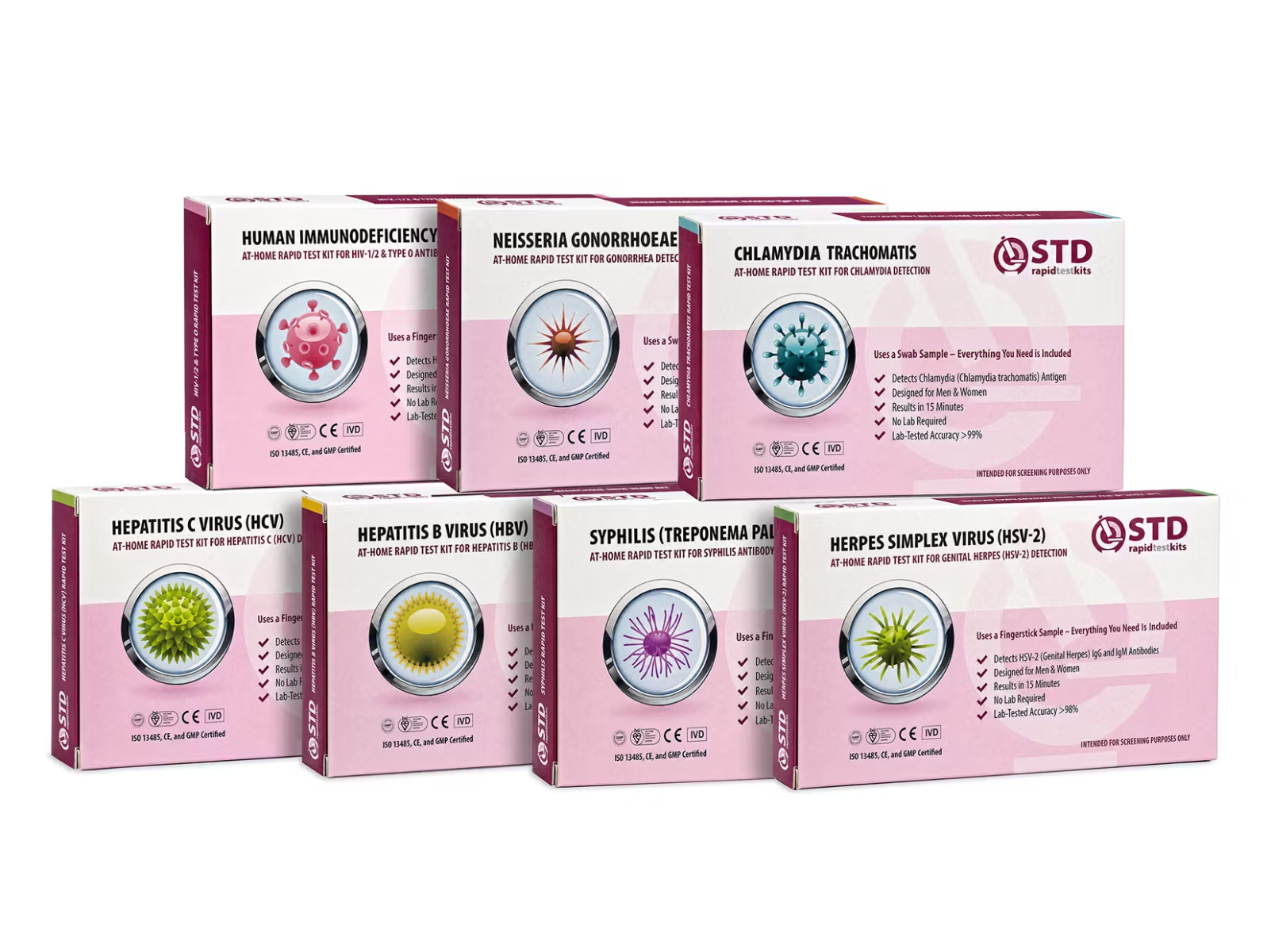
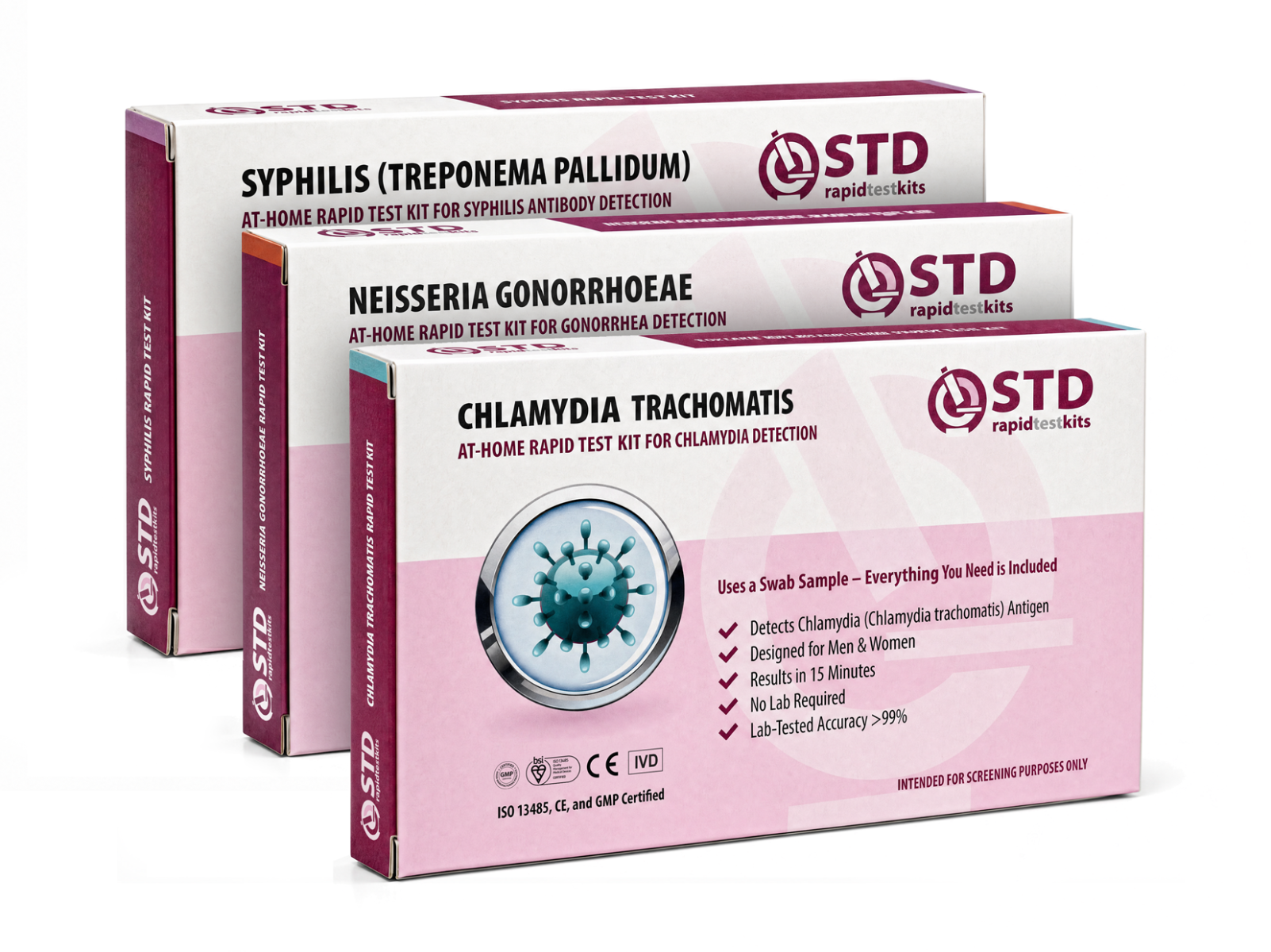
This site sells rapid genital-swab and blood-based STI tests. We do not sell at-home pharyngeal swab kits, because the throat sample type is not validated for our lateral-flow chemistry. If a throat STI is your specific concern, a clinic visit for a throat-swab NAAT is the right test. Our rapid panels cover the adjacent genital and blood-borne risk from the same exposure event, which is often a reasonable next step once the throat question is answered.
This guide summarizes CDC, NHS, and Mayo Clinic guidance into plain-English action items. It is not a substitute for clinical evaluation. If your symptoms match a red-flag pattern below, or if your sore throat has not improved after a week of self-care, see a clinician.
Red flags: when to stop googling and get care
Most sore throats are uncomfortable but harmless. A handful of symptoms should send you to urgent care or the emergency department rather than another search engine. Call a clinician immediately if you notice:
- Severe difficulty breathing or swallowing, especially if your voice changes to a muffled or strained quality
- High fever (above 103°F / 39.4°C) or fever lasting more than three days
- Neck swelling or stiffness that worsens quickly
- Drooling because swallowing your own saliva has become too painful
- Severe fatigue plus yellowing of skin or eyes (possible hepatitis or rarely complication of mono)
- Severe one-sided throat pain with swelling that pushes the uvula toward the other side (possible peritonsillar abscess)
- A non-blanching rash anywhere on the body alongside fever and sore throat
These can indicate something much more serious: epiglottitis (a rapidly swelling airway that is a medical emergency), peritonsillar abscess, retropharyngeal abscess, or rare conditions like Lemierre's syndrome (jugular vein septic thrombophlebitis).
If breathing or swallowing is becoming difficult, if you are drooling, or if your neck is rapidly swelling, go to the emergency department now. Do not wait to see if it improves and do not lie flat (sit upright). These can progress quickly.
Side-by-side: what strep, mono, and allergies actually look like
Patterns matter more than any single symptom. Use the table to gut-check what fits and what does not. Overlap is common; if two columns describe your week, a clinician visit is the right call.
| Pattern | Strep | Mono | Allergies |
|---|---|---|---|
| Speed of onset | Hours (sudden) | Days, building over a week | Hours after exposure |
| Fever | Common, often above 101°F | Often present, mild to moderate | Absent |
| Cough | Usually absent | Sometimes mild | Dry cough common |
| Fatigue | Mild to moderate, resolves in days | Profound, lasts 2 to 4 weeks | Mild, energy stays mostly intact |
| Lymph nodes | Tender, front of neck | Swollen front and back of neck | Not typically swollen |
| Nasal / eye symptoms | Rare | Sometimes mild | Itchy, runny, sneezing, watery |
| Tonsil appearance | Red, swollen, patchy white exudate | Enlarged, sometimes gray-white film | Normal |
| Responds to antihistamines | No | No | Yes, within hours |
The often-missed cause: throat STIs
If you have had oral sex (giving or receiving) in roughly the last 1 to 14 days and your sore throat does not fit a familiar pattern, a pharyngeal sexually transmitted infection deserves consideration. The most common culprits are pharyngeal gonorrhea, pharyngeal chlamydia, and oral herpes (HSV-1, occasionally HSV-2). Throat gonorrhea in particular is often asymptomatic or produces only a mild sore throat with no fever or cough, per the CDC's gonorrhea fact sheet. Without obvious cues, the infection often goes undetected until someone specifically asks for the test.
Routine clinic STI screening that uses a urine sample only will not detect a throat infection. The right test is a pharyngeal swab analyzed by NAAT (nucleic acid amplification testing), which is a laboratory technique with higher analytical sensitivity than at-home rapid tests for throat samples. Ask for it specifically if you have had relevant exposure; many clinics will not order it unless you raise the question. Treatment of pharyngeal gonorrhea has gotten more careful over time as antibiotic resistance has risen, so confirmed diagnosis matters.
Our at-home rapid kits use lateral-flow chemistry on fingerstick blood and self-collected genital swabs. They are not the same technology as lab NAATs, and they are not validated for throat samples. They are the right tool for screening genital chlamydia and gonorrhea or for blood-based panels like HIV and syphilis after a recent exposure; they are the wrong tool for diagnosing a throat infection on its own. Use them as a complementary check on the wider risk after an exposure that also concerns you for a throat infection.
Tests that actually give answers (home and clinic)
You do not have to guess indefinitely. A handful of tests usually settle things. Some can be done at home; others need a clinic or laboratory.
- Rapid strep test (RADT) or throat culture: A swab from the tonsils and back of the throat, processed in the clinic in minutes for RADT, or sent to a lab for 24 to 48 hours for culture. RADT is fast but can miss some cases; if the rapid test is negative but clinical suspicion remains high, the clinician may add a confirmatory culture.
- Mono testing: Traditional heterophile antibody tests (the "Monospot") can miss early infections, especially in children under 4, where the test is unreliable. When mono is strongly suspected or the heterophile test is negative, clinicians often order EBV-specific antibody panels (IgM and IgG to viral capsid antigen, plus EBNA) which give a clearer picture of timing.
- Allergy testing: If sore throat rides with sneezing, itchy eyes, and a clear seasonal pattern, an allergist may use skin-prick testing or specific IgE blood tests to identify triggers (pollens, dust mites, pets, molds).
- Pharyngeal STI testing: A pharyngeal swab analyzed by laboratory NAAT, ordered specifically (not the default urine screen). Ask by name for a throat swab for gonorrhea and chlamydia.
- At-home rapid STI kits: Useful for screening genital or blood-borne STIs after an exposure that included oral sex or other contact. They cover the wider risk picture but do not test throat samples.
A reasonable sequencing for an adult with a sore throat that does not look like obvious strep, mono, or allergies: clinic visit for an exam and (if relevant) rapid strep test, conversation about oral-sex exposure, request for pharyngeal STI swab if relevant, then at-home rapid blood and genital STI testing for the wider concern.

What if it is more than one thing?
Real bodies overlap. It is entirely possible to have allergies and catch strep on top. It is possible to have mono and pick up a cold while immune defenses are run down. It is possible to have a pharyngeal STI alongside any of these. The diagnostic clue is mismatch: an "allergy" sore throat that suddenly comes with a 102°F fever, a "strep" that does not respond to a full course of antibiotics, a "mono" where the fatigue is mild but the throat pain is severe, or a sore throat that keeps coming back over weeks despite reasonable treatment.
When the pattern shifts, retest or widen the differential. Antibiotics for strep are unhelpful for mono and will not touch a viral or allergic cause; antihistamines for allergies will not clear bacterial infection; rest and fluids for mono will not eradicate a pharyngeal STI. Matching treatment to actual cause is the whole point of pinning down the diagnosis.
If any of these patterns describes your week, ask the clinician for a second look:
- An "allergy" sore throat that suddenly spikes a 102°F fever.
- A diagnosed "strep" that does not improve after a full course of the prescribed antibiotic.
- A "mono" where the fatigue is mild but throat pain is severe and persistent.
Viruses cause most sore throats. Only around 1 in 10 adults and 3 in 10 children with a sore throat have strep throat.
Sports, kissing, and "do I have to stop everything?"
For mono, the major concern beyond fatigue is the spleen. Some people develop splenomegaly (an enlarged spleen) which can rupture under contact or heavy strain. The Mayo Clinic guidance on mono advises avoiding contact sports, heavy lifting, and vigorous activity for at least 3 to 4 weeks, with longer restrictions in confirmed splenomegaly. Ask the clinician who diagnosed you for specific clearance before returning to sports. Mono spreads primarily through saliva, so cutting down on direct saliva exchange (kissing, sharing drinks or utensils) while symptomatic protects others.
For strep, contagiousness drops sharply after about 24 hours of appropriate antibiotic treatment and improving symptoms. Most clinical guidance recommends staying home until you are fever-free for at least 24 hours and have completed a full day of antibiotics before returning to school or work.
For allergies, the "restriction" is less about contagion (none) and more about trigger control. Practical steps: HEPA air filtration in bedrooms, nasal saline rinses, second-generation antihistamines (cetirizine, loratadine, fexofenadine), intranasal corticosteroids on a regular schedule during flare seasons, and keeping windows closed during peak pollen days. If symptoms last more than a few weeks each year, a referral to an allergist for definitive testing is reasonable.
When can I get back to normal?
- Mono: avoid contact sports, heavy lifting, and vigorous activity for at least 3 to 4 weeks; longer if a clinician has confirmed an enlarged spleen.
- Strep: return to school or work once fever-free for 24 hours and after completing at least one full day of antibiotics.
- Allergies: no contagion concern. Focus on trigger control (HEPA filter, daily antihistamine, nasal corticosteroid, windows closed on high-pollen days).
The "feels like strep" checklist
Clinicians often use simple bedside scoring systems (Centor and McIsaac scores) to estimate the probability of bacterial strep. These are not for self-diagnosis, but the components are useful to know because they push suspicion higher and can justify asking for a strep test:
- Fever or feeling feverish in the last 24 hours
- Absence of cough (cough points more toward a viral cause or allergies)
- Tender, swollen lymph nodes at the front of the neck
- Tonsillar swelling, with or without visible white exudate
- Age (children and young adults 3 to 14 are at higher risk; risk drops in adults over 44)
If three or more of these are present, the probability that a sore throat is bacterial strep climbs into the range where a rapid strep test is genuinely useful. If you tick only one or none of these and your dominant symptoms are itchy eyes and a runny nose, you are likely in allergy territory. If you tick the lymph-node and fatigue boxes but fever and tonsillar exudate are mild, mono is the better hypothesis and an EBV panel is worth asking about.
The Centor and McIsaac criteria are not validated for self-diagnosis, but they are the same factors a clinician weighs at the bedside when deciding whether a rapid strep test adds enough value to be worth doing. Knowing what counts helps you describe symptoms more usefully during a visit.
FAQs
- Can allergies cause a sore throat without any other symptoms?
- Yes. Throat irritation can be the only obvious sign of allergies, especially with chronic low-level exposure to dust, pet dander, or indoor molds. If a sore throat is your only symptom and it fluctuates with your environment, allergies are plausible. If fever, fatigue, or swollen glands appear, widen the differential.
- How fast does strep throat start?
- Strep typically reaches full severity within 24 hours of first symptoms, and sometimes faster. If a sore throat is still building gradually on day three or four, the cause is more likely viral, mono, or allergic than group A strep.
- Does mono always cause extreme fatigue?
- Most people with mono experience prolonged fatigue, but the intensity varies. Some are flattened for weeks; others have only moderate tiredness alongside a sore throat. Fatigue that lasts more than two weeks after a sore throat starts is one of the strongest pointers toward mono and worth raising with a clinician.
- Can a sore throat from mono become strep?
- You can have both at once. Mono can suppress the immune system temporarily, making bacterial superinfection (including strep) somewhat more likely. If a known mono case suddenly worsens with fever and a new wave of tonsillar exudate, a strep test is reasonable.
- Can oral sex cause a sore throat?
- Yes, in two ways. Mechanical irritation from deep or vigorous oral sex can cause a transient sore throat with no infection. Separately, several sexually transmitted infections (gonorrhea, chlamydia, herpes, and rarely syphilis) can infect the pharynx and cause symptoms that mimic strep or a viral sore throat. If you have had oral sex in the last few weeks and the throat picture does not fit, ask for a pharyngeal swab at a clinic.
- How long should I wait before seeing a doctor for a sore throat?
- Most viral sore throats improve within 5 to 7 days. See a clinician sooner if you have a fever over 101°F, white patches on your tonsils, severe pain on swallowing, swollen tender lymph nodes, a rash, or if symptoms have lasted more than a week without improvement. Go to urgent care or the ER for difficulty breathing, drooling, or rapidly worsening neck swelling.
- Will antibiotics help with mono?
- No. Mono is viral and antibiotics do not treat it. In some cases, amoxicillin or ampicillin given for a presumed strep infection in someone who actually has mono causes a widespread rash. Clinicians try to confirm strep with a rapid test before prescribing antibiotics for this reason.
- Is it possible to have strep without a fever?
- Yes, especially in adults. Fever is the most common feature of strep, but not universal. The combination of sudden severe throat pain, tender front-of-neck lymph nodes, and tonsillar exudate without a cough is enough to warrant a rapid strep test even when fever is absent or mild.
You deserve answers, not assumptions
Strep, mono, allergies, and pharyngeal STIs each leave a fingerprint of symptoms. Pull the timeline apart, note what your nose and eyes are doing, watch the fever, and pay attention to whether antihistamines help or rest helps. If the picture does not fit any of these patterns, especially after a recent oral-sex exposure, the next step is a clinic visit for the right test, not another week of waiting.
If your concern includes the wider risk picture from a recent exposure (and not specifically the throat infection itself), an at-home rapid kit can settle the genital and blood-borne questions quickly and privately. The throat-specific test is a clinic swab and worth asking for by name.
Your next three steps
- Use the timeline and symptom cues in this article to narrow the likely cause to one or two possibilities, then decide whether a clinic visit is needed in the next 24 to 48 hours.
- If a recent oral-sex exposure is in the picture, see a clinic and ask by name for a pharyngeal swab analyzed by NAAT. Urine-only STI screens will miss throat infections.
- If the wider risk from a recent exposure is also a concern, an at-home rapid kit can settle the genital and blood-borne questions privately within about 15 minutes.
- U.S. Centers for Disease Control and Prevention. Strep throat (group A Streptococcus pharyngitis): symptoms, diagnosis, and the 1-in-10-adults / 3-in-10-children prevalence figure.
- U.S. Centers for Disease Control and Prevention. About Epstein-Barr virus and infectious mononucleosis (recovery typically 2 to 4 weeks; fatigue can persist for several weeks or months).
- U.S. Centers for Disease Control and Prevention. Gonorrhea fact sheet, including the often-asymptomatic nature of pharyngeal infection.
- UK National Health Service. Glandular fever (infectious mononucleosis): activity restrictions during the typical 2 to 4 week recovery period.
- Mayo Clinic. Strep throat: symptoms, causes, and post-streptococcal complications including rheumatic fever and kidney inflammation.
- Mayo Clinic. Mononucleosis: symptoms, splenic enlargement, and the 3 to 4 week minimum sports-and-strenuous-activity restriction.
