







Quick Answer: Anal sex is the most likely way to spread STDs, especially HIV. Even without ejaculation, oral sex, rimming, and sharing toys can spread infections. It's not just about condoms; safer sex is about having a plan.
Why STD Risk Depends on the Act, Not the Person
Let’s kill a myth right now: it’s not about being “promiscuous” or “clean.” It’s about biology. STD transmission depends on the body parts involved, the type of exposure, and how vulnerable the tissues are, not your relationship status or number of partners. You can get an STD from one encounter. You can also have 20 partners and stay negative if you’re smart about prevention. That’s just the math.
Here’s how it works: Thin, fragile tissues (like the rectum) are more prone to tearing and absorb viruses faster. Semen and vaginal fluids can carry high viral loads. Some infections, like herpes or HPV, spread through skin contact alone. So when we rank STD risk by act, we’re ranking biological opportunity, not morality.
And yeah, we’re going to talk about rimming, threesomes, toys, and fisting. Because if it’s happening in real life, it belongs in a real health guide.

People are also reading: They Ghosted Me and Left Me With Gonorrhea
From Highest to Lowest (But Still Real)
These rankings are based on data from the CDC, WHO, and peer-reviewed transmission studies. They assume no protection (condoms, gloves, dental dams, etc). We’ll cover how to lower the risk in each section.
| Sex Act | Relative STD Risk | Commonly Transmitted Infections |
|---|---|---|
| Receptive Anal Sex | Very High | HIV, Chlamydia, Gonorrhea, Syphilis, HPV, Herpes |
| Receptive Vaginal Sex | High | Chlamydia, Gonorrhea, HIV, Trichomoniasis, HPV |
| Oral Sex (giving) | Moderate | Gonorrhea, Syphilis, Herpes, Chlamydia, Hepatitis A |
| Rimming (Anilingus) | Moderate | Hepatitis A, Parasites, Gonorrhea, Herpes |
| Shared Toys (Unwashed) | Moderate | Chlamydia, HPV, Herpes, HIV |
| Mutual Masturbation | Low | HPV, Herpes (if contact with fluids/sores) |
| Fingering/Fisting (no barrier) | Low to Moderate | HPV, Herpes, Hepatitis B (if cuts or bleeding) |
Table 1. STD transmission risk by sex act, assuming no protection is used. Rankings are relative, not absolute, context and individual health matter.
We Used Condoms, But I Still Got Gonorrhea”
Leah, 32, thought she was doing everything right. She and her new partner used condoms for vaginal sex. What they didn’t cover? Oral. “We didn’t even think about it,” she said. “It felt casual, low-risk.” A week later, she had a sore throat that wouldn’t quit, and tested positive for oral gonorrhea.
“It was never mentioned in any sex ed class I had. We talked about STDs like they only came from unprotected sex. No one said you could get one from going down on someone.”
Gonorrhea, chlamydia, and even syphilis can be passed through oral sex, especially if there are cuts, sores, or untreated infections. Most cases are asymptomatic. And because oral symptoms are subtle, people don’t connect the dots. Which is why testing matters, no matter what kind of sex you’re having.
Let’s Talk About Anal: The High-Risk, High-Stigma Sex Act
Anal sex has the highest risk of STD transmission, not because it’s “dirty” or “gay” or whatever other outdated nonsense people attach to it, but because of literal tissue structure. The rectal lining is thin, prone to microtears, and highly absorbent. It’s like a welcome mat for viruses.
HIV risk is especially high during unprotected receptive anal sex. But it’s not just HIV, chlamydia, gonorrhea, syphilis, herpes, and HPV are all regular visitors to the back door.
Want to lower the risk? Here's what actually helps:
- Use condoms every time. Not “halfway through,” not “just the tip,” not “we got carried away.” Every time.
- Use lube. Water- or silicone-based. Less friction = fewer tears = lower risk. It’s basic physics and common sense.
- Get tested regularly. Especially extragenital screening (yes, swabbing the rectum). Clinics often skip it unless you ask.
And no, topping doesn’t make you immune. STDs go both ways. Ask your immune system.
Check Your STD Status in Minutes
Test at Home with Remedium7-in-1 STD Test Kit
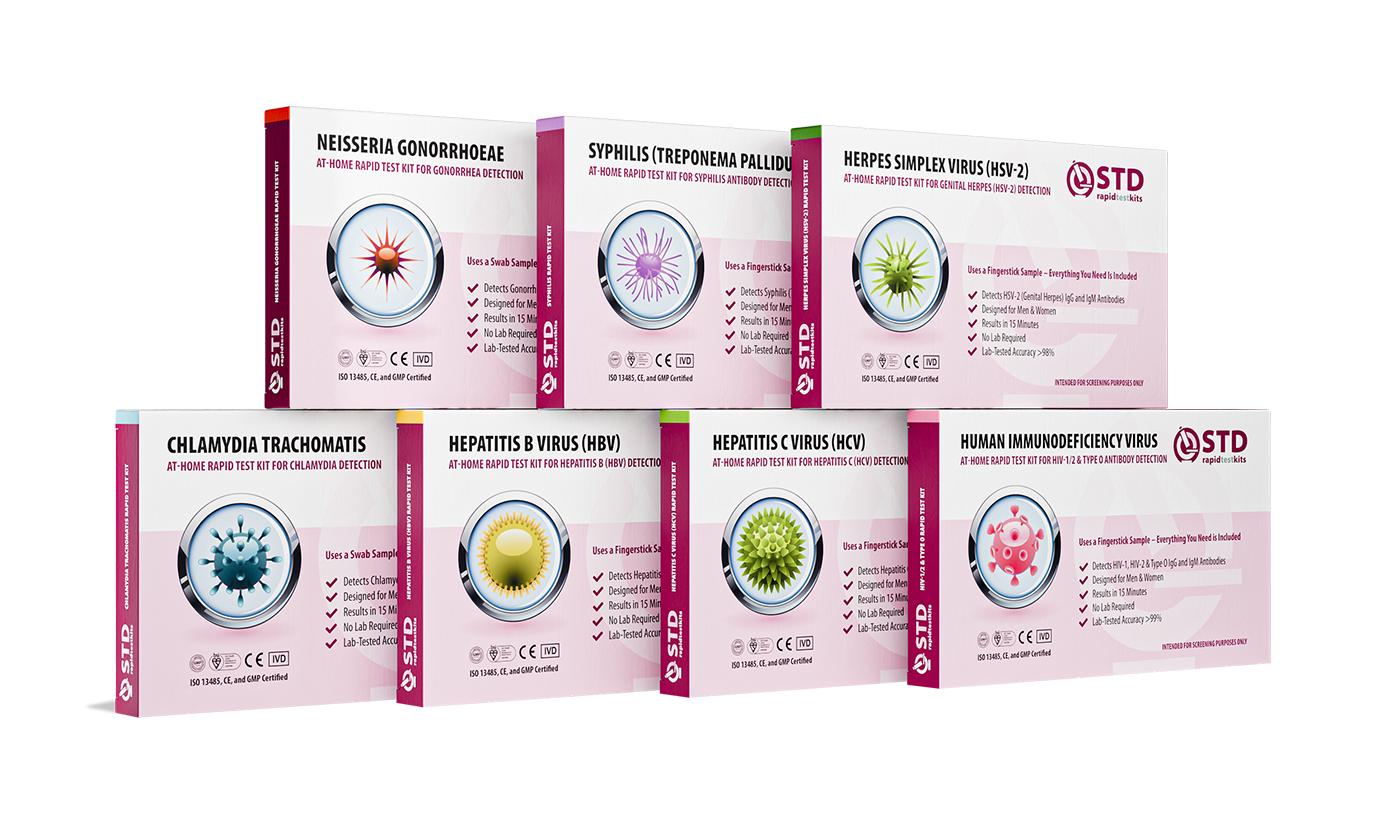
 For Men & Women
 Results in Minutes
 No Lab Needed
 Private & Discreet
Order Now $129.00 $343.00
For all 7 tests
Oral Sex Isn’t “Safe”, It’s Just Less Talked About
Oral sex has a reputation for being risk-free. That’s wrong. Giving oral, whether on a penis, vulva, or anus, can transmit gonorrhea, syphilis, herpes, chlamydia, and hepatitis A. You can also catch them. That sore throat you thought was allergies? Might’ve been oral gonorrhea. Congrats.
Most people don’t use barriers for oral, and honestly, no one’s pretending dental dams are sexy. But there are ways to reduce risk without feeling like you’re in a surgical suite:
- Test often if oral is a regular part of your sex life.
- Don’t brush or floss right before giving oral, it opens up micro-cuts that boost transmission risk.
- Use flavored condoms or cut-open condoms for a barrier if you’re in a higher-risk situation or with new partners.
And if you’ve ever skipped protection during oral because “it’s just oral”, you’re not alone. You’re just misinformed. Let’s fix that.
Rimming: Low-Key Common, Surprisingly Risky
Anilingus, aka rimming, is the kind of act nobody admits to but way more people do than you'd expect. And yes, it comes with its own set of STD risks. This isn’t just about sexual infection, it’s also about fecal-oral transmission of things like hepatitis A, giardiasis, shigella, and more.
You’re not gross if you like it, but you do need to be smart. Here's what helps reduce risk:
- Use a barrier (dental dam or cut-open condom), especially if you don’t know your partner’s status.
- Don’t rim during GI illness or recent diarrhea. Just… don’t.
- Vaccinate for Hepatitis A. Seriously. It’s a standard vaccine for a reason.
Fun fact: the CDC has an entire page dedicated to sexual activity and fecal-oral transmission. Your school health class probably skipped that one.
Group Sex, Toys, and Touch: Where People Get Lazy (and Infected)
When multiple partners or shared objects enter the scene, so do new risks, and most people get casual right when they should be careful. It’s not judgment. It’s biology + physics + fatigue + lube on everything.
Here’s where the risk creeps in:
- Shared sex toys without cleaning or condoms between uses
- Threesomes or more without barrier changes between partners
- Fisting without gloves (Risky if there’s any bleeding, tearing, or open skin.)
Quick fixes: Use gloves. Switch condoms when switching people. Wash toys. Don’t reuse barriers. And maybe have a checklist before the lights go down, because in the moment, no one remembers which end that was in.
Condoms Help, But They’re Not a Force Field
Let’s get one thing straight: condoms are amazing. They’re one of the best tools we’ve got for cutting down STD transmission, especially for HIV, chlamydia, and gonorrhea. But they’re not magical latex armor. They have limits, and a lot of people find out the hard way.
Infections like HPV and herpes can live on skin areas that condoms don’t cover. And if you think using a condom from halfway through counts, sorry, biology disagrees.
| Infection | Can a Condom Fully Prevent It? | Why Not? |
|---|---|---|
| HPV | No | Skin-to-skin transmission from areas outside the condom |
| Herpes (HSV) | No | Can spread via skin contact, even without visible sores |
| Syphilis | Partially | Chancres can appear in areas not covered by condoms |
| Chlamydia | Yes (when used properly) | Transmitted through fluids, which condoms block |
| HIV | Yes (highly effective) | Condoms reduce risk by over 90% with correct use |
Table 2. Condom protection varies by infection type. Skin-to-skin STDs can still spread even with perfect condom use.
Dental Dams: Less Common, Still Useful
Look, we get it. Dental dams aren’t lining the shelves of every bedroom drawer. They’re awkward. They slide. They crinkle. But when used correctly, they can reduce STD transmission during oral on vulvas or anuses. If you’re not into using them every time, that’s fine, but know when they’re a good idea:
- New partners
- Visible sores or recent infections
- Higher-risk acts like rimming
Pro tip: if you don’t have a dental dam, cut a condom lengthwise and flatten it. Or use non-microwavable plastic wrap (yep, that’s real advice). Stay creative, stay protected.
“High-Risk” Doesn’t Mean “Unsafe”, It Means “Strategic”
Here’s what sex ed should have said: all sex carries some risk. But some acts carry more, and some protection methods work better depending on what you’re doing. This isn’t about fear, it’s about knowing where you stand and choosing how to play.
Below is a cheat sheet for what helps, based on actual science, not wishful thinking or Reddit advice:
| Sex Act | Risk Reduction Strategy | Still At Risk For |
|---|---|---|
| Receptive Anal Sex | Condom + water-based lube + HIV PrEP | HPV, Herpes (from skin contact) |
| Oral Sex (giving) | Flavored condom or regular STI testing | Herpes, Gonorrhea, Syphilis |
| Rimming | Dental dam or plastic wrap + Hep A vaccine | Hep A, Parasites, Herpes |
| Shared Toys | Condom on toy + washing between partners | HPV, Herpes (if barrier isn’t changed) |
| Fisting | Gloves + lots of lube + short nails | Hepatitis B, HPV (if cuts present) |
Table 3. Risk reduction options per sex act. Combine multiple strategies for best protection.
How to Talk About Risk Without Killing the Mood
If the only time you talk about STDs is after something weird shows up down there, you’re doing it backwards. The best time to talk is early, before anyone’s naked, ideally. But even if you’re already mid-flirt, it’s still possible to have a real conversation without grinding the vibe to a halt.
Try:
“Hey, just checking, have you been tested recently? I usually test every few months, especially if things get hot.”
Or:
“I’m into XYZ, but I also like to keep things low-drama, so I test regularly and use protection where it counts. Cool with that?”
If they get weird about it? That’s info. If they’re chill and open? That’s a green flag.
“We Were All Tested, But Toys Weren’t”
Dylan, 27, went to a group play party. Everyone had recent test results. They used condoms, gloves, and good communication. But what no one accounted for? Shared toys. One toy went from partner to partner without a barrier or cleaning between uses. A week later: chlamydia. In three people.
“We were so focused on people and condoms, we forgot about the stuff we were using on each other,” Dylan said. “It wasn’t even penetration, it was a vibrating wand. That’s what got me.”
Toys count. So do hands. So does spit. If it touches multiple people, treat it like it matters. Because it does.

People are also reading: How Risky Are Sex Parties? What You Need to Know About STDs
“We Thought We Were Safe, Then Came the Rash”
Ray, 29, had a consistent FWB situation. They used condoms. They talked testing. What they didn’t talk about? Herpes. After a weekend together, Ray developed a painful rash, not on the areas condoms covered, but on their inner thigh. Lab results confirmed it: genital HSV-1.
“We both thought we were safe because we used protection,” Ray said. “I didn’t realize herpes could show up anywhere skin touched.”
Protection isn’t a yes/no checkbox. It’s a spectrum, and the more you know where yours has gaps, the better you can protect your body and your peace of mind.
FAQs
1. So, what’s actually the riskiest sex act for STDs?
Receptive anal sex tops the list, hands down. The tissue is super thin and absorbent, which makes it prime real estate for infections like HIV, chlamydia, and gonorrhea. But if you're doing it with protection and testing in play? You're already ahead of most people.
2. Wait, oral sex can give you an STD?
Yup. Just because it's not penetrative doesn’t mean it's consequence-free. You can get gonorrhea in your throat, herpes on your lips or genitals, and syphilis from one bad decision during brunch sex. And the worst part? Oral STDs often show zero symptoms, until they show up on your lab report.
3. Do condoms protect against everything?
Not quite. They’re excellent for anything fluid-based, like HIV or chlamydia, but they’re not great at blocking infections spread through skin contact, like HPV or herpes. Condoms are the seatbelt, not the full-body airbag.
4. If I only fool around, no penetration, do I really need to test?
Yes. If there are fluids, skin contact, or shared toys, there’s risk. Mutual masturbation, oral, grinding, if you’re doing anything more than holding hands at a distance, you’re not exempt.
5. Does testing kill the mood?
Only if you treat it like an interrogation. Try: “Hey, I usually test every few months just to keep things chill. You down for that too?” It’s mature, hot, and a red flag detector all in one.
6. What about group sex or threesomes?
It’s not the number of people, it’s how fluids and toys are managed. Think of it like potluck safety: label your dishes, clean your utensils, and for god’s sake, don’t double dip.
7. Can I get an STD even if the other person had no symptoms?
Unfortunately, yes. Most STDs are sneakier than that one ex who still views your stories. Chlamydia and herpes, especially, often show zero signs but still spread like wildfire.
8. Is rimming actually risky?
Yep. It’s got that whole fecal-oral transmission thing going on. That includes hepatitis A, parasites, and even gonorrhea. Use barriers or get vaccinated, or at least don’t do it right after taco night.
9. What if I think I messed up, how soon can I test?
Depends on the STD. Some can show up in 1 week, others need 2–3. But if you had a high-risk exposure, don’t wait forever. For HIV, you’ve got a 72-hour window to start PEP, so act fast if it’s a legit scare.
10. What’s the easiest way to test without all the drama?
Use our Combo STD Home Test Kit. It covers the heavy hitters, works fast, and doesn’t require awkward small talk with a lab tech who can't pronounce "chlamydia."
You Deserve Real Info, Not Guesswork
If you came here expecting a neat little ranking and a "just wear condoms" takeaway, sorry. The reality is messier, but also more manageable. Not all sex is equal when it comes to STD risk, but no act is off-limits if you’re strategic, honest, and informed.
This isn’t about shame or paranoia. It’s about power. Knowing which acts carry more risk helps you take control. Whether you're into threesomes, toys, rimming, or the classics, you deserve to enjoy your sex life without rolling the dice on infections you were never taught about in the first place.
And if your last sex ed class didn’t even mention half the acts we covered here? You’re not broken. You were failed. Let’s fix that, starting with testing.
How We Sourced This: This article was based on information from about fifteen reliable medical, scientific, and public health sources, such as CDC reports, peer-reviewed journals, and global health guidelines. We turned the technical information into useful information that you can use to make smart choices without all the medical jargon. We've highlighted some of the most useful and easy-to-read sources below.
Sources
1. CDC – STDs
2. Planned Parenthood – Safer Sex & STDs
4. Oral Sex STI Risk Charts: Transmission and Prevention — Medical News Today
5. CDC — How STIs Spread & Prevention Strategies
Reviewed by: Dr. Monica Kalra, DO – Board-Certified in Family Medicine
Medically Written by: Dr. F. David, MD


