
Published: December 2025 | Last updated: May 2026 | Editorial review and quality control: Martina N.
Sexually transmitted infections are common, treatable, and almost never the catastrophe people fear when they first start to worry. The World Health Organization estimates that more than one million curable STIs are acquired every day worldwide, most of them in people who never noticed a thing was off (WHO fact sheet on STIs). The reason that matters: knowing how STIs really behave, instead of how stigma says they behave, is what lets you make the right call about testing, prevention, and partner conversations.
This article covers the eight infections most people search for, what testing looks like in 2026, what to do with a positive result, and the myths worth retiring. None of it requires medical training to act on. It does require knowing where to start.
What is the single most useful thing to know about STIs?
Most STIs cause no obvious symptoms for months or years. The CDC estimates that roughly 1 in 5 people in the U.S. has an STI at any given moment, and the majority do not know it (<a href="https://archive.cdc.gov/www_cdc_gov/media/releases/2021/p0125-sexualy-transmitted-infection.html">CDC STI prevalence release, 2021</a>). Routine screening (annually for sexually active adults, every 3 to 6 months for higher-risk activity) is how infections get caught and treated before they cause complications. Symptoms alone are not a reliable signal.
Key Takeaways
- More than one million curable sexually transmitted infections are acquired every day worldwide, per the World Health Organization. Most cause no symptoms for the person who has them.
- Bacterial STIs (chlamydia, gonorrhea, syphilis, trichomoniasis) are curable with antibiotics. Viral STIs (HIV, herpes, HPV) are managed long-term with modern medicine that keeps most people healthy.
What are sexually transmitted infections?
Sexually transmitted infections are conditions that pass from one person to another through sexual contact. The clinical term shifted from 'sexually transmitted disease' (STD) to 'sexually transmitted infection' (STI) over the past two decades, because most carriers are infected without ever developing the symptomatic disease state.
Sexual contact in this context covers more ground than most people realize. Vaginal, anal, and oral sex are the obvious routes. Skin-to-skin contact is the less obvious one: herpes, HPV, the syphilis chancre, and pubic lice can all transfer through close contact even when no fluid exchange occurs. Some STIs can also pass through blood (HIV, hepatitis B, hepatitis C), and several can pass from a pregnant person to a baby during birth.
The eight infections that account for the bulk of clinical visits are chlamydia, gonorrhea, syphilis, trichomoniasis, HPV, genital herpes (HSV-1 and HSV-2), HIV, and hepatitis B. Each has a distinct biology, transmission profile, and treatment path. Lumping them together as 'STIs' is convenient shorthand for this article; it is not how clinicians treat them in practice.
You will see both terms used. STD (sexually transmitted disease) is the older label. STI (sexually transmitted infection) is the modern preferred term, because most people who carry one of these infections never develop the symptomatic disease state. An asymptomatic chlamydia infection is real, contagious, and treatable, even when the person feels well.
How STIs spread (and how they don't)
The list of myths worth dismissing is short. You cannot get an STI from a toilet seat, a doorknob, a swimming pool, or sharing a drink. The pathogens responsible do not survive long outside the human body, and they need direct contact with mucous membranes (mouth, genitals, rectum) or broken skin to establish a new infection.
The transmission routes break down into four categories. Fluid exchange during vaginal or anal sex transmits chlamydia, gonorrhea, trichomoniasis, HIV, and hepatitis B most efficiently. Oral sex transmits gonorrhea, herpes, syphilis, and HPV more often than people expect, in either direction (giving and receiving). Skin-to-skin contact in the genital region transmits HSV-1, HSV-2, HPV, and the painless chancre of primary syphilis, even when no fluids are exchanged and even when sexual penetration does not occur. Bloodborne routes matter for HIV, hepatitis B, and hepatitis C: shared needles, occupational needlestick injuries, and (rarely now in the U.S. due to donor screening) blood transfusions.
Condoms reduce risk substantially for fluid-borne infections but do not fully protect against skin-contact infections like HSV and HPV, because not all sores or affected skin are in areas a condom can cover (CDC herpes overview).
For genital herpes (HSV), the CDC notes that the skin can release the virus from areas with no visible sore. A partner without an active outbreak can still pass the virus, especially in the first year after infection. This is why HSV prevention combines barriers, suppressive antiviral medication for some couples, and honest disclosure, rather than relying on symptom-watching alone.
Symptoms worth knowing (and the silence that's normal)
The most important fact about STI symptoms is that most infections do not cause any. Chlamydia, gonorrhea, HPV, and early HIV often produce nothing the person can feel. The CDC notes that the majority of women with chlamydia are asymptomatic, which is a major reason the infection drives so many fertility complications later (CDC STI Treatment Guidelines).
When symptoms do appear, they cluster into a small set of patterns:
- Unusual discharge from the penis, vagina, or rectum (different color, smell, or volume from your baseline)
- Pain or burning when urinating
- Sores, blisters, ulcers, or warts in the genital, anal, or oral area
- Itching, redness, or irritation that does not resolve in a few days
- Pain during sex or unexplained pelvic pain
- Flu-like symptoms (fever, swollen lymph nodes, body aches) within weeks of a new exposure, which can signal acute HIV or secondary syphilis
If any of these are present and persistent, get evaluated. The flip side is also true: the absence of these symptoms is not reassurance. The CDC's STI overview notes that people often have these infections for years without symptoms (CDC about STIs). Routine testing is the only reliable way to know your status. Disclosure: this site sells the at-home rapid tests linked below; the products we recommend are matched to the article's clinical concern, not to commercial preference.
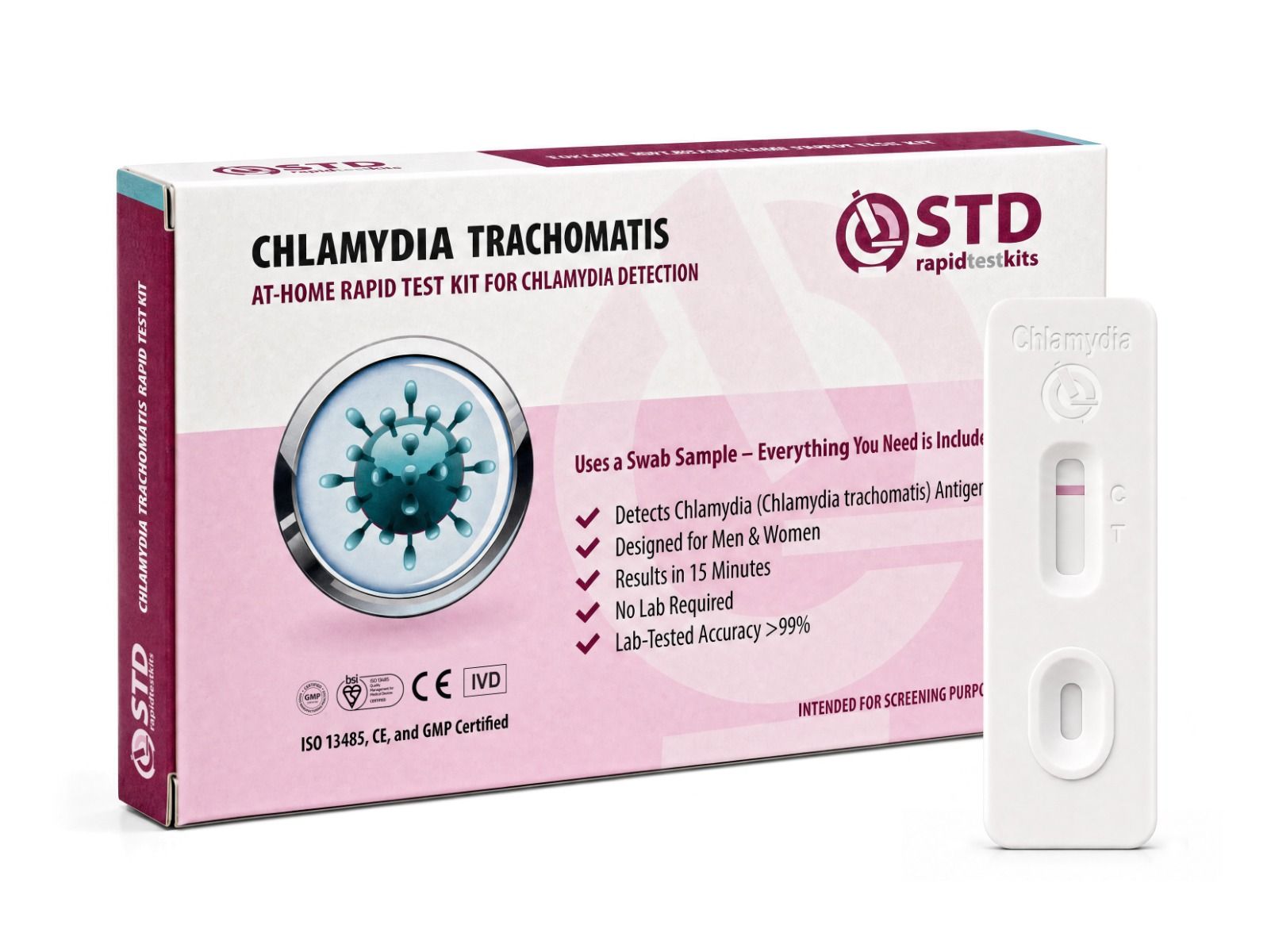
The eight infections most people search for
Each of these infections has its own transmission profile, symptom pattern, and treatment route. Lumping them together is convenient shorthand; it is not how clinicians treat them. The table below is a quick comparison for context.
Bacterial STIs (chlamydia, gonorrhea, syphilis, trichomoniasis) are curable with the right antibiotics, but only if they are caught and treated. Viral STIs (HIV, herpes, HPV, hepatitis B) are not curable in the 'one-and-done' sense, but the modern antiviral toolkit lets people with HIV reach undetectable viral loads (and become non-infectious to partners), keeps herpes outbreaks suppressed, and drops the risk of HPV-driven cervical cancer to near-zero with vaccination plus routine cervical screening.
One bacterial infection deserves a note. Gonorrhea has developed resistance to several antibiotic classes; the CDC currently recommends a specific ceftriaxone regimen and monitors treatment failures nationally (CDC STI Treatment Guidelines). Completing the full prescribed course matters for cure and for slowing further resistance.
Untreated bacterial STIs cause the most preventable damage. Pelvic inflammatory disease (chlamydia and gonorrhea), tertiary syphilis, and untreated HIV produce the long-term complications that show up in the medical literature. None of those outcomes is inevitable. All of them require missing the screening window for years at a time.
| Infection | Common sample | Curable? | Vaccine available? |
|---|---|---|---|
| Chlamydia | Swab or urine (clinic) / swab (at home) | Yes, with antibiotics | No |
| Gonorrhea | Swab or urine (clinic) / swab (at home) | Yes, with ceftriaxone (resistance is a growing concern) | No |
| Syphilis | Blood (antibody) | Yes, with penicillin | No |
| Trichomoniasis | Vaginal swab | Yes, with antibiotics | No |
| HPV | Pap or HPV test (cervix) | No, but most clear on their own | Yes (routine through age 26) |
| Genital herpes (HSV-1, HSV-2) | Lesion swab (active) or blood antibody | No, managed with antivirals | No |
| HIV | Blood (antigen-antibody) | No, managed with daily antiretrovirals | No |
| Hepatitis B | Blood | Sometimes cleared spontaneously; otherwise managed | Yes (childhood schedule, available to adults) |
Prevention that actually works
Prevention is not a single tool. The right strategy depends on which infection you are protecting against, who you are protecting, and what your sexual life looks like.
Barrier methods. External and internal condoms reduce HIV and most fluid-borne STI transmission substantially when used consistently and correctly. Dental dams add some protection during oral sex. Barriers do not fully cover skin-to-skin contact, so HSV and HPV protection is partial.
Vaccination. Two STIs have effective vaccines. The HPV vaccine is recommended routinely for teens and young adults through age 26, and adults aged 27 to 45 may decide to get the vaccine after speaking with their doctor about risk for new HPV infections (CDC HPV vaccine recommendations). The hepatitis B vaccine is part of the routine childhood schedule and is offered to unvaccinated adults.
HIV prevention. Daily oral PrEP (pre-exposure prophylaxis) reduces the risk of HIV acquisition through sex by about 99% when taken as prescribed. Treatment-as-prevention (Undetectable equals Untransmittable, or U=U) means a partner with HIV who maintains an undetectable viral load on antiretrovirals does not transmit the virus through sex.
Routine testing. Annual screening at minimum is the CDC recommendation for sexually active adults; every 3 to 6 months is appropriate with multiple partners or higher-risk activity. Testing turns silent infections into treatable ones before they cause damage.
Communication. Talking with a partner about testing history before sex is awkward exactly once. After that, it becomes routine. The conversation does not have to be confrontational; it is closer to 'when did you last get tested, and would you want to retest together?'.
Most STIs do not have vaccines, but two do: HPV (recommended routinely through age 26, with shared decision-making for adults aged 27 to 45) and hepatitis B (part of the standard childhood schedule, available to unvaccinated adults). If you have not had either, ask your provider.
When and how to test
Testing is the single most actionable thing in this article. The CDC's screening recommendations cover annual chlamydia and gonorrhea testing for sexually active women under 25 and for men who have sex with men, plus annual HIV testing for everyone aged 13 to 64 at least once, and more often for higher-risk activity (CDC STI Treatment Guidelines). Specific testing intervals vary by infection and risk profile; the safest default for most sexually active adults is one full STI screen per year.
The sample types break down by infection. Bloodwork (fingerstick or venous) is used for HIV, syphilis, hepatitis B, hepatitis C, and herpes antibody testing. Urine samples are used in clinics for chlamydia and gonorrhea screening. Self-collected vaginal or penile swabs are used for chlamydia, gonorrhea, trichomoniasis, and HPV. The lab-versus-rapid distinction matters: laboratory NAATs (nucleic acid amplification tests) are the gold-standard reference test for chlamydia, gonorrhea, and trichomoniasis, with the highest analytical sensitivity. At-home rapid tests use lateral-flow chemistry, which is faster and more private, and is well-suited for screening; positive results are worth confirming with a lab when possible.
Window periods matter. Most STIs are not detectable immediately after exposure. HIV antigen-antibody combination tests detect most infections by 45 days. HSV-2 IgG antibodies typically take 6 to 12 weeks to develop after primary infection. Chlamydia and gonorrhea testing is reliable from about 1 to 2 weeks post-exposure. Syphilis serology takes 3 to 6 weeks. Testing too early produces a false sense of security; re-test at the right interval if your initial test was within the window.
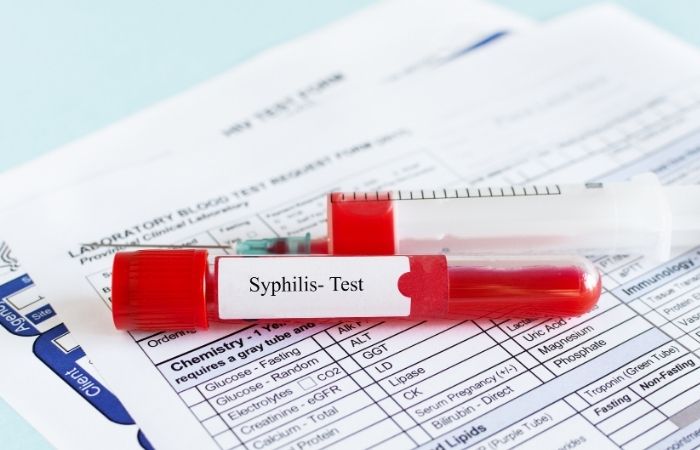
What if a test comes back positive
The first useful instruction is: do not panic. Every STI in this article is treatable. Most are curable. The ones that are not curable are manageable, often to the point that the person living with the infection has a normal life expectancy and does not transmit to partners.
Bacterial STIs (chlamydia, gonorrhea, syphilis, trichomoniasis) are cleared with the right antibiotic. The CDC's treatment guidelines specify the regimen for each one (CDC STI Treatment Guidelines). Three things matter for cure: complete the full course (do not stop when symptoms resolve), avoid sex until the regimen is complete and a clinician confirms cure where required, and treat current and recent partners. Re-infection from an untreated partner is the single most common reason these infections come back.
Viral STIs follow different paths. HIV is managed with daily antiretrovirals; people on stable treatment with an undetectable viral load do not transmit the virus through sex (U=U). Genital herpes is managed with antivirals to suppress outbreaks and reduce transmission risk; many people see fewer outbreaks per year over time. HPV usually clears on its own within two years, and routine cervical screening catches the small fraction that progress.
Partner notification is uncomfortable but consequential. Most state health departments offer anonymous partner-notification services.
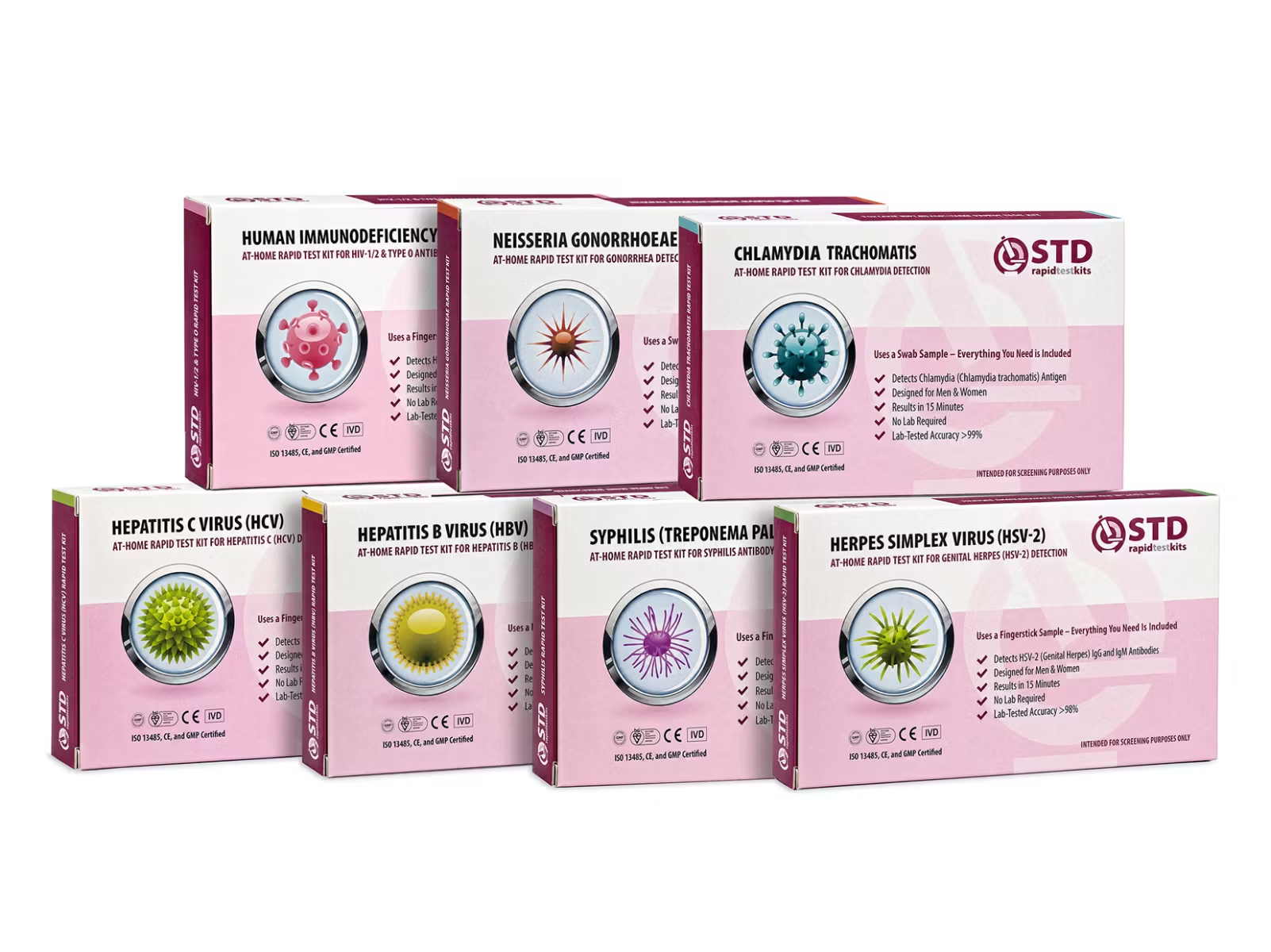
Why untreated STIs cause lasting harm
The main reason to test routinely is not the infection itself; it is the slow damage that untreated STIs cause. The complications below are real, well-documented, and the reason public-health agencies prioritize routine screening over symptom-based diagnosis.
Pelvic inflammatory disease (PID). Untreated chlamydia or gonorrhea in women can ascend to the upper genital tract, causing inflammation of the uterus, fallopian tubes, and ovaries. PID can lead to scarring of the fallopian tubes, ectopic pregnancy, infertility, and long-term pelvic pain (CDC pelvic inflammatory disease overview). Many cases follow infections the person never knew they had.
Tertiary syphilis. Syphilis untreated for years progresses through latent, secondary, and tertiary stages. Late-stage syphilis can cause cardiovascular damage, neurological complications (neurosyphilis), and visible gummatous lesions. Penicillin treatment in the primary or secondary stages prevents all of this.
HPV-related cancers. Persistent infection with high-risk HPV strains drives most cervical cancer cases and a meaningful share of anal, penile, and oropharyngeal cancers. Vaccination plus routine cervical screening (Pap or HPV testing) prevents the overwhelming majority.
HIV progressing to AIDS. Without antiretrovirals, HIV depletes CD4 cells and progresses to AIDS over years. Modern treatment, started promptly, prevents this and lets people live full lifespans.
Increased HIV acquisition risk. Active untreated STIs (especially those causing genital ulcers, like syphilis or HSV) increase the risk of acquiring or transmitting HIV. Treating other STIs is, in part, HIV prevention.

Myths worth retiring
Most STI myths fall into two categories: myths that make people more anxious than they need to be, and myths that make people less careful than they should be. Both are worth addressing.
Myth: 'I would know if I had an STI.' The asymptomatic majority is the central fact of STI epidemiology. Years of silent infection are common with chlamydia, HPV, herpes (between outbreaks), and early HIV. The only thing that knows your status is a test.
Myth: 'STIs happen to other people.' CDC estimates put roughly 1 in 5 people in the U.S. with an STI at any moment. The denominator includes single people, partnered people, monogamous people whose partners had previous partners, and everyone in between. STI status is not a moral category.
Myth: 'STIs only spread through penetrative sex.' Skin-to-skin contact (HSV, HPV, syphilis chancre) and oral sex (gonorrhea, syphilis, herpes) account for a substantial share of transmissions, even without penetration.
Myth: 'Once you have an STI, you have it forever.' Bacterial STIs are cured with antibiotics. Viral STIs are managed, sometimes for life, with treatment that keeps people healthy and (in HIV) non-infectious to partners. 'Forever' applies to a small subset of viral infections, not the entire category.
Myth: 'Condoms make STIs impossible.' Condoms substantially reduce risk for fluid-borne infections and partly reduce risk for skin-contact infections. They are not a 100% guarantee, which is why testing remains part of the picture.
Absence of symptoms does not mean absence of infection. Most STIs cause no symptoms for the majority of people who carry them. Annual testing is the only reliable signal.
Take action: your next steps
Sexual health does not have to be a taboo topic. The more openly people discuss it, the easier the small useful actions become: testing on a regular schedule, using barrier methods, getting vaccinated where applicable, and talking with partners about status. None of these requires special bravery once they become routine.
If it has been more than a year since your last screen, or if you have had a new partner, the right next step is straightforward. Test. The clinic, the community sexual-health center, and the at-home rapid kit are all valid entry points.
Most people with sexually transmitted infections have no symptoms, or symptoms so mild that they do not seek medical care. Without testing, infections can persist undiagnosed and pass to sexual partners.
Frequently asked questions
- How often should I get tested for STIs?
- The CDC recommends at least annual screening for sexually active adults. People with multiple partners, men who have sex with men, and pregnant people are advised to test more frequently (every 3 to 6 months). HIV testing is recommended at least once for every adult aged 13 to 64, and more often for higher-risk activity.
- Can you really get an STI from oral sex?
- Yes. Gonorrhea, chlamydia, syphilis, herpes (HSV-1 and HSV-2), and HPV all transmit through oral sex in either direction. The risk varies by infection and is generally lower than for vaginal or anal sex, but it is not zero. Dental dams and condoms reduce the risk.
- What is the difference between an STI and an STD?
- Mostly terminology. STI (sexually transmitted infection) is the modern preferred term because most people who have one are infected without progressing to symptomatic disease. STD (sexually transmitted disease) was the older term and is still in common use. Clinicians treat them the same way.
- Do home STI tests work as well as clinic tests?
- Home rapid tests use lateral-flow chemistry, which is well-suited to screening and gives results in about 15 minutes. Laboratory NAAT tests (the clinic standard for chlamydia, gonorrhea, and trichomoniasis) have higher analytical sensitivity. The two are complementary: at-home tests are excellent for routine screening and privacy; positive results are worth confirming with a lab when possible.
- Can I have an STI without ever knowing it?
- Yes, and this is the typical case. Chlamydia, HPV, and early HIV often produce no symptoms for months or years. The only reliable way to know your status is a test. Symptom-based screening misses the majority of infections.
- Do condoms fully protect against all STIs?
- No. Condoms substantially reduce risk for fluid-borne STIs (HIV, chlamydia, gonorrhea, hepatitis B). They partially reduce risk for skin-to-skin infections (herpes, HPV, syphilis chancre) because the condom does not cover all the skin involved. They remain the single most effective barrier method available.
- Can bacterial STIs go away on their own?
- No. Chlamydia, gonorrhea, syphilis, and trichomoniasis require antibiotic treatment. Untreated, they can cause serious complications including pelvic inflammatory disease, infertility, and (for syphilis) cardiovascular and neurological damage years later. Re-test after treatment to confirm cure where the CDC guidelines recommend it.
- What is the window period and why does it matter?
- If your exposure was recent, timing matters: chlamydia and gonorrhea testing is reliable from 1 to 2 weeks; syphilis serology from 3 to 6 weeks; HIV 4th-generation antigen-antibody tests by 45 days; HSV-2 IgG antibodies by 6 to 12 weeks. Testing too early produces false negatives. Re-test if your initial test fell within these windows.
- U.S. Centers for Disease Control and Prevention (2021 press release). CDC estimates 1 in 5 people in the U.S. have a sexually transmitted infection.
- World Health Organization. Sexually transmitted infections fact sheet, including the global incidence figure of more than one million curable STIs acquired daily worldwide.
- U.S. Centers for Disease Control and Prevention. Sexually Transmitted Infections Treatment Guidelines, including window periods, screening intervals, and treatment regimens (including current ceftriaxone-based gonorrhea regimen) for the infections covered in this article.
- U.S. Centers for Disease Control and Prevention. Pelvic inflammatory disease overview, including its relationship to untreated chlamydia and gonorrhea and its complications (tubal scarring, ectopic pregnancy, infertility, chronic pelvic pain).
- U.S. Centers for Disease Control and Prevention. HPV vaccine recommendations, including routine vaccination through age 26 and shared clinical decision-making for adults aged 27 to 45.
- U.S. Centers for Disease Control and Prevention. About Sexually Transmitted Infections, including the general statement that infections can persist for years without symptoms in many people who carry them.
- U.S. Centers for Disease Control and Prevention. About Genital Herpes, including the statements that not all herpes sores occur in areas a condom can cover and that the skin can shed virus from areas without a visible sore.
- U.K. National Health Service. Sexually transmitted infections, including the patient-facing overview of routes of transmission and testing recommendations.
