

Published: December 2025 | Last updated: April 2026 | Editorial review and quality control: Martina N.
Mississippi has been pulled into one of the steepest STI surges in the United States. The state now sits among the highest in the nation for congenital syphilis, and adult rates of syphilis, chlamydia, and gonorrhea have climbed in parallel. The story behind the numbers is not just about behavior. It is about clinic closures in rural counties, prenatal-care deserts, long appointment wait times, and the simple fact that many people never feel safe walking into a small-town clinic for an STI test. This guide explains what is happening, who needs to pay attention, when testing actually works, and where private at-home screening fits as a backup when the system is full.
Why is Mississippi's STD epidemic such a big deal, and how can at-home testing help?
Mississippi has the highest congenital syphilis rate in the U.S., driven by gaps in prenatal care, rural clinic shortages, and rising adult infections. At-home rapid kits give a private, fast first read on syphilis, HIV, chlamydia, gonorrhea, and trichomoniasis when clinic access is delayed. They are screening tools, not diagnoses, so positive results need confirmation and treatment from a provider.
Key Takeaways
- Mississippi's congenital syphilis rate has risen sharply over the last decade, and the CDC now ranks it among the highest in the nation.
- At-home rapid tests cannot replace prenatal care, but they shorten the gap between exposure and knowing your status when clinic appointments are weeks out.
Why the Mississippi STD surge is a national warning sign
The picture in Mississippi is not unique to one state. According to the CDC's national STI surveillance program, the United States has seen sharp multi-year increases in syphilis, including congenital syphilis, alongside stubborn elevations in chlamydia and gonorrhea. Mississippi, Louisiana, New Mexico, and several other Southern and Mountain-West states sit at the top of the rankings. Public health officials in Mississippi have publicly described the situation as an epidemic, citing case counts that the local healthcare system is no longer able to absorb at the speed they are appearing.
Three pressures combine to produce the spike. Adult syphilis cases have been rising for years, which seeds congenital cases when infected adults conceive. Rural clinic closures and OB-GYN shortages mean many pregnant Mississippians do not see a provider in the first trimester, which is exactly the window where a single dose of penicillin can prevent transmission to the fetus. Stigma and privacy concerns in small towns then keep many people from seeking testing voluntarily, even when symptoms appear. The result is a cycle that the public-health system, on its current footing, cannot interrupt fast enough.
Mississippi is the most visible point on the map, but the same dynamics show up in any region with thin rural healthcare and rising adult STI rates. If you live in the South, the rural Midwest, or any community where clinic access is scarce, the same risk arithmetic applies to you.
This article is published by stdrapidtestkits.com, which sells at-home STI testing kits. We recommend products based on fit for the reader's concern, not commercial benefit. At-home rapid tests are screening tools, not a substitute for clinic care, especially during pregnancy.
Who should be paying attention right now
If you are pregnant or trying to conceive in Mississippi, you are first in line. The CDC's STI treatment guidelines recommend syphilis screening for all pregnant people at the first prenatal visit, and again in the third trimester (and at delivery) for anyone living in a high-prevalence area or with ongoing risk. Mississippi qualifies as a high-prevalence area for syphilis under that guidance, which means three screening points across pregnancy, not one.
The audience widens fast from there. If you live anywhere in the South where rural clinic access is thin, if you have had a new partner in the past few months, or if you fall into a group the CDC flags for annual screening (sexually active women under 25, men who have sex with men, anyone with a recent partner change), you are in the population this surge affects. The point is not to alarm you. It is to make clear that current STI risk in the region is not a fringe concern, and that early testing is the single most effective tool any individual has.
Consider a hypothetical that local public-health staff describe as common: someone in Gulfport notices a small painless sore near the genitals. They assume it is an ingrown hair, or a razor bump. The local clinic is booked solid. Two weeks later the sore is gone, but the infection is not. During the latent stage, syphilis stops producing surface symptoms and continues progressing internally, where only a blood test can detect it.
How STD tests work, and why the technology matters
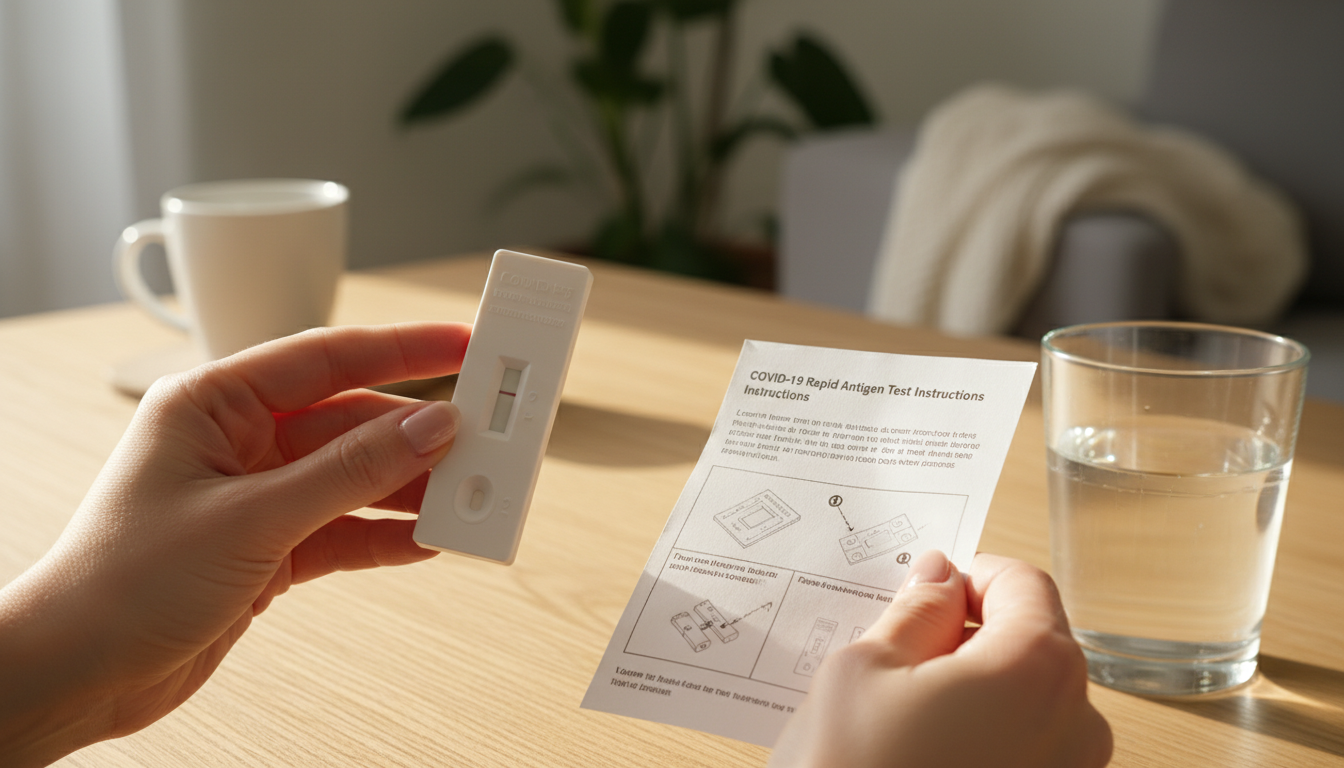
Most reliable STI tests fall into three buckets. The first is laboratory nucleic acid amplification testing (NAAT), which detects bacterial DNA from a urine sample or genital swab. NAAT is what the CDC calls the gold standard for chlamydia and gonorrhea, because of its very high sensitivity. The second is blood-based antigen and antibody testing, used for syphilis, HIV, and the hepatitis viruses. These tests look for the body's immune response to infection, which takes time to develop. The third is the rapid lateral-flow immunoassay, the at-home format that delivers a visual line result in roughly 15 minutes, similar to a pregnancy test.
Our at-home rapid kits are lateral-flow tests, not laboratory NAATs. They are useful, fast, and private, but they are not technologically equivalent to a clinic-run NAAT. A negative rapid result during the right testing window is reassuring; a positive rapid result should be confirmed with a laboratory test before any treatment decision. Used that way, the rapid format is a powerful screening tool. Used as a substitute for clinic confirmation, it is not.
Sample type matters too. Chlamydia, gonorrhea, trichomoniasis, and HPV are infections of mucosal surfaces, so they are tested with a urine sample or a self-collected swab. Syphilis, HIV, and the hepatitis viruses are systemic, so they are tested through blood, usually a fingerstick for the rapid format. If a kit's marketing implies it can detect a throat or rectal infection from a fingerstick blood sample, treat that as a red flag and look elsewhere.
Our at-home kits use lateral-flow chemistry, the same chemistry as a pregnancy test. Laboratory NAATs amplify bacterial DNA and are more sensitive, especially in early or asymptomatic infections. A negative rapid result inside the right window is a meaningful screening signal; a positive rapid result is a strong cue to confirm with a lab before any treatment decision.
Testing windows: when can you actually trust a negative result
Every infection has its own window between exposure and detectability, and a test taken before that window closes can miss a real infection. The table below summarizes the windows the CDC publishes for the major STIs. The HIV row distinguishes laboratory antigen/antibody (Ag/Ab) combination tests from rapid antibody-only tests, because their detection windows differ.
| Infection | Earliest reliable test | Best window for accuracy | Standard test type |
|---|---|---|---|
| Chlamydia | About 7 days | About 14 days | NAAT (urine or swab) |
| Gonorrhea | About 7 days | About 14 days | NAAT (urine or swab) |
| Trichomoniasis | About 5 days | 2 to 4 weeks | NAAT or rapid antigen swab |
| Syphilis | About 3 weeks | 6 to 12 weeks | Blood antibody test |
| HIV (Ag/Ab combo) | About 18 to 45 days | By 45 days | Lab Ag/Ab combo or NAAT |
| HIV (rapid antibody) | About 23 to 90 days | By 90 days | Rapid antibody, fingerstick |
What to do when you cannot wait the full window
When you are anxious, two weeks can feel impossible. Layered testing is a reasonable compromise. An early test, taken inside the window, will not reliably catch a brand-new infection, but a negative result still rules out anything you might have been carrying from before the recent exposure. The retest, taken at the recommended window, is what actually clears the recent event.
Walk through a common scenario. Someone has an unprotected encounter on Saturday. By Monday they are checking themselves in the mirror every hour. They order a rapid syphilis test, it arrives Wednesday, and they test on day five. The result will almost certainly be negative simply because syphilis antibodies usually take three weeks or longer to appear. That negative result is meaningful for any infection that pre-dated Saturday. The retest at four to six weeks is what answers the question they actually have. Treat the early test as a baseline check, not a final answer, and the layered approach gives you both speed and certainty.
Post-exposure prophylaxis (PEP) is a 28-day course of HIV medication that, when started within 72 hours of a high-risk exposure, can prevent infection. Do not wait for testing windows to clear. Contact a clinician, urgent care, or emergency department immediately. PEP is not a do-it-yourself protocol and is not what an at-home test addresses.
Why congenital syphilis is hitting Mississippi hardest
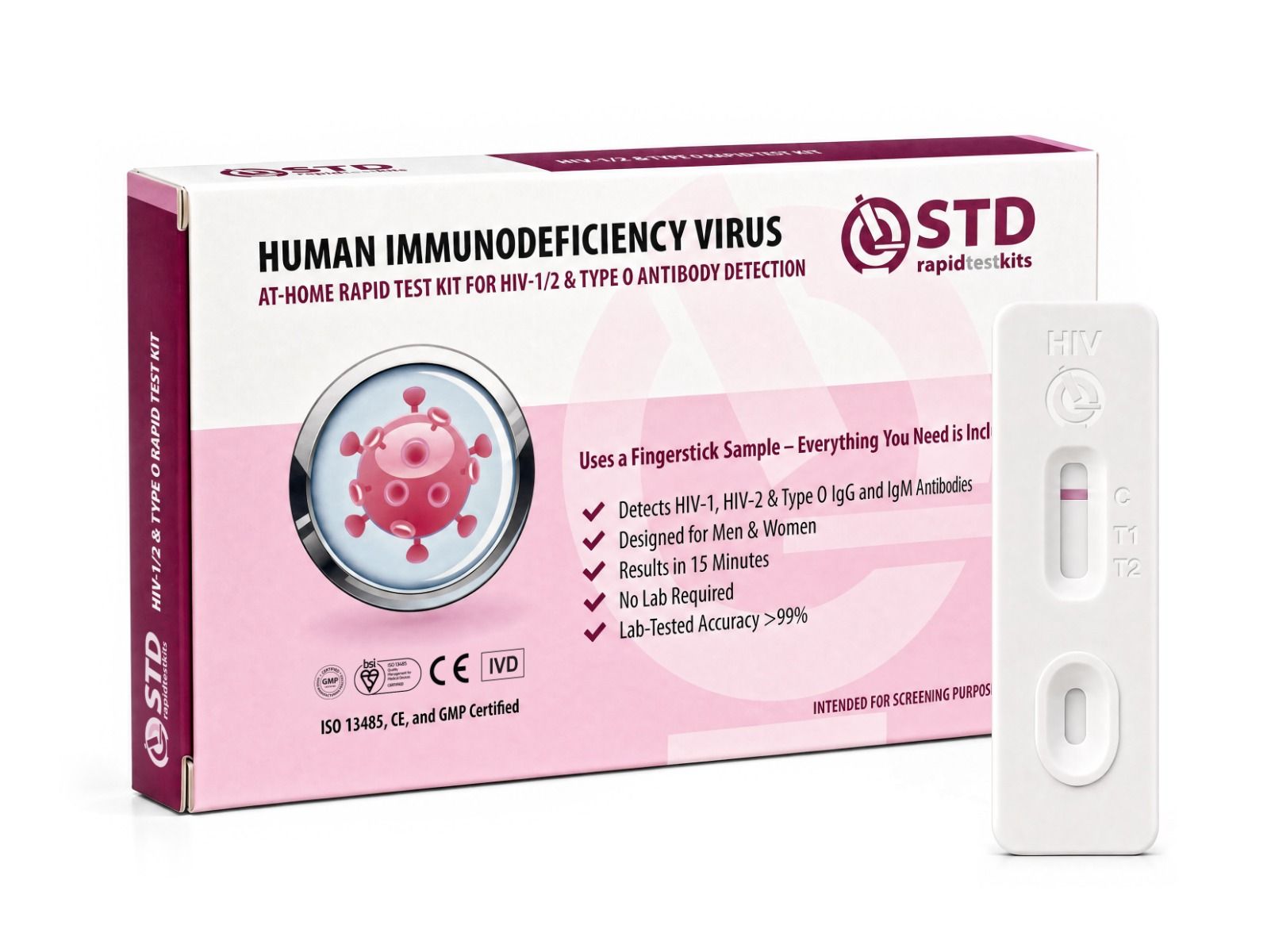
Congenital syphilis happens when an untreated pregnant person passes the infection across the placenta to the fetus. The clinical consequences are severe: miscarriage, stillbirth, premature birth, low birth weight, infant death, and in survivors a range of complications including bone deformities, neurological damage, and rashes. The U.S. case count has risen for years, and Mississippi has consistently ranked at or near the top of state-level rates in CDC surveillance reports.
The reasons are structural rather than behavioral. Many Mississippi counties have no practicing OB-GYN, which means routine prenatal screening simply does not happen for the people who live there. Patients who do reach a provider often arrive late in pregnancy, when treatment can still help but cannot always reverse fetal harm. Even among patients who do get prenatal care, screening can be missed without the right protocols, especially in third-trimester re-screening for high-prevalence areas.
The clinical fix is straightforward. Penicillin is the only treatment recommended by the CDC for syphilis in pregnancy, it is safe, and a single appropriately-timed dose can prevent transmission to the fetus when given early enough. Public health staff in the state consistently name testing access as the bottleneck, not treatment availability: the drug is there; the diagnosis often is not.
Untreated congenital syphilis can cause miscarriage, stillbirth, prematurity, low birth weight, or death shortly after birth. Untreated babies who survive may have deformed bones, severe anemia, enlarged liver and spleen, jaundice, brain and nerve problems, like blindness or deafness, meningitis, or skin rashes.
What at-home testing can and cannot do for pregnant readers
If you are pregnant in Mississippi and the next available prenatal slot is weeks away, an at-home rapid test for syphilis or HIV can shorten the time between an exposure and a first signal. A negative result inside the correct window can buy you the breathing room to wait for your appointment. A positive result tells you that you must reach a clinician immediately, today if possible, because the treatment that protects the fetus is time-sensitive.
What at-home testing cannot do is replace the prenatal visit itself. The penicillin treatment for syphilis in pregnancy must be administered by a clinician using the right formulation and the right timing for your stage of pregnancy. The at-home test is a flashlight that helps you see what is there. The clinic is where the actual care happens.
| Infection | Available as at-home rapid test | Sample type | Priority for pregnancy |
|---|---|---|---|
| Syphilis | Yes | Fingerstick blood | High, screen each trimester in MS |
| HIV | Yes | Fingerstick blood | High, screen at first prenatal visit |
| Chlamydia | Yes | Self-collected swab | High, routine prenatal screen |
| Gonorrhea | Yes | Self-collected swab | High, routine prenatal screen |
| Trichomoniasis | Yes (women's kit) | Vaginal self-swab | Moderate, screen if symptomatic |
| Hepatitis B | Yes | Fingerstick blood | High, routine prenatal screen |
What to do if you test positive at home
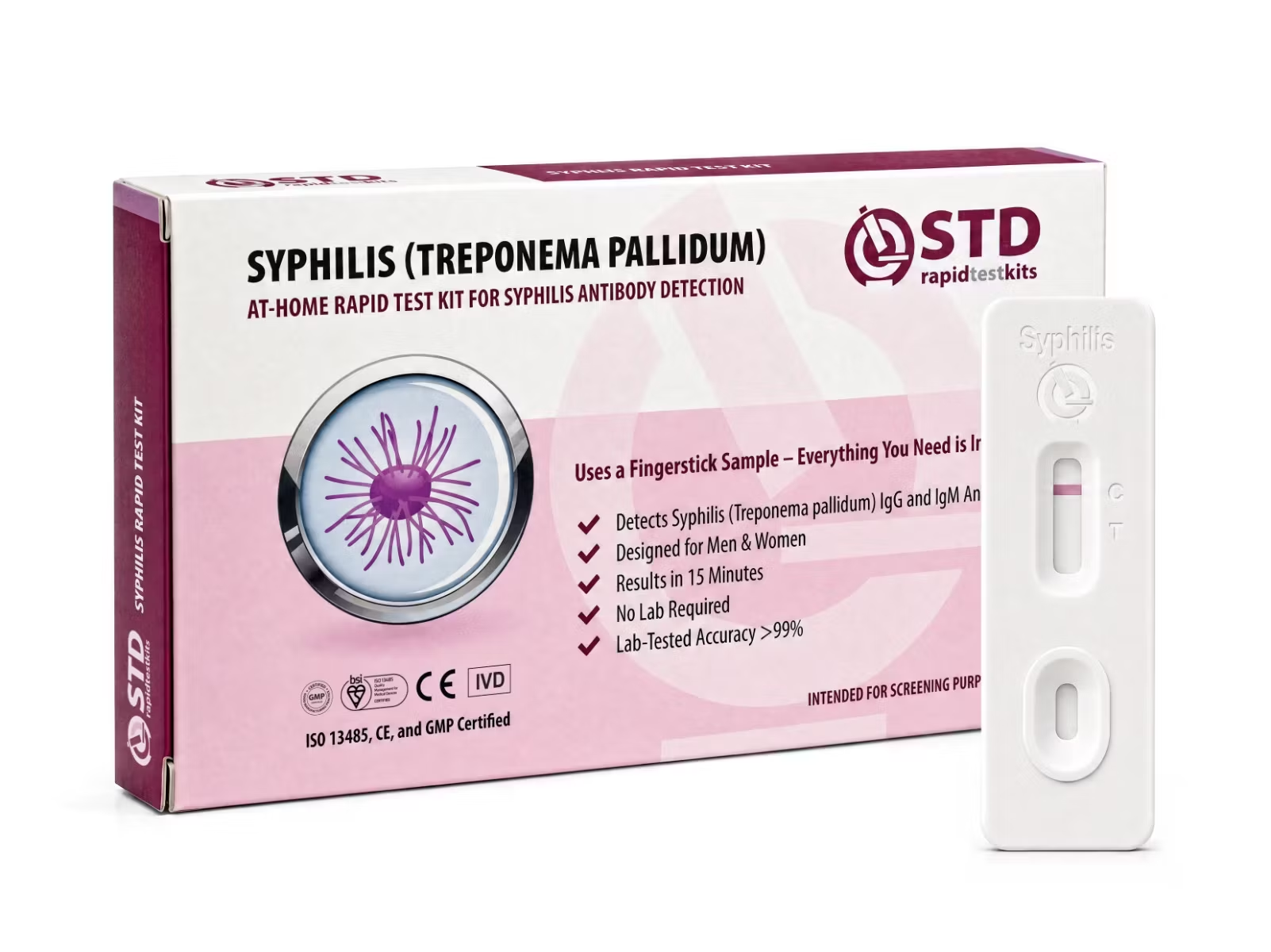
A positive at-home result is a starting point, not a diagnosis. The first step is to confirm the result with a clinician, because lateral-flow tests have a small false-positive rate (especially when used outside the recommended window). For syphilis, confirmation is typically a laboratory non-treponemal test (RPR, the Rapid Plasma Reagin, or VDRL, the Venereal Disease Research Laboratory test) followed by a treponemal-specific test. For HIV, confirmation is an Ag/Ab combo plus a NAAT in some protocols. The clinic can do both quickly.
Treatment is then specific to the infection. Early syphilis is treated with a single intramuscular dose of long-acting benzathine penicillin G, which the CDC describes as the only recommended therapy for pregnancy. Chlamydia and gonorrhea are treated with single-dose or short-course antibiotics. HIV is managed long-term with antiretroviral therapy, and modern regimens make undetectable viral load (and therefore non-transmission to partners) achievable for most people.
Before your appointment, write down your timeline: the date of likely exposure, the date you tested, and any symptoms with their start dates. Bring that note when you go. Most state health departments also offer anonymous partner-notification services that send a text or email to a contact you provide, without using your name. The Mississippi State Department of Health publishes guidance on local options through its STI and HIV programs.
Chlamydia, gonorrhea, syphilis, and trichomoniasis are bacterial or parasitic and are cured by appropriate antibiotic treatment. HIV has no cure today, though modern antiretroviral therapy turns it into a manageable chronic condition with normal life expectancy when treatment is started early. Every infection on this list responds to current medicine when caught and confirmed in time.
Privacy, distance, and stigma: how at-home testing closes the gap
The reason testing fails so many people in Mississippi is rarely that the science is hard. It is that the path to a clinic is hard. In small towns, the receptionist at the only clinic in the county may be a neighbor, a cousin, or a member of the same church. The wait for a Title X family-planning appointment can stretch to weeks. Gas, childcare, and time off work compound the cost. None of that shows up in a national surveillance dataset, but all of it is what determines whether a test happens.
An at-home rapid test removes the visibility cost and most of the time cost. It does not remove the need for follow-up care, and it should not be sold as if it does. What it can do is convert a delay-driven decision (wait three weeks for an appointment, hope nothing happens in the meantime) into an information-driven one (test today, then act on what the result tells you). For someone in a county with no OB-GYN, that is the single largest practical change available right now.
Rapid lateral-flow chemistry is not laboratory NAAT, and a positive result is worth confirming with a lab when possible. Used as a screening tool, in the right window, with a plan for follow-up, an at-home kit can shorten the path between exposure and care by days or weeks in counties where clinic access is thin.
If you order a kit today, it can arrive within 48 hours and you can take it on a schedule that fits around work, childcare, and gas costs. None of that shows up in clinic dashboards, but it is what determines whether a test happens at all in many Mississippi counties right now.

Frequently asked questions
- What does it mean when public-health officials call this an epidemic?
- It means the case rate is rising faster than the local healthcare system can absorb, with measurable harm to the population. Mississippi officials use the word because congenital syphilis cases have climbed sharply over the past decade and the state has the highest rate in the nation, despite a known and inexpensive treatment that can prevent the worst outcomes.
- I have no symptoms. Should I still test?
- Yes. The CDC reports that most STIs, including chlamydia, gonorrhea, and early syphilis, are commonly asymptomatic. Annual screening is the standard recommendation for sexually active women under 25, men who have sex with men, and anyone with a recent new partner. If you are pregnant in Mississippi, screening for syphilis and HIV is recommended at the first prenatal visit and again later in pregnancy.
- How soon after a possible exposure can I get a reliable result?
- It depends on the infection. Chlamydia and gonorrhea NAATs become reliable around two weeks after exposure. Syphilis blood tests are usually reliable from three weeks, with best accuracy at six to twelve weeks. HIV testing windows depend on the test type: lab Ag/Ab combos by 45 days, rapid antibody tests by up to 90 days. Earlier tests can still rule out older infections but cannot reliably catch a brand-new one.
- How accurate are at-home rapid tests compared with clinic NAATs?
- At-home rapid tests are lateral-flow immunoassays, not laboratory NAATs. They are highly useful for screening when used in the correct window, but they are not technologically equivalent to a NAAT. The CDC describes NAAT as the gold standard for chlamydia and gonorrhea. Treat a positive at-home result as a strong signal to confirm with a clinician, and treat a negative result as reliable only inside the test's recommended window.
- If I am pregnant and undiagnosed, how serious is the risk to my baby?
- It is serious and well-documented. Untreated syphilis in pregnancy can lead to miscarriage, stillbirth, infant death, and a range of organ-system complications in surviving infants. The good news is that the treatment, intramuscular benzathine penicillin G, is the same one used for decades, is safe in pregnancy, and is highly effective when given early enough. Earlier testing, even before your first prenatal visit, gives you and your clinician more time to start treatment and protect the baby.
- What if I test positive? What is the next step?
- Confirm the result with a clinician, then start the treatment that matches the infection. Most STIs are curable with antibiotics; HIV is manageable with antiretroviral therapy. Notify any recent partners (state health departments offer anonymous notification tools), and abstain from sex until treatment is complete and your clinician confirms it is safe to resume.
- Will my results be private if I test at home?
- Yes. At-home test results are not transmitted to your insurer, your employer, or anyone else unless you choose to share them. Clinicians who diagnose certain reportable conditions (including syphilis, HIV, and gonorrhea) are required by state law to report cases to public health, but that reporting only happens through the clinical system, not from your at-home test.
- Are the women-only kits a problem if I am male and want to test for trichomoniasis?
- Our at-home trichomoniasis and HPV swab kits are validated for vaginal self-collection and are women-only products. We do not currently offer a male-compatible at-home trich or HPV kit. Male readers needing a trich or HPV test should see a clinic, where a urethral swab or urine NAAT can be performed.
- U.S. Centers for Disease Control and Prevention. Sexually Transmitted Infections Surveillance, including state-level case rates and congenital syphilis trend data.
- U.S. Centers for Disease Control and Prevention. STI Treatment Guidelines, including screening recommendations during pregnancy and treatment regimens for syphilis, chlamydia, gonorrhea, and trichomoniasis.
- U.S. Centers for Disease Control and Prevention. Sexually Transmitted Infections (STIs) main resource hub, with fact sheets on individual infections and testing windows.
- U.S. Centers for Disease Control and Prevention. HIV testing information, including window periods for laboratory Ag/Ab combo and rapid antibody tests.
- U.S. Centers for Disease Control and Prevention. About Congenital Syphilis, including clinical consequences for infants and prevention through prenatal screening.
- Mississippi State Department of Health. STI and HIV prevention, testing resources, and partner-notification services for Mississippi residents.
- World Health Organization. Sexually transmitted infections (STIs) fact sheet, with global context on prevalence, screening, and treatment.
