Published: October 2025 | Last updated: May 2026 | Editorial review and quality control: Martina N.
Hepatitis B and hepatitis C don't announce themselves. Most people who carry these viruses feel completely fine, sometimes for decades, while the infection slowly scars the liver. By the time fatigue, jaundice, or upper-right abdominal pain appear, the damage that prompted those symptoms has often been building for ten to thirty years.
That delay is exactly why the conversation about living with hepatitis has to start before symptoms do. If you've already been diagnosed, the right daily habits and medical follow-up can keep your liver healthy for the long run. If you haven't been diagnosed but you've had a recent risk exposure (unprotected sex, shared injection equipment, certain occupational contacts), a single rapid blood test resolves the question in about 15 minutes.
This guide walks through what hepatitis B and C do to the body, how they spread sexually, what day-to-day life looks like after a diagnosis, and where at-home rapid blood testing fits in the picture.
Key Takeaways
- Hepatitis B and C can quietly damage the liver for 10 to 30 years before symptoms appear, which is why at-risk adults benefit from periodic screening rather than waiting for a warning sign.
- A positive hepatitis result usually warrants a broader STI screening panel (HIV, syphilis), because co-infection accelerates liver damage and changes treatment decisions.
Hepatitis B and C in plain terms
Hepatitis simply means inflammation of the liver. The cause matters. Alcohol, certain medications, autoimmune conditions, and several distinct viruses all produce hepatitis, but the two viruses most relevant to sexual health and at-home testing are hepatitis B virus (HBV) and hepatitis C virus (HCV).
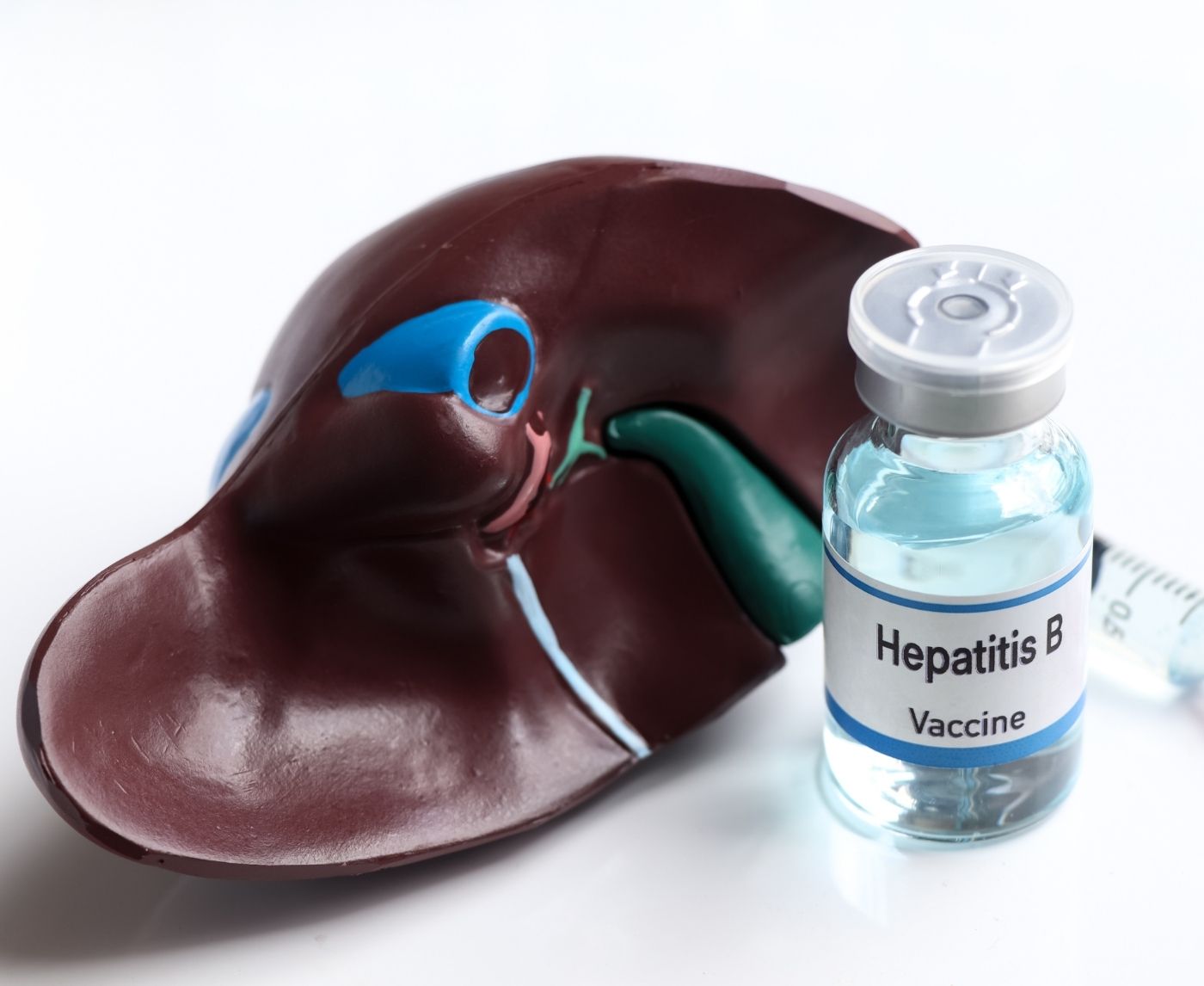
Hepatitis B is a DNA virus transmitted through blood, semen, and other body fluids. The World Health Organization estimates that 254 million people were living with chronic HBV worldwide in 2022, with 1.2 million new infections each year. Most adults who contract HBV clear it on their own within six months. A smaller percentage develop chronic infection, which is when long-term liver complications begin to accumulate.
Hepatitis C is an RNA virus that almost always becomes chronic without treatment. Roughly 50 million people globally live with chronic HCV per WHO estimates. Sexual transmission of HCV is less efficient than HBV. It does occur, particularly during practices that involve blood contact.
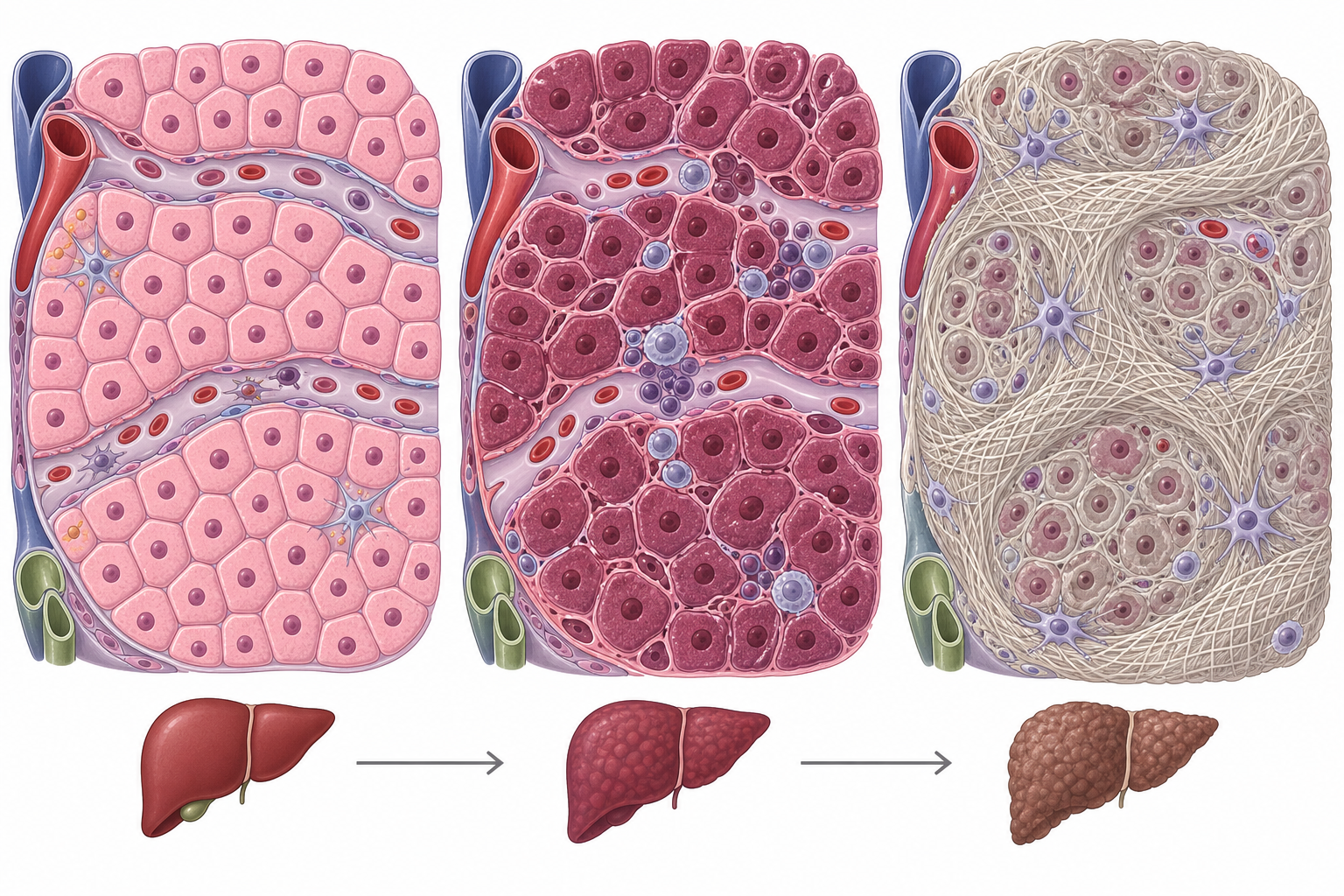
Both viruses target hepatocytes, the liver's working cells. The immune response to infected cells, more than the virus itself, drives most of the inflammation and eventual scarring. Over years, that scarring progresses from fibrosis to cirrhosis to, in some cases, liver cancer or failure.
That cancer risk is real but conditional. Hepatocellular carcinoma develops mainly in people who have progressed to cirrhosis, with lifetime risk estimates above 20% in that sub-group per CDC and WHO data. Patients on effective antiviral therapy with regular ultrasound surveillance every six months see substantially lower cancer rates, which is why ongoing monitoring matters even for people who feel well.
An estimated 254 million people worldwide live with chronic hepatitis B and roughly 50 million with chronic hepatitis C (WHO 2022 to 2023 estimates). The majority of those infections remain undiagnosed, which is why universal adult HCV screening and risk-based HBV screening are now the standard recommendations in the United States.
How hepatitis transmits sexually, and why STI co-infection matters
HBV and HCV spread through three main routes: blood-to-blood contact, sexual contact, and mother-to-child during delivery. For sexual transmission specifically, the risk profile differs by virus and behavior.
- Hepatitis B transmits readily through unprotected vaginal, anal, and oral sex. The CDC notes that sexual contact is among the most common routes of HBV transmission in adults in the United States.
- Hepatitis C is mainly spread by direct blood exposure: shared injection drug equipment, unsterilized tattoo or piercing tools, certain healthcare exposures. Sexual transmission is uncommon in heterosexual monogamous couples, but rises with practices involving blood contact, multiple partners, or co-existing HIV infection.
Co-infection changes the picture in several ways:
- HIV co-infection accelerates HBV and HCV-related liver damage. People living with HIV who also have hepatitis are more likely to develop cirrhosis at younger ages.
- Active syphilis or HSV-2 ulcers create open lesions that make HBV transmission more efficient during sexual contact.
- Some HIV antiretrovirals and hepatitis antivirals interact, so providers manage them together rather than in isolation.
A positive hepatitis result therefore usually prompts a broader STI panel: HIV, syphilis, gonorrhea, chlamydia. The reverse is also true. Anyone diagnosed with a new STI benefits from a hepatitis screen if they don't have a recent one on file.
What symptoms actually look like (and why most people feel fine)
In the first six months after exposure, sometimes called acute infection, some people develop noticeable symptoms:
- Fatigue and a general off feeling
- Loss of appetite, nausea, occasional vomiting
- Mild upper-right abdominal discomfort
- Dark urine, pale stools
- Jaundice (yellowing of the eyes or skin)
- Joint aches
- Low-grade fever
The inconvenient reality is that the majority of people with acute HBV or HCV have no symptoms at all, or have symptoms so mild they get attributed to a passing virus or stress. Chronic infection, the phase that does the long-term damage, is almost always silent until significant liver injury has occurred.
This is why CDC screening guidance no longer relies on symptoms. Adults 18 and older are recommended to have at least one hepatitis C antibody test in their lifetime. Anyone with ongoing risk factors (injection drug use, sex with multiple partners, certain occupational exposures) benefits from periodic retesting. Hepatitis B screening guidance covers similar at-risk populations plus all pregnant people at each pregnancy.
If you're waiting for a clear sign before testing, you may be waiting 10 to 30 years. By then, the liver injury is what's signaling, and earlier treatment options have closed off. A single blood test now is the only way to find a silent infection.
Daily life with a hepatitis diagnosis
A diagnosis doesn't mean a dramatic life overhaul. For most people with chronic hepatitis, the right routine looks more like sensible long-term care than crisis management.
The medical side
- Regular liver function tests, typically every 6 to 12 months, to monitor enzyme levels and viral load
- Periodic imaging (ultrasound) to check for liver changes and screen for hepatocellular carcinoma in higher-risk patients
- A vaccination check for hepatitis A, recommended for anyone with chronic HBV or HCV, plus any missing routine vaccines
- For HBV: ongoing antiviral therapy in many cases, taken once daily, which suppresses the virus and prevents progression
- For HCV: an 8 to 12 week course of direct-acting antiviral drugs (DAAs) that cures more than 95% of cases per WHO data
The personal side
- Tell your dentist, primary care provider, and any new specialist so they can take standard precautions
- Don't share razors, toothbrushes, or anything else that might carry trace blood
- Cover open cuts promptly and clean blood spills with diluted bleach
- If you donated blood in the past, you'll need to stop. The donor screening system catches viral hepatitis, but blood donation is not a route for managing your own infection
Pregnancy, sexual partnerships, and household life all continue. Partners benefit from vaccination (for HBV) and an honest conversation about consistent barrier use, especially while viral load testing and treatment response are still being established.
Tell every new healthcare provider (dentist, surgeon, primary care) so they can apply standard precautions, and complete the hepatitis A vaccine series if you haven't already. Hepatitis A infection on top of chronic HBV or HCV is preventable and notably worse than either virus alone.
Diet, alcohol, and exercise: lifestyle changes that move the needle
The liver processes everything you ingest, so what you put in your body matters more after a hepatitis diagnosis than it did before. Two changes are non-negotiable, and one is more flexible than people often think.
Alcohol: stop, or reduce to a minimum
Alcohol and chronic viral hepatitis compound each other's effects on the liver. The American Association for the Study of Liver Diseases (AASLD) recommends complete avoidance of alcohol for anyone with chronic HBV or HCV. Even moderate drinking accelerates fibrosis progression. Fibrosis slows measurably once alcohol is removed, often more than any dietary change produces.
Weight and metabolic health
Non-alcoholic fatty liver disease can pile on top of viral hepatitis and worsen outcomes. Maintaining a healthy weight, eating mostly whole foods, and managing blood sugar all reduce that additional burden. There is no specific "hepatitis diet," but a Mediterranean-style pattern (vegetables, legumes, whole grains, fish, olive oil, limited red meat and processed food) is well-studied for liver health.
Supplements: caution, not enthusiasm
Several over-the-counter supplements (high-dose vitamin A, niacin, kava, comfrey, certain bodybuilding products) are known to damage the liver. Even milk thistle, often marketed for liver support, has mixed evidence and can interact with antivirals. Run any new supplement past your hepatologist or primary care provider first.
Exercise
Moderate aerobic activity (walking, swimming, cycling, yoga) for about 150 minutes a week is well-tolerated and beneficial. Strenuous training is fine in most cases once you've discussed your specific liver function results with a provider. Listen to your body's energy levels, which can vary more than they did pre-diagnosis.
Hydration and acetaminophen
Drink enough water that your urine is pale. Limit acetaminophen (Tylenol) to no more than 2 grams per day if you have hepatitis, and avoid combining it with alcohol entirely.
The American Association for the Study of Liver Diseases recommends no alcohol at all for chronic HBV or HCV. Even occasional moderate drinking measurably accelerates fibrosis progression, and the effect is multiplicative with viral inflammation rather than additive.
Mental health, stigma, and finding support
The emotional side of a hepatitis diagnosis is consistently underestimated. Research published in BMC Public Health and similar peer-reviewed sources documents elevated rates of depression and anxiety in people with chronic HBV and HCV. The contributors are partly biological (the inflammation itself affects mood-related signaling) and partly social (stigma, disclosure stress, fear of progression).
Approaches that help, drawn from clinical psychology literature on chronic illness:
- A primary care provider or hepatologist you trust and can talk honestly with
- A mental health professional familiar with chronic disease, especially for the first six to twelve months post-diagnosis when adjustment is hardest
- Peer support, in person or online, through reputable organizations such as the Hepatitis B Foundation or the American Liver Foundation
- Honesty with at least one or two close people in your life. Isolation tends to amplify both the medical anxiety and the day-to-day adjustment burden
Stigma around hepatitis is real but often based on outdated information. Sharing factual context with a partner or family member (transmission routes, treatment effectiveness, what daily precautions involve) usually shifts the conversation from fear to logistics quickly.
Worldwide, an estimated 254 million people were living with chronic hepatitis B infection in 2022, with 1.2 million new infections each year. Hepatitis B is preventable with currently available safe and effective vaccines.
Treatment outlook: what cure means for B vs C
The two viruses have very different treatment stories, and conflating them causes a lot of unnecessary worry.
Hepatitis C: actual cure
Direct-acting antiviral drugs (DAAs), available since 2014, cure more than 95% of HCV cases in 8 to 12 weeks of once-daily oral therapy. "Cure" here means sustained virologic response (SVR): the virus is undetectable in the blood for at least 12 weeks after treatment ends, and stays undetectable long-term. The WHO has set a 2030 elimination target for HCV largely because the tools to do it now exist.
Hepatitis B: long-term suppression, sometimes functional cure
Current HBV antivirals (entecavir, tenofovir) suppress viral replication and prevent progression to cirrhosis, but they don't typically clear the virus from the body. People stay on therapy long-term, with regular monitoring. A functional cure (loss of HBsAg, the surface antigen) does happen in a minority of patients on long-term therapy, and research into curative HBV treatments is active.
For both viruses, the most important variable is whether you know your status. Treatment outcomes are dramatically better when therapy starts before significant liver damage has set in.
| Feature | Hepatitis B | Hepatitis C |
|---|---|---|
| Virus type | DNA virus | RNA virus |
| Treatment goal | Long-term viral suppression | Cure (sustained virologic response) |
| Typical treatment duration | Often indefinite, daily oral therapy | 8 to 12 weeks of oral DAAs |
| Cure rate | Functional cure in a minority of patients | Over 95% with direct-acting antivirals |
| Vaccine available | Yes (highly effective) | No (research ongoing) |
| Monitoring frequency | Liver panel and viral load every 6 to 12 months on treatment | Confirm SVR 12 weeks after treatment ends; periodic liver imaging if cirrhosis present |
When and how to test
You should test for hepatitis B and C if any of the following applies:
- Possible recent exposure (unprotected sex with a new partner, needle sharing, occupational blood exposure)
- Born between 1945 and 1965 (an HCV-prevalent birth cohort in the United States)
- Any history of injection drug use, even decades ago
- HIV-positive status
- Current pregnancy
- Long-term hemodialysis
- Tattoos or piercings from unregulated settings
- You simply haven't had a hepatitis test as an adult
Timing matters. Antibody and antigen tests need enough time after exposure for the marker to become detectable. The table below summarizes the typical window periods per CDC and WHO testing guidance.
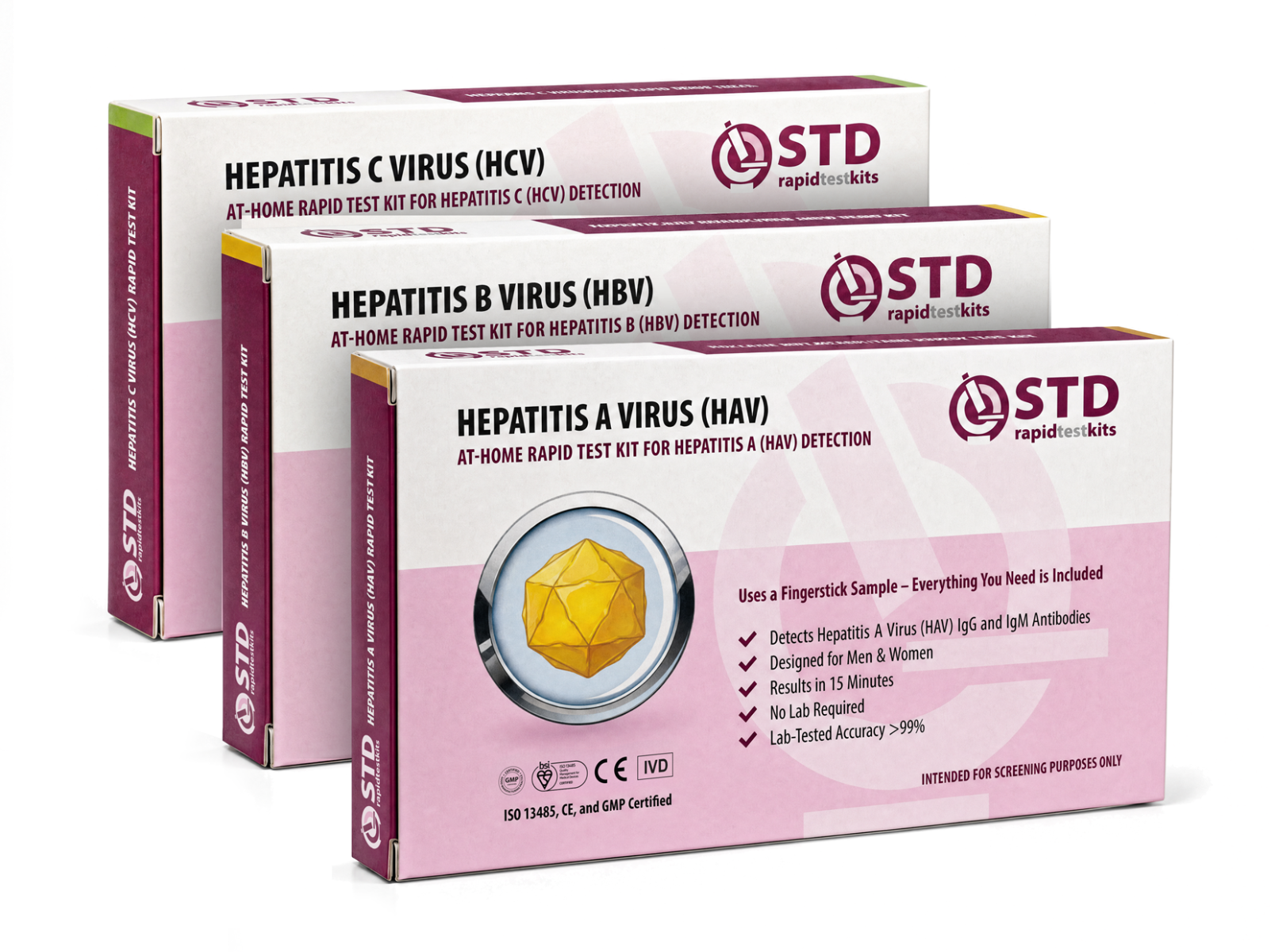
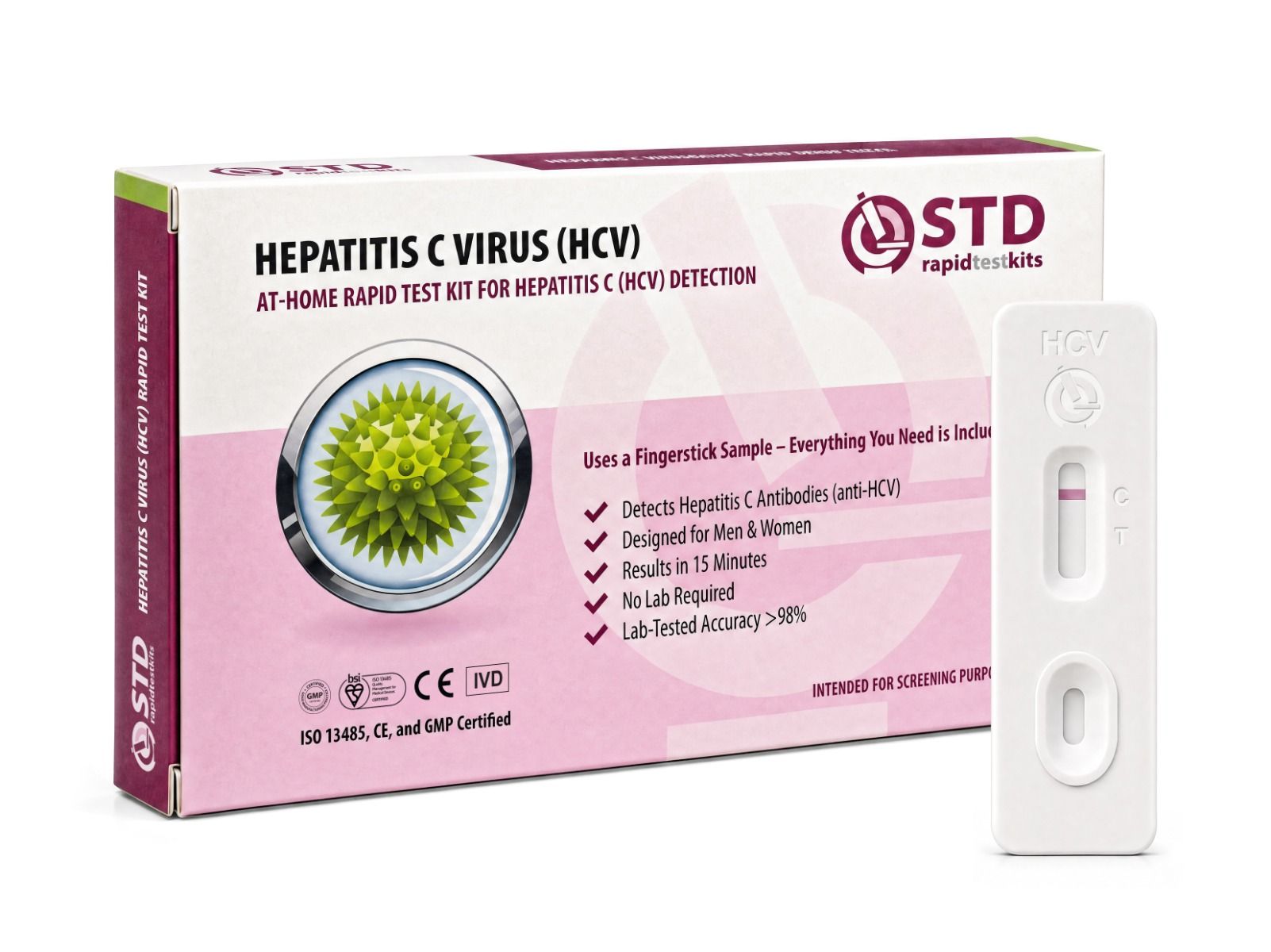
Lateral-flow rapid tests, including the at-home kits we sell, work on the same antibody and antigen targets as laboratory tests, using a fingerstick blood sample. They give a result in about 15 minutes. A positive rapid result is a starting point, not a final diagnosis. Confirmation requires a follow-up laboratory test (PCR for active HCV viral RNA, or quantitative testing for HBV). Negative results during the window period don't fully rule out a recent exposure. Retest 12 weeks after the suspected exposure for the most reliable answer.
| Test marker | Detectable from (average) | Reliable window for negative result |
|---|---|---|
| HBsAg (hepatitis B surface antigen) | About 4 weeks | 8 to 12 weeks after exposure |
| Anti-HBc (hepatitis B core antibody) | About 4 to 10 weeks | 12 weeks after exposure |
| Anti-HCV (hepatitis C antibody) | About 8 to 11 weeks | 12 weeks after exposure |
Frequently asked questions
- Can I get hepatitis from kissing or sharing food?
- Hepatitis B and C are not transmitted through saliva in the absence of blood, so kissing and shared utensils don't pose a meaningful risk. Hepatitis A spreads fecal-orally and can transmit through contaminated food or water, but it's a different virus with different mechanics and a different vaccine.
- How accurate are at-home hepatitis rapid tests?
- Lateral-flow rapid tests for HBsAg and HCV antibody typically report sensitivity in the mid-to-high 90s and specificity above 99% per WHO prequalification reports for similar assays. Performance is best outside the early window period. Any positive result should be confirmed with a laboratory test.
- Will having hepatitis affect my future fertility or pregnancy?
- Hepatitis B does not reduce fertility, and pregnant people with HBV can deliver healthy babies when prophylactic measures (hepatitis B immune globulin plus vaccination of the newborn within 12 hours of birth) are in place. Hepatitis C is similar; vertical transmission risk runs around 5 to 6 percent, lower when viral load is undetectable on treatment.
- Can my partner be vaccinated against the hepatitis I have?
- There is an effective hepatitis B vaccine and your partner should be vaccinated promptly. There is no current vaccine for hepatitis C. Until your partner completes the HBV vaccine series, consistent condom use substantially reduces transmission risk.
- Is hepatitis covered by my regular STI screening?
- Not always. Many standard STI panels include HIV, syphilis, gonorrhea, and chlamydia but not hepatitis B or C. Ask specifically. If you are using an at-home kit, choose a panel that includes the hepatitis tests you want.
- Can I drink any alcohol with hepatitis?
- Even occasional drinks? The AASLD says none. Alcohol and viral hepatitis compound each other's effects on the liver rather than simply adding together, so the damage is more than the sum of the parts. Some hepatologists allow minimal intake in fully-treated, well-compensated patients, but that is a provider-specific conversation, not a blanket permission.
- How often should I retest if my first hepatitis result was negative?
- If you have ongoing risk factors (multiple partners, injection drug use, occupational exposure), annual retesting is reasonable. After a discrete exposure event with a known-positive partner, retest 12 weeks after exposure. For low-risk adults with no specific risk factor, the CDC's current adult-screening recommendation (at least once in a lifetime for HCV) is the baseline.
- Does a positive hepatitis result affect my job?
- For most occupations, no. Standard precautions in healthcare already assume any patient could be infectious. Some specific roles (organ donation, certain military positions, some surgical specialties) have particular policies; check directly with HR or your professional licensing body.
- U.S. Centers for Disease Control and Prevention. Viral Hepatitis: overview, transmission routes, and screening recommendations.
- U.S. Centers for Disease Control and Prevention. Hepatitis B: epidemiology, sexual transmission, and adult vaccination guidance.
- U.S. Centers for Disease Control and Prevention. Hepatitis C: universal adult screening recommendation and treatment context.
- World Health Organization. Hepatitis B fact sheet: 254 million chronic infections globally as of 2022; vaccination and treatment guidance.
- World Health Organization. Hepatitis C fact sheet: DAA cure rates above 95%, 2030 elimination target, sexual transmission risk.
- National Health Service (UK). Hepatitis C: symptoms, testing, and antiviral treatment.
