
Published: September 2025 | Last updated: May 2026 | Editorial review and quality control: Martina N.
Fertility screening can feel like running into a wall of paperwork when you came for hope. Blood draws stack up. Forms keep asking the same questions. Every clinic visit ends with another lab order. Even people with no risk history walk away wondering why the rules feel so heavy compared to anything they have encountered in regular healthcare.
The short version: when an IVF cycle is underway or donor eggs and sperm bank material are involved, a missed infection cannot be quietly fixed later. Screening exists because reproductive medicine amplifies small risks, and protecting embryos, pregnancies, donors, and future children requires a margin that everyday healthcare rarely demands. The strictness is not about suspicion of patients or donors. It is about the simple fact that mistakes in fertility care echo across years and lives.
Key Takeaways
- Repeated screening reflects test expiration windows, not personal trust. Lab results have defined validity periods even when nothing about your life has changed.
- Screening protects four parties at once: the patient, the donor, the future embryo, and any child resulting from the cycle.
Why Fertility Screening Feels So Different From Routine Testing
In most areas of medicine, testing is reactive. You feel symptoms, you get checked. A concern surfaces, a doctor responds. Fertility medicine works on a different schedule, anticipating problems before they occur. By the time an embryo is created, implanted, and carried, undoing a missed infection screen is rarely simple, and the consequences extend well past the patient who skipped a test.
Consider the difference between a routine STI panel at a primary care visit and the labs required before donor sperm is released for a cycle. In one scenario, a positive result affects one person and is usually treatable quickly. In the other, a missed infection could affect embryos in storage, a pregnancy months later, or multiple families if donor material is distributed to several recipients. That amplification of impact is why fertility screening feels heavier and more repetitive than anything most patients have experienced.
Clinics also operate under federal regulations and professional guidelines that leave little room for negotiation. They follow protocols built around worst-case scenarios, even when a patient feels confident about their history or a donor has a clean record.
Under U.S. federal regulation (21 CFR Part 1271), reproductive tissue donors must be screened and tested for a defined panel of infections before donor material can be released. Professional groups like the American Society for Reproductive Medicine layer additional clinical guidelines on top. Clinics are working inside that framework, not improvising.
What Clinics Actually Screen For
When people hear "STI screening" in the context of IVF or a sperm bank, they often picture a generic checklist. The reality is more focused. Panels are designed around infections with documented effects on fertility, pregnancy, or neonatal outcomes. Some interfere with implantation, others raise miscarriage risk, and a few (while rare) can be transmitted through reproductive tissue or during pregnancy if they are not identified ahead of time. Many of these infections also exist without symptoms, which is why fertility medicine cannot afford to assume silence means absence. The panels below appear on most clinical screens because each infection has either a transmission route through reproductive tissue, a documented effect on implantation, or a complication profile that extends into pregnancy.
| Infection | Why It Is Screened | Primary Risk Area |
|---|---|---|
| HIV | Risk of transmission through reproductive tissue and pregnancy | Embryo and maternal health |
| Hepatitis B | Can affect pregnancy outcomes and long-term child health | Maternal and neonatal health |
| Hepatitis C | Blood-borne infection with vertical transmission risk | Pregnancy and infant health |
| Syphilis | Known to cause miscarriage and congenital infection | Fetal development |
| Chlamydia | Associated with implantation failure and pelvic inflammation | Fertility outcomes |
| Gonorrhea | Can damage reproductive tissue and increase pregnancy complications | Fertility and pregnancy |
| HTLV-I/II | FDA-mandated for donor tissue screening | Donor safety and transmission |
| CMV | Antibody status tracked for donor matching in some programs | Neonatal health |
Why One Negative Test Is Not Enough for Donors
For sperm and egg donors, the screening process can feel especially invasive. Many describe it as the most intense medical scrutiny they have ever experienced, even compared to surgical procedures or chronic illness management. Blood draws repeat, questionnaires get personal, and timelines leave no flexibility. Passing every screen once does not produce permanent clearance.
The reason is biological reality. Donor material is collected, stored, and distributed over time. A donor who tested negative six months ago could acquire an infection in the interval without knowing it. This is why FDA rules require sperm donors to be retested after a six-month quarantine of the donated material, with samples only released once a follow-up screen confirms the donor remained negative. For egg donors, post-donation quarantine retesting is not structurally possible in the same way, so egg donor programs lean more heavily on comprehensive pre-donation screening and, where feasible, follow-up contact.
From the outside, the protocol can look excessive. From inside the system, repeated screening is one of the few mechanisms that allows donor conception to exist at scale. Without it, sperm banks and egg donor programs would expose recipients and resulting children to avoidable harm.

Why Intended Parents Get Retested Too
There is a particular kind of frustration that surfaces at fertility clinics when intended parents are asked to repeat testing they completed a few months earlier. The reaction often sounds like a quiet laugh followed by, "But I just did this." Sometimes it is sharper, edged with exhaustion. The feeling of being asked to prove something repeatedly can be heavy, especially when relationships and routines have been stable.
What clinics are responding to is the reality of timing rather than any suspicion about behavior. Fertility cycles unfold over months, sometimes years. Most programs require infectious disease panels to be current within 30 to 180 days of the treatment stage they cover, with HIV and hepatitis windows treated most strictly. Outside that window, results stop being reliable safety guarantees.
There is also a legal and ethical layer most patients never see. Clinics are accountable to regulatory bodies and to future outcomes, not only to the people sitting across from them at intake. If a pregnancy complication or neonatal infection were ever traced to a missed or outdated screen, the harm would reach far beyond one family.
Most people with an STI have no symptoms or only mild symptoms. The only way to know for sure if you have an STI is to get tested.
How Timing Windows Drive the Calendar
Most infections do not appear on tests immediately after exposure. They have incubation or window periods, during which a person can be infected and still test negative. In general healthcare, this often leads to advice like "test again in a few weeks." Inside fertility medicine, it leads to rigid calendars instead of soft suggestions.
Clinics align testing schedules with embryo creation, transfer dates, and donor release timelines. Results must fall within approved ranges relative to each step. This is why someone may be cleared at intake, then asked to repeat labs before embryo transfer, then screened again early in pregnancy. Each phase carries its own risk profile and its own validity window.
| Stage of Treatment | Why Testing Is Required | Timing Sensitivity |
|---|---|---|
| Initial intake | Establish baseline health and eligibility | Moderate |
| Before donor material release | Confirm donor safety at time of use | High |
| Before embryo transfer | Reduce pregnancy and implantation risks | Very high |
| Early pregnancy monitoring | Protect maternal and fetal health | High |
The Rare But Real Risks Behind the Rules
It is tempting to dismiss strict screening as defensive medicine, but most rules exist because of documented harm. Before modern protocols were standardized in the 1980s and 1990s, there were cases of infection transmission through donor material. Pregnancies were complicated by undetected infections. Children were born with preventable conditions traced back to gaps in screening.
These outcomes were never common, but they were significant enough to reshape policy. Reproductive medicine learned early that even rare events carry unacceptable weight when they involve lifelong consequences for a child who had no part in the original decision. The field responded by tightening requirements rather than loosening them.
This history is why clinics rarely negotiate around screening. Even when a patient or donor is comfortable accepting personal risk, clinics cannot ethically extend that risk to embryos or future children.
The FDA's HCT/P regulations took effect in 2005, codifying mandatory infectious disease screening for human cell and tissue donors, including reproductive tissue. Required panel infections include HIV, hepatitis B and C, syphilis, CMV, HTLV-I/II, chlamydia, and gonorrhea. The rules carry the weight of federal regulation, not professional preference.
What Happens When Someone Tests Positive During Screening
A positive result during fertility screening does not end the journey, but it does pause it. Clinics follow established protocols that prioritize treatment, clearance, and retesting before proceeding. For many bacterial infections like chlamydia or gonorrhea, the pathway is straightforward and time-limited, often a course of antibiotics followed by a confirmatory test. For chronic infections like HIV or hepatitis B and C, the path is more complex but still navigable, usually with input from an infectious disease specialist who coordinates with the fertility team.
What surprises many patients is how often these results appear in individuals with no symptoms and no recent risk they can identify. Asymptomatic infections are common, and screening works precisely because it does not rely on guesswork or memory.
Once treated and cleared, many patients and donors move forward without long-term impact on their fertility plans.
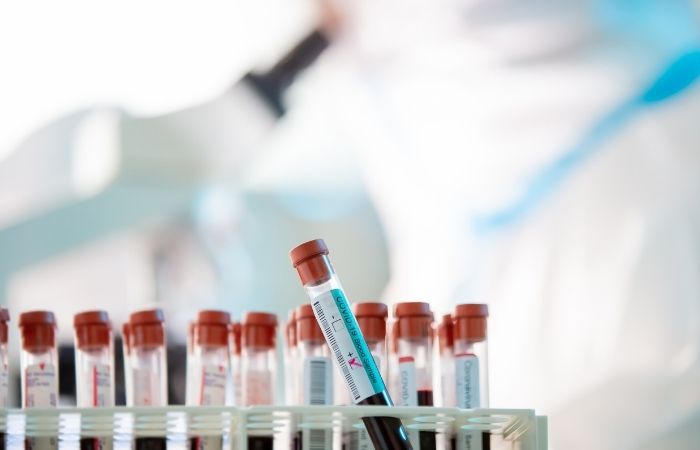
How Screening Improves IVF Outcomes Beyond Disease Prevention
It is easy to think of STI screening as protecting against disease transmission alone. In fertility medicine, the effects extend further. Certain infections are associated with lower implantation rates, higher miscarriage risk, and inflammation that interferes with early pregnancy development. Pelvic inflammatory disease from past or current chlamydia or gonorrhea infection can scar fallopian tubes, change uterine receptivity, and complicate the careful sequence of an IVF cycle.
Embryos are remarkably sensitive to their environment. Even subtle immune responses in the uterus can change outcomes in ways that are hard to predict. Clinics screen aggressively because they are optimizing conditions that cannot be corrected later. Once an embryo fails to implant, the opportunity is gone for that transfer, and another cycle means more time, more money, and more emotional weight.
| Factor | Potential Impact on IVF | Why Screening Helps |
|---|---|---|
| Pelvic inflammation | Reduced implantation rates | Allows treatment before transfer |
| Immune activation | Early pregnancy loss | Stabilizes uterine environment |
| Undetected chronic infection | Lower embryo viability | Improves cycle success odds |
| Tubal scarring from past STI | Tubal pregnancy risk | Informs transfer strategy |
Why Self-Reported Risk Is Not Enough on Its Own
Many patients assume that honest communication should be sufficient. They know their own bodies, their partners, and their history. In most healthcare settings, that kind of transparency is enough. In fertility medicine, it does not stand alone.
Infections do not always correlate with behavior patterns, identity, or perceived risk. Someone in a long-term monogamous relationship can still test positive. A person with no symptoms may have carried a chronic infection for years before discovering it. And someone confident that they were tested recently sometimes turns out to have been screened for a narrower panel than they realized. Relying on self-report would create blind spots that clinics cannot ethically accept, and it would push assumptions about who counts as low-risk into the middle of medical decisions, which is exactly where bias does the most damage.
This is one of the reasons screening rules are standardized rather than individualized. Uniform requirements reduce bias and keep assumptions from shaping medical decisions.
Why are IVF and donor screening rules so strict?
IVF and donor screening rules are strict because untreated infections can affect embryos, pregnancy outcomes, and the long-term health of donors and resulting children. Testing is repeated to keep results within their defined validity windows (often 30 to 180 days depending on the test and the stage of treatment), which is a question of timing rather than trust. Federal regulations from the FDA, combined with professional guidelines from organizations like ASRM, set the baseline that clinics must meet for any donor tissue or IVF procedure.
What Patients Can Do to Feel Less Blindsided
Screening rules are not flexible, but the patient experience of them can be improved with a little preparation. People who ask about timelines early tend to feel more grounded later. Knowing when tests will be required, how long results stay valid, and how far in advance labs can be scheduled makes sudden requests feel less like obstacles and more like checkpoints on a route you already mapped.
Viewing screening as a checkpoint rather than a roadblock also helps. Each clearance moves the process forward. Each completed requirement is one less open variable when transfer day arrives.
For people feeling overwhelmed, it is reasonable to ask clinics to explain the purpose behind each test. Understanding why something is required often softens the frustration of having to do it again, and most clinical teams welcome the chance to explain. Bringing a list of past labs, with dates and exact panels, to early appointments can also save weeks of duplicate testing, especially if you have moved between providers or had testing through different systems in the past year.
Screening as Early Care for a Future Child
Long before a heartbeat or a name, decisions are already being made to protect a child who does not yet exist. This perspective can be grounding for patients whose testing calendar starts to feel like grinding through paperwork.
It reframes screening from scrutiny into preparation. The same instinct that drives expectant parents to childproof a home before a baby arrives is at work here, just expressed through lab results instead of outlet covers.
Practical steps to make screening feel less heavy
- Ask your clinic at the first appointment for a full timeline of required tests and their validity windows.
- Keep a personal log of lab dates and panels. It reduces duplicate testing when moving between providers.
- Treat each cleared test as a checkpoint moving you forward, not a hoop to jump through.
Frequently Asked Questions
- Why am I being tested if I feel completely fine?
- Feeling fine is not the same as being clear. Some of the infections that matter most in fertility medicine are quiet, with no pain, no discharge, and no warning signs. You could feel exactly the same today as you did five years ago and still have something show up on a lab. Clinics do not test because they expect bad news; they test because guessing is not an option when embryos and pregnancies are involved.
- Can STIs really be passed through donor sperm or eggs?
- In modern systems with proper screening, the risk is very low, but it is not zero in theory, which is why the protocols exist. The rules you are experiencing now exist because earlier generations of fertility medicine learned, through documented harm, that proof of current health is what donor distribution requires. Today's screening protocols are why donor conception is as safe as it is.
- Why do they keep retesting me if my relationship has not changed?
- Biology does not track relationship status. Tests have expiration dates, even when your life feels stable. Fertility clinics work on calendars and validity windows. If too much time passes between a test and a transfer, the result stops being considered current. It is a matter of timing, not personal scrutiny.
- I tested negative before. Does that count for something?
- It absolutely counts, just not forever. A negative result tells the clinic what was true at that moment. Fertility care stretches across months, sometimes years, and the clinic's job is to make sure each step is backed by current information. Think of it less like being rechecked and more like being cleared for the next stage.
- What happens if something does come back positive?
- First, take a breath. For many people, a positive result during screening is unexpected and emotionally loud, even when it is medically manageable. In most cases, it means treatment, a pause, and follow-up testing. For chronic infections, it means coordination with a specialist. Clinics handle this every day and are focused on helping you move forward safely, not on closing doors.
- Do these rules apply to everyone, or just donor situations?
- They apply to everyone: donors, intended parents, and gestational carriers alike. The protocols are intentionally uniform so no one's care is shaped by assumptions or bias. Standardization is one of the ways clinics reduce stigma in screening, even when it does not always feel that way at intake.
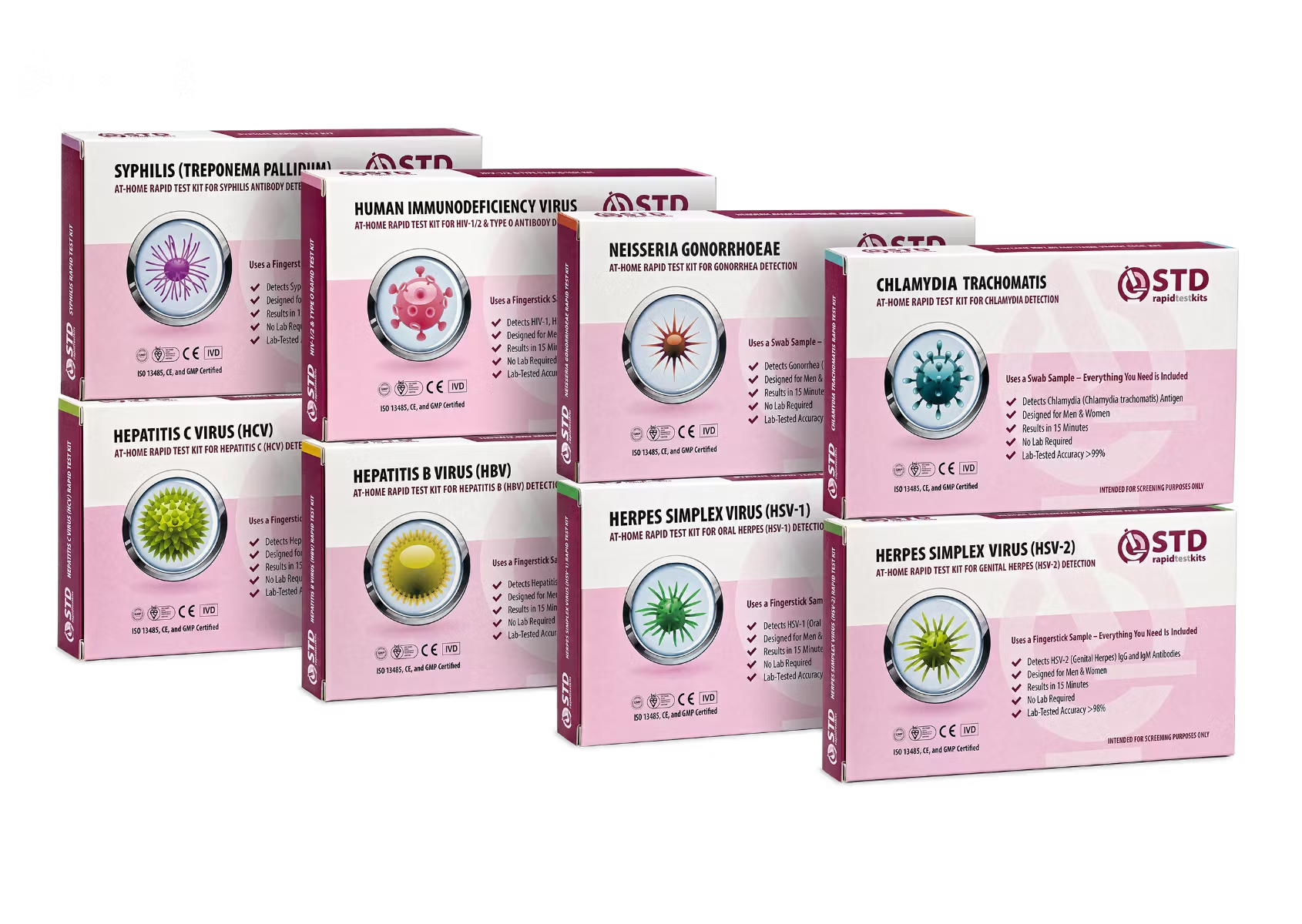
- Can at-home rapid tests replace the lab screening my clinic requires?
- No. At-home rapid tests are useful for personal awareness, baseline checks, and conversations with partners, but fertility clinics use lab-based methods (often NAAT for bacterial infections and fourth-generation antigen-antibody tests for HIV) that meet specific regulatory and timing requirements. Rapid home tests are a complement to clinical screening, not a substitute for it.
- How can I make this process feel less overwhelming?
- Ask questions early. Ask what tests will be required, when they will expire, and how far in advance you can schedule them. Keep a personal file of recent lab dates and panels you can bring to appointments. Information does not remove the inconvenience, but it does restore a sense of agency. Knowing what is coming is often half the relief.
How We Sourced This Article: This article draws on published guidance from the U.S. Centers for Disease Control and Prevention, the U.S. Food and Drug Administration's regulations on human cells and tissues (codified at 21 CFR Part 1271), the World Health Organization's STI fact sheets, the American Society for Reproductive Medicine, and Mayo Clinic's patient-education materials on IVF. We focused on sources that reflect current medical consensus and translated the relevant clinical reasoning into plain English for readers facing fertility screening in real life. This article is not medical advice; for decisions about your specific care, work with your fertility clinic and a licensed provider.
- U.S. Centers for Disease Control and Prevention. Sexually transmitted infections: general guidance on asymptomatic infections, screening, and testing.
- Electronic Code of Federal Regulations. 21 CFR Part 1271: Human cells, tissues, and cellular and tissue-based products. Federal rules mandating donor screening and testing for reproductive tissue.
- American Society for Reproductive Medicine. Patient resources on IVF, donor conception, and pre-treatment screening.
- Mayo Clinic. In vitro fertilization (IVF): patient-education overview of the IVF process and pre-cycle evaluation.
- World Health Organization. Sexually transmitted infections fact sheet, with global prevalence data and screening rationale.
- U.S. Centers for Disease Control and Prevention. Assisted reproductive technology (ART) surveillance and clinical reporting overview.
