Published: August 2025 | Editorial review and quality control: Martina N.
You stared at your phone. The result said positive. Now you are looking for a clear next step instead of another panic spiral, ideally something that does not require driving somewhere or calling anyone before sunrise. Here is the honest version. A positive result for chlamydia, gonorrhea, syphilis, or trichomoniasis is treatable, often with a single course of antibiotics. Herpes and HIV are not curable, but daily medication keeps people healthy and sharply reduces transmission to partners. None of these results change who you are or whether you can have sex again. This guide walks through the practical steps in the order you can actually take them.
Key takeaways
- Chlamydia, gonorrhea, syphilis, and trichomoniasis are bacterial or parasitic infections that resolve with prompt treatment. HIV and herpes are managed with daily medication that keeps most people healthy and sharply reduces transmission risk to partners (CDC STI Treatment Guidelines).
- Your immediate priorities are confirmatory testing if needed, prompt treatment, partner notification for the most recent contacts, and a follow-up retest about three months later for bacterial infections. None of these change who you are or whether sex is part of your future.
What the first 24 hours look like
Nothing medical has to happen in the next twelve hours. There is no result that requires a 2 a.m. emergency room. The right next steps are slow ones. Confirm what you tested for. Write down the date of your most recent likely exposure. Decide where you will get treatment.
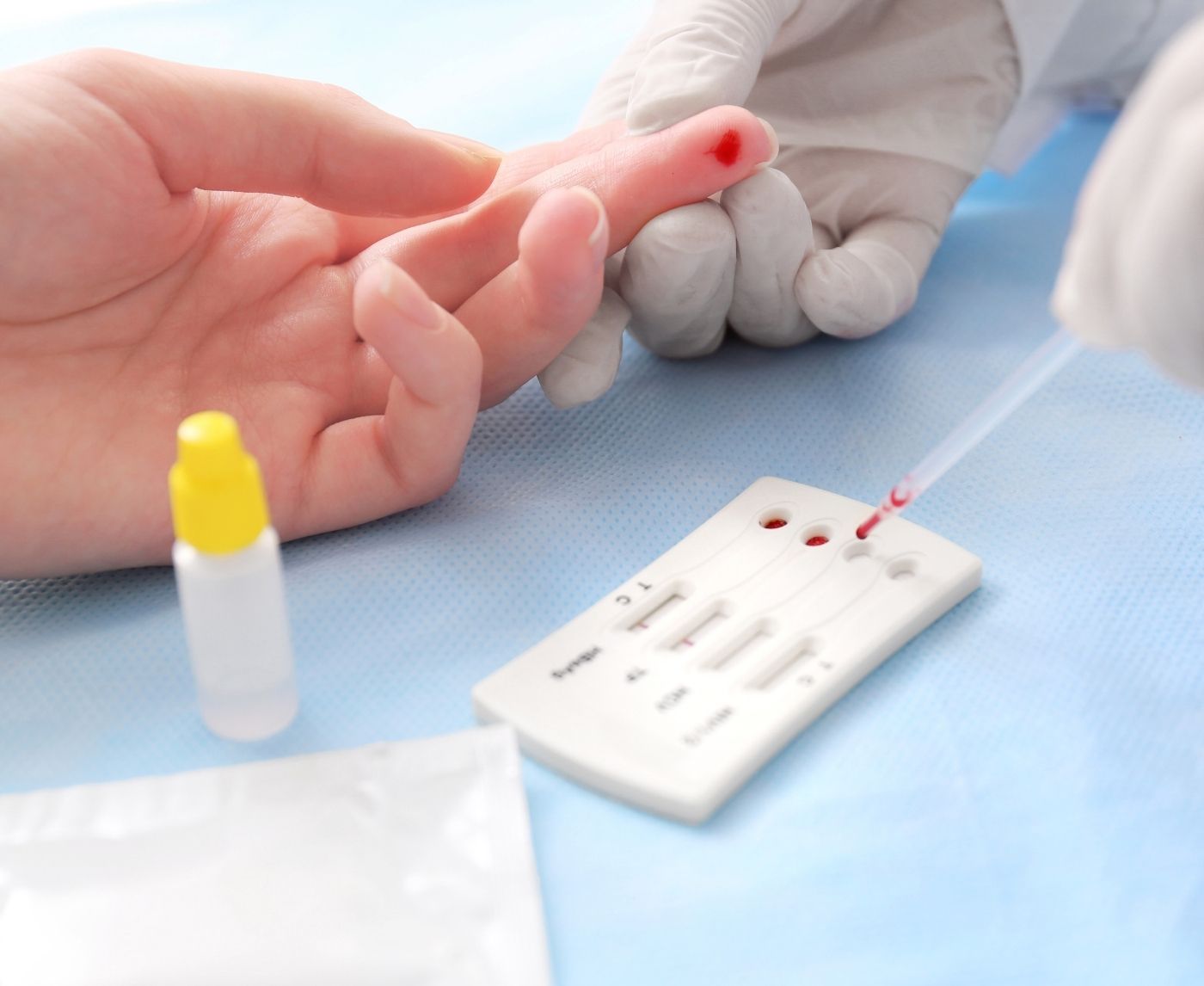
If the positive came from an at-home rapid lateral-flow test, the standard pattern depends on what was detected. For HIV, a positive at-home antibody screen should be confirmed at a lab using a fourth-generation antigen-antibody test or a nucleic acid test before starting antiretroviral therapy. For chlamydia, gonorrhea, syphilis, hepatitis B, or hepatitis C, a positive screen is usually enough for a clinician to either treat presumptively (in the case of bacterial STIs) or order a follow-up confirmatory test (CDC STI Treatment Guidelines).
What to skip in the first day: drafting a partner notification while emotional, deleting dating apps, or making decisions about a relationship. Those can wait until you have confirmation, treatment, and a quieter hour.
- Photograph the test result and the kit's lot information so you have it ready if a clinician asks.
- List the partners you have had sexual contact with in the relevant window. For chlamydia and gonorrhea, that window is typically the prior 60 days; for HIV and syphilis the window can extend further depending on the result and history.
- Choose a treatment route: a primary-care visit, an STI clinic, a tele-health service, or a sexual-health clinic. All four are valid, and the slowest of them is usually still faster than a few days.
Why your symptom search led you here
Most people who land on a positive result did not feel an obvious symptom first. Chlamydia is asymptomatic in most women and a meaningful share of men, which is the main reason routine screening exists for sexually active young adults (CDC About Chlamydia). Gonorrhea is similar: many infections cause no obvious symptoms, especially in pharyngeal and rectal sites. Syphilis can produce a single painless sore that disappears on its own, leaving the infection still active inside the body.
That asymptomatic profile is also why some Google searches feel disorienting. The patterns described in articles or forums often do not match what the reader is feeling, because the most common pattern is no clear pattern. A faint discharge a few days after sex, mild burning during urination that fades, a small bump that resolves overnight: any of these can be benign or not, and none are reliable signals on their own.
The implication is practical rather than philosophical. If you tested because you noticed something specific, that instinct was useful and the result is what matters now. If you tested as part of routine screening with no symptoms at all, you took the path that most public-health agencies recommend (WHO STI fact sheet). Either way, the work ahead is the same: confirm, treat, notify, retest.
Most chlamydia infections in women cause no obvious symptoms, which is why the CDC recommends routine annual screening for sexually active women under 25 and for older women with new or multiple partners. Many gonorrhea infections at pharyngeal and rectal sites are also asymptomatic, so a positive screen is often the first signal that anything was happening at all.
Clinic, mail-in lab, or at-home rapid test: choosing your path
You have three realistic routes after a positive screen, and the right one depends on what was detected and how fast you can move.
A clinic visit (primary care, an STI clinic, or a sexual-health center) has the broadest scope. A clinician can take a fresh sample, prescribe medication on the same day for bacterial infections, and run additional tests for the STIs that often co-occur. The downside is the wait for an appointment, which can stretch to several days, and for some readers the discomfort of a waiting-room conversation.
A mail-in lab service is the slower, more thorough confirmation option. You collect the sample at home, ship it to a CLIA-certified laboratory (a federally accredited clinical lab), and receive a clinician-reviewed result with prescription support if needed. This is the most common confirmatory path for at-home rapid HIV positives.
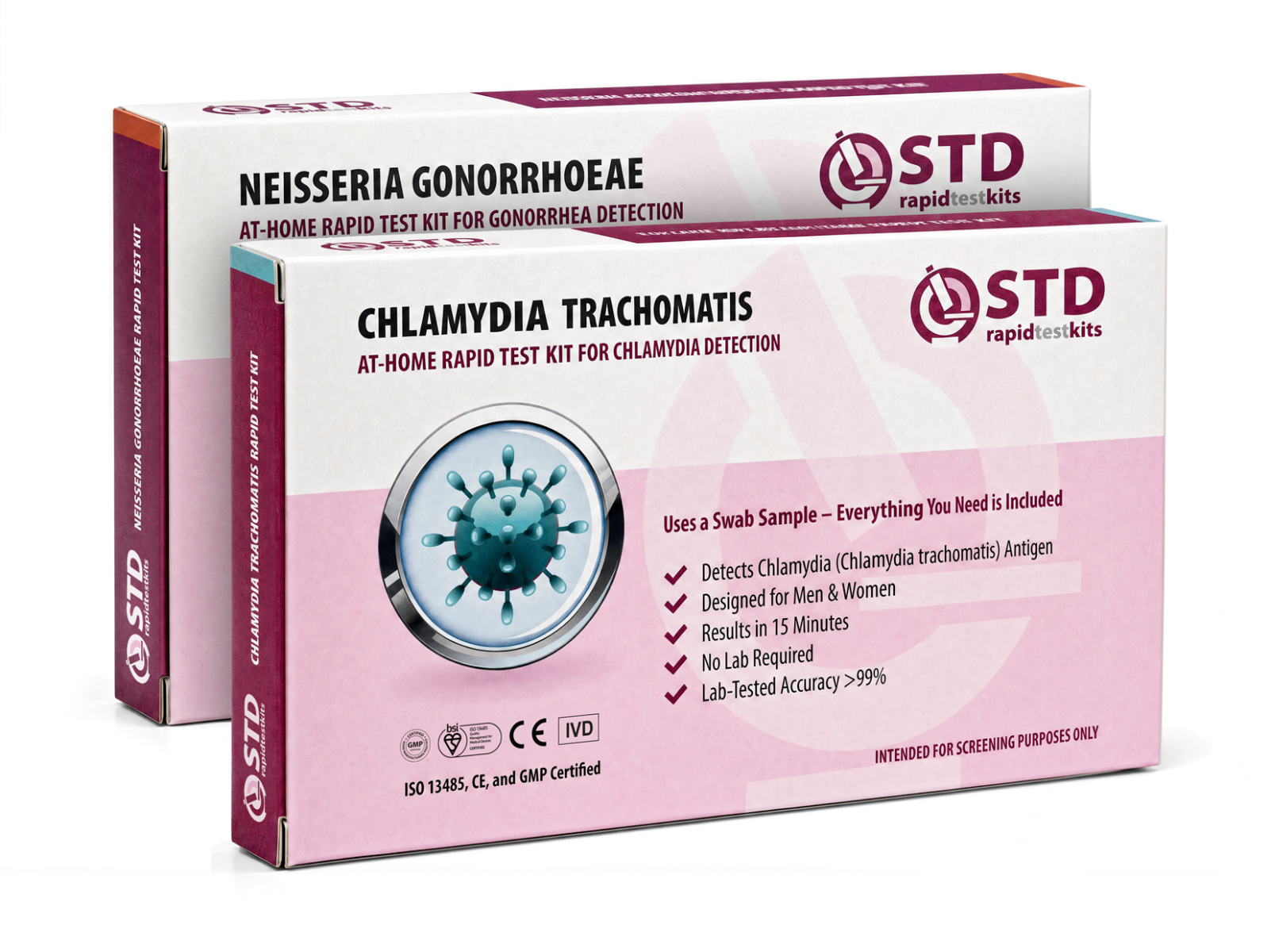
An at-home rapid lateral-flow test is the screening route most readers used to land here. These kits are screening tests using lateral-flow chemistry rather than laboratory nucleic acid amplification (NAAT) tests; per-product sensitivity and specificity figures are listed on each manufacturer's product page, so check the page for the specific kit you used. A positive screen should be paired with one of the two routes above for confirmation and prescription.
For most bacterial STIs, the gap between rapid screen and clinical treatment is small. Chlamydia is treated with a seven-day course of oral doxycycline as the current first-line regimen for most adolescents and adults. Gonorrhea is treated with a single intramuscular ceftriaxone injection given by a clinician (CDC STI Treatment Guidelines). The home test does not replace the prescription. It accelerates the conversation that gets you to one.
A note on commercial context: stdrapidtestkits.com sells rapid at-home swab tests for chlamydia and gonorrhea, which can serve as an initial screen before a clinical confirmation visit. Recommendations on this page are based on what fits the reader's concern, not on which kit we stock.
What the conversation with a partner can sound like
There is no script for this that fits every relationship, but the principles are short. Lead with the result rather than the apology. Name the time window the test covers. Offer the partner a way to test. Stop there.
A version that works for most situations: "I tested positive for [X]. The window where this could have spread covers the last few weeks (or the relevant period for the infection). I want to give you a heads-up so you can get tested. Here is what I am doing about it." That covers what needs saying. The partner can ask follow-up questions or take a few hours, and either response is normal.
When direct contact feels impossible, anonymous partner notification services let public-health departments or trusted nonprofits send the message on your behalf; several U.S. state health departments run versions of these. A clinician at the visit can also send a Patient Delivered Partner Therapy (PDPT) prescription to recent partners for chlamydia and gonorrhea in many states, letting the partner treat without needing a separate appointment. Ask whether your state allows it.
What rarely works: long messages that pre-emptively defend yourself, group texts to multiple partners, or any version of the conversation while you are still in the first hours of the result. A partner who reacts badly is often reacting to the framing rather than to the diagnosis. A partner who reacts well does not need a long message to get there. Most people, when given a calm and specific notification, respond with practical questions about testing and timeline rather than blame.

Sex after a positive result: what changes and what does not
For bacterial STIs, the standard guidance is to wait at least seven days after completing treatment before having sex again, and to avoid sex with any partner who has not also been treated. For chlamydia treated with doxycycline, that means seven days after the seven-day course finishes. For gonorrhea treated with ceftriaxone, seven days after the injection. Reinfection from an untreated partner is the most common reason a recent positive shows up again at the three-month retest (CDC STI Treatment Guidelines).
For HIV, sustained viral suppression on antiretroviral therapy reduces sexual transmission risk to effectively zero, summarized as "Undetectable equals Untransmittable" or U=U (CDC HIV). Reaching undetectable typically takes several months on consistent therapy and is monitored with viral-load testing. During that ramp-up period, condoms and a partner conversation about pre-exposure prophylaxis (PrEP) cover the gap.
For genital herpes, daily suppressive antiviral therapy reduces (without eliminating) the risk of transmission to a partner, and consistent condom use lowers it further. Outbreaks themselves are the highest-risk window; the times to avoid sex are during a visible outbreak or during the early-warning tingling or burning (the prodrome) that precedes blisters (CDC Genital Herpes).
What does not change after a positive result: your physical anatomy, your capacity for desire, or your ability to be a partner someone wants to be with. The sex you have after a positive is often more deliberate, because the conversation about status has already happened. Disclosure becomes part of intimacy rather than a punishment for the diagnosis. Readers who ask whether dating will ever be normal again usually find, within a few months, that "normal" was always going to include some version of this conversation.
When to retest, and why the timing matters
For chlamydia and gonorrhea, the CDC recommends a retest about three months after treatment, regardless of whether the partner was also treated (CDC STI Treatment Guidelines). Retesting at three months catches reinfection: a meaningful share of people who completed treatment turn up positive again at the three-month mark, usually from an untreated partner or a new exposure rather than treatment failure.
Prompt treatment also matters for long-term reproductive health. Untreated chlamydia or gonorrhea can ascend the reproductive tract and cause pelvic inflammatory disease, which is one of the more common preventable causes of tubal scarring and infertility. The risk is substantially lower when infection is caught and treated early, which is the primary reason public-health agencies emphasize routine screening for sexually active young adults even when symptoms are absent.
What three months also avoids is a false "still positive" result from a test run too soon. Nucleic acid amplification tests (NAATs) detect bacterial DNA, which can persist for several weeks after the bacteria themselves are dead. Retesting at four weeks risks a positive that means nothing clinically; retesting at three months almost always reflects current biology.
For HIV, follow-up testing depends on the result. A confirmed HIV diagnosis moves into ongoing viral-load monitoring rather than repeat antibody testing, because the clinical focus shifts to maintaining viral suppression on ongoing therapy. For syphilis, RPR or VDRL titers (blood tests that measure the body's antibody response to syphilis) are tracked at three, six, and twelve months to confirm response to treatment.
For herpes, retesting is rarely useful. The diagnosis is stable, and management is symptom-driven plus daily suppressive therapy if outbreaks are frequent. The follow-up that matters here is a check-in with a clinician about whether the regimen is reducing outbreak frequency, rather than another test.
A second positive after treatment almost always means reinfection from an untreated source rather than a failed antibiotic; retesting tells you where things stand now.

When reinfection happens
A second positive a few months after the first is not unusual, especially if the partner was not treated at the same time or if a new partner enters the timeline. For chlamydia and gonorrhea, the rate of reinfection within the first year after treatment is high enough that the CDC bakes the three-month retest into its default recommendation (CDC STI Treatment Guidelines).
The clinical response is the same as the first round: same antibiotic class, same retest at three months, same partner conversation. The behavioral response is the part that changes. Most reinfections trace back to one of two gaps in the original cycle, and naming them out loud is the single most useful step before another round of antibiotics.
A few situations where reinfection signals something else. Persistent gonorrhea after a documented ceftriaxone injection raises the possibility of antibiotic resistance, which is a clinically real and growing concern (WHO STI fact sheet). Persistent symptoms that did not respond to treatment at all warrant a clinician's review rather than a third home test.
Reinfection reflects biology and timing more than the moral state of the relationship. Treat it like the first one: medication, retest, partner conversation, seven days of abstinence.
- Was the partner actually treated, with a documented prescription rather than a verbal "yeah I got it"?
- Was the seven-day post-treatment abstinence window honored on both sides?
If either answer is no, that gap explains most reinfections.
What healing looks like in the months after
The first month is mostly logistical: take the medication, abstain for seven days post-treatment, send the partner notifications, schedule the three-month retest. The second and third month is when the emotional version of healing usually starts, after the immediate fear has receded and the diagnosis has settled into the background of daily life.
For people on lifelong therapy (HIV, herpes if suppressive therapy is chosen), the daily-pill habit is the part that takes the longest to feel ordinary. Most people describe it as several weeks of conscious reminders followed by a phase where the medication is just part of the morning. A daily phone alarm, a pill organizer, or pairing the dose with an existing habit (toothbrushing, coffee) all work; the choice is less important than the consistency.
For people who tested positive for a curable infection, the mental afterimage often outlasts the biology. A negative three-month retest is the medical signal that the episode is over. The relational signal is the first time the conversation about status comes up with a new partner and lands well, which it usually does. Most people do not lose the partners they were going to keep over a treated bacterial STI.
What does not look like healing: hiding the diagnosis from a current partner, declining to retest because a positive would feel painful, or making permanent decisions about sex or dating in the first month. The version of you that processes this information at month four is in a much better position to make those calls than the version reading this at 3 a.m.
People who take HIV medicine as prescribed and get and keep an undetectable viral load have effectively no risk of sexually transmitting HIV to their HIV-negative partners.
Frequently asked questions
- Can I still have sex after testing positive?
- Seven days after finishing antibiotic treatment is the standard wait for bacterial STIs, and both partners need to complete treatment before sex resumes; otherwise reinfection is likely. For HIV on sustained antiretroviral therapy, the CDC confirms effectively zero sexual transmission risk once viral suppression is reached and maintained (the U=U finding). For genital herpes, daily suppressive medication reduces transmission risk; the times to avoid sex are during an active outbreak or during the early-warning tingling or burning that precedes one.
- How accurate are at-home rapid STD tests?
- Rapid lateral-flow home tests for most STIs perform well within the manufacturer's stated testing window; per-product sensitivity and specificity figures are listed on each kit's product page, so check the specific kit you used. The main practical limit is timing rather than chemistry: testing before antibodies develop can return a false negative even when infection is present. A positive result warrants clinical confirmation, particularly for HIV, before starting treatment.
- Do I have to tell every past partner?
- Public-health guidance focuses on the most recent partners, typically the prior 60 days for chlamydia and gonorrhea, and longer for HIV and syphilis depending on the situation. You do not need to recontact every person from years ago. Anonymous partner notification services exist if a third-party message feels easier than a direct one, and many state health departments run versions of these services.
- How soon should I retest after treatment?
- For chlamydia and gonorrhea, the CDC recommends retesting roughly three months after treatment to detect reinfection. For HIV, follow-up moves into viral-load monitoring rather than repeat antibody testing. For syphilis, RPR or VDRL titers are tracked at three, six, and twelve months. Avoid retesting in the first few weeks after bacterial treatment, because dead bacterial DNA can still produce a positive nucleic acid test for several weeks.
- Will I have to take medication forever?
- For bacterial and parasitic infections (chlamydia, gonorrhea, syphilis, trichomoniasis), no. A short course finishes the treatment. For HIV, daily antiretroviral therapy is currently lifelong, but a single pill once a day is the typical regimen and many people on consistent therapy have full life expectancy. For herpes, daily suppressive therapy is optional and can be started or stopped as outbreak frequency changes over time.
- Can untreated chlamydia or gonorrhea affect fertility?
- Untreated chlamydia and gonorrhea can ascend the reproductive tract and cause pelvic inflammatory disease, which is one cause of tubal scarring and infertility. The risk rises with the duration of untreated infection. Treated promptly, the long-term reproductive risk is small. This is the main reason public-health agencies emphasize routine screening for sexually active young adults even when symptoms are absent.
- What if my partner says they tested negative recently?
- A negative test is true at the moment it was taken, within the assay's window period. New exposures between that test and now can change the picture. If your test is positive and theirs was earlier or used a different sample type, the right next step is for both of you to retest now, ideally with comparable tests, and to talk through any exposures in between.
- U.S. Centers for Disease Control and Prevention. Sexually Transmitted Infections Treatment Guidelines (current edition). Source for retesting timing, doxycycline and ceftriaxone first-line regimens, and seven-day post-treatment abstinence guidance.
- U.S. Centers for Disease Control and Prevention. HIV basics and Treatment as Prevention (U=U) messaging. Source for the undetectable equals untransmittable guidance referenced in the body and quote.
- U.S. Centers for Disease Control and Prevention. About Chlamydia. Source for asymptomatic prevalence and routine screening rationale for sexually active young adults.
- U.S. Centers for Disease Control and Prevention. About Gonorrhea. Source for asymptomatic prevalence at pharyngeal and rectal sites; treatment-regimen specifics are documented in the CDC STI Treatment Guidelines (source 1) rather than this overview page.
- U.S. Centers for Disease Control and Prevention. Genital Herpes. Source for suppressive therapy guidance and outbreak-window transmission risk.
- World Health Organization. Sexually transmitted infections (STIs) fact sheet. Source for global STI context and antibiotic-resistant gonorrhea concern.
- UK National Health Service. Sexually transmitted infections (STIs) overview. Source for cross-jurisdictional confirmation of testing and treatment principles.
