
Published: September 2025 | Last updated: May 2026 | Editorial review and quality control: Martina N.
Mild itching or a faint burning sensation in the day or two after your period ends is more common than most people realize. For many women, vaginal pH and estrogen are still recalibrating in the 24 to 72 hours after bleeding stops, and that brief recalibration alone can make sensitive tissue feel irritated. Most of the time, the discomfort fades on its own without treatment.
But the same hormonal shift that triggers harmless irritation can also unmask an infection that was already quietly present. Yeast, bacterial vaginosis, urinary tract infections, and several sexually transmitted infections can all flare in the days right after menstruation. Knowing how to tell normal recalibration from a real infection is the difference between waiting it out and getting a clear answer through testing.
Key Takeaways
- Most post-period itching that fades within 1 to 3 days is your vaginal pH returning to its protective acidic baseline, not an infection.
- If discomfort lasts more than a week, intensifies each cycle, or comes with unusual discharge or pelvic pain, testing turns guesswork into a clear answer.
Why Symptoms Show Up After Your Period (Even When Nothing Happened)
Your vagina is not a fixed environment. It is an ecosystem that shifts throughout the menstrual cycle. During your period, menstrual blood raises vaginal pH, which makes the environment temporarily less acidic and less protective. That shift on its own can irritate sensitive tissue, especially for anyone who already tends toward vaginal dryness.
Estrogen levels also dip right before and during menstruation. Lower estrogen can thin vaginal tissue slightly and reduce natural lubrication. The combination is what creates that mild burning sensation some people notice during urination or sex in the first few days after bleeding stops.
For most people, this irritation fades within 24 to 72 hours as estrogen rebounds and the vaginal microbiome stabilizes. No infection. No treatment needed. Just biology recalibrating itself.
Here is where it gets more complicated. The same pH shift that causes harmless irritation can also create an opening for certain organisms to overgrow. Bacterial vaginosis thrives in a less acidic environment. Yeast can flare when the balance tips. And if a sexually transmitted infection was already present but subtle, menstruation can amplify inflammation enough to make it noticeable for the first time. The period does not create the infection. It reveals it.
Menstrual blood raises vaginal pH for roughly 2 to 5 days, temporarily reducing the protection that Lactobacillus bacteria normally provide. That recalibration window is when post-period symptoms most commonly emerge, whether they turn out to be harmless hormonal echoes or the first noticeable sign of an underlying infection.
Normal Post-Period Irritation Versus Something More
The hard part about post-period itching is that early infection symptoms can look deceptively mild. Whether the irritation is getting stronger, lasting longer, or changing in character matters far more than any single symptom in isolation. If symptoms appear like clockwork every month and disappear within a couple of days, hormones are a likely culprit. If they are getting stronger, lasting longer, or changing in character, your body may be signaling something else.
One useful filter is whether the irritation is doing the same thing it always does, or whether something is subtly evolving. New odor, new color in your discharge, new spotting between cycles, or new pelvic pressure are all worth flagging.
| Feature | Likely Hormonal or pH Shift | Possible Infection |
|---|---|---|
| Itching | Mild, short-lived, improves in 1 to 2 days | Persistent, worsening, intense discomfort |
| Burning | Slight sting with urination from dryness | Strong burning, pelvic pain, pain during sex |
| Discharge | Clear or slightly creamy, no strong odor | Thick white, gray, yellow, or green discharge |
| Odor | Faint metallic scent lingering from blood | Fishy, sour, or distinctly foul smell |
| Duration | Resolves within a few days | Persists beyond 3 to 5 days or worsens |
When It Is Probably Yeast, BV, a UTI, or an STI
Common post-period irritation falls into a handful of patterns. Yeast infections often flare in the days right after bleeding stops, when the temporary pH rise lets Candida overgrow; the itching tends to be intense and the discharge thick and white. Bacterial vaginosis follows a similar trigger, and many people notice the characteristic fishy odor only after a period ends, when blood is no longer masking it.
Urinary tract infections can show up with menstruation-adjacent burning too, especially when frequent toilet trips during bleeding have changed wiping or hydration habits. The classic clue is burning specifically with urination, plus an urgent feeling and pelvic pressure.
Sexually transmitted infections complicate the picture because their early signs are often quiet. Chlamydia and gonorrhea routinely cause no symptoms at all. When they do, the signs can look like a stronger version of normal cycle changes: slightly more discharge, mild burning during urination, or unexpected spotting between cycles. Trichomoniasis can produce frothy yellowish or greenish discharge and a strong odor that becomes more obvious once menstruation ends. Herpes outbreaks may begin with tingling or burning before any sores appear, which is easy to mistake for friction or dryness.
| Condition | Main Sensation | Discharge Pattern | Other Clues |
|---|---|---|---|
| Yeast Infection | Intense itching | Thick, white, clumpy | Redness and swelling |
| Bacterial Vaginosis | Mild irritation | Thin, gray or white | Fishy odor, stronger after sex |
| UTI | Burning with urination | Usually none | Frequent urge to pee, pelvic pressure |
| Chlamydia | Mild burning or none | Subtle change or spotting | Often symptomless |
| Gonorrhea | Burning, pelvic discomfort | Yellow or green discharge | Bleeding between periods |
| Trichomoniasis | Irritation, soreness | Frothy yellow-green | Strong odor |
| Herpes | Tingling, burning | Usually none | Blisters or sores |
Why Menstrual Blood Changes the Vaginal Environment
A typical healthy vagina sits between pH 3.8 and 4.5 (per ACOG vaginitis guidance), an acidity that keeps protective Lactobacillus bacteria dominant. When menstrual blood enters that environment, pH rises closer to neutral for several days. That shift weakens the protective barrier that normally keeps yeast and certain bacteria in check.
For someone prone to bacterial vaginosis, that change can trigger symptoms right after bleeding stops. For someone with yeast sensitivity, even a small shift can feel dramatic. The vagina almost always re-acidifies within a few days on its own, but during the recalibration window an existing imbalance can become loud enough to notice.
Picture it like soil after heavy rain. Most of the time, the ground rebalances. But if certain weeds were already waiting beneath the surface, the extra moisture gives them an opening. If your symptoms fade as your vaginal environment re-acidifies, hormones were likely the main driver. If they persist past a few days, something else may be growing.
When Should You Actually Test?
If you had new sexual contact recently, timing matters. Every sexually transmitted infection has a window period: the timeframe after exposure during which a test can reliably detect it. Testing too early can give false reassurance. Testing too late just prolongs anxiety.
If symptoms start right after your period but your last new sexual contact was three days ago, it is likely too soon for most bacterial STI tests to detect infection. If your last new contact was three weeks ago and symptoms appear now, testing is appropriate. The table below summarizes typical earliest-reliable testing windows for the infections most commonly suspected after post-period symptoms. These are general guidelines; check each specific test kit's instructions, since exact windows vary by assay technology.
| Infection | Earliest Reliable Testing | Optimal Testing Window |
|---|---|---|
| Chlamydia | About 7 days after exposure | 14 days |
| Gonorrhea | About 7 days after exposure | 14 days |
| Trichomoniasis | 7 to 14 days | 2 to 4 weeks |
| Syphilis (blood antibody) | 3 to 6 weeks | Up to 12 weeks |
| HIV (rapid antibody) | 3 to 4 weeks | Up to 12 weeks |
| Herpes (blood antibody) | 2 to 3 weeks | 6 to 12 weeks |
The Quiet Infections: STIs That Often Skip Loud Symptoms
There is a reason so many people miss early STI symptoms. Chlamydia frequently causes no signs at all. When it does, the signs may be limited to mild burning during urination or a slight discharge change that blends into normal cycle variation. Gonorrhea can cause increased discharge and pelvic discomfort, but the only clue may be irritation that worsens after menstruation. Trichomoniasis can show up as itching with a frothy yellow-green discharge that gets blamed on post-period imbalance.
Herpes is its own category. Early outbreaks may begin with tingling or burning before any visible sore appears. When that burning coincides with the end of a period, dryness or friction is the easy assumption, and the real cause can stay undiagnosed for weeks until a test confirms it.
Most people who have an STI do not know it, because many infections cause no signs or symptoms. Routine screening based on age and risk factors is the only reliable way to find them early, when treatment is most effective.
If It Is Recurrent, Don't Keep Self-Diagnosing
Recurring post-period irritation has a specific kind of frustration to it. One month yeast treatment seems to fix it. Next month it is back, and the cycle of switching soaps, trying probiotics, and blaming stress continues without a real answer. That loop of half-solutions can stretch on for months. Sometimes years.
Recurrent symptoms deserve confirmation, not repeated guessing. A comprehensive screening panel can rule out the common bacterial STIs that are often silent but treatable. A confirmed result either frees you to treat yeast or BV with confidence, or starts the straightforward treatment that comes with an STI diagnosis.
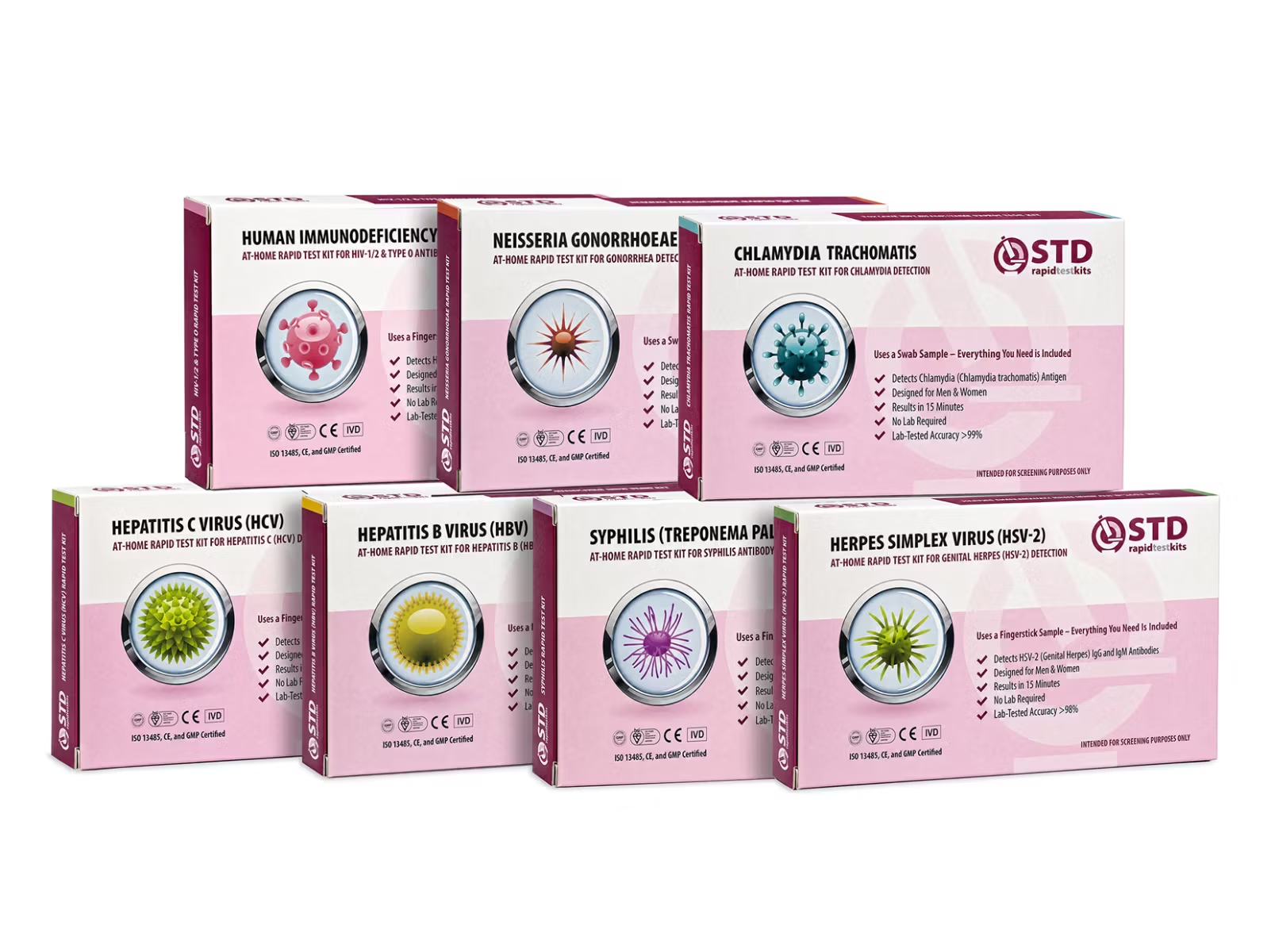
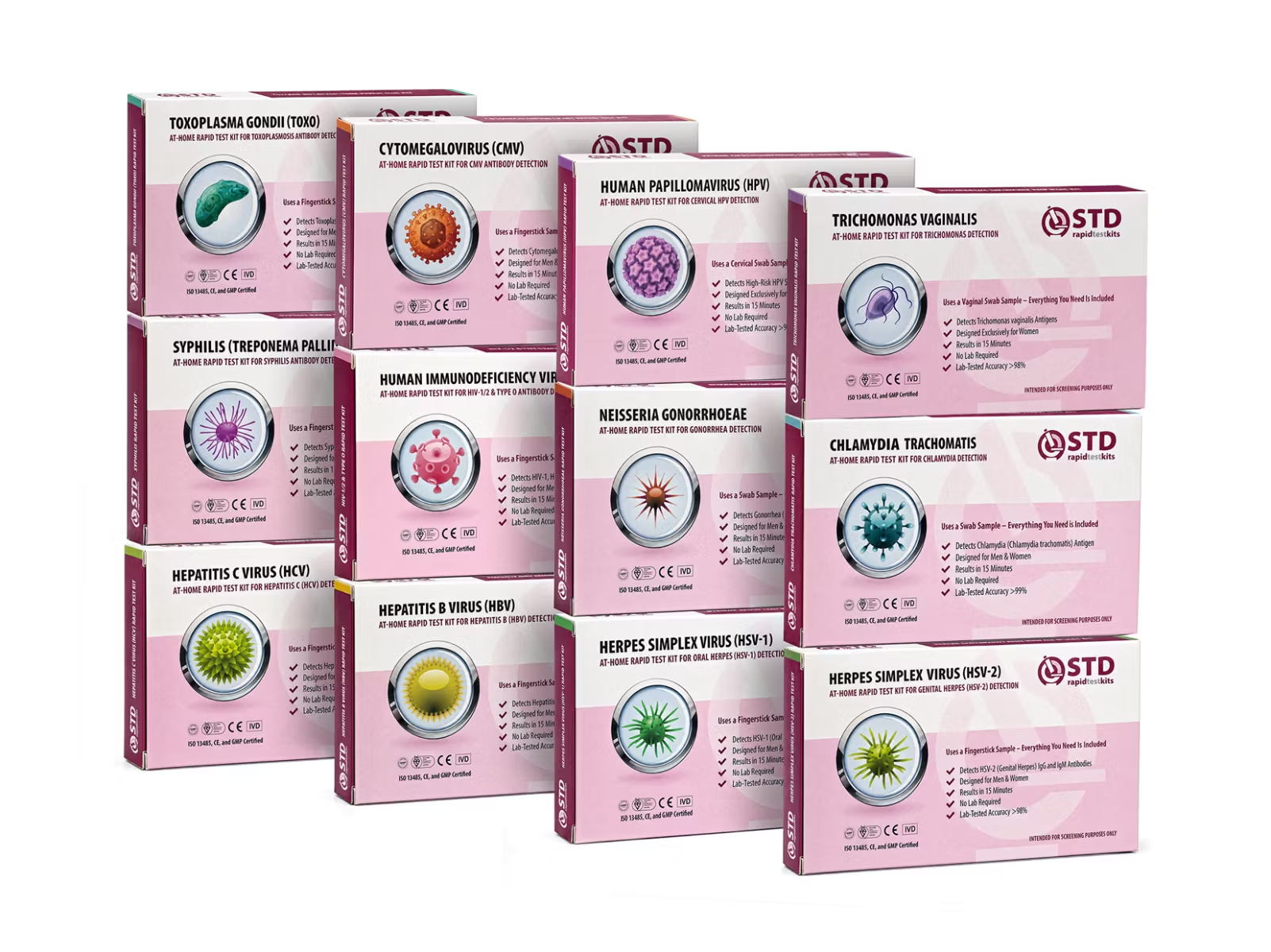
This site sells rapid at-home STI test kits; the panel linked below is available for purchase if you decide testing is the next step.
When to Involve a Provider Right Away
Most post-period irritation is mild and resolves on its own or with simple treatment. But certain symptoms should not wait for at-home testing. Pelvic pain that feels deep and persistent, fever, heavy bleeding that is clearly abnormal for you, or new and significant pain during sex all deserve prompt medical evaluation.
These signs can indicate pelvic inflammatory disease, an untreated upper-tract infection, or other complications that need clinician assessment and prescription treatment. Pelvic inflammatory disease can scar the fallopian tubes and affect future fertility, particularly when it goes untreated for more than a few days. It is also readily treatable with antibiotics when caught early, which is why prompt evaluation matters more than waiting to see whether symptoms resolve on their own. If any of these red-flag symptoms show up, skip the online research loop and seek in-person care.
- Deep, persistent pelvic or lower-abdominal pain
- Fever or chills with vaginal symptoms
- Heavy or unusual vaginal bleeding outside your normal cycle
- New, significant pain during sex
- Symptoms that worsen rapidly over hours rather than days
How to Reduce Irritation While You Figure It Out
While you are observing the pattern or waiting for test results, support your body gently. The simplest explanation often really is dryness and hormonal recalibration, and a few small adjustments can be enough to settle things while you watch the pattern.
If your intuition keeps nudging you that something feels different this time, listen to it. A discreet at-home rapid test can give you clarity without disrupting your routine, and the result, whether negative or positive, points you toward a specific next step.
- Skip heavily scented soaps and avoid douching entirely
- Choose breathable cotton underwear
- Stay well hydrated and urinate after sex
- Give the tissue a few days to settle before assuming the worst
- If dryness is the main driver, a plain unscented vulvar moisturizer can help
You Deserve Answers, Not Assumptions
Mild itching or burning right after your period is often hormonal and fades quickly. But when it lingers, worsens, or comes with unusual discharge, spotting, or pelvic pain, guessing will not help. Clarity will.
Testing is not dramatic. It is the same kind of routine, responsible healthcare as a dental cleaning or a blood-pressure check. Whether you go to a clinic or use a discreet at-home rapid panel, you are choosing facts over fear. A rapid at-home test gives you a clear result in minutes, and whether that result is negative or positive, you leave the loop of uncertainty behind and know exactly what to do next.
FAQs
- How do I know if it is just hormones and not an STI?
- Start with timing and intensity. If the itching shows up like clockwork right after your period and fades within a couple of days, that is usually pH recalibrating. If it lingers, gets stronger, or arrives with unusual discharge, spotting, or pelvic pain, that is when the pattern starts pointing toward an infection and testing makes sense.
- It burns a little when I pee after my period. Is that bad?
- A slight sting right after menstruation can happen because vaginal tissue is temporarily drier and more sensitive, similar to chapped lips after cold weather. But if that burning intensifies, brings urgency or pelvic pressure, or is paired with discharge changes or spotting, a UTI or an STI becomes more likely and is worth checking.
- Can my period actually trigger STI symptoms?
- Your period does not create an STI. But it can change the vaginal environment enough to amplify inflammation. If an infection was already quietly present, the post-period pH shift can be what makes it noticeable for the first time. The infection is not new; it is newly obvious.
- What if the symptoms go away on their own?
- Some mild hormonal irritation disappears on its own. So can early STI symptoms. If you had a recent new partner and something felt different even briefly, testing after the appropriate window period buys peace of mind. If your sexual risk has not changed and the irritation was mild and predictable, monitoring is reasonable.
- I only have one partner. Do I still need to worry about STIs?
- Monogamy reduces risk, but does not eliminate it unless both partners have tested negative and remained exclusive since those tests. Many infections are asymptomatic for months or longer. This is not about suspicion; it is biology. Testing together can actually reinforce trust rather than threaten it.
- Could this just be yeast every month?
- Recurrent yeast infections often flare after periods because of pH shifts. If the itching feels intense, almost distracting, and the discharge is thick and white, yeast is high on the list. But if yeast treatments stop fully solving it, or symptoms keep returning despite treatment, testing makes sure something else is not being missed.
- When should I stop researching and just take a test?
- When research stops giving you new information and starts looping. If you have read three articles, compared discharge colors twice, and are still anxious, that is the cue. A result replaces speculation with clarity. Whether negative or positive, clarity is more useful than another search session.
- If it is an STI, does that mean something is wrong with me?
- No. Sexually transmitted infections are common, treatable, and part of adult life for millions of people. They are a medical condition, not a verdict on character or relationship value. Treatment is straightforward, and early detection prevents complications. That is the whole point of testing.
- U.S. Centers for Disease Control and Prevention. Chlamydia fact sheet, symptom and testing-window information.
- U.S. Centers for Disease Control and Prevention. Gonorrhea fact sheet, symptom and testing-window information.
- U.S. Centers for Disease Control and Prevention. Trichomoniasis fact sheet, female-anatomy presentation and testing.
- World Health Organization. Sexually transmitted infections (STIs) fact sheet, global asymptomatic-transmission data.
- Mayo Clinic. Bacterial vaginosis: symptoms and causes, including pH-related triggers around menstruation.
- American College of Obstetricians and Gynecologists. Vaginitis FAQ, including normal vaginal pH range and differentiation of common causes of vaginal irritation.
