This is an elaborative post that shall detail the important aspects of cold sores and skin rashes, their causes, symptoms, and how to manage them. With the use of SEO-optimized keywords and well-structured subheadings, this article attempts to make the information on these common skin conditions amiable and accessible to readers.
03 October 2024
4 min read
4846
Cold Sores: Overview and Causes
Cold sores—technically known as herpes labialis—are painful blisters that usually occur around the mouth and lips. They are caused by the herpes simplex virus, not by a virus that causes a cold, despite their common name. Though they can appear on the nose, cheeks, and fingers, too. Cold sores often begin with a tingling sensation in the lips, chin, or around the mouth. A few days later, a cluster of red, fluid-filled blisters forms, then eventually breaks and crusts over.
Cold sores normally start off as fluid-filled blisters that rupture, ooze, and then crust over with a yellow scab. The scab sloughs off to reveal fresh new skin. This cycle usually lasts roughly 7 to 10 days. These sores are contagious in nature through the process until they have completely crusted over.
Cold Sores: A Common Problem
Contrary to the popular belief that cold sores will rarely occur, about 90% of the population will go through at least one outbreak during their lifetime. First-time infections tend to have the worst symptoms, and children may get seriously ill.
Understanding Skin Rashes
The word 'rash' applies to all forms of skin discoloration or texture abnormality. The most common types of rashes are hives, eczema, athlete's foot, and the rashes triggered by poison ivy. Rashes can be produced by fungal, bacterial, viral, or parasitic infections and may occur anywhere on the body.
Reasons for Skin Rashes
Although infections are one of the topmost rash causes, there are a number of non-infectious causes which might be responsible for the development of a rash. People with disorders like hay fever are advised to consult physicians upon the onset or appearance of a new rash.
Identifying Skin Rashes: Signs and Symptoms
The following are common skin rash signs and symptoms that usually accompany skin rashes:
Blisters
Skin ulcers
Scaling of the skin
Some patients may also exhibit the following symptoms:
Itching
Skin discoloration
Skin crusting
Types of Non-Infectious Rashes and Symptoms
Many non-infectious diseases can cause skin rashes. Common examples include atopic dermatitis, seborrheic dermatitis, contact dermatitis, diaper rash, stasis dermatitis, psoriasis, hives, nummular eczema, drug eruptions, and heat rash (miliaria). All these diseases have distinctive features such as itching red bumps resolving within hours with hives and also bumpy eruptions with no ooze or weeping as seen in psoriasis.
Management of Non-Infectious Rashes
For non-infectious rashes, over-the-counter topical creams and oral antihistamines such as diphenhydramine and hydroxyzine can adequately alleviate symptoms, particularly itching.
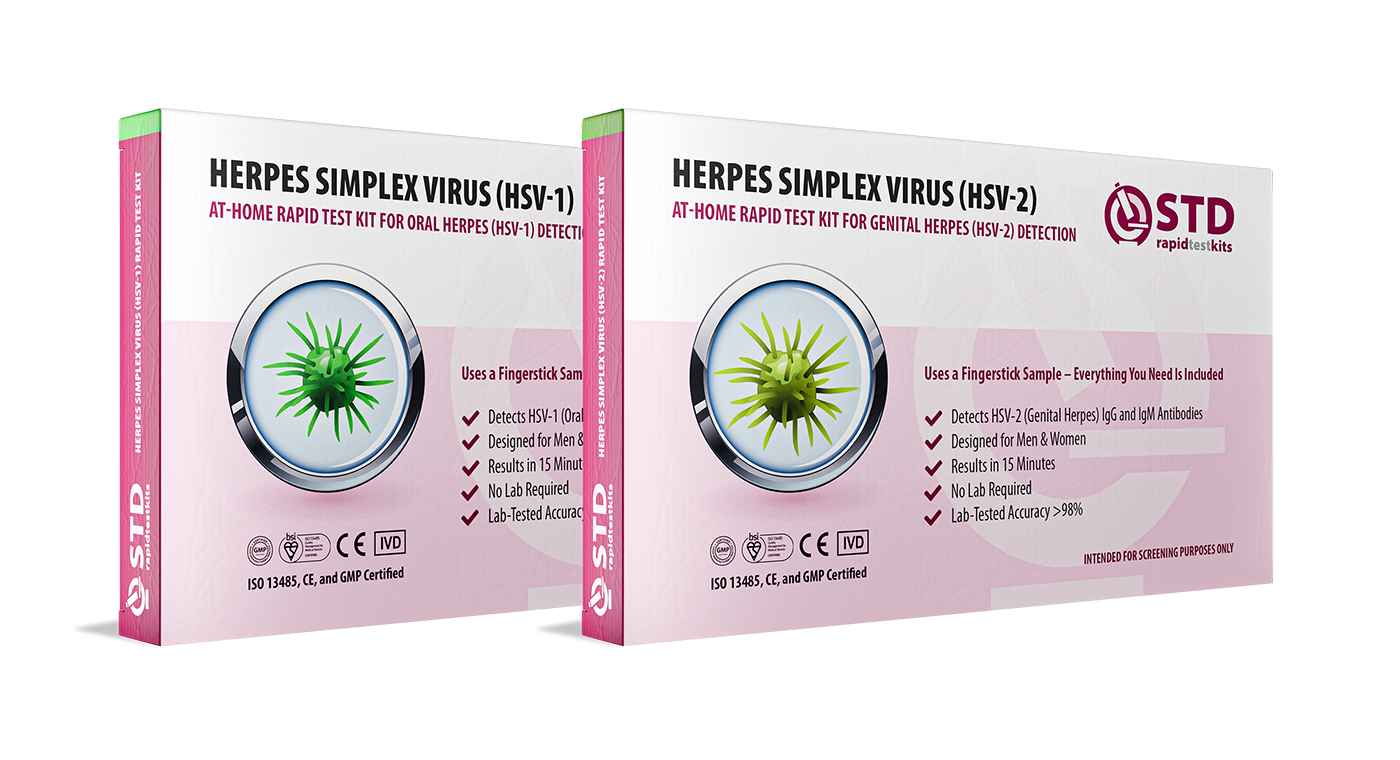
Check Your STD Status in Minutes
Test at Home with Remedium Genital & Oral Herpes Test Kit
Infectious disease specialists, pediatricians, dermatologists, and internal medicine doctors are also quite often able to diagnose and identify various types of skin rashes.
Diagnosis of Rash: How It Is Done
Generally, a skin rash is diagnosed by the identification of its primary and most common features, followed by the description regarding its configuration, and lastly, the distribution on the body. The differential diagnosis, on the basis of which physicians can enumerate diseases that may cause the rash, often leads to certain laboratory investigations for an exact diagnosis.
Infection due to Fungi and Bacteria
Skin fold infections, due to fungal infections like yeasts, have the effect of causing fiery red rashes dotted with pustules. Most of these are related to hygiene issues although they can also be transmitted in pools, gyms, and locker rooms, or among family members. Antifungal cream usually serves to clear up the rash.
Meanwhile, bacterial infections often present as skin diseases including impetigo and folliculitis, usually caused by strep or staph bacteria. These diseases more often affect children and may result in blistering eruptive lesions that can be painful. Other bacterial infections may cause generalized rashes, which are seen in scarlet fever, secondary syphilis, and Rocky Mountain spotted fever.
Effective Treatment Strategies for Rashes
Fortunately, most of the rashes are benign and self-limiting; they improve spontaneously over a few days without any specific therapy. Symptomatic treatment may be provided with:
Topical anti-pruritic creams, usually containing 1% hydrocortisone
Moisturizing lotions
Oral antihistamines such as hydroxyzine and diphenhydramine
Antifungal creams in fungal infections
If the rashes, however, persist or spread or fail to improve with these, consultation with a dermatologist for a proper evaluation and treatment is appropriate.
Overall, cold sores and rashes may be painful, but there is a better way to handle them once the symptoms, causes, and methods of treatment are known. And remember, when in doubt, always seek professional medical advice for proper assessment and care.







 For Men & Women
 Results in Minutes
 No Lab Needed
 Private & Discreet


