
Published: November 2025 | Last updated: May 2026 | Editorial review and quality control: Martina N.
The short answer is yes. Chlamydia trachomatis, the same bacterium behind one of the most common sexually transmitted infections in the world, can also infect the eye and lead to permanent vision loss when it goes untreated. The longer answer matters more, because the global picture and the local picture are very different.
In low-income regions with poor sanitation and limited water access, repeated chlamydial eye infections during childhood build up scarring over years and progress to a blinding disease called trachoma. In the United States, Canada, the United Kingdom, and most of Europe, blindness from chlamydia is rare. The risks that still matter in higher-income countries are a newborn eye infection passed from mother to baby during vaginal birth, and a milder adult eye infection called inclusion conjunctivitis that follows an undiagnosed genital chlamydia infection.
This guide explains all three forms in plain language: what the symptoms look like, how clinicians diagnose and treat them, what at-home chlamydia testing can and cannot do, and the prevention steps that actually move the needle.
Key takeaways
- Trachoma, the chronic form of ocular chlamydia, is the world's leading infectious cause of blindness, affecting roughly 1.9 million people per WHO data, but it is almost entirely confined to communities with limited water and sanitation access.
- For readers in higher-income countries, the practical chlamydia-vision risks are a newborn eye infection passed during vaginal birth, and a milder adult eye infection from autoinoculation. Both are preventable by screening and treating the underlying genital infection.
What ocular chlamydia actually is
Chlamydia trachomatis is a single bacterial species with a few different personalities depending on which serotype is involved. Genital chlamydia infections come from serotypes D through K. Trachoma comes from serotypes A through C. The newborn eye infection seen in industrialized countries usually comes from serotypes D through K, transmitted directly during vaginal delivery.
All of these are technically the same bacterium. Knowing which form is in play matters because the source, the geography, the treatment timeline, and the long-term consequences look very different.
The trachoma form is what places chlamydia on the World Health Organization's list of neglected tropical diseases. Per the WHO trachoma fact sheet, repeated childhood infections in endemic regions trigger years of inflammation, scarring of the inner upper eyelid, and eventually inward-turning eyelashes that scrape the cornea every time the person blinks. That mechanical damage to the cornea is what causes the irreversible vision loss.
The adult inclusion conjunctivitis form behaves more like a stubborn pink eye and rarely scars. Newborn ocular chlamydia falls between the two: usually treatable, but capable of causing lasting damage if missed.
Can chlamydia really cause blindness?
Yes. Repeated untreated chlamydial eye infections cause trachoma, the world's leading infectious cause of blindness, affecting around 1.9 million people globally according to the WHO. In higher-income countries the realistic risks are a milder adult eye infection from autoinoculation and a newborn eye infection passed during vaginal birth. Both forms respond well to oral antibiotics when caught in time, and both are preventable by screening and treating the underlying genital chlamydia infection.
How chlamydia reaches the eye
Three transmission routes account for nearly every case of ocular chlamydia worldwide.
- Person to person, eye to eye. This is the trachoma route. Repeated contact with infected eye and nose secretions, often through shared towels, contaminated fingers, and clusters of flies in regions with limited water for face washing, builds up exposure over years. The disease becomes endemic across whole communities rather than infecting random individuals.
- Genital to eye (autoinoculation). Adults with an undiagnosed genital chlamydia infection sometimes transfer the bacteria to their own eye by hand. Touching the genital area, then touching the eye without washing, is enough. This is the most common adult mechanism in higher-income countries and the reason most adult inclusion conjunctivitis cases appear in only one eye.
- Mother to newborn during birth. If the pregnant person has an active genital chlamydia infection during a vaginal delivery, the baby can pick up the bacteria as they pass through the birth canal. Symptoms typically appear in the first two weeks of life. A subset of these babies also develop a chlamydial pneumonia at one to three months.
In low-resource settings, the trachoma route dominates and the disease is endemic across entire communities. In high-income countries, autoinoculation and neonatal transmission are the realistic risks for an individual reader.
1. Eye-to-eye, community-level. Years of shared towels, fingers, and flies in regions with limited water access. This is the trachoma route, almost entirely confined to endemic communities.
2. Genital-to-eye, individual-level. An adult with untreated genital chlamydia transfers bacteria from the genital area to one eye by hand. The most common adult mechanism in higher-income countries.
3. Mother-to-newborn, perinatal. Bacteria are passed to the baby during vaginal delivery when the parent has untreated genital chlamydia at the time of birth.
What ocular chlamydia looks like
The early presentation is easy to confuse with everyday pink eye, which is why ocular chlamydia is often missed until it has been going on for several weeks. The NHS chlamydia overview and the CDC chlamydia page both flag persistent or prolonged conjunctivitis as a presentation that deserves a second look.
Typical symptoms include:
- Persistent redness that does not clear on its own within a week. Ordinary viral conjunctivitis usually settles in 7 to 10 days; chlamydial conjunctivitis tends to drag on much longer.
- Sticky mucus or pus-like discharge, often worse on waking. The discharge may glue the eyelids together overnight.
- Swelling of the eyelids and tenderness around the eye.
- A foreign-body sensation, sometimes described as grit or sand under the lid, made worse by blinking.
- Blurred vision, especially as discharge accumulates across the cornea.
- Follicles on the inside of the upper eyelid, which a clinician sees by gently flipping the lid. Follicular conjunctivitis is one of the visual clues that distinguishes chlamydial infection from typical bacterial pink eye.
- Tender lymph nodes in front of the ear, on the same side as the affected eye.
In trachoma, the picture evolves over years. Early active trachoma in children looks like a stubborn pink eye with prominent follicles. Cycles of reinfection produce thick white scarring on the inner upper eyelid, then inward-turning lashes (a condition called trichiasis), corneal abrasions, and progressive vision loss in adulthood.
Symptoms typically appear within one to three weeks of exposure, but the timeline can stretch longer in milder cases. Trachoma can remain subclinical for months at a time between flares.
Any case of conjunctivitis that does not improve after one to two weeks of standard care deserves a closer look. The same applies to one-sided conjunctivitis with thick mucopurulent discharge in a sexually active adult, especially if there has been a new partner in the previous month.
Clinicians who suspect chlamydial conjunctivitis usually swab the inside of the lower eyelid and send the sample for a nucleic acid amplification test (NAAT). NAAT is the laboratory gold standard for chlamydia detection across every body site, with sensitivity well above what at-home rapid tests achieve.
The global picture: trachoma and preventable blindness
Trachoma is the version of ocular chlamydia that earns the disease its place on the World Health Organization's neglected tropical disease list. Per the WHO trachoma fact sheet, trachoma is responsible for blindness or visual impairment in roughly 1.9 million people, and the disease remains a public-health problem in dozens of countries across Africa, Central and South America, Asia, the Western Pacific, and the Middle East.
Two facts about trachoma make it tractable as a public-health problem. First, it is not transmitted in a single infectious event. It takes years of repeated infections during childhood to set up the eyelid scarring that eventually causes blindness in adulthood. That long runway gives prevention programs a window to interrupt the cycle. Second, the bacterium responds to a single oral dose of azithromycin, which means mass drug administration at the community level is feasible.
The WHO has coordinated a global elimination strategy called SAFE since the late 1990s, with four pillars:
- Surgery for advanced trichiasis to stop eyelashes from continuing to scar the cornea.
- Antibiotics, typically azithromycin, distributed at the community level in repeated annual rounds.
- Facial cleanliness, encouraged through public-health campaigns focused on children.
- Environmental improvement, especially clean water access, household latrines, and fly control.
The program has worked. The global population at risk from trachoma has fallen by tens of millions since the early 2000s, and dozens of countries have now been validated by the WHO as having eliminated trachoma as a public-health problem. The disease remains a serious local concern in communities where clean-water access and primary care are still limited.
For a reader in the United States, the United Kingdom, or most of continental Europe, the realistic chance of acquiring trachoma is essentially zero unless they live or work for an extended period in an endemic community.
Trachoma is responsible for the blindness or visual impairment of about 1.9 million people. Blindness from trachoma is irreversible. Infection spreads through personal contact and by flies that have been in contact with discharge from the eyes or nose of an infected person.
Newborn ocular chlamydia (neonatal inclusion conjunctivitis)
This is the form that matters most for readers in higher-income countries who are pregnant or thinking about pregnancy. Chlamydial conjunctivitis is among the most common forms of newborn eye infection, also called ophthalmia neonatorum, alongside gonococcal and herpes simplex causes.
The mechanism is direct. If the pregnant person has an untreated genital chlamydia infection at the time of vaginal delivery, the baby is exposed to the bacterium as they pass through the birth canal. Roughly one-third to one-half of babies born to a parent with untreated active genital chlamydia develop conjunctivitis in the first two weeks of life, and a smaller proportion go on to develop a chlamydial pneumonia in the first few months.
Standard hospital practice in the U.S. and the U.K. is to apply erythromycin ointment to every newborn's eyes shortly after birth. That prophylactic ointment is effective against gonococcal eye infection, which can blind a baby within hours, but per the CDC STI treatment guidelines for chlamydia neonatal ocular prophylaxis with erythromycin is ineffective against chlamydial ophthalmia neonatorum. The reliable prevention is screening and treating the parent during pregnancy.
Per the CDC, every pregnant person under 25 should be screened for chlamydia at the first prenatal visit, and older pregnant people with risk factors should be screened as well. Anyone testing positive should be treated and then retested three to four weeks later to confirm cure, with a further test of cure at three months when feasible. Treatment in pregnancy uses azithromycin, which has a strong safety profile and clears the infection effectively. Doxycycline is avoided in pregnancy.
When a baby does develop chlamydial conjunctivitis, the standard treatment is oral erythromycin (or in some cases azithromycin) for fourteen days, because topical eye drops alone do not clear the bacteria from the nasopharynx and the lungs. Untreated, the same infection can later produce chlamydial pneumonia.

Who's at higher risk
The risk profile depends on which form of ocular chlamydia we're talking about.
Trachoma. Children under ten years old living in trachoma-endemic communities carry most of the active infection. Women are disproportionately affected by the late blinding form, because years of caregiving for infected children mean repeated re-exposure. Communities lacking reliable water access and adequate latrines have the highest transmission. Travelers staying for weeks at a time in endemic regions face a small risk; tourists on shorter trips almost never acquire the disease.
Adult inclusion conjunctivitis. Sexually active adults with a current or recent untreated genital chlamydia infection are the affected population. Risk factors track the same ones that drive genital chlamydia in general: a new partner in the past few months, more than one partner in the past year, condomless sex with a partner whose STI status has not been confirmed, and a history of other sexually transmitted infections.
Newborn ocular chlamydia. Babies born vaginally to a parent with active untreated genital chlamydia. Most cases are preventable through prenatal screening and treatment, which is why the CDC recommends universal first-trimester screening for pregnant people under 25.
| Risk group | Geography | Primary risk factor |
|---|---|---|
| Children in trachoma-endemic communities | Sub-Saharan Africa, Middle East, parts of Asia and Latin America | Repeated childhood eye infections plus limited water and sanitation access |
| Sexually active adults with genital chlamydia | Anywhere | A current or recent untreated genital infection plus hand-to-eye transfer |
| Newborns of parents with untreated chlamydia | Anywhere a vaginal birth happens without prenatal screening | Untreated maternal genital infection at the time of delivery |
How clinicians diagnose ocular chlamydia
For the adult inclusion form, the workup is straightforward. A clinician takes a conjunctival swab from the inside of the lower eyelid and sends it for nucleic acid amplification testing (NAAT). NAAT is the same molecular technology used for genital chlamydia screening, and it is extremely sensitive even with the small volume of bacteria typically present in eye samples.
Because adults with ocular chlamydia almost always have an underlying genital infection, clinicians also test the urethra, cervix, rectum, or pharynx as appropriate, and offer testing for the infections that frequently travel with chlamydia: gonorrhea, syphilis, and HIV.
For neonatal conjunctivitis, diagnosis combines symptoms appearing in the first two weeks of life, a swab of the affected eye, and screening of the mother. The differential always includes gonococcal conjunctivitis, which presents earlier and can cause corneal perforation within hours, so any newborn eye infection is treated as urgent until tests come back.
For trachoma in endemic regions, diagnosis is mostly clinical. WHO field teams use a five-stage grading system based on what the inside of the eyelid looks like, without needing laboratory confirmation. This makes large-scale screening campaigns feasible in settings without easy lab access.
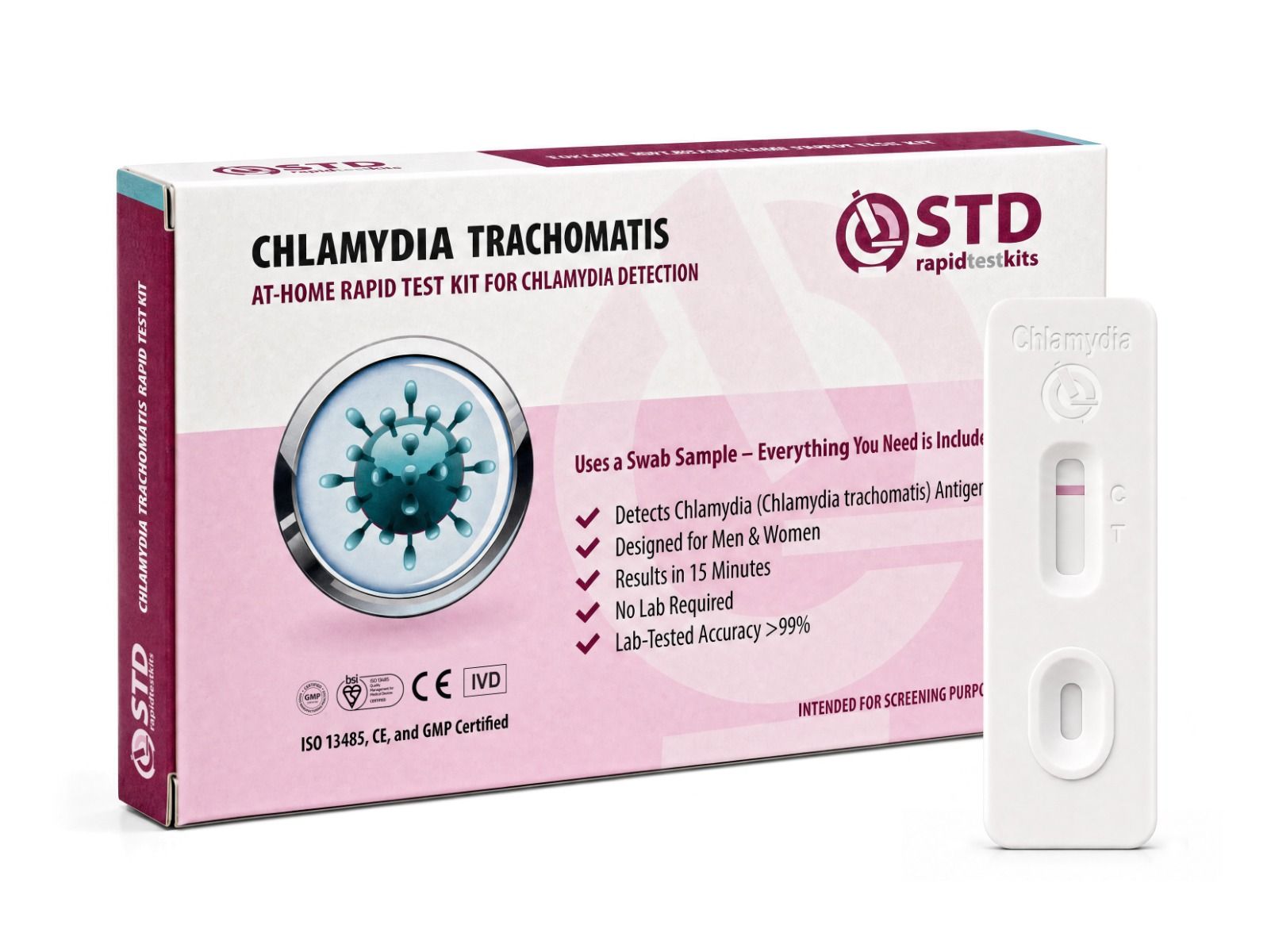
Rapid lateral-flow chlamydia kits sold for home use, including the ones on this site, are validated for self-collected vaginal or penile swabs. They are not validated for eye samples and are designed for screening, not for confirmatory diagnosis.
If you suspect a chlamydial eye infection, the right move is to see a clinician for a conjunctival swab and a clinical exam, not to apply an at-home kit to the eye.
Treatment that actually works
Antibiotics clear ocular chlamydia reliably when given on time. The standard regimens follow current CDC and WHO guidance:
- Adult inclusion conjunctivitis. One gram of oral azithromycin as a single dose, or 100 mg of oral doxycycline twice daily for seven days. Topical antibiotic eye drops added on top of oral therapy are not routinely necessary.
- Trachoma. One adult-weight-appropriate dose of azithromycin, given as part of a community-wide round when the disease is endemic. Repeat rounds annually for several years are how the SAFE strategy achieves elimination at the population level.
- Neonatal chlamydial conjunctivitis. Oral erythromycin syrup, dosed by weight, for fourteen days. Topical eye treatment alone is inadequate because it does not clear the bacteria from the throat and lungs, leaving the baby at risk of subsequent chlamydial pneumonia.
- Advanced trichiasis. Eyelid surgery to rotate the lashes away from the cornea. Performed by ophthalmologists or trained surgical assistants in trachoma-elimination programs.
Anyone treated for ocular chlamydia should also be tested for genital chlamydia, treated if positive, and counseled to notify recent partners so they can be tested and treated. Without partner treatment, reinfection within months is the rule rather than the exception.
Pregnant people diagnosed with chlamydia during pregnancy are treated with azithromycin. Doxycycline is avoided because of fetal-safety concerns. A test of cure is recommended three to four weeks after treatment to confirm clearance before delivery.
Prevention you can act on
The right prevention depends entirely on which form of the disease you are trying to avoid.
Avoiding adult inclusion conjunctivitis and the genital infection behind it
- Use condoms consistently with new or non-monogamous partners.
- Get tested for chlamydia at least annually if you are sexually active and under 25, or older with risk factors. The CDC recommends annual screening for all sexually active women under 25 and for older women with risk factors, as well as for men who have sex with men.
- Treat any positive result, retest at three months to screen for reinfection, and avoid sex for the seven days following single-dose treatment or until a seven-day antibiotic course is complete.
- Encourage current and recent partners to test and treat at the same time. Partner-delivered therapy is permitted in many jurisdictions when in-person follow-up is hard.
- Wash hands before touching your eyes, contact lenses, or shared towels, especially if you may have been exposed.
Avoiding newborn ocular chlamydia
- If you are pregnant or planning a pregnancy, get screened for chlamydia at the first prenatal visit, treat any positive result with azithromycin, and confirm clearance with a retest several weeks later.
- Re-test in the third trimester if you are under 25 or have ongoing risk factors.
- If you have a partner who has not been tested in the last year, ask them to test before pregnancy.
- Continue prophylactic newborn eye ointment as a hospital standard, while recognizing that the ointment protects mainly against gonococcal eye disease and does not reliably prevent chlamydial conjunctivitis.
Avoiding trachoma (relevant for residents of endemic areas and long-stay travelers)
- Wash the face daily with clean water, especially in children.
- Use latrines rather than open defecation, which reduces fly populations carrying eye and nose secretions.
- Participate in community azithromycin distribution rounds when they are offered.
- Support household and community water and sanitation improvements where you live or work.
WHO SAFE strategy: the four pillars
- Surgery for advanced trichiasis to stop inward-turning lashes from continuing to scar the cornea.
- Antibiotics, typically a community-wide annual round of oral azithromycin, in trachoma-endemic regions.
- Facial cleanliness, encouraged through public-health campaigns focused on children.
- Environmental improvement: clean water access, household latrines, and fly control.
When to test for genital chlamydia at home
For most adults reading this article in a high-income country, the practical action item is screening for genital chlamydia, the source infection. Catching and treating a genital infection prevents the autoinoculation eye infection in yourself, prevents transmission to partners, and protects any future newborn from neonatal conjunctivitis.
Rapid lateral-flow home tests like the ones we sell screen a self-collected vaginal or penile swab and return a result in about fifteen minutes. They are designed for screening, not for confirming a treatment cure. Anyone who tests positive should follow up with a clinician for confirmatory laboratory NAAT and a prescription. Per the CDC STI treatment guidelines for chlamydia, NAAT is the recommended test for detecting C. trachomatis infection, with sensitivity above what at-home lateral-flow chemistry achieves on its own. The two are complementary, not equivalent.
Common reasons to screen at home:
- A new sexual partner in the past three months.
- Annual screening if you are sexually active and under 25.
- Symptoms of genital chlamydia, including unusual discharge, burning during urination, pelvic pain, or bleeding between periods.
- A persistent conjunctivitis that has not responded to standard pink-eye care, alongside a clinical evaluation for the eye itself.
- Planning a pregnancy in the next year.
- A partner who has tested positive for chlamydia or another STI.
Window-period note: chlamydia can typically be detected by laboratory NAAT and by most rapid lateral-flow tests starting around fourteen days after exposure. Testing sooner than fourteen days risks a false negative. If you test early and the result is negative, retest after the window has passed or if symptoms appear later.
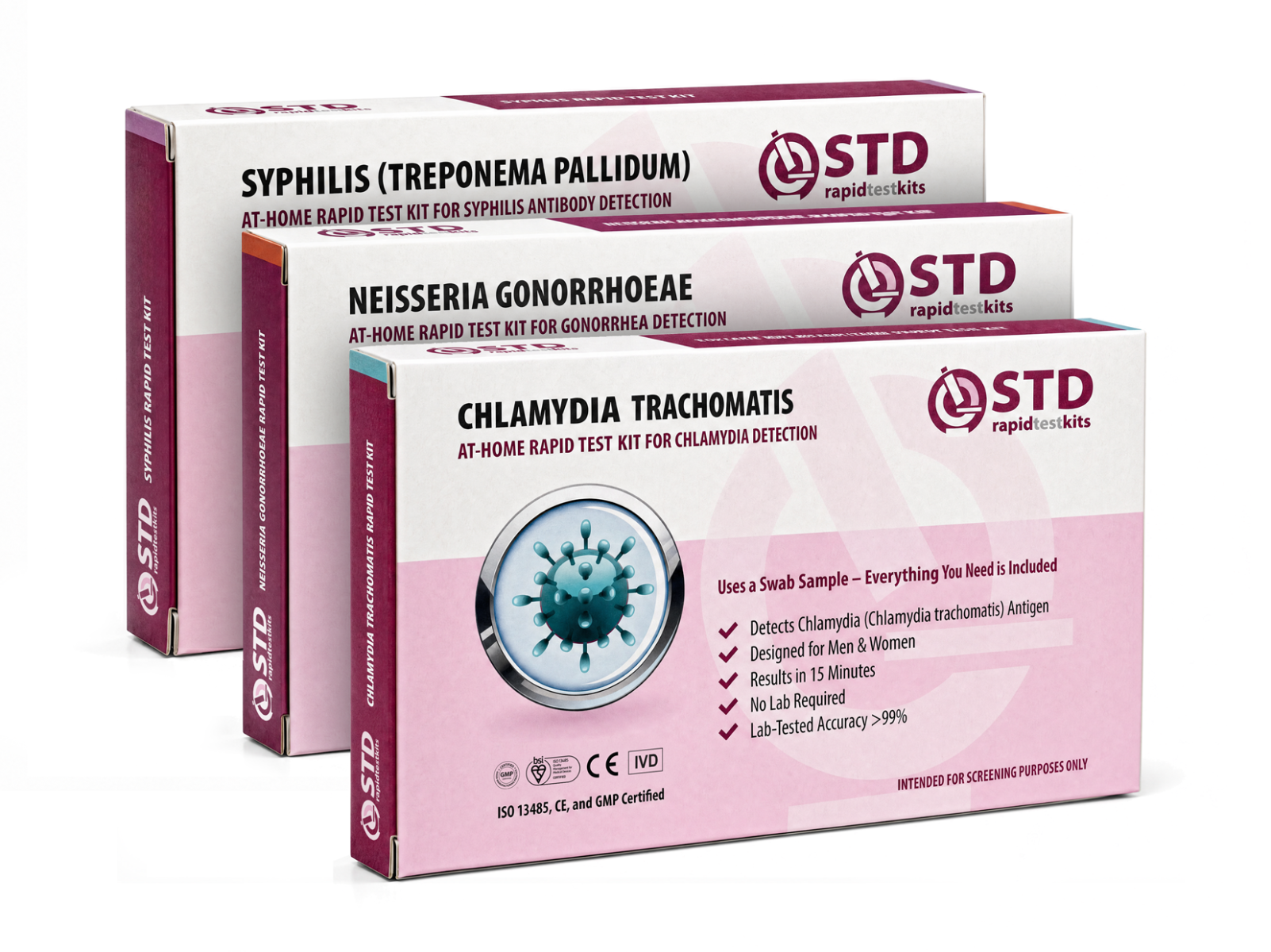
Our at-home rapid kit screens for genital chlamydia only. It is not validated for eye samples, and we do not sell an ocular chlamydia test. For a suspected eye infection, see a clinician. For routine sexual-health screening, an at-home kit is a reasonable starting point.
FAQs
- Can chlamydia really cause permanent blindness?
- Trachoma, the blinding form, requires years of repeated infection in a low-resource setting. A single eye infection treated promptly does not cause blindness. Trachoma develops only after cycles of childhood reinfection thicken and scar the inner upper eyelid, pull the lashes inward, and let them scrape the cornea with every blink. Outside endemic communities, the risk of blinding trachoma is essentially zero.
- If I have genital chlamydia, will my eyes be affected?
- Probably not. Autoinoculation from genitals to eyes happens, but it requires direct hand transfer of bacteria and is relatively uncommon. Most people with genital chlamydia never develop eye symptoms. The bigger reasons to treat genital chlamydia are partner protection, the risk to fertility in women, and the risk to any future newborn during vaginal delivery.
- How is ocular chlamydia diagnosed?
- A clinician swabs the inside of the lower eyelid and sends the sample for a nucleic acid amplification test (NAAT). Adults with confirmed ocular chlamydia are usually also tested for a genital infection and offered tests for gonorrhea, syphilis, and HIV, because those infections frequently travel together.
- Can I use a home chlamydia swab on my eye?
- No. Our at-home rapid tests are validated only for genital self-swabs. They are designed to detect chlamydia from a vaginal or penile sample, not from the eye. If you suspect a chlamydial eye infection, see a clinician for proper eye swab testing and treatment. Using a genital-swab kit on the eye produces an unreliable result and is not a recommended use.
- How long after exposure do eye symptoms appear?
- Typically one to three weeks after exposure for the adult inclusion form, and within the first two weeks of life for newborn ocular chlamydia. Trachoma can remain subtle for months or years between acute flares before scarring becomes obvious.
- How is ocular chlamydia treated?
- In adults, a single one-gram oral dose of azithromycin or a seven-day course of oral doxycycline (100 mg twice daily) clears the infection. Newborns are treated with oral erythromycin syrup for fourteen days to clear both the eye infection and the bacteria in the throat and lungs. Topical eye drops alone are not enough.
- Should pregnant women be tested for chlamydia?
- Yes. The CDC recommends chlamydia screening at the first prenatal visit for all pregnant people under 25, and for older pregnant people with ongoing risk factors. Anyone testing positive should be treated with azithromycin and retested to confirm cure. This is the single most effective way to prevent neonatal chlamydial conjunctivitis and pneumonia.
- Is chlamydial conjunctivitis contagious within a household?
- It can be transmitted by close contact with infected eye secretions, shared towels, or contaminated fingers. Strict hand hygiene during the first week of antibiotic treatment, plus separate towels and pillowcases for the infected person, is usually enough to prevent household spread. Trachoma transmission specifically requires the kind of repeated, prolonged exposure that happens in endemic communities, not the brief contact of a household visit.
- World Health Organization. Trachoma fact sheet, including global burden of blindness and visual impairment, transmission routes, and the SAFE elimination strategy.
- U.S. Centers for Disease Control and Prevention. Chlamydia overview, symptoms, complications, and screening recommendations.
- U.S. Centers for Disease Control and Prevention. STI Treatment Guidelines: Chlamydial Infections. Covers NAAT as the recommended diagnostic test, treatment regimens, and the role of prenatal screening in preventing chlamydial ophthalmia neonatorum.
- NHS. Chlamydia: symptoms, complications including conjunctivitis, and treatment.
- Cleveland Clinic. Chlamydia: causes, symptoms, complications including conjunctivitis, and newborn risks.
- MedlinePlus (U.S. National Library of Medicine). Chlamydia infections: clinical overview and screening guidance.
