





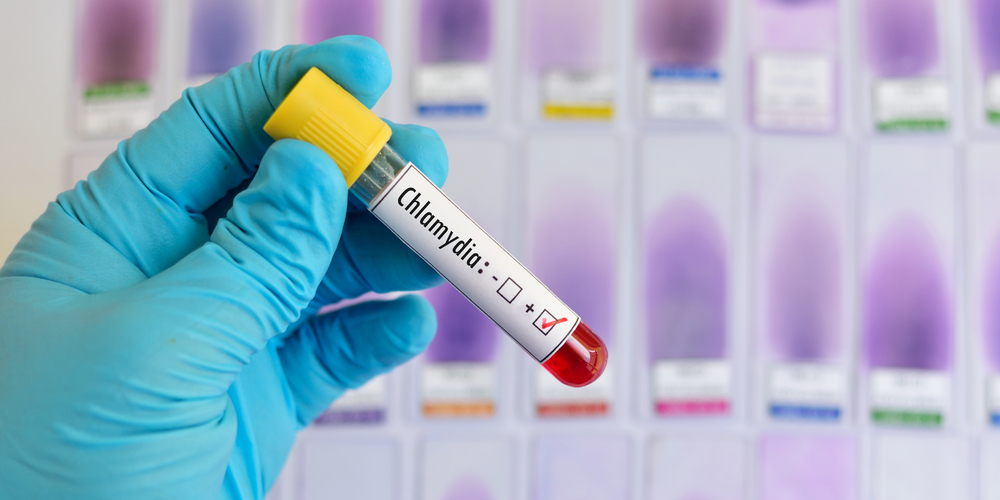

Quick Answer: You can absolutely have an STD and feel completely fine. Many STDs, including chlamydia, gonorrhea, herpes, and even HIV, often show no symptoms for weeks, months, or ever. The only way to know is to get tested.
This Is What “No Symptoms” Really Looks Like
Let’s be real: when we say we feel fine after a hookup, we’re usually trying to talk ourselves down. Maybe the condom slipped. Maybe oral was unprotected. Maybe it was spontaneous and we don’t fully know their status. But no rash, no burn, no weird discharge? Cool. We tell ourselves we’re good.
Except that’s not how this works. Around 70% of women and half of men with chlamydia have zero symptoms. Gonorrhea’s just as sneaky. Herpes can show up years after exposure, if it ever does. And early HIV? You might feel flu-ish. Or nothing at all.
“I felt completely normal,” said Ty, 30, who tested positive for gonorrhea during a routine panel. “Maybe itchy once or twice, but I brushed it off. I almost canceled the appointment.”
Even when symptoms do show up, they’re often so subtle you’ll rationalize them away. A shift in smell. A bump that passes. A burn that comes and goes. STDs don’t always yell. Sometimes they whisper. Sometimes they say nothing, and still keep moving.
False Sense of Safety: The Problem with “Feeling Fine”
There’s this subtle, dangerous belief that if we’re not in pain, we’re not at risk. It makes sense, most illnesses we deal with have symptoms. We get the flu, we get a fever. We eat something bad, our stomach tells us. We get hurt, it hurts. But sexually transmitted infections don’t always follow the same rules.
That false sense of safety is why asymptomatic chlamydia continues to be the most reported bacterial STD in the U.S., especially among people under 30. Many only get diagnosed because a partner told them, or because they were getting tested for something else.
It’s also why some people keep transmitting infections without knowing it. If you don’t know you’re carrying something, you can’t disclose it to partners. And if they feel fine too, the cycle just continues.
“There’s this guilt that hits you later,” Sasha said. “Like, did I give this to someone? Did someone give this to me and not know? It’s not even about blame. It’s about not knowing. That part messes with you.”
That emotional fallout, the spiral of shame, fear, resentment, is exactly why we need to change the script. Not just medically, but emotionally. Because feeling fine is not the same as being safe. And getting tested is not an admission of guilt. It’s a form of care.
If any part of you is wondering “should I get tested?”, that’s your answer right there.
And if you want the most private, fast, and judgment-free way to do it? You don’t have to leave your house.
People are also reading: How to Talk to Your Partner After a Surprise Positive Chlamydia Test (Again)
When Symptoms Don’t Show Up, But the Infection Does
Let’s talk science. There’s a reason why you can carry an STD and still feel completely normal. It comes down to something called the incubation period, the time between when you’re exposed and when the infection becomes detectable or symptomatic.
For some STDs, this period is short. For others, it’s long, and inconsistent. According to CDC guidelines, chlamydia can show up in tests within 1–5 days of exposure, but symptoms, if they ever come, might not appear for weeks. Gonorrhea tends to act faster, usually within 2–7 days, but again, symptoms are optional. Syphilis? Its first sign is often a painless sore that people miss or misdiagnose as a zit or cut. Then it disappears entirely… even as the infection progresses in the body.
One of the most misunderstood STDs is herpes. You can test negative for months, even years, if your immune system hasn’t created enough antibodies for detection. Some people don’t get their first outbreak until triggered by stress, illness, or hormonal changes. Until then, the virus just… lives quietly inside you.
“I didn’t even know what herpes looked like,” said Denise, 34, who thought she had a razor bump until the pain worsened. “It wasn’t until the second time it happened that I thought to get tested. I felt so stupid. But no one ever talks about this stuff in real detail.”
Let’s be clear: you can test positive without ever having felt “sick”. A 2022 review published in the Lancet Global Health estimated that nearly half of all genital herpes infections worldwide are asymptomatic. That’s not a glitch. That’s normal.
It’s also why HIV can spread undetected. In its early “acute” phase, the virus may cause flu-like symptoms in some people, but not all. And by the time someone does feel sick, the virus may have already done immune system damage. The only way to know is to test, ideally with a fourth-generation test that can catch early infection.
The scary part isn’t that these infections exist. It’s that most people who carry them don’t know. They feel fine. They assume everything is okay. And they delay testing because their body isn’t screaming otherwise. But the body doesn’t always scream. Sometimes it just whispers, and sometimes it says nothing at all.
“But I Got Tested Last Year”, Why Testing Isn’t One-and-Done
Here’s another common trap: the idea that one negative test equals forever safety. It doesn’t. Not unless you’ve been in a completely closed relationship with no new exposures since then.
The window between exposure and test detection, called the diagnostic window, varies by infection and test type. Take HIV again. Antibody-only tests may not detect infection until 3 months post-exposure. A test taken too early might show up negative even if the virus is already present.
“I got tested after a one-night stand,” said Manny, 27. “It came back negative, so I figured I was fine. But I didn’t know I tested too early. Two months later, I did a full panel again and boom, positive for chlamydia.”
This is how STDs hide. Not because you’re reckless. Not because you’re irresponsible. But because the science is complex, and the public information is weak.
The good news? Modern testing kits are closing that gap. Rapid chlamydia and gonorrhea tests can now detect infection within days. Combination kits screen for multiple STDs at once, without requiring symptoms or clinic visits. But timing still matters. If you test too soon, you might need a follow-up to confirm results.
The right question isn’t “Did I test recently?” It’s “Have I tested recently enough, after my last potential exposure?” And if your gut is telling you to check again… that’s your body talking. Even if your genitals aren’t.
Why Silence Doesn’t Equal Safety (And Never Did)
Silence is seductive. It makes us feel like nothing’s wrong. But when it comes to sexual health, silence is not a diagnosis, it’s a delay. A delay in knowing, a delay in protecting others, a delay in getting treatment that could stop things before they get worse.
“I was mad at myself,” said Jules, 21, who tested positive for HPV during a routine pelvic exam. “I hadn’t had sex in months. I felt fine. It didn’t even cross my mind that something could’ve been passed to me from before. I just assumed I was clean because nothing felt off.”
But STDs don’t disappear just because you don’t notice them. Some silently damage reproductive health over time, especially in people with uteruses. Untreated chlamydia or gonorrhea can lead to pelvic inflammatory disease (PID), which in turn can cause chronic pain, infertility, or ectopic pregnancy. All without you ever “feeling sick.”
And that’s the part no one teaches you. We’re taught to look for symptoms. We’re not taught that “no symptoms” is the most common symptom of all.
So we delay. We wait for a sign. But the truth is, the sign is already here. It’s the fact that you had unprotected sex. It’s the fact that your partner’s status is unknown. It’s the fact that you’re even reading this right now, heart racing, tabs open, phone clenched.
You’re already listening. Now it’s time to act.
Check Your STD Status in Minutes
Test at Home with Remedium10-in-1 STD Test Kit
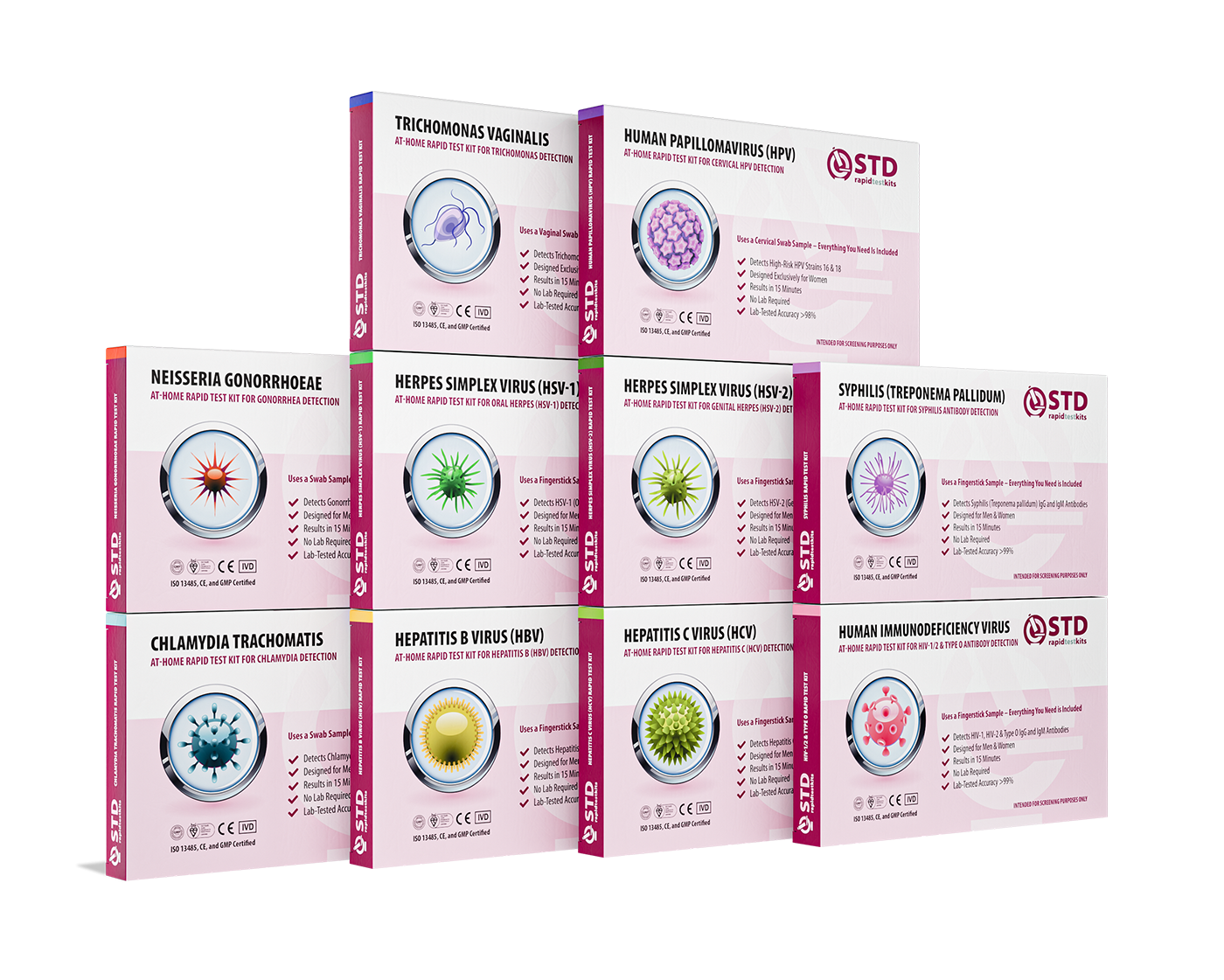
 For Women
 Results in Minutes
 No Lab Needed
 Private & Discreet
Order Now $189.00 $490.00
For all 10 tests
What No One Tells You About Getting Tested
There’s this quiet bravery in getting tested when you feel fine. It means you’re choosing clarity over comfort. You’re deciding that knowing is better than guessing. That even if nothing seems wrong, your body, and your partners, deserve the truth.
But that choice doesn’t always feel brave in the moment. It can feel humiliating, scary, lonely. Like walking into a clinic with invisible guilt draped over your shoulders. Like the nurse might look at you differently. Like maybe you did something wrong just by being human and horny and curious.
“I cried in the car after my test,” said Sam, 24. “Not because I was scared of a positive. But because I was ashamed for even needing to go. I felt dirty. I kept thinking, ‘If I was more careful, I wouldn’t be here.’”
This is the stigma trap. It convinces you that testing is a confession instead of a precaution. That taking care of yourself means you must’ve messed up somewhere. And that silence, emotional and physical, is safer than visibility.
But here’s the truth: testing is care. It’s protection. It’s respect for your own body and the people you touch with it. You wouldn’t ignore a broken bone just because you can still walk. So why ignore your sexual health just because nothing hurts?
It’s okay to be scared. It’s not okay to stay scared and silent forever.
Disclosure Isn’t Shameful, It’s Intimate
Let’s talk about that moment, the one that paralyzes people. The moment you think: “What if I test positive? How do I tell someone?”
It’s terrifying. But it doesn’t have to be tragic.
Testing positive doesn’t mean you’re gross, irresponsible, or dangerous. It means you’re informed. It means you can start treatment. It means you can protect your partners. It means you’re taking your health seriously, and inviting others to do the same.
“I texted him after I found out I had chlamydia,” said Leah, 29. “It was awkward as hell. But he was chill. He got tested. He had it too. We laughed about it later. It honestly brought us closer.”
It doesn’t always go that way. But it often goes better than you think. And when it doesn’t? That says more about them than you. Because disclosure isn’t just about risk, it’s about trust, autonomy, and love.
If someone told you they tested positive, you’d probably feel nervous, but you’d also feel respected. Seen. Considered. That’s the same gift you give when you disclose. It’s not a punishment, it’s intimacy.
Feeling Fine Is Not a Diagnosis. Testing Is.
We live in a culture that trains us to wait until we’re broken to ask for help. Until there’s blood, pain, or a full-blown problem. But sexual health doesn’t work that way. You don’t have to wait for a symptom to be worthy of testing. You don’t need a reason more valid than “I want to know.”
You don’t have to feel dirty. You don’t have to be in a relationship. You don’t have to have slept with a bunch of people. You don’t even have to be worried. You just have to care about yourself and the people you touch.
“I started getting tested regularly not because I was scared, but because I got tired of the guessing game,” said Dev, 32. “Now it’s just part of my self-care. Like getting my teeth cleaned. It’s boring in the best way.”
Testing doesn’t have to be a panic button. It can be a routine, a reset. A check-in. And if it feels too vulnerable to do in public or you just want privacy? At-home STD tests have changed the game.
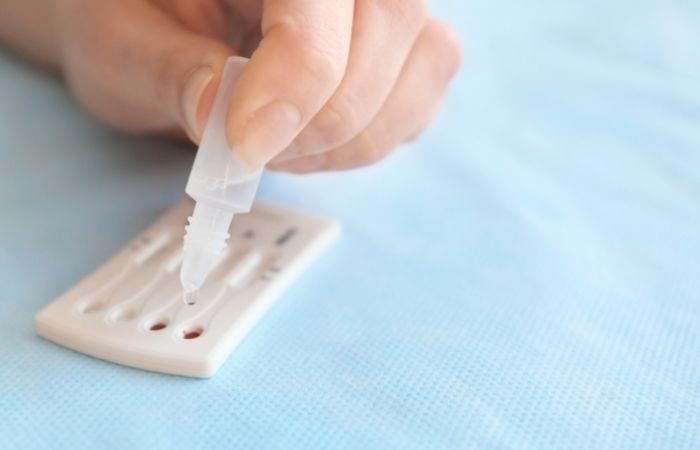
No awkward waiting rooms. No raised eyebrows. No delays. Just a quick swab, a few drops of blood, and an answer that belongs only to you, until you decide to share it.
And if the result is positive? You’re not doomed. You’re not ruined. You’re not broken. You’re just someone who knows. Someone who can treat. Someone who can move forward without fear.
Testing is power. And you deserve that power, even when you feel fine.
People are also looking for: Can an STD Shrink Your Balls?
What Feeling Fine Doesn’t Tell You
Here’s the part that catches people off guard: even when STDs don’t show symptoms, they can still cause long-term harm. They can still spread. They can still impact your fertility, your immune system, and your mental health. And that’s not to scare you, it’s to empower you with the truth.
Chlamydia and gonorrhea are two infections that can damage reproductive organs without you knowing it. This can cause pelvic inflammatory disease, chronic pain, or infertility. Syphilis left untreated can impact the brain and nervous system. HIV can progress into AIDS without treatment. And none of these necessarily come with obvious, early symptoms.
This isn’t about punishment. It’s not about morality. It’s about medicine. Biology. Systems. And being proactive rather than reactive.
Getting tested isn’t just about you. It’s about everyone you’ve been with, and everyone they’ve been with. It’s a ripple of care. A domino effect of responsibility. It’s how we build safer, more honest sexual cultures.
You don’t need to feel bad to take care of yourself. You just need to feel ready.
You Deserve Answers, Not Assumptions
Whether you had a one-time thing or you’re in a monogamous relationship, your body is worth checking in on. Not out of fear. Out of love.
You don’t need symptoms to get tested. You need self-respect.
And you don’t have to wait. This discreet combo test kit covers the most common STDs, including those that often show no symptoms. It’s fast, private, and ships directly to you. No clinic. No judgment. Just answers.
You’re not alone in this. So many of us have had that “oh shit” moment after a hookup. That second-guessing. That voice in your head whispering, “Am I okay?”
Let this be your answer: you deserve clarity. You deserve relief. You deserve care that doesn’t wait for something to go wrong.
End the guessing game. Know your status now.
FAQs
1.Can you really have an STD and feel totally normal?
Absolutely. That’s the trap. Most STDs don’t knock on the door with a fever or rash. They sneak in quietly, hang out in your system, and sometimes never make a scene. You might not see or feel anything, and still test positive.
2. If I don’t have discharge, itching, or pain, do I still need to test?
Yep. Those “classic” symptoms? Not so classic. Plenty of people never get them at all. Think of testing like brushing your teeth, it’s about maintenance, not reacting to a crisis.
3. How long do I need to wait after sex before testing?
It depends on the infection. Some STDs can be detected in just a few days, others take weeks. If you test too early, you might get a false negative. The sweet spot is usually, 2 to 3 weeks after exposure, with more tests if needed. Many at-home kits come with instructions for this!
4. If I don't pay attention to them, will STDs just go away?
That's a false belief that could be dangerous. Some STDs might go dormant, but that doesn’t mean they disappear. They can still damage your body or be passed to partners. Spoiler: Ghosting your infection never works out.
5. My partner says they feel fine. Should I still get tested?
Yes, yes, and still yes. Feeling fine is not the same as being clear. Many people carry infections without knowing, and trust isn’t the same as testing. Think of it as teamwork, not suspicion.
6. Is it embarrassing to test positive?
It might feel that way, especially at first, but honestly? It’s more common than people think. One positive result doesn’t define you. What matters is what you do next: treat, disclose, protect, move forward. That’s real care.
7. Are at-home STD tests accurate?
If you’re getting them from a reputable provider (like the one we link here), they’re solid. Quick, discreet, and clinically backed. Just make sure you follow the instructions and don’t test too early after exposure.
8. Can you pass an STD without symptoms or during oral sex?
100% yes. Oral sex can transmit herpes, gonorrhea, chlamydia, and more, even when everyone feels fine. That’s why testing isn’t just about what you feel. It’s about what you might not know.
9. Do I have to tell my partners if I test positive?Legally? In some places, for some infections. Ethically? Yes. Emotionally? It’s hard, but it gets easier. Most people respond better than you expect, especially when you own it with calm, clear honesty.
10. I’m scared to test. What if it’s positive?
That fear is real. But waiting in the dark won’t make it go away. Testing gives you answers, and answers lead to treatment, clarity, peace. Whatever the result, you’ll be better off knowing. You’re not alone in this.
Sources
1. CDC – STD Facts and Resources
3. CDC – Genital Herpes Fact Sheet
4. HIV.gov – Basic Facts About HIV
5. Planned Parenthood – Why Testing Matters


