







Quick Answer: Telling your partner you have chlamydia starts with honesty, calm timing, and a script that centers care over blame. It's about protecting both of you, not confessing a crime.
Why Telling a Partner About Chlamydia Feels So Hard
Marcus, 27, sat in his car for 45 minutes outside his girlfriend’s apartment. The test result had come in that morning. Positive. He knew he needed to tell her, but every version of the conversation in his head ended in screaming, or worse, her walking away. “I was more afraid of losing her than I was of the infection,” he told us later. “It made me feel dirty. Like I messed everything up.”
This is what stigma does. It warps something common and treatable into a moral crisis. It makes people delay disclosure, skip treatment, or ghost someone instead of talking. But chlamydia is not a reflection of who you are. It's just an infection, a biological fact that’s passed easily, often without symptoms, and frequently between people who never cheated, never knew, and never meant harm. The emotional weight comes from how society talks (or doesn’t talk) about STDs, not from the bacteria itself.
That’s why this article isn’t about “confessing” anything. It’s about communicating. There’s a difference.
Before You Say Anything: Get Your Facts Straight
Imagine this: someone tells you they have an infection, but they don’t know what it is, how it spreads, or what it means for you. That uncertainty can trigger fear, panic, even anger. Now imagine the same conversation, but the person is calm, informed, and clear. That’s the version we’re aiming for.
Before you start the conversation, make sure you understand what a chlamydia diagnosis actually means. Here’s a quick breakdown to help ground you:
| Fact | What It Means |
|---|---|
| Chlamydia is bacterial | It can be cured with antibiotics, usually a simple 7-day course. |
| Often has no symptoms | Most people don’t know they have it, which is how it spreads easily. |
| You can test positive even if you used condoms | Chlamydia can spread through oral, anal, or vaginal contact, and condoms reduce but don’t eliminate risk. |
| Testing positive doesn’t prove who gave it to whom | There’s no timeline fingerprint. You may have had it for weeks or months without knowing. |
| It’s common | More than 1.6 million cases are reported in the U.S. each year. |
Table 1. What a chlamydia diagnosis really means, and why it doesn’t say anything about your worth or your relationship choices.
Knowing this changes how you carry the conversation. You’re not going in confused or ashamed. You’re going in informed and grounded. That confidence? It’s contagious in the best way.

People are also reading: Spotting, Burning, or Nothing? What Chlamydia Feels Like for Real
When Should You Bring It Up?
Timing matters, but not in the way most people think. There's no perfect moment. No magic day when it won’t feel awkward. But there are better times to talk than others.
Don’t blurt it out mid-argument. Don’t drop it between drinks on a first date. But also, don’t wait weeks hoping it’ll “go away” (it won’t). If you’ve already been intimate, the sooner you speak up, the better, for your partner’s health and your peace of mind.
Nadia, 31, had tested positive from a routine panel after her annual check-up. Her partner hadn’t shown symptoms, and they were exclusive. “I felt guilty,” she said. “But I knew dragging it out would just make it worse.” She chose a quiet night, face-to-face, after dinner. No distractions. No wine. Just care and clarity. “It was scary, but he appreciated that I told him. We both got treated, and we’re still together.”
If you can, choose a private, low-stress moment. Face-to-face or phone is better than text. If safety is a concern, texting or using an anonymous partner notification service is valid. Your well-being comes first.
Check Your STD Status in Minutes
Test at Home with RemediumChlamydia Test Kit
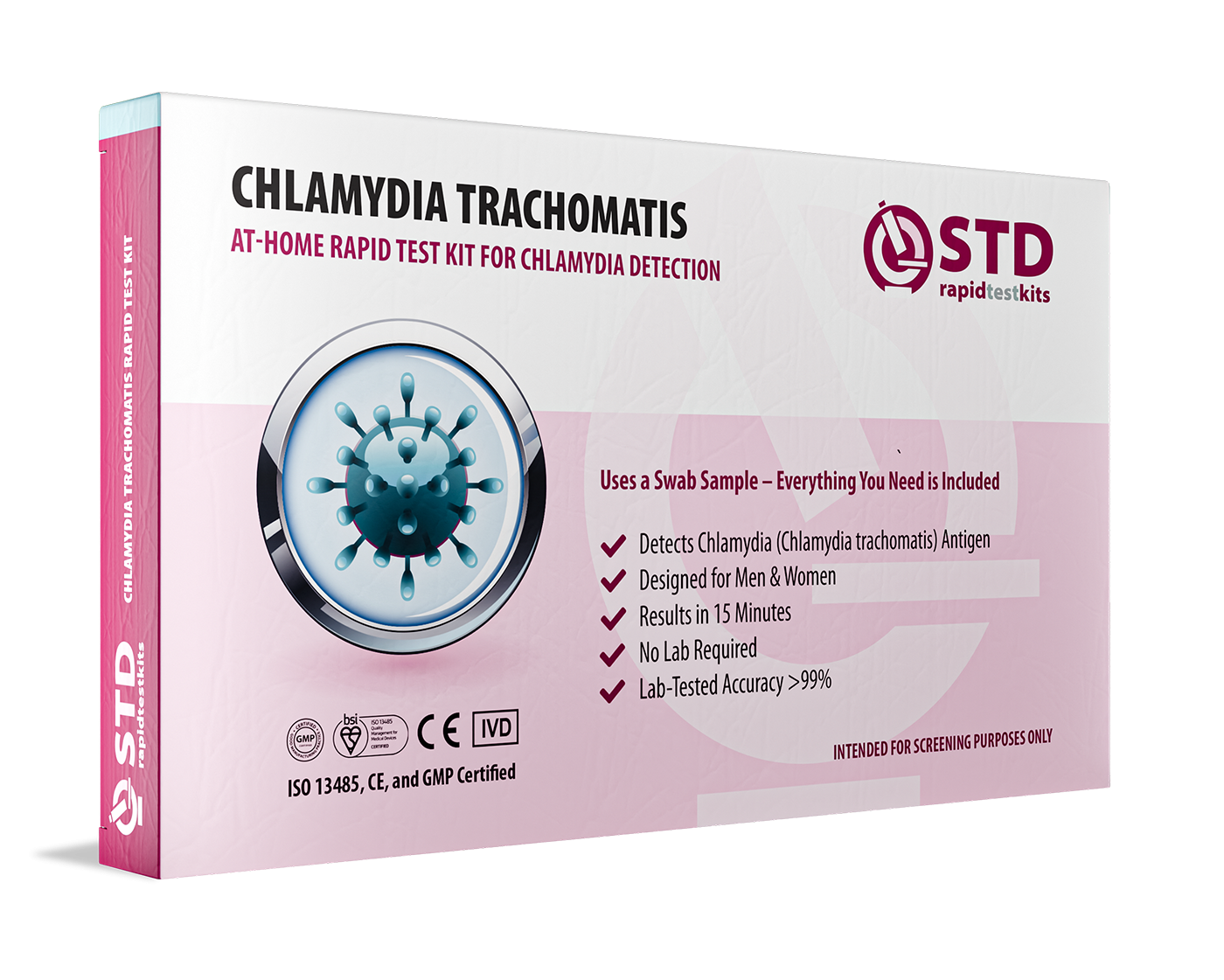
 For Men & Women
 Results in Minutes
 No Lab Needed
 Private & Discreet
Order Now $33.99 $49.00
What to Say (and What Not to Say)
This is the moment you’ve been dreading. But you don’t have to improvise. You don’t need to perform guilt or justify your choices. You just need to be honest, clear, and calm. You are not confessing a sin, you are communicating about health.
Here’s one approach, broken down like a real conversation, not a script, but a flexible starting point. Imagine saying something like this:
“Hey, I need to talk to you about something kind of uncomfortable but important. I just got tested and found out I have chlamydia. I didn’t know, I haven’t had symptoms, but I wanted to let you know because it’s treatable, and you might want to get checked too.”
That’s it. That’s the core. It’s honest. It’s calm. It doesn’t point fingers or collapse into apology. It opens the door to conversation. Depending on your relationship, you might add more context, how you got tested, when you found out, or what the next steps are, but the heart of the message is simple: you care enough to tell them.
What you don’t need to say: “I’m so sorry I ruined everything,” “I must be disgusting,” “Please don’t hate me,” or “I’m sure I got it from you.” Those phrases shift the focus from care to shame or blame. Stay grounded in health, not guilt. If you’re unsure who transmitted it or when it happened, it’s okay to say: “I don’t know when this started, I tested as part of routine care.” That’s true for most people.
What If You're Not in a Relationship?
This conversation looks different when you’re not coupled. Maybe it was a casual hookup. Maybe it was someone you’re not speaking to anymore. Maybe you don’t even know their last name. That doesn’t mean the door is closed.
Eric, 22, had a one-night stand with someone he met at a concert. Three weeks later, he tested positive for chlamydia. “I didn’t know how to reach out,” he admitted. “We followed each other on Instagram, but that was it.” He debated saying nothing. But eventually, he messaged: “Hey, not sure if you remember me, but I wanted to give you a heads up. I tested positive for chlamydia recently and figured you might want to get tested just in case. Hope you’re doing okay.” He never got a reply. But he felt better knowing he tried.
Disclosure isn’t about the reaction. It’s about respect. Whether it’s through DM, text, or an anonymous online notification tool, you’re offering someone the chance to take care of their health. That’s a gift. Even if they don’t respond. Even if they block you. You did your part.
How Most People Actually React
Here’s the truth that doesn’t get told enough: most people don’t explode. They don’t ghost. They don’t slut-shame. Especially when you approach them calmly, with clarity and care. It’s awkward, yes, but not catastrophic.
In a recent study published in the Journal of Adolescent Health, researchers found that partner notification for STIs, especially via direct communication, often led to neutral or positive responses. People were grateful to be informed. Many said they wouldn’t have known to test otherwise.
Of course, not everyone reacts well. Some people lash out from fear, ego, or misunderstanding. That’s not your fault. Your responsibility is honesty, not managing someone else’s discomfort. If you’re concerned about emotional abuse or retaliation, prioritize your safety. You don’t owe face-to-face disclosure to someone who might harm you emotionally or physically. Period.
But in most cases? You’ll be surprised by how okay it ends up being.
Partner Notification Options: Quiet, Clear, Anonymous
If speaking directly isn’t safe, possible, or emotionally doable, you still have valid ways to notify someone. Partner notification doesn’t have to mean a vulnerable phone call or a heart-to-heart across the dinner table.
| Method | How It Works | When It's Useful |
|---|---|---|
| In-Person or Video Chat | Direct, emotionally open conversation | Trusted partners, ongoing relationships |
| Text or Message | Quick, written heads-up with space for questions | Casual partners, long-distance, anxiety-friendly |
| Anonymous Notification Tool | Send a free, nameless message via public health or STD sites | When privacy or safety is a concern |
| Telehealth Support | Some providers will contact partners for you | Clinic-based testing follow-up or by request |
Table 2. Options for telling a partner, choose the method that fits your safety, relationship, and comfort level.
Every method is valid. What matters is that you choose one. Not just for their health, but so you’re not carrying it alone.
If They React Badly, Here’s What to Remember
It’s every discloser’s nightmare: the angry text. The voice raised in accusation. The silence. But let’s pause here. A bad reaction doesn’t mean you did anything wrong. You didn’t infect someone on purpose. You didn’t deceive. You’re not a villain in this story, you’re someone navigating sexual health in a culture that rarely teaches us how.
Janelle, 29, told her partner about her diagnosis calmly and with transparency. “He went off on me,” she said. “He called me dirty. He asked who I’d been sleeping with. I ended up crying and apologizing for things I hadn’t even done.” That reaction, she later realized, wasn’t about chlamydia. It was about control. About shame. About his own internalized beliefs.
If someone lashes out, remember this: their response reflects their emotional readiness, not your moral worth. Walk away if you need to. Block them if it’s toxic. You already did the hard part. You told the truth.
There are resources that help people navigate toxic reactions to disclosure. If you’re scared to tell someone because of how they might respond, that’s a sign of something deeper, and you deserve support for that too.
After You Tell Them: What Comes Next?
If things go well, the next steps usually look like this: your partner gets tested. Maybe they also test positive. You both get treated. You wait the 7 days post-treatment before resuming sexual contact (no sex during treatment, even with condoms). Then you move forward. That’s it.
Sometimes, disclosure becomes a moment of deeper connection. Rafiq, 25, told his new partner after only two dates. “I thought she’d ghost me. But she thanked me. She said no one had ever been that upfront before. We both got tested, and honestly, it built trust early.”
What matters most is that you create a container for mutual care. This isn’t just about avoiding transmission, it’s about building a culture of honesty around sex. That starts with you.
Need support with treatment? You can order a discreet chlamydia test or explore treatment options through telehealth providers who can prescribe antibiotics after a positive result.
People are also reading: Can You Trust an At-Home Syphilis Test? Here’s the Data
Why People Delay (and Why You Shouldn’t)
Delaying the conversation is incredibly common. You think maybe it’ll go away. Maybe they won’t notice. Maybe you’ll lose them if you speak up. But waiting doesn’t erase the diagnosis, it just increases the risk to both of you. The longer someone goes untreated, the greater the chances of complications like pelvic inflammatory disease (PID) or epididymitis.
Danny, 33, avoided telling a recent hookup for two months. “By the time I got the nerve, he’d already developed symptoms. I felt horrible. If I’d just said something, it could’ve been prevented.” Danny’s experience is not uncommon, but it’s also preventable. Early action can stop a spiral of shame and medical harm.
The discomfort you feel now? It’s temporary. The regret of not saying anything can last longer.
Check Your STD Status in Minutes
Test at Home with Remedium6-in-1 STD Rapid Test Kit
 For Men & WomenResults in MinutesNo Lab NeededPrivate & Discreet
Order Now $119.00 $294.00
For all 6 tests
Why This Isn’t a Confession, It’s Care
Here’s the reframe we need: talking about STDs isn’t a confession. It’s not an apology tour. It’s health communication. Like letting someone know you have the flu and might’ve passed it on. Or telling a partner you have allergies before ordering dinner. We don’t panic about that, but because STDs are tied to sex and shame, we treat them like character flaws.
Talking about chlamydia is an act of care. For yourself. For your partners. For the people they might sleep with in the future. It’s harm reduction. It’s integrity. It’s brave. And it gets easier the more we practice.
Even if you don’t get the perfect reaction, or feel shaky after the talk, you’ve done something powerful: you broke the silence. And that alone changes everything.
FAQs
1. Do I really have to tell someone I hooked up with once?
If there’s a chance they were exposed, yeah. Even if it was casual. Even if it was months ago. Think of it like this: if they had something and didn’t tell you, wouldn’t you want to know? A one-time hookup doesn’t mean you owe them your life story, but a quick message could protect theirs.
2. What if I don’t even know who I got it from?
Join the club. Chlamydia often has zero symptoms, and it can live in your system for weeks or months. You might’ve gotten it in a past relationship and only now caught it on a test. That’s not failure, it’s biology. Forget the blame game. Focus on testing and treating now.
3. Is it okay to tell someone over text?
Absolutely. It might not be ideal for every situation, but for lots of people, texting gives space to breathe, to think, to avoid spiraling. Just keep it simple: “Hey, I tested positive for chlamydia recently. Wanted to let you know so you can get checked too.” That’s enough. That’s care.
4. Can I skip the talk if I already got treated?
Tempting, but no. If you had sex before getting treated, they could still have it, and keep spreading it. It’s like cleaning your side of the bed but leaving theirs dirty. Do your part. Send the message.
5. What if they freak out or get mean?
That says more about them than it does about you. You’re being honest. You’re being brave. If their response is shaming, cruel, or explosive, you don’t need to stick around for that. Protect your peace. Block if you need to. And remind yourself: you did the right thing.
6. Can I use one of those anonymous STD notification tools?
Yes, and they’re lifesavers for tricky situations. You can send a nameless heads-up through services like InSpot or ask a clinic to notify for you. It's discreet, respectful, and better than radio silence.
7. How long do I have to wait after treatment to have sex again?
Seven days. Full stop. Even if you feel fine. Even if they do too. You need to finish treatment and wait out that window, or you risk reinfecting each other. Use the time to reconnect emotionally. Or just nap a lot. Both are healing.
8. Should I tell my current partner if I don’t think they gave it to me?
Yes. Especially them. They could still be infected without knowing. And beyond the biology, it’s about trust. This talk might suck, but it also might bring you closer. Weird how honesty works like that.
9. What if they say they got tested recently and were negative?
Great! But still, encourage them to test again. Their last test might’ve been too early to detect it, or they might’ve been exposed after. Testing isn’t about trust, it’s about timing. Say it with love, not doubt.
10. Can I get reinfected even if we both got treated?
Yep. If either of you has sex with someone else who has it, or if you don’t wait the full 7 days post-treatment, you could pass it right back. Think of treatment like hitting reset. But you still need to play safe afterward.
You Deserve Clarity, Not Fear
You did the brave thing. You faced the diagnosis. You asked how to talk about it. That alone puts you miles ahead of the silence most people sit in. Now it’s time to carry that same clarity into the conversation.
There’s no perfect script. But there is a perfect reason: care. You’re protecting yourself and your partners. You’re breaking shame. You’re saying: I respect you enough to tell you the truth.
Don’t wait and wonder. If you’ve tested positive, or even suspect something’s off, get the clarity you need. This at-home combo test kit checks for the most common STDs quickly and discreetly. Your next chapter starts with knowing.
How We Sourced This Article: We combined current guidance from leading medical organizations with peer-reviewed research and lived-experience reporting to make this guide practical, compassionate, and accurate.
Sources
2. Planned Parenthood – What is Chlamydia?
3. InSpot – Free Anonymous Partner Notification
4. Partner Services (CDC STI Treatment Guidelines)
5. Expedited Partner Therapy | STI (CDC)
6. Chlamydial Infections - STI Treatment Guidelines (CDC)
7. Partner Services | HIV Nexus (CDC)
8. Partner notification and partner treatment for chlamydia (PMC)
9. TellYourPartner.org | National Prevention Information Network (CDC)
10. Partner notification - PMC
About the Author
Dr. F. David, MD is a board-certified infectious disease specialist focused on STI prevention, diagnosis, and treatment. He blends clinical precision with a no-nonsense, sex-positive approach and is committed to expanding access for readers in both urban and off-grid settings.
Reviewed by: Tanya Redman, MSN, FNP | Last medically reviewed: January 2026
This article is for informational purposes and does not replace medical advice.


