Published: September 2025 | Last updated: May 2026 | Editorial review and quality control: Martina N.
You went in for an annual exam, had a Pap smear, and got the call that everything looked normal. A few weeks later something feels off in your body, or a partner texts you about a positive STI result, and now you are wondering how that “normal” squares with what is actually happening. Here is the short version: a Pap smear and an STI test are two different things, doing two different jobs. A perfectly clean Pap does not mean you have been screened for chlamydia, gonorrhea, HIV, syphilis, trichomoniasis, or herpes.
This guide walks through what a Pap actually checks for, what it cannot detect, why most clinics do not automatically add an STI panel, and what to do if you suspect an infection slipped past your last cervical screen. It is written for anyone with a cervix who has been told everything looked good and wants to make sure that is actually true.
Key Takeaways
- A Pap smear screens for abnormal cells in the cervix, mostly changes caused by HPV. It does not test for chlamydia, gonorrhea, trichomoniasis, syphilis, HIV, or herpes.
- Unless your provider specifically ordered a chlamydia and gonorrhea swab, a blood draw for syphilis and HIV, or an HPV co-test alongside your Pap, those infections were not screened for, even though the visit involved a pelvic exam.
What a Pap smear actually checks for
A Pap test (short for Papanicolaou test) is a cervical cancer screen, not an infection screen. During the procedure your clinician inserts a speculum, brushes a small sample of cells from the surface and canal of the cervix, and sends those cells to a lab. A pathologist or automated cytology system looks at the cells under a microscope to check whether their shape, size, and nuclei look normal. If anything looks abnormal, the report uses categories like ASC-US, LSIL, HSIL, or AGC under the Bethesda reporting system to flag what kind of cell change was seen (Mayo Clinic: Pap smear overview).
The reason a Pap exists at all is HPV. Persistent infection with high-risk strains of human papillomavirus (mostly HPV 16 and 18) drives the cellular changes that can become cervical cancer over years. The Pap is the screen for those changes, not for the virus itself. Some patients also receive an HPV DNA co-test, which checks the same cervical sample for the actual high-risk HPV genetic material. Current guidance generally recommends primary HPV testing every five years for people aged 25 to 65, Pap plus HPV co-testing every five years, or Pap alone every three years (CDC: screening for cervical cancer). Many clinics still default to Pap alone for patients under 30 unless something changes.
Here is the part that trips most people up. Although the procedure involves a speculum and a swab of the cervix, the laboratory work for a Pap is fundamentally different from STI testing. The Pap looks at cell morphology. STI tests look for an actual pathogen, typically using nucleic acid amplification testing (NAAT) for chlamydia, gonorrhea, and trichomoniasis, antibody and antigen blood tests for HIV and syphilis, or culture and PCR for herpes. The samples can be collected at the same visit, but they are different tests run by different lab workflows, and they have to be ordered separately.
| Test type | Primary purpose | Detects STIs? | What it misses |
|---|---|---|---|
| Pap smear (cytology) | Detect cervical cell changes (often from HPV) | Only indirectly, via abnormal cells | Chlamydia, gonorrhea, trichomoniasis, HIV, syphilis, herpes |
| HPV DNA test (co-test) | Check for high-risk HPV types in the cervical sample | Yes, but only HPV | All other STIs |
| NAAT or rapid STI test | Identify a specific infection (e.g. chlamydia, gonorrhea) | Yes, direct pathogen detection | Cervical cell changes and cancer risk |
Why STIs commonly slip past a Pap
Most bacterial and parasitic STIs do not show up as visible cell changes on a cytology slide. Chlamydia, gonorrhea, and trichomoniasis colonize the cervical epithelium, but they typically do not warp the cell structures the way persistent high-risk HPV does. Under the microscope, an infected cervix can look essentially normal even when an active infection is present.
The cervix has fewer pain-sensing nerve endings than parts of the vulva and vaginal canal, which is one reason cervical infections often produce no obvious symptoms. The CDC's STI treatment guidelines state that asymptomatic chlamydia infection is common among both men and women (CDC STI treatment guidelines: chlamydia), and a large share of cervical gonorrhea infections are similarly silent. Untreated, these infections can ascend into the uterus and fallopian tubes and cause pelvic inflammatory disease, which is linked to chronic pelvic pain, ectopic pregnancy, and infertility.
The Pap, by design, does not look for any of this. It is calibrated to flag cells whose morphology suggests cancer precursors. A clean Pap means the cervical cells sampled at that visit looked structurally normal under the microscope on the day they were read. It is genuinely good news about cancer risk, and it is not information about whether you have an active bacterial or viral STI.
The pattern that follows is predictable: someone has a new partner, gets a Pap a few weeks later because the visit was already on the calendar, feels reassured by the “normal” result, and skips a separate STI test. Months later, they notice intermenstrual spotting, painful intercourse, or burning when peeing. A proper panel finds the infection that had been there the whole time, quietly, on a screen that was never built to spot it.

The HPV exception: when a Pap can hint at an STI
HPV is the one place where a Pap and an STI test overlap. When a Pap flags ASC-US or higher, an HPV-driven infection is the most common underlying cause. If your clinic ordered HPV co-testing, the same cervical sample is run for high-risk HPV DNA, and you may get one of three result patterns. Each pattern points to a different next step.
There are more than 100 known HPV types. A small subset of high-risk types, including HPV 16, 18, 31, 33, 45, 52, and 58, drives nearly all cervical cancers. Low-risk types like HPV 6 and 11 cause genital warts, which are diagnosed by visual inspection, not by Pap. A Pap that flags abnormal cells does not tell you which HPV type you have or whether it is high-risk or low-risk on its own. The follow-up workup, often colposcopy and HPV typing, fills in those gaps.
Even at its best, the Pap-and-HPV combination only addresses one infection out of the standard STI panel. A patient can be Pap-negative, HPV-negative, and still be carrying chlamydia, gonorrhea, trichomoniasis, syphilis, HIV, or herpes. The cervical screen is doing its job. The job just does not include those other infections.
Three patterns from Pap plus HPV co-testing
- Abnormal cells plus a positive high-risk HPV result. Workup typically proceeds to colposcopy.
- Abnormal cells with a negative HPV result. Surveillance with a repeat Pap is usually the next step.
- Normal cells with a positive high-risk HPV result. Repeat co-testing in roughly one year is the common management, not immediate colposcopy.
Symptoms are not a reliable safety net
A common assumption sounds like this: “If something were really wrong, I would feel it.” For most cervical and lower-genital-tract STIs, that assumption does not hold up. The CDC's STI treatment guidelines describe asymptomatic chlamydia infection as common in both men and women, and a substantial share of gonorrhea infections in women are also silent. According to the CDC, 70 to 85 percent of persons with trichomoniasis have minimal or no genital symptoms; when symptoms do appear, the discharge can be diffuse, malodorous, or yellow-green, sometimes with vulvar irritation (CDC STI treatment guidelines: trichomoniasis).
When symptoms do appear, they are easy to mistake for something more familiar. Increased discharge gets blamed on a yeast infection. Burning when peeing gets treated as a UTI. Intermenstrual spotting gets attributed to a new birth control or to stress. Cycle-tracking apps and self-care content rarely flag these as “go test for STIs” signals, and many people self-treat with over-the-counter products that mask but do not address the underlying infection.
Waiting for symptoms is not a screening strategy. By the time chlamydia or gonorrhea causes obvious symptoms in the upper reproductive tract, scarring and inflammation may already be in progress. And a “normal” Pap result tells you nothing about how you feel in the months after that visit. If something is off, that is its own signal to test, regardless of when your last cervical screen happened.
Why did my STD test come back positive when my Pap smear was normal?
Because a Pap smear screens only for abnormal cervical cells, mostly changes caused by HPV. It does not test for the bacteria, viruses, or parasites that cause most STIs. Unless your provider specifically ordered a chlamydia and gonorrhea swab, an HIV and syphilis blood draw, or an HPV co-test, those infections were never checked, even though the visit involved a pelvic exam. A normal Pap means cervical cells look healthy. It does not mean you are STI-free.
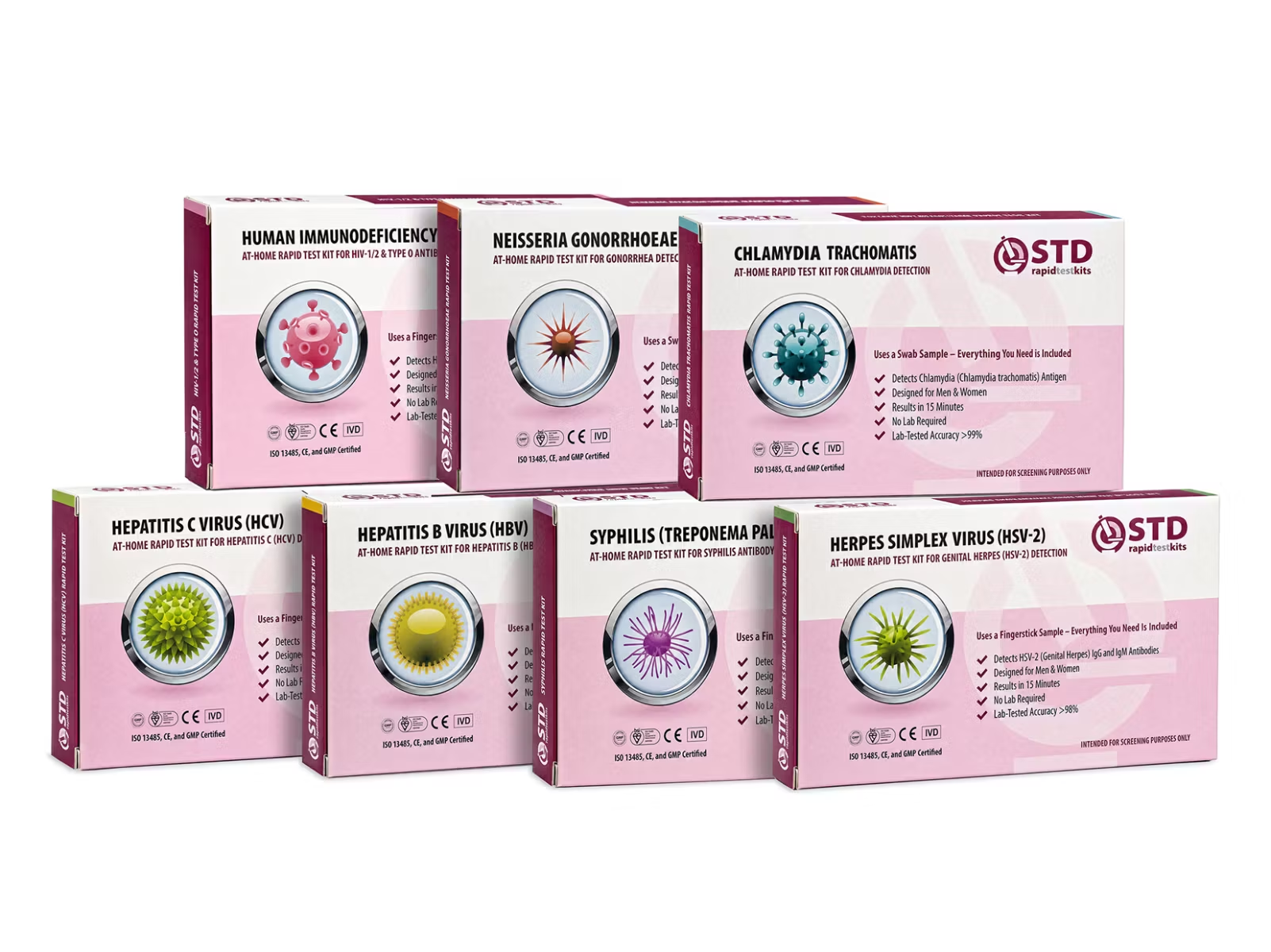
This site, stdrapidtestkits.com, sells the at-home STI test kits referenced in this article. Product recommendations are based on fit for the reader's concern, not on commercial benefit alone.
Why your provider did not run a full STI panel automatically
For most adults, STI screening is not bundled into the annual exam by default. The USPSTF recommends routine chlamydia and gonorrhea screening for sexually active women under 25 and for older women at increased risk (CDC: getting tested for STIs). HIV screening is recommended at least once for everyone aged 15 to 65. Syphilis screening is recommended for pregnant patients and others at increased risk. Beyond those baseline recommendations, additional STI testing is risk-based, not universal.
In practice, that means a clinician taking a short history at a busy visit may not order any STI tests unless the patient mentions a new partner, recent unprotected sex, symptoms, or a known exposure. Insurance coverage varies. Some plans only cover STI testing when an ICD-10 diagnosis or symptom code is attached. Some practice settings, especially primary care offices and women's health clinics with tight schedules, treat the annual Pap as the visit's main task and leave broader screening for a follow-up.
None of this is malpractice. It is the default behavior of a system that screens based on stated risk, not on universal assumption. The gap shows up most often for patients in long-term partnerships who do not bring up new exposures, for patients over 25 who are not asked the right questions, and for patients whose providers feel awkward asking. Queer patients, patients of color, sex workers, and patients who have been dismissed or misgendered during prior care also experience this gap at higher rates. The cleanest correction is to bring up testing yourself: “I would also like to be screened for the most common STIs today, even though I do not have symptoms.”

How to find out what was actually tested at your last visit
If you are not sure whether your last visit included STI testing, you do not have to guess. Open your patient portal and look at the lab results section. STI panels show up as itemized line items, not as a single “panel” summary. If the only line item you see is “Pap smear,” “cervical cytology,” or “liquid-based cytology,” no STI tests were run. The presence of a pelvic exam in your visit note does not change this.
Call the office if you cannot find lab results and ask directly: “Was a chlamydia and gonorrhea NAAT ordered at my last visit, and were HIV and syphilis blood tests run?” The answer will be unambiguous.
If the answer is no and you want to test, you have two viable paths. The first is to schedule a brief follow-up specifically for STI screening; most clinics will accept this as a same-day add-on once requested. The second is to use an at-home rapid test or mail-in NAAT panel between visits. Each route has trade-offs, and the right answer depends on how urgently you want results, how comfortable you are returning to the same clinic, and whether you want results in 15 minutes or in several days.
Lab line items to look for in your portal
- Chlamydia trachomatis, NAAT
- Neisseria gonorrhoeae, NAAT
- HIV-1/2 antigen/antibody combo (sometimes listed as HIV Ag/Ab)
- RPR or rapid plasma reagin (the standard syphilis screen)
- Trichomonas vaginalis, NAAT
- HPV DNA, high-risk (only if co-testing was ordered)
When to retest after a normal Pap
If you have had unprotected sex with a new partner, or your partner has just told you they tested positive, the relevant question is not “should I retest” but “when.” Each STI has a window period: the time between exposure and when a test can reliably detect the infection. Testing earlier than the window can produce a false negative, which is why a Pap done in the days right after a new exposure tells you almost nothing about infections from that exposure.
Chlamydia and gonorrhea NAAT typically become reliable about 1 to 2 weeks after exposure. Trichomoniasis NAAT is similar. Syphilis blood tests (RPR or treponemal IgG) reliably detect infection from about 3 to 6 weeks after exposure, sometimes longer. HIV detection depends on the test format: fourth-generation antigen/antibody combination tests detect infection from roughly 18 to 45 days, while antibody-only rapid tests need closer to 23 to 90 days. For HSV-2, type-specific antibody tests can yield false negatives in early infection; CDC's STI treatment guidelines recommend repeating type-specific antibody testing 12 weeks after the presumed time of acquisition for confirmation (CDC STI treatment guidelines: genital herpes).
Several triggers should prompt a retest regardless of when your last Pap happened: a partner's positive result, any new symptoms (unusual discharge, intermenstrual bleeding, painful sex, painful urination, genital sores or lesions), starting a new relationship, or ending one. None of these require a clinic appointment to act on if at-home testing is the better fit for your situation.
| Time since exposure | Recommended action | Why it matters |
|---|---|---|
| 0 to 7 days | Wait before testing, unless symptoms are severe | Most tests are too early to be reliable; false negatives are common |
| 1 to 2 weeks | Test chlamydia, gonorrhea, trichomoniasis (NAAT or rapid swab) | Detection of these infections becomes reliable in this window |
| 18 to 45 days | Test HIV with a fourth-generation antigen/antibody combo | p24 antigen plus early antibodies reach detectable levels in this window |
| 3 to 6 weeks | Test syphilis (RPR or treponemal IgG) | Antibody markers become detectable; some cases need slightly longer |
| Up to 12 weeks | HSV-2 type-specific antibody confirmatory retest if a herpes screen is on your panel | CDC guidance recommends a repeat type-specific antibody test 12 weeks after presumed acquisition to rule out false negatives from early infection |
What at-home rapid testing covers, and how to read the results
At-home rapid STI tests use lateral-flow chemistry, the same technology behind home pregnancy tests and Covid-19 antigen tests. A self-collected swab (for chlamydia, gonorrhea, trichomoniasis, or HPV) or a fingerstick blood drop (for HIV, syphilis, hepatitis B, hepatitis C, HSV-1, or HSV-2) goes onto a cassette, and a result line appears within roughly 15 to 20 minutes. The advantages are real: privacy, no lab visit, no insurance code, results in minutes instead of days.
Lateral-flow rapid tests are not identical to laboratory NAAT in analytical sensitivity. Lab NAAT, which amplifies tiny amounts of pathogen genetic material, remains the gold standard for confirming chlamydia and gonorrhea. Rapid tests are useful screening tools, especially for patients who would otherwise delay testing for weeks, and a positive rapid result is meaningful and worth confirming with a lab NAAT when access is available. A negative rapid result inside the correct window period is reassuring but not absolute; if symptoms persist or exposure was very recent, a follow-up at a clinic is the right next step.
Window timing matters just as much. A rapid test does not change the biology of when an infection is detectable. A chlamydia rapid done 3 days after exposure can be falsely negative for the same reason a lab NAAT done that early would be. Match the test to where you are in the window, not the other way around. Read the kit instructions carefully, particularly the lines about when after exposure the result becomes reliable.
For most readers of this article, the practical workflow is straightforward: confirm what was actually tested at your last visit, identify the gap, choose a rapid or NAAT-based panel that covers the infections relevant to your exposures, test inside the correct window, and confirm any positive with a clinical lab. None of that requires repeating the Pap. It answered the question it was built for; the infections being tested now belong to a different protocol.
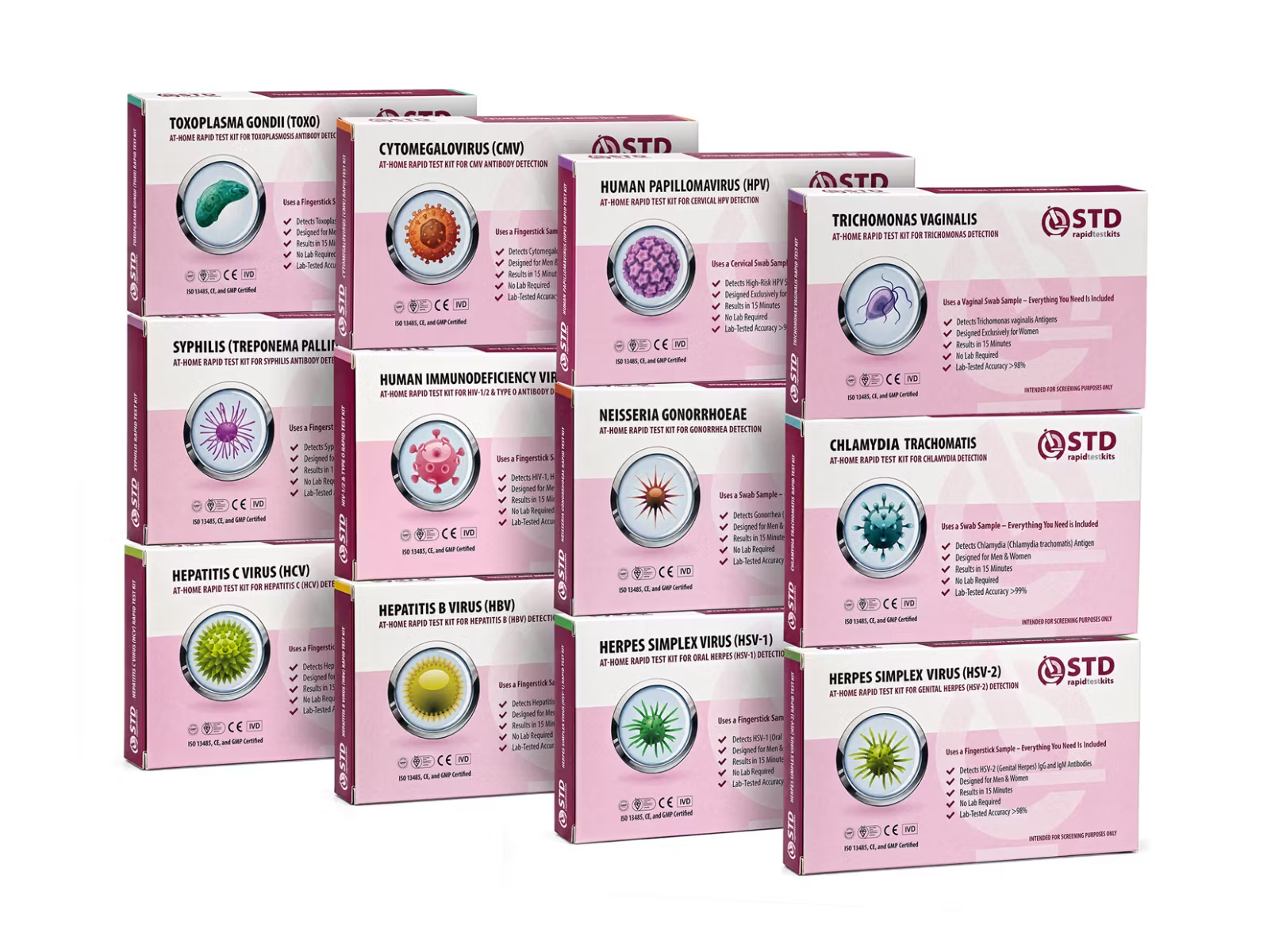
Asymptomatic infection is common among both men and women. Annual screening of all sexually active women aged under 25 years is recommended.
FAQs
- Does a Pap smear test for any STIs at all?
- A Pap smear screens for abnormal cervical cells, which are most often caused by HPV, so it can indirectly flag HPV-related cell changes. It does not test for chlamydia, gonorrhea, trichomoniasis, HIV, syphilis, or herpes. Unless your provider added an HPV co-test or a separate STI panel, you were screened only for cervical cancer risk.
- My Pap was normal but I just tested positive on an at-home STI test. Did the lab make a mistake?
- Probably not. The Pap and the STI test answer different questions. The Pap looked at cervical cell structure, which can look normal even when an active infection is present in the cervix. Your positive at-home result, if symptoms or a recent exposure also apply, points to an infection that the Pap was never designed to detect. Confirm a positive rapid result with a lab NAAT if you can, then treat.
- Can chlamydia or gonorrhea really sit in the cervix without symptoms?
- Yes. The CDC's STI treatment guidelines describe asymptomatic chlamydia infection as common in both men and women, and a large share of cervical gonorrhea infections are also silent. The cervix has fewer pain-sensing nerve endings than other parts of the genital tract, so infections there can persist without obvious signs. Untreated infections can ascend and cause pelvic inflammatory disease, which raises the risk of infertility and ectopic pregnancy.
- How do I ask my provider for a full STI panel without it being awkward?
- Direct works best. “I would also like to be screened for the most common STIs today, even though I do not have symptoms.” If you want specifics: “Please run chlamydia and gonorrhea NAAT, HIV, syphilis, and trichomoniasis.” Most clinicians appreciate a patient who asks plainly. If you get pushback or judgment, that is a signal about the clinic, not about your request.
- How soon after a new exposure can I test?
- Different infections have different window periods. Chlamydia and gonorrhea NAAT become reliable around 1 to 2 weeks. Fourth-generation HIV antigen/antibody tests detect infection from roughly 18 to 45 days. Syphilis blood tests work from about 3 to 6 weeks. For HSV-2, CDC's STI treatment guidelines recommend a confirmatory type-specific antibody retest 12 weeks after the presumed exposure to rule out false negatives from early infection. Testing inside the wrong window can return a false negative even when an infection is present.
- Can I use an at-home rapid test instead of going back to the doctor?
- Yes, with caveats. At-home lateral-flow rapid tests are real screening tools and useful when getting back to a clinic is hard. They are not identical to laboratory NAAT in analytical sensitivity, so a positive rapid result is best confirmed with a lab NAAT, and a negative result inside the correct window is reassuring but not absolute. If symptoms persist after a negative rapid, follow up with a clinic.
- My partner tested positive and I had a normal Pap two weeks ago. What now?
- Test for the specific infection your partner had, using the right test at the right time. A normal Pap from two weeks ago does not address chlamydia, gonorrhea, or any other STI. If your partner had chlamydia or gonorrhea, an at-home rapid swab or a clinic NAAT from this week onward is reliable. If they had HIV, a fourth-generation test from about 18 days post-exposure forward; for syphilis, wait 3 to 6 weeks.
- How often should I get STI tested if I am sexually active and have a cervix?
- USPSTF recommends annual chlamydia and gonorrhea screening for sexually active women under 25, and risk-based screening above that age. HIV screening at least once for everyone aged 15 to 65, and more often if at increased risk. After a new partner, after a breakup, or after any concerning symptom is also a sensible trigger. The Pap schedule (every 3 or 5 years depending on the protocol) does not replace any of this.
How we sourced this article: We synthesized current guidance from the CDC's STI treatment guidelines (chlamydia, trichomoniasis, and genital herpes sections), the CDC's cervical cancer and STI testing landing pages, the National Cancer Institute, the Mayo Clinic, NIH MedlinePlus, and the U.S. Office on Women's Health. The structure and framing were shaped around the questions readers ask in the days after a “normal” Pap, drawn from search-intent patterns and public health outreach materials.
- U.S. Centers for Disease Control and Prevention. Screening for cervical cancer, including current Pap and HPV co-testing intervals for adults.
- U.S. Centers for Disease Control and Prevention. Getting tested for STIs, including who should be screened and at what intervals.
- U.S. Centers for Disease Control and Prevention. STI treatment guidelines, chlamydial infections, including the asymptomatic-infection statement and the annual-screening recommendation for sexually active women under 25.
- U.S. Centers for Disease Control and Prevention. STI treatment guidelines, trichomoniasis, including the 70 to 85 percent asymptomatic figure and the yellow-green or malodorous discharge description.
- U.S. Centers for Disease Control and Prevention. STI treatment guidelines, genital herpes, including the 12-week confirmatory type-specific antibody retest recommendation for suspected recent HSV-2 acquisition.
- National Cancer Institute. Cervical cancer screening, including what a Pap test detects and how it differs from HPV testing.
- Mayo Clinic. Pap smear overview, including procedure description and the Bethesda reporting categories (ASC-US, LSIL, HSIL, AGC).
- U.S. Office on Women's Health. Pap and HPV tests, including who should get co-testing and at what age.
