I Got a Faint Line on My HIV Test, Then a Negative Later
Why a faint line on an HIV rapid test is not the diagnosis.
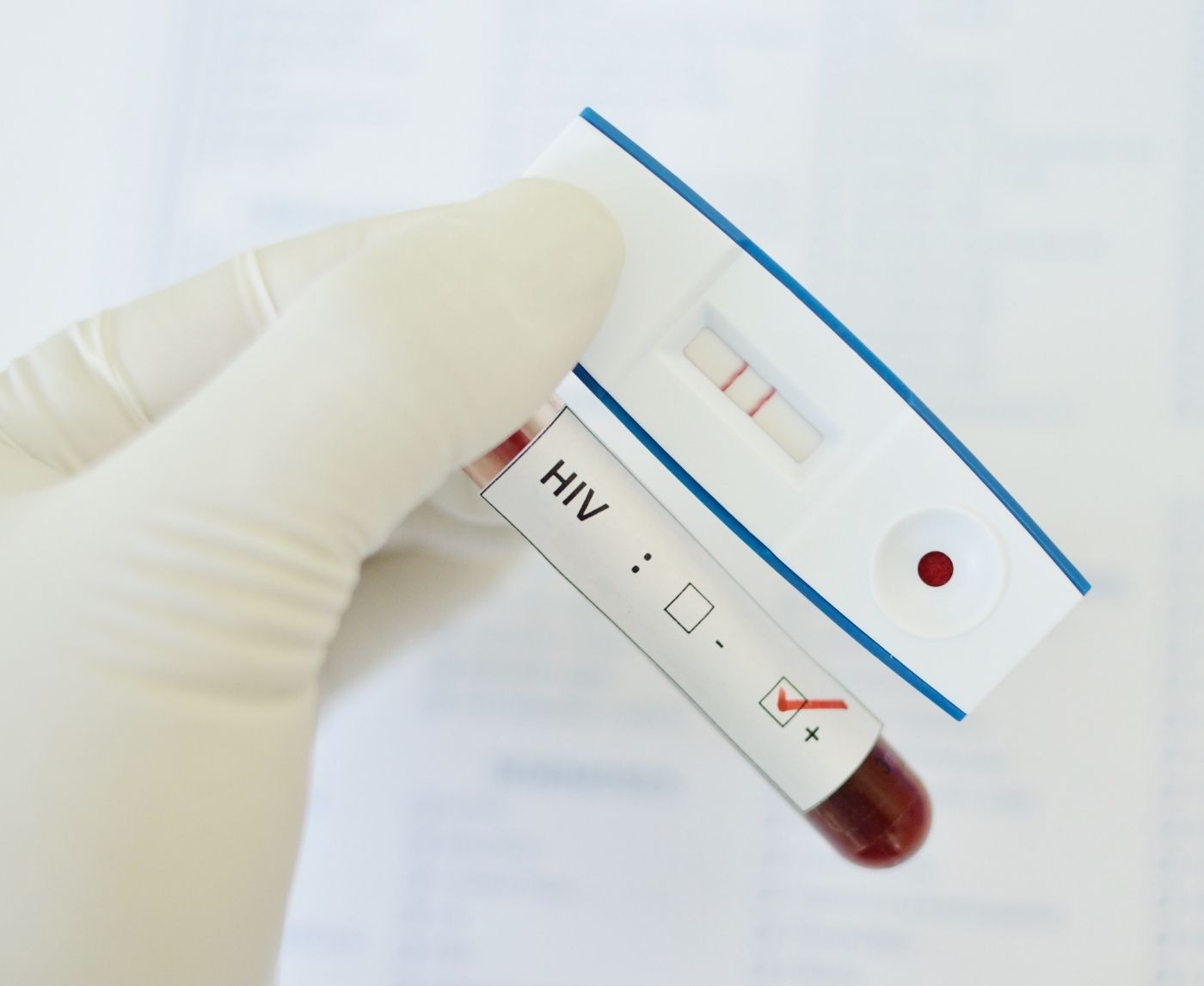



- Any visible second line on an HIV rapid test, even faint, is treated as reactive. A confirmatory test from a clinic or lab is the only way to know what the line truly means.
- Antibody-based rapid tests typically need 23 to 90 days after exposure to be reliable. A confusing or faint result inside that window usually clears up with a properly timed follow-up test.
Published: December 2025 | Last updated: May 2026 | Editorial review and quality control: Martina N.
A faint second line on an HIV rapid test rarely means what your stomach tells you in the first ten seconds. The strength of the line is not a measure of how positive a result is. It is a snapshot of how the cassette chemistry reacted in one moment, with one drop of fluid, in one set of conditions. That snapshot can reflect a real reactive result, an immune response caught early, an evaporation line, or a buffer-flow quirk.
This guide walks through what a faint line can and cannot tell you, why a follow-up test often comes back clean, and what the next reliable step is. The numbers and timelines below are drawn from current CDC and HIV.gov guidance, not from forum threads or kit-box anxiety.
What a Faint Line on an HIV Rapid Test Actually Shows
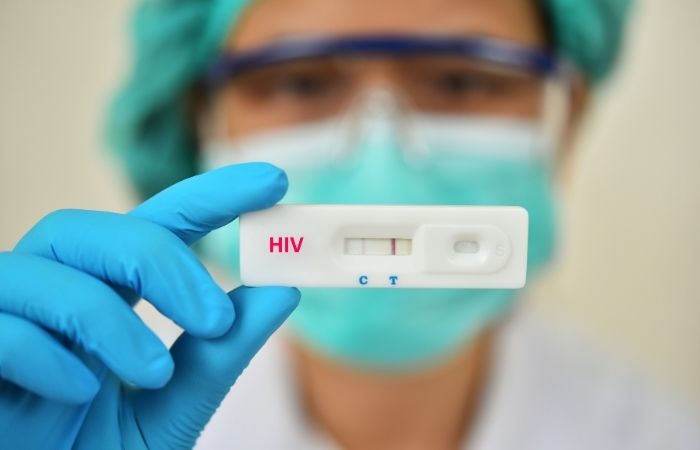
Rapid HIV tests are lateral-flow immunoassays. A drop of blood or oral fluid mixes with a buffer and travels along a paper strip coated with antibodies that bind to HIV proteins. If your sample carries enough HIV antibodies (or, on combination tests, the p24 antigen), they get caught at a specific spot on the strip and a colored line appears. A control line further along confirms the test ran correctly.
The intensity of the test line depends on how much antibody or antigen the cassette captured: a strong response produces a dark line, a weak response produces a light one. According to the CDC's testing guidance, any visible test line, faint or dark, is read as reactive; no test line is non-reactive. The strength of the line is not a measure of how advanced or how severe an infection is. It indicates whether the chemistry on the strip met the threshold to react.
A faint line therefore carries the same warning weight as a dark one: both are read as reactive, and both need confirmatory testing before anyone treats the result as a diagnosis. The most common causes of a faint line are summarized below; identifying the likely cause shapes the next step more than the line's intensity does.
| Possible Cause | What It Suggests | Recommended Next Step |
|---|---|---|
| Low antibody levels | Very early infection, or a weakened immune response from medication or another condition | Retest 28 days after exposure with a lab antigen/antibody combo test |
| Buffer or sample-volume error | Too much or too little fluid can produce a faint or smeared line that mimics a reactive result | Use a fresh kit, follow the timing and volume steps exactly, then read inside the window |
| Expired or poorly stored kit | Heat, humidity, or age can degrade the chemistry and create false lines | Discard and use a kit stored as the instructions specify, within its printed expiration date |
| Reading after the time window | Background staining and evaporation can create a faint line after the read time | Only trust the result during the window stated on the kit, usually 15 to 20 minutes |
| True weak reactive result | HIV antibodies are present at a level near the test's detection threshold | Confirm with a different test type, ideally a lab antigen/antibody combo or NAAT |
What does a faint line on an HIV rapid test mean?
Any visible second line within the test's read window (usually 15 to 20 minutes) is treated as reactive, even a faint one. The intensity of the line is not a measure of severity; it reflects how much antibody or antigen the cassette captured. A faint reactive result needs a confirmatory test from a clinic or lab. The most common causes are timing (the test was taken inside the window period before antibodies were established) or a kit or buffer issue, and a properly timed follow-up usually clears it up.
When Timing Changes What a Faint Line Means
HIV does not produce a positive test the day after exposure. Antibodies and viral proteins take time to reach detectable levels in blood or oral fluid, and the period before that happens is called the window period. A faint line inside the window period is the most common source of confusion in self-testing.
The CDC's testing guidance sets out three timing brackets that apply to different test technologies. Rapid antibody self-tests (the kind sold for home use) need the longest wait. Lab antigen/antibody combination tests can detect HIV earlier because they also pick up the p24 antigen, which appears before antibodies. Nucleic acid amplification tests (NAAT/PCR) detect viral RNA itself and can be reliable even sooner, though they are typically reserved for situations where very early detection matters, such as a known exposure to a partner with a high viral load.
The practical takeaway is that a faint line at day 10 carries different weight than a faint line at day 60. The earlier the test, the more likely a faint or ambiguous result reflects a timing artifact rather than a true reactive result. The standard reliable detection windows are below.
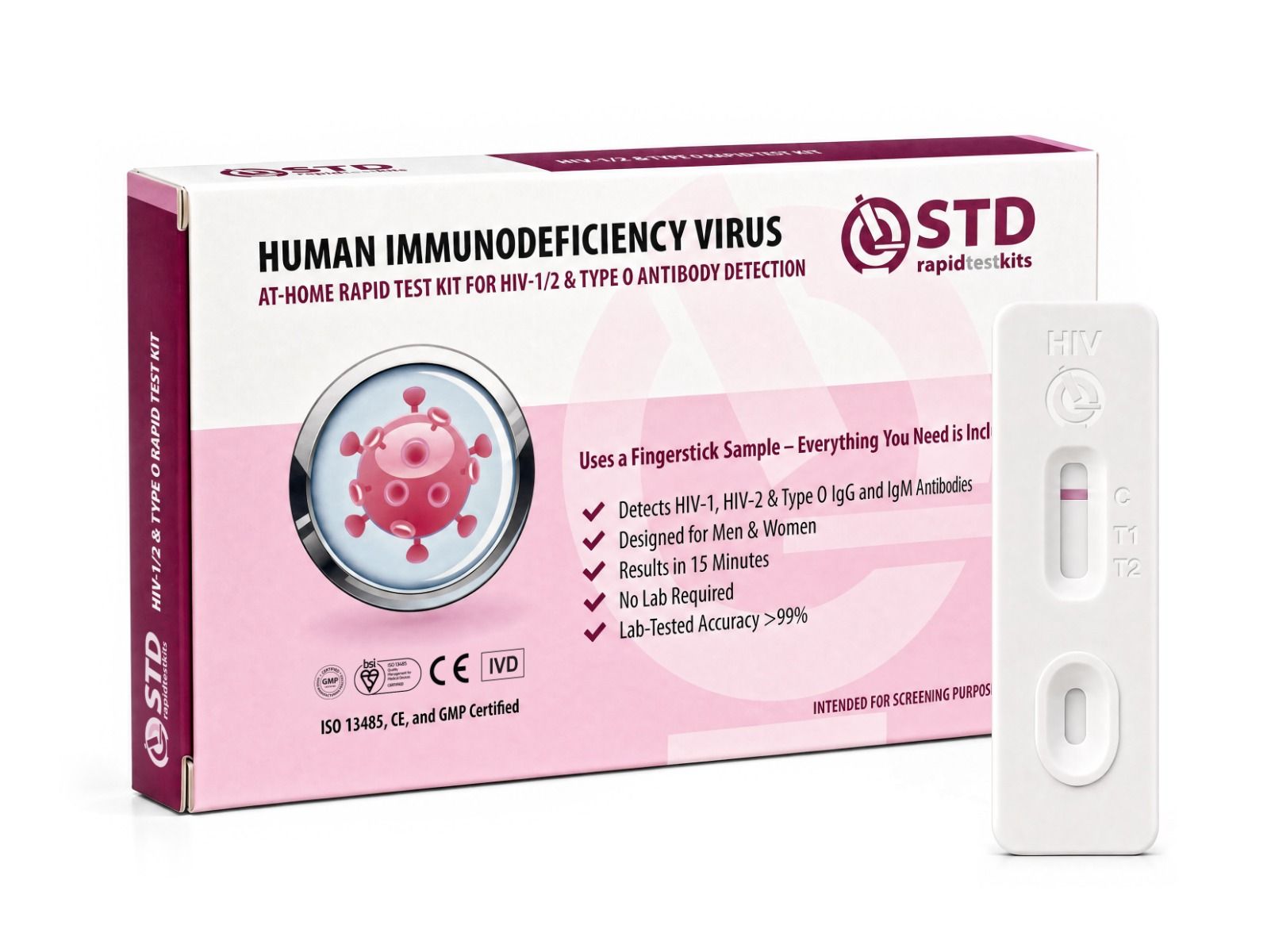
Note: this site sells rapid HIV home tests. The product below is one option if you are planning to retest at home.
| Test Type | What It Detects | Reliable Detection Window |
|---|---|---|
| Rapid antibody self-test (blood or oral fluid) | HIV-1 and HIV-2 antibodies | 23 to 90 days after exposure |
| Lab antigen/antibody combination (4th generation) | p24 antigen plus HIV antibodies | 18 to 45 days after exposure |
| Nucleic acid test (NAAT/PCR) | HIV viral RNA | 10 to 33 days after exposure |
Can a Faint Line Be a False Positive?
Yes, and this is where most of the confusion in online forums lives. A false positive happens when the test reads as reactive even though HIV antibodies are not present. No rapid test is perfectly specific, and a small percentage of reactive results in any population will turn out to be false positives once confirmatory testing is run. This is the reason CDC and WHO require any reactive rapid result to be followed up with a different test method before a diagnosis is made.
The conditions that most commonly produce a false-positive or weakly reactive line on an HIV rapid test fall into a few categories. Certain autoimmune conditions, including lupus and rheumatoid arthritis, can produce antibodies that cross-react with the test chemistry. Recent vaccinations, such as flu shots and COVID-19 boosters, can temporarily generate antibodies that confuse some rapid assays. Pregnancy and certain chronic infections can also nudge the chemistry. None of these mean a faint line should be ignored, but they explain why the second test, the one run with different chemistry in a lab, is what counts.
People on PrEP occasionally receive reactive results on some HIV rapid tests. PrEP medications (tenofovir and emtricitabine) do not contain HIV protein, so the mechanism is different from typical antibody cross-reactivity. It is not fully understood and appears uncommon in practice. If you are on PrEP and get a faint or reactive result, tell your provider; the standard response is to run a NAAT (viral RNA test) to rule out actual infection, since NAAT detects the virus itself rather than antibodies. The i-Base testing guide covers false-positive rates and the confirmatory testing process in plain language.
If you get a faint or reactive result, let the clinic know about any of the following before confirmatory testing. They can shape which assay is used and how the result is interpreted:
- Autoimmune conditions such as lupus or rheumatoid arthritis
- Recent vaccinations within the past few weeks (flu shots, COVID-19 boosters, others)
- Current pregnancy
- Chronic infections, including viral hepatitis
- Use of PrEP or PEP
When the Second Test Comes Back Negative
One of the most common sequences in HIV self-testing goes like this: a first rapid test, taken inside the window period, shows a faint and ambiguous line. A second rapid test, taken a few days later, shows a clear single line. A lab test a week or two after that confirms negative. Many people then ask, reasonably, what the first faint line really was.
Three explanations cover most of these cases. First, the first test may have caught the immune system at a moment when antibody levels were near (but not above) the detection threshold, and the second test simply did not pick anything up because the threshold was not crossed. Second, the first test may have produced an evaporation or background line that did not reflect any real binding on the strip. Third, the kit itself may have been out of specification: expired chemistry, heat exposure during shipping, or humidity can all distort how the cassette reads.
For practical purposes, when a lab confirmatory test taken after the full window period (90 days post-exposure for antibody-based methods, 45 days for a 4th-generation combo) comes back negative, that is the answer. A true positive becoming a true negative without antiretroviral therapy does not happen at meaningful frequency in HIV diagnosis. The first faint line is best understood as noise, not as a result that was later reversed.
User Error That Can Make a Faint Line Appear
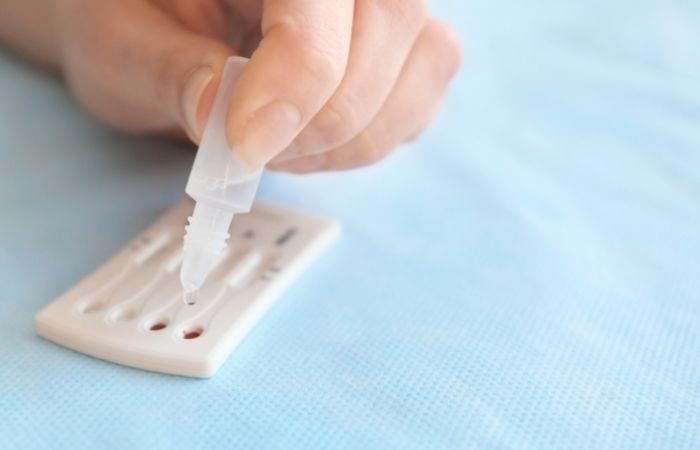
Rapid tests are sensitive to how they are run. The instructions are dense, the steps are timed in seconds rather than minutes, and most people are testing in conditions that are not exactly laboratory-grade. The most common errors that affect interpretation involve buffer-volume mistakes, sample-handling problems, and reading the result outside the window.
Reading too early is rarer than reading too late, but both happen. The 15-to-20-minute read window exists because the chemistry needs time to develop and the test starts drying out beyond that point. Lines that appear at 30 or 45 minutes are usually evaporation artifacts, not reactive results. Photographing the test at the correct time and then setting it aside removes the temptation to keep re-reading it under different lighting.
Environment matters too. A kit that has spent a humid summer in a bathroom cabinet, a kit left in a hot car for an afternoon, or a kit past its printed expiration date can all produce faint or invalid results. Storing kits in their original sealed packaging, at room temperature, away from steam and direct sunlight, is what manufacturers specify and what produces consistent results. The table below summarizes where user error most commonly creeps in by test format.
| Test Format | Common User Errors | Effect on Result |
|---|---|---|
| Blood-cassette rapid test | Wrong buffer volume, expired kit, reading after the window | Can create false faint lines or invalid (no control line) results |
| Oral fluid swab test | Eating or drinking before swabbing, brushing teeth shortly before testing, incomplete swab of the gum line | Lowers sensitivity, raises the chance of a false-negative read |
| Fingerstick rapid test | Inadequate fingerstick volume, drop not fully transferred to the cassette | Test fails to flow, or partial development produces an unreadable result |
When a Faint Line Really Is HIV
Sometimes the faint line is the real thing. This is more likely when the test is taken well past the four-week mark after exposure (and ideally inside the reliable detection window of 23 to 90 days for an antibody rapid test, or 18 to 45 days for a 4th-generation combo), and when the faint line appears within the read time and persists on a second test taken a day or two later. In those situations, the intensity of the line is not a reflection of how high the viral load is or how advanced the infection is. It reflects how much antibody or antigen the test chemistry captured at that moment.
WHO's testing strategy guidelines treat any reactive rapid result, faint or strong, as a trigger for confirmatory testing using a different assay. The reasoning is straightforward: rapid tests are screening tools, not diagnostic ones. Their job is to flag samples that need a second look. A faint reactive result is the chemistry doing exactly what it was designed to do, even if the visual signal is subtle.
The wrong response to a faint line is to dismiss it because it does not look convincing. The right response is to confirm. Early diagnosis matters: starting antiretroviral therapy quickly produces dramatically better long-term outcomes and reduces the risk of onward transmission to effectively zero once viral load is suppressed.
The CDC specifies that any positive (reactive) result on an antibody-based HIV test requires a follow-up confirmatory test before a diagnosis is made. The same applies to rapid self-tests: a reactive result is a screening flag, not a final answer. Source: <a href="https://www.cdc.gov/hiv/testing/" target="_blank" rel="noopener">CDC, HIV testing guidance</a>.
What to Do Next If You Saw a Faint Line
The first step after a faint or ambiguous result is to confirm whether the line appeared within the test's read window. If it showed up between roughly 15 and 20 minutes of starting the test (the exact range depends on the brand), treat it as reactive and plan a confirmatory test. If it appeared 30 minutes or an hour later, it is almost certainly an evaporation line and should be disregarded.
The second step is to check the timing of your exposure. If you tested within the first three weeks after a possible exposure, you are inside the window period for almost every rapid test on the market, and an ambiguous result is most often a timing artifact. Plan a retest at day 28 for a 4th-generation lab combo test, or at day 90 for a rapid antibody self-test. A NAAT or PCR test can be used as early as day 10 if a clinic offers it and the situation warrants the cost.
The third step is the confirmatory test itself. In the United States, free or low-cost HIV testing is available at most state health-department clinics and many community organizations; HIV.gov maintains a testing-site locator. Mail-in lab tests are another option for people who prefer to handle the process from home. Whatever route is more accessible, the goal is the same: a second test, run with different chemistry, that gives a clear answer.
Why Retesting Matters More Than the Strength of the Line
Retesting is not a sign that the first test was a failure. It is how rapid testing is designed to work. The screening test flags a sample; the confirmatory test answers the question. Both halves of that process are necessary to produce a reliable diagnosis, and skipping the second half is what leaves people stuck in limbo.
For people who tested inside the window period, the second test serves a second purpose: it gives the immune system time to either produce detectable antibodies or to demonstrate that no infection is being mounted. The CDC's testing guidance identifies day 28 (for combination antigen/antibody tests) and day 90 (for antibody-only rapid tests) as the windows after which a negative result can be treated as conclusive for a single past exposure.
If new exposures occur during the waiting period, the clock resets to that newest exposure date. This is the part most people miss in the anxiety of a faint result: the calendar matters more than the test brand. A negative on day 12 followed by a faint line on day 28 followed by a negative on day 45 is not three contradictory results; it is one timeline showing the immune system catching up and then settling.

If Confirmation Comes Back Positive
A confirmed positive HIV result is a different situation than the limbo of a faint line, and it deserves its own response. The headline, which often gets lost in the shock of the moment, is that HIV in 2026 is a manageable chronic condition for people with access to antiretroviral therapy. People diagnosed today and started on treatment have life expectancies that closely track the general population, and once viral load is suppressed below detectable levels (usually within a few months of starting therapy), they cannot transmit HIV to sexual partners. That is the basis of the U=U message: undetectable equals untransmittable.
The standard next steps after a confirmed positive are a baseline lab workup (CD4 count, viral load, resistance testing), linkage to an HIV-specialist provider, and initiation of antiretroviral therapy. Most current regimens are one pill once a day with manageable side-effect profiles. Insurance coverage for HIV care is broad in the United States; uninsured patients can access the Ryan White HIV/AIDS Program, which fills the gap for treatment and ancillary services regardless of immigration status in most jurisdictions.
The emotional reaction to a confirmed diagnosis varies. Shock, grief, numbness, anger, and even relief (for people who had suspected something for a long time) all show up. Support is part of the standard of care: most HIV clinics integrate counseling and peer-support resources alongside medical treatment, and community organizations linked through HIV.gov can connect people to local services.
- Baseline lab workup: CD4 count, HIV viral load, and resistance testing to guide treatment choice.
- Linkage to an HIV-specialist provider. Primary-care doctors can refer; state health departments can also connect you directly.
- Initiation of antiretroviral therapy (ART). Most current regimens are one pill once a day.
- Access support resources through <a href="https://www.hiv.gov/" target="_blank" rel="noopener">HIV.gov</a> and the Ryan White HIV/AIDS Program for uninsured care, counseling, and peer support.
You Deserve Answers, Not Assumptions
A faint line on an HIV rapid test is a moment of uncertainty rather than a verdict. The chemistry that produced it may be answering a real question (your immune system is responding to an exposure), answering the wrong question (a cross-reactive condition or a kit error), or producing noise. The strength of the line itself does not tell you which.
What tells you is a confirmatory test, taken at the right point in the window period, run with different chemistry. That sequence (rapid screen, confirmatory follow-up) is how every public-health system around the world handles HIV testing, because it is the combination that produces reliable answers without missing real infections.
If you are in the waiting zone between a faint line and a confirmation, the move is to plan the next test. Re-reading the original cassette under different lighting will not produce an answer.
FAQs
- Does any faint line on an HIV rapid test mean I have HIV?
- No. A faint line within the read window means the test is reactive and needs follow-up confirmation, not that HIV is confirmed. Rapid tests are screening tools; a confirmatory test from a clinic or lab is what produces a diagnosis. A meaningful portion of faint reactive results turn out to be timing artifacts, cross-reactive false positives, or kit issues rather than HIV.
- My first test had a faint line and my second was clearly negative. Which one should I trust?
- When the second test is run later in the window period and the result is clearly negative, that is almost always the more reliable answer. Lab confirmatory testing after the full window (90 days for an antibody rapid test, 45 days for a 4th-generation combo) is what produces the final answer. A faint line followed by a clear negative most often reflects a timing artifact or kit issue on the first test.
- Can PrEP cause a faint line on an HIV antibody test?
- It can, occasionally. PrEP medications (tenofovir and emtricitabine) do not contain HIV protein, so the mechanism is different from typical antibody cross-reactivity and is not fully understood. The effect appears uncommon in practice. If you are on PrEP and get a faint or reactive result, tell your provider; they will typically run a NAAT (viral RNA test) to confirm, since NAAT detects the virus itself rather than antibodies.
- I read my test after 30 minutes and saw a faint line. Does that count?
- No. Rapid HIV tests have a defined read window, usually 15 to 20 minutes depending on the brand. Lines that appear after that window are typically evaporation artifacts as the chemistry dries, not reactive results. The instructions are specific about this for a reason; reading late is one of the most common sources of false alarm.
- Can stress, illness, or a recent vaccine cause a false-positive HIV test?
- Everyday stress and routine illness do not cause false positives. Recent vaccinations (including flu shots and COVID-19 boosters) and certain autoimmune conditions can occasionally produce cross-reactive antibodies that show up on a rapid screen. These are uncommon causes and they explain why the confirmatory test always uses a different assay; the second method does not share the same cross-reactivity.
- My faint line looked real, then faded. What happened?
- After the read window closes, the cassette starts drying out and the chemistry continues to react in unpredictable ways. A line that appeared faint within the window and faded later (or appeared after the window and faded) is consistent with normal post-read drift. Trust what you saw inside the time window stated on the kit, and retest if you are unsure.
- When should I retest after a confusing result?
- For a single past exposure, day 28 is the standard retest mark for a 4th-generation antigen/antibody combo lab test, and day 90 is the conclusive mark for an antibody-only rapid test. If a new exposure occurs, the clock starts over from that newest date. NAAT (viral RNA) testing can be used as early as day 10 if a clinic offers it.
- Where can I get confirmatory testing if I do not want to go to my regular doctor?
- HIV.gov maintains a testing-site locator that includes free and low-cost options at state health departments, community clinics, and Planned Parenthood. Mail-in lab tests are another route. Both produce results that meet clinical confirmatory standards. Our 7-in-1 home test kit covers HIV and six other infections at home for situations where the exposure raises questions about more than just HIV.
How We Sourced This Article: This article was built from current guidance published by leading public-health organisations (CDC, WHO, HIV.gov) and from the i-Base HIV treatment guide, then translated into plain language tied to the questions readers most commonly bring to home HIV testing. The text was reviewed by a licensed medical doctor before publication.
- U.S. Centers for Disease Control and Prevention. HIV testing overview, including window periods and confirmatory protocols for rapid antibody, antigen/antibody, and NAAT tests.
- HIV.gov. HIV testing overview, covering self-test interpretation, reactive versus non-reactive reads, and confirmatory follow-up.
- World Health Organization. HIV/AIDS fact sheet, including diagnostic strategy and the requirement that reactive screening results be confirmed by a second test.
- U.S. Centers for Disease Control and Prevention. HIV self-testing guidance, including read-window interpretation and follow-up steps after a reactive result.
- i-Base. HIV test accuracy, window periods, and follow-up testing. Plain-language summary of antibody, combination, and viral-load testing.