

Published: September 2025 | Last updated: April 2026 | Editorial review and quality control: Martina N.
A rash that looks like baby acne. A runny nose that does not clear. A baby who is not gaining weight the way the chart says she should. These are the symptoms parents most often describe at the moment a pediatrician first mentions the word syphilis. The reaction is almost always the same: shock, then a slow flood of guilt and confusion. "I tested negative," parents say. "How is this possible?"
The honest answer is that congenital syphilis often passes through screening systems that test pregnant patients once and never again. According to CDC guidance on congenital syphilis, nearly 4,000 cases were reported in the United States in 2024, the highest number recorded in a single year since 1994. Most affected infants were born to people who received some prenatal care but were not retested later in pregnancy. This guide covers what newborn symptoms actually look like, why one negative test is not always enough, and what you can do at any stage to protect your baby.
Can syphilis hurt a baby if the mother had no symptoms?
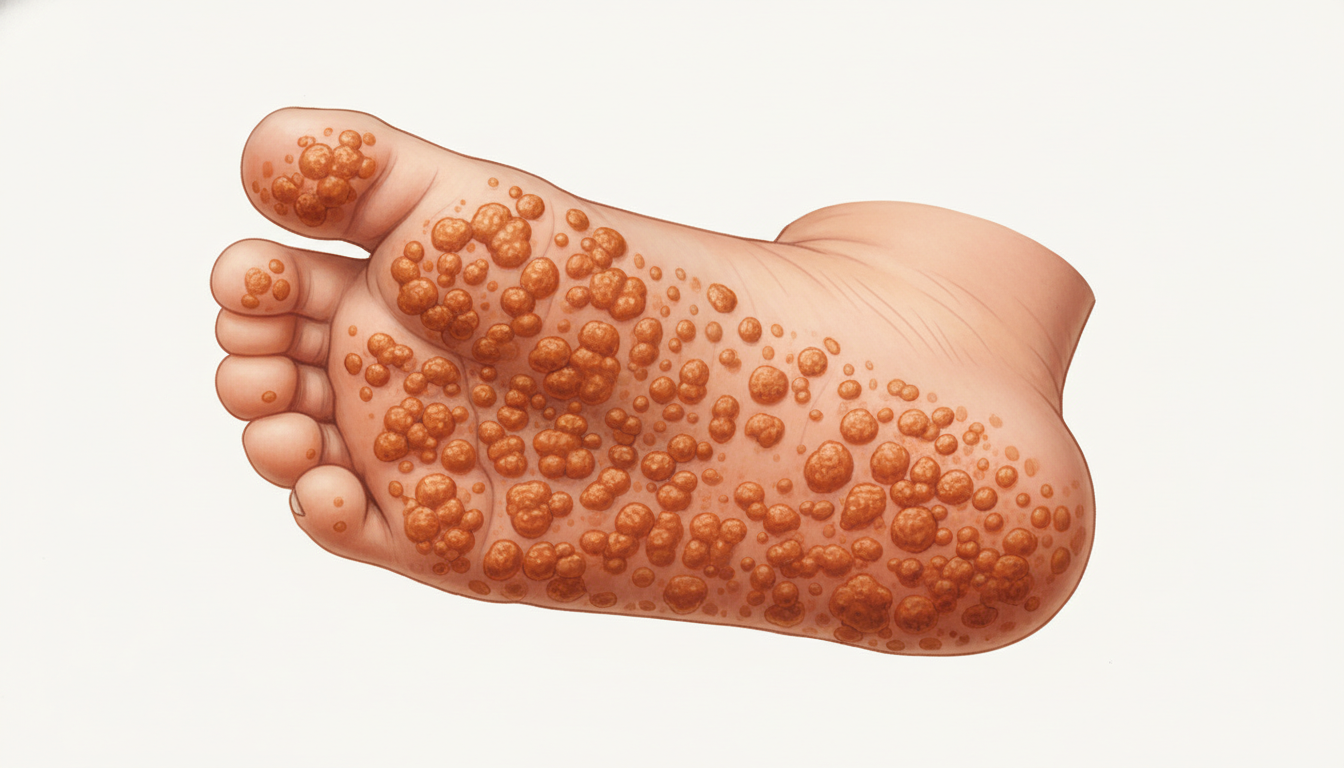
Yes. Congenital syphilis can develop in newborns even when the birthing parent had no visible sores, rash, or symptoms during pregnancy. The most common newborn signs are a copper-colored rash on the palms and soles, persistent thick or bloody nasal discharge, low birth weight, and an enlarged liver or spleen. Risk is highest when syphilis is contracted after the first-trimester screening and never picked up by a repeat test. Per CDC guidance, anyone in a high-prevalence area should be screened at the first prenatal visit, again at 28 weeks, and again at delivery.
Key Takeaways
- Nearly 4,000 U.S. congenital syphilis cases were reported in 2024, the highest annual total since 1994 (CDC).
- Most cases involve birthing parents who tested negative early in pregnancy but were never retested in the third trimester.
When Newborn Symptoms Get Mistaken for Something Else
Congenital syphilis is sometimes called a great imitator because its early signs look like minor illnesses every new parent has Googled at 3 a.m. A rash that spreads on the palms and soles can look like heat rash. Persistent yellow or pink-tinged nasal discharge, sometimes called snuffles, can be mistaken for a lingering cold. A baby who feeds poorly or refuses to move an arm can be misread as colicky or fussy. The deception is part of why early diagnosis is missed for weeks or months.
Per the CDC's congenital syphilis fact sheet, the most common newborn signs include:
- Rash on the palms and soles, often copper-colored or maculopapular (flat, slightly raised discolored spots), sometimes spreading to the face and body.
- Snuffles: thick, bloody, or persistent nasal discharge that does not clear like a cold.
- Low birth weight or failure to gain weight in the first weeks of life.
- Enlarged liver or spleen, sometimes accompanied by jaundice.
- Bone tenderness or refusal to move a limb (pseudoparalysis, where bone pain makes the baby avoid moving an arm or leg).
- In severe cases, seizures, limpness, or other signs of central nervous system involvement.
Some of these signs appear within the first weeks of life. Others can be delayed by months. According to the March of Dimes, up to 2 in 5 babies (40 percent) born to people with untreated syphilis die from the infection, and stillbirth or neonatal death is more likely without treatment. Early recognition of any of the signs above is the difference between a treatable infection and a long medical course.
Why First-Trimester Testing Is Not Always Enough
Most prenatal visits in the United States include a syphilis blood test in the first trimester. That test is reliable for what it measures: whether the parent has syphilis at the moment the blood is drawn. It cannot detect an infection that has not happened yet, and it can miss an infection that is too recent to have produced detectable antibodies.
That gap matters because new exposures during pregnancy do happen. A new partner. A partner whose own status changed. An infection acquired weeks earlier that had not yet seroconverted. The longer the gap between that one early test and delivery, the more room there is for a missed case.
The CDC's STI treatment guidelines recommend repeat syphilis screening at 28 weeks of pregnancy and again at delivery for people who live in high-prevalence areas, who are at increased risk, or whose partners are at risk. In practice, this guidance is unevenly implemented. Many state laws require only the first-trimester test, and many providers do not retest unless a patient asks. Researchers from UC Davis (Fang et al., 2022) examining California cases reported that congenital syphilis rates correlate more strongly with county-level female poverty, education, and uninsured rates than with whether the county is urban or rural.
The CDC's STI treatment guidelines recommend a syphilis test at the first prenatal visit, with repeat testing at 28 weeks and at delivery for anyone in a high-prevalence community, anyone whose partner is at increased risk, or anyone with a new sexual partner during pregnancy. If you are unsure whether you fall into one of these categories, ask your provider directly. The right answer is almost always a repeat test, not a wait-and-see.
The Numbers Behind the Resurgence
Congenital syphilis cases are at the highest level reported in three decades. The CDC's congenital syphilis statistics document nearly 4,000 reported cases in the United States in 2024, the largest single-year total since 1994 and a continued rise from prior years. CDC's broader STI Statistics surveillance hub tracks the year-by-year trend.
The picture is sharper at the state level. California has been a particular focus because of how dramatically its numbers have shifted. The California Department of Public Health reports cases rose from 104 in 2014 to 514 in 2023, an increase of nearly 400 percent. Counties that mix urban and rural populations, including Kern, Fresno, San Joaquin, and Los Angeles, have all reported elevated rates.
| Where | Most recent reported cases | Trend |
|---|---|---|
| United States, 2024 (CDC) | Nearly 4,000 cases | Highest annual total since 1994 |
| California, 2023 (CDPH) | 514 cases | Up from 104 in 2014, roughly 394 percent rise |
| Los Angeles County, 2023 | 126 cases | Higher than several rural California counties |
| Kern, Fresno, San Joaquin counties | Among highest county rates in the state | Driven by access gaps and inconsistent retesting |
Beyond Rural Communities: This Is Now Every Zip Code
For years, congenital syphilis was framed as a problem of remote, agricultural counties where prenatal care is hard to reach. That framing is outdated. Recent California data shows that congenital syphilis cases now appear in suburban and urban communities at rates similar to or higher than some rural areas.
The 2023 California numbers illustrate the shift. Los Angeles County reported 126 cases that year, with a rate per live birth higher than several of the state's rural counties. Counties that mix urban centers with surrounding agricultural land, including Kern, Fresno, and San Joaquin, also reported elevated rates. The Fang et al. UC Davis analysis identified concentrated poverty, limited prenatal coverage, and inconsistent retesting protocols as the strongest predictors of where cases cluster, regardless of whether the area is urban or rural. A pregnant person who attends one prenatal visit in the first trimester and never returns has the same exposure profile in a downtown apartment as on a remote farm.
In 2023, Los Angeles County reported 126 congenital syphilis cases (CDPH), more than several of California's predominantly rural counties combined. The state-level data shows the disease no longer concentrates by geography. It tracks healthcare access, prenatal coverage, and the rate of repeat testing in the third trimester.
How Syphilis Crosses From Parent to Baby
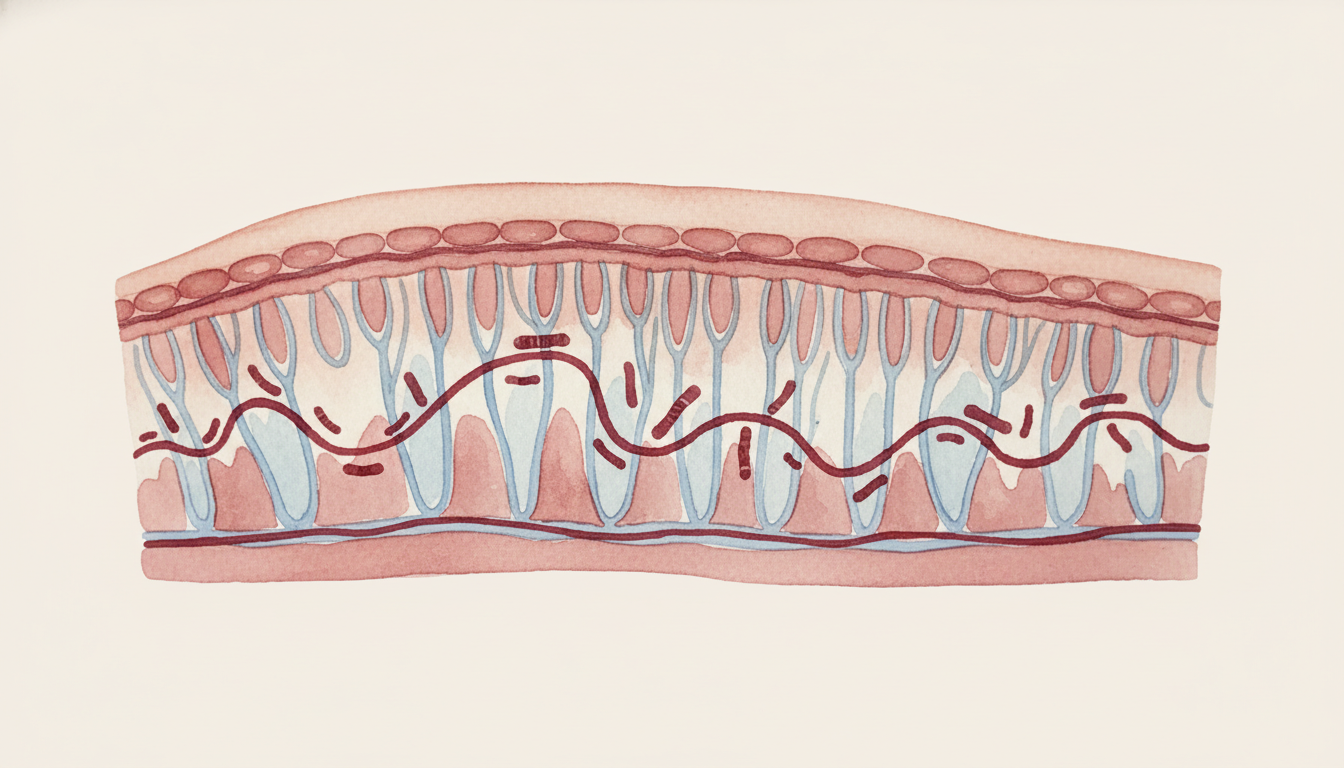
Syphilis is caused by a bacterium called Treponema pallidum. During pregnancy, the bacterium can cross the placenta at any stage. According to the World Health Organization, untreated, late-treated, or incorrectly treated syphilis in pregnancy results in adverse birth outcomes in 50 to 80 percent of cases. The highest transmission risk is during the early stages of untreated maternal infection, when bacterial loads in the bloodstream are highest. Late-stage or partially treated maternal syphilis still carries a transmission risk, although it is somewhat lower.
The outcomes for an exposed baby depend heavily on whether and when treatment occurs. WHO data identifies benzathine penicillin G as the only recommended treatment for syphilis in pregnancy and the only medicine able to prevent mother-to-child transmission of the bacteria. Penicillin is safe at any point in pregnancy, and timely treatment of the parent is the single most effective intervention available.
What Treatment Looks Like for You and Your Baby
If a syphilis test comes back positive during pregnancy, treatment is fast and effective. The standard regimen is a single intramuscular injection of long-acting benzathine penicillin G for early-stage infection. Late-stage or unknown-duration infection requires three weekly doses. Penicillin allergy is managed through desensitization protocols that are well established in obstetric care; alternative antibiotics are not considered equivalent for treatment in pregnancy.
For a newborn diagnosed with confirmed or highly probable congenital syphilis, the CDC's STI treatment guidelines specify aqueous crystalline penicillin G at 100,000 to 150,000 units per kilogram of body weight per day for a total of 10 days, given by IV in the hospital. Procaine penicillin G by intramuscular injection is an alternative regimen. Follow-up serologic testing every three months until results are nonreactive is part of standard care.
If you are reading this after a confirmed diagnosis in your own newborn, the most important thing to know is that treatment works. The grief, anger, and self-blame parents describe are real and valid. They do not change the fact that your baby has a path forward.
Many cases of congenital syphilis could be prevented through timely testing and treatment of the mother during pregnancy. CDC recommends syphilis screening at the first prenatal visit, with repeat testing for those at increased risk.
The Stigma That Delays Care
Underneath the clinical numbers is a layer that statistics struggle to capture: shame. Many parents who later receive a congenital syphilis diagnosis describe a moment during pregnancy when they considered asking for a repeat test and decided against it. The reasons are usually not medical. They are about feeling judged for having a new partner, for being honest about a sexual history, or simply for asking twice.
That hesitation has consequences. Public-health research on barriers to congenital syphilis prevention in California has documented patients who attended one prenatal appointment, did not receive structured follow-up, and stopped pushing for retesting because they felt embarrassed to insist. Others describe avoiding follow-up entirely after a single judgmental comment from clinic staff.
The clinical takeaway is direct: asking for an STI test during pregnancy is not a confession. It is part of routine prenatal care, in the same category as a glucose test or a blood pressure reading. Anyone asking for a repeat syphilis screen is doing exactly what current public health guidance recommends.
A repeat syphilis test in the third trimester sits in the same category of medical care as a glucose tolerance test or a blood pressure reading. It is not a moral disclosure. The right framing for the conversation is simple: this is the standard care current public health guidance recommends.
Talking to Your Provider About Retesting
If you are pregnant, recently postpartum, or worried about your newborn's symptoms, you have the right to ask for testing without explaining or apologizing. If conversation feels easier with a script in mind, here are phrasings that work:
- "I'd like to be retested for syphilis at this visit, please."
- "I had a new partner during this pregnancy. Can we run the screening panel again?"
- "I read that CDC recommends third-trimester retesting in some areas. Does that apply to me?"
- "Can my partner be tested as well? I'd like both of us cleared before delivery."
- "My baby has a rash and a persistent runny nose. Can we rule out congenital syphilis?"
If a provider declines or makes you feel judged, you have options. Most state and county health departments offer free or low-cost STI testing without requiring a prenatal appointment. Federally Qualified Health Centers and Planned Parenthood clinics also test. You can request a second opinion. You can switch providers. You can document the request and the response in your own notes if you want a paper trail.
This site sells rapid at-home STI test kits, including a syphilis test. Information in the section that follows reflects how at-home testing can complement, not replace, clinic-based prenatal screening.
Why At-Home Testing Has a Role Here
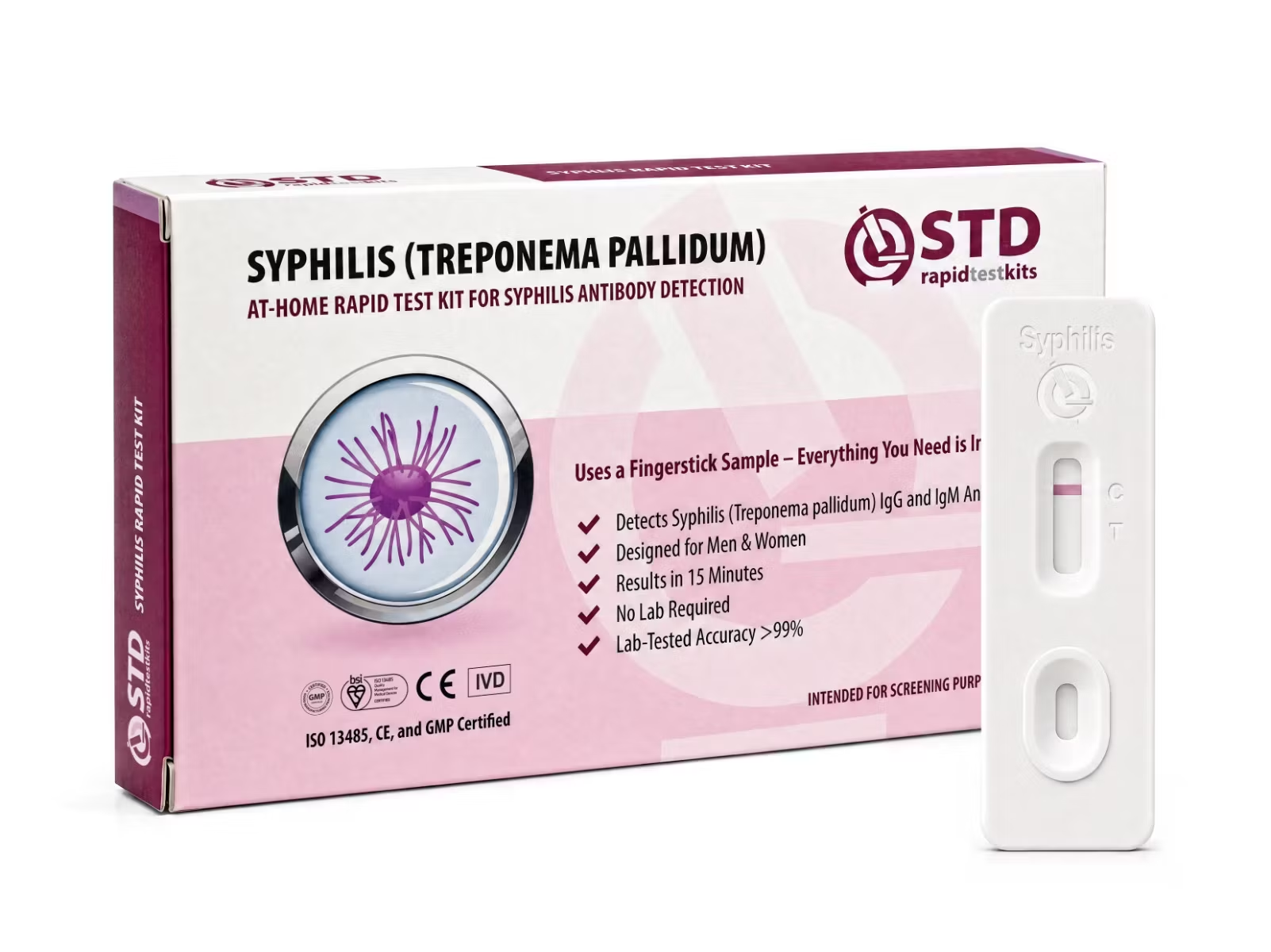
Clinic-based screening is the gold standard, but it is not the only tool available. At-home rapid syphilis tests are lateral-flow blood tests that detect Treponema pallidum antibodies from a fingerstick blood sample. They are most useful as a screening or peace-of-mind layer between scheduled prenatal appointments, particularly for people who:
- Live in counties where the nearest OB clinic requires hours of travel.
- Had a new partner during pregnancy and were not offered a repeat screen.
- Want to retest after the 28-week mark and cannot get an appointment in time.
- Are postpartum and notice symptoms in a newborn before the next pediatric visit.
At-home rapid lateral-flow tests are a screening layer, not a laboratory confirmatory test. A positive at-home result should be followed by a confirmatory blood test at a clinic or lab and prompt clinical care. Public-health experts often refer to this stack of overlapping checks as layered prevention: prenatal screening, repeat testing, partner testing, and at-home screens used together rather than instead of one another.
If You Are Just Learning About This Now
Some parents arrive at this article in the third trimester. Some arrive after their baby has been admitted to the NICU. Some arrive after a pediatric appointment that did not feel right. Wherever you are in the timeline, the same set of practical steps applies.
If you are still pregnant: ask your provider for a repeat syphilis test today, even if you tested negative earlier. There is no test fatigue penalty for asking. The March of Dimes notes that treating syphilis in the parent before 26 weeks of pregnancy substantially reduces the risk to the baby; treatment is still recommended at any later stage as well.
If you have already given birth and you are worried about symptoms: take your baby to a pediatrician promptly and request a syphilis workup. The combination of palmar or plantar rash, persistent snuffles, and poor weight gain is a recognized pattern that pediatricians know to evaluate. Earlier treatment is associated with better outcomes.
If your baby has already been diagnosed and treated: the CDC's STI treatment guidelines outline the standard 10-day IV penicillin G regimen and the structured follow-up testing schedule used to monitor recovery. Some infants need longer-term pediatric specialist care; many do well with the standard course. You are not the first parent to navigate this, and the medical infrastructure that exists for these cases is built specifically to give your child the best possible start.
FAQs
- Can someone really have syphilis without any symptoms?
- Yes. Syphilis is often called a silent infection in its early stages. The first sore (chancre) can appear in a place that is hard to see and resolves on its own within a few weeks even without treatment. Many people only learn they have syphilis from a routine blood test or after their newborn is screened.
- What does congenital syphilis look like in a newborn?
- The rash is the most recognizable early sign: copper-colored, slightly raised spots on the palms and soles that don't look like normal baby skin irritation. Persistent thick or bloody nasal discharge (snuffles) that won't clear is the second most common sign. A baby who refuses to move one arm may have bone pain rather than colic. Some babies appear typical at birth and develop signs weeks or months later, which is why pediatric follow-up still matters even after a reassuring early visit.
- If I tested negative early in pregnancy, am I safe?
- Not necessarily. The first-trimester test cannot detect infections that occurred after the test, and it can miss an infection that was too recent to produce detectable antibodies. The CDC recommends repeat testing at 28 weeks and at delivery for anyone in a high-prevalence area or with new exposure during pregnancy.
- Can syphilis pass to a baby if the parent has no symptoms?
- Yes. Syphilis often goes through a latent stage, sometimes for years, where the parent has no visible symptoms but the bacteria is still present in the bloodstream. During pregnancy, that latent infection can still cross the placenta. This is why many congenital syphilis cases involve parents who genuinely felt healthy throughout pregnancy. A routine blood test can detect latent syphilis even when there is nothing to see on examination.
- How is congenital syphilis treated?
- The CDC's standard treatment for a newborn with confirmed or highly probable congenital syphilis is 10 days of intravenous aqueous crystalline penicillin G in the hospital, dosed by body weight. Treatment of the parent during pregnancy with intramuscular benzathine penicillin G can prevent congenital syphilis altogether and is safe at every stage of pregnancy.
- Are home syphilis tests reliable?
- Rapid lateral-flow home tests detect syphilis antibodies in a fingerstick blood sample. They are useful as a screening layer between prenatal visits or for partners who cannot easily reach a clinic. A positive home result should always be confirmed by a laboratory test before treatment decisions are made.
- Can syphilis pass through breastfeeding?
- Syphilis bacteria are not transmitted in breast milk. The only breastfeeding-related transmission risk is direct contact with an active syphilitic sore on the breast or nipple, which is uncommon. If you have any open sore in that area, ask your provider before breastfeeding.
- What should I do if my provider dismisses my concerns?
- Ask explicitly for the test you want and ask for both the request and the response to be documented. If you are still uncomfortable, you have the right to seek a second opinion, switch providers, or use a county health department for confirmatory testing. STI testing in pregnancy is standard care, not a special request.

- U.S. Centers for Disease Control and Prevention. About Congenital Syphilis: signs in newborns, transmission, 2024 case-count statement, and treatment overview.
- U.S. Centers for Disease Control and Prevention. STI Statistics surveillance hub: provisional 2024 syphilis surveillance data and county-level resources.
- U.S. Centers for Disease Control and Prevention. STI Treatment Guidelines: prenatal screening, 28-week and delivery retesting recommendations, and the 10-day IV aqueous crystalline penicillin G regimen for newborns.
- World Health Organization. Syphilis fact sheet: 50 to 80 percent adverse birth outcomes for untreated, late-treated, or incorrectly treated syphilis in pregnancy and benzathine penicillin G as the only WHO-recommended treatment for pregnant patients.
- California Department of Public Health. Congenital Syphilis surveillance: California-specific case trends from 2014 through 2023 and county-level data.
- March of Dimes. Syphilis in pregnancy: 40 percent infant mortality figure for untreated maternal syphilis, the 26-week treatment threshold, and prevention through penicillin.
- Fang J, Silva RM, Tancredi DJ, Pinkerton KE, Sankaran D. Association of congenital syphilis rates with socioeconomic factors in small to medium California counties. PubMed PMID 35739308.
- NHS. Syphilis: causes, symptoms, testing, and penicillin-based treatment.
