

Published: November 2025 | Last updated: April 2026 | Editorial review and quality control: Martina N.
How do you prevent chlamydia in teens?
Layered protection works better than any single tactic: consistent condom use from the start of any sexual contact (not partway through), routine annual screening for anyone sexually active under 25 (the CDC's standing recommendation), and open conversations that make testing feel ordinary instead of shameful. For teens who can't or don't want to visit a clinic, an at-home rapid swab test is a private, accurate alternative.
Key Takeaways
- Most teens with chlamydia have zero symptoms, which is why annual screening matters even when nothing feels wrong.
- The CDC recommends annual chlamydia screening for all sexually active women under 25, regardless of symptoms or perceived risk.
Parents, educators, and teens themselves. The goal is to replace shame and vagueness with specific, actionable prevention information. This site is published by stdrapidtestkits.com, which sells at-home rapid STI testing kits, and recommends products based on fit-for-purpose, not commercial benefit. We do not sell every test type that exists, and the article calls out where a clinic visit is the better option.
Chlamydia is the most commonly reported bacterial sexually transmitted infection in the United States, and the burden falls heaviest on adolescents and young adults. Per the CDC's adolescent STI guidelines, prevalence rates of several STIs including chlamydia are highest among adolescents and young adults. The infection itself is not catastrophic when caught early, a course of antibiotics clears it. The problem is that most teens carrying it have no idea they are. They feel fine, do not test, pass it on, and only find out months or years later when complications appear.
That is the frustration at the center of teen chlamydia prevention. Fear-based abstinence messaging does not stop transmission. Vague advice to “be safe” does not either. What works is specific information delivered without judgment: how the infection moves between people, what tools reduce transmission, when to test, and what to do if a test is positive.
The CDC's adolescent STI guidance is direct: prevalence rates of several STIs including chlamydia are highest among adolescents and young adults. Two factors drive this. Cervical ectopy in younger women exposes more vulnerable tissue to infection, and sexual networks in younger age groups tend to be more densely connected, so each new infection has more potential paths to spread.
How chlamydia spreads (beyond penetrative sex)
Chlamydia trachomatis is a bacterium that lives in mucous membranes: the cervix, urethra, rectum, and throat. It moves between people through contact with infected fluids on those tissues. Penetrative vaginal or anal sex is the most efficient route, but it is not the only one. Per the WHO chlamydia fact sheet, the infection is primarily transmitted through vaginal, oral, and anal sex. The UK National Health Service chlamydia page additionally advises against sharing sex toys and recommends washing them and covering them with a fresh condom before another partner uses them.
That matters for teens specifically because a lot of early sexual activity falls into the “we did not really do anything” category. Mutual hand-genital contact with shared fluids, oral-genital contact, sharing toys: all of these are contact routes for the bacterium, regardless of how the encounter is labeled.
Two biological factors raise the risk for younger people. First, the cervix in adolescent and young adult women has a larger area of vulnerable columnar epithelial tissue (the cell type chlamydia infects most easily) than in older women, a phenomenon called cervical ectopy. Second, sexual networks tend to be denser in younger age groups, meaning each new infection has more potential paths to spread.

Why so many teens have chlamydia and never know
The clinical word for chlamydia's behavior is asymptomatic. The plain-English version: most people who have it feel completely normal. The CDC's chlamydia overview states that the infection often has no symptoms in either sex but can still cause serious health problems. When symptoms do appear, they often look like ordinary problems: a slight burning during urination, mild discharge, a dull ache that gets dismissed as a urinary tract issue or period-related cramping.
Combine “feels fine” with “no routine testing unless something prompts it” and you get the situation surveillance data describes. A teen has unprotected oral or genital contact, picks up an infection, feels nothing, has another partner three weeks later, transmits it, and so on. By the time anyone tests, several people are involved.
The WHO's chlamydia fact sheet notes that untreated chlamydia can cause pelvic inflammatory disease and increases the risk of infertility and ectopic pregnancy. In men, untreated infection can cause epididymitis (inflammation of the tube that carries sperm) and, less commonly, reactive arthritis. None of these complications announce themselves loudly during the infection itself, which is the entire reason routine screening is the centerpiece of public-health guidance.
Per the CDC, chlamydia often has no symptoms in either sex but can still cause serious reproductive complications. Feeling fine is not evidence of being uninfected, which is the entire reason annual screening exists for anyone sexually active under 25.
Layered prevention: why no single tactic is enough
No single prevention method is sufficient on its own. Condoms reduce risk substantially when used correctly and consistently, but most teens do not use them perfectly. Annual screening catches infections that prevention missed. Honest communication shapes whether either of those tools gets used at all.
The table below summarizes what each component contributes and where its limits are.
| Strategy | What it does | Where it falls short alone |
|---|---|---|
| Consistent condom use | Reduces transmission risk for vaginal and anal sex when used correctly from start of contact | Does not cover every transmission route (oral, hand-to-genital, shared toys); often applied late or inconsistently |
| Dental dams for oral contact | Creates a barrier for oral-vaginal or oral-anal contact | Rarely used; teens often unaware they exist or where to get them |
| Annual chlamydia screening | Catches asymptomatic infections that prevention missed; allows treatment before complications | Only useful if done; many teens never test until something goes wrong |
| Cleaning shared sex toys | Prevents fluid transfer between partners via shared objects | Only effective if cleaned between every partner with appropriate disinfectant |
| Open partner communication | Raises the chance both people test before sex and disclose recent exposures | Requires emotional safety teens often do not have |
Why condoms matter, even though they are not enough
Condoms reduce chlamydia transmission, but the size of that reduction depends on consistent and correct use. The CDC's chlamydia overview identifies using condoms the right way every time as a key prevention measure. Inconsistent use does not deliver that protection.
The realistic teen-use pattern looks like this. Condoms get applied late, after oral or hand-to-genital contact has already happened, taken off early before finishing, skipped entirely on the assumption that pulling out is enough (it is not, for STI transmission), or stored in wallets where heat damages the latex.
Practical fixes that genuinely move the needle on use:
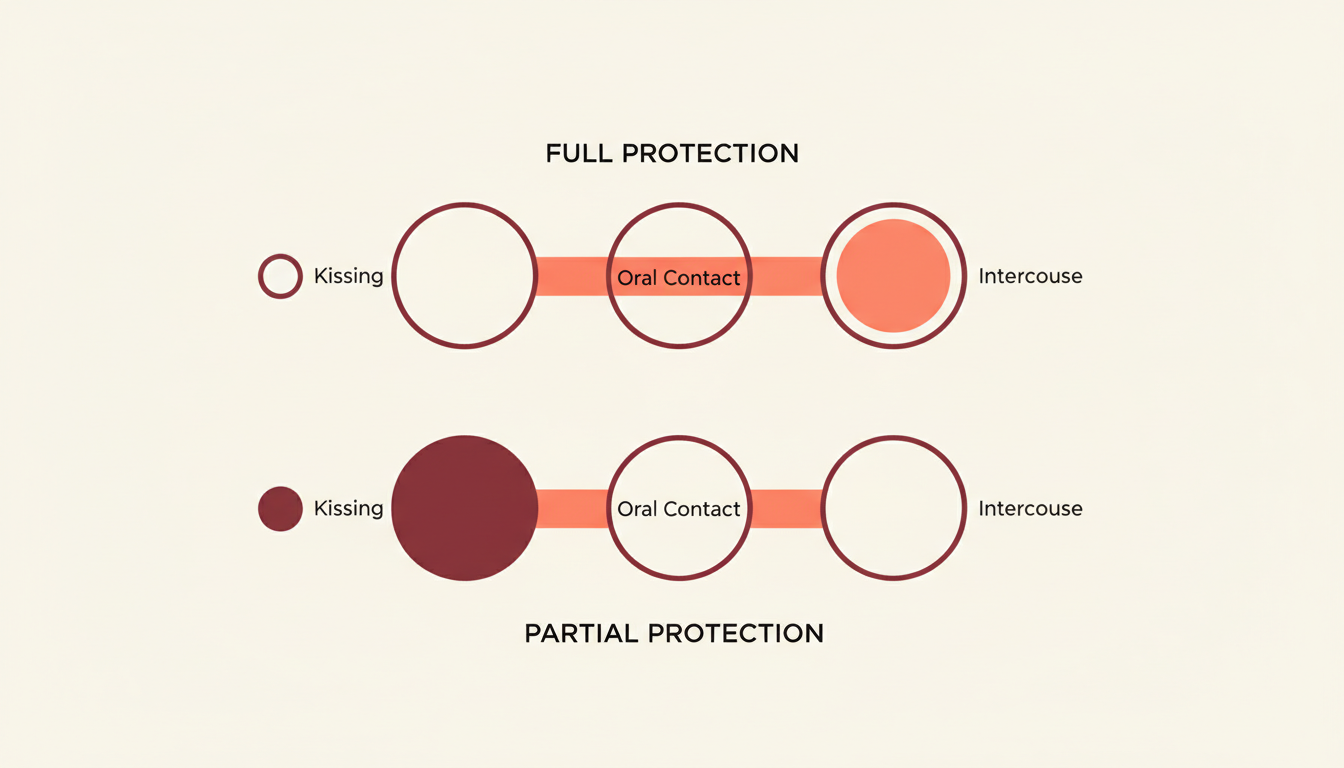
- Put the condom on before any genital-to-genital or genital-to-mouth contact, not just before penetration.
- Use a water-based or silicone-based lubricant. Oil-based lubricants degrade latex.
- Check the expiration date and store in a cool, dry place (not a glove compartment, not a wallet).
- For oral contact, use a dental dam or a condom cut open lengthwise.
- Do not rely on spermicide for STI protection. Spermicide prevents pregnancy; it does not reduce chlamydia transmission and may cause irritation that increases risk.
At-home testing: what it does and what it does not do
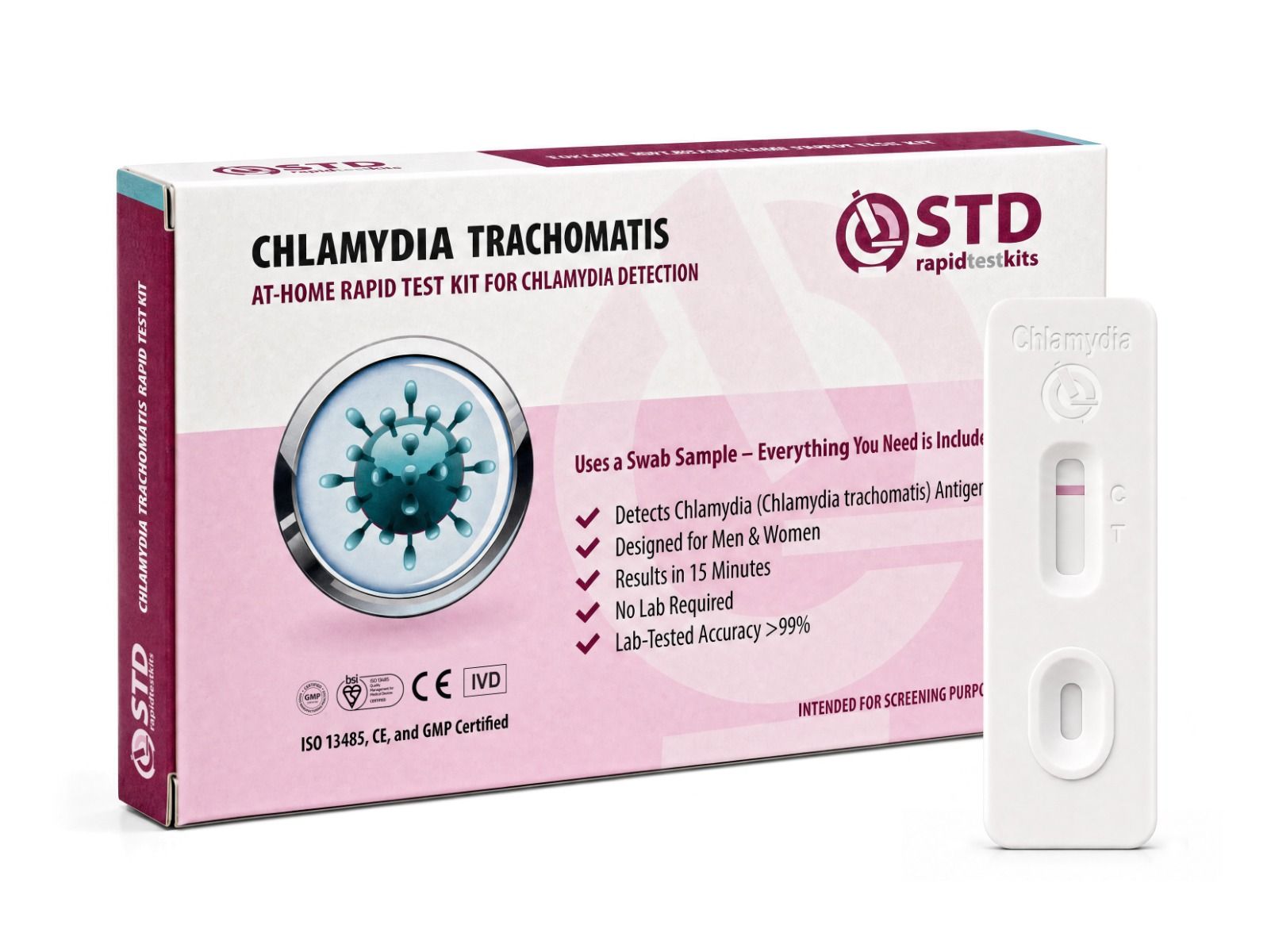
For teens uncomfortable with clinics, embarrassed about parental discovery, or just inconvenienced by appointments, an at-home rapid test removes friction from the testing decision. Our at-home chlamydia rapid test is a self-collected swab (not a urine sample) using lateral-flow chemistry, with a result in roughly 15 minutes. It ships in plain packaging.
What an at-home rapid lateral-flow test is: a screening tool that detects chlamydia antigen on a self-collected swab. It is the same general technology used for at-home pregnancy tests and lateral-flow COVID tests, applied to a different target.
What it is not: a replacement for laboratory NAAT (nucleic acid amplification testing). Laboratory NAAT offers higher analytical sensitivity than rapid lateral-flow assays, particularly in asymptomatic infections. The two test types are complementary screening tools, not equivalents. A useful pattern: screen at home for fast privacy, and follow up a positive result with a clinic-confirmed laboratory test before treatment.
Our home kit uses a self-collected swab. We do not sell a urine-based chlamydia test, and we do not sell a pharyngeal (throat) swab kit. Teens whose only exposure was oral and who are concerned about a throat infection should see a clinic for a pharyngeal swab. The home swab kit is for genital sample collection.
Privacy, consent, and parental notification
One of the biggest reasons teens skip STI testing is fear of parents finding out. The good news: in every U.S. state, minors have some legal right to consent to STI testing and treatment without parental permission. The exact age threshold and which services are covered vary state by state, but the baseline access is national. The Guttmacher Institute maintains a state-by-state summary, and Planned Parenthood's website includes guidance on finding confidential reproductive-health services.
For teens using insurance, the explanation-of-benefits sent home can inadvertently reveal a clinic visit to parents, which is a separate privacy concern. A handful of practical workarounds exist that keep the testing record off a parent's mailbox.
For parents reading this: the pragmatic approach is making testing feel ordinary. A test kit left in a bathroom drawer with a short non-judgmental note communicates trust more clearly than any conversation. Teens who know they will not be punished for a positive result are far more likely to test in the first place, and far more likely to come to you if something does come back positive.
Title X clinic, sliding-scale fee. Federally funded reproductive-health clinics that bill on a sliding scale and do not require parental insurance.
School-based health center. On-campus visits that bill differently from outside clinics and often do not generate an insurance explanation-of-benefits sent home.
Self-paid at-home swab test. Ships in plain packaging, no insurance record generated, result available privately.
How often should a sexually active teen test?
The CDC's screening recommendations are concrete. All sexually active women under 25 should be screened for chlamydia annually, even with no symptoms. Sexually active men who have sex with men should be screened at least annually at all relevant anatomical sites of exposure. Anyone with a new partner, multiple partners, or a partner with known infection should be retested.
Beyond the annual baseline, standard guidance calls for testing after any known exposure (a partner tests positive), after any unprotected sex with a new or non-monogamous partner, and any time symptoms appear, even mild ones (burning during urination, unusual discharge, pelvic ache, testicular swelling).
One nuance worth understanding: chlamydia tests have a window period. Because bacterial load builds over time after exposure, tests taken within the first week or two may not yet detect the infection reliably. The practical pattern is to test at roughly two weeks post-exposure, and retest at four to six weeks if any concern remains.
When to test, in plain rules
- Once a year minimum if you are sexually active and under 25, even with no symptoms.
- After every new partner, after any unprotected sex, and after a partner tests positive.
- Wait at least two weeks after a specific exposure for the test to be reliable; retest at four to six weeks if concern remains.
The myths that get teens infected
Most chlamydia transmission among teens traces back to a small number of persistent myths. Each one is wrong in a specific way, and each one is worth correcting plainly.
“You cannot catch chlamydia if you are still a virgin.” Wrong, if the definition of virginity is reserved for vaginal intercourse. Chlamydia transmits through oral, anal, and hand-to-genital contact with infected fluids. Penetration is not required.
“If something were wrong, I would feel it.” Wrong. Per the CDC's chlamydia overview, the infection often produces no symptoms in either sex. The absence of pain, discharge, or odor is not evidence of being uninfected.
“It will go away on its own.” Wrong. Chlamydia is a bacterial infection. Without antibiotics it persists, sometimes for months or years, and can cause irreversible reproductive damage. Per the WHO's chlamydia fact sheet, untreated infection can cause pelvic inflammatory disease and raise the risk of infertility and ectopic pregnancy.
“Pulling out keeps you safe.” Wrong for STI transmission. Withdrawal is a (poor) pregnancy-prevention method. It does not address the contact and fluid exposure that transmit chlamydia.
“Douching after sex protects me.” Douching disrupts the natural vaginal flora that helps limit pathogen growth and may push organisms further into the reproductive tract. It does not lower chlamydia risk and is actively discouraged in standard reproductive-health guidance.
“Spermicide protects against STIs.” Spermicide is a contraceptive only, not an STI prophylactic. It does not reduce chlamydia transmission, and frequent use can cause genital irritation that may slightly increase STI susceptibility.
If you remember nothing else from this section: most teen chlamydia infections produce zero symptoms. The CDC's chlamydia overview is explicit that the infection often has no symptoms in either sex. “I would know if something were wrong” is the belief that drives most of the missed-screening problem.
How to talk about this without making it weird
The goal of any adult having a sexual-health conversation with a teen is not to deliver the perfect lecture. It is to make the door visible and easy to walk through. Specific, low-key, repeated availability beats one big sit-down talk every time.
What works in practice:
- Lead with the offer of help, not with rules. “If you ever want to talk about testing, birth control, or anything sex-related, I am here and you will not be in trouble” is more useful than a list of prohibitions.
- Normalize testing as routine self-care, the same category as a dental cleaning. The less weight a single test carries, the more likely it happens.
- Make access easy. A test kit in a bathroom drawer with a short note removes a friction step that might otherwise prevent the test entirely.
- Acknowledge that you do not need to be the expert. Pulling up a CDC page together is a perfectly good answer to a question you cannot fully answer yourself.
- Drop the moral framing. A positive test result is a medical event, not a character verdict.
Schools and community programs that work the same way (peer-led, consent-centered, LGBTQ-inclusive, paired with confidential on-site testing) consistently outperform abstinence-only curricula in measurable outcomes. The evidence on this has been clear for two decades; the policy has just been slow to catch up.
Chlamydia is the most commonly reported bacterial STI in the United States. Sexually active women younger than 25 years old should be tested for chlamydia every year.
If a teen tests positive: next steps
The most important thing for a parent or trusted adult to know is that a positive chlamydia test is not an emergency and not a life event. Per the CDC's STI treatment guidelines, uncomplicated chlamydia infection is treated with a 7-day course of doxycycline, with single-dose azithromycin as an alternative in specific cases. The infection clears with antibiotics. There is no chronic carrier state.
The emotional reaction usually matters more than the medical one. What teens often need is reassurance that this does not change who they are or what they are capable of. Antibiotics clear the infection completely; the three-month follow-up test confirms it did not return from a partner who was not treated.
Immediate steps after a positive home test
- Confirm with a clinic NAAT before starting treatment when possible. A home rapid test is a screen, not a definitive diagnosis.
- See a clinician (Planned Parenthood, a Title X clinic, a school-based health center, or a primary-care provider) for the antibiotic prescription.
- Pause sexual activity until 7 days after treatment is complete.
- Notify recent partners so they can test and treat. Many states allow expedited partner therapy, which lets the same clinician prescribe for partners without a separate visit.
- Retest at three months, since reinfection from an untreated partner is the most common reason chlamydia recurs.
What about a chlamydia vaccine?
There is no licensed chlamydia vaccine as of this writing. Multiple candidates have entered clinical trials, and an early-phase candidate showed acceptable safety and immunogenicity in 2019, but no product has reached licensure. The current prevention toolkit remains barrier protection, regular screening, partner communication, and prompt treatment of detected infections.
Frequently asked questions
- Can a teen catch chlamydia without having vaginal sex?
- Yes. Chlamydia transmits through any contact with infected mucous membranes, including oral sex, anal sex, hand-to-genital contact with shared fluids, and shared sex toys that have not been cleaned. Penetration is not required.
- If I have no symptoms, do I still need to test?
- Yes, if you are sexually active. The CDC recommends annual chlamydia screening for all sexually active women under 25, with or without symptoms. Most teen infections produce no symptoms at all, which is exactly why annual screening is the rule rather than waiting for something to feel wrong.
- Will my parents find out if I test through a clinic?
- In every U.S. state, minors have some legal right to consent to confidential STI testing and treatment. The exact rules vary by state, but the baseline access is national. If you are using parental insurance, the explanation-of-benefits can sometimes reveal the visit; using a Title X clinic, a school-based health center, or paying out of pocket avoids that disclosure path.
- How soon after exposure can I test?
- About two weeks post-exposure is the earliest reliable window. Earlier than that, bacterial levels may not be high enough for the test to detect, producing a falsely negative result. If concern remains, retest at four to six weeks.
- Can I use an at-home chlamydia test if I am under 18?
- Yes. At-home rapid swab tests are designed for self-collection and ship in plain packaging. There is no age check on purchase. The instructions are simple, the result comes in roughly 15 minutes, and no insurance or clinic visit is required.
- Does oral sex really transmit chlamydia?
- It can, in both directions. Pharyngeal (throat) chlamydia is generally less common than genital infection but well documented. If oral contact was the only exposure and a throat infection is the specific concern, a clinic-administered pharyngeal swab is the right test; we do not sell a home throat-swab kit.
- What happens if I test positive?
- Confirm the result with a clinic test where possible, get the antibiotic prescription (typically a seven-day doxycycline course), pause sex until seven days after treatment, and notify recent partners so they can test and treat. Retest at three months, since reinfection from an untreated partner is the most common reason chlamydia returns.
- How effective are condoms against chlamydia?
- Consistent correct use from the start of contact substantially reduces but does not eliminate risk. Condoms only protect the part of an encounter they cover, so late application leaves the earlier oral or manual contact unprotected, which is where most teen exposure happens.
- U.S. Centers for Disease Control and Prevention. About Chlamydia: overview of symptoms, asymptomatic prevalence, prevention, and screening recommendations.
- U.S. Centers for Disease Control and Prevention. Adolescent STI guidelines: rationale for higher STI prevalence in adolescents and young adults.
- U.S. Centers for Disease Control and Prevention. STI screening recommendations including annual chlamydia screening for sexually active women under 25.
- U.S. Centers for Disease Control and Prevention. STI treatment guidelines for chlamydial infections, including the doxycycline regimen and the 3-month retest recommendation.
- World Health Organization. Chlamydia fact sheet covering global prevalence, transmission routes, complications, and prevention.
- U.K. National Health Service. Chlamydia patient guidance covering symptoms, transmission routes, testing, and treatment.
