
Published: August 2025 | Last updated: May 2026 | Editorial review and quality control: Martina N.
There is a moment when the conversation starts to shift. Eye contact lingers, a hand brushes a shoulder, and somewhere underneath the warmth a question sits in your chest: have they been tested? You want to ask. You also do not want to break what is building. This guide is for that moment, and the ones that come before it.
Asking about STD testing is not a mood killer when you do it with care, timing, and shared purpose. It is a signal that you are paying attention to both bodies in the room. The right words can turn a potentially awkward exchange into a moment of trust that actually makes intimacy feel safer. This piece walks through what to say, when to say it, what most standard tests really cover, and how to read the response so you know whether you are with someone worth trusting your body to.
Key Takeaways
- The testing talk lands as care rather than interrogation when you anchor it in your own routine and frame it as shared protection.
- Standard STD panels often skip Herpes, Trichomoniasis, and HPV unless specifically requested, so "I was tested" rarely means "I was tested for everything."
Why the testing talk feels heavier than it should
The discomfort is less about the question itself than about the cultural baggage attached to it. STDs carry a kind of shame that other common health conditions do not. Nobody flinches at "have you had a flu shot," but "have you been tested" can read as accusation. The reaction is not logical, and that does not make it less real.
The CDC's STI testing guidance recommends annual testing for sexually active women under 25, for men who have sex with men, and for anyone with new or multiple partners. The same guidance points out that most sexually transmitted infections cause no symptoms, which means routine testing is the only reliable way for anyone to know their status. None of this is a comment on behavior, just basic preventive care, similar to a dental cleaning or a cholesterol check. The more matter-of-fact the conversation, the easier it lands for both of you.
There is also a literacy gap working against you. Many people who say "I have been tested" believe they were fully screened when their clinic actually ran only a partial panel. Herpes is rarely included unless asked for. Trichomoniasis is often skipped in men entirely. HPV testing is generally part of cervical cancer screening rather than a standalone STI check. Your partner may be telling you the truth as they understand it and still be carrying something neither of you knows about.
Most standard clinic panels at a routine visit cover chlamydia, gonorrhea, syphilis, and HIV. Several infections usually need to be requested separately:
- Herpes (HSV-1 and HSV-2) blood antibody testing
- Trichomoniasis, especially in men
- HPV outside of cervical cancer screening
If a partner says they had a full screen, a gentle follow-up about which infections were on the panel is reasonable, not paranoid.
Timing: when to bring it up
There is no universal right moment, but there are clearly better and worse ones. The worst time is mid-undressing. The best window sits somewhere between the moment you sense this is heading somewhere and the moment you find yourselves alone, a car ride home or a dinner conversation or a text before plans, any setting where neither person is half-clothed and the temperature of the room is still rational.
The physiology matters here. Once arousal kicks in, the parts of the brain that handle nuance and risk assessment quiet down. This is normal biology, not a flaw in your judgment. Talk earlier than your nervous system thinks you need to, because by the time the question feels urgent it has already become harder to ask.
A simple opener that takes pressure off: anchor it in your own routine. Say, "I got tested last month, it is something I do every few months." That phrasing tells your partner this is hygiene, not suspicion, and they can answer without feeling singled out. The MyHealthfinder conversation starters from the U.S. Department of Health and Human Services use a similar structure: lead with your own testing as the on-ramp.
Four conversational frames that work, depending on your style and your read of the moment:
| Approach style | What it sounds like | Why it works |
|---|---|---|
| Warm and direct | "Have you been tested recently? I like knowing where we both stand." | Treats the answer as practical information, not a judgment |
| Inclusive | "I usually test every few months. Want to do it together sometime?" | Shifts focus from interrogation to shared care |
| Light and playful | "Okay, awkward incoming. Can we talk testing for two minutes?" | Acknowledges the discomfort and moves past it quickly |
| Routine-anchored | "Testing is part of how I show up for myself and my partners." | Models the behavior without putting them on the spot |
The micro-script: what to actually say
Imagine you are on a couch. The lighting is soft. Things are heading somewhere. You do not need a speech. You need one sentence that opens a door:
"This is not the sexiest thing I will say tonight, but I care about how this goes. Have you been tested recently?"
Or:
"Before we go further, can we do a quick check-in about testing? I do this with everyone I get close to."
Notice what is missing: blame, suspicion, or any hint that you are worried about them specifically. The energy is calm and clear. The frame is "I do this with everyone," which transforms the question from accusation into routine. Most people respond to that frame with relief.
If your voice carries "I like you" while your words ask the question, the question lands as care. If your voice carries suspicion, even gentle words will feel like an interrogation. Tone is most of the work, more than the specific words. Practice the line in your head a few times before you need it so you do not stumble through the delivery when it matters.
Anchored in care: "This is not the sexiest thing I will say tonight, but I care about how this goes. Have you been tested recently?"
Anchored in routine: "Before we go further, can we do a quick check-in about testing? I do this with everyone I get close to."
What "I have been tested" often misses
Here is where many of these conversations go sideways: the person says yes, they were tested, and they genuinely believe they are in the clear. They may be wrong, through no fault of their own.
According to the CDC's STI screening recommendations, standard panels at most clinical visits typically cover chlamydia, gonorrhea, syphilis, HIV, and sometimes hepatitis B and C. They generally do not cover:
- Herpes (HSV-1 or HSV-2), unless you specifically request a blood antibody test
- Trichomoniasis in men, and often not in women either, unless symptoms are present
- HPV, which is usually part of cervical cancer screening rather than an STI panel
So when a partner says "I am fully tested," a gentle follow-up clarifies without challenging: "Do you remember which infections they covered? Some clinics leave Herpes off unless you ask." That curious framing keeps the conversation open without putting them on the defensive. You are not accusing them of lying. You are inviting them to think about what their visit actually included, which is often less than the word "tested" implies.
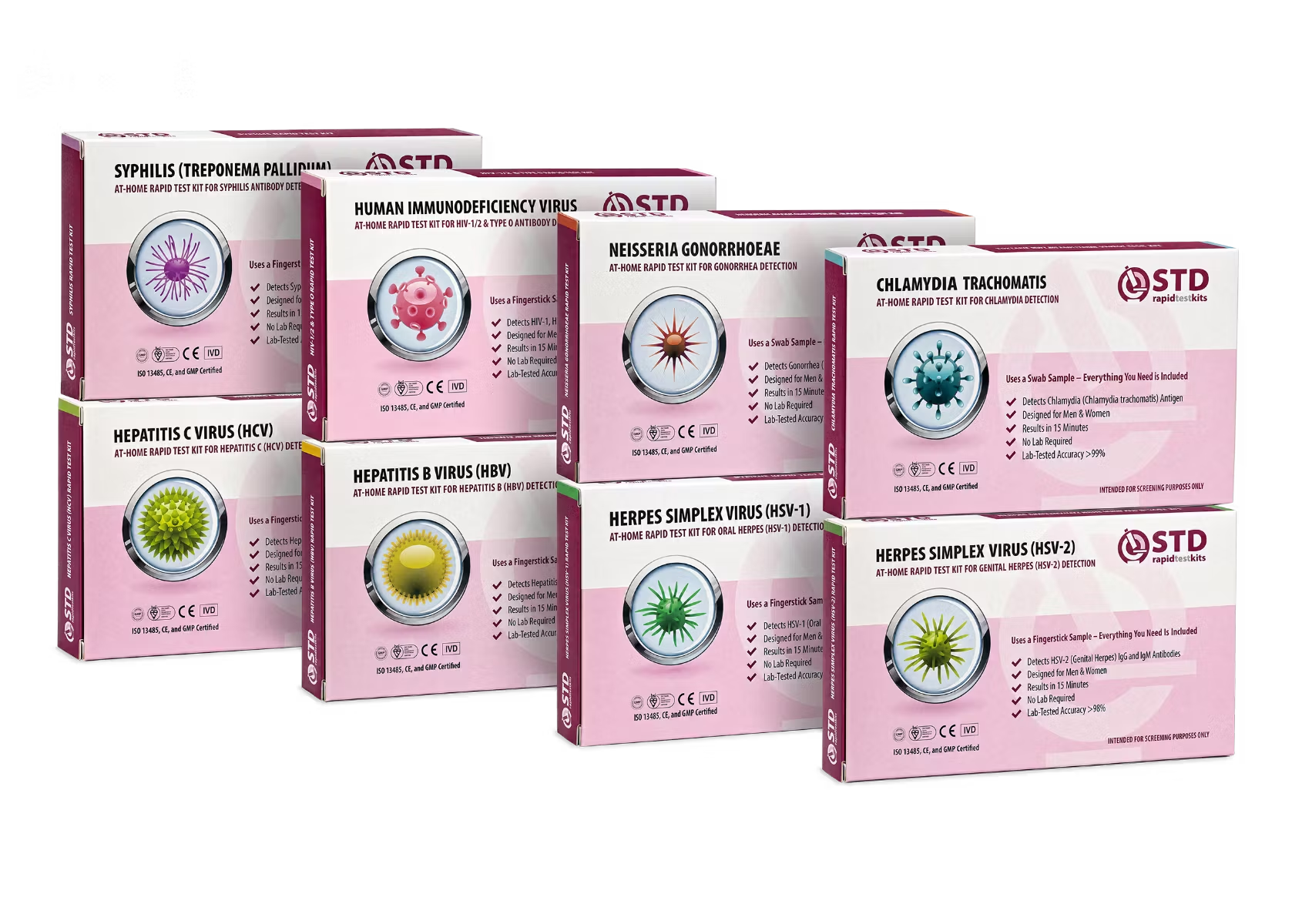
A note on the kits below: stdrapidtestkits.com sells the at-home rapid tests referenced in this article. We recommend products that match the reader's concern, not based on what earns more.
How to handle different responses
The way someone responds to your question tells you a lot, usually less about their sexual history than about how they handle a vulnerable moment. Some answers call for a gentle follow-up, some call for reassurance, and some are a signal to pause before going further.
| Partner response | What it might mean | How to respond |
|---|---|---|
| "I have never been tested." | They may lack access, information, or habit, not necessarily anything else | Offer to test together and share an at-home option |
| "I was tested a while ago, I think." | Uncertainty about timing or what was covered | Gently ask which infections were on the panel |
| "Why do you need to know?" | Possible shame, defensiveness, or unfamiliarity with the conversation | Reaffirm your intentions, frame it as routine for you |
| "I tested last month, want to see the results?" | Comfortable with transparency, treats testing as normal | Thank them, share your own status in return |
If their reaction is defensive
If a partner pushes back with "why are you even asking me that" or "do you not trust me," notice it without panicking. Testing measures biology. Two healthy, faithful people can both carry asymptomatic infections from years before they met, so the conversation has very little to do with whether either of you is trustworthy. It has everything to do with information.
If they can hear that distinction, the conversation moves on and you both decide together. If they cannot, you have learned something useful about how this person handles vulnerable topics, and you have learned it before the stakes got higher.
Two healthy, faithful partners can both carry asymptomatic infections from years before they met. Testing measures what is in someone's body right now, not whether they have been honest with you. Holding both ideas at once makes the conversation easier for both of you.
If you need to disclose your own status
Sometimes you are the one carrying something. Herpes is the most common example, but HPV, hepatitis B, and HIV are also possibilities. Disclosure is not legally required in every jurisdiction, but it is ethical, and it builds a kind of trust that no other part of the conversation can.
A frame that works:
"Before we get physical, there is something I want to share. I tested positive for [X] a while back. I manage it, and I have learned what reduces transmission. I want you to have the full picture before we decide anything together."
The key is calm. You are not asking permission, you are sharing information. The right partner will appreciate the directness. The wrong one will react badly, which saves both of you from a relationship that was not going to work anyway.
For Herpes specifically, CDC genital herpes guidance notes that daily suppressive antiviral therapy and consistent condom use both reduce the risk of transmission to a partner. Avoiding sex during outbreaks reduces it further. Knowing those numbers lets you and a partner make decisions with real information rather than fear.
If saying it out loud feels too hard the first few times, write it down and read it from a note. Practice on yourself in the mirror. Sending a text before you meet is also a reasonable way to say something hard, and many people find it easier than the face-to-face version the first time.
STIs are often asymptomatic. When symptoms occur, they can be non-specific.

Testing together: turning prevention into intimacy
There is a version of this conversation that does not just protect you, it deepens the connection. You can order tests together, open results at the same time, and treat the appointment as a shared step rather than two separate errands.
This works because shared vulnerability builds trust in ways that shared dinners cannot. You are saying, in plain action: I value this enough to schedule it, to be slightly uncomfortable for an hour, to learn something about my body alongside you. Most people remember that kind of gesture longer than they remember dinners or weekend trips.
Some couples make testing a quarterly ritual. Others tie it to relationship milestones, like the move from casual to exclusive. Some open the envelope (or check the lab portal) over a quiet drink. None of these formats are silly. They are exactly the kinds of small rituals that build long-term emotional safety, and they tend to outlast the relationships that skipped them.
For people newer to dating, suggesting a shared at-home test on the second or third date can also screen for compatibility. The way someone responds tells you about how they handle care, communication, and shared decisions. A partner who says "great idea, let us do it" is signaling something useful about who they are. A partner who recoils is signaling something useful too.

Reading their response: green flags and exit signs
Most writing about partners focuses on red flags. Let us flip it. What you are listening for is emotional steadiness in the face of a conversation most people find uncomfortable. Responses that signal someone worth your time and your body include:
- "Thanks for asking, I was hoping we would talk about this."
- "I last tested in March. Here is what they ran. What about you?"
- "I have not tested in a while, want to do it together?"
- "I appreciate that you brought this up directly."
The same steadiness tends to show up in other situations where honesty costs something, which is exactly why it is worth noticing here.
The flip side: dismissiveness, mockery, accusations of paranoia, or a flat refusal to engage. None of those reactions are about you. They tell you how this person handles discomfort and accountability, and they tell you before things get more complicated between you.
If a partner consistently makes you feel small for caring about your health, take that seriously. Open sexual-health communication is part of basic care, not an optional courtesy, and a partner who refuses to engage with that is showing you something specific about how they approach shared decisions.
The shorter version, if you forget everything else
Ask early, before clothes come off. Anchor the question in your own routine. Use a calm tone that says "I do this with everyone." If they say they were tested, ask which infections were on the panel. If they have not been tested, offer to do it together. If they react badly, you have information you needed before going further. The conversation clears enough space for both of you to be honest, which is what makes the rest of it land.
Quick checklist
- Bring it up when you are both still clothed and calm.
- Anchor the question in your own testing routine.
- If they say they were tested, ask which infections the panel covered.
- If they have not tested, offer to test together using an at-home kit.
- If they get defensive, slow down and see how they handle being uncomfortable.
FAQs
- Is asking about STD testing really not a mood killer?
- Done with a calm, warm tone, it usually is not. People often report feeling closer to a partner who asks, because it signals care and self-respect. The version that kills the mood is interrogation, not the question itself. Try anchoring it in your own routine and watch the response soften.
- When is the best time to bring it up?
- Earlier than your nervous system thinks you need to. Texting before the date, a quiet moment over dinner, the drive home, anywhere both of you are still fully clothed. Once arousal kicks in, the brain handles nuanced conversation less easily, so move the question forward in time rather than backward.
- What if they say they are tested but I am not sure they know what was covered?
- Standard panels typically cover chlamydia, gonorrhea, syphilis, and HIV. Herpes, HPV, and trichomoniasis often need to be requested separately. A useful follow-up question is "Was herpes on the panel, or do you know which ones they ran?" Most partners take this as curiosity rather than accusation, since many of them genuinely do not know what their clinic covered either.
- What if they have never been tested?
- That is more common than people think. Lack of access, lack of information, or just nobody ever telling them they should are the most common reasons. Offering to test together turns a potentially awkward moment into a shared step. At-home rapid kits make this much easier than a clinic appointment.
- Do I have to disclose if I had Herpes or another infection in the past?
- If there is still a risk of transmission, ethical practice is to share before sex. You can frame it calmly: "I tested positive for X a while back. I manage it. Here is what reduces risk for us." Framing it around management and risk reduction usually lands better than leading with the diagnosis itself.
- Should we test together or just share results?
- Either works. Some couples swap recent lab reports or screenshots. Others schedule a joint visit or open at-home results together. The key is timing: testing three months ago does not cover last weekend, so make sure your most recent test reflects your recent activity.
- What if they get defensive about the question?
- That reaction is rarely about you. Sometimes it is shame they have not processed, sometimes it is unfamiliarity with the conversation. A steady response like "this is something I ask everyone, it is not personal" gives them room to recover. If the defensiveness persists, the answer is telling you something useful about how this person handles vulnerable topics.
- Is it ever too late to ask?
- No. Even after you have already been intimate, you can say "I have been thinking, I would like to get tested. Want to do it together?" Asking after the fact is not an admission of failure. It just means you are taking care of something that got skipped, and a partner who cares about you will say yes.
How we sourced this article: We combined current guidance from the CDC and WHO on STI screening and partner communication with the lived-experience patterns reported in public health communication research. The conversation scripts are written in editorial voice and are not transcripts of real patients. Clinical claims about what standard panels cover and what they typically omit are drawn from current CDC screening recommendations, reviewed for accuracy by our medical reviewer.
- U.S. Centers for Disease Control and Prevention. STI screening recommendations and rationale, including which infections are typically included in routine panels.
- U.S. Centers for Disease Control and Prevention. Getting tested for STIs: when and how often to test based on age, sex, and partner profile.
- U.S. Centers for Disease Control and Prevention. Genital herpes information for the public, including transmission reduction with suppressive antiviral therapy and condom use.
- U.S. Centers for Disease Control and Prevention. Prevention Begins with You: conversation guidance for talking with partners about STIs.
- World Health Organization. Sexually transmitted infections (STIs) fact sheet, including the asymptomatic nature of most STIs and the role of testing.
- U.S. Department of Health and Human Services, MyHealthfinder. STI testing conversation starters for partners.
