






Last updated: March 2026
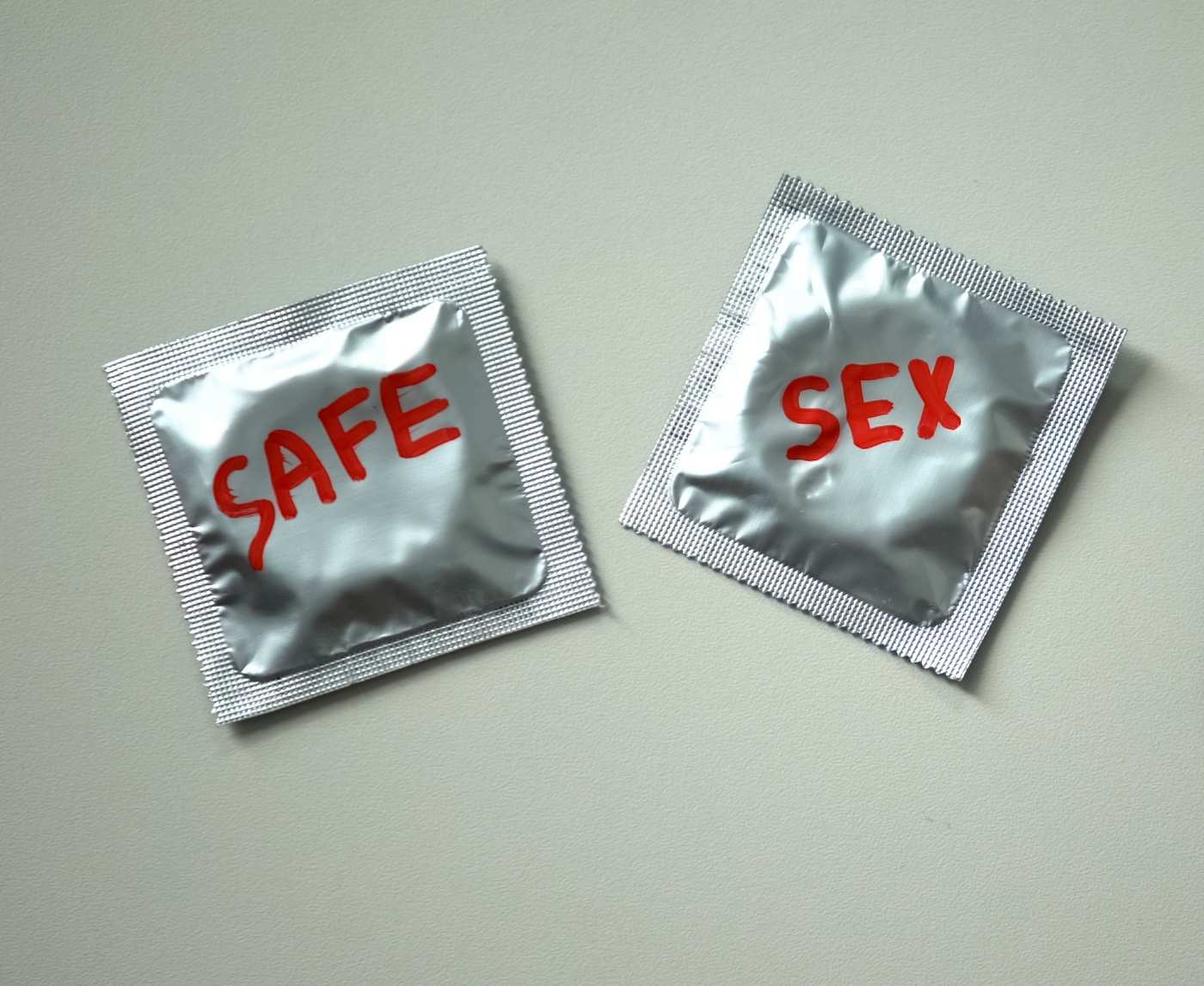
Condoms are one of the most effective tools we have for reducing STD risk, but they don’t eliminate it completely. If you’ve had “protected” sex and still feel unsure, you’re not overthinking it. There are real biological reasons why risk can still exist, even when everything seemed done right.
You’ll hear “use protection” everywhere, from health classes to dating apps, but what rarely gets explained is what protection actually means in practice. Condoms are excellent at blocking fluids, but some infections don’t rely on fluids at all. That gap is where confusion, and anxiety, tends to show up.
Yes, you can still get an STD even if you used a condom. The reason comes down to how different infections spread. Some require fluid exchange, which condoms block very effectively. Others spread through skin-to-skin contact in areas a condom doesn’t cover. Understanding that difference is what turns “safe sex” from a vague idea into something you can actually navigate with confidence.
People are also reading: Dating Multiple People? Here’s How to Talk About Testing and STDs
How Effective Are Condoms Against STDs, Really?
If you’ve ever left a hookup thinking, “We used a condom, so I’m good,” that instinct isn’t wrong, it’s just incomplete. Condoms are extremely effective, but their effectiveness depends entirely on how an infection spreads inside the body.
For infections like chlamydia and gonorrhea, which live in bodily fluids such as semen, vaginal fluid, or rectal secretions, condoms act as a physical barrier. They prevent those fluids from entering another person’s body, which blocks transmission at a biological level. When used correctly from start to finish, condoms reduce the risk of these infections by a significant margin, according to public health guidance from organizations like the CDC.
But biology doesn’t always cooperate with the idea of a perfect barrier. Not every STD needs fluid to spread. Some viruses and bacteria live on the surface of the skin and can transfer through direct contact. That means even with correct condom use, there are scenarios where transmission can still occur, because the condom isn’t covering every area involved in contact.
This is where a lot of people get tripped up. “Effective” doesn’t mean “absolute.” It means risk is reduced, not eliminated. And that distinction matters most in the hours or days after sex, when your brain starts replaying everything, looking for certainty that doesn’t quite exist.
What Condoms Don’t Fully Protect Against (Skin-to-Skin STDs)
Here’s the part most people don’t get told clearly: condoms don’t cover your entire genital area. And for certain STDs, that detail is everything.
Direct skin-to-skin contact can spread infections like HPV (human papillomavirus), herpes (HSV-1 and HSV-2), and syphilis. These pathogens don't have to move through fluids; they can live on the skin's surface and spread through tiny breaks or direct contact with infected areas. If that area isn’t covered by a condom, the barrier doesn’t apply.
Imagine noticing a small patch of irritation or a bump days after sex and immediately thinking, “That shouldn’t be possible, we used protection.” This is exactly where the confusion starts. The condom did its job where it was placed, but it didn’t cover everything involved in the encounter.
| STD Type | Condom Protection Level |
|---|---|
| Chlamydia | High protection (fluid transmission blocked) |
| Gonorrhea | High protection (fluid transmission blocked) |
| HIV | High protection (fluid transmission blocked) |
| HPV | Partial protection (skin-to-skin spread possible) |
| Herpes (HSV-1 & HSV-2) | Partial protection (spread via skin contact) |
| Syphilis | Partial protection (lesion contact outside coverage) |
This doesn’t mean condoms are ineffective, it means they’re precise tools. They work extremely well for what they’re designed to block. The gap is because people think that they cover every possible transmission route, but some infections actually work outside of that barrier.
The CDC says that using condoms correctly and consistently lowers the risk of STDs a lot, but it doesn't completely get rid of it, especially for infections that spread through skin contact. That's where most misunderstandings happen.
Symptoms After Protected Sex: STD or Something Else?
A few days after sex, you notice something feels off. Maybe there’s a slight burn when you pee, or your skin feels irritated, or there’s a discharge you weren’t expecting. Even if you used a condom, your brain jumps straight to: “Is this an STD?”
The reality is that not every symptom after sex is caused by an infection. Longer or more intense sex can irritate sensitive tissue, especially if there wasn't enough lubrication. Some people may have mild allergic reactions to latex condoms, which can cause itching, redness, or swelling within hours to a day after contact. These reactions are not infections; they are either mechanical or immune-based.
But timing matters here. Symptoms from irritation tend to show up quickly, often within the same day or the next. In contrast, most bacterial STDs like chlamydia or gonorrhea have an incubation period, meaning symptoms typically appear several days to weeks after exposure, not immediately. That delay happens because the bacteria need time to multiply and trigger inflammation inside the body.
This is why guessing based on symptoms alone is unreliable. Two completely different causes, friction vs infection, can feel surprisingly similar in the early stages. And that’s exactly why testing becomes the next logical step when something doesn’t feel right. It’s not about assuming the worst, it’s about replacing uncertainty with a clear answer.
Check Your STD Status in Minutes
Test at Home with Remedium7-in-1 STD Test Kit

 For Men & Women
 Results in Minutes
 No Lab Needed
 Private & Discreet
Order Now $129.00 $343.00
For all 7 tests
At-Home STD Testing After Protected Sex: What Actually Works
This is the point where most people go from Googling to deciding what to do next. If you’ve had protected sex but still feel unsure, whether because of symptoms or just a lingering question, the fastest way to get clarity is testing. And not all tests work the same way.
For bacterial infections like chlamydia and gonorrhea, the gold standard is a NAAT (nucleic acid amplification test). This test looks for the DNA of the bacteria, which makes it very sensitive even when there are no or only mild symptoms. Blood tests look for antibodies or antigens that your immune system makes to find viruses like HIV, herpes, hepatitis, and syphilis.
Timing is everything here. If you test too soon, you might get a false negative, not because you're not clear, but because your body hasn't reached the point where it can be detected yet.
Here are the exact testing windows you need to follow:
- Chlamydia: test from 14 days after exposure
- Gonorrhea: test from 3 weeks after exposure
- Syphilis: test from 6 weeks after exposure
- HIV: test at 6 weeks for first indicator, retest at 12 weeks for certainty
- Herpes HSV-1 and HSV-2: test from 6 weeks after exposure
- Hepatitis B: test from 6 weeks after exposure
- Hepatitis C: test from 8–11 weeks after exposure
If you test before these windows, a negative result doesn’t fully rule out infection. It simply means the infection may not yet be detectable. That’s why retesting is sometimes necessary, because your immune system and the pathogen both follow biological timelines, not your anxiety timeline.
A negative result taken at the correct time means no infection was detected within the limits of the test’s accuracy. A positive result means the infection is confirmed, and the next step is straightforward: seek appropriate medical care and avoid further transmission. There’s no guessing at that point, just clarity and action.
If you want to skip the clinic visit and get answers privately, a comprehensive at-home STD test kit allows you to check multiple infections at once, which makes sense after any encounter where you’re unsure what risk level actually applied.
| STD | Test Type |
|---|---|
| Chlamydia | NAAT (urine or swab) |
| Gonorrhea | NAAT (urine or swab) |
| HIV | Blood test (antigen/antibody) |
| Syphilis | Blood test (antibody detection) |
| Herpes | Blood test (antibody detection) |
| Hepatitis B & C | Blood test (antigen/antibody) |
Testing isn’t an overreaction, it’s the fastest way to move from “what if” to “here’s what’s actually going on.”
When “Safe” Sex Still Leads to Risk
You can do everything “right”, use a condom from start to finish, and still end up in a situation where risk exists. Not because you failed, but because real-world sex isn’t as controlled as a health textbook makes it sound.
Condoms rely on correct use, full coverage, and consistent contact boundaries. But in reality, small variables creep in. A condom might shift slightly during movement, exposing skin at the base. There may be genital-to-genital contact before the condom is put on or after it’s removed. Even brief contact is enough for certain infections to transfer, especially those that spread through skin rather than fluids.
Oral sex is another commonly overlooked scenario. Many people don’t use condoms or barriers during oral sex, assuming the risk is negligible. But infections like gonorrhea, herpes, and syphilis can transmit through oral-genital contact. The throat, genitals, and surrounding skin can all serve as entry points depending on the infection’s biology.
Then there’s the moment no one thinks about until afterward: the beginning of sex. If there’s genital contact before the condom is applied, even briefly, transmission risk already exists. The same applies at the end. If the condom comes off and there’s contact before separation, the barrier is no longer in place.
None of this is about blaming behavior, it’s about understanding mechanics. Transmission doesn’t require a dramatic failure like a condom breaking. Sometimes it’s just a matter of exposure happening in a way that the condom wasn’t designed to prevent.
People are also reading: Herpes Testing at Home: Safe, Private, and Actually Accurate
The False Sense of Security Problem
There’s a psychological side to all of this that doesn’t get talked about enough. Condoms don’t just reduce physical risk, they also create a mental shortcut: “I used protection, so I’m safe.”
That belief is comforting, and in many cases, it’s mostly true. But “mostly” is where people get caught off guard. Because when symptoms show up later, or when a partner sends a message saying they tested positive, it creates a kind of confusion that feels worse than if there had been no protection at all.
This is what researchers sometimes describe as a “risk compensation effect.” When people feel protected, they’re less likely to perceive lingering risk, which can delay testing. It’s not carelessness, it’s human psychology. The brain wants closure, and “we used a condom” feels like closure.
The problem is that biology doesn’t respond to reassurance. It responds to exposure. If exposure occurred outside the condom’s coverage, or through a transmission route the condom doesn’t block, the infection process can still begin, even if everything felt “safe” in the moment.
That’s why testing becomes less about reacting to obvious risk and more about confirming reality. It closes the gap between what felt safe and what actually happened at a biological level.
What to Do If You’re Still Worried After Protected Sex
If you’re reading this, there’s a good chance you’re in that in-between space, nothing obviously wrong, but not fully reassured either. Maybe you’ve noticed a symptom. Maybe you haven’t. Either way, your brain is running scenarios.
The most useful thing you can do at this point is shift from guessing to timing. Instead of asking, “Do I have something?” the better question is, “When would a test actually give me a reliable answer?” That’s where the testing windows you saw earlier come in.
If you’re within the window period for a specific infection, waiting until the correct time matters. Testing too early can give you a negative result that feels reassuring but isn’t conclusive. That’s not a failure of the test, it’s just how detection works at the molecular level.
If you’re already past the window period, testing now gives you a clear answer. And that clarity has two outcomes. A negative result lets you move on without second-guessing every sensation in your body. A positive result gives you direction, because once something is confirmed, it’s manageable, and you can take the appropriate next steps.
If you want a straightforward way to cover the most common infections at once, a multi-panel STD test kit is often the most efficient option. It removes the need to guess which infection to test for and gives you a broader picture in one step.
Why Symptoms and Risk Don’t Always Line Up
One of the most annoying things about STD anxiety is how symptoms can come and go. You might expect a clear signal, something that makes it clear what is going on. But that's not how most infections act.
A lot of STDs don't show any signs, especially in the beginning. That means you could have an infection and not even know it. From a biological perspective, this happens because the immune response hasn’t ramped up enough to create noticeable inflammation or discomfort.
On the flip side, you can feel symptoms that seem intense, burning, itching, irritation, and still not have an STD. That’s because the genital area is sensitive and reactive. Changes in pH, new bacteria exposure, stress, or even friction can cause feelings that are similar to infection.
This mismatch between symptoms and reality is what makes self-diagnosis unreliable. The presence of symptoms doesn’t confirm an STD, and the absence of symptoms doesn’t rule one out. That’s why testing is framed as clarity rather than confirmation of a suspicion, it gives you an answer either way.
According to the NHS, many STIs show no symptoms at all, especially in early stages, which reinforces the importance of testing based on exposure rather than symptoms alone.
Check Your STD Status in Minutes
Test at Home with Remedium6-in-1 STD Test Kit
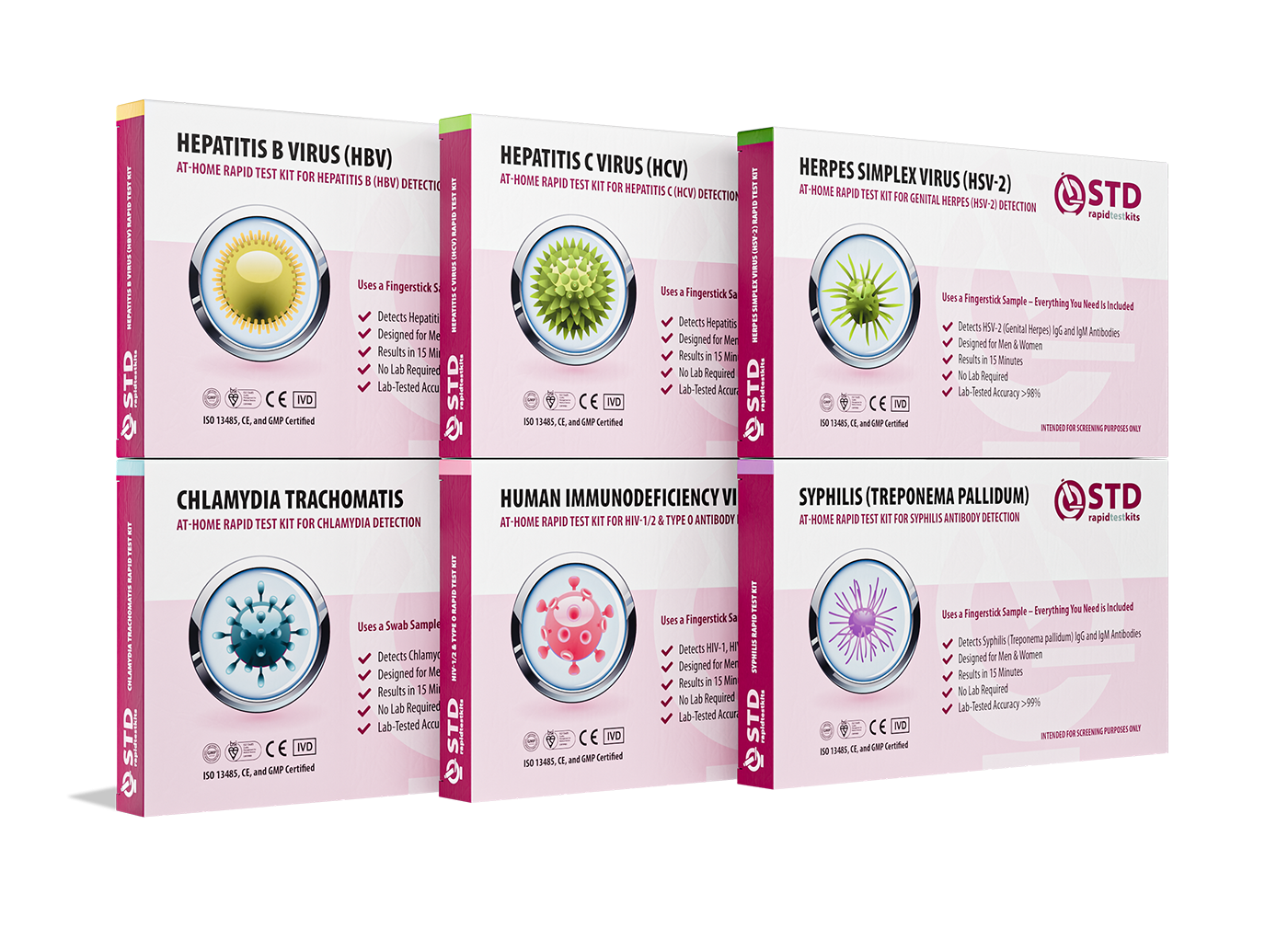 For Men & WomenResults in MinutesNo Lab NeededPrivate & Discreet
Order Now $119.00 $294.00
For all 6 tests
How to Think About Condom Use Moving Forward
None of this changes the fact that condoms are one of the most effective tools we have for reducing STD risk. The goal isn’t to make you distrust them, it’s to understand them accurately.
Think of condoms as a high-quality filter, not a force field. They dramatically reduce risk for fluid-transmitted infections and lower overall exposure. But they don’t eliminate every possible pathway, especially when skin-to-skin transmission is involved.
This perspective actually puts you in a stronger position. Instead of relying on a binary idea of “safe” versus “unsafe,” you start thinking in terms of risk reduction and confirmation. You use protection, and then when needed, you use testing to verify the outcome.
That combination, barrier protection plus informed testing, is what gives you real control over your sexual health. Not guesswork, not assumptions, but a system that matches how infections actually behave in the body.
And if there’s ever a moment where something feels uncertain, testing isn’t an overreaction. It’s simply the next logical step in understanding what your body is doing.
For a full range of discreet options, you can explore at-home STD testing kits here and choose the level of coverage that matches your situation.
FAQs
1. Wait… so you can actually get an STD even if you used a condom?
Yeah, this is the part most people don’t get told clearly. Condoms are excellent at blocking fluids, which is how infections like chlamydia and gonorrhea spread. But infections like herpes, HPV, and syphilis can live on the skin itself. If that skin isn’t covered, transmission is still possible.
2. So what STDs are we really talking about here?
The main ones that slip past condom coverage are herpes (HSV-1 and HSV-2), HPV, and syphilis. They don’t need fluids, they just need contact. That’s why someone can do everything “right” and still end up confused afterward.
3. I used protection but now something feels off… should I panic?
No panic needed, but don’t ignore it either. A lot of post-sex symptoms turn out to be irritation, friction, or even a reaction to latex. But since early STD symptoms can look similar, testing is what separates “probably nothing” from “now I know for sure.”
4. What’s more concerning: symptoms or no symptoms at all?
Honestly? Both can be misleading. Some infections cause noticeable symptoms, but many don’t, especially early on. So feeling fine doesn’t guarantee anything, and feeling something doesn’t automatically mean infection. That’s why testing exists in the first place.
5. How do I know when it’s actually the right time to test?
This is where timing matters more than most people expect. If you test too early, your body might not have produced enough detectable markers yet. That can lead to a false negative. Hitting the correct testing window is what turns a test into a reliable answer.
6. Let’s say I test negative… can I fully relax?
If you tested after the correct window period, then yes, you can trust that result within the accuracy limits of the test. If you tested early, though, that “negative” might just mean “too soon.” In that case, a follow-up test closes the loop.
7. And if it’s positive?
Then you’ve got clarity, which is actually a good place to be. A positive result means the infection is confirmed, and from there, you can take straightforward next steps with medical care. No more guessing, no more spiraling.
8. Does oral sex change the risk even if I used a condom for intercourse?
It can. If no barrier was used during oral sex, infections like gonorrhea, herpes, and syphilis can still pass between the mouth and genitals. It’s one of the most common “wait, how did that happen?” scenarios.
9. Is it overkill to test after protected sex if nothing seems wrong?
Not at all. Think of testing as closing a tab in your brain that won’t stop refreshing. You're not overreacting; you're just choosing to be clear instead of unsure.
10. So what’s the real takeaway here?
Condoms are powerful, they reduce risk a lot. But they’re not a full-body shield. The smartest approach isn’t choosing between protection or testing, it’s using both. That’s what actually puts you in control.
Take Control of Your Sexual Health, Without the Guesswork
If there’s one takeaway from all of this, it’s simple: condoms reduce risk, but testing confirms reality. If you’ve had protected sex and something feels uncertain, whether it’s a symptom or just a lingering question, getting tested is how you move forward with clarity instead of doubt.
If you're not sure what your risk level was, the best option is to get a full combo STD test kit that lets you check for several infections at once. You can also look into single STD tests here based on your specific concern if you'd rather have a more focused approach.
For more options and complete privacy, you can browse all available kits directly on the STD Rapid Test Kits homepage. Testing isn’t about panic, it’s about getting real answers and moving forward with confidence.
How We Sourced This: Our article was constructed based on current advice from the most prominent public health and medical organizations, and then molded into simple language based on the situations that people actually experience, such as treatment, reinfection by a partner, no-symptom exposure, and the uncomfortable question of whether it “came back.” In the background, our pool of research included more diverse public health advice, clinical advice, and medical references, but the following are the most pertinent and useful for readers who want to verify our claims for themselves.
Sources
3. WHO, Sexually Transmitted Infections
6. CDC — Human Papillomavirus (HPV) Fact Sheet
About the Author
Dr. F. David, MD is a board-certified infectious disease specialist focused on STI prevention, diagnosis, and treatment. He writes with a direct, sex-positive, stigma-free approach designed to help readers get clear answers without the panic spiral.
Reviewed by: Rapid STD Test Kits Medical Review Team | Last medically reviewed: March 2026
This article is for informational purposes and does not replace medical advice.


