

Published: October 2025 | Last updated: April 2026 | Editorial review and quality control: Martina N.
The conversation usually starts in the same way. Someone asks whether oral sex really counts, whether spit or swallow changes anything, whether that scratchy throat the next morning is worth worrying about. The honest answer sits between two common extremes. Oral sex carries lower STI risk than vaginal or anal intercourse, yet it is not risk-free. Several common sexually transmitted infections do pass through oral contact, and most of them do it quietly, with no obvious symptoms.
This guide walks through what the evidence says about transmission, why the spit-or-swallow question matters less than people think, and how to tell the difference between a normal sore throat and one worth investigating. If you came here after a recent encounter and want a quick read on what to do next, the takeaways below cover it.
How risky is oral sex for STIs, really?
Lower than vaginal or anal sex, yet not risk-free. Herpes, gonorrhea, syphilis, and HPV transmit reasonably well through oral contact. Chlamydia transmits less efficiently. HIV transmission through oral sex is rated by the CDC as low to negligible in most circumstances. Whether you spit or swallow makes very little difference; exposure happens at the moment of mucosal contact, not at ingestion. Barriers, the HPV vaccine, and post-exposure testing reduce risk to near-zero.
Key Takeaways
- Spitting versus swallowing has almost no effect on STI risk. Exposure happens at the moment of mucosal contact, not at the moment you swallow.
- Most oral STIs are silent. At-home rapid kits screen blood-side infections (HIV, syphilis, herpes, hepatitis) and genital swab infections, but a sore throat needs a clinic-administered throat swab for accurate diagnosis.
STIs that spread through oral sex
The U.S. Centers for Disease Control and Prevention lists the common infections that transmit through oral sex with reasonable efficiency: gonorrhea, herpes simplex virus (both HSV-1 and HSV-2), syphilis, chlamydia, HPV, and rarely HIV. Each one behaves differently in the mouth and throat compared with the genitals, which is part of why these infections are so easy to miss.
Two practical points before the table. First, transmission can happen in either direction. The partner giving oral can pick up an infection from the other partner's genitals, and the partner receiving can pick one up from the giver's mouth. Second, ejaculation is not the threshold for risk. Pre-ejaculate, vaginal fluids, and skin-to-skin contact are all part of the picture, which is why oral activity that doesn't end in ejaculation can still carry some risk.
| Activity | Most likely to transmit | Relative risk | Notes |
|---|---|---|---|
| Giving oral to a penis | Gonorrhea, herpes, syphilis, HPV, chlamydia (less common) | Low to moderate | Throat exposure for the giver. Receiver risk is much lower, though not zero. |
| Giving oral to a vulva | Herpes, gonorrhea, HPV, syphilis | Low to moderate | Risk to giver increases with mouth sores or recent dental work. |
| Receiving oral | Herpes, syphilis, HPV | Low | Risk increases sharply if the giver has visible cold sores or bleeding gums. |
| Oral-anal contact | Hepatitis A, herpes, gonorrhea, intestinal parasites | Moderate to high | Barriers and good hygiene cut this risk substantially. |
Spitting versus swallowing: what changes, what doesn't
This is one of the most googled questions on the topic and one of the most reassuringly boring answers in sexual health. The choice does not change your STI risk in any meaningful way, because exposure does not happen during ingestion. It happens at the moment infectious fluid touches a mucosal surface: the inside of the lips, the gums, the tongue, the soft palate, and the tonsillar pillars (the arched tissue on either side of the back of the throat). By the time you decide to spit or swallow, that contact has already taken place.
The stomach is, if anything, the safest part of the route. Stomach acid destroys most pathogens within seconds, including HIV. Swallowed semen is broken down in digestion long before it could cause infection. The popular fear that swallowing causes STIs while spitting prevents them gets the biology backwards.
If you want to lower risk during oral sex, the levers that matter are barrier use (a condom on a penis, a dental dam on a vulva or anus), avoiding oral contact during a herpes outbreak or while the giver has bleeding gums, and getting the HPV vaccine if you are eligible. Choosing to spit instead of swallow does not appear in that list. Make the choice based on personal preference, and not on a misplaced sense of safety.
STI exposure occurs the moment infectious fluid touches mouth or throat tissue. By the time the swallow reflex kicks in, the contact has already taken place. The stomach is the safest part of the route: acid destroys most pathogens within seconds, including HIV. So spit or swallow as you prefer; the choice is comfort, not protection.
How risky is each infection through oral sex?
Lumping all STIs together as one category is a common mistake. Risk varies a lot by pathogen, by which side of the encounter you were on, and by whether either partner has visible symptoms. Pulling apart the major ones, with detail drawn from CDC STI guidance and the WHO STI fact sheet:
| Infection | Transmits through oral? | Typical oral or throat symptoms | Notes |
|---|---|---|---|
| Gonorrhea | Yes, well documented | Often none. Sometimes mild sore throat or redness. | Most pharyngeal infections are asymptomatic per CDC surveillance. Antibiotics cure it. |
| Chlamydia | Yes, less efficiently than genital | Usually none. Mild irritation if present. | Less efficient throat colonization than gonorrhea. Antibiotics cure it. |
| Syphilis (primary) | Yes, highly contagious during ulcer stage | A single painless ulcer (chancre) on the lip, tongue, or tonsil. | Antibiotics cure early stages. Easy to mistake for canker sore. |
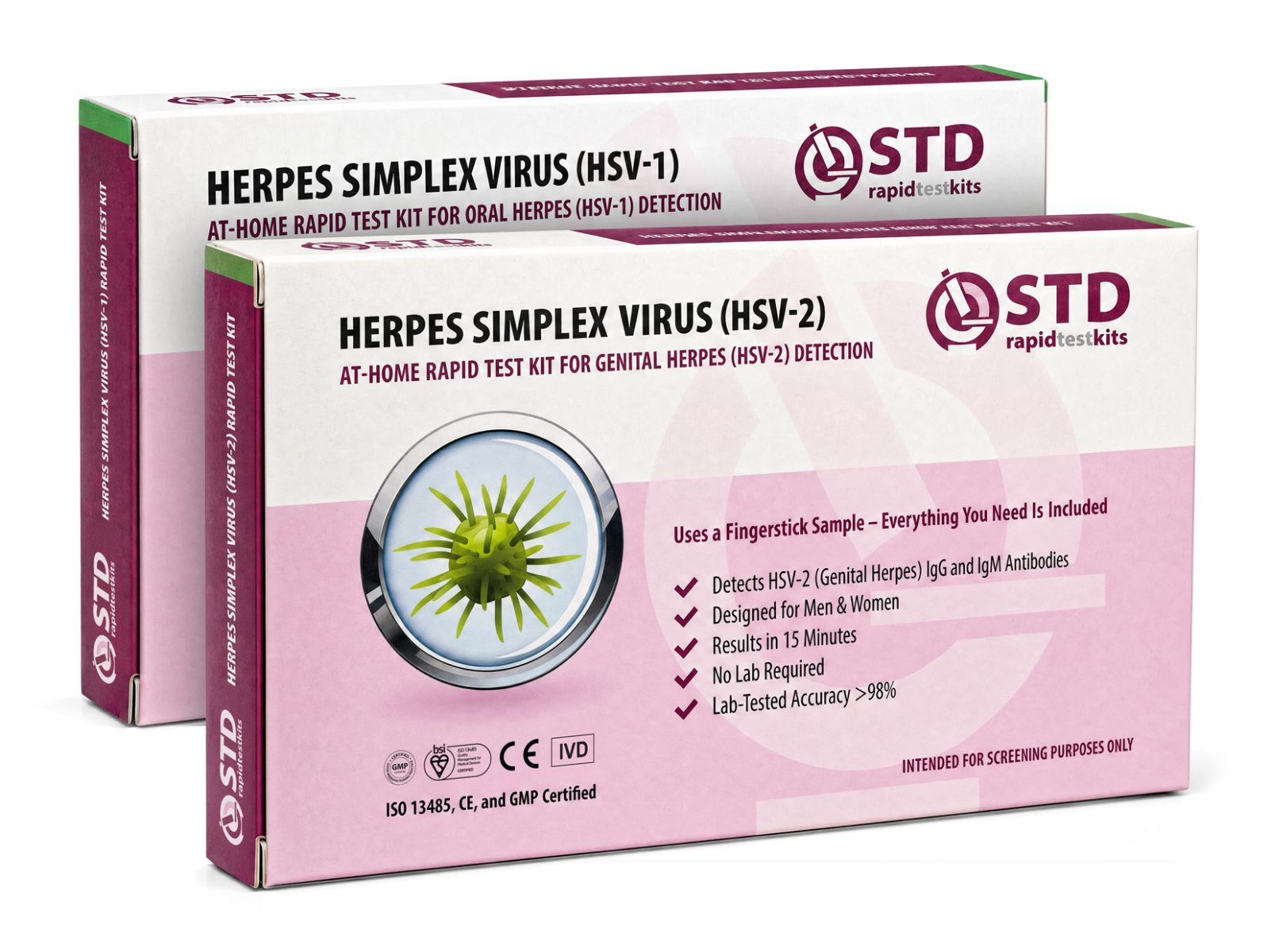
| Herpes (HSV-1, HSV-2) | Yes | Early tingling, then small clustered blisters that crust over. | Both types cross between mouth and genitals. Antivirals manage symptoms; not curable. |
| HPV | Yes | Usually none. Long-term link to oropharyngeal cancers. | Vaccination prevents the high-risk strains. Most infections clear on their own. |
| HIV | Very rarely | None directly attributable to oral exposure. | CDC rates this risk as low to negligible. Increases if open sores or bleeding gums are present. |
Where to get tested after oral exposure
The right test depends on what you are worried about, and the testing pathway for throat infections looks different from the one for genital or blood-side infections. This is where home testing and clinic testing serve different jobs, and being honest about which is which saves you a wasted trip.
Throat infections (oral gonorrhea, oral chlamydia) are diagnosed from a clinic-administered throat swab, processed by a laboratory using nucleic acid amplification testing (NAAT or PCR). At-home rapid lateral-flow kits, including the ones we sell, do not include validated throat swab tests. The swab products in our catalog are validated for vaginal or penile sample collection only. If your concern is specifically a sore throat that lingers after a new partner, book a sexual health clinic visit and ask for a pharyngeal swab.
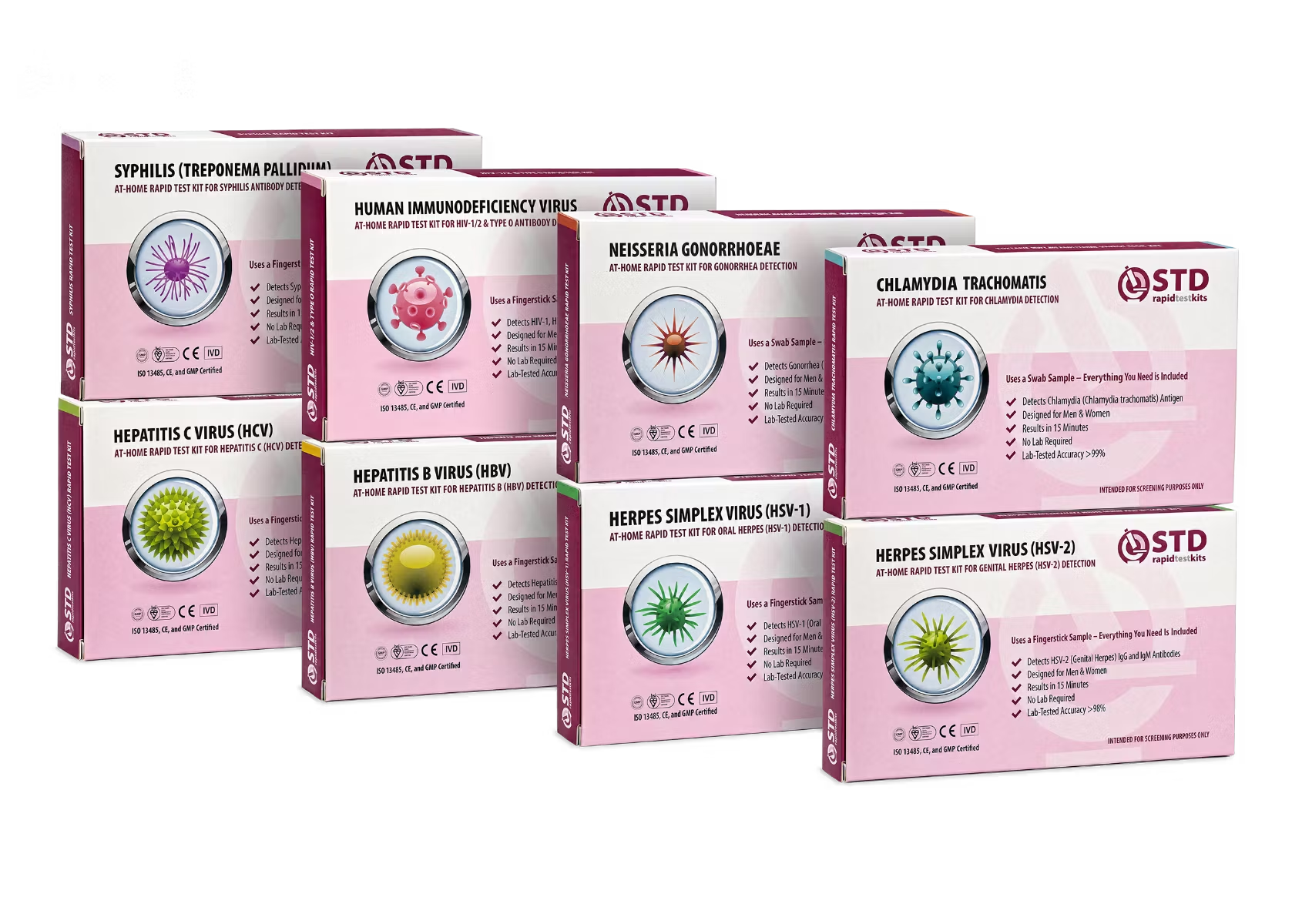
For the rest of the picture, at-home rapid testing covers a lot of ground. Blood-side infections (HIV, syphilis, hepatitis B, hepatitis C, HSV antibodies) are screened with a fingerstick rapid test. Genital chlamydia and gonorrhea are screened with a self-collected swab. After an oral exposure, the most useful at-home panel is usually a multi-infection blood and swab combo, since the same partner who could have transmitted something to your throat could also have transmitted to a genital site you can sample at home.
If your main worry is a persistent sore throat after a new sexual partner, your best move is a clinic visit for a throat swab tested by laboratory NAAT. Our at-home rapid tests cover the related blood and genital exposures from the same encounter; they are not designed for throat sampling. Both routes can be useful in parallel.
Disclosure: this site sells at-home rapid STI tests. The kit recommended below is selected because it covers the exposures most relevant to this article, and not on a paid-placement basis.
Lowering your risk in practice
Risk reduction during oral sex looks unglamorous on paper. Barriers cut transmission of bacterial and viral infections by a meaningful amount, yet survey data consistently show that consistent barrier use during oral sex is rare among adults. The reasons are practical: condoms and dental dams are sold for penetrative sex more than oral, and the supermarket selection rarely includes the flavored or unlubricated options that work better orally. The barrier still works whether or not it is fashionable.
Vaccination is the other quiet win. The HPV vaccine prevents the high-risk strains most strongly linked to oropharyngeal cancers and is recommended for routine vaccination through age 26, with shared clinical decision-making through age 45, per ACIP guidance summarized on the National Cancer Institute HPV fact sheet. If you missed it as a teenager, it is still worth asking your primary care provider about eligibility.
Then there is the conversation. Asking a partner whether they have tested recently is one of the highest-return habits in sexual health, and one of the most underused. A short check before things heat up reduces both real risk and post-encounter anxiety. Plenty of partners welcome the question once it is asked plainly.
Three risk-reduction moves that move the needle
- Use a barrier (condom for oral on a penis, dental dam for oral on a vulva or anus). Flavored condoms are widely available and improve comfort.
- Get the HPV vaccine if you are eligible. ACIP recommends routine vaccination through age 26 and shared decision-making through age 45.
- Ask a new partner about their recent testing before things heat up. Short, plain conversations reduce real risk and post-encounter anxiety in equal measure.
When a symptom deserves a closer look
Most sore throats after oral sex are exactly what they look like: a viral upper-respiratory infection picked up the same way you would pick one up at work. The clues that point toward an STI rather than a cold are specific. A sore throat lasting more than a week without other cold symptoms (runny nose, cough, body aches) is one. A single painless ulcer on the lip, tongue, or tonsil that does not heal within ten days is another; that is the classic primary syphilis chancre and warrants a blood test. Cold-sore-style clustered blisters with an early tingling sensation point to oral HSV. Persistent swollen lymph nodes in the neck after the throat itself has settled are also worth investigating.
For most other patterns, watchful waiting plus a baseline test at the right window is the calmer option. The window-period rules of thumb: bacterial throat infections show on NAAT around 7 to 14 days after exposure; primary syphilis chancres typically appear roughly 3 weeks after exposure (with a published range of 10 to 90 days); HIV is reliably caught by a fourth-generation antigen-antibody test from around 18 to 45 days; HSV antibodies become reliably detectable around 12 weeks out. Testing too early gives a false sense of security; testing at the right window gives a real answer.
If a partner has just told you they tested positive for something specific, contact a sexual health clinic the same day. They can advise on post-exposure prophylaxis (PEP) for HIV exposures within 72 hours and on targeted treatment for bacterial exposures.
There is little to no risk of getting or transmitting HIV from oral sex.
FAQs
- Can I really get gonorrhea or chlamydia in my throat from oral sex?
- Yes. Throat (pharyngeal) gonorrhea is well documented, and most cases are asymptomatic. Pharyngeal chlamydia happens too, though it transmits less efficiently. Both are diagnosed from a clinic-administered throat swab and cured with antibiotics.
- Is spitting safer than swallowing?
- No meaningful difference. By the time you make that choice, any infectious fluid has already touched your throat or mouth lining. Stomach acid clears swallowed material in seconds. Pick whichever you prefer; the decision is about personal comfort, not a risk calculation.
- What are my real chances of catching HIV from oral sex?
- Very low. The CDC rates the per-act risk of HIV through oral sex as low to negligible. Risk rises if there are open sores, bleeding gums, or another STI present in either partner. Condoms or dental dams cut that already small risk further.
- How soon should I test after a worrying oral encounter?
- Different infections have different windows. Throat-side gonorrhea or chlamydia: about 7 to 14 days, with a clinic throat swab. Syphilis: a blood test around 3 to 6 weeks after exposure. HIV: most fourth-generation tests are reliable from about 18 to 45 days. HSV antibody seroconversion takes up to 12 weeks. Testing too early gives false reassurance.
- Are at-home STI tests reliable for oral infections?
- For a true throat infection, no. The at-home rapid kits we sell are validated for fingerstick blood (HIV, syphilis, hepatitis, HSV antibodies) and self-collected vaginal or penile swabs (chlamydia, gonorrhea, trich, HPV). For a pharyngeal swab you need a clinic. We are honest about that scope rather than selling around it.
- Can kissing alone transmit STIs?
- Mostly no. Saliva is hostile to most STI pathogens, and HIV is not transmitted by kissing. The exception worth knowing about is HSV-1 (cold sores), which transmits readily from an active lesion to a partner's mouth. Syphilis can also pass during deep kissing if a partner has an active oral chancre.
- Does the HPV vaccine prevent oral cancer?
- It prevents infection with the high-risk HPV strains (notably HPV-16 and HPV-18) responsible for the majority of HPV-related oropharyngeal cancers. Routine vaccination is recommended through age 26, with shared clinical decision-making through age 45. Adult vaccination is worth asking your provider about even if you missed it as a teenager.
- Will mouthwash kill an STI in my throat?
- No. Mouthwash freshens breath and reduces some oral bacteria temporarily; it does not cure or prevent an STI. Do not skip a clinic test or antibiotic course on the strength of a gargle routine. Some studies have looked at antiseptic mouthwash as an experimental adjunct for gonorrhea, but the evidence is not strong enough to replace standard care.
- U.S. Centers for Disease Control and Prevention. About STI Risk and Oral Sex: transmission routes for gonorrhea, chlamydia, syphilis, herpes, HPV, and HIV through oral activity.
- U.S. Centers for Disease Control and Prevention. STI overview, screening recommendations, and treatment guidelines.
- World Health Organization. Sexually Transmitted Infections fact sheet, including global prevalence and prevention guidance.
- National Health Service (UK). Sex activities and risk: oral sex section covering risk levels and practical reduction strategies.
- National Cancer Institute. HPV and Cancer fact sheet: links between HPV infection and oropharyngeal cancers, plus current vaccination age recommendations.
- MedlinePlus (NIH). Sexually Transmitted Infections: patient-oriented summary of common STIs and testing pathways.
