How Long Can You Live With Full-Blown AIDS?
The honest two-part answer most search results never give you.




- Untreated AIDS historically led to death within about 1 to 3 years, driven by opportunistic infections that overwhelm a severely damaged immune system.
- On effective antiretroviral therapy, people diagnosed with AIDS commonly live for decades, and earlier treatment moves life expectancy closer to the general-population average.
Published: October 2025 | Last updated: May 2026 | Editorial review and quality control: Martina N.
The question "how long can you live with full-blown AIDS" tends to land in a search bar at a stressful moment. A recent test result, a partner's disclosure, a symptom that will not let go, or simply an old fear pushed to the front of the mind. The honest answer has two parts, and they look almost nothing alike.
Without treatment, late-stage AIDS shortens life to about 1 to 3 years. With modern antiretroviral therapy, decades.
Key takeaways
- Untreated AIDS historically led to death within about 1 to 3 years, driven by opportunistic infections that overwhelm a severely damaged immune system.
- On effective antiretroviral therapy, people diagnosed with AIDS commonly live for decades, and earlier treatment moves life expectancy closer to the general-population average.
What "full-blown AIDS" actually means
"Full-blown AIDS" is informal language for advanced HIV. Clinically, AIDS is the stage where the immune system has been damaged enough that the CD4 T-cell count drops below 200 cells per cubic millimeter of blood, or where a person develops one of the AIDS-defining opportunistic illnesses, per the CDC's HIV staging criteria. It is not a different virus or a separate disease. It is HIV that has been allowed to progress to its most severe stage.
The distinction matters because the timeline depends on what happens next. AIDS without treatment looks one way. AIDS with prompt antiretroviral therapy looks another way. The diagnosis itself does not lock in the outcome.
A person with HIV is classified as having AIDS (Stage 3) when either of two thresholds is met:
- CD4 count below 200 cells/mm³, indicating severe immune suppression.
- Development of an AIDS-defining illness, such as pneumocystis pneumonia, Kaposi sarcoma, or esophageal candidiasis, regardless of CD4 count.
Untreated AIDS: what the timeline historically looked like
Before effective HIV medications became widely available in the mid-1990s, an AIDS diagnosis carried a short median survival. The CDC notes that without treatment, survival at the AIDS stage averages approximately three years, and most clinical reviews from the pre-ART era put the typical range at about 1 to 3 years from progression to AIDS. Some people survived longer. Others declined faster.
The reason the timeline is short is not HIV itself attacking organs the way some other viruses do. HIV's damage is indirect. The virus targets CD4 T-cells, which coordinate the immune response. As CD4 counts fall, the body loses its ability to fight off pathogens it would otherwise control easily.
Below CD4 200, the body becomes vulnerable to a long list of opportunistic infections and cancers. Many of them are rare or mild in healthy people, but life-threatening when the immune system cannot mount a defense. The table below sketches what that progression tends to look like when it goes uninterrupted.
| Stage | What is happening in the body | What it tends to feel like |
|---|---|---|
| Severe immune damage | CD4 cells drop below 200 per mm³ | Persistent fatigue, frequent minor illnesses |
| Opportunistic infections | Body cannot control bacteria, fungi, viruses | Pneumocystis pneumonia, chronic diarrhea, unintentional weight loss |
| Advanced complications | AIDS-defining cancers and neurological involvement | Kaposi sarcoma, cognitive changes, severe weakness |
What actually causes death in late-stage AIDS
People often assume HIV is what kills someone with AIDS. The picture is more layered than that.
Common causes of death in untreated or under-treated AIDS, per WHO HIV/AIDS surveillance, include pneumocystis pneumonia (a fungal lung infection rare in healthy adults), tuberculosis (including drug-resistant strains), Kaposi sarcoma and certain lymphomas linked to immune suppression, cytomegalovirus disease, cryptococcal meningitis, and severe bacterial bloodstream infections.
A healthy immune system controls most of these without conscious effort. Without that control, they accumulate. Sometimes one severe infection is the immediate cause of death. More often, the body has been fighting several at once for months. The 1 to 3 year estimate reflects this gradual erosion of immune defense, not a single catastrophic event.
- Pneumocystis pneumonia (PCP), a fungal lung infection that is rare in healthy adults but a leading cause of death at low CD4 counts.
- Tuberculosis, including extrapulmonary and drug-resistant forms.
- Kaposi sarcoma, a cancer linked to immune suppression and human herpesvirus 8.
- Cytomegalovirus disease, most commonly affecting the eyes, gut, or nervous system.
- Cryptococcal meningitis, a fungal infection of the membranes around the brain.
- Severe bacterial bloodstream infections, repeated invasive infections the body can no longer clear.
AIDS with modern treatment: a completely different timeline
This is where the answer to "how long can you live" diverges sharply from anything published before the mid-1990s.
Antiretroviral therapy (ART) is a combination of medications taken daily that block HIV from replicating. When ART works, the amount of HIV in the blood drops dramatically, often to levels too low for standard tests to detect. The CD4 count then has room to recover.
Large cohort studies, including the ART Cohort Collaboration (ART-CC), have shown that a young adult starting effective ART can expect a life expectancy approaching that of the general population. Outcomes are best when treatment begins before AIDS develops, but even people who start treatment at the AIDS stage are now commonly measured in decades, not months. The WHO summarizes this plainly: effective treatment enables people living with HIV to manage their condition as a chronic health issue rather than a terminal one.
| Scenario | Estimated life expectancy | What changes |
|---|---|---|
| No treatment | About 1 to 3 years after AIDS diagnosis | Immune system continues to decline; opportunistic infections accumulate |
| ART started at AIDS stage | Often 10 to 30+ additional years | Virus suppressed; partial to substantial immune recovery |
| Early and consistent ART | Approaching general-population average | Minimal long-term immune damage; chronic-disease management |
What antiretroviral therapy actually does
ART does not remove HIV from the body. The virus integrates into the DNA of long-lived immune cells and can persist there for years. What ART does is stop HIV from copying itself, which interrupts the cascade of immune damage at its source.
Three things happen in roughly this order. Viral load drops, with the amount of HIV in the blood falling sharply within weeks of starting treatment. Immune damage stops accelerating, because CD4 cells are no longer being destroyed at the same rate. Then, over months and years, immune function recovers as the CD4 count climbs back upward.
The phrase "undetectable viral load" refers to HIV levels too low for standard blood tests to measure. Reaching that state is the practical goal of ART. Once someone is consistently undetectable, two things become true at once. Their immune system can rebuild. And, according to CDC HIV treatment guidance, they cannot transmit HIV sexually to partners, a finding summarized as U=U (undetectable equals untransmittable).
ART lowers the amount of the virus in a person's body. This stops symptoms and allows people to live full and healthy lives.
Can immune function recover after an AIDS diagnosis?
Yes, often substantially, though the recovery is rarely a full reset.
How well someone recovers depends on how low the CD4 count fell before treatment started, how long the immune system was suppressed, age and other health conditions, and whether opportunistic infections caused lasting organ damage. Someone who reached a CD4 count of 50 before starting ART can still recover to 400 or higher over a few years, though they may remain more vulnerable to certain infections than someone whose CD4 never dropped that low.
Someone diagnosed and treated before their CD4 fell below 200 in the first place usually recovers immune function closer to normal. The earlier the starting point, the more complete the recovery tends to be. The idea that AIDS is a one-way path is outdated. Most people on consistent ART reach CD4 counts in the 400 to 600 range within two to three years. That is enough to dramatically reduce infection risk and support a normal daily life, even when the count does not fully return to pre-infection levels.
| Area | What typically improves on ART | What may stay limited |
|---|---|---|
| Immune system | CD4 count rises, often into normal ranges | May not return fully to pre-infection baseline |
| Daily health | Fewer infections, more stamina, fewer hospital visits | Some chronic conditions may persist or develop earlier than expected |
| Life expectancy | Significantly extended, often by decades | Outcome depends on how early treatment began and adherence over time |
How fast does HIV turn into AIDS without treatment?
This is the same question phrased from the other direction. Instead of asking how long someone lives with AIDS, it asks how long it takes to get there.
Without ART, chronic HIV infection usually advances to AIDS in about 10 years or longer, per the NIH's HIVinfo staging fact sheet, though in some people it may advance faster. A small fraction of people called rapid progressors reach AIDS within 2 to 3 years. A smaller fraction called long-term non-progressors maintain stable CD4 counts for 15 or more years without medication. Most people fall somewhere in between.
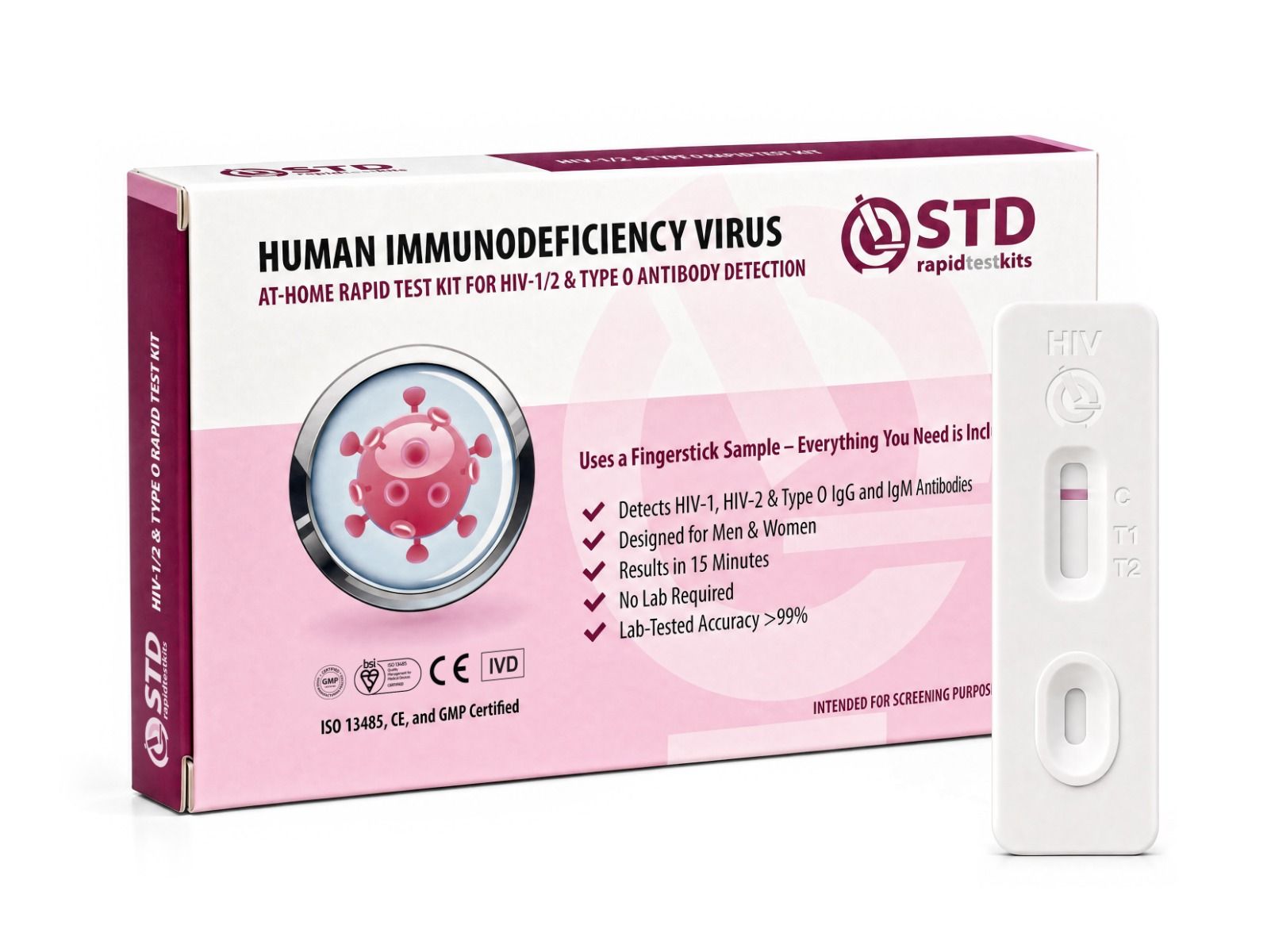
The frustrating thing about this stage is how silent it is. After the brief flu-like illness that can occur in the first weeks of HIV infection (called acute HIV), many people feel normal for years. The virus is still active. CD4 cells are still being depleted. But the person feels fine. By the time symptoms become hard to ignore, the infection has often progressed substantially. This article is published by stdrapidtestkits.com, which sells at-home rapid STI testing kits. The recommendations below are based on fit for the reader's situation, not commercial benefit, and a reactive home result should always be confirmed with a laboratory test.
| Stage | Typical timeframe (without treatment) | What you might notice |
|---|---|---|
| Acute HIV | About 2 to 4 weeks after exposure | Flu-like symptoms, or nothing at all |
| Chronic (clinical latency) | Several years, often a decade or more | Often no obvious symptoms |
| AIDS | About 10 years or longer (typical) | Severe infections, weight loss, persistent fatigue |
Why some people don't get diagnosed until they have AIDS
A significant share of HIV diagnoses in the United States still occur at a late stage, with the infection already classified as AIDS at the time of testing, per CDC HIV surveillance. That pattern has shifted as testing has expanded, but late diagnosis remains common.
Late diagnosis is not primarily about carelessness. It is the product of several overlapping factors. HIV's long asymptomatic phase means the virus does its work quietly for years. Stigma still delays testing for many people. Risk perception is uneven, because many people assume HIV is something that happens to other people. Healthcare access gaps matter. And the overlap between HIV symptoms and common illnesses can delay the right test being ordered when someone does seek care.
The practical takeaway is simple. Symptoms cannot be relied on to indicate HIV status. Routine testing is the only reliable way to catch HIV before symptoms develop, a point reflected in NHS HIV guidance, which emphasizes that many people living with HIV do not know they have it because the virus can stay symptom-free for years.

Why earlier testing changes long-term outcomes
The earlier HIV is diagnosed and treated, the less damage accumulates before ART can stop it. That has real, measurable consequences for the rest of someone's life.
Immune recovery is faster and more complete. Long-term complications such as cardiovascular disease, kidney problems, and neurocognitive changes are reduced. The chance of reaching and staying at an undetectable viral load is higher. Transmission risk to partners drops to effectively zero on consistent ART.
Late diagnosis does not eliminate any of those benefits, but it makes each one harder to reach. The body has more to recover from. The treatment plan may need to address active opportunistic infections at the same time as starting ART, which adds complexity, side-effect burden, and sometimes hospital admissions. Catching HIV earlier shortens that road dramatically.
- Faster, more complete immune recovery. Starting ART before CD4 falls below 200 usually means rebuilding to near-normal CD4 ranges.
- Lower long-term complication risk. Cardiovascular disease, kidney problems, and neurocognitive changes are less likely when viral suppression starts early.
- U=U becomes achievable. An undetectable viral load means HIV is not transmitted sexually to partners.
Do people still die from AIDS today?
Yes, though the reasons have changed.
In settings where HIV care is accessible, AIDS-related deaths today are usually linked to a small set of preventable patterns: late diagnosis (HIV not detected until significant immune damage), inconsistent or interrupted treatment, lack of access to medications, drug-resistant HIV strains in someone with a history of incomplete adherence, and co-occurring health conditions that limit treatment options.
AIDS-related deaths have declined substantially over the past two decades, though the disease has not been eliminated. AIDS-related deaths continue each year, concentrated in regions with limited testing and treatment access. The WHO HIV/AIDS fact sheet reports roughly 630,000 AIDS-related deaths globally in 2024.

What you can do right now
If you are reading this because of a specific worry, the most useful next step is not running survival timelines through your head. It is testing.
HIV tests have improved substantially over the last decade. Fourth-generation laboratory tests can detect HIV antibodies and the p24 antigen as early as about 18 to 45 days after exposure, per CDC HIV testing guidance. Rapid antibody tests, including at-home options, become reliable somewhat later in the window period but still within roughly 23 to 90 days for most assays. Specific window periods vary by kit, so read each product page carefully before timing your test.
For someone who has not tested recently and is wondering, a single rapid antibody test gives a starting answer that can be confirmed with a lab test if reactive. For someone worried about a broader range of exposures, a combination kit covers more ground in one screening. Choosing between a single-infection test and a combo kit is a secondary question. Getting tested is the first one. The timeline only feels overwhelming when you do not know where you stand.
- Recent possible exposure (single source). Wait until you are past the assay's window period, then take a rapid antibody test. Confirm any reactive result with a lab test.
- Multiple possible exposures or unknown sources. Use a combination kit so one round covers HIV plus the other common infections that could have come with the same exposure.
- Any reactive home result. Contact a healthcare provider for confirmatory laboratory testing and to start care. Reactive does not mean confirmed.
Frequently asked questions
- How long can someone live with full-blown AIDS without treatment?
- Median survival after progression to AIDS without antiretroviral therapy is historically about 1 to 3 years. The CDC puts the average at roughly three years. The cause of death at that stage is almost always opportunistic infections rather than HIV directly damaging organs.
- How long can someone live with AIDS on antiretroviral therapy?
- Decades, in most cases. Even when treatment starts at the AIDS stage rather than earlier, life expectancy is now commonly measured in decades. People diagnosed earlier and treated consistently can approach a near-normal life expectancy.
- What actually causes death in late-stage AIDS?
- Opportunistic infections and AIDS-defining cancers. The most common include pneumocystis pneumonia, tuberculosis, Kaposi sarcoma, cytomegalovirus disease, cryptococcal meningitis, and severe bloodstream infections. HIV weakens the immune system to the point where these conditions become life-threatening.
- Can the immune system recover after an AIDS diagnosis?
- Yes. On effective ART, CD4 counts commonly climb back into the 400 to 600 range within two to three years. The main limiting factor is how suppressed the immune system was before treatment began; a CD4 nadir of 50 means a slower, less complete recovery than a nadir of 150, with some lingering vulnerability to certain infections.
- How long does it take for untreated HIV to become AIDS?
- On average, 10 years or longer without medication, though the range is wide. A small group reach AIDS within 2 to 3 years; another small group stay stable for 15-plus years without drugs. The silent chronic phase between initial infection and AIDS is why testing matters: many people feel completely normal for years while the virus quietly depletes CD4 cells.
- Is AIDS still considered a death sentence today?
- Not in settings where testing and ART are accessible. AIDS is still a serious diagnosis, but it is now managed as a chronic condition rather than a terminal one. The real risk today is delayed diagnosis or interrupted treatment, not the diagnosis itself.
- Can an at-home rapid test detect HIV reliably?
- Yes, once you are past the window period. Rapid antibody tests, including at-home options, are reliable for most people from about 23 to 90 days after exposure, depending on the assay. A reactive home result should be confirmed with a laboratory test, since rapid tests are screening tools rather than confirmatory ones.
- Why do some people only find out they have HIV after it has become AIDS?
- HIV's long asymptomatic phase is the main reason. People can feel completely fine for years while the virus quietly depletes CD4 cells. Stigma, uneven risk perception, and limited testing access all play a role too. Routine testing matters more than waiting for symptoms.
- U.S. Centers for Disease Control and Prevention. About HIV: staging criteria, CD4 thresholds for AIDS diagnosis, and the approximate three-year average survival at the AIDS stage without treatment.
- U.S. Centers for Disease Control and Prevention. HIV treatment: antiretroviral therapy, viral suppression, and the Undetectable = Untransmittable (U=U) finding.
- World Health Organization. HIV/AIDS fact sheet: ART effectiveness, AIDS as the most advanced stage of HIV infection, and 2024 global AIDS-related mortality figure.
- National Institutes of Health, HIVinfo. Stages of HIV infection: clinical latency, progression to AIDS in about 10 years or longer without treatment.
- HIV.gov. Symptoms of HIV: signs and clinical features across stages of infection.
- National Health Service (UK). HIV and AIDS overview: symptoms, testing, and clinical context for asymptomatic chronic HIV and late diagnosis.